
On-premise cloud: what it is, how it works, when it pays off

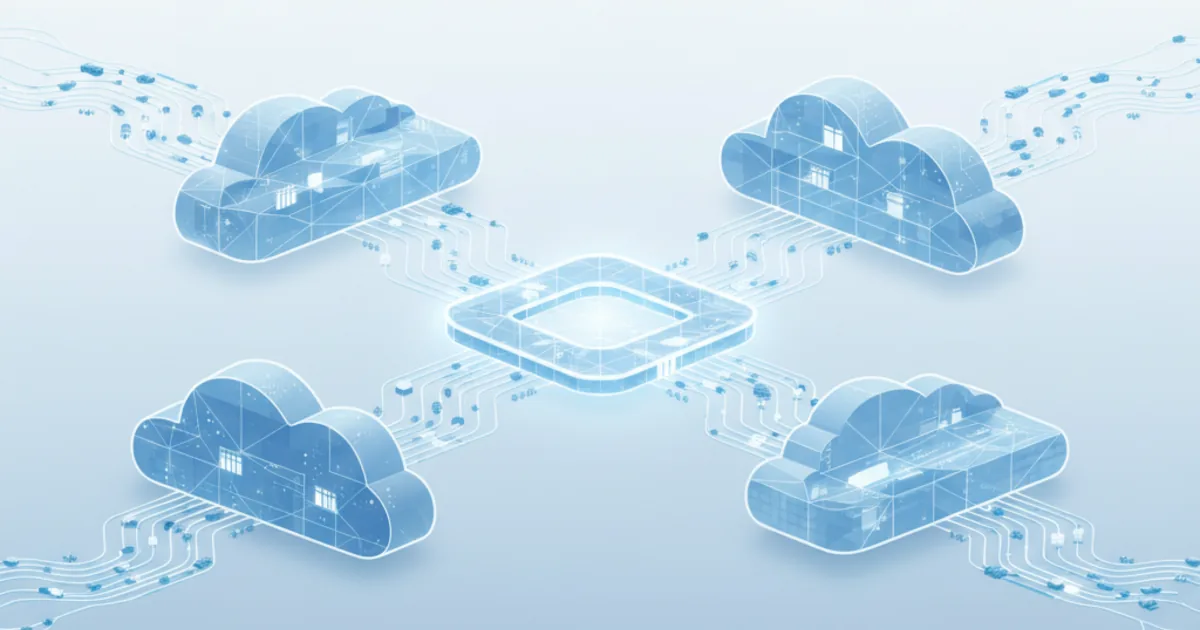
An on-premise cloud is a private cloud that runs in your own data center or server room: you own the hardware, and a software layer adds the self-service, pooling, automation and metering you get from AWS or Azure. It suits workloads with strict data-location, latency or legacy needs, at the price of capital outlay and in-house operations.
Key takeaways
- "Cloud" describes how resources are delivered, not where they sit. NIST explicitly allows a private cloud to exist on or off premises.
- A server room becomes a cloud only when users can provision resources themselves, from shared pools, with usage measured.
- You can build one on your own software stack (VMware, Nutanix, OpenStack) or rent the hyperscaler's version on your floor (AWS Outposts, Azure Local, Google Distributed Cloud).
- It pays off for steady, high-utilization workloads and data that must stay on site. It loses to public cloud on bursty demand and on speed of expansion.
- You carry the full security and operations burden: there is no provider on the other side of a shared responsibility model.
- Most organizations end up hybrid: an on-premises core for what must stay, and public cloud for the rest.
What is an on-premise cloud?
It is cloud computing delivered from infrastructure you control. The test is not the building but the operating model.
The NIST definition of cloud computing (SP 800-145) lists five essential characteristics: on-demand self-service, broad network access, resource pooling, rapid elasticity and measured service. It defines a private cloud as infrastructure "provisioned for exclusive use by a single organization" that "may be owned, managed, and operated by the organization, a third party, or some combination of them, and it may exist on or off premises." An on-premises cloud is simply the on-premises case of that definition.
So a rack of virtualized servers is not automatically a cloud. If a developer still files a ticket and waits two weeks for a virtual machine, you have a modern data center, not a cloud. Once that developer can request capacity from a portal or API, get it in minutes from a shared pool, and see what it costs, you do.
Private cloud on premises vs a traditional data center
A traditional data center maps applications to specific servers, configured by hand. Capacity is bought per project, and much of it sits idle. An on-premises private cloud pools compute, storage and network, and hands them out through automation. The hardware can be identical. The difference is the software layer and the way IT works with the rest of the business.
How an on-premises private cloud works
Five building blocks turn owned hardware into a cloud service:
- Virtualization or containers. A hypervisor (or a Kubernetes platform) abstracts workloads from physical servers so they can share hardware safely.
- Software-defined storage and networking. Volumes, virtual networks, firewall rules and load balancers are created by API rather than by re-cabling.
- Orchestration and automation. Templates and infrastructure-as-code decide where workloads run and build them the same way every time.
- A self-service portal and API. Users pick from a catalog with guardrails: approved images, sizes and quotas.
- Metering and governance. Usage is measured per team or project so you can show back or charge back costs, and policies are enforced centrally.
Identity (directory integration, multi-factor authentication, role-based access), backup with off-site copies, and monitoring sit across all five. Without them, self-service becomes sprawl.
Options for building an on-premise cloud
Enterprises looking for the best on-premise infrastructure usually choose between three approaches. None is best in general; the right one depends on which public cloud you already use, your skills, and how much you want to operate yourself.
| Approach | Examples | Who operates the hardware | Fits when |
|---|---|---|---|
| Hyperscaler infrastructure on your site | AWS Outposts, Azure Local, Google Distributed Cloud | Vendor-managed or vendor-designed; you provide space, power and network | You want the same APIs and tools on-premises as in the public region |
| Private cloud software on your own servers | VMware Cloud Foundation, Nutanix Cloud Platform, OpenStack | Your team or a managed service provider | You need full control, existing VMware skills, or no dependency on a public region |
| Container platform on bare metal or VMs | Red Hat OpenShift, upstream Kubernetes | Your platform team | New applications are containerized and portability between sites matters |
The hyperscaler options differ in detail. AWS Outposts is described by AWS as "a family of fully managed services delivering AWS infrastructure and services to virtually any on-premises or edge location". Azure Local runs on validated partner hardware, is managed through Azure Arc, can run connected or disconnected, and is priced per physical core plus any Azure services you consume. Google Distributed Cloud offers connected and air-gapped variants. All three generally assume an ongoing relationship with the vendor's cloud, which is the point for some buyers and a deal-breaker for others.
What Are the Benefits of an On-premises Private Cloud?
Control over data location and access
You know which building, which rack and which disk holds your data, and who can physically reach it. That makes data-residency answers simple for auditors and customers. It also helps when a contract or regulator demands that certain data never leave a site.
Predictable performance and low latency
Workloads next to factory equipment, trading systems or large local datasets avoid round trips to a distant region. You size the hardware, so there are no noisy neighbors you cannot see.
Cost advantage at steady, high utilization
Owned hardware that runs near capacity for its whole life can cost less per unit than renting the same capacity on demand. The advantage disappears when utilization is low or uneven, because you pay for idle capacity either way.
Room for legacy and specialized systems
Mainframe links, licensed software tied to physical hosts, GPUs for a specific model, unusual network protocols: an on-premises platform can accommodate them without rework.
Drawbacks and risks
- Capital up front. Servers, storage, networking, software licenses, power, cooling and physical security are paid before the first workload runs, and replaced on a multi-year refresh cycle.
- Slow expansion. Growing beyond your installed capacity means forecasting, budget approval, procurement and installation. Public cloud capacity is available in minutes.
- Limited elasticity. You can scale within the pool you bought. You cannot burst past it, so you must size for peaks.
- Operations and skills. Patching, firmware, capacity planning, backup tests and 24/7 incident response are all yours. Hiring and keeping that skill set is often the hardest part.
- Annual support costs. Vendor maintenance and support contracts typically cost a recurring percentage of the purchase price; the rate depends on vendor and support tier.
On-premises cloud vs public cloud vs hybrid
The short answer: keep on site what has a hard reason to be there, and put variable or commodity workloads in public cloud. The table summarizes the trade-offs.
| Factor | On-premises private cloud | Public cloud | Hybrid |
|---|---|---|---|
| Cost model | Capital expense, then fixed running costs | Pay per use, no up-front hardware | Mix of both |
| Scaling | Within installed capacity; weeks or months to add more | Minutes, effectively unlimited for most customers | Steady base on site, bursts in public cloud |
| Security responsibility | Entirely yours, from the building up | Shared with the provider | Split by workload |
| Data location | Exactly where you put it | Chosen region; provider controls the facility | Sensitive data on site, the rest in a region |
| Access to new services | What you install and run | Hundreds of managed services | Public services for workloads that can use them |
| Best for | Steady load, strict residency, low latency, legacy | Variable load, fast growth, new products | Most mid-size and large organizations |
Security is not automatically better on either side. AWS describes its shared responsibility model as security "of" the cloud (the provider's facilities, hardware and virtualization) versus security "in" the cloud (your configuration, data and access). On premises, both halves are yours. That is full control, and also full accountability.
The 2025 State of the Cloud survey from Flexera found that 70% of respondents run a hybrid strategy with at least one public and one private cloud. For most organizations the question is not "on-premises or cloud" but which workloads go where. Our guide to hybrid cloud for small businesses covers that mix for smaller teams.
What does an on-premises cloud cost?
There is no honest single number: a three-node cluster for a branch office and a multi-site platform for a bank differ by orders of magnitude. Build a total cost of ownership over the expected hardware life, usually three to five years, with these lines:
- Hardware: servers, storage, network switches, firewalls, and spare capacity for growth and failover.
- Software: hypervisor or platform licenses, orchestration, backup, monitoring and security tooling.
- Facilities: floor space or colocation fees, power, cooling, fire suppression and physical access control.
- People: platform engineers, on-call cover, training, or a managed service contract.
- Support and refresh: vendor support renewals and the next hardware generation.
- Risk: a second site or cloud target for disaster recovery.
Compare that with a public cloud estimate for the same workloads at realistic utilization, using reserved or committed pricing for the steady part. Our article on what it costs to operate a data center breaks down the facility side in more detail.
When keeping cloud on premises makes sense
Use this checklist. Two or more "yes" answers usually justify at least part of your estate staying on site:
- Do contracts, regulators or customers require certain data to stay in a specific facility?
- Does the workload need single-digit-millisecond latency to local equipment or users?
- Is the load steady, with utilization that stays high most of the year?
- Do you depend on licensed software or hardware that cannot move to a public cloud?
- Do you already own a modern facility with years of useful life and the team to run it?
If the answers are mostly "no", the economics usually favor moving. Our article on on-premises to cloud migration benefits and cost savings covers where savings come from. Regulation alone rarely forces on-premises: GDPR and NIS2 set requirements for security and processing, not a ban on public cloud. Data location and control still need to be documented either way, which is where a GDPR compliance review helps.
A real example: when fixed capacity holds you back
SilverRail Technologies, which builds booking infrastructure for rail operators, ran its Nordic branch on a separate platform before merging it onto AWS with Opsio. The SilverRail case study lists the pain points of the previous setup: fixed costs from bulk purchasing, slow provisioning tied to agreed SLAs, release cycles dependent on the provider's timeline, and no CLI for automating service management. Those are the classic limits of fixed-capacity infrastructure. After the migration, flexible AWS pricing with automatic scheduling, on-demand provisioning, and AWS Systems Manager and Patch Manager for automated operations replaced them.
The lesson is not that every workload should leave your data center. It is that the problems a cloud solves, slow provisioning and paying for capacity you do not use, need to be solved on site too if you keep workloads there.
How Opsio helps
Opsio is an AWS Advanced Tier Services Partner with teams in Karlstad and Bangalore. We assess which workloads should stay on premises and which should move, design private and hybrid cloud environments, and run them under our AWS managed service when the target is AWS.
Frequently asked questions
What is on-premise cloud?
It is a private cloud hosted in your own facility. You own or control the hardware, and software provides self-service provisioning, pooled resources, automation and usage metering, so internal teams consume infrastructure the way they would from a public provider.
Is an on-premise cloud the same as a private cloud?
It is one type of private cloud. NIST defines a private cloud by exclusive use by one organization, and notes it may exist on or off premises. A private cloud hosted by a third party in its data center is still private, but not on-premises.
What is the best on-premise infrastructure for an enterprise?
It depends on your main public cloud and your skills. AWS Outposts, Azure Local and Google Distributed Cloud give you the same tools as the public region. VMware Cloud Foundation, Nutanix or OpenStack give more independence but need a capable platform team or a managed provider.
Is an on-premises cloud cheaper than public cloud?
Only for steady workloads that keep owned hardware highly utilized over its lifetime. For variable or growing demand, public cloud is usually cheaper because you stop paying for idle capacity. Compare a three-to-five-year TCO, including staff and facilities, before deciding.
Can an on-premises cloud support GDPR and NIS2 compliance?
Yes, but location alone does not make you compliant. You still need access control, encryption, logging, incident handling and documented processing. Public cloud can meet the same rules; the difference is who operates each control.
Related reading
Explore More
AWS Migration Service
Cloud Migration — AWS MAP
Azure Migration
Cloud Solutions — Migration
GCP Migration
Cloud Solutions — Migration
Database Migration
Cloud Solutions — Migration
Replatforming
Cloud Solutions — Migration
Refactoring & Modernization
Cloud Solutions — Migration
Cloud Adoption
Cloud Solutions — Migration
Cloud Orchestration
Cloud Solutions — Migration
Digital Transformation Services
Cloud Solutions — Transformation
Related Articles
About the Author

Editorial standards: This article was written by a certified practitioner, named in the byline above. We revise it when the technology or regulation it covers changes; the dates above show the latest update. Opsio maintains editorial independence — we recommend solutions on technical merit, not commercial relationships.


