
DevOps managed service provider: what it does and how it works

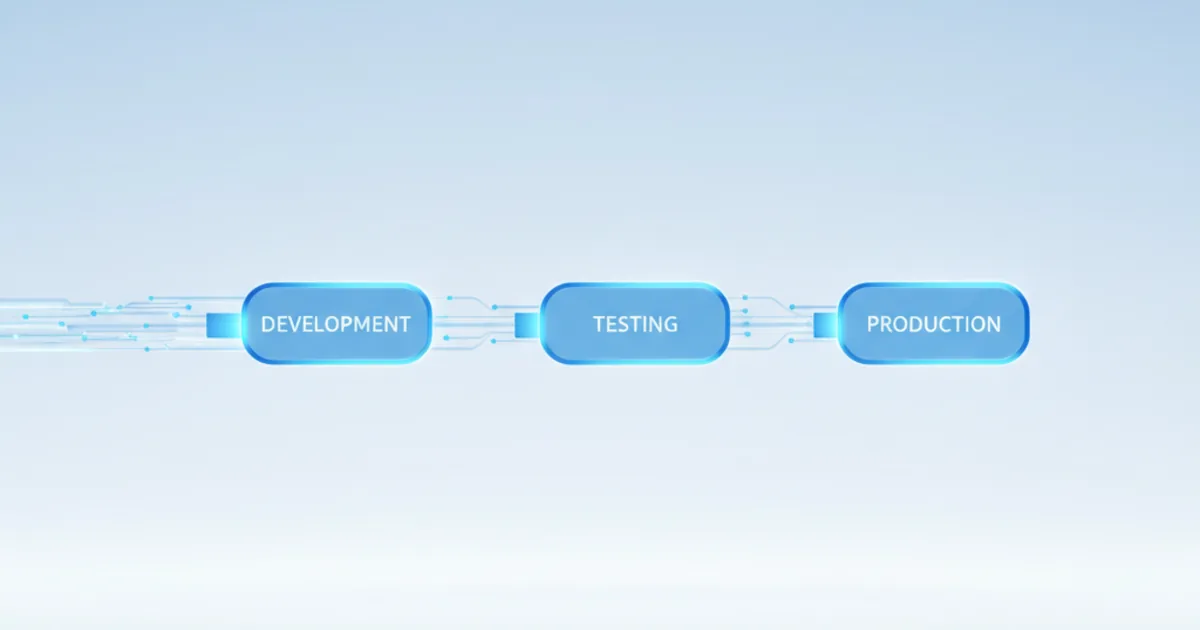
A DevOps managed service provider is an outside team that builds and then runs your software delivery and cloud operations as an ongoing service: CI/CD pipelines, infrastructure as code, monitoring, incident response, security patching and cost control. You keep ownership of the product and the code; the provider keeps the platform it ships on healthy, measured and improving.
Key takeaways
- The provider owns the delivery platform (pipelines, environments, observability, on-call), while your developers own the application and its roadmap.
- It differs from DevOps consulting: a consultant designs and hands over, a managed provider stays accountable for running the result under an SLA.
- Agree on measurable outcomes up front, such as DORA's software delivery metrics, response times per priority and a monthly cost report.
- Insist that all infrastructure lives in code in your own repositories and cloud accounts, so you can change provider without a rebuild.
- The model fits best when you ship often, run on AWS or Azure and cannot staff a 24/7 platform team yourself.
What does a DevOps managed service provider do?
It runs the machinery between a developer's commit and a healthy production system. In practice the work splits into a build phase and a run phase.
In the build phase the provider assesses how you ship today, then sets up or repairs the delivery platform. Typical deliverables are:
- CI/CD pipelines that build, test, scan and deploy every change the same way. See our CI/CD pipeline service for what this covers.
- Infrastructure as code with Terraform, AWS CloudFormation or Bicep, so every environment can be recreated from a repository.
- Container platforms on Kubernetes (Amazon EKS, Azure AKS) or simpler managed services such as Amazon ECS where Kubernetes is overkill.
- Observability: logs, metrics, traces, dashboards and alerts tied to service-level objectives rather than raw CPU graphs.
- Security in the pipeline: dependency and container image scanning, secrets management and least-privilege access for deploy roles.
In the run phase the provider operates that platform every day. It answers alerts, patches base images and clusters, rotates credentials, tunes autoscaling, reviews cloud spend and keeps the pipelines working when your developers add new services. Each month it reports what changed, what broke and what it will improve next.
How is managed DevOps different from DevOps consulting or a classic MSP?
The difference is who stays accountable after go-live. The table shows the three common models side by side.
| Model | What you buy | Who runs it after go-live | Fits when |
|---|---|---|---|
| DevOps consulting | Assessment, design and a fixed-scope build | Your own team | You have platform engineers but need a design or a push to get started |
| Classic infrastructure MSP | Server, network and backup operations, often ticket-based | The MSP, for infrastructure only | Workloads change rarely and releases are infrequent |
| Managed DevOps | Build of the delivery platform plus ongoing operation of it | The provider, jointly with your developers | You release often and need pipelines, cloud and on-call covered around the clock |
A classic MSP keeps servers running. A managed DevOps team also cares about how fast and how safely changes reach production. That is why its scope includes pipelines, test automation hooks and deployment strategy, not only uptime.
What does a typical engagement look like?
Most engagements follow four steps, whatever the provider calls them.
- Assessment. The provider maps your repositories, environments, release process, incidents and cloud bill, and agrees on a baseline for the metrics you will track.
- Foundation build. Accounts or subscriptions, networking, identity, infrastructure as code and the first pipelines are set up. Teams on AWS often use the operational excellence pillar of the AWS Well-Architected Framework as the checklist here.
- Migration of services. Applications move onto the new platform one at a time, starting with a low-risk service to prove the pipeline and the rollback path.
- Steady-state operations. The provider takes over on-call, patching, cost reviews and platform upgrades, with a monthly service review and a quarterly roadmap.
A good provider shortens step 4's ticket queue over time by automating recurring fixes. If the same alert wakes someone every week for three months, that is a problem the provider should be fixing, not billing for.
Who does what: a simple split of responsibilities
- Your team: product decisions, application code, unit and integration tests, data ownership, approval of production changes that affect customers.
- The provider: pipeline code, infrastructure code, cluster and runtime upgrades, monitoring and alert routing, first response to incidents, backup and restore tests, cost reports.
- Shared: incident reviews, release calendars, security findings that need code changes, capacity planning before launches.
Write this split down as a RACI before the contract is signed. Most disputes in managed services start with an alert that nobody thought was theirs.
Which benefits can you expect, and what are the trade-offs?
The main gains are round-the-clock coverage, faster and safer releases, and a platform that is documented in code rather than in one engineer's head.
- Coverage without hiring a full platform team. A 24/7 rota needs several people to be sustainable. A provider spreads that cost across customers.
- Measured delivery performance. DORA's software delivery metrics (change lead time, deployment frequency, failed deployment recovery time, change fail rate and deployment rework rate) give both sides a shared scoreboard. DORA's research finds that speed and stability are not trade-offs: top performers do well on all five.
- Security as routine work. Patching, image scanning and access reviews happen on a schedule instead of after an audit finding.
- Cost visibility. Someone is paid to look at the cloud bill every month, rightsize resources and switch off idle environments.
The trade-offs are real too. You depend on an outside team for production access, so contracts need clear exit terms. Knowledge can drift away from your developers if the provider does everything behind a ticket wall. And a fixed monthly fee only pays off if the scope is defined well enough that you are not paying change requests for routine work.
How do you measure whether the provider is working?
Agree on a short list of numbers at the start, record the baseline in the assessment and review them monthly.
- The five DORA delivery metrics for your main services.
- Response times per incident priority, measured from alert to human acknowledgement.
- Number of repeat incidents and how many were removed through automation.
- Patch latency: days from a critical vendor patch to production.
- Cloud cost per environment or per customer, with the savings actions taken that month.
- Restore tests completed, with the measured restore time.
Avoid contracts that report only "tickets closed". Ticket counts reward activity, not outcomes.
When is managed DevOps the right choice?
It suits companies that ship software often but do not want, or cannot recruit, a full in-house platform team. Common examples are SaaS companies with a small or mid-sized development team, product companies moving from a single data centre to AWS or Azure, and enterprises whose internal IT runs infrastructure well but has no pipeline or Kubernetes skills.
It is a weaker fit if you deploy a few times a year to a stable system, or if you already have a mature platform team and only need occasional specialist help. In those cases consulting or a narrower managed cloud service is usually cheaper.
If you are comparing providers, our guide on how to choose a DevOps managed service provider covers the evaluation criteria, pricing models and contract questions in more depth. For AWS, also ask whether the provider holds the AWS Managed Services Provider validation, which requires a third-party audit of technical skills and business health.
How Opsio helps
Opsio is an AWS Advanced Tier Services Partner with the AWS Migration Competency, with offices in Karlstad, Sweden and Bangalore, India. Our managed DevOps service covers pipeline and infrastructure-as-code builds, Kubernetes and container platforms, observability and 24/7 operations on AWS and Azure. Priority 1 incidents are acknowledged within 15 minutes around the clock, P2 within 30 minutes and P3 within 4 business hours.
For WorkBuster, a global SaaS recruitment platform, Opsio moved the platform to AWS, including a MySQL database that had run inside a VMware hypervisor, with a near-zero downtime approach. The infrastructure was deployed with AWS CloudFormation templates, versioned and managed like software code, on EC2 behind an Application Load Balancer with multi-AZ MySQL RDS and CloudWatch alarms. Read the WorkBuster case.
Frequently asked questions
What is the difference between DevOps and a managed service provider?
DevOps is a way of working that joins development and operations through automation, shared ownership and fast feedback. A managed service provider is a company that runs part of your IT for you. A managed DevOps provider applies DevOps practices while taking operational responsibility for your delivery platform.
Does a DevOps managed service provider replace my developers?
No. Your developers keep writing and owning the application. The provider takes over the platform work around it: pipelines, environments, monitoring, on-call and upgrades, so developers spend more time on features.
How much does managed DevOps cost?
Pricing is usually a monthly fee based on the number of environments, services or cloud accounts in scope, plus a one-off fee for the initial build. Ask for a fixed scope list and a rate card for anything outside it, so routine work does not turn into change requests.
Can I keep my cloud accounts and code if I change provider?
You should. Make it a contract term that cloud accounts, repositories, pipeline definitions and documentation belong to you, and that the provider uses your accounts rather than its own. That keeps an exit to a handover rather than a rebuild.
Which tools does a managed DevOps provider use?
Most work with Git platforms such as GitHub, GitLab or Azure DevOps, infrastructure as code with Terraform or CloudFormation, containers on Kubernetes or Amazon ECS, and monitoring through CloudWatch, Azure Monitor, Prometheus or Datadog. A good provider adapts to the tools you already use where they work.
Related Articles
About the Author

Editorial standards: This article was written by a certified practitioner, named in the byline above. We revise it when the technology or regulation it covers changes; the dates above show the latest update. Opsio maintains editorial independence — we recommend solutions on technical merit, not commercial relationships.


