
Cloud change management: process, controls and metrics

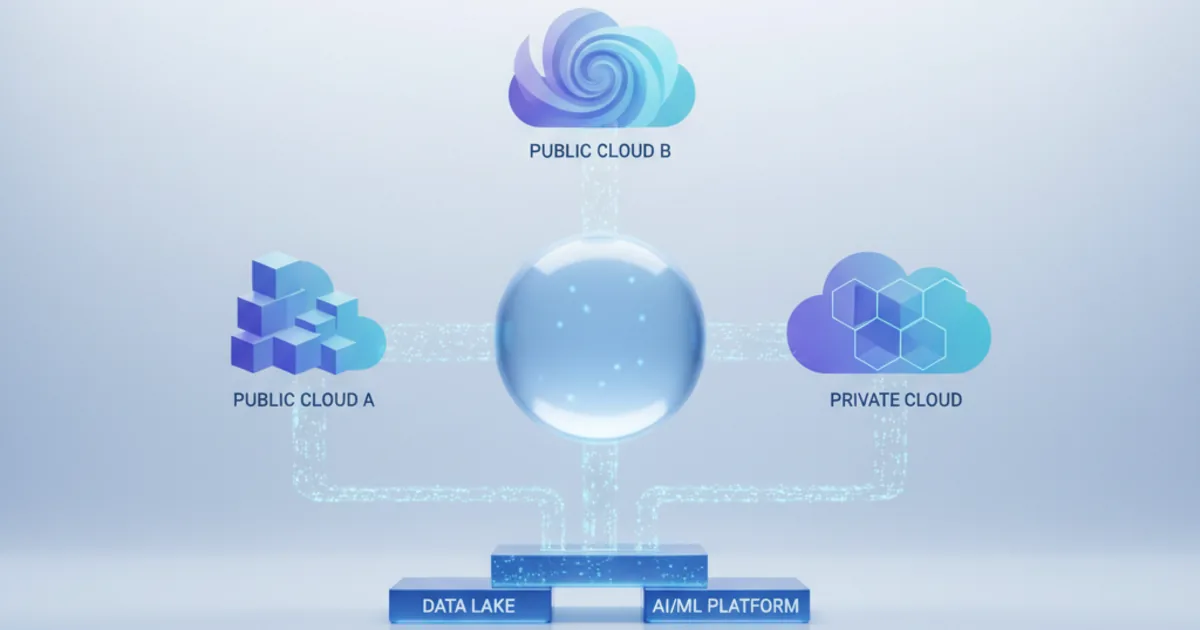
Cloud change management is the process for proposing, assessing, approving, deploying and reviewing changes to cloud infrastructure and services, so that teams can ship often without causing outages, security gaps or cost surprises. In the cloud it relies less on change boards and more on infrastructure as code, automated checks, peer review and fast rollback.
Key takeaways
- Classify changes as standard, normal or emergency, and pre-approve standard changes so they flow through automation without a meeting.
- Make infrastructure as code and pull-request review the default change path; treat console changes as exceptions that get logged and reverted.
- Use guardrails that run automatically: policy checks in the pipeline, AWS Config or Azure Policy in the account, and alarms after deployment.
- Measure with DORA's delivery metrics: change lead time, deployment frequency, change fail rate and failed deployment recovery time.
- Deploy in small, reversible steps (canary, blue-green, feature flags) so a bad change affects few users and is quick to undo.
What is cloud change management?
It is change control adapted to infrastructure that is created, modified and deleted by API calls. A "change" can be a new security group rule, a database parameter, a Kubernetes manifest, a scaling policy or an IAM permission. Any of them can cause an outage or a data exposure.
AWS's Well-Architected Framework puts it this way in its reliability pillar: changes to a workload or its environment must be anticipated and accommodated to achieve reliable operation. That includes changes you make (deployments, patches) and changes imposed on you (demand spikes).
The term is also used for the people side of cloud adoption: training, communication and new ways of working. That matters too, and we touch on it below, but this article focuses on controlling technical changes. If you are looking for software tools to run change requests, see our separate guide to cloud-based change management tools.
How is it different from traditional IT change control?
Traditional change control assumed few, large, risky changes to long-lived servers, approved by a weekly change advisory board (CAB). Cloud teams make many small changes a day, so the controls move into the pipeline.
| Aspect | Traditional change control | Cloud change management |
|---|---|---|
| Change size | Large releases, monthly or quarterly | Small changes, often several a day |
| Approval | CAB meeting for most changes | Peer review in pull requests; CAB only for high-risk changes |
| Record of change | Ticket with a description | Version-controlled code, plan output and pipeline logs |
| Testing | Manual test window | Automated tests and policy checks on every change |
| Rollback | Restore from backup, slow | Redeploy the previous version, or switch traffic back |
| Drift detection | Periodic audits | Continuous configuration monitoring |
What are the steps in the change process for cloud?
Six steps cover most organisations. The difference between teams is how much of each step is automated.
- Request. A developer or engineer opens a pull request or change ticket describing what changes and why.
- Classify and assess risk. Is it a standard, normal or emergency change? What is the blast radius: one service, one account, or the whole organisation?
- Review and approve. Peer review for most changes. Extra approval from security or a CAB for high-risk changes, such as network or identity changes in production.
- Test. Automated unit and integration tests, plus policy checks. For infrastructure, review the plan: AWS CloudFormation change sets or
terraform planshow exactly which resources will be created, modified or replaced. - Deploy. Roll out in stages, watch alarms and roll back automatically if health checks fail.
- Review. Close the change, record the outcome and run a blameless post-incident review if the change caused an issue.
Standard, normal and emergency changes
| Type | Example | Approval path |
|---|---|---|
| Standard | Scaling a node group, rotating a certificate, routine patching | Pre-approved; runs through the pipeline with automated checks |
| Normal | New service, database engine upgrade, network change | Peer review plus owner approval; CAB if high risk |
| Emergency | Fix for an active incident or critical vulnerability | Fast-track approval by an on-call lead, reviewed afterwards |
The goal is to move as many changes as possible into the standard category, with templates and tests that make them safe.
Which controls make cloud changes safe?
Four layers do most of the work. Each one catches problems the others miss.
1. Infrastructure as code as the only path
Define resources in CloudFormation, Terraform, Bicep or similar. Every change is a commit with an author, a reviewer and a diff. See our infrastructure as code service for how we set this up.
2. Policy checks before deployment
Scan templates in the pipeline for public storage buckets, open security groups, missing encryption or missing tags. Fail the build rather than fix it in production.
3. Guardrails in the account
Services such as AWS Config record configuration changes and evaluate resources against rules. On Azure, Azure Policy can audit or deny non-compliant resources. These catch drift from console changes and give auditors a history.
4. Safe deployment and rollback
Microsoft's Well-Architected guidance on safe deployment practices recommends small, incremental, staged rollouts with health checks between stages. Canary releases, blue-green deployments and feature flags all limit how many users see a bad change.
What about ITSM tools and change tickets?
Many organisations still need a change record in an ITSM tool for audit, especially under ISO 27001, NIS2 or DORA. Link the pipeline to the ticket rather than duplicating work: the ticket references the pull request, and the pipeline updates the ticket when it deploys. AWS Systems Manager Change Manager provides request and approval workflows for operational changes, but note that AWS closed it to new customers from 7 November 2025; existing customers can keep using it.
How do you measure whether cloud changes are well managed?
Use DORA's software delivery metrics, which balance speed against stability. The DORA research programme defines them as:
- Change lead time: time from commit to running in production.
- Deployment frequency: how often you deploy.
- Failed deployment recovery time: how long it takes to recover from a failed deployment.
- Change fail rate: share of deployments that need immediate intervention, such as a rollback or hotfix.
- Deployment rework rate: share of deployments that are unplanned and caused by a production incident.
Add two operational metrics of your own: the share of changes made outside the pipeline (console or CLI changes found by drift detection), and the share of incidents caused by changes. If either is rising, tighten the default change path.
What are the common challenges?
- Console changes during incidents. Engineers fix things by hand and forget to update the code. Next deployment reverts the fix. Require a follow-up pull request for every manual change.
- CAB as a bottleneck. Weekly meetings for every change push teams to batch work into larger, riskier releases. Pre-approve standard changes.
- Shared resources. A change to a shared VPC, transit gateway or identity provider affects many teams. Give these a stricter path and a wider review.
- Cost changes nobody approved. A larger instance type or a new region looks like a small change in code but can be a large change on the invoice. Show cost estimates in the pull request.
- People and skills. New ways of working need training, clear ownership and leadership support. Without that, people work around the process.
How Opsio helps
Opsio runs cloud operations for AWS and Azure environments with change management built in: infrastructure as code, pipeline policy checks, configuration monitoring and 24/7 incident response. P1 incidents, including those caused by a failed change, are acknowledged within 15 minutes around the clock.
For SaaS recruitment platform WorkBuster, Opsio deployed the AWS environment with CloudFormation templates, so infrastructure is versioned like code and changes can be managed, tracked and deployed quickly. The platform runs on EC2 with Multi-AZ MySQL RDS and CloudWatch alarms, and the migration took a near-zero downtime approach. If you want an outside view of your current process, our cloud monitoring and support team can review your change path and alerting.
Frequently asked questions
What is change management in cloud computing?
It is the process for planning, approving, deploying and reviewing changes to cloud resources and services. In practice it combines infrastructure as code, peer review, automated testing and policy checks, staged deployments and post-change reviews.
What are the types of change in ITIL applied to cloud?
Standard changes are low-risk and pre-approved, normal changes need assessment and approval, and emergency changes are fast-tracked to fix an incident and reviewed afterwards. Cloud teams try to make most changes standard through templates and automation.
Do you still need a change advisory board in the cloud?
Usually only for high-risk changes, such as shared network, identity or data platform changes in production. Peer review and automated checks handle routine changes faster and with a better audit trail than a weekly meeting.
Which tools are used to manage cloud changes?
Version control and pull requests, infrastructure as code (CloudFormation, Terraform, Bicep), CI/CD pipelines, policy-as-code scanners, configuration monitoring such as AWS Config or Azure Policy, and an ITSM tool where audit requires change records.
How does cloud change management support compliance?
Frameworks such as ISO 27001, NIS2 and DORA (the EU regulation, not the DORA research programme) expect controlled, documented changes. Version-controlled code, approval records in pull requests, pipeline logs and configuration history give auditors evidence of who changed what, when and with whose approval.
Related reading: ai change management.
Related reading: security change management.
Related Articles
About the Author

Editorial standards: This article was written by a certified practitioner, named in the byline above. We revise it when the technology or regulation it covers changes; the dates above show the latest update. Opsio maintains editorial independence — we recommend solutions on technical merit, not commercial relationships.


