
Smart manufacturing consulting: what it covers, use cases and how to choose

Head of Innovation
Digital Transformation, AI, IoT, Machine Learning, and Cloud Technologies. Nearly 15 years driving innovation
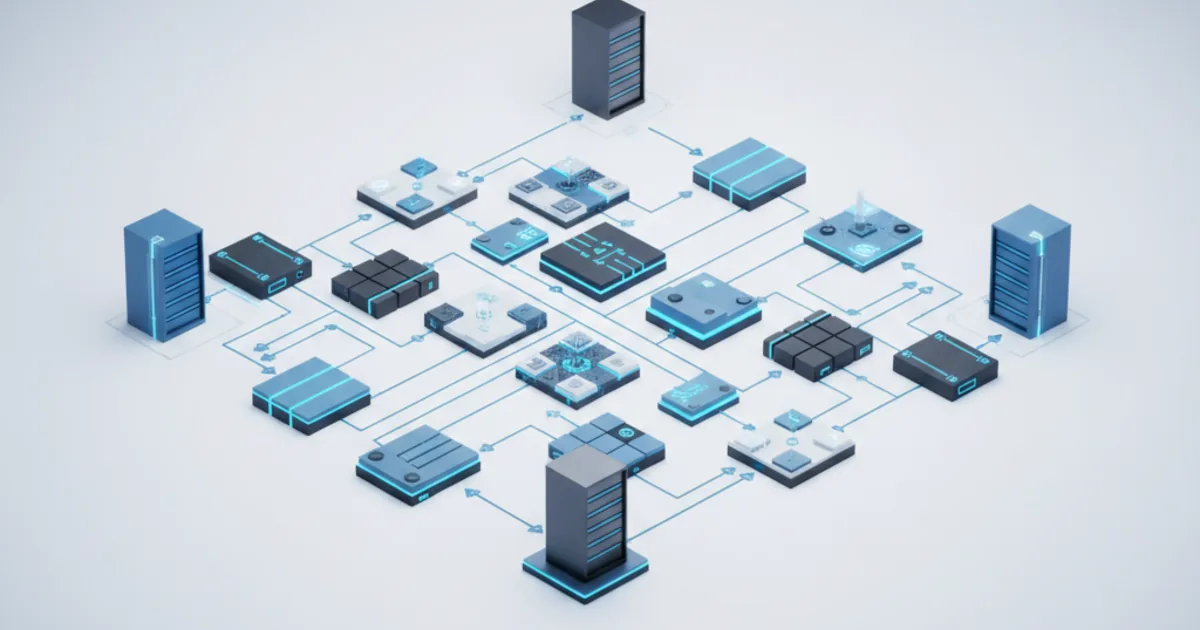
Smart manufacturing consulting helps a manufacturer connect machines, data and software so the plant can measure and improve itself: OEE monitoring, predictive maintenance, automated quality inspection and energy tracking. A good consultant assesses your current maturity, picks two or three use cases with clear value, runs a pilot on one line, and then scales what works securely.
Key takeaways
- Start from production problems such as unplanned downtime, scrap or energy cost, not from a technology wish list.
- The first deliverable should be a maturity assessment and a short, prioritised use-case list with a business case for each.
- Prove value on one line or one machine group before rolling out across plants.
- Connecting OT to IT and cloud raises cyber risk. Plan segmentation and OT security from day one, using NIST SP 800-82 and ISA/IEC 62443.
- In the EU, many manufacturers and food producers fall under NIS2, so the programme must also meet its risk-management and reporting rules.
What is smart manufacturing?
Smart manufacturing is production where machines, sensors and business systems share data in near real time, and that data drives decisions on the shop floor and in planning. It is the practical side of what is often called Industry 4.0.
In practice it combines a few building blocks:
- Connectivity: sensors and PLC data collected through industrial protocols such as OPC UA or MQTT, usually through an edge gateway.
- Data platform: a historian or cloud data store that holds machine data together with MES and ERP data, so you can relate a stoppage to an order or a batch.
- Analytics and AI: dashboards for OEE and energy, models that predict failures, and computer vision that inspects products.
- Automation: robots, automated material handling and closed-loop control that acts on the data.
- Security and governance: network segmentation, access control and monitoring across both IT and OT.
For a wider view of how these pieces change a factory, see digital transformation in manufacturing.
What does a smart manufacturing consultant do?
A consultant turns a broad ambition into a funded sequence of projects, and then helps deliver them. The work usually runs in five stages.
| Stage | What happens | Typical output |
|---|---|---|
| 1. Assess | Walk the lines, interview operators and engineers, inventory machines, networks and systems | Maturity assessment, data and network map, list of pain points |
| 2. Prioritise | Score candidate use cases by value, feasibility and data availability | Shortlist of two or three use cases with business cases |
| 3. Design | Define edge, network, data platform and security architecture | Reference architecture, OT security zones, vendor shortlist |
| 4. Pilot | Build the first use case on one line with real users | Working solution, measured before-and-after results, lessons learned |
| 5. Scale and run | Roll out to more lines and plants; hand over or operate | Rollout plan, runbooks, training, support model |
Structured maturity frameworks help in the assessment stage. The Smart Industry Readiness Index (SIRI), first launched in Singapore and now maintained by the International Centre for Industrial Transformation (INCIT), and Germany's acatech Industrie 4.0 Maturity Index are common references. They give a shared vocabulary for where the plant is today and what the next step should be.
Which smart manufacturing use cases pay back first?
The use cases that pay back fastest are usually the ones where data already exists and the cost of the problem is easy to measure.
OEE and downtime monitoring
Collecting machine states automatically shows where availability, performance and quality losses really happen. It replaces manual downtime logs and is often the foundation for every other use case.
Predictive maintenance
Vibration, temperature and current data can flag bearing wear, misalignment or motor faults before a breakdown. It works best on critical assets with a known failure history. See IoT predictive maintenance for how this is set up.
Automated visual inspection
Cameras and computer vision models detect surface defects, missing parts or wrong labels at line speed, and log every image for traceability. This suits plants where manual inspection is a bottleneck or misses defects. Opsio builds these systems; see automated visual inspection.
Energy monitoring
Metering per line or machine shows energy per unit produced and highlights idle consumption, which supports both cost and sustainability reporting.
Traceability and quality analytics
Linking process parameters to batch and serial numbers lets quality teams find root causes faster and answer customer complaints with data.
Why OT security has to be part of the plan
Connecting production systems to IT networks and the cloud exposes equipment that was never designed for it. A smart manufacturing programme without an OT security design creates risk to safety and uptime.
Two references are widely used. NIST SP 800-82 Rev. 3 gives guidance on securing operational technology while respecting its performance, reliability and safety requirements, with typical topologies, threats and countermeasures. The ISA/IEC 62443 series defines security for industrial automation and control systems, including risk assessment, zones and conduits, patch management and requirements for service providers.
Regulation adds a second reason. The European Commission's NIS2 FAQ lists food, chemicals and the manufacture of medical devices, computers and electronics, machinery and equipment, and motor vehicles and other transport equipment among the "other critical sectors". As a rule, medium-sized and large entities in these sectors must take cybersecurity risk-management measures and notify significant incidents. Ask any consultant how their architecture supports these duties. Our guide to OT security in smart factories covers the controls in more detail.
Example: NIS2 compliance at a Swedish food manufacturer
Löfbergs, the Karlstad coffee roaster founded in 1906, is covered by NIS2 and the Swedish Cybersecurity Act (Cybersäkerhetslagen). Opsio works as its end-to-end compliance partner in four phases: a gap analysis against the NIS2 requirement areas, a prioritised roadmap with milestones and owners, implementation of risk management, incident handling, access control, logging and monitoring and supply-chain security, and ongoing compliance support. For a manufacturer starting a smart manufacturing programme, this kind of baseline makes it safer to connect production data to the cloud.
How to choose a smart manufacturing consultant
- Shop-floor experience: can they talk to maintenance and production staff, not only IT? Ask who will be on site.
- Vendor independence: are they tied to one automation or software vendor, and is that a problem for your installed base?
- OT and IT skills together: industrial protocols and PLCs as well as cloud, data and security.
- Pilot discipline: a fixed-scope pilot with agreed success measures before the large investment.
- Run model: who supports the solution at 03:00 when a line stops, and how is that priced?
- Compliance: NIS2, GDPR for any personal data (for example camera images of staff), and your customers' quality requirements.
How Opsio helps
Opsio, with offices in Karlstad, Sweden, and Bangalore, India, helps manufacturers with industrial IoT, AI visual inspection, cloud data platforms and NIS2 security programmes, and runs the resulting systems with 24/7 support. Start with our industrial IoT solutions or data and AI services.
Frequently asked questions
What does smart manufacturing consulting include?
Usually a maturity assessment, use-case prioritisation, architecture design for edge, data and security, a pilot on one line, and a rollout plan. Many consultants also support or operate the solution after go-live.
How long does a smart manufacturing pilot take?
It depends on data access and the use case. Monitoring use cases on machines that already expose data are quicker than projects that need new sensors, cameras or model training. Agree a fixed scope and success measures before you start.
Is smart manufacturing only for large factories?
No. Smaller plants often start with OEE monitoring or one inspection station, which needs limited investment and shows results on a single line.
Does connecting machines to the cloud create security risk?
Yes, if it is done without segmentation and monitoring. Use an OT security design based on NIST SP 800-82 or ISA/IEC 62443, keep control networks separate, and send data out through controlled gateways.
Does NIS2 apply to manufacturers?
Many are in scope. NIS2 covers food and the manufacture of medical devices, electronics, machinery and vehicles, among other sectors, mainly for medium-sized and large entities. Check your national implementing law, such as Sweden's Cybersäkerhetslagen.
For hands-on delivery in India, see Opsio's digital transformation consulting practice.
About the Author

Head of Innovation
Jacob leads innovation at Opsio, specialising in digital transformation, AI, IoT, and cloud-driven solutions that turn complex technology into measurable business value. With nearly 15 years of experience, he works closely with customers to design scalable AI and IoT solutions, streamline delivery processes, and create technology strategies that drive sustainable growth and long-term business impact.
Editorial standards: This article was written by a certified practitioner, named in the byline above. We revise it when the technology or regulation it covers changes; the dates above show the latest update. Opsio maintains editorial independence — we recommend solutions on technical merit, not commercial relationships.