
DevOps as a Service Providers – Enhancing Efficiency and Collaboration

Over 80% of digital transformation initiatives fail to meet their original goals, according to recent industry analysis. This startling statistic reveals the immense pressure modern organizations face when trying to accelerate their software delivery capabilities. Companies across industries struggle to balance rapid development with system stability and cost management.
We recognize this critical challenge facing today's business leaders. The convergence of development and operations through specialized external partners creates measurable value for organizations seeking competitive advantage. These strategic alliances allow companies to focus on core competencies while expert teams handle technical complexities.
Our exploration begins by positioning these specialized partners as essential components of successful digital transformation. They bring proven methodologies and cutting-edge tools that would be challenging to build internally. This approach combines operational benefits with strategic advantages for sustainable growth.
Selecting the right partner impacts not only technical outcomes but also long-term scalability. It determines an organization's ability to respond quickly to market demands and customer expectations. We frame this discussion within the context of the rapidly expanding global market for these capabilities.
Key Takeaways
- External DevOps expertise helps overcome common digital transformation challenges
- Specialized partners enable faster software delivery while maintaining system stability
- The right partnership creates both operational benefits and strategic advantages
- Companies can focus on core business objectives while experts handle technical complexity
- Partner selection directly impacts long-term scalability and market responsiveness
- Access to proven methodologies and cutting-edge tools accelerates transformation
- Successful partnerships balance cost management with competitive innovation
Introduction to DevOps as a Service Providers
Accessing specialized DevOps capabilities through managed service models enables organizations to overcome common digital transformation challenges. This approach represents a comprehensive delivery model that combines software development methodologies with operational excellence. Companies gain expert-managed capabilities without the overhead of building internal teams with specialized skills.
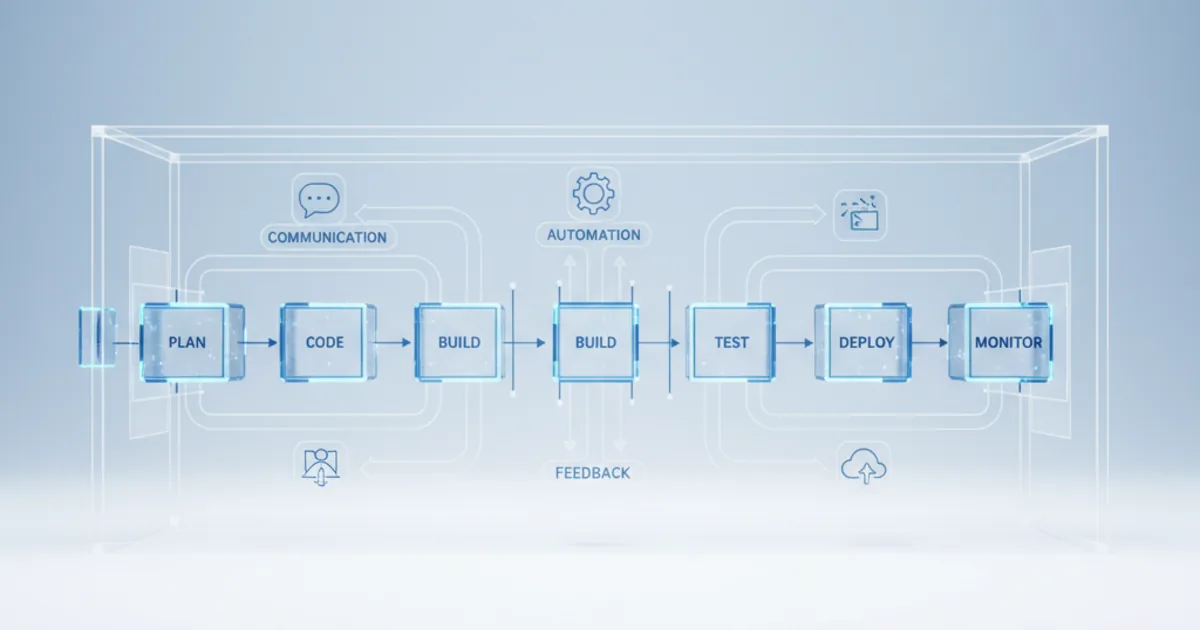
Our understanding of these services encompasses the complete software development lifecycle. This includes initial planning, coding, testing, deployment, and ongoing monitoring. All phases are orchestrated through automated processes that accelerate delivery while maintaining quality and stability.
We recognize that external partners bring critical expertise in configuration management, continuous integration, and cloud architecture design. This transforms how organizations approach software development and operational efficiency. More than technical support, it embodies a cultural shift toward collaboration between teams.
The economic rationale for this approach proves compelling for modern businesses. Accessing specialized expertise through service providers is far more cost-effective than recruiting and retaining skilled professionals internally. This strategic partnership enables organizations to leverage proven methodologies and cutting-edge tools efficiently.
Need expert help with devops as a service providers – enhancing efficiency and collaboration?
Our cloud architects can help you with devops as a service providers – enhancing efficiency and collaboration — from strategy to implementation. Book a free 30-minute advisory call with no obligation.
Market Overview and Growth Trends
The global market for DevOps expertise is experiencing unprecedented expansion, driven by organizations seeking competitive advantages through faster software delivery. We observe remarkable growth projections, with the market expected to reach $81.14 billion by 2033 from $13.16 billion in 2025.
North American companies currently lead this transformation, commanding over 37% of global market share. This dominance reflects early cloud adoption and mature digital infrastructure among enterprises in the region.
Alternative research suggests even more aggressive expansion, projecting valuations reaching $139.86 billion by 2034. This growth underscores the critical role DevOps plays in delivering scalable, secure solutions.
The marketplace includes over 2,210 service providers globally, though most are smaller firms with fewer than 250 professionals. This landscape emphasizes the importance of selecting established companies with comprehensive capabilities.
Several factors fuel this rapid market expansion. Increasing cloud adoption, faster time-to-market requirements, and growing system complexity drive demand. The persistent shortage of qualified experts also pushes businesses toward specialized providers.
We recognize this growth as a fundamental shift in how forward-thinking companies approach software development. Partnering with experienced providers offers a cost-effective path to modernization that internal teams often struggle to achieve.
Global Impact of DevOps Services
Organizations seeking DevOps partnerships now benefit from a truly global marketplace with distinct regional strengths. We observe concentrated expertise across three key areas that offer different advantages for software development initiatives. This geographic diversity enables companies to find optimal matches for their specific technical and operational requirements.
Insights from Europe, Asia, and Latin America
Europe demonstrates remarkable tech capabilities, particularly in Central and Eastern Europe. This region hosts over 55,500 DevOps experts and more than 430 specialized providers. Poland and Ukraine lead with the largest talent pools, followed by Romania, Hungary, and the Czech Republic.
Asia's landscape is dominated by India, where LinkedIn data shows over 256,000 professionals with relevant expertise. Approximately 350 companies offer these services, though many are smaller firms requiring careful evaluation. This market concentration presents both opportunity and selection challenges.
Latin America has emerged as an important hub with around 90,000 experts and nearly 210 providers. Brazil and Mexico contain the majority of companies with DevOps project experience. Their nearshore location offers North American clients significant advantages in time zone alignment and cultural compatibility.
We recognize that each region has developed specialized approaches to engineering challenges. Successful global engagements require understanding these distinct capabilities and how they align with specific business objectives.
What Are the Benefits of DevOps Methodology?
Organizations implementing modern development practices experience transformative benefits that extend beyond technical improvements. We observe comprehensive advantages that create sustainable competitive advantages through integrated approaches.
These methodologies establish stable work environments where reliability improves alongside team satisfaction. Well-balanced practices reduce traditional tensions between isolated groups, creating harmonious workflows.
Stable Work Environments and Improved Productivity
Companies achieve remarkable productivity gains through flexible pipelines that adapt quickly to changes. Automation eliminates manual bottlenecks, allowing rapid deployment of updates without complications.
Skilled professionals focus on higher-value activities instead of repetitive tasks. This optimization creates significant efficiency improvements across entire organizations.
Enhanced Product Quality and Customer Satisfaction
Continuous feedback cycles and automated testing throughout the development lifecycle ensure superior release quality. Collaboration between teams results in software that meets higher standards consistently.
Faster problem resolution capabilities mean issues get identified earlier and fixed rapidly. This responsiveness directly translates to improved customer experiences and satisfaction.
| Aspect | Traditional Approach | DevOps Methodology |
|---|---|---|
| Release Frequency | Monthly/Quarterly | Daily/Weekly |
| Error Resolution Time | Days/Weeks | Hours/Days |
| Team Collaboration | Siloed Departments | Integrated Teams |
| Process Automation | Manual Interventions | Automated Pipelines |
| Innovation Capacity | Limited by Structure | Encouraged Experimentation |
The interconnected benefits create foundations for continuous improvement and market leadership. Organizations gain the agility needed to respond effectively to evolving business demands.
What Is the DevOps as a Service Model?
Modern software development requires integrated approaches that bridge traditional gaps between creation and deployment phases. We define this operational framework as a comprehensive philosophy that packages essential tools and methodologies into a cohesive delivery system.
This model extends beyond technical support to encompass cultural transformation across teams. Third-party expertise brings proven methodologies alongside infrastructure and automation capabilities. The approach ensures successful adoption throughout the entire organization.
Cloud-based implementation amplifies inherent methodology benefits significantly. Businesses gain enhanced flexibility and accelerated deployment speed throughout the software lifecycle. This eliminates constraints of manual processes that traditionally limit scalability.
Unified environments create seamless integration between continuous pipelines and monitoring systems. This consolidation simplifies typically overwhelming tool selection and management challenges. Organizations leverage pre-integrated technology stacks without lengthy implementation efforts.
The delivery framework proves particularly valuable for digital transformation initiatives. Companies access enterprise-grade capabilities immediately rather than building internal expertise. This creates necessary agility to respond quickly to evolving business requirements.
Why Outsource DevOps Services?
The decision to engage external expertise represents a pivotal moment in an organization's technological evolution. We recognize this strategic choice addresses multiple operational challenges simultaneously, creating immediate value while building sustainable capabilities.
Businesses gain immediate access to senior talent through established networks of experienced engineers. This eliminates the lengthy recruitment and training cycles that typically delay internal initiatives.
Cost Efficiency and Reduced Operational Burden
Partnering with specialized providers proves far more economical than building internal teams. Companies avoid expenses associated with competitive salaries, ongoing training, and infrastructure support.
Service providers assume complete responsibility for complex administrative tasks. This includes HR management, software licensing, and compliance requirements that often burden internal resources.
Access to Expert Talent and Accelerated Delivery
Experienced teams implement proven organizational infrastructure from day one. They establish continuous testing frameworks and cross-functional strategies that streamline development cycles immediately.
This approach particularly benefits startups and growing companies needing enterprise-grade capabilities. As highlighted in our analysis of DevOps outsourcing considerations, external partnerships deliver comprehensive expertise without substantial upfront investment.
Organizations maintain focus on business-critical operations while experts handle technical complexities. This strategic division of labor creates optimal conditions for both innovation and execution.
Evaluating Key Features of Top DevOps Providers
Our framework for assessing potential partners focuses on measurable indicators of operational maturity and technical depth. We establish rigorous evaluation criteria that help businesses identify providers who function as true strategic partners rather than transactional vendors.
Team size serves as a critical differentiator, where companies with more than 250 technology professionals demonstrate established processes and breadth of expertise. This organizational scale ensures service continuity and the capacity to handle complex enterprise requirements effectively.
Market presence represents another vital consideration. Providers with over five years of operational history have proven their ability to deliver consistent results while adapting to evolving technologies. This longevity indicates stability that clients need for ongoing partnership relationships.
We emphasize the importance of comprehensive portfolios showcasing real-world experience with:
- Continuous integration and delivery pipelines
- Cloud infrastructure design and management
- Automation frameworks across development cycles
- Complex system integration capabilities
Client reviews from independent sources provide invaluable insights into reliability and communication quality. These testimonials reveal genuine commitment to achieving project goals rather than simply completing contracted tasks.
Top-tier companies distinguish themselves through demonstrated expertise across multiple dimensions. This includes technical proficiency with modern tools, process maturity ensuring predictable outcomes, and proven ability to scale services as client needs evolve.
Technology partnerships and certifications validate competence while communication models ensure seamless integration with internal teams. Systematic evaluation using these criteria helps businesses identify partners who deliver sustained value for long-term digital transformation objectives.
The Role of Cloud in DevOps as a Service
Cloud environments provide the essential foundation that makes contemporary software development approaches both economically viable and technically superior. We recognize that cloud integration represents more than just infrastructure hosting—it enables the complete automation and scalability modern businesses demand.
Our partnerships with leading cloud platforms ensure solutions leverage proven technologies and industry best practices. This strategic alignment creates environments where tools and processes operate seamlessly within cloud-based ecosystems.
Integration with AWS, Azure, and Google Cloud
Expertise across multiple cloud platforms provides clients with unprecedented flexibility in their technology choices. We deliver solutions that leverage the unique capabilities of AWS, Azure, and Google Cloud while maintaining consistent operational excellence.
Cloud-based services contribute remarkable flexibility throughout the entire software lifecycle. Teams can provision resources instantly and scale infrastructure dynamically based on real-time demand.
Infrastructure as Code principles enable comprehensive automation across all development processes. Entire environments can be defined, versioned, and replicated through declarative configurations rather than manual procedures.
This cloud-native approach unlocks advantages that fundamentally transform software delivery. Organizations gain near-instantaneous scaling capabilities, geographic distribution for improved performance, and consumption-based pricing models.
Selection Criteria for Choosing a DevOps Partner
Selecting the right technical collaborator represents one of the most critical decisions in modern business technology strategy. We approach this process with the understanding that these relationships evolve into strategic partnerships integral to organizational structure.
Our methodology begins with creating a focused shortlist of candidates from preferred geographic regions. These companies must demonstrate solid domain expertise in your specific industry sector.
Experience, Client Reviews, and Proven Portfolios
We emphasize thorough assessment of technical capabilities across the full spectrum of development operations. Some providers specialize in single cloud platforms while others offer comprehensive end-to-end services.
Portfolio analysis provides concrete evidence of a company's experience with projects of similar complexity. Client references and documented success stories reveal genuine commitment to achieving business objectives.
Technical proficiency verification includes essential tools like Docker, Kubernetes, and major cloud platforms. This expertise ensures your initiatives leverage current best practices and technologies.
| Evaluation Area | Basic Provider | Strategic Partner |
|---|---|---|
| Technical Breadth | Single platform focus | Multi-cloud expertise |
| Project Experience | Limited case studies | Documented success stories |
| Communication Process | Reactive reporting | Proactive engagement |
| Risk Management | Basic certifications | Comprehensive security compliance |
end-to-end risk mitigation involves verifying relevant certifications and established communication processes. Clear escalation paths ensure challenges get addressed promptly during project execution.
Contract negotiation should explicitly define scope, timelines, and post-launch support arrangements. This systematic approach dramatically increases engagement success and delivers measurable business value.
DevOps as a Service Providers: A Comprehensive Guide
Successful technology partnerships emerge from selecting companies with demonstrated expertise across multiple industries and global delivery capabilities. We present a curated guide to leading firms that excel in software development and cloud engineering services.
Our selection highlights N-iX as a premier global company with 23 years of experience operating from 25 locations worldwide. They maintain over 60 specialized engineers and 400 cloud experts who have delivered more than 150 implementation projects.
European providers like Svitla Systems feature over 1,000 specialists across Poland, Ukraine, Mexico, and other regions. They offer comprehensive software development services to healthcare, financial services, and business sectors.
Polish companies such as STX Next employ 500+ engineers specializing in cloud migration for real estate and finance industries. Asian market leaders including Netsmartz maintain delivery centers across India, Singapore, and Australia.
| Provider | Experience | Team Size | Specialization |
|---|---|---|---|
| N-iX | 23 years | 60+ engineers | Cloud architecture, CI/CD |
| Svitla Systems | Established | 1,000+ specialists | Healthcare, financial services |
| Sigma Software | Proven | 2,000+ experts | Multi-industry consulting |
| STX Next | Established | 500+ engineers | Real estate, e-commerce |
| Netsmartz | Global | Multi-center | Enterprise app modernization |
This guide enables businesses to identify partners whose expertise aligns with specific project requirements. Each company brings unique strengths in software delivery and technical consulting services.
Success Metrics and KPIs in DevOps Implementation
Effective technology partnerships rely on quantifiable metrics that showcase improvements across the entire development lifecycle. We establish comprehensive measurement frameworks that translate technical enhancements into meaningful business outcomes for our partner companies.
Our approach begins with deployment velocity tracking. We measure release frequency, success rates, and deployment speed to demonstrate how automation accelerates software delivery without compromising stability.
| KPI Category | Specific Metric | Baseline Measurement | Target Improvement |
|---|---|---|---|
| Deployment Speed | Release Frequency | Monthly releases | Weekly deployments |
| Cycle Efficiency | Lead Time | 30 days average | 7 days target |
| Change Management | Failure Rate | 15% of changes | Under 5% goal |
| Quality Assurance | Defect Escape | 10 bugs monthly | 2 maximum |
| Application Performance | Uptime Percentage | 99.5% current | 99.9% target |
Cycle lead time measurement reveals workflow bottlenecks in development processes. This data helps streamline operations and reduce waiting periods throughout the software creation pipeline.
Change success metrics provide critical insights into process maturity. We track the volume of modifications, failure rates, and problematic deployments to validate testing procedures.
Defect rate monitoring assesses quality improvements across all development stages. This includes measuring production bugs and resolution speed to ensure continuous testing effectiveness.
Application performance tracking captures real user experience through support ticket volumes and system response times. These indicators demonstrate whether technical improvements translate into better business outcomes.
We emphasize establishing baseline measurements before implementation begins. This enables accurate ROI calculation and demonstrates concrete value from technology partnerships.
Global Regions Driving DevOps Innovation
Global technology advancement follows geographic patterns where specific regions cultivate unique approaches to software development methodologies. We analyze how concentrated talent pools, investment capital, and entrepreneurial ecosystems create innovation hubs that shape modern engineering practices.
North America maintains leadership through established technology companies and substantial venture funding for startups. This region demonstrates early adoption of emerging practices that accelerate software delivery cycles for competitive advantage.
European markets, particularly Northern and Central-Eastern regions, showcase strong engineering education traditions. These areas produce innovative development approaches applied to diverse client projects across multiple industries.
Asian technology centers, especially India and Southeast Asia, demonstrate rapid adoption of automation frameworks. Large service companies and growing startup ecosystems contribute novel infrastructure management solutions.
Latin American countries like Brazil and Mexico combine technical expertise with geographic proximity to North American markets. This creates collaborative environments where cross-border projects generate innovative organizational practices.
| Innovation Region | Key Strengths | Primary Contributions | Market Impact |
|---|---|---|---|
| North America | Venture capital, established companies | Tool development, early adoption | Sets global standards |
| Europe | Engineering education, mature ecosystems | Methodology innovation, client projects | Quality-focused approaches |
| Asia | Scale, rapid adoption | Automation frameworks, cost efficiency | Democratizes access |
| Latin America | Nearshore advantage, cultural alignment | Collaborative models, hybrid practices | Bridges regional gaps |
Understanding these geographic innovation patterns helps businesses identify emerging development practices. Companies can evaluate partners at the forefront of software engineering evolution and anticipate how methodologies will adapt to changing market demands.
Overcoming Common DevOps Implementation Challenges
Many organizations encounter predictable obstacles when adopting modern software development approaches. We identify six critical signs indicating the need for process transformation within technology teams.
Infrequent deployments represent the first major challenge. Traditional development practices often result in slow, batched releases that prevent rapid response to market opportunities.
Excessive manual processes create significant bottlenecks. Teams relying on human intervention for deployments and testing experience slower, error-prone releases compared to automated approaches.
Persistent deployment delays stem from approval bottlenecks and environment preparation issues. Modern methodologies address these through continuous integration that eliminates waiting periods.
Communication breakdowns between siloed teams create misaligned priorities and duplicate efforts. Cross-department cooperation becomes essential for efficient resource utilization.
Unclear pipeline objectives hinder team alignment. Collaborative planning ensures everyone understands how their work contributes to organizational success.
Management practices that discourage experimentation prevent process optimization. Constructive feedback loops empower teams to improve through iterative refinement.
| Implementation Challenge | Traditional Approach | Modern Solution |
|---|---|---|
| Deployment Frequency | Monthly batched releases | Continuous incremental updates |
| Process Automation | Manual testing and deployment | Automated pipelines and monitoring |
| Team Communication | Siloed departments | Cross-functional collaboration |
| Goal Alignment | Individual objectives | Shared pipeline vision |
| Management Support | Risk-averse culture | Experimental learning environment |
We recommend phased implementation approaches with executive sponsorship to address these challenges effectively. Partnering with experienced companies accelerates transformation while reducing implementation risks for development teams.
Case Studies: Real-World DevOps Transformations
Concrete examples from diverse industries showcase the operational improvements possible with expert guidance. We examine how strategic partnerships deliver measurable business outcomes through technical modernization.
Examples of Successful Cloud Migrations and Automation
Telecommunications companies achieved remarkable results by migrating legacy systems to cloud platforms. One partner reduced operational costs by 40% while improving system reliability significantly.
Financial services organizations implemented comprehensive automation across their software development lifecycle. Deployment cycles shortened from weeks to hours, with release frequency increasing dramatically.
Media and entertainment companies leveraged dynamic infrastructure scaling to handle unpredictable traffic patterns. This ensured consistent user experience during peak demand while optimizing costs.
Manufacturing enterprises modernized application architectures from monolithic systems to microservices. This transition enabled independent team operations and accelerated innovation cycles.
| Industry | Before Transformation | After Implementation | Key Improvement |
|---|---|---|---|
| Telecommunications | Monthly deployments | Daily releases | 40% cost reduction |
| Financial Services | Weeks deployment cycle | Hours deployment | 75% lead time reduction |
| Media & Entertainment | Manual scaling | Dynamic infrastructure | 60% defect rate improvement |
| Manufacturing | Monolithic systems | Microservices architecture | 300% deployment frequency |
These transformations demonstrate that studying real-world implementations provides valuable insights. Organizations gain realistic expectations about timelines, resource requirements, and business outcomes.
Enhancing Business Operations with DevOps Services
Contemporary business environments demand integrated approaches that bridge technical capabilities with strategic objectives. We observe how specialized consulting transforms operational frameworks across multiple dimensions.
These methodologies accelerate time-to-market for new products and features. Companies gain competitive advantages by responding rapidly to customer feedback and market opportunities.
Resource utilization improves significantly through optimized infrastructure spending. Cloud-native architectures reduce waste from inefficient processes while reallocating team capacity toward innovation.
Operational reliability increases through automated testing and continuous monitoring. Systematic deployment processes minimize business disruptions and protect revenue streams.
Scalability becomes achievable without proportional overhead increases. Startups expand efficiently while established companies enter new markets confidently.
Strategic guidance helps leadership teams align technical decisions with business goals. Enhanced software development velocity translates directly into customer satisfaction and market position.
Viewing these practices as strategic business enablers helps organizations justify transformation investments. Success metrics connect technical improvements to performance indicators.
Conclusion
Business leaders increasingly recognize that sustainable competitive advantage stems from collaborative relationships with proven technology partners. The projected market growth to $81-140 billion demonstrates widespread acknowledgment that modern success requires integrated approaches to software delivery.
Selecting the right partner demands careful evaluation of team experience, portfolio depth, and technical capabilities. Successful implementations deliver measurable outcomes including accelerated deployment cycles, enhanced product quality, and superior operational efficiency.
These partnerships extend beyond technical implementation to foster cultural transformation, breaking down silos and establishing collaborative practices. We emphasize that engaging specialized expertise represents a strategic business decision impacting innovation capacity and market responsiveness.
Organizations seeking to accelerate their digital transformation should consider how external partnerships provide immediate access to comprehensive expertise and proven methodologies essential for achieving ambitious goals.
FAQ
What is the primary business value of engaging a DevOps as a Service provider?
The primary value lies in accelerating software delivery while improving product quality and operational stability. We help businesses achieve faster time-to-market, reduce development costs, and enhance team collaboration, allowing internal teams to focus on core innovation rather than infrastructure management.
How does the DevOps as a Service model differ from traditional IT consulting?
Unlike traditional consulting that often provides periodic advice, our model offers continuous, integrated support. We embed our engineering expertise directly into your development and operations processes, providing hands-on implementation, 24/7 monitoring, and proactive management of your entire delivery pipeline for sustained efficiency.
What key performance indicators should we track to measure the success of a DevOps implementation?
We recommend tracking deployment frequency, lead time for changes, mean time to recovery (MTTR), and change failure rate. These metrics provide a clear view of delivery speed, stability, and reliability. Additionally, monitoring infrastructure costs and team productivity offers insight into operational and financial efficiency gains.
Can DevOps as a Service support businesses with legacy systems and on-premise infrastructure?
A> Absolutely. We specialize in modernizing legacy environments through gradual, low-risk transitions. Our approach includes containerization, automation of manual processes, and strategic cloud migration plans. This allows businesses to leverage modern practices without disrupting current operations, paving the way for a smoother digital transformation.
What level of customization and control do we retain over our development processes when outsourcing?
You maintain full strategic control. Our role is to implement and manage the technical processes that align with your business goals. We act as an extension of your team, adapting our tools and practices—such as continuous integration and infrastructure as code—to fit your specific workflows, security requirements, and compliance standards.
How do you ensure security and compliance within a DevOps framework?
Security, or DevSecOps, is integrated throughout the entire lifecycle. We implement automated security testing, infrastructure compliance checks, and continuous monitoring from the initial code commit to production deployment. This "shift-left" approach ensures vulnerabilities are identified and addressed early, maintaining robust security posture and adherence to regulations like GDPR or HIPAA.
About the Author

Editorial standards: This article was written by a certified practitioner and reviewed by our engineering team. We revise it when the technology or regulation it covers changes; the dates above show the latest update. Opsio maintains editorial independence — we recommend solutions on technical merit, not commercial relationships.