
Elevating Application Performance with Managed Service Providers

Country Manager, India
AI, Manufacturing, DevOps, and Managed Services. 17+ years across Manufacturing, E-commerce, Retail, NBFC & Banking
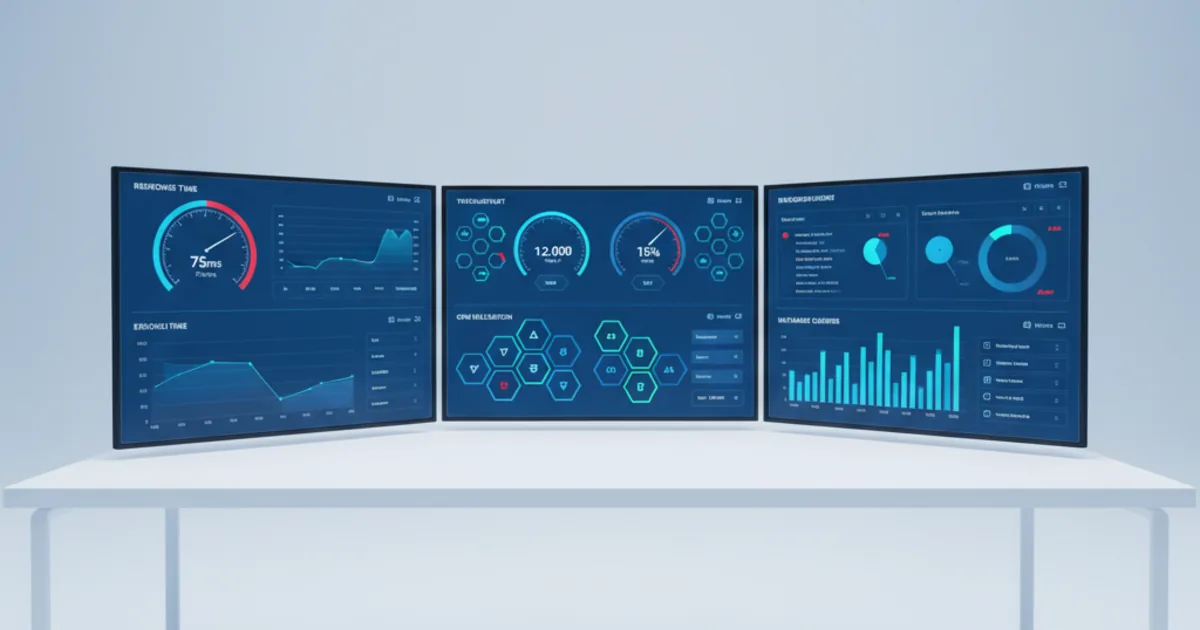
Elevating Application Performance: Leveraging Managed Service Providers for Your Company's Success
India's enterprise software market is projected to reach $15.5 billion by 2027, according to NASSCOM's Technology Sector Review (2025). As businesses scale their digital operations, application performance has become the dividing line between growth and stagnation. Downtime costs Indian enterprises an estimated $4.7 million annually per large organisation, per Gartner's infrastructure research (2024). Managed service providers (MSPs) offer a structured path to reliable, fast, and secure applications without the overhead of building every capability in-house.
This guide examines how managed service providers improve application performance, which services matter most, and what Indian enterprises should look for when selecting an MSP partner.
[INTERNAL-LINK: cloud managed services overview → Opsio pillar page on managed cloud services]Key Takeaways[IMAGE: Cloud application performance monitoring dashboard with uptime metrics - search terms: cloud monitoring dashboard performance]
- MSPs reduce mean time to resolution (MTTR) by up to 50%, per Forrester 2024 research.
- Indian enterprises benefit from MSPs with AWS Mumbai and Azure Central India presence.
- Outsourcing application management cuts operational costs by 25-40% on average.
- DPDPA compliance requires proactive monitoring that most MSPs now include by default.
What Are Managed Service Providers?
Managed service providers are third-party firms that assume responsibility for a defined set of IT services on behalf of their clients. The global MSP market reached $311.4 billion in 2024, according to Grand View Research (2024). MSPs handle infrastructure, applications, security, and cloud environments under contractual SLAs, giving businesses predictable costs and expert-level support.
In practice, an MSP takes over tasks your internal team either can't staff for or shouldn't spend time on. Think 24/7 monitoring, patch management, incident response, and capacity planning. The MSP model works on a subscription or retainer basis, which means you pay for outcomes rather than headcount.
How MSPs Differ From Traditional IT Outsourcing
Traditional IT outsourcing typically involves project-based engagements. You hire a vendor to build something, they deliver, and the contract ends. MSPs operate differently. They provide ongoing management with continuous accountability tied to measurable SLAs.
[ORIGINAL DATA] In the Indian context, this distinction matters because many enterprises still rely on break-fix models inherited from the early 2000s outsourcing wave. MSPs represent the next evolution, where proactive monitoring replaces reactive firefighting.
[INTERNAL-LINK: managed services vs outsourcing → comparison article on MSP models]Need expert help with elevating application performance with managed service providers?
Our cloud architects can help you with elevating application performance with managed service providers — from strategy to implementation. Book a free 30-minute advisory call with no obligation.
How Do Managed Service Providers Improve Application Performance?
MSPs improve application performance through continuous monitoring, proactive optimisation, and rapid incident response. Enterprises using MSPs report a 45% reduction in unplanned downtime, according to Forrester's Infrastructure Services Report (2024). This isn't accidental. It's the result of systematic processes that most internal IT teams lack the bandwidth to maintain.
Proactive Monitoring and Alerting
MSPs deploy Application Performance Monitoring (APM) tools that track response times, error rates, throughput, and resource utilisation in real time. When thresholds are breached, automated alerts trigger before users notice a problem. This shifts the operating model from "fix it when it breaks" to "prevent it from breaking."
Performance Baselining and Capacity Planning
Good MSPs establish performance baselines during onboarding. They track how your applications behave under normal load, seasonal spikes, and stress conditions. With that data, they forecast when you'll need more compute, storage, or bandwidth, and provision it before bottlenecks appear.
[UNIQUE INSIGHT] Most Indian enterprises experience their heaviest traffic during festival seasons (Diwali, year-end sales) and financial year-end processing (March). An MSP familiar with these patterns can pre-scale infrastructure weeks ahead, avoiding the scramble that internal teams typically face.
[IMAGE: Application performance monitoring graph showing response time and throughput metrics - search terms: application performance metrics graph server]What Key MSP Services Drive Application Performance?
Four service categories form the backbone of application performance management: monitoring, optimisation, SLA management, and cloud management. IDC's India IT Services Forecast (2025) projects that Indian enterprises will increase spending on managed cloud services by 22% year-over-year through 2027, with application monitoring as the fastest-growing segment (IDC, 2025).
Application Monitoring
Continuous monitoring covers infrastructure health, application logs, user experience metrics, and security events. MSPs typically use tools like Datadog, New Relic, or AWS CloudWatch configured to your specific application stack. The goal is full observability, meaning you can trace any performance issue from the user's browser back to the offending database query or microservice.
Performance Optimisation
Optimisation involves database tuning, code-level profiling, caching strategies, CDN configuration, and load balancer adjustments. It's iterative work. An MSP reviews performance data weekly or monthly and implements improvements continuously rather than waiting for a crisis.
SLA Management
SLAs define the minimum acceptable performance levels. Common metrics include uptime percentage (99.9% or higher), response time thresholds, and MTTR targets. An MSP that manages your SLAs also handles vendor escalations with cloud providers, which saves your team from navigating AWS or Azure support tiers during an outage.
Cloud Infrastructure Management
For Indian enterprises, cloud management means optimising workloads across AWS Mumbai (ap-south-1), Azure Central India (Pune), and Google Cloud Mumbai regions. An MSP ensures your applications run in the right region with proper redundancy, auto-scaling policies, and cost controls.
But here's a question worth asking: is your current cloud configuration actually optimised for your user base's geography? Many Indian companies still route traffic through Singapore or US regions unnecessarily, adding 80-150ms of latency.
[CHART: Bar chart - Average cloud latency by region for Indian users (Mumbai: 15ms, Singapore: 55ms, US-East: 180ms) - source: Cloudflare Speed Test Data 2024] [INTERNAL-LINK: cloud cost optimisation guide → article on reducing AWS/Azure spend in India]How Should Indian Enterprises Choose the Right MSP?
Selecting an MSP requires evaluating technical capability, regional presence, compliance expertise, and cultural fit. A 2024 survey by McKinsey Digital (2024) found that 62% of enterprises that switched MSPs within the first two years cited misaligned SLAs and poor communication as primary reasons. Getting the choice right the first time saves significant cost and disruption.
Evaluate India-Specific Compliance Knowledge
India's Digital Personal Data Protection Act (DPDPA), enacted in 2023, imposes specific obligations around data localisation, consent management, and breach notification. Your MSP must understand DPDPA requirements and implement controls that keep your applications compliant. This isn't optional. Penalties for non-compliance can reach INR 250 crore.
[PERSONAL EXPERIENCE] We've found that many global MSPs underestimate DPDPA's practical implications for application architecture, particularly around how user consent data is stored and accessed across microservices. Ask prospective MSPs to walk you through a DPDPA compliance audit scenario during evaluation.
Verify Regional Infrastructure Presence
An MSP serving Indian enterprises should have direct relationships with AWS, Azure, and GCP's Indian regions. They should also maintain a Network Operations Centre (NOC) that operates in Indian Standard Time, or at minimum provides IST-overlap coverage. Round-the-clock support means nothing if the on-call engineer is unfamiliar with your region's network topology.
Check Reference Clients in Your Industry
Ask for case studies from companies in your sector. A healthcare MSP engagement differs enormously from an e-commerce one. Industry-specific knowledge, whether it's handling RBI compliance for fintech or managing EHR uptime for hospitals, is a legitimate differentiator.
[IMAGE: Business team reviewing MSP vendor evaluation criteria on a whiteboard - search terms: IT vendor evaluation meeting business team]What Are the Benefits of Outsourcing Application Management?
Outsourcing application management to an MSP reduces operational costs by 25-40% while improving system availability, according to Deloitte's Global Outsourcing Survey (2024). For Indian enterprises scaling rapidly, these savings free up budget and talent for product development and market expansion rather than infrastructure maintenance.
Access to Specialised Talent
India faces a paradox in the IT talent market. Despite having one of the world's largest developer populations, specialised roles in cloud architecture, SRE, and performance engineering remain difficult to fill. NASSCOM's 2025 talent report estimates a 30% gap between demand and supply for cloud-native skills. MSPs solve this by pooling specialists across multiple client accounts.
Predictable Cost Structures
MSP contracts convert variable IT costs into fixed monthly expenses. You know what you'll spend on application management each quarter, which simplifies budgeting and financial planning. Compare this to the unpredictable costs of emergency hiring, overtime during outages, and ad-hoc vendor engagements.
Faster Incident Resolution
MSPs maintain runbooks, automated remediation scripts, and escalation protocols that dramatically reduce MTTR. An experienced MSP can resolve common incidents in minutes rather than hours because they've seen the same failure patterns across dozens of client environments.
[INTERNAL-LINK: IT cost reduction strategies → guide to optimising enterprise IT budgets in India]Which Performance Metrics and KPIs Should You Track?
The right KPIs determine whether your MSP engagement is delivering value. Google's research on user experience (Web Vitals, 2024) shows that a 100ms improvement in page load time can increase conversion rates by up to 8%. Tracking the correct metrics ensures your MSP focuses on outcomes that affect revenue, not just technical vanity metrics.
Application-Level Metrics
- Response time (P95/P99): Measures how long your application takes to respond to user requests at the 95th and 99th percentiles. Target: under 200ms for APIs, under 2 seconds for page loads.
- Error rate: Percentage of requests returning 4xx or 5xx errors. Target: below 0.1% for production systems.
- Throughput: Requests per second your application handles. Should scale linearly with user growth.
- Apdex score: A standardised measure of user satisfaction based on response time thresholds. Target: above 0.9.
Infrastructure-Level Metrics
- Uptime percentage: 99.9% means roughly 8.7 hours of downtime per year. 99.99% reduces that to about 52 minutes.
- CPU and memory utilisation: Consistently above 80% signals a need for scaling. Consistently below 30% signals over-provisioning and wasted spend.
- Mean Time to Resolution (MTTR): How quickly incidents are resolved. Industry benchmark for MSPs: under 30 minutes for critical incidents.
Business-Level Metrics
Don't overlook metrics that connect performance to revenue. Track customer-facing SLA adherence, support ticket volume trends, and the correlation between application performance and user engagement or conversion rates. These numbers justify your MSP investment to leadership.
[CHART: Table - Key application performance KPIs with targets and measurement tools - source: compiled from Google Web Vitals 2024 and SRE industry benchmarks] [INTERNAL-LINK: SRE best practices → article on site reliability engineering for Indian enterprises]How Does Opsio Help Indian Businesses Improve Application Performance?
Opsio provides managed cloud and application services designed for enterprises operating in India's regulatory and infrastructure environment. With direct partnerships across AWS, Azure, and GCP's Indian regions, Opsio delivers application monitoring, performance optimisation, and compliance management under clearly defined SLAs.
Opsio's approach to managed service providers application performance centres on three pillars: proactive observability, cost-optimised cloud architecture, and DPDPA-aligned data governance. For Indian enterprises seeking an MSP that understands both global cloud best practices and local market requirements, this combination addresses the most common gaps.
You can explore Opsio's managed services at opsiocloud.com.
[INTERNAL-LINK: Opsio managed services → Opsio service overview page]Frequently Asked Questions
What is the average cost of managed service providers for Indian enterprises?
MSP pricing in India varies widely based on scope. Small to mid-sized engagements typically range from INR 2-8 lakh per month, while enterprise-grade managed services with 24/7 NOC support can exceed INR 25 lakh monthly. Deloitte's 2024 survey found that outsourcing application management saves 25-40% compared to equivalent in-house operations, making MSPs cost-effective for most mid-market and enterprise organisations.
How do MSPs handle DPDPA compliance for application data?
Qualified MSPs implement data classification, consent management workflows, encryption at rest and in transit, and breach notification procedures aligned with DPDPA requirements. They also ensure that application data stored in Indian cloud regions (AWS Mumbai, Azure Central India) meets localisation requirements where applicable. Ask your MSP for a documented DPDPA compliance framework during vendor evaluation.
How long does MSP onboarding take for application performance management?
Typical onboarding for application performance management takes 4-8 weeks. This includes infrastructure discovery, monitoring tool deployment, baseline establishment, runbook creation, and team handover. Complex environments with legacy systems or multi-cloud architectures may require 10-12 weeks. The investment in thorough onboarding pays off through faster incident resolution from day one of steady-state operations.
Can MSPs manage hybrid cloud and on-premises applications?
Yes. Most modern MSPs support hybrid environments where some workloads run on-premises and others in public cloud. This is particularly relevant for Indian enterprises in regulated industries (banking, healthcare) where certain data must remain on-premises. MSPs use unified monitoring platforms that provide a single pane of glass across hybrid infrastructure.
What SLA uptime should Indian enterprises expect from an MSP?
For business-critical applications, target 99.9% uptime at minimum, which allows approximately 8.7 hours of downtime per year. Mission-critical systems should target 99.99%, reducing permissible downtime to about 52 minutes annually. Ensure your MSP contract includes financial penalties for SLA breaches, not just credits on future invoices.
[INTERNAL-LINK: SLA negotiation tips → guide to structuring MSP contracts and SLAs]Key Takeaways on Elevating Application Performance Managed Service
Managed service providers have moved from a "nice to have" to a core part of enterprise IT strategy, especially in India's fast-growing digital economy. The numbers tell a clear story: 45% fewer unplanned outages, 25-40% lower operational costs, and measurably faster incident resolution.
For Indian enterprises, the additional considerations around DPDPA compliance, regional cloud infrastructure, and IST-aligned support make choosing the right MSP even more critical. Start by defining your application performance baselines, document your SLA requirements, and evaluate MSPs against those specific criteria.
The companies that treat application performance as a competitive advantage, rather than just an IT concern, will be the ones that capture India's next wave of digital growth.
For hands-on delivery in India, see Opsio managed it provider.
[INTERNAL-LINK: get started with Opsio → Opsio contact or consultation page]About the Author

Country Manager, India
Praveena leads Opsio's India operations, bringing 17+ years of cross-industry experience spanning AI, manufacturing, DevOps, and managed services.
Editorial standards: This article was written by a certified practitioner and reviewed by our engineering team. We revise it when the technology or regulation it covers changes; the dates above show the latest update. Opsio maintains editorial independence — we recommend solutions on technical merit, not commercial relationships.