
DevOps Automation and Automated CI/CD Pipelines: A Comprehensive Guide

Country Manager, India
AI, Manufacturing, DevOps, and Managed Services. 17+ years across Manufacturing, E-commerce, Retail, NBFC & Banking
What is DevOps Automation?
DevOps automation refers to the practice of using tools and scripts to perform repeatable tasks across the software delivery lifecycle with minimal human intervention. It removes manual, error-prone steps and codifies the flow of building, testing, and deploying software, allowing teams to focus on innovation rather than routine operations.
At its core, DevOps automation aims to break down silos between development and operations teams, fostering collaboration and shared responsibility for the entire software delivery process. By automating repetitive tasks, teams can achieve faster releases, improved reliability, and reduced operational overhead.
Key Benefits of DevOps Automation
- Faster time to market with automated build and deployment processes
- Improved code quality through consistent testing and validation
- Reduced human error by eliminating manual steps
- Enhanced collaboration between development and operations teams
- Increased deployment frequency and reliability
- Better resource utilization and cost efficiency
What Are CI/CD Pipelines?
CI/CD pipelines form the backbone of DevOps automation, providing a structured approach to software delivery. The pipeline consists of distinct stages that code changes must pass through before reaching production, with each stage designed to catch issues early in the development process.
Continuous Integration (CI)
Continuous Integration focuses on automatically integrating code changes from multiple contributors into a shared repository. Each integration triggers automated builds and tests to detect problems early. This practice encourages developers to commit code frequently, leading to better collaboration and faster issue resolution.
Continuous Delivery (CD)
Continuous Delivery extends CI by automatically preparing code changes for release to production. After passing automated tests, code is deployed to a staging environment where it undergoes further testing. With continuous delivery, code is always in a deployable state, ready to be released with a manual approval step.
Continuous Deployment
Continuous Deployment takes automation a step further by automatically deploying every change that passes all tests directly to production without manual intervention. This approach enables rapid releases and immediate user feedback but requires robust testing and monitoring to ensure reliability.
Anatomy of a CI/CD Pipeline
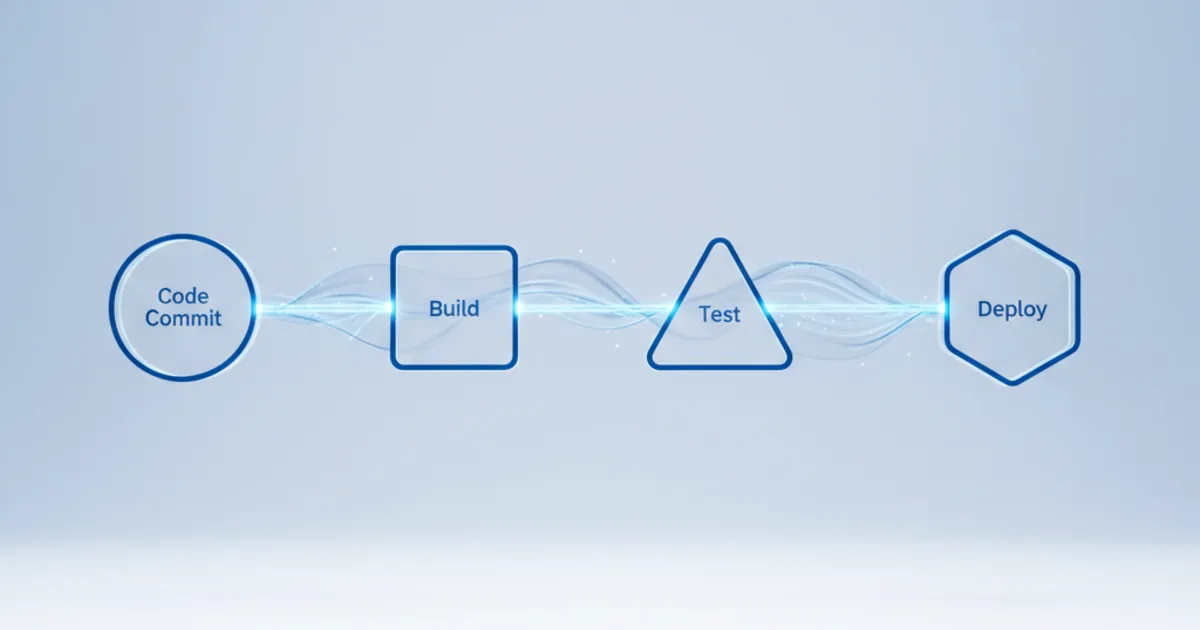
A typical automated CI/CD pipeline includes the following stages:
Source Stage
Developers commit code to a version control system like Git, triggering the pipeline. This stage may include code quality checks and linting to ensure basic standards are met before proceeding.
Build Stage
The application is compiled, dependencies are resolved, and artifacts are created. For containerized applications, this stage includes building Docker images. Failed builds immediately notify developers of issues.
Test Stage
Automated tests verify the code’s functionality and quality. This includes unit tests, integration tests, and potentially end-to-end tests. Security scans and compliance checks may also run during this stage.
Deployment Stage
Code is deployed to the target environment using strategies like blue-green deployment, canary releases, or rolling updates to minimize risk and downtime.
Free DevOps Automation Assessment Tool
Evaluate your organization’s DevOps maturity and identify automation opportunities with our interactive assessment tool. Get a personalized report with actionable recommendations.
Need expert help with devops automation and automated ci/cd pipelines?
Our cloud architects can help you with devops automation and automated ci/cd pipelines — from strategy to implementation. Book a free 30-minute advisory call with no obligation.
Essential Tools for DevOps Automation and CI/CD Pipelines
Implementing effective DevOps automation requires the right set of tools. Here’s an overview of key tools categories and popular options for building robust CI/CD pipelines:
CI/CD Platforms
| Tool | Best For | Key Features |
| Jenkins | Customizable pipelines with extensive plugin ecosystem | Open-source, highly extensible, supports distributed builds |
| GitLab CI/CD | End-to-end DevOps platform with integrated SCM | Built-in with GitLab, YAML-based pipeline configuration, container registry |
| GitHub Actions | GitHub-native automation with simple workflow syntax | Tight GitHub integration, marketplace of pre-built actions, matrix builds |
| CircleCI | Fast, parallel testing and deployment | Cloud-native, parallelization, caching mechanisms, orbs for reusable config |
Infrastructure as Code (IaC) Tools
Infrastructure as Code is a key practice in DevOps automation that allows teams to manage infrastructure using code and automation rather than manual processes. Popular IaC tools include:
- Terraform: Declarative IaC tool for provisioning and managing cloud infrastructure across multiple providers
- Ansible: Agentless automation tool for configuration management, application deployment, and orchestration
- Pulumi: Infrastructure as Code using familiar programming languages like Python, TypeScript, and Go
- AWS CloudFormation: Template-based IaC service for AWS resources
Containerization and Orchestration
Containers provide consistent, isolated environments for applications, while orchestration tools manage container deployment and scaling:
- Docker: Platform for building, shipping, and running containerized applications
- Kubernetes: Container orchestration platform for automating deployment, scaling, and management
- OpenShift: Enterprise Kubernetes platform with added developer and operational features
- Docker Compose: Tool for defining and running multi-container Docker applications
How Do You Implement DevOps Automation and CI/CD Pipelines?
Successfully implementing DevOps automation requires a strategic approach that considers your organization’s specific needs, existing workflows, and technical capabilities. Here’s a step-by-step guide to getting started:
Assessment and Planning
- Evaluate your current development and deployment processes to identify bottlenecks and automation opportunities
- Define clear objectives and success metrics for your automation initiatives
- Select appropriate tools based on your technology stack, team skills, and specific requirements
- Create a phased implementation plan with achievable milestones
Building Your First CI/CD Pipeline
Start with a simple pipeline for a low-risk application to gain experience and demonstrate value:
- Set up version control with branching strategy (e.g., GitFlow, trunk-based development)
- Configure automated builds triggered by code commits
- Implement automated testing (unit tests, integration tests)
- Create deployment automation for staging environments
- Add monitoring and feedback mechanisms
Scaling and Maturing Your Automation
As your team gains confidence with automation, expand and enhance your pipelines:
- Implement infrastructure as code for consistent environment provisioning
- Add security scanning and compliance checks to your pipeline
- Incorporate advanced deployment strategies like blue-green or canary deployments
- Implement feature flags for safer feature releases
- Establish metrics and monitoring for pipeline performance
CI/CD Pipeline Templates
Jump-start your automation journey with our collection of ready-to-use CI/CD pipeline templates for popular tools including Jenkins, GitHub Actions, and GitLab CI.
What Are the Best Practices for DevOps Automation and CI/CD Pipelines?
Adopting these best practices will help you maximize the benefits of your DevOps automation initiatives while avoiding common pitfalls:
Pipeline Design and Management
- Pipeline as Code: Define pipelines using code (e.g., Jenkinsfile, GitHub Actions YAML) and store in version control
- Modular Pipelines: Break pipelines into reusable components to improve maintainability
- Fast Feedback: Optimize pipelines to provide quick feedback to developers
- Idempotent Operations: Ensure pipeline steps can be run multiple times without side effects
- Versioned Artifacts: Tag and version all build artifacts for traceability
Testing and Quality Assurance
- Shift-Left Testing: Move testing earlier in the development process
- Test Automation: Automate unit, integration, and end-to-end tests
- Test Data Management: Ensure consistent test data across environments
- Code Quality Gates: Enforce code quality standards with automated checks
- Performance Testing: Include performance tests in your pipeline for critical applications
Security and Compliance
- DevSecOps: Integrate security throughout the pipeline
- Automated Security Scanning: Include SAST, DAST, and dependency scanning
- Secrets Management: Use secure vaults for managing sensitive information
- Compliance as Code: Automate compliance checks and evidence collection
- Least Privilege: Apply principle of least privilege to pipeline permissions
Deployment Strategies
Blue-Green Deployment
Maintain two identical production environments with only one active at a time. Deploy to the inactive environment, test, then switch traffic.
Canary Releases
Gradually roll out changes to a small subset of users before full deployment, allowing for monitoring and early issue detection.
Feature Flags
Decouple deployment from release by using feature flags to control feature availability, enabling trunk-based development and safer releases.
Rolling Updates
Gradually replace instances of the previous version with the new version, reducing downtime and risk.
Measuring Success in DevOps Automation
To ensure your DevOps automation initiatives deliver value, it’s essential to track key metrics that reflect both technical efficiency and business outcomes:
Key Performance Indicators (KPIs)
| Metric | Description | Target for High Performers |
| Deployment Frequency | How often code is successfully deployed to production | Multiple deployments per day |
| Lead Time for Changes | Time from code commit to successful production deployment | Less than one day |
| Change Failure Rate | Percentage of deployments causing failures in production | 0-15% |
| Mean Time to Recovery (MTTR) | Average time to restore service after a failure | Less than one hour |
Pipeline Performance Metrics
- Pipeline Duration: Total time from trigger to completion
- Stage Duration: Time spent in each pipeline stage
- Success Rate: Percentage of pipeline runs that complete successfully
- Test Coverage: Percentage of code covered by automated tests
- Defect Escape Rate: Bugs that escape to production despite testing
Real-World Success with DevOps Automation
Organizations across industries have achieved significant improvements by implementing DevOps automation and CI/CD pipelines. Here are some examples:
Common Challenges and Solutions
While the benefits of DevOps automation are significant, organizations often face challenges during implementation. Here are common obstacles and practical solutions:
Challenges
- Cultural resistance to automation and new workflows
- Legacy systems that are difficult to integrate into CI/CD pipelines
- Lack of skills and expertise in automation tools
- Security and compliance concerns with automated deployments
- Initial investment in tools and infrastructure
Solutions
- Start with small wins and showcase success to build buy-in
- Use adapters and wrappers to integrate legacy systems
- Invest in training and consider hiring DevOps specialists
- Implement “shift-left” security and compliance as code
- Begin with open-source tools and scale as needed
Overcoming Resistance to Change
Cultural transformation is often the biggest challenge in DevOps adoption. These strategies can help overcome resistance:
- Executive Sponsorship: Secure support from leadership to drive organizational change
- Education and Training: Invest in upskilling teams on DevOps practices and tools
- Start Small: Begin with pilot projects to demonstrate value before scaling
- Celebrate Wins: Recognize and publicize early successes to build momentum
- Cross-functional Teams: Form teams that include both development and operations expertise
Future Trends in DevOps Automation
The DevOps automation landscape continues to evolve with emerging technologies and practices. Stay ahead by keeping an eye on these trends:
AI-Powered DevOps
Artificial intelligence and machine learning are being integrated into DevOps tools to provide predictive analytics, anomaly detection, and intelligent automation. AI can help identify potential issues before they impact users and optimize pipeline performance.
GitOps
GitOps uses Git as the single source of truth for declarative infrastructure and applications. Changes to configuration are made through pull requests, providing improved visibility, traceability, and security for infrastructure changes.
Serverless CI/CD
Serverless architectures for CI/CD pipelines eliminate the need to manage infrastructure, providing on-demand scaling and pay-per-use pricing models that can reduce costs and maintenance overhead.
Platform Engineering
Platform engineering focuses on building internal developer platforms that abstract away infrastructure complexity and provide self-service capabilities for development teams, accelerating software delivery.
Conclusion: Getting Started with DevOps Automation
DevOps automation and automated CI/CD pipelines are no longer optional for organizations that want to remain competitive in today’s fast-paced digital landscape. By implementing these practices, you can accelerate software delivery, improve quality, and reduce operational overhead.
Remember that successful DevOps automation is a journey, not a destination. Start small, focus on delivering value, measure your progress, and continuously improve your processes and tools. With the right approach, you can transform your software delivery capabilities and achieve significant business benefits.
Next Steps
- Assess your current development and deployment processes
- Identify high-value automation opportunities
- Select appropriate tools based on your specific needs
- Implement a pilot CI/CD pipeline for a low-risk application
- Measure results and refine your approach
- Scale successful practices across your organization
About the Author

Country Manager, India
Praveena leads Opsio's India operations, bringing 17+ years of cross-industry experience spanning AI, manufacturing, DevOps, and managed services.
Sources and further reading
- DORA's software delivery performance metrics — DORA (Google Cloud)
- Accelerate State of DevOps Report 2024 — DORA (Google Cloud)
- Accelerate State of DevOps 2021 — DORA (Google Cloud)
Editorial standards: This article was written by a certified practitioner and reviewed by our engineering team. We revise it when the technology or regulation it covers changes; the dates above show the latest update. Opsio maintains editorial independence — we recommend solutions on technical merit, not commercial relationships.