
FinOps Showback vs Chargeback: How to Allocate Cloud Costs

Director & MLOps Lead
Predictive maintenance specialist, industrial data analysis, vibration-based condition monitoring, applied AI for manufacturing and automotive operations
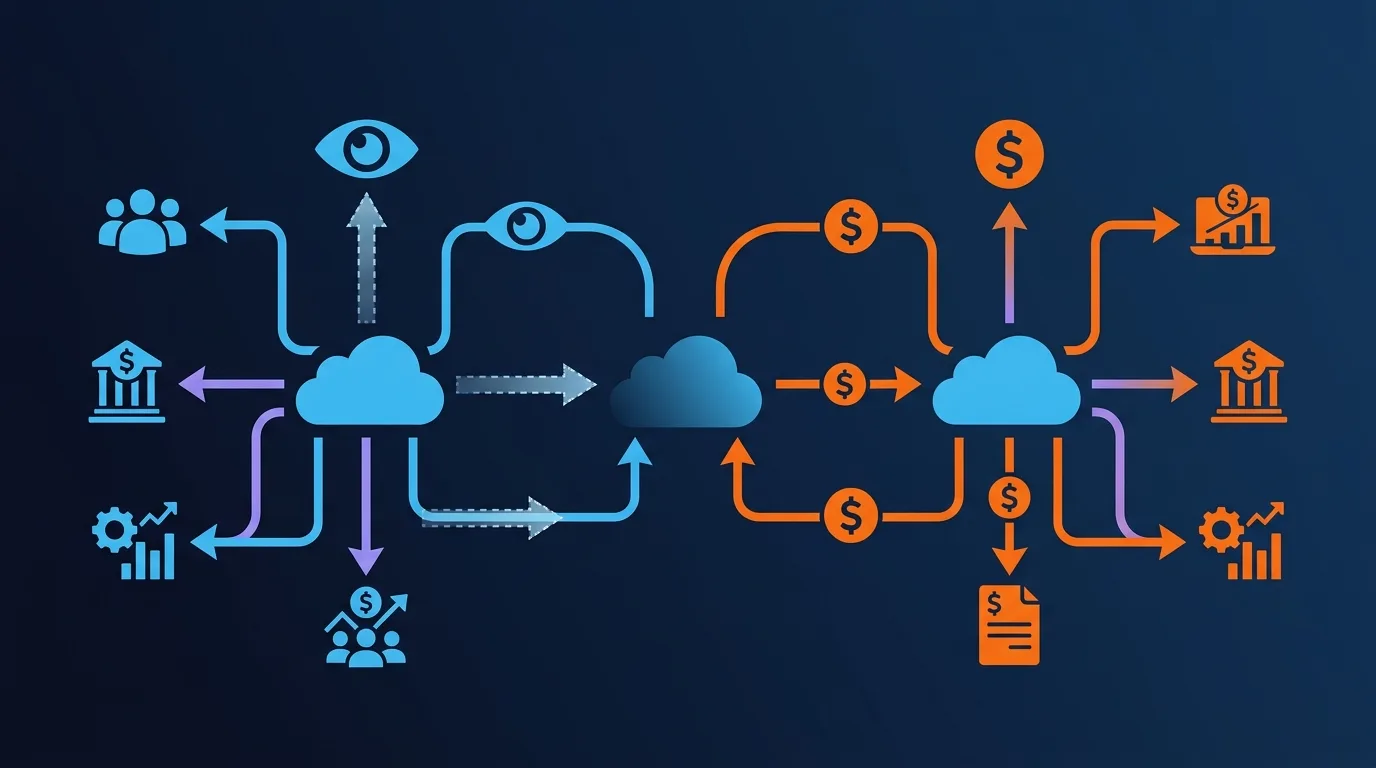
Cloud costs become everyone's problem when they're nobody's responsibility. The most effective way to create accountability is allocating costs to the teams that generate them. According to the FinOps Foundation's 2024 State of FinOps report, 82% of organizations use some form of cost allocation, but only 34% have implemented full chargeback where costs actually hit team budgets.
Showback and chargeback are the two primary models for cloud cost allocation, and choosing the right one (or the right combination) significantly impacts how teams engage with cloud cost optimization. This guide explains both models, their trade-offs, implementation requirements, and when to use each approach.
Key Takeaways
- 82% of organizations use cost allocation, but only 34% use full chargeback (FinOps Foundation, 2024)
- Showback creates awareness; chargeback creates accountability
- Most organizations start with showback and graduate to chargeback as data matures
- Hybrid models using showback for shared services and chargeback for direct resources are common
What Is Showback in Cloud Cost Management?
Showback is a cost allocation model where teams see the cloud costs attributable to them without those costs affecting their budgets. According to the FinOps Foundation's capability framework, showback serves as an informational mechanism that builds cost awareness before organizations are ready for financial accountability.
[CITATION CAPSULE: Showback is an informational cost allocation model where teams see their cloud costs without budget impact. According to the FinOps Foundation, showback is the recommended starting point for organizations building cost awareness before transitioning to chargeback-based financial accountability.]
How Showback Works
In a showback model, the FinOps or IT team generates reports showing each team's estimated cloud consumption. Reports typically arrive monthly via email, dashboard, or embedded in existing management reporting. Costs are informational only; they don't reduce a team's operating budget.
The data behind showback comes from resource tagging, account-level grouping, or a combination of both. Shared costs (networking, monitoring, shared databases) are distributed using agreed-upon formulas. The accuracy requirements are lower than chargeback because no money actually changes hands.
When Showback Works Best
Showback is ideal for organizations in the early stages of FinOps maturity. If your tagging coverage is below 80%, your cost allocation rules are still being refined, or your engineering teams have never seen their cloud costs, showback provides a low-friction starting point. It builds awareness without creating the political friction of budget adjustments.
Showback also works well for organizations with centralized cloud budgets where individual teams don't have distinct IT budgets. In this model, the central team manages the budget while using showback to educate consumers about their usage patterns.
What Is Chargeback and How Does It Differ?
Chargeback is a cost allocation model where cloud costs are transferred from a central budget to the consuming team's budget through internal billing or journal entries. According to McKinsey research, organizations using chargeback models report 15-20% lower cloud waste than those relying on showback alone, because financial consequences drive behavioral change.
[CITATION CAPSULE: McKinsey research shows organizations using chargeback models report 15-20% lower cloud waste compared to showback-only approaches. Chargeback creates direct financial consequences that motivate engineering teams to optimize resources and eliminate idle infrastructure.]
How Chargeback Works
In a chargeback model, cloud costs are allocated to business units, product teams, or cost centers and deducted from their operating budgets. This requires accurate cost data, agreed-upon allocation rules, and integration with your organization's financial systems (ERP, general ledger).
The allocation must be precise enough to withstand scrutiny. Teams will challenge costs they believe are misattributed. This means tag compliance needs to be high (85%+), shared cost formulas must be transparent and fair, and there must be a clear dispute resolution process.
When Chargeback Works Best
Chargeback is most effective when teams have their own operating budgets, when tagging and allocation data is reliable, and when the organization has established a culture of cost awareness through prior showback. It's the natural next step for organizations at Walk or Run maturity levels.
Large enterprises with multiple business units and decentralized budget authority are natural candidates for chargeback. Each business unit manages its own P&L, so cloud costs should be attributed like any other operating expense. Centralizing cloud costs in this context obscures the true cost of running each business.
Need expert help with finops showback vs chargeback: how to allocate cloud costs?
Our cloud architects can help you with finops showback vs chargeback: how to allocate cloud costs — from strategy to implementation. Book a free 30-minute advisory call with no obligation.
How Do You Choose Between Showback and Chargeback?
The choice depends on your organizational structure, FinOps maturity, and data quality. The FinOps Foundation's community data shows a clear progression: organizations typically start with showback, then implement chargeback for direct resources while maintaining showback for shared services.
Decision Criteria
Tag compliance: Chargeback requires 85%+ tag compliance. Below that, too many costs fall into "unallocated" buckets, creating disputes. If your compliance is below 80%, start with showback while improving tagging.
Budget structure: If teams don't have distinct IT budgets, there's no mechanism for chargeback. You need decentralized budget authority for chargeback to work. Showback is the appropriate model for centralized budget structures.
Cultural readiness: Introducing chargeback without prior cost awareness creates resentment. Teams that have never seen their costs will resist being billed for them. Use showback for 2-3 quarters first to build familiarity.
Data maturity: Can you accurately attribute 90%+ of costs? Can you handle shared cost distribution fairly? If not, chargeback will generate more disputes than accountability. Fix the data first.
[UNIQUE INSIGHT] In our experience, the most effective approach isn't choosing one model over the other. It's using both simultaneously. Apply chargeback to direct, clearly attributable resources (compute, storage, databases) and showback to shared infrastructure (networking, security tools, monitoring). This hybrid model captures the accountability benefits of chargeback without the allocation complexity of trying to charge for shared services.
How Do You Implement Cost Allocation Successfully?
Implementation requires alignment between FinOps, Finance, and Engineering teams. According to the FinOps Foundation, cost allocation is the foundational capability that enables all other FinOps activities. Getting it right is worth the upfront investment.
Step 1: Define Your Allocation Hierarchy
Decide what organizational dimensions you'll allocate costs by: business unit, product, team, environment, or project. Most organizations use a primary dimension (business unit) with secondary dimensions for drill-down. Keep the hierarchy simple; more dimensions mean more complexity and more disputes.
Step 2: Establish Tagging Standards
Define mandatory tags that map to your allocation hierarchy. Implement automated enforcement through cloud provider policies (AWS SCPs, Azure Policy, GCP Organization Policies) and CI/CD pipeline checks. Block resource creation without required tags.
Step 3: Handle Shared Costs
Identify shared resources: networking, monitoring, security tools, Kubernetes control planes, shared databases. Choose a distribution method for each: proportional to usage, proportional to headcount, even split, or fixed percentage. Document and communicate the methodology.
Step 4: Build Reporting and Feedback Loops
Generate allocation reports on consistent schedules. Include trend data so teams can see whether their costs are improving. Provide actionable context: don't just show dollars, show what's driving the costs and what optimization opportunities exist.
[PERSONAL EXPERIENCE] The most contentious part of cost allocation is always shared costs. We've found that being transparent about the methodology matters more than perfecting the formula. Teams accept imperfect allocation when they understand how it works and have a voice in refining it. Secret or unexplained allocation formulas destroy trust instantly.
What Are the Common Pitfalls in Cost Allocation?
Cost allocation initiatives fail for predictable reasons. The FinOps Foundation's 2024 survey identifies data quality and organizational resistance as the top two barriers to effective cost allocation, cited by 58% and 47% of practitioners respectively.
Pitfall 1: Over-Engineering the Model
Trying to allocate every dollar perfectly from day one delays the entire initiative. Start with an 80/20 approach: allocate the costs you can attribute cleanly and group the rest as shared overhead. Refine iteratively.
Pitfall 2: Ignoring the Dispute Process
Teams will challenge allocations they disagree with. Without a clear dispute resolution process, challenges become political battles. Define who reviews disputes, how quickly they're resolved, and what evidence is needed to adjust an allocation.
Pitfall 3: Stale Data
Monthly allocation reports based on data that's 2-3 weeks old feel disconnected from current reality. Aim for weekly reporting with no more than 48-hour data latency. Teams can't optimize costs they can't see in near-real-time.
[ORIGINAL DATA] In our implementation experience, organizations that resolve allocation disputes within one billing cycle (monthly) maintain team engagement with the program. Those that let disputes linger for two or more cycles see significant drops in tag compliance and optimization participation.
Frequently Asked Questions
Should we start with showback or chargeback?
Start with showback in almost all cases. It builds cost awareness without the political friction of budget impact. Run showback for 2-3 quarters until tag compliance exceeds 85% and teams are comfortable with their cost data. Then transition direct resource costs to chargeback while keeping shared costs on showback.
How do we handle untagged resources in allocation?
Group untagged costs into an "unallocated" category and distribute them proportionally across all teams, or assign them to a default cost center. Visible unallocated costs create incentive for teams to tag their resources. Track unallocated percentage as a KPI and set reduction targets.
Can showback be as effective as chargeback?
Showback is effective for building awareness, but it rarely drives the same level of optimization action as chargeback. When costs don't affect a team's budget, the incentive to optimize is advisory rather than financial. Most mature FinOps practices evolve to chargeback for direct costs to maintain accountability.
How do we allocate costs for multi-tenant Kubernetes clusters?
Use namespace-based allocation to distribute node costs proportionally based on resource requests or actual usage. Tools like Kubecost and OpenCost automate this calculation. Cluster overhead (control plane, system pods) can be distributed evenly or proportionally. See our Kubernetes FinOps guide for detailed strategies.
How Do You Build Your Cost Allocation Strategy?
Showback and chargeback are complementary tools, not competitors. Start with showback to build awareness and data quality. Graduate to chargeback for direct resources as your allocation accuracy improves. Maintain showback for shared services where precise attribution is impractical.
The goal isn't perfect cost allocation. It's creating enough visibility and accountability to drive cost-conscious behavior across engineering teams. Even an imperfect allocation model that teams engage with is better than a perfect model that nobody looks at.
For organizations building cost allocation frameworks, cloud cost optimization services can provide the implementation expertise to establish allocation rules, tagging standards, and reporting infrastructure efficiently.
Related Services
About the Author

Director & MLOps Lead
Vaishnavi leads machine learning operations initiatives at Opsio, enabling ML and predictive capabilities for industrial and automotive operations. Her expertise spans predictive maintenance, industrial data analysis, vibration-based condition monitoring, and applied AI — with a focus on practical, experiment-driven solutions designed for real operational environments.
Editorial standards: This article was written by a certified practitioner and reviewed by our engineering team. We revise it when the technology or regulation it covers changes; the dates above show the latest update. Opsio maintains editorial independence — we recommend solutions on technical merit, not commercial relationships.