
We Simplify ERP Data Migration for Enhanced Operational Efficiency

Consultant Manager
Six Sigma White Belt (AIGPE), Internal Auditor - Integrated Management System (ISO), Gold Medalist MBA, 8+ years in cloud and cybersecurity content
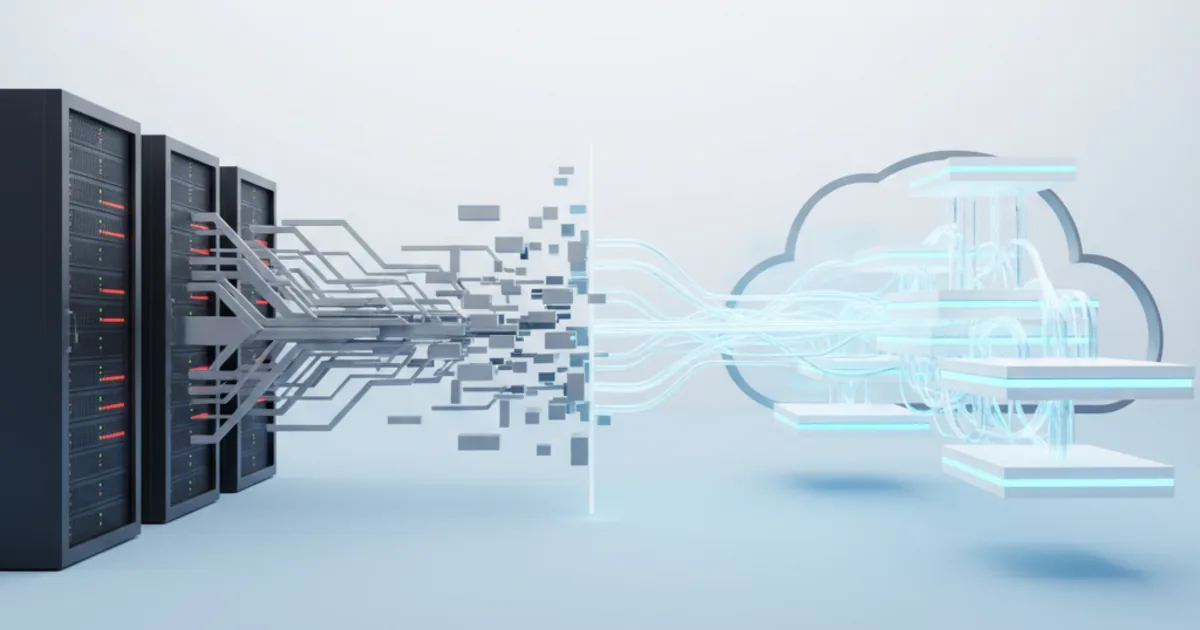
ERP Data Migration for Enhanced Operational Efficiency addresses three persistent challenges in enterprise IT: reducing operational complexity, improving system reliability, and freeing skilled engineers to focus on high-value work.
This strategic move is more critical than ever. The enterprise software market is booming, with revenue projected to reach billions, underscoring its central role in modern operations.
We see this transition not as a mere technical task. It is a foundational business initiative that directly impacts your continuity and long-term success.
Our proven methodology demystifies the complexity. We transform it into a manageable project with clear milestones.
We help consolidate disparate streams of information. This eliminates silos and creates a single, reliable source of truth for your entire enterprise.
Partnering with us provides a structured process. It mitigates risk, minimizes disruption, and unlocks new potential for growth and innovation across all your business processes.
Key Takeaways
- A well-planned system transition is a strategic business initiative, not just an IT project.
- Market growth highlights the importance of modernizing your core operational platform.
- Success hinges on maintaining data integrity and business continuity throughout the process.
- Simplifying the complexity involves a structured, milestone-driven approach.
- Consolidating information into a single source empowers better decision-making.
- The right partnership minimizes risk and turns a challenge into an opportunity for efficiency.
What Is ERP Data Migration and Why Is It Critical?
A successful system upgrade hinges on one non-negotiable phase: the methodical preparation and transfer of all vital company information. Understanding what this entails, and why it demands such scrutiny, is the cornerstone of a seamless transition.
Defining the ERP Data Migration Process
We define this undertaking as a strategic, methodical transfer of business information. It is far more than a simple copy-and-paste operation.
The core framework is an Extract, Transform, and Load (ETL) sequence. First, relevant information is extracted from primary sources like legacy software and spreadsheets. It is then cleansed and transformed for compatibility before being loaded into the new platform's structure.
This harmonizes diverse records—from financials to customer details—into a unified format. The goal is to establish a single, reliable source of truth for the entire enterprise from day one.
The High Stakes of Data Integrity and Business Continuity
The stakes for this operation are exceptionally high. Information integrity is non-negotiable.
Corrupted or lost records during the transfer can cripple business continuity. This affects everything from daily operations and supplier relations to financial reporting and customer service.
Legacy systems often contain outdated or inconsistent information accumulated over years. The relocation presents a pivotal opportunity to cleanse and standardize these assets, laying a foundation for future accuracy and informed decision-making.
Consequently, this phase is frequently the most demanding part of a major software implementation. It requires scrupulous attention to detail to avoid the pitfalls of duplicates and misaligned formats. Appreciating this criticality is the first step toward building a robust strategy that safeguards your business.
Need expert help with we simplify erp data migration for enhanced operational efficiency?
Our cloud architects can help you with we simplify erp data migration for enhanced operational efficiency — from strategy to implementation. Book a free 30-minute advisory call with no obligation.
What Are the Key Drivers for Migrating Data to a New ERP System?
The decision to adopt a modern operational platform is often propelled by a set of compelling business imperatives, each demanding strategic attention.
These motivations extend far beyond a simple software upgrade. They address core challenges that hinder growth and efficiency in today's competitive landscape.
We help organizations articulate these drivers clearly. This ensures alignment across all stakeholders and justifies the investment in a transformative project.
Consolidating Disparate Systems and Silos
Growing companies naturally accumulate a patchwork of standalone applications and spreadsheets. Information becomes trapped in departmental silos, creating barriers to seamless workflow.
A primary driver for transition is the need to unify these fragmented sources. A cohesive new ERP system breaks down these barriers, liberating critical information.
This integration creates a single platform for improved access and consistency. Teams across finance, sales, and operations can then collaborate using the same reliable facts.
We identify this consolidation as a foundational step. It transforms isolated data pools into a streamlined, company-wide resource.
Improving Data Accuracy for Better Decision-Making
Legacy information often carries errors from years of manual entry or system glitches. These inaccuracies directly undermine the confidence leaders have in their reports.
Improving information quality is not just a technical goal. It is a business imperative for sound strategic choices.
The transition process provides a pivotal opportunity to cleanse and validate these assets. We help you transform raw, inconsistent records into a reliable strategic asset.
“You cannot make good decisions with bad information.” This principle underscores why accuracy is non-negotiable for competitive advantage.
This results in trustworthy reporting and analytics. Your team gains a solid foundation for forecasting, planning, and responsive action.
Enhancing Compliance and Future-Proofing Your Business
Regulatory landscapes are constantly evolving, especially concerning financial reporting and data privacy. Older platforms often lack the built-in controls to manage these requirements efficiently.
Modern solutions are designed with contemporary regulatory frameworks in mind. They help you manage records in accordance with standards, reducing legal risk.
Future-proofing your organization is another critical driver. A scalable new platform positions you to adapt to technological advancements and market changes.
Obsolete legacy software becomes costly to maintain and hinders innovation. A new implementation supports new business models and growth without such constraints.
Additional powerful drivers include:
- Operational Efficiency: Automating manual tasks like inventory tracking and order processing reduces costs and minimizes human error.
- Customer Centricity: A unified platform provides a complete view of customer interactions. This enables more responsive and personalized service, boosting satisfaction.
- Competitive Edge: Ultimately, these drivers converge on achieving a stronger market position. We guide you in leveraging this transition for tangible advantage.
Understanding these drivers ensures your project is viewed as a strategic business initiative. It secures the necessary buy-in and focuses efforts on delivering maximum value from day one.
Crafting Your ERP Data Migration Strategy and Plan
Strategic planning transforms the daunting task of system transition from a perceived risk into a calculated investment in operational excellence. A detailed blueprint guides every action, from initial vendor selection to the final go-live moment.
This blueprint aligns technical execution with overarching company goals. It ensures that every step contributes to tangible business outcomes, not just a technical upgrade.
We help you develop this comprehensive roadmap. Our approach turns complexity into a sequence of manageable, clearly defined phases.
Setting Scope, Timeline, and Defining Success
A successful project begins with clear boundaries. We work with you to define what information will move, from which legacy sources, and into which modules of the new platform.
Establishing a realistic timeline is equally critical. Rushing leads to errors, while delays increase costs and business disruption.
We advocate for setting measurable success criteria early. These metrics might include zero downtime for critical operations, 100% accuracy for financial records, or full user adoption within a set period.
This clarity keeps the entire initiative focused. It provides a yardstick to measure progress and demonstrate value to all stakeholders.
Building a Cross-Functional Migration Team
This transition is not an IT-only endeavor. Its success depends on input from every part of the organization.
We emphasize assembling a dedicated team with representatives from finance, sales, supply chain, and human resources. Each member brings essential knowledge about their department's records and processes.
This structure fosters ownership and ensures no critical nuance is overlooked. The team becomes the engine driving the project forward, with clear roles and responsibilities.
Effective internal communication is vital. This team bridges the gap between technical experts and end-users, managing expectations and facilitating smooth training later.
Choosing the Right ERP Vendor and Partner
Selecting your software provider and implementation guide is a pivotal decision. The right partner brings industry-specific experience and a proven methodology.
We guide your evaluation beyond basic features. Look for vendors with a strong track record in your sector and review detailed case studies of their cloud transitions.
Key evaluation criteria should include technological fit, post-go-live support capabilities, and alignment with your budget and timeline. The partner's expertise becomes an extension of your own team.
A fundamental strategic choice is deployment model. The decision between a cloud-based service and an on-premises installation has profound implications.
| Consideration | Cloud-Based Solution | On-Premises Solution |
|---|---|---|
| Infrastructure | Vendor-managed hosting; accessed via the internet. | Requires company-owned hardware and data center space. |
| Cost Model | Predictable subscription fee (OpEx). | Large upfront capital investment (CapEx). |
| Implementation Timeline | Typically faster deployment. | Often longer due to hardware provisioning. |
| Maintenance & Updates | Handled by the vendor automatically. | Responsibility of your internal IT staff. |
| Scalability | Easily scaled up or down with business needs. | Scaling requires purchasing and installing new hardware. |
| Customization | May be limited by vendor platform. | Offers greater potential for deep customization. |
Our strategic planning always includes a selective approach to the transfer. You should not move all legacy information indiscriminately.
We help you curate, cleanse, and migrate only what is necessary and accurate. This prevents recreating old chaos in your new, streamlined system.
The strategy must also account for data compliance and industry regulations from the outset. We ensure your plan includes steps to convert records into appropriate formats.
Establishing validation rules during this phase sets the foundation for ongoing information quality. By defining communication protocols early, we create a project plan that mitigates risk.
This plan manages stakeholder expectations. It sets the stage for a smooth, well-coordinated execution phase, turning strategy into reality.
The Step-by-Step ERP Data Migration Process
The journey from legacy software to a new enterprise system is navigated through a series of deliberate, interconnected steps. This disciplined methodology transforms strategic intent into operational reality.
We guide you through each phase of this critical undertaking. Our focus is on precision, quality assurance, and maintaining seamless business continuity from start to finish.
Understanding this sequence demystifies the overall effort. It provides a clear roadmap for your team and stakeholders, ensuring everyone moves in lockstep toward a successful launch.
Step 1: Identifying and Extracting Data from All Sources
The foundation of a successful transition is a complete inventory. We begin by cataloging every repository holding business information.
This includes primary legacy systems, departmental spreadsheets, Access databases, and even physical records. Leaving any source unaccounted for creates gaps that disrupt operations later.
Our extraction process captures this information in its raw state. We establish secure protocols to ensure nothing is altered or lost during this initial gathering phase.
Step 2: Cleansing and Validating Your Data
Raw, extracted information is rarely ready for a modern platform. This step is where quality is forged, often leveraging your internal team's deep knowledge.
We collaborate closely with your subject matter experts to scrutinize records. The goal is to remove duplicates, correct longstanding errors, and archive obsolete entries.
This cleansing is a business improvement activity, not just a technical one. It ensures only accurate, relevant, and current information moves forward, becoming a true asset.
Step 3: Mapping and Transforming Data for the New System
Here, technical expertise is paramount. Legacy fields and formats must be expertly aligned with the new ERP system's required structure.
We map each source element—like a customer ID or product code—to its corresponding destination. This prevents misinterpretation and ensures relationships between records are preserved.
Transformation rules are then applied to convert the information. This harmonizes disparate formats into the consistent language your new platform understands.
Step 4: Loading, Testing, and Validating the Migration
With mapping complete, we begin loading information into a secure test environment. We never perform a single, high-risk bulk transfer.
Instead, we implement a cycle of pilot migrations followed by rigorous system tests. This iterative approach identifies and resolves issues with small batches first.
Continuous validation checks that the information behaves correctly in its new home. We often create a dedicated training database during this phase, allowing users to practice with realistic, cleansed records.
Step 5: Managing Dynamic Data and Going Live
The final step addresses information that cannot be frozen—active transactions in flight at the moment of cut-over. A precise plan is essential for business continuity.
We develop procedures to capture and enter in-process records like open invoices, active work orders, and real-time inventory changes. Dedicated resources are assigned to execute this plan during the go-live window.
This managed transition minimizes disruption. It ensures your operations continue smoothly from the final moment in the old system to the first moment in the new one.
| Process Step | Key Activities | Primary Objective |
|---|---|---|
| 1. Identify & Extract | Inventory all sources; extract records from legacy systems, spreadsheets, databases. | Complete, secure gathering of all business information. |
| 2. Cleanse & Validate | Remove duplicates, correct errors, archive obsolete entries with internal team input. | Ensure only high-quality, accurate information proceeds. |
| 3. Map & Transform | Align legacy fields and formats to the new ERP's structure; apply conversion rules. | Prepare information for seamless integration into the new environment. |
| 4. Load, Test & Validate | Execute pilot data migrations; conduct iterative system and validation testing. | Verify information integrity and system functionality before final deployment. |
| 5. Manage Dynamic Data & Go-Live | Capture in-process transactions; execute cut-over plan with dedicated resources. | Ensure zero-downtime transition and immediate business continuity. |
Throughout these steps, we emphasize documentation and controlled progress. Our methodical approach incorporates periodic updates to test environments, keeping them current.
This structured process turns complexity into confidence. It delivers a reliable new platform, powered by clean, trustworthy information from day one.
What Are the Common Challenges in ERP Data Migration and How to Overcome Them?
While the promise of a modernized operational backbone is compelling, the path to achieving it is often lined with predictable challenges. Recognizing these hurdles early allows us to build robust countermeasures directly into your project plan.
We transform these potential obstacles into managed, calculated risks. Our approach ensures your transition remains on schedule and delivers the intended value without disruptive surprises.
Data Quality Issues and Complex Legacy Structures
Historical information is rarely pristine. Years of manual entries and isolated departmental practices often lead to outdated, incomplete, or inconsistent records.
These quality issues can undermine the reliability of your new platform from day one. We tackle this head-on with rigorous cleansing protocols executed in partnership with your internal experts.
Complex legacy formats present another significant hurdle. Older software often uses non-standard structures that don't align with modern enterprise systems.
Our team specializes in expert mapping and transformation. We correctly interpret these unique formats, ensuring every record is accurately understood and placed within the new erp system's framework.
Managing Large Data Volumes and System Downtime
Enterprises possess vast amounts of information. Transferring it all at once can overwhelm network resources and cause severe performance bottlenecks.
This often leads to prolonged system unavailability, directly hurting productivity. We employ optimized extraction and loading techniques to handle large volumes efficiently.
A phased migration strategy is frequently the best solution. We move information in prioritized batches, which minimizes the load on infrastructure.
Detailed scheduling with clear fallback plans is non-negotiable. This meticulous planning allows business operations to continue with minimal interruption during the critical cut-over window.
Ensuring Smooth Integration with Existing Applications
Your new enterprise platform does not exist in a vacuum. It must work seamlessly with other critical software, like CRM or e-commerce platforms.
Poorly managed integration points are a common source of post-launch discrepancies. Information may flow incorrectly, creating conflicting records between systems.
We design and test integration touchpoints with great care. Our goal is to maintain perfect consistency and automated flow between your new core database and all connected applications.
This proactive design prevents silos from re-forming. It ensures your entire technology ecosystem operates as a unified, efficient whole.
| Common Challenge | Potential Impact | Our Proactive Solution |
|---|---|---|
| Poor Information Quality & Legacy Complexity | Inaccurate reporting, unreliable system from launch. | Rigorous cleansing and expert legacy format mapping. |
| Large Information Volumes | Performance bottlenecks, extended downtime, delays. | Optimized ETL techniques and a phased, batched transfer approach. |
| Application Integration Issues | Data discrepancies, broken workflows, manual re-entry. | Careful design and testing of all system integration touchpoints. |
| Business Disruption & Downtime | Lost productivity, revenue impact, user frustration. | Detailed migration scheduling with built-in fallback and rollback plans. |
Beyond technical issues, human factors like cross-departmental miscommunication can derail progress. We foster clear channels and align your cross-functional team on every goal and process.
By anticipating these challenges, we embed the solutions directly into your strategy. This turns a potentially risky undertaking into a smooth, controlled journey toward operational excellence.
What Are the Best Practices for a Successful ERP Data Migration?
The difference between a chaotic implementation and a smooth, successful launch often lies in the disciplined application of core principles. These guidelines are distilled from industry experience and form the backbone of every project we undertake.
We integrate these best practices into your strategy from the outset. This ensures your transition is not only technically sound but also delivers maximum business value and user adoption.
Start Early, Clean Thoroughly, and Migrate Selectively
Initiating the information work at the very beginning of your overall project timeline is non-negotiable. This provides the ample time required for deep analysis and meticulous cleansing.
Rushing this phase is a primary cause of post-launch issues. We champion a thorough audit of all legacy records to decide what to archive, what to cleanse, and what to transfer.
This selective approach prevents the movement of obsolete or redundant information into your new system. It is a foundational practice for establishing long-term information hygiene from day one.
Prioritize Extensive Testing and Stakeholder Communication
A robust testing framework is essential for identifying and resolving issues long before go-live. We prioritize extensive validation at every stage, from unit tests on specific records to full-scale dress rehearsals.
This continuous testing cycle builds confidence and uncovers discrepancies in a controlled environment. It is a critical step that safeguards your operational continuity.
Effective stakeholder communication runs parallel to this technical rigor. We establish regular update mechanisms to keep all parties informed and aligned.
Managing expectations and ensuring organizational buy-in throughout the journey is a continuous practice. Clear communication turns potential resistance into collaborative support.
Document the Process and Plan for Post-Migration Support
Documenting every decision, mapping, and procedure creates invaluable institutional knowledge. This record serves as an essential training resource for the go-live phase and for future system adjustments.
We ensure this documentation is comprehensive and accessible. It transforms your project from a one-time event into a repeatable model for future excellence.
Planning for comprehensive post-migration support is equally critical. A dedicated support plan must be activated immediately after the new platform is live.
This plan addresses teething issues, user questions, and necessary information adjustments swiftly. It provides the safety net that ensures a positive user experience and sustains operational momentum.
“Quality is never an accident; it is always the result of intelligent effort.” This philosophy underpins our commitment to these proven practices.
By adhering to these best practices, we build a foundation for more than just a successful technical migration. We lay the groundwork for full user adoption and the long-term information quality that sustains the value of your investment.
Leveraging Tools and Automation for Efficient Migration
The strategic application of specialized software and automated workflows is a game-changer for modern enterprise system implementations. These technologies transform a labor-intensive, error-prone endeavor into a controlled, efficient operation.
We integrate advanced platforms to handle the heavy lifting. This allows your internal team to focus on strategic oversight and business continuity.
How Data Migration Tools Simplify Mapping and Cleansing
Specialized software brings intelligence to the most complex phases of your transition. It automates the meticulous task of aligning legacy information with your new platform's structure.
Intelligent field-matching algorithms analyze source and target formats. They propose accurate mappings, dramatically reducing manual configuration time and human error.
These platforms are equally powerful during the cleansing phase. They automatically scan vast record sets for duplicates, inconsistencies, and formatting errors.
Your subject matter experts are then presented with clear, actionable flags. This shifts their role from tedious manual review to high-value strategic validation.
The Role of Automation in Accelerating the ETL Process
Automation is the engine that drives speed and reliability throughout the Extract, Transform, and Load sequence. Manually processing large information volumes is impractical and poses significant risk.
Automated workflows execute these steps swiftly and consistently. They handle millions of records with the same precision as a few thousand, ensuring scalable performance.
This acceleration is crucial for meeting project timelines without compromising quality. It also enables robust pre-launch testing, which is essential for confidence.
We utilize tools with built-in validation capabilities to run simulations. These dry runs verify that information behaves correctly in the new environment before the final cut-over.
Integration features ensure these tools work seamlessly with your chosen enterprise software and other critical applications. This maintains flow and consistency across your entire technology ecosystem from the start.
“Automation applied to an inefficient operation will magnify the inefficiency.” We ensure our application is strategic, enhancing an already sound process.
By embedding these technologies into our methodology, we achieve more than just a faster timeline. We enhance the overall reliability and quality of the transition outcome.
This approach provides a faster return on your software investment. It turns a complex technical project into a streamlined pathway to operational excellence.
The Future of ERP Data Migration: AI and Ongoing Data Hygiene
As technology evolves, the frontier of system transitions is being reshaped by intelligent automation and a fundamental shift toward proactive information management. The goal moves beyond a successful one-time move to establishing a self-sustaining culture of excellence.
We help you look past the immediate project horizon. Our focus is on leveraging emerging tools to build a foundation where information quality is maintained effortlessly, becoming a permanent competitive asset.
Using AI for Duplicate Detection and Data Enrichment
Artificial Intelligence is revolutionizing how we handle information during a transition. It brings sophisticated pattern recognition to tasks that were once manual and error-prone.
Intelligent algorithms can now identify duplicate records with incredible accuracy. They spot potential matches despite variations in company names, addresses, or contact details that would fool a simple search.
AI-powered enrichment tools connect to external, authoritative sources. They can validate and correct addresses in real-time or append missing contact details from professional networks.
This significantly elevates the quality of your customer and vendor records from day one. The emergence of AI assistants within modern platforms offers real-time, contextual guidance.
These helpers provide validation suggestions as users enter information. They prevent the introduction of bad records from the very first use of your new erp system.
Building a Foundation for Long-Term Data Quality
The ultimate objective is to move beyond periodic cleaning projects. We help you implement proactive governance policies and system-level validations that enforce standards at the point of entry.
This shift from reactive to proactive management is critical. It ensures your information asset remains pristine and valuable long after the initial project is complete.
Planning for an AI-friendly structure today future-proofs your investment. A well-organized database allows your platform to leverage advancing technologies for continuous business intelligence.
Ongoing hygiene must be framed as an embedded business process, not an IT task. The practices and tools we establish during the transition create this sustainable framework.
| Aspect | Reactive, Legacy Approach | Proactive, Future-Ready Approach |
|---|---|---|
| Duplicate Management | Periodic manual cleanup projects after issues arise. | AI-driven, real-time detection and prevention during entry. |
| Information Enrichment | Static records; updates require manual research. | Automated validation and enrichment against live external sources. |
| Quality Enforcement | Correcting errors found in reports. | System validations and AI assistants prevent errors at entry. |
| Governance Model | Ad-hoc, project-based cleaning. | Embedded data governance policies and continuous hygiene. |
| System Adaptability | Rigid structure; hard to leverage new tech. | AI-friendly architecture ready for next-generation tools. |
| Primary Goal | Clean information for a one-time migration. | Launch a sustainable culture of information excellence. |
By anticipating these advancements, we position your transition as a strategic launchpad. It fosters sustained operational efficiency and empowers truly informed decision-making for years to come.
Conclusion
We firmly believe that a well-orchestrated platform upgrade is a decisive step toward sustainable competitive advantage.
This strategic undertaking transcends mere technical necessity. It represents a transformative business initiative that unlocks the full potential of your new ERP system.
Success rests on meticulous planning, cross-functional collaboration, rigorous information cleansing, and continuous testing. Selecting the right implementation partner is as crucial as choosing the software itself.
Our partnership ensures your migration is managed with precision and strategic oversight. We provide dedicated post-go-live support to ensure a smooth adjustment and measure success through improved operational efficiency.
By entrusting us, you secure a collaboration dedicated to simplifying complexity. We safeguard your vital assets and enable your enterprise to thrive in an increasingly digital landscape.
FAQ
What is the most critical phase in a new system implementation?
The planning and data cleansing phase is paramount. A well-defined scope, timeline, and a dedicated team set the foundation. Thoroughly cleaning legacy information before the move prevents costly errors and ensures the integrity of your operational records from day one.
How long does a typical migration project take?
The timeline varies significantly based on business complexity, the volume of records, and the quality of legacy systems. A project can range from several months to over a year. Starting early with a detailed plan and using automated tools are best practices for managing this timeframe effectively.
What are common pitfalls businesses face during this transition?
Key challenges include poor data quality from old software, unplanned system downtime, and inadequate testing. To overcome these, we advocate for selective transfer—moving only essential records—and implementing a robust validation strategy with multiple test cycles before the final go-live event.
Why is a cross-functional team important for success?
A> A team with members from IT, operations, finance, and management ensures all business needs are addressed. This collaboration helps accurately map old fields to new ones, secures user buy-in, and provides the comprehensive support needed for training and issue resolution post-launch.
Can automation tools truly accelerate the process?
Absolutely. Specialized software automates the extract, transform, and load (ETL) workflow, reducing manual effort and human error. These tools streamline mapping different formats, cleansing entries, and running validation checks, which dramatically increases efficiency and project confidence.
What should we plan for after the go-live event?
Post-launch support is crucial for continuity. Your plan should include immediate technical assistance, additional user training sessions, and a period of parallel operations if possible. Establishing ongoing data hygiene practices ensures your new enterprise platform remains accurate and valuable long-term.
Related Articles
About the Author

Consultant Manager
Debolina works at the intersection of IT operations, quality management, and compliance at Opsio. She focuses on practical, data-driven insights around operational efficiency, governance, and continuous improvement — helping organisations streamline complex systems while maintaining standards.
Editorial standards: This article was written by a certified practitioner and reviewed by our engineering team. We revise it when the technology or regulation it covers changes; the dates above show the latest update. Opsio maintains editorial independence — we recommend solutions on technical merit, not commercial relationships.


