
Smart Manufacturing AI Solutions

Director & MLOps Lead
Predictive maintenance specialist, industrial data analysis, vibration-based condition monitoring, applied AI for manufacturing and automotive operations
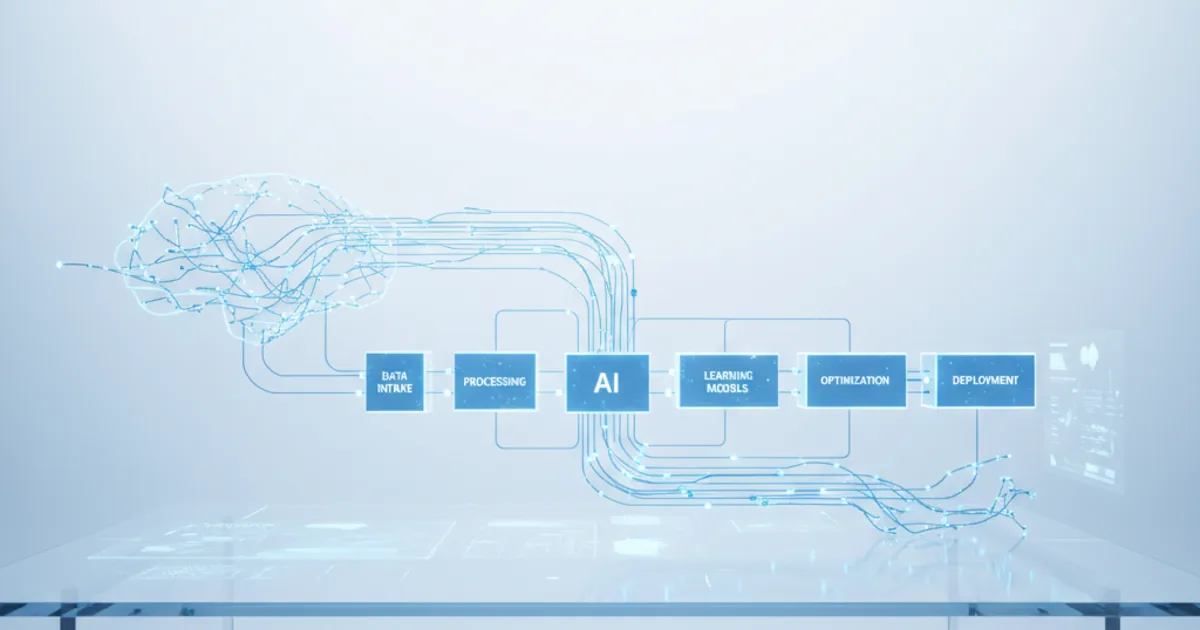
Manufacturing AI Solutions delivers measurable results—lower operational risk, faster time-to-market, and infrastructure that adapts to business demand rather than constraining it. This is no longer a futuristic concept but a present-day reality reshaping the industrial landscape. The convergence of intelligent technologies is creating a new paradigm for operational excellence.
According to a recent Deloitte survey, an overwhelming 92% of industry executives now believe that smart manufacturing will be the primary driver for competitiveness. This represents a significant consensus on the transformative power of these integrated systems. The digital transformation, often called Industry 4.0, combines powerful tools like the Internet of Things, advanced robotics, and augmented reality.
These systems work together to optimize enterprise resource planning, making companies more agile and adaptable to market shifts. We understand that navigating this complex evolution can be challenging. That’s why we offer our expertise to guide your journey, reducing your operational burden while accelerating innovation. Contact us today to begin a conversation about your unique needs.
Key Takeaways
- An overwhelming majority of industry leaders see advanced production systems as essential for future competitiveness.
- Modern industrial evolution integrates multiple emerging technologies to create responsive operations.
- These interconnected systems enhance agility and adaptability within the enterprise.
- Real-time optimization of resource planning is a core benefit of this approach.
- Expert guidance can significantly reduce the complexity of implementing new operational technologies.
What Is Smart Manufacturing AI?
Moving beyond traditional automation, modern production ecosystems are now built on a foundation of interconnected intelligence. This represents a fundamental reimagining of how industrial processes are designed and controlled.
Defining Smart Manufacturing AI
We define this approach as the sophisticated integration of artificial intelligence, machine learning, and sensor networks. These elements work together to create self-optimizing operations.
High-tech sensors continuously gather performance data from critical assets. Cloud platforms then process this information, while advanced algorithms generate actionable insights.
The goal is a system capable of autonomous decision-making. This transforms static production lines into dynamic, responsive environments.
Benefits for Modern Manufacturing
Adopting these intelligent systems delivers significant, measurable advantages for contemporary operations. The impact is felt across the entire production lifecycle.
Organizations realize substantial gains in operational efficiency through optimized processes. This leads to notable reductions in waste and production errors.
Product quality sees marked improvement enabled by real-time monitoring and control. Potential issues are identified and corrected proactively, safeguarding final product standards.
A key strategic benefit is increased production flexibility. These technologies allow for rapid reconfiguration of lines to meet shifting market demands and optimize inventory.
We help businesses translate these sophisticated technologies into concrete competitive advantages and operational improvements.
Need expert help with smart manufacturing ai solutions?
Our cloud architects can help you with smart manufacturing ai solutions — from strategy to implementation. Book a free 30-minute advisory call with no obligation.
Key Technologies Driving Smart Manufacturing
Modern production facilities are embracing a suite of integrated technologies that work in harmony. These systems create responsive environments where data flows seamlessly between connected devices.
Industrial Internet of Things (IIoT) and Robotics
The Industrial Internet of Things forms the backbone of connected operations. Networks of sensors collect real-time information from machinery throughout the facility.
This data enables automated processes and sophisticated analysis. Robots excel at repetitive tasks like assembly and material handling with superior precision.
Facilities like the Phillips plant in the Netherlands demonstrate robotics’ effectiveness. Their automated systems produce electric razors with minimal human supervision.
Digital Twins and Additive Manufacturing
Digital twins create virtual replicas of physical systems for testing and optimization. Manufacturers can simulate scenarios before implementing changes in actual production.
Additive manufacturing, or 3D printing, enables complex part production in single steps. This technology reduces time and costs while allowing customized development.
| Technology | Primary Function | Key Benefits | Implementation Complexity |
|---|---|---|---|
| IIoT Networks | Real-time data collection | Process optimization | Medium |
| Robotic Systems | Automated task execution | Precision and speed | High |
| Digital Twins | Virtual simulation | Risk reduction | High |
| Additive Manufacturing | Rapid prototyping | Customization flexibility | Medium |
The integration of these technologies creates flexible production environments. We help businesses leverage these tools to optimize workflows and increase asset interoperability.
Leveraging Data Analytics and Machine Learning
Today’s industrial environments leverage computational intelligence to convert raw operational metrics into strategic business advantages. We help organizations implement sophisticated data analytics that transform routine information into valuable insights for continuous improvement.
These systems process vast amounts of production data to identify patterns and optimize processes. The resulting intelligence drives smarter decision-making across entire operations.
Real-Time Data Analysis for Predictive Maintenance
Predictive maintenance represents one of the most impactful applications of machine learning technologies. Algorithms continuously analyze equipment performance data to forecast potential failures before they occur.
This approach enables proactive scheduling of repairs during planned downtime periods. Organizations significantly reduce unplanned stoppages while extending asset lifespans.
Anomaly detection solutions automatically identify unusual patterns in time series data. The system can trigger alerts for maintenance teams or even automate part ordering processes.
| Maintenance Approach | Downtime Impact | Cost Efficiency | Implementation Complexity |
|---|---|---|---|
| Reactive (Breakdown) | High – Unplanned | Low – Emergency repairs | Low |
| Preventive (Scheduled) | Medium – Planned | Medium – Regular maintenance | Medium |
| Predictive (Data-Driven) | Low – Optimized timing | High – Targeted repairs | High |
Quality monitoring throughout the production cycle detects deviations early. Machine learning algorithms provide root cause analysis to address issues at their source.
We implement solutions that deliver actionable insights for maintenance optimization. Our approach transforms operational data into strategic advantages for production quality and efficiency.
How Do You Implement Smart Manufacturing AI in Modern Factories?
Successful digital transformation hinges on strategic implementation frameworks that address both technical and organizational dimensions. Industry leaders recognize the substantial commitment required, with Deloitte data showing 78% of companies allocate over 20% of their improvement budgets to these initiatives.
This significant investment reflects the strategic importance organizations place on operational modernization. Most expect these expenditures to continue increasing in the coming fiscal year.
Strategies for System Integration
We develop comprehensive integration approaches that recognize implementation complexity. Transformation requires careful planning and cross-functional collaboration.
Establishing dedicated internal teams proves critical for success. More than half of surveyed organizations create central working groups specifically tasked with researching and deploying these systems.
These teams ensure transformation efforts receive focused attention and executive sponsorship. They manage challenges including leadership buy-in, technology investment justification, and resource constraints.
Risk Management and Cybersecurity Measures
Operational risk represents a primary concern for 65% of respondents. Potential business disruption and production losses demand thorough mitigation planning.
Cybersecurity measures must address specific threats in connected environments. Unauthorized access concerns 55% of companies, while intellectual property theft worries 47%.
We implement robust controls that protect operational technology networks. Our approach minimizes disruption while safeguarding critical assets and data.
Value tracking frameworks enable organizations to assess progress against objectives. These measurement systems demonstrate return on investment and guide scaling decisions.
Enhancing Production Efficiency with Cloud and Edge Solutions
Distributed computing models are transforming how manufacturers process operational information. These complementary approaches create flexible infrastructures that support real-time decision-making throughout production environments.
Benefits of Cloud Computing in Manufacturing
Cloud-based systems serve as foundational infrastructure for modern operations. They enable remote management of data collection and storage while eliminating substantial capital expenditures.
Organizations gain increased visibility throughout their supply chains with these solutions. The technology allows seamless integration of IIoT applications and real-time equipment monitoring from any location.
Manufacturers can scale their operations efficiently as production demands fluctuate. This flexibility represents a significant strategic advantage in dynamic market conditions.
Edge Computing for Faster Data Processing
Edge computing brings computation closer to where data originates within facilities. This paradigm enables faster processing of high-volume equipment information with minimal latency.
The approach reduces network bandwidth requirements and transmission costs dramatically. Sensitive operational data remains within controlled local networks, enhancing security and compliance.
Critical systems continue functioning during central data center disruptions, preventing production stoppages. This resilience ensures consistent operational reliability even during connectivity challenges.
Current adoption rates show 57% of facilities use cloud computing, while 42% leverage edge capabilities. We help organizations architect optimal hybrid infrastructures that balance centralized management with localized processing.
Real-World Case Studies and Industry Insights
Leading organizations worldwide are achieving remarkable operational improvements through strategic technology adoption. Industry research reveals compelling quantitative evidence of these transformations.
According to Deloitte survey data, companies implementing advanced systems report substantial gains. These include 10-20% improvements in output, 7-20% gains in workforce productivity, and 10-15% increases in unlocked capacity.
Success Stories from Leading Manufacturers
The Phillips facility in the Netherlands demonstrates robotics automation excellence. Their systems produce electric razors with consistent quality and remarkable efficiency.
Fanuc’s Japanese plant represents a striking example of mature automation. Industrial robots manufacture other industrial robots with minimal human supervision.
A commercial aerospace manufacturer achieved 10-15% throughput increases. Their cloud-based production control application optimized scheduling and resource allocation.
A defense industry contractor reduced constraint resolution time by 26%. Their command center leverages real-time data visibility and predictive analytics.
These examples demonstrate the broad applicability of modern production technologies. We help organizations across diverse sectors achieve similar transformative results.
Boosting Supply Chain Resilience and Agility
The convergence of data architecture and supply chain management creates new opportunities for operational resilience. Modern data lakehouse solutions provide the foundation for this transformation, enabling comprehensive visibility across complex networks.
We implement data lakehouse architectures that overcome traditional data silo limitations. These systems blend information from ERP platforms, inventory databases, and transportation systems into unified analytical environments.
Utilizing Data Lakehouses and Analytics
Data lakehouses represent a modern approach to information management. They combine the structural benefits of data warehouses with the flexibility of open-source technologies.
This architecture supports diverse data formats including text documents, audio recordings, and video feeds. Organizations gain comprehensive supply chain visibility through integrated analytics frameworks.
| Data Architecture | Data Integration Capability | Analytical Flexibility | Implementation Timeline |
|---|---|---|---|
| Traditional Data Silos | Limited to structured data | Restricted to predefined queries | 6-12 months |
| Data Warehouse Only | Structured data primarily | Moderate analytical flexibility | 4-8 months |
| Data Lakehouse Architecture | All data types and formats | Full analytical flexibility | 3-6 months |
Optimizing Inventory and Process Management
Enhanced visibility enables manufacturers to optimize inventory levels across their networks. This reduces carrying costs while ensuring material availability for production continuity.
Real-time data collection supports rapid response to demand fluctuations and supply disruptions. We help organizations implement solutions that transform supply chain data into competitive advantages while reducing operational complexity.
Overcoming Challenges in the Digital Transformation
While technology offers transformative potential, its implementation introduces complex workforce and security considerations. Organizations must address both human capital development and operational protection simultaneously to achieve successful outcomes.
Addressing Workforce Upskilling and Talent Gaps
The industry faces substantial workforce challenges, with projections indicating nearly 4 million new employees needed by 2033. Companies report significant difficulties filling critical roles in production management and specialized technology positions.
Adapting existing workers to modern operational environments remains a top concern for many organizations. We help manufacturers develop comprehensive training programs that build digital capabilities across all workforce levels.
Most companies employ multiple approaches including new talent acquisition and third-party training courses. This multifaceted strategy addresses immediate skill gaps while building long-term organizational capacity.
Managing Operational and Cybersecurity Risks
Operational risk represents a primary concern during technology implementation. Business disruption and production continuity issues demand thorough mitigation planning.
Cybersecurity measures must address specific threats in interconnected environments. The majority of manufacturers have performed recent security assessments of their technology stacks.
We implement robust controls that protect operational networks while maintaining production efficiency. Our approach minimizes disruption while safeguarding critical assets and sensitive information.
Key Takeaways on Smart Manufacturing AI Solutions
Forward-thinking organizations are redefining production capabilities through sophisticated data-driven approaches that transform traditional workflows. This evolution represents a fundamental shift in how modern facilities operate, delivering measurable improvements in efficiency, quality, and operational flexibility across diverse industry sectors.
The proven benefits include optimized processes that increase throughput, enhanced quality control through real-time monitoring, and reduced waste through intelligent resource allocation. Industry data confirms 10-20% improvements in output and 7-20% gains in workforce productivity, as detailed in our analysis of AI in smart manufacturing.
While implementation presents challenges, these obstacles are surmountable with proper planning and experienced partnership. Contact us today to explore how our comprehensive solutions can help your organization optimize operations and unlock new competitive advantages.
FAQ
What are the primary benefits of implementing these advanced systems in a factory?
The primary benefits include significant gains in production efficiency, enhanced quality control through real-time detection, and improved supply chain resilience. These technologies enable predictive maintenance, which reduces downtime, and provide valuable insights for optimizing operations and inventory management.
How do data analytics and machine learning contribute to operational improvements?
These tools analyze vast amounts of information from sensors and systems to uncover trends and predict potential issues. This analysis supports predictive maintenance, improves process management, and delivers actionable insights that drive cost savings and boost overall equipment effectiveness.
What role do cloud and edge computing play in modern industrial settings?
A> Cloud computing offers scalable data storage and powerful analytics capabilities, centralizing information for better organization-wide decision-making. Edge computing processes data closer to the source, such as on the factory floor, enabling faster response times for automation and robotics, which is critical for real-time control.
What are the common challenges companies face during digital transformation?
Key challenges include managing cybersecurity risks to protect sensitive operational technology, addressing the need for workforce upskilling to manage new systems, and ensuring seamless integration of new technologies with legacy equipment and processes without disrupting ongoing production.
How can these technologies make a supply chain more agile?
By utilizing data lakehouses and advanced analytics, companies gain end-to-end visibility into their supply network. This allows for better demand forecasting, optimized inventory levels, and faster response to disruptions, significantly enhancing the chain’s agility and overall resilience to market changes.
For hands-on delivery in India, see manufacturing defect detection.
About the Author

Director & MLOps Lead
Vaishnavi leads machine learning operations initiatives at Opsio, enabling ML and predictive capabilities for industrial and automotive operations. Her expertise spans predictive maintenance, industrial data analysis, vibration-based condition monitoring, and applied AI — with a focus on practical, experiment-driven solutions designed for real operational environments.
Editorial standards: This article was written by a certified practitioner and reviewed by our engineering team. We revise it when the technology or regulation it covers changes; the dates above show the latest update. Opsio maintains editorial independence — we recommend solutions on technical merit, not commercial relationships.