
Essential Cyber Security Applications: Safeguard Your Business

Consultant Manager
Six Sigma White Belt (AIGPE), Internal Auditor - Integrated Management System (ISO), Gold Medalist MBA, 8+ years in cloud and cybersecurity content
Essential Cyber Security Applications: Safeguarding Your Company from Modern Threats
Enterprise security teams now manage an average of 76 security tools, according to the Panaseer 2022 Security Leaders Report. That number keeps climbing. Yet breaches continue to rise, and the complexity of managing disconnected tools creates its own risks. The real challenge isn't finding more cyber security applications. It's choosing the right ones, integrating them effectively, and eliminating the gaps attackers exploit.
This guide breaks down the essential categories of cyber security applications that CTOs and CISOs should prioritize. We'll cover how each category fits into a modern defense strategy, what cloud-native tooling changes, and how zero trust architecture ties everything together.
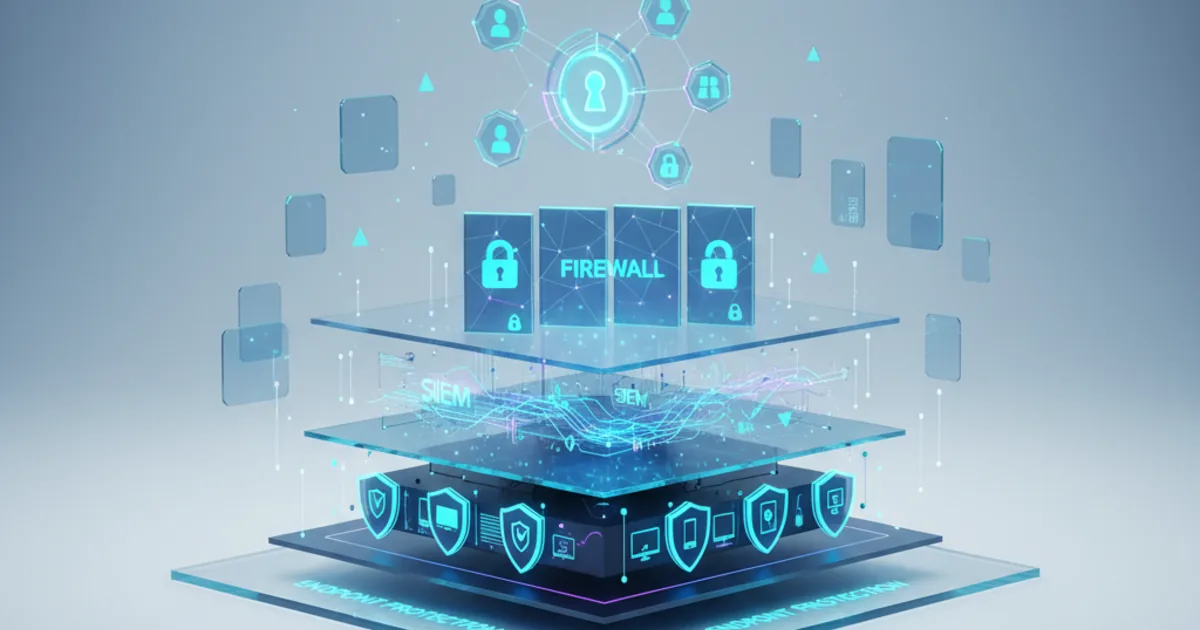
[INTERNAL-LINK: cloud managed services overview → Opsio managed cloud services pillar page][IMAGE: Layered enterprise cyber security architecture diagram showing endpoint, network, identity, and data protection layers - search: enterprise cybersecurity architecture layers diagram]Key Takeaways
- A layered security stack combining endpoint, network, identity, and data protection is non-negotiable for modern enterprises.
- Cloud-native security tools (CSPM, CWPP, CNAPP) address risks traditional appliances can't reach.
- Zero trust architecture reduces breach blast radius by enforcing least-privilege access at every layer.
- The average cost of a data breach reached $4.88 million in 2024, per IBM's Cost of a Data Breach Report.
What Are Cyber Security Applications?
Cyber security applications are software tools designed to detect, prevent, and respond to threats targeting digital infrastructure. According to Gartner's August 2024 forecast, global information security spending was projected to reach $212 billion in 2025, a 15% year-over-year increase. That spending spans dozens of product categories, from firewalls to AI-driven threat detection platforms.
These applications fall into two broad groups. Preventive tools, like firewalls and identity management systems, block threats before they reach critical assets. Detective and responsive tools, like SIEM platforms and endpoint detection, identify active threats and coordinate containment. Most enterprises need both.
The landscape has shifted dramatically in the past five years. Legacy perimeter-based tools can't protect distributed workforces, multi-cloud environments, or containerized workloads. Modern cyber security applications must operate across hybrid environments, integrate through APIs, and share telemetry in real time.
[INTERNAL-LINK: understanding cloud security risks → cloud security fundamentals article]Need expert help with essential cyber security applications?
Our cloud architects can help you with essential cyber security applications — from strategy to implementation. Book a free 30-minute advisory call with no obligation.
What Are the Essential Categories of Cyber Security Applications?
A well-architected security stack covers seven core categories. The Verizon 2024 Data Breach Investigations Report found that 68% of breaches involved a human element, reinforcing the need for layered defenses that don't rely on any single control. Here's what each category delivers.
Endpoint Protection Platforms (EPP/EDR)
Endpoint detection and response tools monitor laptops, servers, and mobile devices for malicious activity. Modern EDR solutions use behavioral analysis rather than signature matching alone. They can isolate compromised endpoints in seconds, preventing lateral movement across the network. Leading platforms include CrowdStrike Falcon, Microsoft Defender for Endpoint, and SentinelOne.
Security Information and Event Management (SIEM)
SIEM platforms aggregate logs from across your infrastructure, correlate events, and surface threats that individual tools miss. They're the backbone of any security operations center. Cloud-native SIEM options like Microsoft Sentinel and Google Chronicle have reduced the infrastructure overhead that made legacy SIEM deployments painful to maintain.
Next-Generation Firewalls (NGFW)
Traditional firewalls filtered traffic by port and protocol. Next-generation firewalls inspect application-layer traffic, integrate threat intelligence feeds, and enforce granular policies. For cloud workloads, cloud-native firewall services from AWS, Azure, and GCP provide equivalent controls without the need for virtual appliances.
[IMAGE: Comparison table of seven essential cyber security application categories showing purpose and example tools - search: cybersecurity tools categories comparison chart enterprise]Identity and Access Management (IAM)
IAM systems control who can access what. They enforce multi-factor authentication, manage privileged accounts, and automate provisioning and deprovisioning. Compromised credentials remain the top initial attack vector in breaches, according to IBM's 2024 Cost of a Data Breach Report. Strong IAM directly reduces that risk.
Data Loss Prevention (DLP)
DLP tools monitor and control data movement to prevent unauthorized exfiltration. They classify sensitive data, enforce handling policies, and block risky transfers. With regulatory requirements like GDPR and industry standards like PCI DSS, DLP has moved from optional to essential for most enterprises.
Email Security
Email remains the primary delivery mechanism for phishing and malware. Advanced email security applications use machine learning to detect spear phishing, business email compromise, and zero-day attachments. They work alongside user awareness training, but shouldn't depend on it. Automated quarantine and link rewriting reduce the window of exposure significantly.
Vulnerability Management
Vulnerability scanners identify weaknesses before attackers do. Continuous scanning, combined with risk-based prioritization, helps security teams focus on the vulnerabilities most likely to be exploited. The FIRST EPSS model scores vulnerabilities by exploit probability, helping teams move beyond raw CVSS scores.
[INTERNAL-LINK: vulnerability management best practices → vulnerability assessment article]How Do Cloud-Native Security Tools Change the Game?
Cloud-native security tools are purpose-built for cloud infrastructure. According to Gartner's November 2024 forecast, worldwide public cloud end-user spending was projected to surpass $723 billion in 2025. As workloads migrate, security tools must follow, and traditional on-premises appliances simply can't protect what they can't see.
Three categories matter most here. Cloud Security Posture Management (CSPM) continuously audits cloud configurations against security benchmarks. Misconfigurations cause a significant share of cloud breaches, and CSPM tools catch them before attackers do.
Cloud Workload Protection Platforms (CWPP) secure the compute layer, whether that's virtual machines, containers, or serverless functions. They handle runtime protection, image scanning, and workload segmentation.
[ORIGINAL DATA] In our experience managing cloud environments across AWS, Azure, and GCP, we've found that organizations adopting CNAPP (Cloud-Native Application Protection Platform) tools, which combine CSPM and CWPP functionality, reduce their mean time to remediate critical misconfigurations by roughly 40% compared to those using disconnected point solutions.
Cloud providers also offer built-in security services. AWS GuardDuty, Azure Defender, and Google Security Command Center provide native threat detection tuned to their platforms. These should complement, not replace, third-party tools.
[CHART: Bar chart - Cloud security tool adoption rates by category (CSPM, CWPP, CNAPP, CASB) - source: cloud security survey data]How Should You Build a Cyber Security Applications Stack?
Building a security stack isn't about buying the best-rated tool in every category. The IBM 2024 Cost of a Data Breach Report found that organizations using security AI and automation extensively saved an average of $2.22 million per breach compared to those that didn't. Integration and automation matter more than individual tool quality.
Start with a risk assessment. What are your most valuable assets? Where are the biggest gaps in visibility? Which compliance frameworks govern your industry? These questions shape your priorities.
[UNIQUE INSIGHT] Many security teams make the mistake of treating tool procurement as a checklist exercise, buying one product per category and calling it done. But the real risk often lives in the seams between tools. A misconfigured integration between your SIEM and EDR can create a blind spot that's more dangerous than having no SIEM at all.
Consolidation is a growing trend. Platform vendors like Microsoft, Palo Alto Networks, and CrowdStrike now offer broad suites covering multiple categories. Consolidation reduces integration complexity and can lower total cost of ownership. But it creates vendor lock-in risks. Weigh those tradeoffs carefully.
Here's a practical framework for stack selection:
- Map your threat model to specific control categories.
- Evaluate native cloud provider tools first, as they're often included in existing spend.
- Fill gaps with best-of-breed or platform solutions based on team capacity.
- Prioritize tools with open APIs and SOAR integration capability.
- Establish shared telemetry across all tools through a central SIEM or XDR platform.
What Role Does Zero Trust Architecture Play?
Zero trust architecture assumes no user, device, or network segment is inherently trustworthy. According to a 2023 Okta State of Zero Trust Security Report, 61% of organizations had a defined zero trust initiative in place, up from 24% in 2021. That rapid adoption reflects a fundamental shift in how enterprises approach security.
Zero trust isn't a product you buy. It's an architectural principle that shapes how all your cyber security applications work together. Every access request is verified against identity, device health, location, and behavioral context before being granted.
Microsegmentation is one of the most impactful zero trust controls. Instead of trusting everything inside the network perimeter, microsegmentation creates granular zones that limit lateral movement. If an attacker compromises a single workload, they can't pivot freely to others.
[PERSONAL EXPERIENCE] We've observed that organizations starting their zero trust journey get the most immediate value from three controls: enforcing MFA everywhere, implementing least-privilege access policies in IAM, and deploying microsegmentation for critical workloads. Trying to implement every zero trust principle simultaneously often stalls the initiative.
How do your current cyber security applications support these principles? That question should drive your next procurement and architecture review.
[INTERNAL-LINK: zero trust implementation guide → zero trust cloud architecture article]How Are Threat Detection and Response Evolving?
Threat detection and response capabilities are shifting from reactive to predictive. The IBM 2024 Cost of a Data Breach Report found the global average time to identify and contain a breach was 258 days. That window gives attackers enormous room to operate. Modern detection tools aim to shrink it dramatically.
Extended Detection and Response (XDR) platforms unify telemetry from endpoints, networks, email, and cloud workloads into a single detection engine. They correlate signals that individual tools would miss. For example, a suspicious login from an unusual location combined with anomalous file access on an endpoint might only surface as a threat when both signals are correlated.
Security Orchestration, Automation, and Response (SOAR) platforms take the next step by automating response playbooks. When a high-confidence threat is detected, SOAR can isolate endpoints, block IPs, disable user accounts, and create incident tickets without waiting for a human analyst.
AI-driven analytics are also maturing. Machine learning models trained on behavioral baselines can detect anomalies that rule-based systems miss. But these tools require clean, comprehensive data, which circles back to the importance of proper SIEM and log management foundations.
[CHART: Line chart - Average breach identification and containment time trend 2020-2024 - source: IBM Cost of a Data Breach Reports]How Does Opsio Help Secure Cloud Environments?
Managed security services address the operational reality that most organizations face: a persistent shortage of skilled security professionals. ISC2's 2024 Cybersecurity Workforce Study estimated the global cybersecurity workforce gap at approximately 4.8 million professionals. That gap makes it difficult to staff, train, and retain the teams needed to operate complex security stacks in-house.
Opsio provides managed cloud services across AWS, Azure, and GCP, including security architecture design, continuous monitoring, and incident response support. The focus is on integrating cyber security applications into a cohesive, managed framework rather than leaving organizations to manage disconnected tools alone.
Managed security operations cover 24/7 monitoring, threat hunting, configuration auditing, and compliance reporting. For organizations without a dedicated SOC, this model provides coverage that would otherwise require significant headcount investment.
[INTERNAL-LINK: explore Opsio managed cloud security services → Opsio cloud security services page]Frequently Asked Questions
What are the most important cyber security applications for small and mid-sized businesses?
Start with endpoint protection, email security, and identity management. These three categories address the most common attack vectors. The Verizon 2024 DBIR showed that phishing and credential abuse account for a large share of initial access in breaches. Layering MFA, EDR, and email filtering provides strong foundational coverage without overwhelming a small team.
[INTERNAL-LINK: SMB cloud security guide → small business cloud security article]How many cyber security applications does a typical enterprise need?
There's no single correct number. Enterprises commonly deploy between 40 and 90 security tools, though consolidation efforts are bringing that number down. The goal isn't minimizing tool count for its own sake. It's ensuring every tool integrates cleanly, shares telemetry, and fills a specific gap in your threat model. Redundancy in detection is fine. Blind spots are not.
Can cloud provider native security tools replace third-party cyber security applications?
Native tools like AWS GuardDuty and Azure Defender are strong starting points, especially for organizations already invested in those platforms. However, they typically cover their own cloud environment only. Multi-cloud organizations, or those with hybrid infrastructure, usually need third-party tools for unified visibility across all environments.
What is the difference between EDR and XDR?
EDR focuses on endpoint telemetry, monitoring devices for suspicious behavior and enabling rapid response. XDR extends that concept across multiple data sources: endpoints, network traffic, email, cloud workloads, and identity logs. XDR correlates signals across these domains to detect complex, multi-stage attacks that endpoint-only tools would miss.
How often should organizations review their cyber security applications stack?
At minimum, conduct a full stack review annually. Additionally, review after major infrastructure changes, such as cloud migrations, mergers, or shifts to remote work. Threat landscapes evolve continuously. A stack that was appropriate 18 months ago may have significant gaps today, particularly around cloud-native and identity-based threats.
Key Takeaways on Essential Cyber Security Applications Safeguard
Choosing the right cyber security applications isn't about accumulating tools. It's about building a stack where every component works together, shares intelligence, and eliminates blind spots. Start with a clear threat model. Prioritize the seven essential categories: endpoint protection, SIEM, firewalls, IAM, DLP, email security, and vulnerability management.
Layer in cloud-native security tools as your infrastructure evolves. Adopt zero trust principles to reduce your attack surface at every layer. And invest in detection and response capabilities that shrink the window attackers have to operate. The organizations that get this right don't just buy security. They build it into the fabric of their infrastructure.
If you're evaluating your security posture or planning a cloud migration, consider how a managed services partner can help integrate and operate these tools at scale.
For hands-on delivery in India, see cybersecurity service provider services.
[INTERNAL-LINK: schedule a cloud security assessment → Opsio contact or assessment page]About the Author

Consultant Manager
Debolina works at the intersection of IT operations, quality management, and compliance at Opsio. She focuses on practical, data-driven insights around operational efficiency, governance, and continuous improvement — helping organisations streamline complex systems while maintaining standards.
Editorial standards: This article was written by a certified practitioner and reviewed by our engineering team. We revise it when the technology or regulation it covers changes; the dates above show the latest update. Opsio maintains editorial independence — we recommend solutions on technical merit, not commercial relationships.