
Cloud Disaster Recovery in India — DRaaS with <1h RTO
Cloud disaster recovery services protect your Indian operations against downtime — Opsio delivers automated failover with sub-1-hour RTO and sub-15-minute RPO across AWS Mumbai (ap-south-1)/Hyderabad (ap-south-2), Azure Central India, and GCP Mumbai (asia-south1), with ISO 22301 alignment and RBI BCP compliance for Indian business continuity.
Trusted by 100+ organisations across 6 countries
<1h
RTO Target
<15min
RPO Target
Automated
Failover
Multi-Cloud
DR
What's Included
DR Strategy & Business Impact Analysis
Comprehensive business impact analysis identifying critical applications, acceptable RTO/RPO targets, and recovery priorities — aligned with RBI business-continuity guidelines and industry-specific regulations for Indian enterprises.
Cross-Region Replication
Continuous data replication between AWS Mumbai and Hyderabad, Azure Central India and South India, or GCP Mumbai and Delhi NCR — ensuring data durability with sub-15-minute RPO for Indian production workloads.
Automated Failover & Failback
Automated DR orchestration using AWS Elastic Disaster Recovery, Azure Site Recovery, and cloud-native tools. One-click failover with DNS cutover, database promotion, and application startup sequencing.
Quarterly DR Testing
Scheduled DR drills that execute full failover to the recovery region, validate application functionality, measure actual RTO/RPO, and produce audit-ready reports for RBI and CERT-In compliance.
Ransomware Recovery
Immutable backup strategies with air-gapped copies, point-in-time recovery capabilities, and clean-room recovery environments — protecting Indian enterprises against ransomware with guaranteed data recoverability.
DR Runbook Management
Comprehensive, tested runbooks documenting every failover step, responsible parties, communication procedures, and rollback plans — maintained and updated quarterly as your Indian infrastructure evolves.
Opsio has been a reliable partner in managing our cloud infrastructure. Their expertise in security and managed services gives us the confidence to focus on our core business while knowing our IT environment is in good hands.

Magnus Norman
Head of IT · Löfbergs
Two enterprise security platforms. Included free.
Others pay a fortune for continuous vulnerability monitoring and a unified security-and-cost workspace — and then pay again for the people to run them. Every Opsio managed-cloud customer gets both, at no extra cost, with our engineers acting on what they surface.
SeqOps
Continuous vulnerability monitoring across your entire cloud & server estate — always on, never in the way.
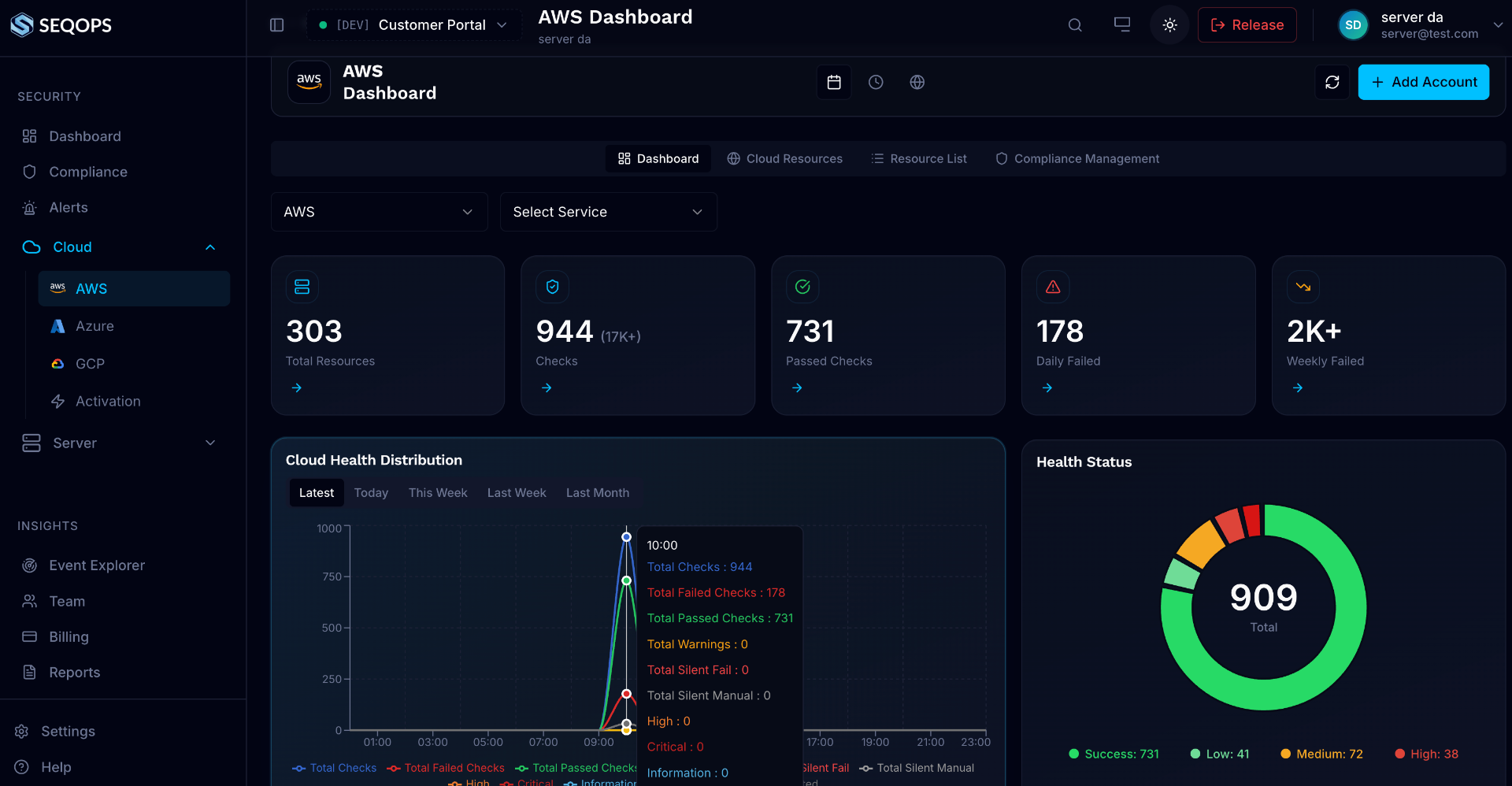
- Every vulnerability, misconfiguration & exposure found continuously across AWS, Azure, GCP, Windows & Linux
- AI ranks findings by real risk, so effort goes where it matters
- Continuous compliance scoring: NIS2 · ISO 27001 · GDPR · PCI · HIPAA
- Read-only — collects security metadata, never your data
Opsio Shield
One intelligent workspace that unifies security posture, compliance scoring and cloud cost — so nothing hides between tools.
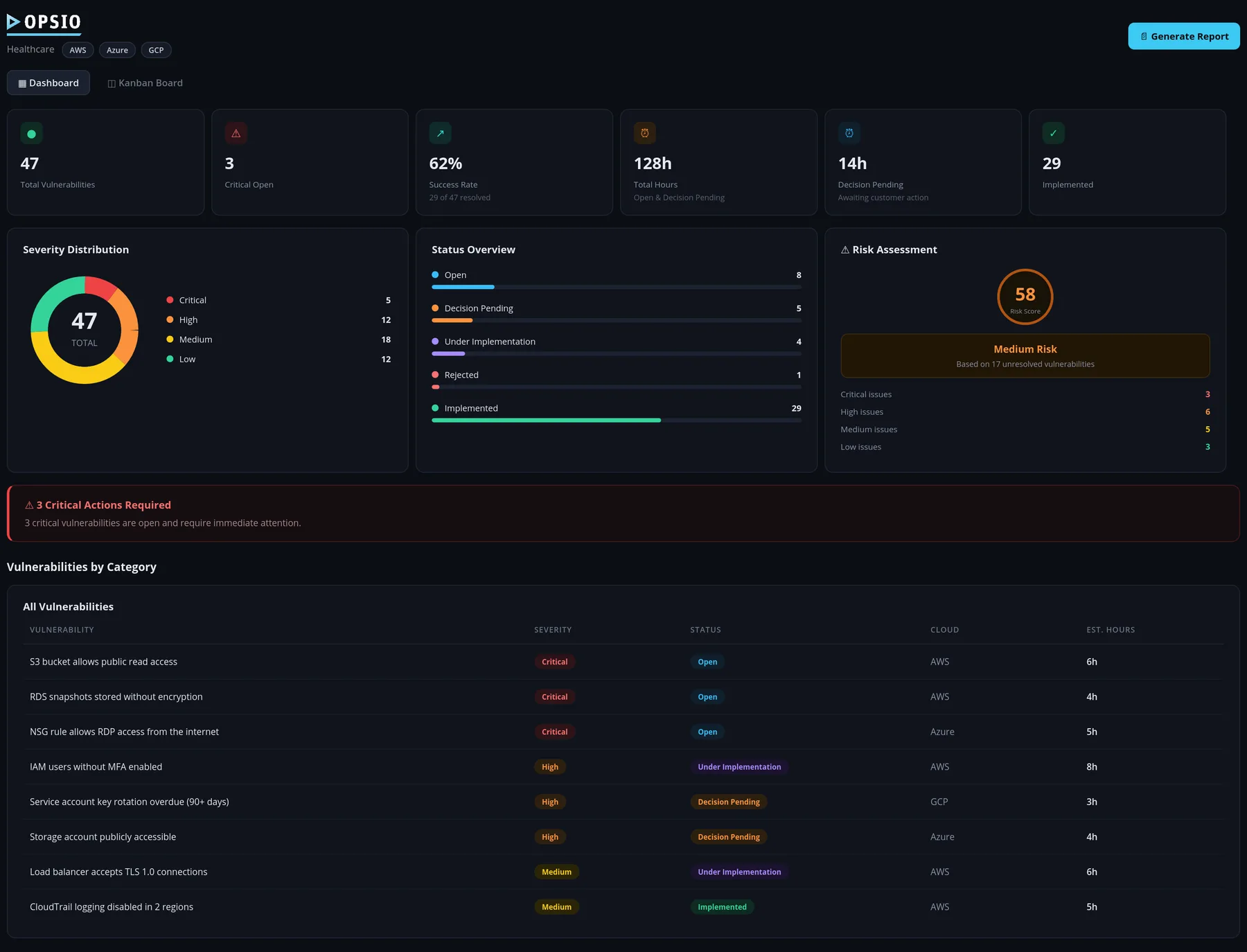
- Security posture, compliance score & multi-cloud spend on one live dashboard
- Cost anomalies & budget overruns caught before the invoice lands
- Auto-generated compliance evidence & vulnerability reports
- Encrypted secrets, mandatory MFA & row-level isolation by design
It's simply part of being an Opsio managed-cloud customer.
Enterprise-Grade Cloud Disaster Recovery for India
Cloud disaster recovery exists because Indian enterprises face mounting risks: monsoon-season infrastructure disruptions, power grid instability, and an evolving cyber-threat landscape that makes ransomware a when-not-if scenario. Traditional DR approaches — cold standby in a co-location facility — deliver RTOs measured in days, not hours, and remain untested until the worst possible moment arrives. Reference programme architecture and the full DR provider model are documented in our global disaster recovery service provider page. Opsio's cloud disaster recovery services leverage the geographic diversity of Indian cloud regions — AWS Mumbai and Hyderabad, Azure Central India and South India, GCP Mumbai — to deliver automated failover with RTO under one hour and RPO under fifteen minutes. We design, implement, and continuously test DR solutions that protect your most critical workloads without the capital cost of maintaining standby data centres. Azure-centric estates leverage the patterns documented in our Azure disaster recovery as a service programme for Site Recovery, replication policy, and failover orchestration.
Our DR-as-a-Service model covers the entire lifecycle: DR strategy and BIA, architecture design, replication configuration, automated failover testing, runbook documentation, and quarterly DR drills that prove recoverability to auditors, regulators, and board members — ensuring compliance with RBI business-continuity guidelines and CERT-In requirements. Steady-state replication health and failover-drill telemetry are wired into our cloud monitoring and support services so DR posture is visible between drills, not only during them.
India's geography and infrastructure create disaster recovery requirements unlike any other market. Monsoon flooding in Mumbai, seismic risks across the Himalayan belt, and power grid instability across multiple states demand DR architectures that account for region-specific risk profiles. Opsio designs DR solutions that leverage AWS Mumbai and Hyderabad, Azure Central and South India, and cross-cloud failover capabilities to provide resilience matched to India's specific risk landscape. AWS-side operational continuity is delivered through our AWS managed service provider programme; Azure-side through our Azure managed service provider programme — so DR runbooks and steady-state runbooks share the same on-call rota.
RBI's business continuity management guidelines mandate specific RTO and RPO targets for financial services organisations, with regular DR testing and documented recovery procedures. Similarly, CERT-In expects critical information infrastructure operators to maintain and test DR capabilities. Opsio's DR programme is designed to satisfy these Indian regulatory requirements with automated quarterly DR drills that produce the compliance evidence regulators expect. Cost trade-offs across pilot-light, warm-standby, and hot-standby tiers are continuously revisited through our cloud cost optimization services so DR posture stays affordable as the estate grows.
Indian enterprises increasingly rely on real-time applications — UPI payment processing, stock trading platforms, e-commerce marketplaces — where even minutes of downtime translate to significant revenue loss and regulatory scrutiny. Traditional DR approaches with multi-hour RTO targets are insufficient for these workloads. Opsio implements active-active and warm standby architectures across Indian cloud regions that deliver near-zero RPO and sub-30-minute RTO for business-critical applications. Featured reading from our knowledge base: Disaster Recovery on Cloud: Strategies and Services – Opsio, RTO & RPO in Disaster Recovery | Opsio IN, and Disaster Recovery & Business Continuity in the Cloud: Planning Guide for India.
Disaster Recovery, The Opsio Way — Building Resilience from Day One
How Opsio Compares
| Capability | DIY DR | Generic DR Provider | Opsio Cloud DR India |
|---|---|---|---|
| RTO/RPO targets | Hours to days | 1-4 hours | Minutes RPO, under 1 hour RTO |
| DR testing | Annual or never | Bi-annual | Quarterly automated DR drills with Indian region failover |
| Multi-region capability | Single region backup | Basic replication | Mumbai + Hyderabad + cross-cloud DR orchestration |
| Compliance alignment | Basic backups | Standard DR plan | RBI BC/DR guidelines + CERT-In + DPDPA data residency |
| Automation | Manual runbooks | Semi-automated | Fully automated failover with zero-touch recovery |
| Application awareness | VM-level only | Basic app grouping | Application-consistent recovery with dependency mapping |
| Typical annual cost | ₹25-50L (infra + staff) | ₹15-35L (limited scope) | ₹20-50L (fully managed + quarterly drills) |
Ready to get started?
What You Get
Pricing & Investment Tiers
Transparent pricing. No hidden fees. Scope-based quotes.
Pilot Light DR
₹2,00,000–₹4,50,000/mo
Minimal standby, longer RTO
Warm Standby DR
₹4,50,000–₹8,00,000/mo
Reduced-capacity standby, RTO <1h
Hot Standby DR
₹8,00,000–₹15,00,000/mo
Full-capacity standby, RTO <15min
Transparent pricing. No hidden fees. Scope-based quotes.
Questions about pricing? Let's discuss your specific requirements.
Cloud Disaster Recovery in India — DRaaS with <1h RTO
Free consultation