
Vulnerability Assessment & Management for India
Identify, prioritise, and remediate vulnerabilities before they become breaches. Opsio's vulnerability management programme provides continuous scanning, risk-based prioritisation, and remediation tracking across your entire Indian attack surface.
Trusted by 100+ organisations across 6 countries
24/7
Continuous Scanning
<24h
Critical Alert SLA
100%
Asset Coverage
CVSS
Risk Scoring
What's Included
Continuous Vulnerability Scanning
Automated vulnerability assessment of infrastructure, applications, containers, and cloud configurations on a continuous schedule. We deploy Qualys, Tenable, AWS Inspector, and Azure Defender across Indian environments for comprehensive coverage.
Risk-Based Prioritisation
Not all vulnerabilities carry equal weight. We prioritise using CVSS scores, known exploit availability from CISA KEV, asset criticality within your Indian operations, and network exposure to focus remediation on genuine business risk.
Remediation Tracking & SLA Management
Assigned remediation owners, severity-based SLAs, progress dashboards, and automated escalation workflows ensure findings do not languish in backlogs. Complete audit trail for CERT-In and RBI compliance.
Cloud Configuration Assessment
Continuous assessment of AWS Mumbai, Azure Central India, and GCP configurations against CIS benchmarks. We detect misconfigurations, overly permissive IAM policies, unencrypted storage, and exposed services across Indian cloud estates.
Container & Image Scanning
Docker image and running container scanning for known vulnerabilities using Trivy and cloud-native scanners. Integrated into CI/CD pipelines so Indian development teams catch issues before production deployment.
Compliance Reporting
Automated reports mapped to ISO 27001, CERT-In, DPDPA, RBI cybersecurity guidelines, and NIST — with audit-ready evidence packages, trend dashboards, and executive summaries tracking risk posture improvements over time.
Opsio's focus on security in the architecture setup is crucial for us. By blending innovation, agility, and a stable managed cloud service, they provided us with the foundation we needed to further develop our business. We are grateful for our IT partner, Opsio.

Jenny Boman
CIO · Opus Bilprovning
Two enterprise security platforms. Included free.
Others pay a fortune for continuous vulnerability monitoring and a unified security-and-cost workspace — and then pay again for the people to run them. Every Opsio managed-cloud customer gets both, at no extra cost, with our engineers acting on what they surface.
SeqOps
Continuous vulnerability monitoring across your entire cloud & server estate — always on, never in the way.
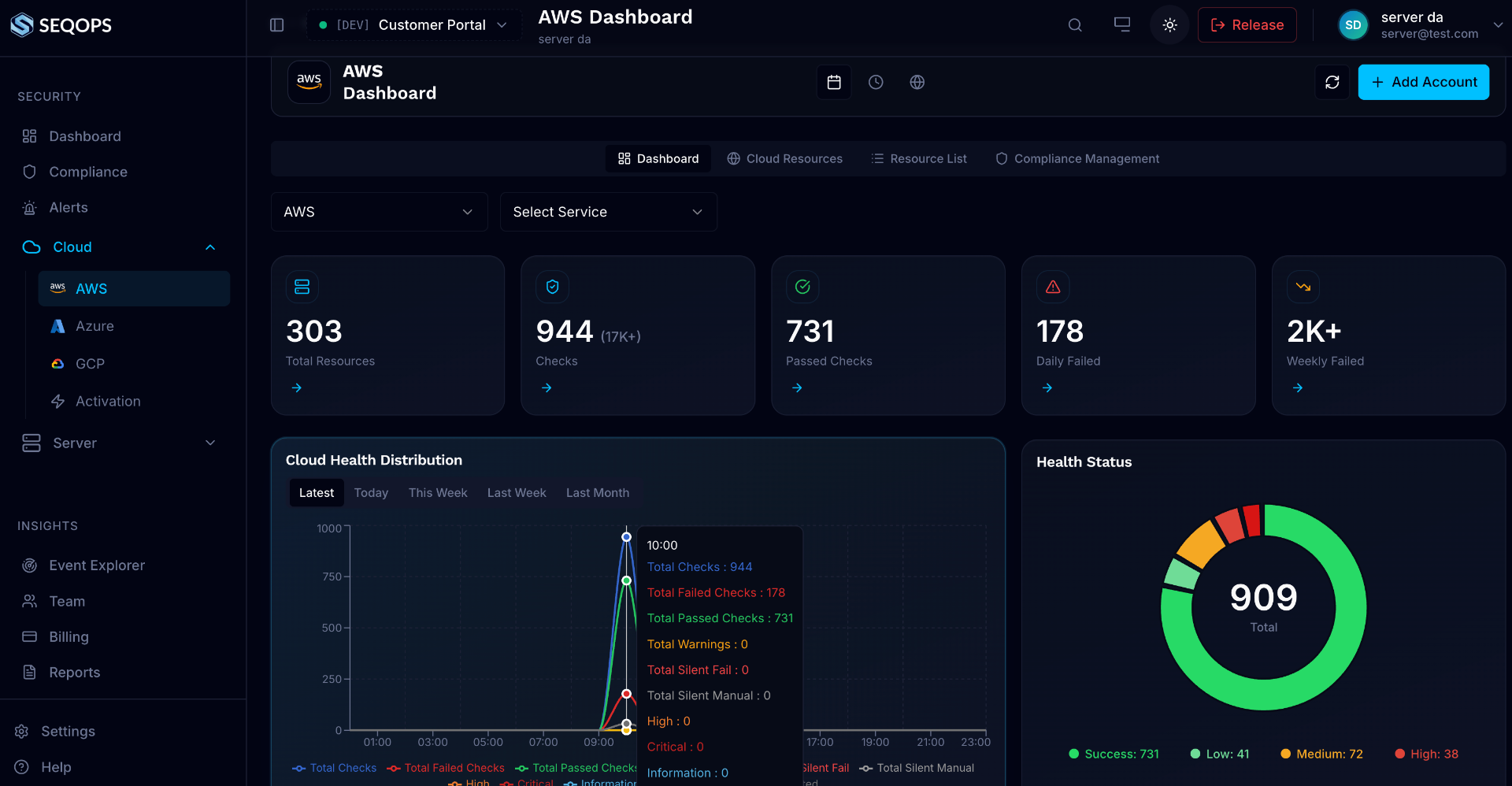
- Every vulnerability, misconfiguration & exposure found continuously across AWS, Azure, GCP, Windows & Linux
- AI ranks findings by real risk, so effort goes where it matters
- Continuous compliance scoring: NIS2 · ISO 27001 · GDPR · PCI · HIPAA
- Read-only — collects security metadata, never your data
Opsio Shield
One intelligent workspace that unifies security posture, compliance scoring and cloud cost — so nothing hides between tools.
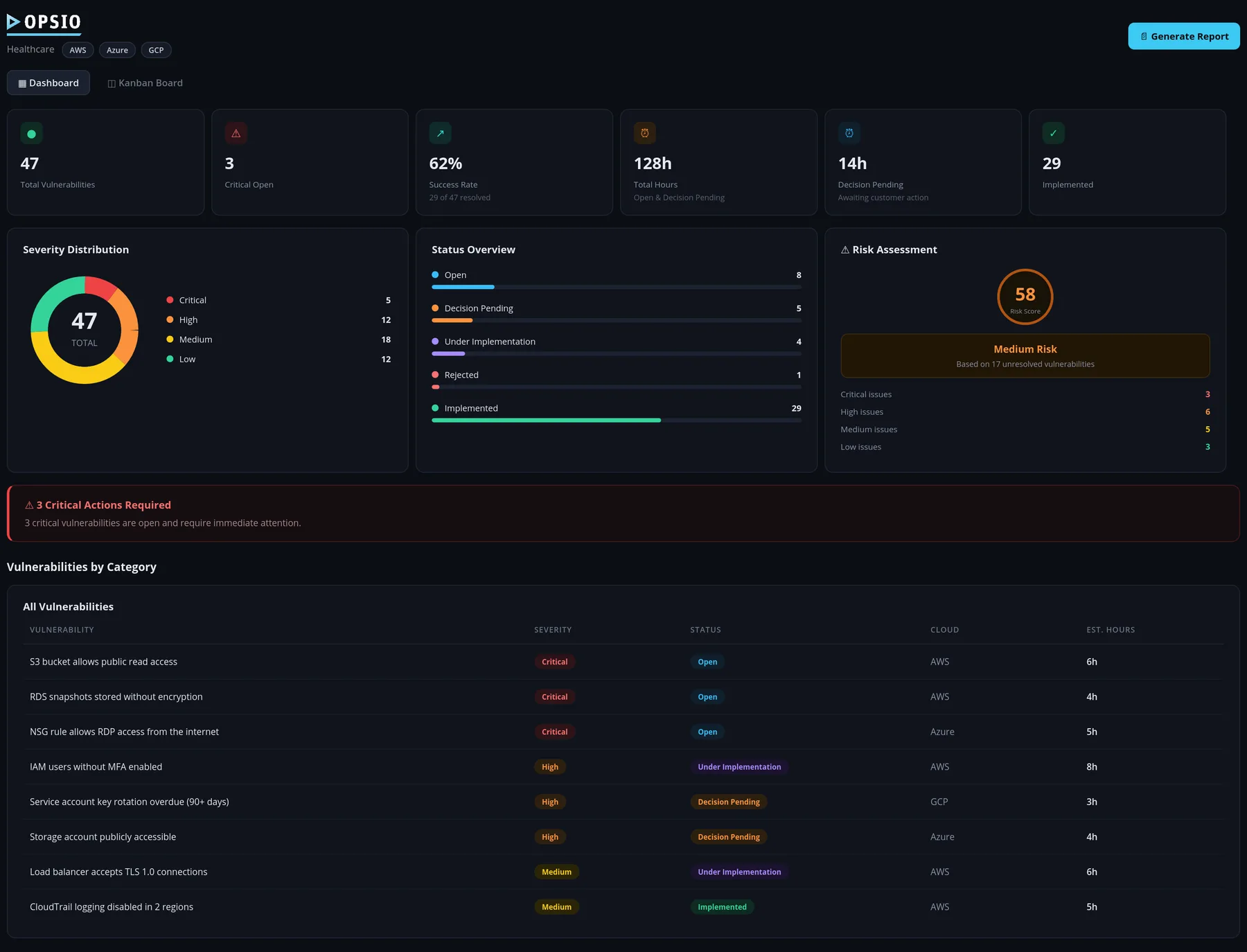
- Security posture, compliance score & multi-cloud spend on one live dashboard
- Cost anomalies & budget overruns caught before the invoice lands
- Auto-generated compliance evidence & vulnerability reports
- Encrypted secrets, mandatory MFA & row-level isolation by design
It's simply part of being an Opsio managed-cloud customer.
Why Indian Enterprises Need Continuous Vulnerability Management
Over twenty-five thousand new CVEs are published yearly. Indian enterprises running Digital India platforms, UPI integrations, and BFSI applications face mounting exposure. Without continuous vulnerability assessment and systematic remediation, your attack surface grows faster than your team can patch — and CERT-In expects rapid incident handling. Opsio's vulnerability management service provides continuous automated scanning using Qualys, Tenable, and cloud-native scanners including AWS Inspector and Azure Defender within Indian regions. Scanning alone is insufficient — we add risk-based prioritisation using CVSS scores, exploit availability, and Indian business context to ensure critical vulnerabilities are addressed first.
Our service includes remediation tracking, SLA management, executive dashboards, and compliance-ready reporting mapped to ISO 27001, CERT-In advisories, DPDPA, RBI cybersecurity guidelines, and NIST. We transform raw scan data into actionable risk intelligence tailored to the Indian threat landscape.
Indian enterprises face a unique vulnerability management challenge: the intersection of rapidly scaling cloud infrastructure across Mumbai and Hyderabad regions with legacy on-premises systems that still process critical business logic. Shadow IT proliferation in Indian organisations — driven by business units independently provisioning cloud resources — creates asset blind spots that traditional vulnerability scanners miss entirely. Opsio's continuous discovery engine maps your entire Indian attack surface across cloud, on-premises, and SaaS environments.
The CERT-In mandate for six-hour incident reporting makes proactive vulnerability management existentially important for Indian enterprises. Organisations that discover and remediate vulnerabilities before exploitation avoid the regulatory cascade of mandatory incident reporting, potential DPDPA penalties, and reputational damage in a market where trust is paramount. Opsio's risk-based prioritisation ensures that the vulnerabilities most likely to be exploited in the Indian threat landscape are addressed first.
India's position as a global outsourcing hub means that vulnerability management must extend beyond an organisation's own infrastructure to encompass client-facing environments and supply chain partners. BFSI institutions, IT services companies, and pharmaceutical firms operating from India must demonstrate mature vulnerability management practices to satisfy international client audits and regulatory requirements from multiple jurisdictions simultaneously. Featured reading from our knowledge base: Vulnerability management services India | Comprehensive Security Solutions, Enhancing Business Security: Expert IT Vulnerability Assessments, and Expert IT Vulnerability Assessment for Secure Operations – Opsio. Related Opsio services: Security Assessment & Forensics for India, SOC Security Services India — 24/7 Managed SOC & MDR from Bangalore, Managed Detection & Response (MDR) for India, and Cloud Security Services for India.
How Opsio Compares
| Capability | DIY Scanning | Generic VA Provider | Opsio VA Management India |
|---|---|---|---|
| Scanning coverage | Periodic manual | Weekly automated | Continuous real-time scanning |
| Asset discovery | Manual inventory | Basic network scan | Full cloud + on-prem + shadow IT discovery |
| Risk prioritisation | CVSS score only | Basic risk ranking | Context-aware: exploitability + Indian threat landscape |
| Patch management | Manual, delayed | Recommendations only | Automated patching with rollback capability |
| CERT-In reporting | None | Basic vulnerability lists | Pre-formatted CERT-In compliant reports |
| SLA for critical vulns | Weeks to months | 5-7 days | 24-hour remediation for critical findings |
| Typical annual cost | ₹15-30L (tools + staff) | ₹20-40L (scanning only) | ₹25-60L (full lifecycle management) |
Ready to get started?
What You Get
Pricing & Investment Tiers
Transparent pricing. No hidden fees. Scope-based quotes.
Initial Assessment
₹4–₹10 lakh
One-time
Continuous Scanning & Management
₹1.5–₹6 lakh/mo
Ongoing
Remediation Support
₹2.5–₹8 lakh/mo
Optional
Transparent pricing. No hidden fees. Scope-based quotes.
Questions about pricing? Let's discuss your specific requirements.
Vulnerability Assessment & Management for India
Free consultation