

Understanding automated Cloud sla monitoring
In today's fast-paced digital landscape, cloud services form the backbone of countless businesses. Ensuring these services consistently meet agreed-upon performance levels is critical for operational success and user satisfaction. This is precisely where automated Cloud sla monitoring comes into play, offering a robust solution for continuous performance validation.
automated Cloud sla monitoring refers to the systematic and programmatic process of verifying that cloud services adhere to their defined Service Level Agreements (SLAs). It involves using specialized tools and scripts to automatically collect, analyze, and report on various performance metrics. This continuous verification ensures that cloud providers deliver on their promises, safeguarding business operations.
The essence of automatic SLA tracking lies in its proactive nature, moving beyond reactive problem-solving. It establishes a framework for constant vigilance over cloud performance, minimizing the potential for service disruptions. This automation frees up valuable human resources, allowing teams to focus on strategic initiatives rather than manual checks.
SLA monitoring automation significantly enhances transparency and accountability within cloud environments. By providing objective data, it creates a clear picture of service health against contractual obligations. This data is invaluable for performance reviews, contract renegotiations, and ensuring robust governance across all cloud engagements.
The Imperative for automated Cloud sla monitoring
As organizations increasingly migrate critical applications and data to the cloud, the reliance on external providers grows exponentially. Downtime, slow performance, or security breaches can have severe repercussions, impacting revenue, customer trust, and brand reputation. Consequently, the need for robust oversight becomes paramount.
automated Cloud sla monitoring provides the essential visibility required to manage these dependencies effectively. It acts as an independent auditor, continuously verifying that cloud services are meeting uptime guarantees, response times, and other key performance indicators. Without such automation, manual verification would be impractical and prone to error in dynamic cloud environments.
One of the primary drivers for implementing this monitoring is to mitigate business risk. Unattended SLA compliance can lead to unexpected service degradation, which directly affects end-users and internal operations. Proactive monitoring identifies potential issues before they escalate, allowing for timely intervention and minimizing business impact.
Furthermore, it empowers organizations with data-driven insights to optimize their cloud spending and vendor relationships. By understanding actual performance versus promised performance, businesses can make informed decisions about resource allocation and ensure they are receiving the value they pay for. This level of insight is crucial for maintaining efficient and resilient cloud infrastructure.
Key Components of Effective automated Cloud sla monitoring
Implementing a truly effective automated Cloud sla monitoring system requires a combination of sophisticated tools, well-defined metrics, and intelligent alerting mechanisms. These components work in unison to provide a comprehensive view of cloud service health and compliance. Understanding each element is crucial for building a resilient monitoring framework.
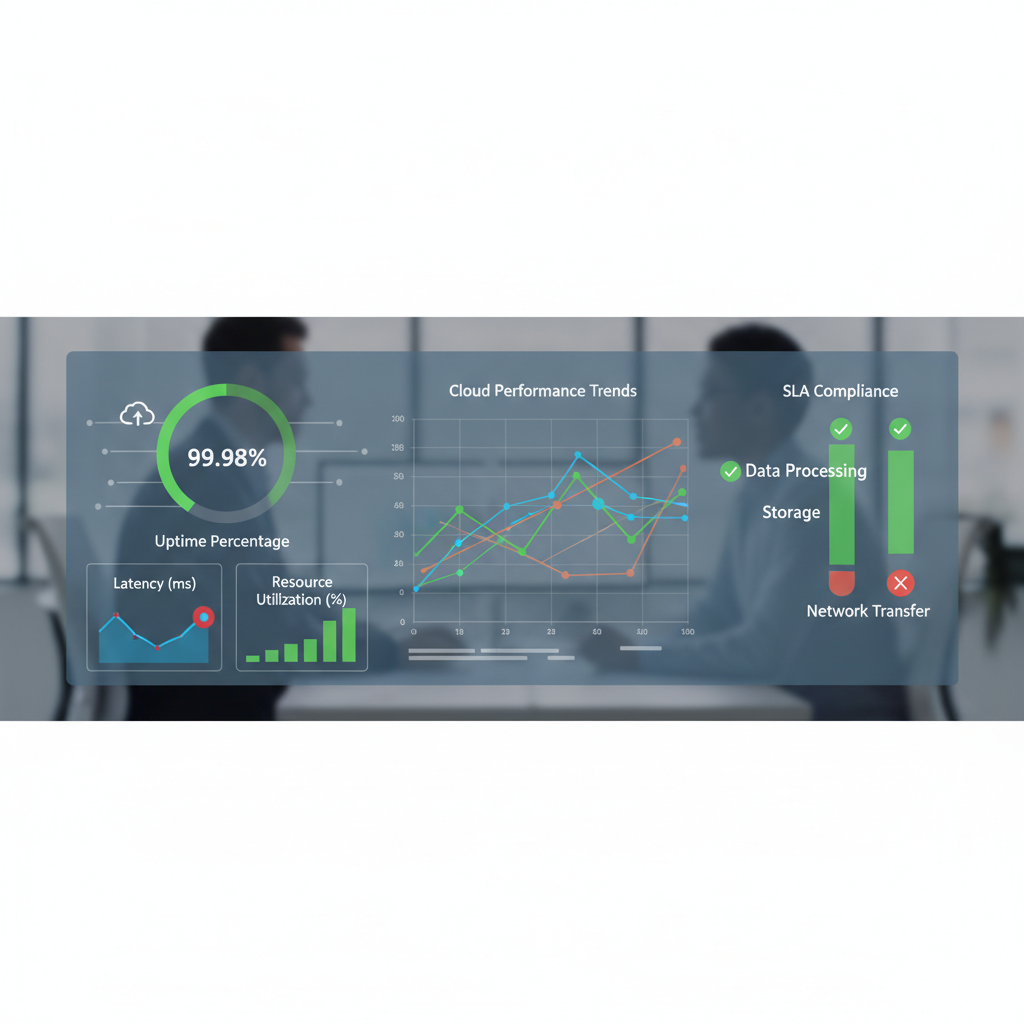
Central to any monitoring system are the performance metrics themselves. These typically include uptime, latency, throughput, error rates, and resource utilization for specific cloud services. Defining these metrics clearly and linking them directly to SLA clauses ensures that monitoring efforts are focused and relevant.
Scripted cloud performance checks are a core element, utilizing synthetic transactions to simulate user interactions or API calls. These scripts run at regular intervals, testing services from various geographical locations and reporting back on their performance. This proactive approach helps identify issues even before real users encounter them, providing early warning signals.
Alerting and notification systems are another critical component. When performance deviates from predefined thresholds or an SLA is at risk, the system must trigger immediate alerts. These alerts can be delivered via various channels like email, SMS, or integration with incident management platforms, ensuring prompt awareness and response. Self-regulating cloud monitoring systems often leverage these alerts to trigger automated remediation actions.
Finally, comprehensive reporting and analytics capabilities are vital for long-term strategic insights. Automated systems should generate detailed reports on historical performance, trend analysis, and SLA compliance over time. This data supports performance reviews, capacity planning, and helps identify recurring issues, ensuring continuous improvement in service delivery.
ENSURE UNINTERRUPTED SERVICE
Ensure uninterrupted service delivery and proactively prevent costly SLA breaches. Leverage our automated, real
✓ Free consultation✓ No commitment required
✓ Trusted by experts
Implementing automated Cloud sla monitoring: A Step-by-Step Guide
Successfully deploying automated Cloud sla monitoring involves a structured approach that ensures comprehensive coverage and effective incident response. This programmatic SLA management strategy requires careful planning and execution to integrate seamlessly with existing operations. Follow these steps to establish a robust monitoring system.
The first step is to clearly define your Service Level Agreements (SLAs) and Key Performance Indicators (KPIs). This involves collaborating with stakeholders to understand business criticalities and translating them into measurable service objectives. Specify what constitutes acceptable performance for uptime, response times, error rates, and other relevant metrics for each cloud service.
Next, select appropriate automated Cloud sla monitoring tools. Evaluate solutions based on their ability to integrate with your specific cloud providers, support the metrics you need, and offer features like synthetic monitoring, real-user monitoring, and robust alerting. Consider scalability and ease of use when making your selection.
Once tools are chosen, configure monitoring agents or scripts for your cloud resources. This involves deploying small software agents or setting up API connections that collect performance data from your cloud infrastructure and applications. For "scripted cloud performance checks," develop and deploy synthetic transaction scripts that mimic critical user journeys.
After data collection is set up, establish effective alerts and notification workflows. Define thresholds for each KPI that, when breached, trigger an alert. Configure who receives these alerts, through which channels, and what severity levels are associated with different types of performance degradation. Prompt notifications are key to effective response.
The fifth step in this automated Cloud sla monitoring guide is to design comprehensive reporting and review processes. Schedule regular reports that show SLA compliance trends, performance bottlenecks, and incident summaries. Implement a review cadence where these reports are analyzed, and findings lead to actionable improvements in your cloud architecture or vendor management.
Finally, integrate your monitoring system with your existing incident management and IT service management (ITSM) platforms. This ensures that alerts automatically create tickets, assign them to the correct teams, and streamline the incident resolution process. Programmatic SLA management thrives on efficient end-to-end workflows.
Best Practices for Robust automated Cloud sla monitoring
Achieving optimal results with automated Cloud sla monitoring goes beyond mere setup; it requires continuous refinement and adherence to best practices. These tips ensure your monitoring system remains relevant, accurate, and truly valuable in maintaining service excellence. Focusing on proactive measures will significantly enhance your cloud operations.
One crucial practice is to regularly review and update your SLAs and associated monitoring thresholds. Cloud environments evolve rapidly, and what was critical last year might not be today. Ensure your SLAs reflect current business needs, application architecture, and vendor capabilities. This keeps your automatic SLA tracking accurate and relevant.
Another best practice is to test your alerts and incident response procedures periodically. Do not wait for a real incident to discover that your notification system is misconfigured or that your response team is unclear on their roles. Conduct simulation drills to validate the entire workflow, from alert generation to problem resolution.
For comprehensive coverage, utilize a combination of synthetic and real-user monitoring (RUM). Synthetic monitoring provides consistent, controlled data from predefined locations, while RUM captures actual user experiences. Together, they offer a complete picture of service availability and performance, which is vital for any automated Cloud sla monitoring strategy.
Ensure your monitoring solution provides comprehensive coverage across all your cloud services and regions. In multi-cloud or hybrid environments, it is easy to overlook certain components. A holistic view is essential to prevent blind spots that could lead to unnoticed SLA breaches. This is a fundamental aspect of the best automated Cloud sla monitoring approaches.
Finally, always focus on the end-user experience (EUX) as the ultimate measure of success. While technical metrics are important, if the end-user experience is poor, your services are failing their primary purpose. Configure your automated Cloud sla monitoring to directly reflect EUX, using metrics that matter most to your users. These automated Cloud sla monitoring tips drive real business value.
Challenges and Solutions in automated Cloud sla monitoring
While automated Cloud sla monitoring offers immense benefits, organizations frequently encounter various challenges during implementation and ongoing management. Addressing these issues proactively is essential for maintaining the integrity and effectiveness of your monitoring efforts. Understanding common hurdles and their solutions can streamline your journey.
One significant challenge is the sheer volume and noise of monitoring data. Cloud environments generate vast amounts of metrics, logs, and events, making it difficult to pinpoint relevant information. The solution involves implementing intelligent filtering, anomaly detection, and correlation engines to reduce alert fatigue and focus on actionable insights. Effective self-regulating cloud monitoring requires smart data processing.
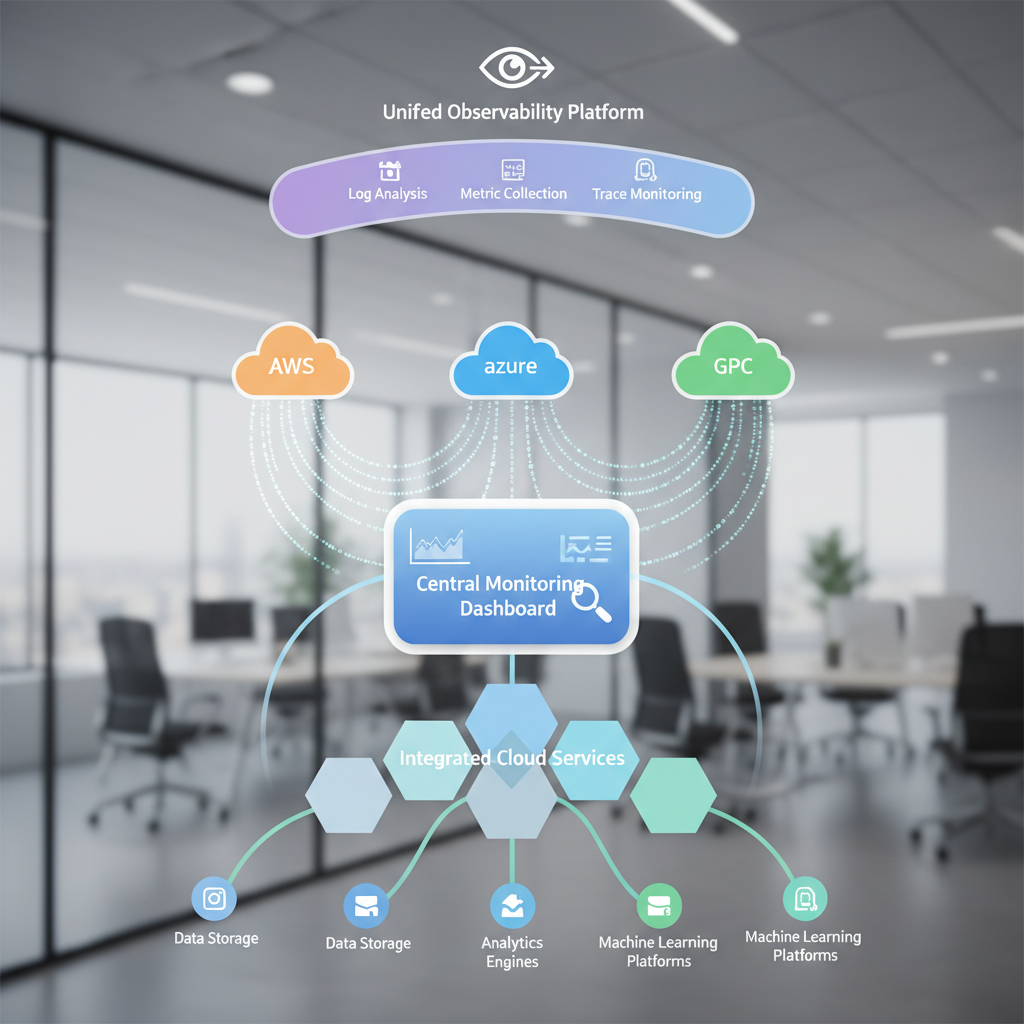
Another hurdle arises from multi-cloud and hybrid cloud complexity. Monitoring across disparate platforms with varying APIs, metrics, and terminologies can be daunting. The answer lies in adopting unified monitoring platforms that offer broad integration capabilities and provide a single pane of glass for all your cloud resources, simplifying programmatic SLA management.
Defining realistic and measurable SLAs can also be a challenge. Business owners might set overly ambitious targets, or technical teams might define metrics that are difficult to monitor accurately. Collaborative workshops involving both business and technical stakeholders can bridge this gap, ensuring SLAs are achievable, verifiable, and meaningful.
Integration hurdles with existing IT infrastructure and tools often pose problems. Legacy systems may not easily communicate with modern cloud monitoring solutions. Solutions include leveraging open APIs, developing custom connectors, or opting for monitoring platforms that offer extensive out-of-the-box integrations with common ITSM, CMDB, and automation tools.
Finally, ensuring consistent performance baselines in dynamic cloud environments is tough. Cloud resources scale up and down, making it hard to establish a stable "normal" performance. Implementing AI-driven baselining and predictive analytics helps differentiate genuine performance issues from expected fluctuations, providing more accurate automated Cloud sla monitoring examples for decision-making.
The Future of automated Cloud sla monitoring
The landscape of automated Cloud sla monitoring is continually evolving, driven by advancements in artificial intelligence, machine learning, and the ever-growing complexity of cloud architectures. The future promises even more sophisticated, proactive, and self-optimizing monitoring capabilities, further enhancing service reliability.
One major trend is the increased integration of AI and machine learning for predictive analysis. These technologies will move beyond reactive alerting to anticipate potential SLA breaches before they occur. By analyzing historical data and identifying patterns, AI-powered systems can flag anomalies that suggest impending issues, enabling proactive remediation.
We can expect to see smarter, more autonomous remediation capabilities. Future automated Cloud sla monitoring systems will not just alert but will also trigger self-healing actions, such as scaling up resources, rerouting traffic, or restarting failing components. This moves towards truly self-regulating cloud monitoring, minimizing human intervention.
Serverless and containerized monitoring solutions will become more prevalent, offering greater flexibility and scalability. These lightweight, event-driven monitoring agents can be deployed precisely where needed, reducing overhead and improving the granularity of data collection, further enhancing unattended SLA compliance.
The emphasis will also shift towards business-centric monitoring, where performance metrics are directly correlated with business outcomes. Instead of just tracking CPU usage, systems will assess how technical performance impacts sales, customer satisfaction, or conversion rates, providing a more holistic view of service value. This holistic view will guide the evolution of automated Cloud sla monitoring guide.
Ultimately, the future points towards highly integrated, intelligent orchestration platforms that unify monitoring, incident management, and automation across diverse cloud landscapes. These platforms will leverage advanced analytics to provide actionable insights, driving continuous optimization and ensuring unparalleled service quality.
Frequently Asked Questions (FAQ)
What exactly is automated Cloud sla monitoring?
automated Cloud sla monitoring is the practice of continuously and programmatically verifying that cloud services meet their predefined Service Level Agreements (SLAs). It involves using tools to automatically collect performance data, analyze it against established thresholds, and alert stakeholders to potential deviations or breaches. This ensures cloud providers deliver on their contractual promises regarding uptime, performance, and other critical metrics.
Why is automated Cloud sla monitoring important for businesses?
It is crucial for businesses to ensure the reliability and performance of their cloud-based applications and infrastructure. automated Cloud sla monitoring helps prevent downtime, maintain optimal user experience, mitigate financial and reputational risks, and ensure compliance with contractual obligations. It provides essential visibility and accountability, empowering businesses to make informed decisions and optimize their cloud investments.
What are common metrics monitored in Cloud SLAs?
Common metrics monitored in Cloud SLAs typically include uptime percentage (service availability), latency (response time), throughput (data transfer rate), error rates, and resource utilization (CPU, memory, storage). Other metrics might include data durability, security compliance, and disaster recovery time objectives (RTO) or recovery point objectives (RPO). The specific metrics depend on the nature of the cloud service and its criticality.
Can automated Cloud SLA monitoring work across multi-cloud environments?
Yes, automated Cloud sla monitoring is designed to work effectively across multi-cloud and hybrid cloud environments. Modern monitoring solutions offer connectors and integrations for various cloud providers like AWS, Azure, and Google Cloud, as well as on-premise infrastructure. This capability provides a unified view of performance and SLA compliance across your entire distributed IT landscape, streamlining programmatic SLA management.
How does automated Cloud SLA monitoring improve incident response?
It significantly improves incident response by providing real-time alerts when performance deviates from SLA thresholds. These alerts are often automatically routed to relevant teams, sometimes even creating incident tickets automatically. This proactive notification system enables quick diagnosis and resolution of issues, minimizing downtime and reducing the impact on end-users and business operations.
What is the difference between synthetic and real-user monitoring in this context?
Synthetic monitoring involves simulating user interactions with an application or service from various locations to proactively check availability and performance. It runs continuously and predictably. Real-user monitoring (RUM), conversely, collects data from actual user sessions, providing insights into the genuine user experience. Both are valuable components of best automated Cloud sla monitoring, offering a comprehensive view of service health.
ENSURE UNINTERRUPTED SERVICE
Ensure uninterrupted service delivery and proactively prevent costly SLA breaches. Leverage our automated, real
✓ Free consultation✓ No commitment required
✓ Trusted by experts
Conclusion
The reliance on cloud services continues to grow, making automated Cloud sla monitoring an indispensable tool for any organization. It provides the critical visibility and accountability needed to ensure cloud performance aligns with business expectations and contractual agreements. By leveraging automatic SLA tracking, businesses can move beyond reactive problem-solving to proactive performance management.
Embracing automated Cloud sla monitoring safeguards against potential service disruptions, optimizes resource utilization, and strengthens vendor relationships. It is an investment in business continuity and customer satisfaction, ensuring that your cloud infrastructure consistently delivers on its promises. As cloud environments become more complex, the intelligent, self-regulating capabilities of automated Cloud sla monitoring will be paramount for sustained success.
Opsio provides cloud consulting and managed services to help organizations implement and manage their technology infrastructure effectively.