

Understanding Cloud Cost Optimization Strategies
In today's dynamic digital landscape, cloud adoption continues to accelerate, bringing unprecedented agility and scalability to businesses worldwide. However, with the myriad of services and fluctuating usage, controlling cloud expenditure has become a critical challenge for many organizations. This is where robust cloud cost optimization strategies come into play, offering a systematic approach to managing and reducing cloud spending without sacrificing performance or innovation.
Effective cloud cost management involves more than just cutting expenses; it's about maximizing value from every dollar spent in the cloud. It encompasses a continuous process of planning, monitoring, and adjusting cloud resources and services to align with business needs and financial goals. Implementing these strategies ensures that resources are utilized efficiently, leading to significant long-term savings and improved operational efficiency.
The Core Principles of Effective Cloud Cost Optimization
Successful cloud cost optimization is built upon several foundational principles that guide decision-making and implementation. These principles help organizations develop a comprehensive framework for managing their cloud investment. By adhering to these guidelines, businesses can achieve greater financial control and resource efficiency within their cloud environments.
One of the most important aspects is the adoption of FinOps principles, which foster collaboration between finance, operations, and business teams. This cultural shift ensures that everyone understands the financial implications of their cloud usage, promoting shared accountability. It moves cloud financial management from a reactive task to a proactive, integrated business practice.
Embracing FinOps for Financial Governance
FinOps principles establish a framework for cloud financial management that emphasizes collaboration and real-time visibility. It treats cloud spending as a shared responsibility, integrating financial accountability directly into daily operations. This approach helps bridge the gap between technical teams and finance departments.
By embedding FinOps, organizations gain better control over their cloud expenditure. It encourages a culture where engineering teams are empowered to make cost-conscious decisions, while finance teams gain granular insight into cloud spending patterns. This leads to more informed budgeting and resource allocation.
Continuous Monitoring and Analysis
Consistent monitoring of cloud usage and spend is paramount for effective optimization. Organizations must have tools and processes in place to track consumption patterns, identify anomalies, and pinpoint areas of potential waste. Without clear visibility, optimization efforts can be misdirected or ineffective.
Detailed analysis of usage data allows for informed decisions regarding resource allocation and configuration. This ongoing process helps maintain cost efficiency as cloud environments evolve and business demands change. It is a proactive measure against unexpected cost increases.
Key Pillars of Cloud Cost Optimization Strategies
Implementing successful cloud cost optimization strategies requires a multi-faceted approach, addressing various aspects of cloud resource management and procurement. Each pillar contributes to overall savings and efficiency, forming a robust framework for controlling cloud spending. These key areas demand consistent attention and strategic planning.
By focusing on these distinct areas, businesses can systematically identify and eliminate inefficiencies, leading to substantial reductions in cloud expenses. A holistic strategy considers technical configurations, purchasing models, and organizational processes. This comprehensive approach is vital for sustainable cost savings.
Resource Utilization Optimization
Ensuring that cloud resources are used to their fullest potential is a cornerstone of cost optimization. Underutilized resources represent direct financial waste and can significantly inflate cloud bills. Effective resource utilization optimization involves careful planning and continuous adjustment.
It focuses on matching resource allocation precisely with actual demand, avoiding over-provisioning. This means not only right-sizing instances but also identifying and eliminating idle resources that continue to incur charges. Maximizing the efficiency of every active resource is a primary goal.
#### Rightsizing Cloud Resources
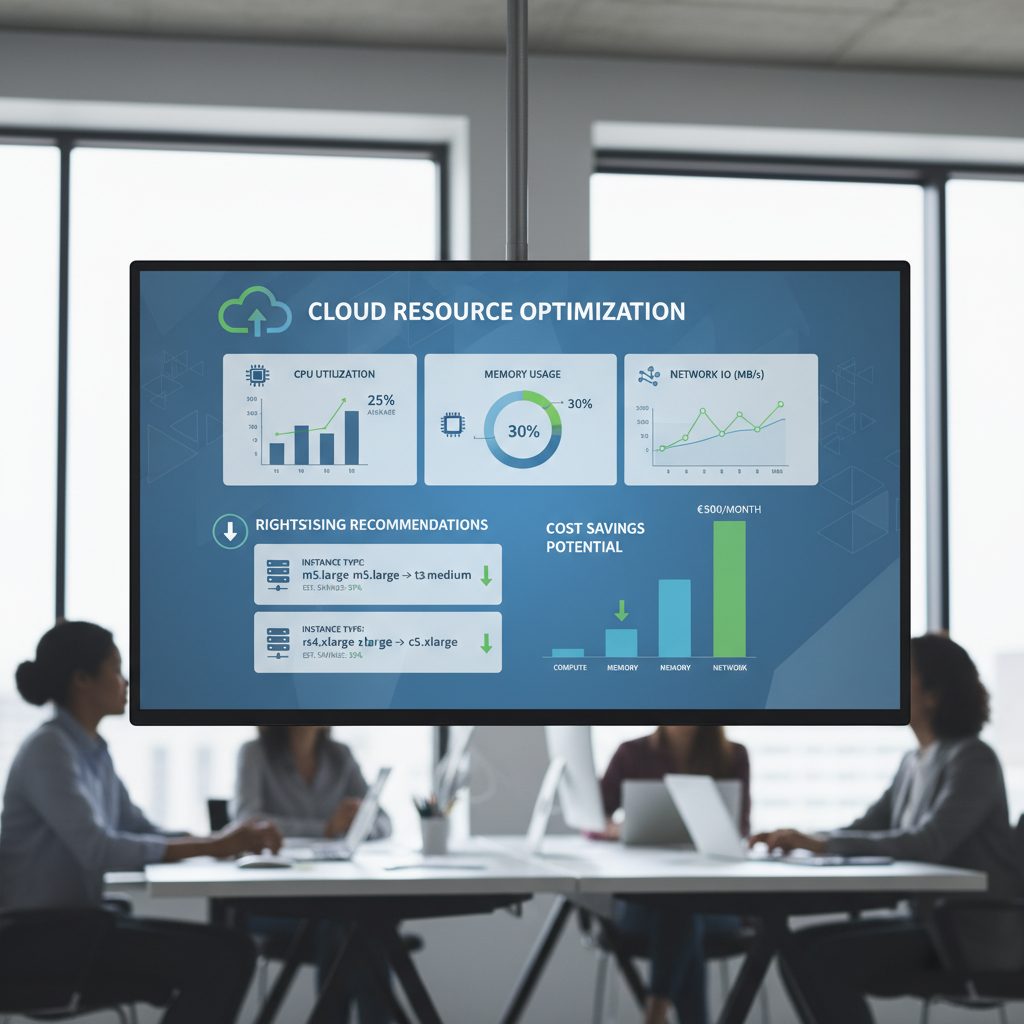
Rightsizing cloud resources involves adjusting the size and type of virtual machines, databases, and other services to precisely match application requirements. Many organizations initially over-provision resources "just in case," leading to unnecessary expenditure. Analyzing performance metrics helps identify opportunities for rightsizing.
This process ensures that you are not paying for capacity you don't need, making it a critical component of waste reduction in cloud environments. Tools and services provided by cloud providers often offer recommendations for rightsizing instances. Regularly reviewing and adjusting resource sizes can yield substantial savings without impacting performance.
#### Identifying and Eliminating Waste
A significant portion of cloud spending is often attributable to idle or unattached resources. These can include unattached storage volumes, old snapshots, unused IP addresses, or stopped instances that still incur storage costs. Proactive identification and elimination of such waste are essential.
Implementing automated cleanup routines and regularly auditing cloud environments can prevent accumulation of these forgotten resources. This directly contributes to cost-saving best practices by ensuring that every dollar spent serves a productive purpose. Regularly reviewing resource inventories helps maintain a lean cloud footprint.
Leveraging Cost-Saving Purchasing Models
Cloud providers offer various purchasing models designed to provide discounts for committed usage or flexible capacity. Understanding and strategically utilizing these models can lead to significant cost reductions compared to on-demand pricing. Choosing the right model depends on workload predictability and commitment levels.
These models reward users who can forecast their resource needs, even partially. Integrating these purchasing strategies into your overall cloud expense management plan is crucial. It requires a balance between flexibility and cost savings.
#### Reserved Instances and Savings Plans
Reserved Instances (RIs) and Savings Plans (SPs) allow customers to commit to a certain amount of compute usage over a 1-year or 3-year period in exchange for significant discounts. These are ideal for steady-state workloads with predictable resource requirements. They provide substantial savings compared to on-demand rates.
Selecting the right type and quantity of RIs or SPs requires careful analysis of historical usage and future projections. Often, a mixed strategy combining these commitment models with on-demand pricing for burstable workloads provides optimal cost efficiency. This planning is vital for effective cloud budgeting and forecasting.
#### Spot Instances for Fault-Tolerant Workloads
Spot Instances allow users to bid for unused cloud capacity, offering very steep discounts compared to on-demand prices. These instances can be interrupted by the cloud provider with short notice if the capacity is needed elsewhere. They are perfectly suited for fault-tolerant, flexible workloads.
Examples include batch processing, data analysis, and stateless applications that can easily resume from interruption. Integrating spot instances into your architecture can drastically reduce costs for suitable workloads. This strategy requires robust application design to handle potential interruptions gracefully.
Implementing Automation for Cost Control
Automation plays a pivotal role in optimizing cloud costs by enforcing policies, managing resources dynamically, and preventing manual errors. Manual management of complex cloud environments often leads to overlooked opportunities for savings or inadvertent resource over-provisioning. Automation offers a consistent and scalable solution.
Automated processes can respond instantly to changes in demand, ensuring that resources scale up or down as needed. This reduces the need for human intervention and minimizes the risk of human error. It also ensures adherence to established cloud financial governance policies.
#### Automated Resource Scheduling and Scaling
Automating the startup and shutdown of non-production environments during off-hours can lead to substantial savings. Development, testing, and staging environments often don't need to run 24/7. Implementing schedules to turn these off automatically overnight or on weekends is a simple yet effective strategy.
Similarly, auto-scaling groups can automatically adjust the number of instances based on demand, ensuring optimal resource utilization. This dynamic adjustment prevents both over-provisioning during low demand and performance bottlenecks during peak times. It’s a key element of dynamic resource utilization optimization.
Enhancing Visibility with Cloud Expense Management Tools
Gaining clear visibility into cloud spending is the first step towards effective cost optimization. Cloud expense management tools provide detailed insights into where money is being spent, by whom, and on what resources. These tools consolidate billing data and present it in an understandable format.
They help identify trends, pinpoint cost anomalies, and allocate costs accurately to specific teams or projects. Without robust visibility, identifying opportunities for improvement becomes incredibly difficult. These tools are indispensable for proactive cloud cost optimization strategies.
Establishing Cloud Financial Governance
Robust cloud financial governance involves setting clear policies, guidelines, and accountability structures for cloud spending. It ensures that all cloud usage aligns with organizational objectives and budget constraints. This framework prevents uncontrolled spending and promotes responsible resource consumption.
Defining clear tagging strategies for resources is a fundamental aspect of governance, enabling accurate cost attribution and reporting. Regular audits and reviews of governance policies ensure their continued effectiveness. This creates a culture of financial responsibility across the organization.
MAXIMIZE CLOUD SAVINGS
Connect With Opsio
Tell us about your business requirement and let Opsio take care of the rest.
✓ No commitment required
✓ Trusted by experts
Implementing Cloud Cost Optimization: A Step-by-Step Approach
Embarking on cloud cost optimization requires a structured and iterative approach. Following a clear set of steps can help organizations effectively identify savings opportunities and implement sustainable changes. This systematic methodology ensures that efforts are targeted and impactful.
This section outlines a practical framework for implementing cloud cost optimization strategies within your organization. Each step builds upon the previous one, leading to a comprehensive and continuously improving cost management program. It leverages best practices to drive efficiency.
Step 1: Gain Comprehensive Visibility into Current Spending
The first crucial step is to fully understand your current cloud expenditure. This involves collecting and analyzing billing data from all your cloud providers. Without this foundational knowledge, any optimization efforts will be akin to navigating in the dark.
Tools for cloud expense management are essential here, providing granular breakdowns of costs by service, region, project, and department. Identify your largest cost centers and understand the resources contributing to them. This visibility is the bedrock for all subsequent optimization actions.
Step 2: Identify and Eliminate Waste
Once you have a clear picture of your spending, focus on identifying obvious areas of waste. This includes idle resources, unattached storage volumes, old snapshots, and over-provisioned instances. This step directly targets waste reduction in cloud environments.
Utilize cloud provider tools or third-party solutions to scan for these unused or underutilized assets. Prioritize eliminating resources that offer the quickest and easiest savings. This initial cleanup can yield immediate and significant reductions in your cloud bill.
Step 3: Rightsizing and Optimizing Resource Utilization
After removing obvious waste, focus on optimizing the resources that are still in use. Analyze usage metrics (CPU, memory, network I/O) for all your active instances and services. The goal is precise resource utilization optimization.
Determine if current resources are appropriately sized for their workloads. Downgrade oversized instances, adjust database capacities, or leverage serverless functions where appropriate. This step is continuous as workloads evolve, ensuring ongoing efficiency.

Step 4: Leverage Discounted Purchasing Options
Explore and implement cloud provider purchasing models like Reserved Instances (RIs), Savings Plans, or Spot Instances. These offer substantial discounts compared to on-demand pricing. This strategy requires careful planning and forecasting.
Analyze your stable, long-running workloads to identify candidates for RIs or Savings Plans. Design fault-tolerant applications to take advantage of Spot Instances for significant savings on eligible workloads. A balanced approach using various models often yields the best results.
Step 5: Implement Automation and Governance Policies
Automate resource management tasks wherever possible, such as scheduling non-production environments to shut down during off-hours. Implement auto-scaling for variable workloads to dynamically adjust resources based on demand. Automation drives continuous efficiency.
Establish strong cloud financial governance policies, including mandatory tagging, budget alerts, and approval workflows. Ensure these policies are communicated across the organization and regularly enforced. This step embeds cost consciousness into operational practices.
Step 6: Continuously Monitor, Analyze, and Iterate
Cloud cost optimization is not a one-time project but an ongoing process. Continuously monitor your cloud spend, resource utilization, and adherence to governance policies. Regularly review performance against your cloud budgeting and forecasting goals.
Analyze new opportunities for optimization as cloud services evolve and your business needs change. Foster a culture of cost awareness across all teams. This iterative approach ensures that your cloud environment remains cost-efficient over the long term.
Advanced Techniques for Maximizing Cloud Savings
Beyond the fundamental strategies, several advanced techniques can further enhance your cloud cost optimization efforts. These often require deeper technical expertise and a more mature FinOps culture, but they can unlock substantial additional savings. Implementing these advanced methods can lead to a highly optimized cloud footprint.
These techniques focus on architectural changes, deeper financial analysis, and leveraging specialized tools. They represent the next level of sophisticated cloud expense management. Organizations that master these can achieve truly exceptional cloud financial efficiency.
Optimizing Data Transfer Costs
Data transfer (egress) costs can become a significant hidden expense, especially for applications with high data movement between regions, availability zones, or to the internet. Understanding data flow patterns is crucial for minimizing these charges. Strategies include co-locating resources and leveraging Content Delivery Networks (CDNs).
By designing architectures that minimize cross-region or cross-availability zone data transfers where possible, substantial savings can be realized. Utilizing internal network communication paths and caching frequently accessed data closer to users are key strategies. This reduces reliance on expensive external data transfers.
Leveraging Serverless and Containerization
Migrating suitable workloads to serverless platforms (like AWS Lambda, Azure Functions, Google Cloud Functions) or container orchestration services (Kubernetes, AWS ECS) can significantly reduce operational costs. Serverless computing charges only for actual execution time, eliminating idle resource costs.
Containers provide greater resource density and portability, making better use of underlying infrastructure. These technologies abstract away server management, reducing operational overhead and often leading to more efficient resource utilization. They align well with modern cloud cost optimization strategies.
Negotiating Enterprise Discount Agreements
For large enterprises with substantial and predictable cloud spending, negotiating an Enterprise Discount Agreement (EDA) directly with the cloud provider can yield significant additional discounts. These agreements are tailored to specific usage commitments and often include dedicated support.
Engaging in these negotiations requires a clear understanding of your long-term cloud strategy and projected spend. While not applicable to all businesses, an EDA can be a powerful tool for maximizing savings for high-spending organizations. It's a strategic move in cloud expense management.
Benefits and Challenges of Cloud Cost Optimization
Implementing effective cloud cost optimization strategies brings a multitude of benefits, extending beyond mere financial savings. However, organizations also face various challenges in their journey towards an optimized cloud environment. Understanding both sides is crucial for a successful approach.
Recognizing these benefits can motivate adoption, while anticipating challenges allows for proactive planning and mitigation. A balanced perspective ensures a realistic and effective implementation of cost-saving best practices. This holistic view strengthens the overall strategy.
Tangible Benefits
The most immediate benefit is a direct reduction in cloud expenditure, freeing up budget for innovation and other strategic initiatives. Optimized spending directly impacts the bottom line, enhancing financial performance. This is often the primary driver for embarking on cost optimization.
Beyond savings, optimization leads to improved operational efficiency, as resources are aligned with actual needs. Enhanced visibility into cloud costs fosters greater accountability and better decision-making across teams. This promotes a more mature cloud operating model.
Overcoming Challenges
One significant challenge is the sheer complexity of cloud billing, especially across multiple services and providers. Interpreting detailed billing reports requires specialized knowledge and tools. Another hurdle is gaining organizational buy-in, particularly from engineering teams who may prioritize speed over cost efficiency.
Addressing these challenges requires a commitment to FinOps principles, investing in robust cloud expense management tools, and fostering a culture of continuous learning and collaboration. Breaking down silos between finance and technical teams is key to successful cloud financial governance.
Frequently Asked Questions About Cloud Cost Optimization
This section addresses common questions about cloud cost optimization strategies, providing clear and concise answers to help organizations better understand and implement these critical practices.
What is cloud cost optimization strategies?
Cloud cost optimization strategies refer to the set of practices and techniques used to reduce overall cloud spending while maintaining or improving performance and scalability. It involves analyzing usage, identifying waste, and implementing cost-saving measures across an organization's cloud infrastructure. The goal is to maximize the business value derived from cloud investments.
Why is cloud cost optimization important for businesses?
Cloud cost optimization is crucial because it directly impacts a company's profitability and competitive advantage. Unmanaged cloud costs can quickly spiral out of control, consuming significant portions of the IT budget. By optimizing, businesses free up capital for innovation, improve operational efficiency, and gain better financial control over their cloud environments.
What are common areas where cloud costs can be optimized?
Common areas for optimization include rightsizing compute instances to match actual workload demands, eliminating idle or unused resources, leveraging discounted purchasing options like Reserved Instances or Savings Plans, and optimizing data transfer costs. Automating resource management and implementing strong cloud financial governance also offer substantial savings opportunities.
How do FinOps principles contribute to cloud cost optimization?
FinOps principles establish a cultural practice that brings financial accountability to the variable spend model of the cloud. It promotes collaboration between finance, operations, and business teams, fostering shared ownership of cloud costs. By integrating financial insights into daily operations, FinOps enables data-driven decisions that lead to continuous cloud cost optimization.
What tools are available to help with cloud expense management?
Cloud providers themselves offer native tools for cost monitoring and reporting, such as AWS Cost Explorer, Azure Cost Management, and Google Cloud Billing Reports. Additionally, many third-party cloud expense management platforms provide enhanced features like multi-cloud visibility, advanced analytics, budget alerting, and optimization recommendations. These tools are vital for effective cloud budgeting and forecasting.
Is cloud cost optimization a one-time task?
No, cloud cost optimization is an ongoing, continuous process. Cloud environments are dynamic, with services, usage patterns, and pricing models constantly evolving. Regular monitoring, analysis, and adjustments are necessary to maintain cost efficiency over time. It requires an iterative approach to stay optimized.
MAXIMIZE CLOUD SAVINGS
Connect With Opsio
Tell us about your business requirement and let Opsio take care of the rest.
✓ No commitment required
✓ Trusted by experts
Conclusion
Effectively managing cloud expenditure through robust cloud cost optimization strategies is no longer optional; it is a strategic imperative for businesses operating in the cloud. By embracing FinOps principles, meticulously optimizing resource utilization, and leveraging smart purchasing models, organizations can significantly reduce their cloud bills without compromising performance or innovation. The journey involves a systematic approach, starting with comprehensive visibility and moving through waste reduction, rightsizing, automation, and strong financial governance.
Implementing these cost-saving best practices leads to more than just financial savings; it fosters a more efficient, agile, and financially responsible cloud environment. Organizations that invest in continuous monitoring and iteration will ensure their cloud infrastructure remains optimized, delivering maximum value for every dollar spent. Begin your optimization journey today to unlock the full potential of your cloud investment and drive sustainable growth.
Opsio provides cloud consulting and managed services to help organizations implement and manage their technology infrastructure effectively.