

The adoption of multi-cloud strategies has become a cornerstone for modern enterprises, offering unparalleled flexibility, resilience, and innovation potential. However, this distributed environment also introduces significant complexities, particularly when it comes to managing expenditures. Effective multi-cloud cost optimization is no longer just a best practice; it is a critical business imperative for sustained financial health and competitive advantage in 2026 and beyond.
This comprehensive guide will delve into the strategies, tools, and best practices necessary to achieve significant hybrid cloud cost savings. We will explore how to gain control over your spending across diverse cloud infrastructures, ensuring that your investment delivers maximum value. By mastering multi-cloud cost optimization, organizations can unlock greater efficiency and innovation.
The Imperative of Multi-Cloud Cost Optimization
The shift to multi-cloud environments, encompassing public clouds like AWS, Azure, and Google Cloud, alongside private and hybrid setups, brings incredible benefits but also substantial financial challenges. Without a focused approach to multi-cloud cost optimization, expenses can quickly spiral out of control. This can erode the very agility and cost-efficiency that cloud adoption promises.
Organizations are increasingly realizing that merely migrating to the cloud does not automatically guarantee cost savings. Instead, proactive and continuous efforts are required to manage diverse cloud infrastructures effectively. The strategic importance of optimizing spend in hybrid environments cannot be overstated for long-term success.
Understanding the Landscape: Why Multi-Cloud Environments Present Unique Cost Challenges
Multi-cloud environments inherently introduce a complex array of factors that make cost management difficult. Each cloud provider has its own pricing models, discount structures, and billing mechanisms, making it challenging to compare and consolidate expenses. This lack of standardization often leads to a fragmented view of overall cloud spending.
Moreover, different teams within an organization might be utilizing various cloud services independently, leading to potential redundancies and orphaned resources. This distributed ownership complicates efforts towards cross-platform cloud expense reduction. Without a unified strategy, identifying underutilized resources or wasteful spending becomes a monumental task.
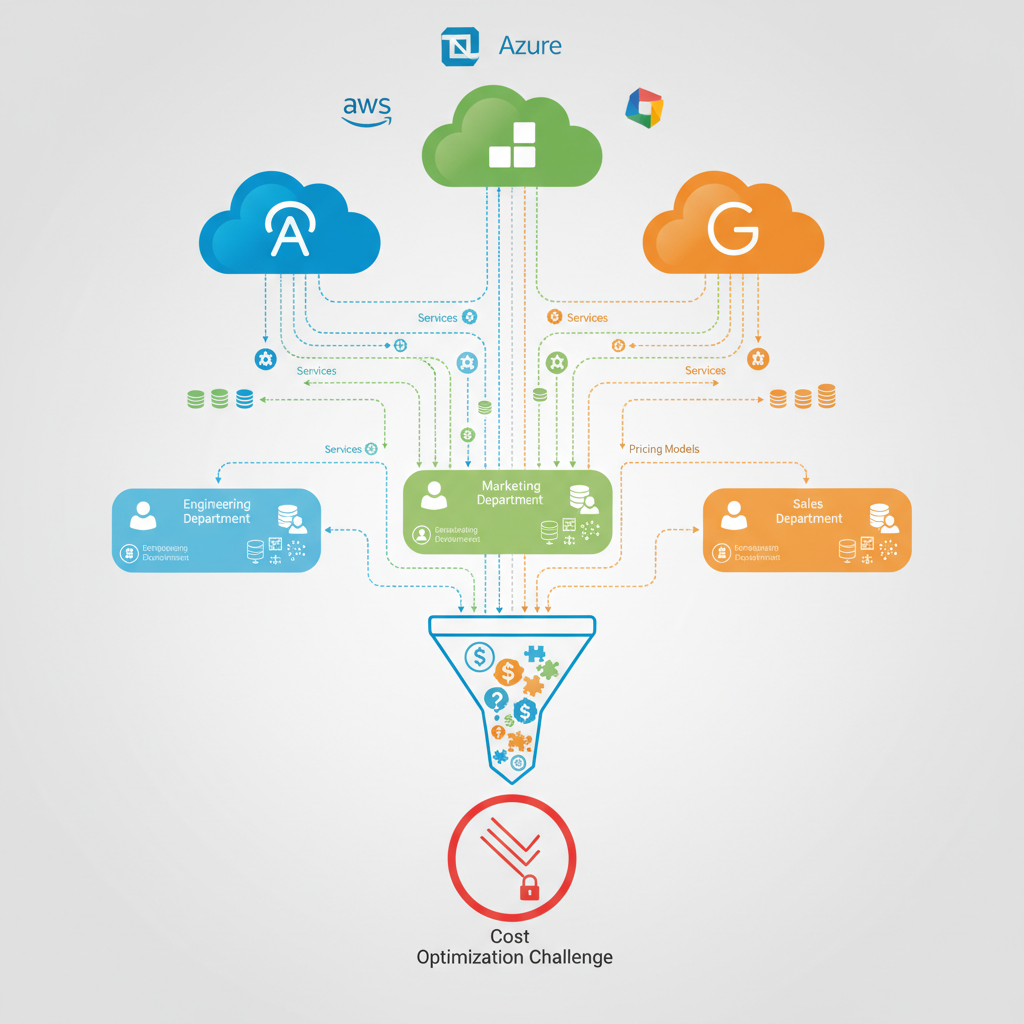
The unique challenges stem from several key areas. These include the sheer volume of services, varying resource types, regional pricing differences, and the constant evolution of cloud offerings. Navigating these complexities requires specialized knowledge and a dedicated focus on multi-cloud financial governance.
RECOMMENDED FOR YOU
Connect With Opsio
Tell us about your business requirement and let Opsio take care of the rest.
✓ No commitment required
✓ Trusted by experts
Core Principles of Effective Multi-Cloud Cost Optimization
Achieving successful multi-cloud cost optimization requires a foundational understanding and adherence to several core principles. These principles serve as the bedrock for any robust cost management strategy, enabling organizations to gain control and drive efficiency. Implementing these pillars consistently is key to sustainable savings.
Establishing these fundamental practices ensures that efforts towards multi-vendor cloud financial governance are coordinated and effective. They provide a structured approach to tackling the intricacies of managing diverse cloud spending. Let's delve into each critical principle.
Achieving Comprehensive Visibility
The first and arguably most critical step in multi-cloud cost optimization is gaining complete visibility into all cloud expenditures. This means breaking down silos between cloud providers and creating a unified view of spending across the entire multi-cloud landscape. Without this visibility, identifying areas for reduction is impossible.
Consolidated cloud cost reporting is essential for understanding where every dollar is being spent. This includes tracking costs by project, department, application, and individual resource. Detailed reporting allows stakeholders to pinpoint inefficiencies and hold teams accountable for their cloud consumption.
Implementing Robust Governance and Policies
Effective governance provides the necessary guardrails to control cloud spending proactively. This involves establishing clear policies, roles, and responsibilities for cloud resource provisioning, usage, and deprovisioning. Strong governance prevents uncontrolled sprawl and ensures adherence to budget constraints.
Policies should cover aspects like tagging standards, approved instance types, data retention rules, and cost allocation methodologies. By defining these guidelines, organizations can ensure that all cloud resources are deployed and managed in a cost-efficient manner from the outset. This creates a framework for continuous multi-cloud cost optimization.
Leveraging Automation for Efficiency
Automation is a powerful enabler for multi-cloud cost optimization, significantly reducing manual effort and human error. Automating tasks such as rightsizing resources, scheduling power-offs for non-production environments, and deprovisioning idle assets can lead to substantial savings. Tools and scripts can continuously monitor usage patterns.
Implementing automated alerts for budget overruns or unusual spending spikes allows for immediate corrective action. Automation also facilitates the enforcement of governance policies, ensuring consistent application across all cloud providers. This proactive approach is fundamental to best multi-cloud cost optimization practices.
Continuous Optimization Cycles
Multi-cloud cost optimization is not a one-time project but an ongoing, iterative process. Cloud environments are dynamic, with usage patterns and business needs constantly evolving. Therefore, a continuous cycle of monitoring, analysis, optimization, and reporting is essential to maintain cost efficiency.
Regular reviews of cloud bills, performance metrics, and cost allocation reports are vital. This continuous feedback loop allows organizations to adapt strategies, refine policies, and identify new opportunities for cross-platform cloud expense reduction. Adopting this mindset ensures long-term financial health in the cloud.
Practical Strategies for Maximizing Hybrid Cloud Cost Savings
Beyond the core principles, several practical strategies can be implemented to drive significant hybrid cloud cost savings. These actionable multi-cloud cost optimization tips focus on specific areas of cloud consumption where waste frequently occurs. Applying these tactics systematically will yield tangible results.
Organizations looking for multi-cloud cost optimization examples can draw inspiration from these proven methods. Each strategy addresses common challenges in optimizing spend in hybrid environments. Let's explore how to put these into practice.
Rightsizing and Resource Provisioning
One of the most effective strategies is rightsizing cloud resources to match actual workload requirements. Many instances are over-provisioned, meaning they have more CPU, memory, or storage than they truly need, leading to unnecessary expenditure. Regularly analyzing resource utilization data is key to identifying these inefficiencies.
Consistently review your compute, storage, and database instances to ensure they are appropriately sized for their workloads. Downsizing instances to their optimal configuration can lead to substantial savings without impacting performance. Automated tools can assist in recommending ideal instance types based on historical usage.
Utilizing Discount Programs and Commitment Plans
Cloud providers offer various discount programs, such as Reserved Instances (RIs), Savings Plans, and Committed Use Discounts. These allow organizations to commit to a certain level of usage over a period (e.g., 1 or 3 years) in exchange for significant price reductions. This is a cornerstone of multi-cloud cost optimization.
Analyzing historical and projected usage patterns is crucial to determining the optimal commitment level across your multi-vendor cloud infrastructure. While these plans offer substantial savings, careful planning is required to avoid over-commitment, which can negate the benefits. Consider a blend of commitment types for maximum flexibility.
Managing Data Transfer and Storage Costs
Data transfer costs, often referred to as egress fees, can become a significant and unexpected expense in multi-cloud environments. Moving data between different cloud regions, availability zones, or even between cloud providers can incur substantial charges. Minimizing unnecessary data egress is a critical area for optimization.
Architect your applications to keep data co-located with the services that process it whenever possible to reduce inter-region or inter-cloud data transfers. For storage, optimize by moving less frequently accessed data to cheaper storage tiers, like archival storage, or by deleting old, unneeded data. Implementing smart lifecycle policies can automate this process, contributing to cross-platform cloud expense reduction.
Harnessing Serverless and Containerization Efficiencies
Modern architectural patterns like serverless computing (e.g., AWS Lambda, Azure Functions, Google Cloud Functions) and containerization (e.g., Kubernetes, Docker) offer inherent cost efficiencies. Serverless functions only consume resources when actively executing, eliminating idle costs. Containers provide greater resource density and portability.
Migrating suitable workloads to serverless or containerized platforms can significantly reduce operational overhead and infrastructure costs. These technologies align well with the goal of optimizing spend in hybrid environments, allowing for more granular resource consumption and cost tracking. They represent a key part of the best multi-cloud cost optimization strategies.
Essential Tools and Technologies for Multi-Cloud Financial Governance
To effectively implement multi-cloud cost optimization strategies, organizations need the right tools. The market offers a diverse range of solutions, from cloud-native capabilities to specialized third-party platforms, all designed to provide consolidated cloud cost reporting and management. Selecting the right set of tools is crucial for multi-vendor cloud financial governance.
These tools facilitate visibility, enable automation, and support the governance policies necessary for successful cost management. They provide the insights and control required to make informed decisions about cloud spending. Understanding the options available is the first step toward building a robust cost management framework.
Cloud-Native Cost Management Solutions
Each major cloud provider offers its own suite of cost management tools (e.g., AWS Cost Explorer, Azure Cost Management + Billing, Google Cloud Billing reports). These tools provide detailed insights into spending within their respective ecosystems, offering capabilities like cost allocation, budgeting, and anomaly detection. They are excellent for granular control within a single cloud.
However, relying solely on cloud-native tools requires aggregating data manually across providers for a true multi-cloud view. While powerful for individual cloud optimization, they don't inherently provide a consolidated view for comprehensive multi-cloud cost optimization. They often serve as foundational data sources for broader solutions.
Third-Party Cloud Expense Management (CEM) Platforms
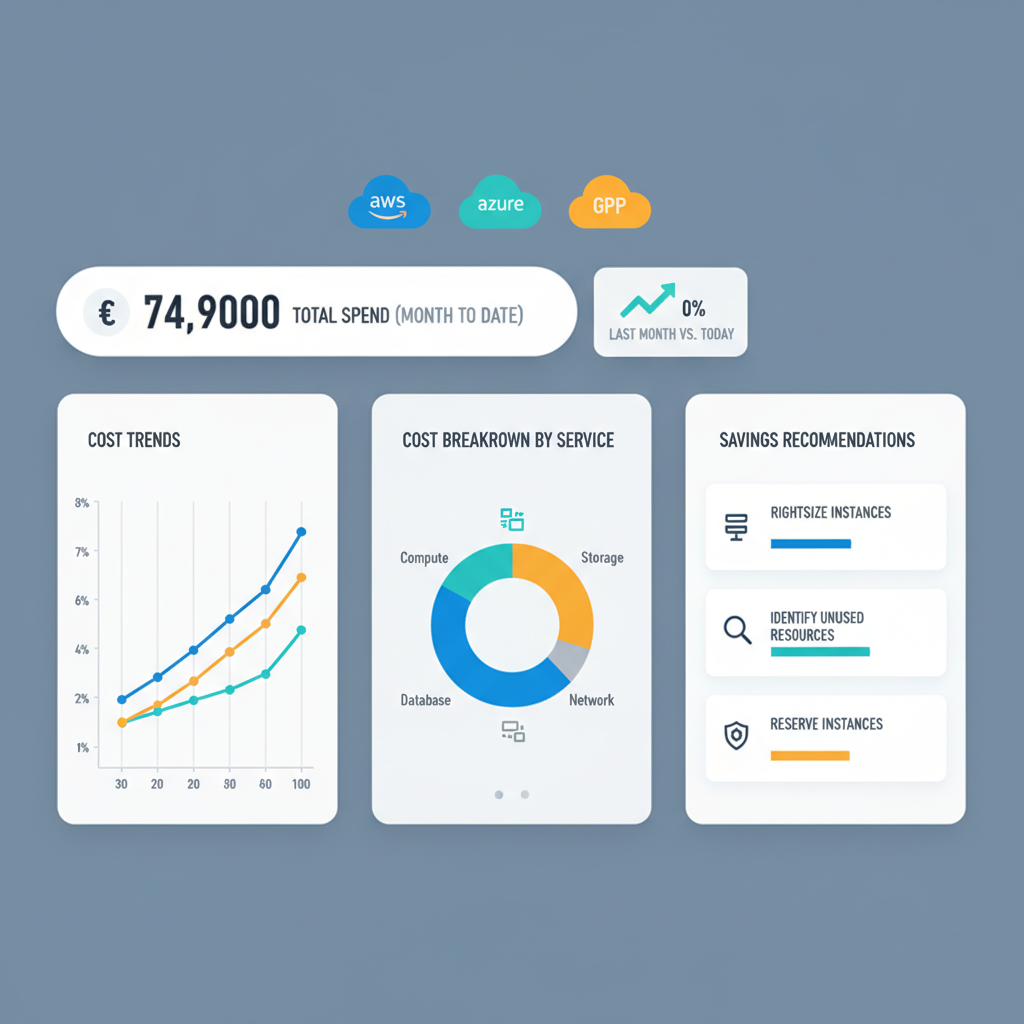
Dedicated third-party Cloud Expense Management (CEM) platforms are designed specifically to address the complexities of multi-cloud environments. These platforms ingest billing data from multiple cloud providers, offering a unified dashboard for consolidated cloud cost reporting, analysis, and optimization recommendations. They are crucial for managing diverse cloud infrastructures.
These CEM tools often provide advanced features such as AI-driven cost anomaly detection, customizable dashboards, showback/chargeback capabilities, and automated recommendations for rightsizing or savings plan purchases. They are invaluable for organizations seeking the best multi-cloud cost optimization solutions, providing a single pane of glass for all cloud spend.
Overcoming Common Hurdles in Cross-Platform Cloud Expense Reduction
Despite the numerous benefits and available strategies, organizations often encounter significant hurdles when attempting cross-platform cloud expense reduction. These challenges range from technical complexities to organizational inertia, and addressing them is vital for success. Recognizing and proactively tackling these obstacles can make all the difference in achieving effective multi-cloud cost optimization.
Understanding these common pitfalls allows teams to prepare better and implement robust solutions from the outset. It ensures that efforts toward multi-vendor cloud financial governance are not derailed by unforeseen issues. Let's look at some key challenges.
One significant hurdle is the lack of standardized tagging and metadata across different cloud providers. Inconsistent tagging makes it incredibly difficult to accurately allocate costs to specific projects, teams, or applications, hindering consolidated cloud cost reporting. Developing and enforcing a universal tagging strategy is paramount.
Another challenge is organizational silos, where different departments manage their own cloud accounts without centralized oversight. This can lead to redundant spending and a lack of accountability. Fostering a FinOps culture that promotes collaboration between finance, operations, and development teams is essential for optimizing spend in hybrid environments.
The sheer pace of cloud innovation and the continuous introduction of new services and pricing models also present a hurdle. Staying abreast of these changes and adapting optimization strategies accordingly requires continuous learning and agility. Regular training and knowledge sharing are crucial for maintaining expertise in multi-cloud cost optimization.
The Future of Multi-Cloud Cost Optimization in 2026
Looking ahead to 2026, the landscape of multi-cloud cost optimization is set to evolve further, driven by advancements in AI, machine learning, and automation. Expect even more sophisticated tools that offer predictive analytics for future cloud spend and proactive recommendations for savings, moving beyond reactive reporting.
The emphasis will shift towards even greater autonomy in cost management, with AI-powered agents automatically identifying and rectifying cost inefficiencies without human intervention. Integration between multi-cloud cost optimization platforms and existing FinOps frameworks will deepen, fostering a culture of financial accountability across the enterprise. Best multi-cloud cost optimization practices will increasingly leverage these intelligent systems.
Furthermore, the focus on sustainable IT will integrate environmental costs into financial governance, considering the carbon footprint alongside monetary expenditures. This holistic approach to multi-vendor cloud financial governance will become a defining characteristic, adding a new dimension to optimizing spend in hybrid environments. The "multi-cloud cost optimization guide" of the future will encompass these broader considerations.
RECOMMENDED FOR YOU
Connect With Opsio
Tell us about your business requirement and let Opsio take care of the rest.
✓ No commitment required
✓ Trusted by experts
Conclusion: Your Path to Sustainable Multi-Cloud Cost Efficiency
Navigating the complexities of multi-cloud environments requires a strategic, disciplined, and continuous approach to cost management. By embracing comprehensive visibility, robust governance, automation, and a culture of continuous optimization, organizations can achieve significant hybrid cloud cost savings. The insights and strategies outlined in this multi-cloud cost optimization guide provide a clear roadmap for success.
The journey to effective multi-cloud cost optimization is ongoing, demanding vigilance and adaptation. By implementing these practical multi-cloud cost optimization tips and leveraging advanced tools, businesses can not only curb wasteful spending but also reallocate resources towards innovation and growth. Embrace these principles today to build a financially resilient and agile cloud future in 2026 and beyond.
Opsio provides cloud consulting and managed services to help organizations implement and manage their technology infrastructure effectively.