
POC Meaning in AI: A Comprehensive Explanation

Director & MLOps Lead
Predictive maintenance specialist, industrial data analysis, vibration-based condition monitoring, applied AI for manufacturing and automotive operations
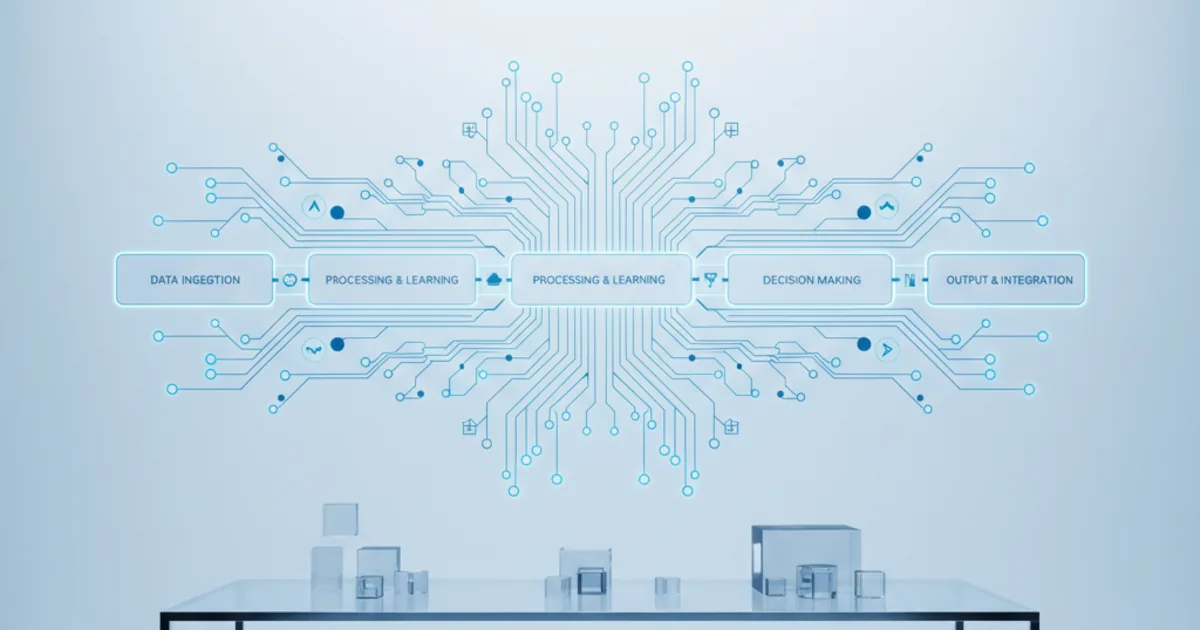
Are you curious about how businesses test and validate Artificial Intelligence solutions before they fully invest?
Knowing about proof of concept AI is key in today's tech world. A Proof of Concept (POC) is a hands-on test of a product or service's workability. It shows if it's worth investing in big time. We guide businesses in using AI by explaining POC in AI. This helps them make smart choices. For more details on how we can help, please Contact Us.
Key Takeaways
- Understanding the significance of POC in AI for businesses.
- Validating AI solutions through practical demonstrations.
- The role of POC in reducing operational risks.
- Enabling informed decision-making for AI investments.
- Leveraging POC for business growth through cloud innovation.
What Is the POC Meaning in AI?
AI is changing many industries, and the POC meaning in AI is key for companies wanting to use AI well. We look at why Proof of Concept in AI matters, its definition, main ideas, and how it helps businesses.
Definition and Core Concepts
A Proof of Concept (POC) in AI is a small project or test to see if an AI idea or solution works. Its main goal is to show if a project can work for teams, clients, and others. It helps find problems early.
Origin of the Term "Proof of Concept"
The term "Proof of Concept" started in tech and business to check new ideas or tech before spending a lot. In AI, it's used to lower risks of using complex AI solutions.
POC vs. Other Technical Terminology
It's important to know the difference between POC and other terms like prototypes and Minimum Viable Products (MVPs). They are all related but have different roles in making a product. Here's a table comparing them:
| Term | Purpose | Scope |
|---|---|---|
| POC | Validate concept viability | Limited functionality |
| Prototype | Test and refine the product | More comprehensive than POC |
| MVP | Launch a product with minimal features | Functional product with core features |
Knowing the differences between these terms is key for good AI concept validation and project success. By using POCs, companies can make sure they're investing in AI solutions that work for them.
Need expert help with poc meaning in ai: a comprehensive explanation?
Our cloud architects can help you with poc meaning in ai: a comprehensive explanation — from strategy to implementation. Book a free 30-minute advisory call with no obligation.
Why Are POCs Essential for AI Implementation?
As businesses adopt AI, the role of POCs becomes critical. POCs, or Proofs of Concept, are key in AI implementation. They help organizations test their AI strategies before big investments.
Risk Mitigation Through Validation
POCs aim to reduce risks in AI adoption. By running an AI experiment or AI trial run, companies can check if their AI plans work. This lowers the risk of investing in projects that might fail.
Technical Risk Assessment
POCs help spot technical risks early. They let teams find issues like bad data or complex integrations. This way, teams can fix problems before they cause big delays.
Business Risk Reduction
POCs also cut down on business risks. They prove if an AI solution works, helping avoid expensive mistakes. This managed risk mitigation is key to getting the most from AI investments.
Using POCs makes sure AI projects are both workable and strategic. This leads to better AI results. By making POCs a regular part of AI development, companies can tackle AI challenges more confidently.
How Do AI POCs Differ from Prototypes and MVPs?
It's important for businesses to know the difference between AI POCs, prototypes, and MVPs. These terms are often mixed up, but they have different roles in AI development.
Scope and Purpose Variations
An AI POC checks if an AI solution is possible. It tests assumptions and looks for risks. A prototype shows how the AI will work, focusing on design and use.
An MVP is a working version of the AI with key features. It aims to please early users and get feedback for later improvements.
Investment and Resource Requirements
The cost and effort needed for AI POCs, prototypes, and MVPs differ a lot.
Time Commitments
AI POCs need less time because they aim to quickly check if something works.
Financial Considerations
AI POCs cost less than prototypes and MVPs. They are simple tests to see if an idea is worth exploring further.
| Characteristics | AI POC | Prototype | MVP |
|---|---|---|---|
| Purpose | Test feasibility | Showcase functionality | Deliver a functional product |
| Scope | Limited features | Key features demonstrated | Enough features for early adopters |
| Time Commitment | Short-term | Medium-term | Long-term |
| Financial Investment | Lower | Moderate | Higher |
What Are the Key Components of a Successful AI Proof of Concept?
To make an AI POC successful, we need to focus on several key areas. A well-planned AI POC helps us see if AI solutions can work well in our organization.
Clear Objectives and Success Metrics
Setting clear goals and success metrics is key. We should have specific, measurable targets that match our company's strategy. This means picking KPIs to check if the POC is working.
Clear objectives help us track progress and decide on the AI project's future. Also, having clear success metrics helps us validate the AI concept. This builds trust with our stakeholders.
Data Quality and Accessibility Requirements
The success of an AI POC depends a lot on data quality and how easy it is to get to. We must make sure the data is good, accurate, and right for training AI models. We need to check if the data is available and if we can use it well.
Data Preparation Strategies
Good data preparation is essential for an AI POC. This means coming up with plans for cleaning, combining, and changing data. With strong data preparation, we can make the data better and more reliable for our AI model.
Data Governance Considerations
Data governance is very important for managing the data in our AI POC. This includes setting rules for keeping data safe, private, and following laws. Good data governance helps us avoid risks and makes sure our AI POC is based on reliable data.
By focusing on clear goals, data quality, and good data management, we can make sure our AI POC is well-made. This helps us make smart choices about the AI project's future and its value to our business.
How Should You Design an Effective AI POC Strategy?
An effective AI POC strategy starts with picking the right business problems to solve. We should choose projects that match our business goals and promise big value.
Identifying Business Problems Worth Solving
To find the right problems, we must look at our current operations and challenges. We need to work with different stakeholders to understand their issues. Then, we can figure out which AI solutions can fix these problems well.
Establishing Realistic Timelines and Milestones
After picking the right problems, we need to set realistic timelines and milestones. We break the project into smaller phases and set goals for each one. This makes it easier to manage and achieve.
Short-term Goals
Short-term goals are about quick wins, like collecting data and testing models. These goals help us check our approach and make changes early on.
Long-term Vision Alignment
While chasing short-term goals, we must also think about the long term. We need to make sure our AI POC project fits with our business strategy and can grow with us.
| AI POC Strategy Component | Description | Importance Level |
|---|---|---|
| Business Problem Identification | Identifying the right business problems to solve using AI | High |
| Timeline Establishment | Setting realistic timelines and milestones for the POC project | High |
| Short-term Goals | Focusing on immediate objectives such as data collection and model development | Medium |
| Long-term Vision Alignment | Ensuring the POC project aligns with overall business strategy | High |
What Is the Step-by-Step Process of Implementing an AI POC?
Starting a successful AI POC needs a clear plan. We'll show you how to go from defining the problem to testing the model. This includes all the key steps.
Problem Definition Phase
The first step is to clearly state the problem you want to solve. You need to find a business challenge where AI can help a lot. It's important to set clear goals and how to measure success.
A good problem statement makes sure everyone is on the same page. This helps everyone work together towards the same goals.
Data Collection and Preparation
After defining the problem, collecting and preparing data comes next. This means getting the right data, cleaning it, and getting it ready for the AI model. The data must be accurate and cover the problem you're trying to solve.
Model Development and Testing
With the data ready, we can start building and testing the AI model. This involves several important steps:
Algorithm Selection
Picking the right algorithm is crucial for the AI POC's success. You need to choose one that fits the problem and data. Knowing different machine learning algorithms is important.
Performance Evaluation
After making the model, we check how well it works. We use the success metrics we set earlier. This means testing the model and checking its accuracy and other important metrics.
Continuous iteration and refinement are often needed to get the model to perform as desired.
What Challenges Do Organizations Face in AI POC Development?
The path to a successful AI POC is filled with hurdles. These include data problems, technical limits, and resistance from within the organization. Knowing these challenges is key to finding ways to beat them.
Data-Related Obstacles
Data is a big challenge in AI POCs. Companies often face data quality issues like missing, wrong, or biased data. This can really hurt how well AI models work. It's important to make sure data is good and accessible.
A solid data plan is vital to get past these problems.
| Data-Related Challenge | Impact on AI POC | Mitigation Strategy |
|---|---|---|
| Poor Data Quality | Inaccurate Model Performance | Implement Data Validation and Cleansing |
| Limited Data Accessibility | Delays in Development | Establish Data Sharing Agreements |
| Data Bias | Biased Model Outcomes | Use Diverse Data Sets and Bias Detection Tools |
Technical Limitations
Technical hurdles are another big problem in AI POCs. Issues like inadequate infrastructure, not enough skilled people, and trouble integrating AI with current systems are common. To tackle these, it's important to check the organization's tech setup and skills.
Organizational Resistance
Resistance from within the organization is a major challenge. It can come from fear of change, not understanding AI, or worries about losing jobs.
Change Management Strategies
To beat this resistance, good change management is key. This means clear communication about AI's benefits and goals. Also, training programs to help employees grow.
Stakeholder Alignment Techniques
Getting stakeholders on board is vital for AI POC success. Using regular updates, stakeholder engagement sessions, and clear demonstration of value can help win their support.
How Can You Measure the Success of an AI Proof of Concept?
To measure an AI POC's success, use both numbers and feedback. This mix helps fully understand how well the POC works and its future benefits.
Quantitative Evaluation Metrics
Quantitative metrics give clear numbers on an AI POC's performance. They are key to knowing what the AI can do and what it can't.
Technical Performance Indicators
Technical indicators like accuracy and precision are vital. They show how well the AI model works. For example, in classifying things, these metrics tell us how good it is at making correct choices. For more on choosing the right metrics, check out this guide on AI POC implementation.
Business Impact Measurements
Business impact metrics show how much value an AI POC can bring. Important KPIs include cost cuts, new revenue, and making processes better. These numbers help see if the AI is worth the investment.
Qualitative Assessment Factors
Qualitative factors add depth to the numbers by looking at usability, growth potential, and goal alignment. User feedback, stakeholder happiness, and future growth possibilities are important. By looking at both sides, you can decide if to grow your AI POC.
What Steps Are Needed to Scale from POC to Production?
To move an AI proof of concept (POC) to production, we need a solid plan. This plan must cover infrastructure and team skills. As we grow from a POC to a full production setup, several important factors come into play.
Infrastructure Considerations
Infrastructure is key when scaling from POC to production. Our setup must handle the bigger load and complexity of production. We must think about data storage, processing power, and network capabilities.
Team Structure and Capabilities
Having the right team is crucial for a successful move from POC to production. We need to check our team's skills and see if we need more expertise.
Required Skill Sets
To scale well, our team should have diverse skills. These include data science, engineering, and project management. Here's a table showing important roles and their duties:
| Role | Responsibilities |
|---|---|
| Data Scientist | Model development, testing, and optimization |
| AI Engineer | Model deployment, infrastructure management |
| Project Manager | Project planning, resource allocation, timeline management |
Organizational Structure Adjustments
Scaling up might also mean changing our team structure. We might need to create new teams or adjust roles. This ensures our production setup gets the support it needs.
By focusing on both infrastructure and team skills, we can successfully scale our AI POC to production. This will help us meet our business goals and grow through cloud innovation.
Can You Share Real-World Examples of Successful AI POCs?
AI POCs have changed the game in many fields like healthcare, finance, and manufacturing. They've brought big wins, from better patient care to smoother operations. This shows how AI can make a real difference.
Healthcare Industry Applications
In healthcare, AI POCs help predict patient outcomes and treatments. For example, AI can spot diseases like cancer early by looking at medical images. This is a big deal for breast cancer detection, making diagnoses more accurate and cutting down on false alarms.
Financial Services Implementations
Financial services use AI POCs to fight fraud, manage risks, and serve customers better. AI chatbots, for instance, offer non-stop help, boosting customer satisfaction and saving money. AI also helps in smarter lending decisions by analyzing risks.
Manufacturing and Supply Chain Cases
Manufacturing has seen AI POCs improve production and maintenance. This includes smarter maintenance and better supply chain management.
Predictive Maintenance Examples
Predictive maintenance uses AI to forecast when equipment needs fixing. This cuts down on downtime and boosts equipment performance. For example, a factory might use AI to spot machinery issues before they happen.
Supply Chain Optimization Stories
AI also optimizes supply chains by predicting demand and managing inventory. This leads to faster deliveries and lower inventory costs.
| Industry | AI POC Application | Benefits |
|---|---|---|
| Healthcare | Predictive diagnosis | Improved diagnosis accuracy |
| Financial Services | Fraud detection and customer service | Enhanced security and customer experience |
| Manufacturing | Predictive maintenance and supply chain optimization | Reduced downtime and improved efficiency |
What Can We Learn from Failed AI POC Attempts?
Not every AI POC project works out as planned. But, studying these failures can teach us a lot for the future. By looking into why they failed, we can spot common mistakes and how to avoid them.
Common Reasons for Failure
Knowing the usual reasons for failure helps us get ready for AI POCs. Most failures come from technical problems or not aligning with the company's goals.
Technical Shortcomings
Issues like bad data quality or not enough computing power can stop an AI POC. It's key to make sure the technical setup is strong.
Strategic Misalignment
If an AI POC doesn't match the company's big goals, it's likely to fail. Good communication between tech teams and business leaders is vital for matching goals.
Extracting Valuable Insights from Failed POCs
Even failed AI POCs have value. By figuring out what went wrong, we can learn a lot about our operations, data, and tech skills.
Seeing failure as a chance to learn helps companies improve their AI POCs. This way, they can do better in their next projects.
Who Should Be Involved in AI Proof of Concept Projects?
AI POC projects need a team effort from many departments and top-level sponsors. They succeed when everyone works together towards a shared goal.
Executive Sponsorship and Support
Having a top sponsor is key for AI POC projects. They help by bringing together different departments, solving problems, and pushing the project forward.
Cross-Functional Team Collaboration
A team with both tech and business experts is vital for AI POC success. This mix ensures all angles are covered.
Technical Team Roles
Technical folks, like data scientists and AI engineers, build and test the AI model. They're the tech brains behind the project.
Business Stakeholder Involvement
Business experts offer insights into how the AI fits into operations. They make sure the project meets business goals.
| Role | Responsibilities | Benefits |
|---|---|---|
| Executive Sponsor | Resource allocation, strategic guidance | Ensures project alignment with business goals |
| Technical Team | AI model development, testing | Delivers a functional AI solution |
| Business Stakeholders | Operational insights, business alignment | Ensures the AI POC meets business needs |
How Should You Budget for AI POCs?
AI POC budgeting means looking at the first costs and possible gains to see if a project works. When planning AI POCs, companies need to think about different money matters to do well.
Initial Investment Requirements
The first money needed for AI POCs includes costs for getting data ready, hiring people, and setting up tech. Data preparation is key because good data is needed for AI to work right. Companies also need to plan for talent acquisition or training staff to work on AI.
Here's a detailed look at what you might spend first:
| Cost Component | Description | Estimated Cost Range |
|---|---|---|
| Data Preparation | Costs for cleaning, processing, and getting data ready for AI model training. | $10,000 – $50,000 |
| Talent Acquisition/Training | Expenses for hiring or training people with AI skills. | $20,000 – $100,000 |
| Technology Infrastructure | Costs for the hardware and software needed for AI development and testing. | $15,000 – $75,000 |
Calculating Return on Investment
To figure out the ROI for AI POCs, you need to look at both quick wins and long-term gains. Short-term ROI looks at savings or revenue from the POC right away. Long-term value assessment considers how the AI solution could grow and impact the company over time.
Short-term ROI Considerations
Short-term, focus on the immediate benefits of the AI POC. This could be making processes better or getting new insights. These benefits can quickly show a return on investment, making the initial cost worth it.
Long-term Value Assessment
For a full ROI picture, you must look at the AI solution's long-term value. This includes ongoing savings, revenue growth, and competitive edge from using and growing the AI tech.
What Ethical Considerations Apply to AI Proof of Concept Development?
When we work on AI proof of concepts, we must think about the ethics involved. AI POCs are new and exciting but also bring up big ethical questions. We need to handle these concerns to make sure our AI is used right.
Data Privacy and Security
Data privacy and security are key ethical issues in AI POCs. We must protect sensitive info and follow rules like GDPR. It's important to have strong security to keep data safe from hackers.
Bias Prevention and Fairness
Bias and fairness in AI are also big concerns. If AI is biased, it can lead to unfair treatment. So, we need to find ways to prevent and fix bias in AI.
Algorithmic Bias Detection
To find bias in AI, we test and analyze AI models carefully. We use tools and metrics to spot unfair patterns. This helps make sure AI treats everyone fairly.
Inclusive Design Principles
Inclusive design means making AI that works for everyone. By using diverse data and views, we can make AI that's fair and open to all.
What Are the Emerging Trends in AI POC Methodologies?
AI is changing fast, and so are the ways we test it. Now, we're moving towards quicker, more automated testing. This change is making it easier for companies to innovate with AI.
Automated POC Development Tools
New tools are making AI testing faster. These tools help companies quickly test and improve AI models. This means they can start using AI sooner, which helps them stay ahead.
Integration with DevOps and MLOps
AI testing is now working better with DevOps and MLOps. This teamwork makes sure AI is not only made well but also works smoothly in real use.
Continuous Integration for AI Models
AI models are now getting tested automatically. This makes sure they're strong and work right when they're used. It's a big step towards making AI reliable.
Deployment Automation Advances
Putting AI models into use is getting easier. New tools help move AI from testing to real use without mistakes. This makes AI deployment faster and safer.
Conclusion: Maximizing the Value of AI Proof of Concepts
AI Proof of Concepts are key to successful AI use. They help businesses understand and use AI well. To get the most out of AI POCs, companies need a clear plan and goals.
Improving AI POCs means focusing on quality data and realistic timelines. It also helps to work together across different teams. This way, businesses can fully use AI POCs and move to production smoothly.
As AI grows, using AI POCs well will be more important. Companies that do this will stay ahead. By following the tips in this article, businesses can make the most of their AI POCs. This leads to better business results and less work through cloud innovation.
FAQ
What are the key components of a successful AI POC?
A good AI POC has clear goals, ways to measure success, quality data, and a clear plan. This makes sure the POC is focused and can be done.
How can you measure the success of an AI POC?
Success is measured by how well the AI works and how happy users are. This includes looking at how accurate and efficient the AI is.
What ethical considerations apply to AI POC development?
Ethical issues include keeping data safe, avoiding bias, and being open about AI's use and limits.
Who should be involved in AI POC projects?
AI POC projects need support from leaders and a team that includes people from business, tech, and data science.
Related Articles
About the Author

Director & MLOps Lead
Vaishnavi leads machine learning operations initiatives at Opsio, enabling ML and predictive capabilities for industrial and automotive operations. Her expertise spans predictive maintenance, industrial data analysis, vibration-based condition monitoring, and applied AI — with a focus on practical, experiment-driven solutions designed for real operational environments.
Editorial standards: This article was written by a certified practitioner and reviewed by our engineering team. We revise it when the technology or regulation it covers changes; the dates above show the latest update. Opsio maintains editorial independence — we recommend solutions on technical merit, not commercial relationships.


