
Elevate Your Business with Commercial AI: Q&A on Transformative Solutions

Director & MLOps Lead
Predictive maintenance specialist, industrial data analysis, vibration-based condition monitoring, applied AI for manufacturing and automotive operations
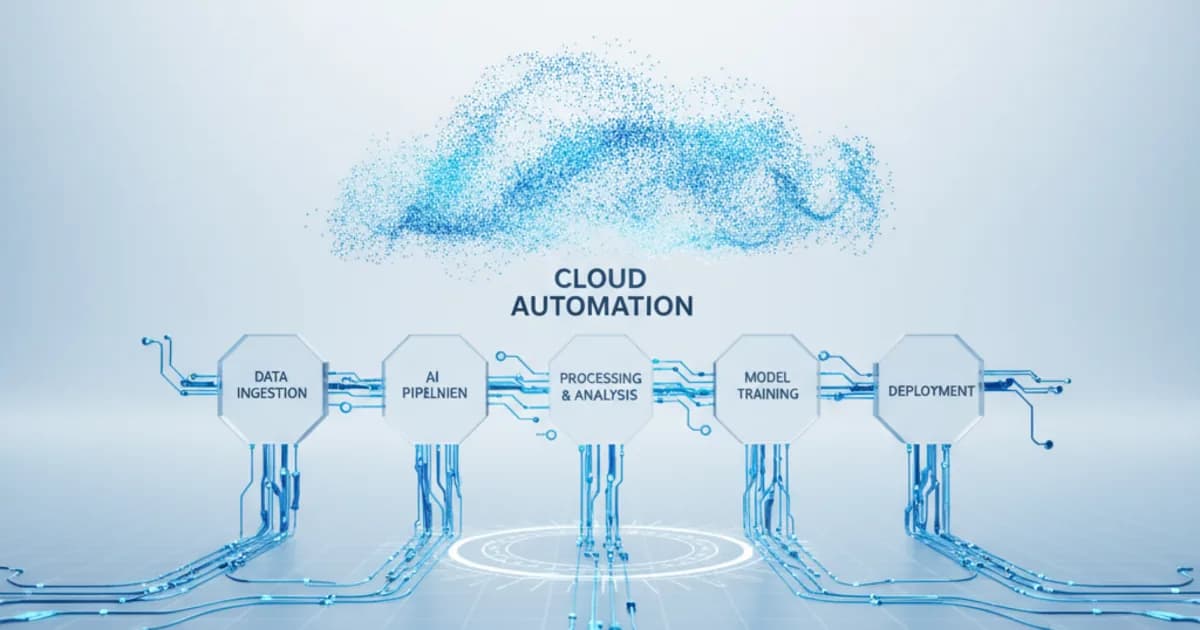
Can your business afford to fall behind in the AI revolution? Technology is moving fast, and AI-driven business solutions are key for staying ahead. They help companies keep up with the latest trends.
We dive into how Business AI applications can change your company. You'll get expert tips and advice on using AI well. This way, businesses can find new chances, make things more efficient, and grow.
At Opsiocloud, we get the challenges of adopting AI. We're here to help your business on this path. For tailored advice on adding AI to your strategy, Contact Us.
Key Takeaways
- Discover how AI can elevate your business operations.
- Learn from expert insights on AI implementation.
- Explore practical advice on leveraging AI-driven solutions.
- Understand the benefits of adopting Business AI applications.
- Find out how to integrate AI into your business strategy effectively.
What Is Commercial Artificial Intelligence?
Businesses are turning to technology more and more. Understanding commercial artificial intelligence (AI) is key to staying ahead. Commercial AI uses AI in business to boost efficiency, innovation, and growth.
Defining AI in the Business Context
In business, AI automates tasks, improves decision-making, and enhances customer service. AI software solutions are used in many fields. They help companies stay ahead of the competition.
How Commercial AI Differs from Academic AI
Academic AI is about research and theory. Commercial AI is about solving real-world business problems. This shows how machine learning technology is used in business.
Real-World Business Applications vs. Research
Commercial AI tackles business needs like optimizing processes and predicting maintenance. Academic AI focuses on research and models. Knowing this helps businesses use AI software solutions for real results.
Using commercial AI, businesses can see big improvements in efficiency and innovation. As we dive deeper into commercial AI, its role in business will keep growing.
Need expert help with elevate your business with commercial ai?
Our cloud architects can help you with elevate your business with commercial ai — from strategy to implementation. Book a free 30-minute advisory call with no obligation.
Why Should Businesses Consider Implementing AI Solutions?
Businesses today face many challenges in the digital world. Using Business AI applications and AI-driven business solutions can help them stay ahead. These tools make companies more efficient, innovative, and focused on customers.
Adopting AI is not just a trend; it's a smart move. It can greatly improve a company's profits and its place in the market. With Enterprise AI platforms, businesses can automate tasks, understand customers better, and make smarter decisions based on data.
Competitive Advantages of AI Adoption
One big reason to use AI is the edge it gives you over rivals. Early adopters can improve efficiency, customer service, and innovation. AI quickly analyzes data, finds patterns, and predicts trends, helping businesses react faster to changes.
ROI Potential of Commercial AI Investments
Investing in AI can bring big returns. It automates tasks and improves decision-making, saving costs and boosting sales. The secret to high ROI is knowing the short-term vs. long-term benefits of AI.
Short-Term vs. Long-Term Benefits
In the short term, AI can make operations smoother, cut costs, and enhance customer service. For example, AI chatbots can handle simple customer questions, freeing up staff for more complex tasks. Long-term, AI can spark innovation, create new income streams, and introduce new business models. For instance, AI predictive maintenance can prevent expensive downtime and extend equipment life.
To get the most from AI, businesses need a solid plan. They should think about both the quick wins and the long-term changes AI can bring. This way, they can stay competitive in an AI-driven world.
Which Industries Are Being Transformed by Commercial Artificial Intelligence?
Commercial Artificial Intelligence (AI) is changing many industries. It's making businesses work better and deliver more value. We see AI's wide and deep impact across different sectors.
Healthcare and Pharmaceutical Applications
In healthcare, AI is helping patients get better faster. It makes clinical work smoother and speeds up finding new medicines. AI can look at medical images better and quicker than doctors, catching diseases early.
Pharmaceutical companies use AI to find new drugs and see how well they work. They also use it to plan clinical trials better.
Key applications in healthcare include:
- Predictive analytics for patient risk assessment
- Personalized medicine through genomic analysis
- AI-assisted drug discovery and development
Financial Services and Banking Transformations
The financial world is changing fast with AI. It helps spot fraud, predict risks, and improve customer service. Banks use AI to make better investment choices and follow rules better.
Notable AI applications in finance include:
- Risk management and fraud detection
- Algorithmic trading and portfolio management
- Personalized financial services and recommendations
Retail and E-commerce Innovations
AI is changing retail and e-commerce. It makes customer experiences personal, improves supply chains, and forecasts demand better. AI helps retailers suggest products that fit each customer's needs, boosting sales and engagement.
Manufacturing and Supply Chain Optimization
In manufacturing, AI optimizes production, predicts when machines might break, and boosts product quality. It also changes supply chains by forecasting demand, managing inventory, and planning logistics.
| Industry | AI Applications | Benefits |
|---|---|---|
| Healthcare | Diagnostic tools, drug discovery, personalized medicine | Improved patient outcomes, reduced costs |
| Finance | Fraud detection, risk management, algorithmic trading | Enhanced security, improved investment strategies |
| Retail | Personalized recommendations, demand forecasting, supply chain optimization | Increased sales, improved customer satisfaction |
| Manufacturing | Predictive maintenance, quality control, supply chain optimization | Reduced downtime, improved product quality |
Commercial AI is deeply affecting many industries. By using AI, businesses can innovate, work more efficiently, and stay ahead in their markets.
What Are the Most Common Business AI Applications Today?
Businesses are now using AI in many ways. These uses are making operations more efficient and improving customer service. They also help in driving innovation.
Customer Service and Engagement Tools
AI is big in customer service and engagement. AI-powered chatbots and virtual assistants offer 24/7 support. They answer questions and solve problems quickly.
These tools make customers happier and help human agents focus on harder issues.
Process Automation Solutions
AI is also key in automating processes. Machine learning algorithms and AI software solutions automate tasks. This makes workflows smoother and cuts down on errors.
It also helps businesses use their resources better.
Predictive Analytics and Decision Support
AI is also used for predictive analytics and decision support. Machine learning technology analyzes data to predict trends. This helps businesses make smart decisions and spot opportunities.
Data-Driven Decision Making
AI helps in making decisions based on data. It gives businesses accurate forecasts and insights. This way, decisions are made with data, not just guesses.
In summary, AI is used in many ways in businesses. It improves customer service, automates tasks, and supports decision-making. As Business AI applications grow, we'll see even more innovative uses of AI.
How Do Enterprise AI Platforms Differ from Standalone Solutions?
When thinking about adding AI to their work, companies need to know the difference between Enterprise AI platforms and standalone solutions. Enterprise AI platforms offer a wide range of AI tools that can be used in many parts of a business. On the other hand, standalone AI solutions focus on one task or area.
Integration Capabilities and Ecosystem Considerations
One big difference is how well they work with other systems. Enterprise AI platforms are made to easily fit into what a company already uses. This makes the AI system work better with other parts of the business. It helps companies use AI orchestration in different areas, making things run smoother.
Things to think about when integrating include:
- How well it works with current IT systems
- Its ability to connect with different data sources
- Support for various programming languages and frameworks
Scalability and Enterprise-Grade Features
Enterprise AI platforms grow with a company, offering big business features. These include strong security, fast computing, and good data management.
Security and Compliance Requirements
Security is key for Enterprise AI platforms because they deal with important business data. They must meet strict security and compliance rules. This includes protecting data, controlling who can access it, and following laws.
Important security features of Enterprise AI platforms include:
- Advanced threat detection and prevention
- Data encryption at rest and in transit
- Regular security audits and compliance checks
Knowing the differences helps companies choose the right AI strategy. This leads to more value from their AI efforts.
What Should Companies Look for in AI Technology Services?
Finding the right AI technology services can be tough. Businesses use AI to innovate and work more efficiently. They need to pick AI service providers that fit their needs.
Evaluating AI Service Providers
When looking at AI service providers, there are important things to check. First, look at their expertise and experience in AI. Check their past work, how they develop AI, and if they can work with your systems.
It's also key to see if they offer customizable solutions for your company. Look at their data analysis skills, industry knowledge, and ability to create specific AI apps for you.
Implementation Support and Training Considerations
Good support is crucial for AI success. Look for providers that give implementation support and training. This support should cover the tech and how to use it well.
Training should be tailored to your company's needs. It should address your specific challenges. This could include on-site training, online help, and ongoing support for a smooth transition.
Maintenance and Ongoing Development
AI keeps getting better, so you need a provider that keeps up. Look for ongoing maintenance and development. This means regular updates, improvements, and help with any problems.
Also, check if the provider is committed to research and development. This shows they're keeping their AI solutions current. This is important for staying ahead in the market.
By carefully checking these factors, companies can choose the best AI services. This helps them succeed and get the most from their AI investments.
How Can Small and Medium Businesses Leverage AI-Driven Business Solutions?
Small and medium businesses (SMBs) see AI as a way to grow and work better. They look at the good things AI can do and how to use it. It's key to know the benefits and how to start using AI.
Cost-Effective AI Implementation Strategies
For SMBs, money matters when thinking about AI. Starting with tools like chatbots or predictive maintenance is smart. These AI-driven solutions help right away and prepare for more AI use.
Using cloud-based AI services is another smart move. It lowers the cost of starting with AI. SMBs can get advanced AI without spending a lot on hardware or software.
Scaling AI Solutions for Growing Businesses
As SMBs get bigger, their AI needs to grow too. This means using more AI tools and applying them in different areas. Industry-specific AI solutions are great because they solve problems specific to certain industries.
Cloud-Based AI Services for SMBs
Cloud-based AI is flexible and grows with SMBs. It lets businesses use AI tools easily. Cloud AI helps SMBs by:
- Lowering costs
- Being easy to scale and use
- Accessing advanced AI
- Getting AI up and running fast
| Cloud-Based AI Service | Key Benefits | Typical Applications |
|---|---|---|
| AI-Powered Customer Service | 24/7 Support, Personalization | Chatbots, Virtual Assistants |
| Predictive Analytics | Data-Driven Decision Making | Sales Forecasting, Inventory Management |
| Automated Process Optimization | Increased Efficiency, Reduced Costs | Workflow Automation, Resource Allocation |
By using AI, SMBs can improve now and get ready for the future. As Commercial AI products get better, SMBs will have more chances to innovate and succeed.
What Challenges Do Companies Face When Implementing Commercial AI Products?
Businesses are adopting commercial AI products more often. But, they face big challenges that can slow down the process. Integrating AI into their systems is complex and needs careful planning.
We'll look at the main obstacles companies meet when using AI solutions.
Data Quality and Availability Issues
Ensuring data quality is a big challenge. AI needs good data to work well. But, many companies struggle with data problems.
To solve this, companies need to manage their data well. This includes cleaning, integrating, and governing data. This way, AI systems can use the best data available.
Integration with Legacy Systems
Another challenge is integrating AI with old systems. Many IT infrastructures are complex and hard to update.
Companies should plan carefully how to integrate AI with their systems. They might need to work with AI vendors or use special software to connect systems.
Talent Acquisition and Training
Getting the right talent is hard. There's a big demand for AI experts, but not enough supply.
Companies can train their current employees or look for new ways to find talent. This could include partnering with startups or using cloud-based AI services.
Ethical and Compliance Considerations
Companies also need to think about ethics and compliance. AI must be fair and follow rules.
| Challenge | Description | Potential Solution |
|---|---|---|
| Data Quality Issues | Inaccurate or incomplete data hindering AI performance | Implement data governance and cleansing processes |
| Legacy System Integration | Difficulty integrating AI with existing infrastructure | Develop comprehensive integration strategy |
| Talent Acquisition | Shortage of skilled AI professionals | Invest in employee training programs |
| Ethical Compliance | Ensuring AI systems are fair and compliant | Implement transparent AI practices and regular audits |
By tackling these challenges, businesses can use AI products better. It's important to keep up with AI updates and best practices.
How Is Machine Learning Technology Revolutionizing Business Operations?
Machine learning in business is more than a trend. It's a big change towards smarter, more flexible, and efficient ways of working. It lets businesses look at lots of data, find patterns, and make better choices. This change is seen in many parts of how businesses run.
From Reactive to Predictive Business Models
Machine learning helps businesses move from just reacting to things to actually predicting what will happen. By looking at past data and current info, companies can guess trends, see problems coming, and grab chances. This way of working makes decisions better and operations smoother.
Continuous Improvement Through ML Feedback Loops
One big thing about machine learning is how it keeps getting better. Through feedback loops, ML models learn from new data, getting better at predicting things. This keeps business operations sharp and ready for changes in the market.
Automated Learning and Adaptation
Machine learning also means businesses can learn and adapt on their own. As ML models get new info, they change their ways, getting better over time. This lets businesses stay quick and competitive in a fast-changing world.
Some big pluses of machine learning technology are:
- It makes predictions better
- It makes operations more efficient
- It helps make decisions based on data
- It keeps learning and adapting
By using machine learning, we can really improve how businesses work. From making processes better to making customers happier. As AI solutions keep getting better, there are even more chances for businesses to grow and succeed.
What ROI Metrics Should Businesses Track for AI Implementations?
Businesses can measure AI's success through various ROI metrics. They should watch both numbers and how well AI works. This helps them see if their AI plans are paying off.
Quantitative Performance Indicators
Quantitative metrics give a clear number on how well AI is doing. Important ones include:
- Cost savings: Less money spent because of automation and better processes.
- Revenue growth: More money made thanks to AI insights and advice.
- Efficiency gains: Doing things faster and getting products or services to market quicker.
- Accuracy improvements: Doing tasks like data work and customer service better.
Qualitative Benefits Assessment
Qualitative benefits are also key to judging AI success. These include:
- Enhanced customer experience: Making customers happier and more engaged with personalized services.
- Strategic decision-making: Making smarter choices with data and predictive analytics.
- Innovation catalyst: AI sparking new ideas or improving current processes.
Timeline Expectations for AI Investment Returns
Businesses should know when to expect returns from AI. The time it takes can depend on the AI type, how complex it is, and how big the project is.
Short-term returns (less than 12 months) are common in automation and chatbots. Medium-term returns (1-3 years) are seen in predictive maintenance and sales forecasting. Long-term returns (3+ years) come from big AI projects like new products or services.
By watching both numbers and how well AI works, and knowing when to expect returns, businesses can make smart choices. This helps them get the most out of their AI investments.
How Are Artificial Intelligence Software Companies Evolving Their Offerings?
Artificial intelligence software companies are making their AI solutions more advanced. This is because businesses need to stay ahead in a fast-changing market. They are using new technology to meet these needs.
Trends in Commercial AI Product Development
Commercial AI product development is seeing big changes. One key trend is the move towards industry-specific AI solutions. These solutions are made for specific sectors, helping businesses tackle their unique challenges.
Another trend is combining AI with new technologies like IoT and blockchain. This makes AI solutions more powerful and efficient. It helps businesses innovate and work better.
Specialization vs. End-to-End Solutions
AI software companies face a choice: specialize or offer complete solutions. Specializing means deeper knowledge and more focused solutions. But, end-to-end solutions cover more business needs.
Industry-Specific AI Expertise
Building industry-specific AI expertise is key for many companies. By focusing on certain industries, they understand those sectors better. This lets them create AI solutions that really work.
In healthcare, AI helps improve patient care with predictive analytics and personalized medicine. In finance, AI fights fraud and manages risks. This focus on specific industries is making AI more popular across different sectors.
What Industry-Specific AI Solutions Are Delivering the Highest Value?
Businesses are adopting AI technologies at a fast pace. Industry-specific solutions are leading the way in adding value across sectors. These solutions are tailored to meet the unique needs of different industries.
Industry-specific AI solutions tackle specific challenges and opportunities in each sector. For example, in healthcare, AI helps improve patient care, streamline clinical work, and advance medical research.
Customized AI Applications by Sector
Different industries use Commercial AI products in unique ways. In finance, AI helps manage risks, detect fraud, and offer personalized services. Retail uses AI to enhance customer experience, optimize supply chains, and forecast consumer trends.
In manufacturing, AI optimizes production, predicts maintenance needs, and boosts product quality. The use of AI technology services allows companies to create tailored AI solutions that fit their needs.
Case Studies of Successful Industry Implementations
Many companies have seen great success with industry-specific AI solutions. For instance, a top healthcare provider cut patient readmission rates by 20%. A major retailer saw a 15% sales boost with an AI-powered recommendation engine.
The success of these AI solutions is measured in various ways. Here's a table showing some key performance indicators (KPIs) for different sectors:
| Sector | AI Application | KPI | Impact |
|---|---|---|---|
| Healthcare | Predictive Analytics | Patient Readmission Rate | 20% reduction |
| Retail | Recommendation Engine | Sales Increase | 15% increase |
| Manufacturing | Predictive Maintenance | Downtime Reduction | 30% reduction |
By using industry-specific AI solutions, businesses in various sectors can see big benefits. These range from better operational efficiency to enhanced customer experiences. As AI technology keeps evolving, we expect to see even more innovative uses across industries.
How Will Commercial AI Evolve in the Next Five Years?
Commercial AI is on the verge of a big change. This is thanks to new tech and shifting business needs. The mix of new technologies will greatly shape the future of commercial AI.
Emerging Technologies and Integration Possibilities
The next five years will bring big leaps in natural language processing, computer vision, and predictive analytics. These new techs will boost current AI products and open up new services.
Key Emerging Technologies:
- Advanced Machine Learning Algorithms
- Edge AI for Real-Time Processing
- Explainable AI for Transparency
As these techs grow, we'll see more industries using AI. This will lead to smarter AI solutions for businesses.
Preparing Your Business for Future AI Advancements
To stay ahead, businesses need to invest in AI services and plan for AI adoption.
Strategic Planning for AI Adoption
Good planning means checking what you can do now, finding what needs work, and making a plan for AI. This includes:
| Strategic Planning Steps | Description | Benefits |
|---|---|---|
| Assess Current Capabilities | Evaluate existing infrastructure and talent | Identify gaps and opportunities |
| Identify Areas for Improvement | Analyze business processes and pain points | Prioritize AI initiatives |
| Develop AI Roadmap | Create a plan for AI implementation and scaling | Ensure alignment with business goals |
By being proactive with AI, businesses can thrive in the fast-changing AI world.
Conclusion: Taking the Next Step with Commercial AI
Commercial artificial intelligence is now a must for businesses to stay ahead. It's not just a luxury anymore.
Businesses can use AI to make things better. They can make operations smoother, improve customer service, and find new ways to make money.
If you want to see how AI can help your business, contact Opsio Cloud. Our experts are here to guide you through the AI journey.
By using commercial AI, companies can open up new chances for growth. They can stay ahead in a world where AI is key.
FAQ
What is commercial artificial intelligence, and how does it differ from academic AI?
Commercial AI is used in businesses to make them more efficient and innovative. It focuses on solving real-world problems. Academic AI, on the other hand, is about research and new ideas.
How can commercial AI transform businesses, and what are the potential benefits of AI adoption?
Commercial AI can make businesses better by making them more efficient and improving customer service. It can also help businesses grow and make more money in the long run.
What are some common business AI applications, and how are they being used in various industries?
AI is used in many ways, like chatbots for customer service and tools for predicting sales. It helps businesses in healthcare, finance, retail, and more to grow and improve.
How do enterprise AI platforms differ from standalone AI solutions, and what are the key considerations for integration?
Enterprise AI platforms work with other systems and offer more features. Standalone AI solutions might not work as well with other systems. When choosing, think about how well it will work with your current systems.
What should companies look for when evaluating AI technology services, and what factors are crucial for successful implementation?
Look at the provider's skills, support, and how they keep improving. Training, maintenance, and support are key for AI to work well in the long term.
How can small and medium businesses leverage AI-driven business solutions, and what are the cost-effective implementation strategies?
Small and medium businesses can use AI to grow and be more efficient. They can use cloud-based AI services, which are affordable and scalable.
What challenges do companies face when implementing commercial AI products, and how can they be overcome?
Companies might struggle with data quality, making AI work with other systems, finding the right talent, and ethical issues. Improving data, planning well, and training staff can help solve these problems.
How is machine learning technology revolutionizing business operations, and what are the benefits of predictive models?
Machine learning is changing how businesses work by using predictive models and learning from feedback. It helps businesses make better decisions and adapt quickly.
What ROI metrics should businesses track for AI implementations, and what are the key performance indicators?
Businesses should look at how much money AI saves and how it improves customer satisfaction. This helps see if AI is working well.
How are artificial intelligence software companies evolving their offerings, and what are the trends in commercial AI product development?
AI companies are always improving their products to meet new needs. They are focusing on specialized solutions and end-to-end products, which are driving innovation.
What industry-specific AI solutions are delivering the highest value, and what are the key success factors?
AI solutions tailored for specific industries are bringing great value. Success comes from understanding industry challenges and creating solutions that meet those needs.
How will commercial AI evolve in the next five years, and what are the emerging technologies and integration possibilities?
Commercial AI will keep getting better with new technologies and ways to use them. Businesses need to plan and invest in these advancements to stay ahead.
About the Author

Director & MLOps Lead
Vaishnavi leads machine learning operations initiatives at Opsio, enabling ML and predictive capabilities for industrial and automotive operations. Her expertise spans predictive maintenance, industrial data analysis, vibration-based condition monitoring, and applied AI — with a focus on practical, experiment-driven solutions designed for real operational environments.
Editorial standards: This article was written by a certified practitioner and reviewed by our engineering team. We revise it when the technology or regulation it covers changes; the dates above show the latest update. Opsio maintains editorial independence — we recommend solutions on technical merit, not commercial relationships.