
Benefits of Managed Cloud Services for Small Business (2026)

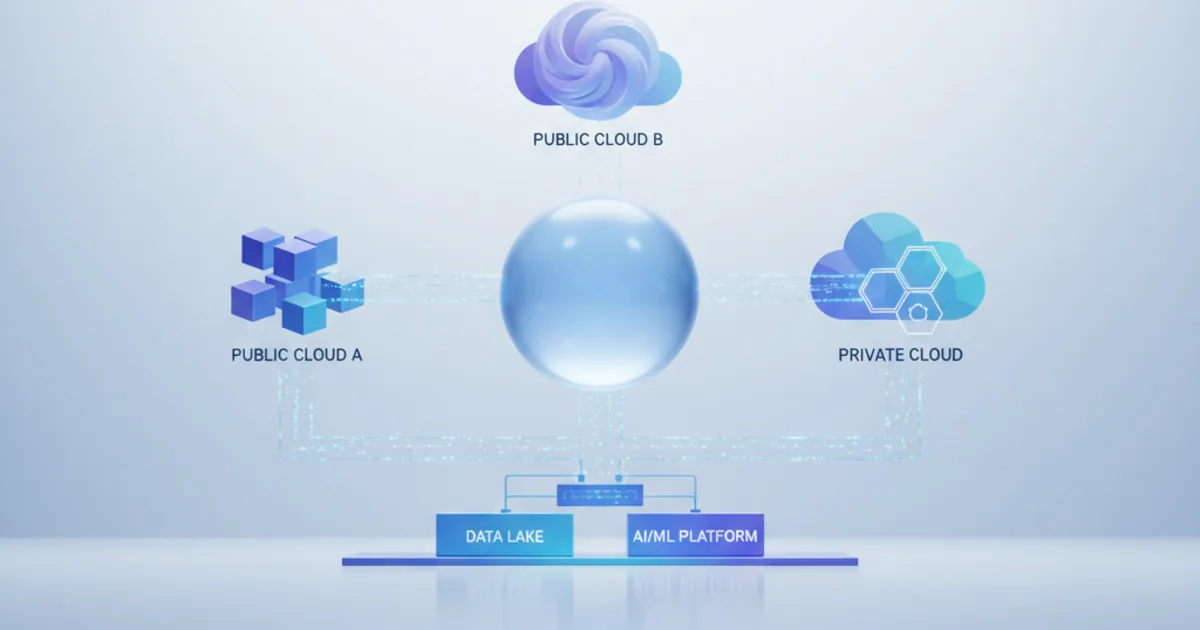
Managed cloud services give small businesses enterprise-grade IT infrastructure without the cost of building and staffing it in-house. By outsourcing cloud management to a specialized provider, SMBs gain predictable budgets, stronger security, and the ability to scale resources on demand — freeing owners and lean teams to focus on growth instead of server maintenance.
A managed cloud service means a third-party provider handles the day-to-day operation of your cloud environment: migration, configuration, monitoring, optimization, patching, and security. For a small business in 2026, this turns an unpredictable capital expense into a fixed monthly operating cost while giving you access to expertise that would be prohibitively expensive to hire full-time.
Cost Savings and Predictable IT Budgets
Shifting from hardware ownership to a managed subscription model can reduce total IT spending by 30–40 % for a typical small business. Instead of sinking capital into servers that depreciate within three to five years, you pay only for the compute, storage, and support you actually use each month.
Eliminating High Upfront Capital Expenditure
Physical server hardware costs have continued to climb through 2026, driven by supply-chain constraints and demand for AI-capable processors. Managed cloud services remove the need for that initial purchase entirely. You rent capacity instead of buying it, keeping cash available for product development, hiring, or marketing.
Moving to a Predictable OpEx Model
With a fixed monthly fee, business owners can forecast IT spending accurately — no surprise invoices for failed drives or emergency cooling repairs. This subscription-based model is especially valuable for companies with seasonal revenue, because you can match costs to actual demand.
Reducing In-House IT Overhead
A senior cloud architect in the United States commands an average salary above $150,000 per year. Most small businesses cannot justify that cost for a single hire. A managed services agreement gives you an entire team of specialists — network engineers, security analysts, database administrators — for a fraction of that figure, improving operational efficiency across the board.
Enterprise-Grade Security on a Small-Business Budget
Small businesses are disproportionately targeted by cyberattacks because attackers assume their defenses are weaker — managed cloud providers close that gap. In 2026, AI-driven threats make proactive, expert-led security a necessity rather than a luxury.
Advanced Threat Protection
Managed providers deploy layered defenses that were once reserved for large enterprises: AI-driven anomaly detection, Zero Trust Network Access (ZTNA), endpoint detection and response (EDR), and advanced encryption at rest and in transit. These protections come standard in a managed engagement, not as costly add-ons.
Continuous Monitoring and Patching
Security demands 24/7 vigilance. Managed providers run automated systems that watch traffic patterns, flag anomalies, and apply patches as soon as vulnerabilities are disclosed. When a zero-day exploit surfaces, your environment is updated within hours rather than days or weeks.
Navigating Data Sovereignty and Compliance
Regulations around data privacy — GDPR, CCPA, and newer industry-specific mandates — continue to tighten. A qualified managed provider helps you store data in the correct geographic regions and handle it according to current legal standards, reducing the compliance burden on your internal team.
Need expert help with benefits of managed cloud services for small business (2026)?
Our cloud architects can help you with benefits of managed cloud services for small business (2026) — from strategy to implementation. Book a free 30-minute advisory call with no obligation.
Seamless Scalability for Growing Businesses
The ability to scale infrastructure up or down in minutes is one of the most tangible advantages managed cloud services offer small businesses. Traditional on-premise hardware forces you to over-provision for peak demand or scramble to add capacity when traffic spikes.
Real-Time Resource Adjustment
Cloud elasticity means you add processing power and storage during a seasonal surge — a holiday sales peak, a product launch, a viral marketing campaign — and scale back down afterward. You pay only for what you consume, so growth does not require a proportional increase in infrastructure cost.
Supporting the Hybrid and Remote Workforce
The hybrid work model is now standard for most knowledge-work businesses. Managed cloud environments provide secure, high-performance access to company applications from any location. Whether your team works from a central office, a home office, or on the road, the experience stays consistent.
Simplified SaaS Management
Most SMBs rely on dozens of cloud-based applications — CRM, accounting, project management, communication tools. A managed provider ensures these tools are integrated, updated, and running without performance bottlenecks, so your team spends time using software instead of troubleshooting it.
Disaster Recovery and Business Continuity
Data loss is frequently a terminal event for a small business; a managed cloud provider builds resilience into your environment from day one. Automated backups, geographic redundancy, and rapid failover mean your company can survive hardware failures, ransomware attacks, and natural disasters.
Automated Backups and Rapid Restoration
Managed providers automate backup cycles — often in near-real-time — and use mirroring techniques that allow instant failover if a primary server goes down. Recovery time objectives (RTOs) measured in minutes, not hours, are now standard for managed engagements.
Geographic Redundancy
Your data is stored across multiple geographically dispersed data centers. If one facility is affected by a natural disaster, power outage, or network failure, operations continue from another location with no data loss. This level of redundancy is impractical to achieve with on-premise infrastructure alone.
Stakeholder Confidence
Knowing your business can withstand a catastrophic IT event builds trust with clients, partners, and investors. Demonstrating a documented disaster-recovery plan is increasingly a requirement in vendor assessments and compliance audits.
Access to Specialized Expertise and 24/7 Support
The modern cloud stack — multi-cloud architectures, edge computing, AI integrations — is too complex for a single generalist IT hire to manage effectively. A managed provider delivers a team of specialists and round-the-clock monitoring for less than the cost of one senior employee.
A Team of Specialists on Demand
When you partner with a managed cloud provider, you gain access to experts in cloud migration strategy, network engineering, security operations, and database management. This breadth of expertise ensures your environment is optimized for performance, not just kept running.
Proactive Issue Resolution
Modern managed services are proactive, not reactive. Continuous monitoring identifies anomalies — CPU spikes, memory leaks, unusual access patterns — before they cause downtime. Problems are often resolved before your team is even aware of them, maintaining the uptime your business depends on.
Staying Ahead of Technology Trends
Technology evolves quickly. A managed provider keeps your infrastructure current with emerging capabilities: AI-driven automation, sustainable "green cloud" configurations, and new compliance frameworks. You benefit from innovation without dedicating internal resources to research and implementation.
How to Choose the Right Managed Cloud Provider
Not every managed service provider (MSP) is the right fit — evaluate candidates on security posture, scalability, compliance expertise, and transparent pricing. Here are the key factors to assess:
- Security certifications: Look for SOC 2 Type II, ISO 27001, or equivalent certifications that demonstrate audited security practices.
- Scalability guarantees: Confirm the provider can scale resources up and down quickly without contract renegotiation.
- Compliance support: If your industry has specific regulations (HIPAA, PCI-DSS, GDPR), verify the provider has documented compliance capabilities.
- Transparent pricing: Avoid providers with hidden fees for egress, support tiers, or incident response.
- Proven track record: Ask for case studies or references from businesses of a similar size and industry.
For a side-by-side look at outsourced versus internal IT costs, see our Cloud Managed Services vs In-House IT Costs: 2026 Comparison.
Frequently Asked Questions
What is the difference between cloud hosting and managed cloud services?
Cloud hosting provides the infrastructure — virtual servers, storage, networking. Managed cloud services add a layer of human expertise on top: monitoring, security, optimization, patching, and support. You get both the platform and the team to run it.
How much do managed cloud services cost for a small business?
Pricing varies widely based on workload size, compliance requirements, and support level. Typical small-business engagements range from $500 to $5,000 per month. For a detailed breakdown, read our guide on the cost of managed cloud services in 2026.
Can I keep some infrastructure on-premise and move the rest to a managed cloud?
Yes. A hybrid approach is common and often ideal for businesses with legacy applications or strict data-residency requirements. A good managed provider will design an architecture that connects your on-premise systems to the cloud securely. Learn more in our hybrid cloud computing for small business guide.
Is managed cloud secure enough for sensitive data?
Reputable managed providers typically exceed the security capabilities of in-house SMB teams. Look for providers with SOC 2, ISO 27001, or industry-specific certifications and ask about their incident response procedures.
Next Steps: Future-Proof Your Small Business
The gap between tech-enabled and tech-burdened businesses continues to widen in 2026. Managed cloud services provide the foundation for agility, security, and sustainable growth — allowing small business owners to concentrate on serving customers and innovating products instead of managing servers.
If your company still relies on legacy hardware or reactive IT support, now is the time to evaluate a managed cloud engagement. Talk to our cloud specialists to build a migration plan aligned with your business goals, or explore our full range of managed services for 2026.
Related reading: Cloud Computing Services for Small Business Q&A.
Related Articles
About the Author
Editorial standards: This article was written by a certified practitioner and reviewed by our engineering team. We revise it when the technology or regulation it covers changes; the dates above show the latest update. Opsio maintains editorial independence — we recommend solutions on technical merit, not commercial relationships.


