
AIOps: How AI Transforms IT Operations

Director & MLOps Lead
Predictive maintenance specialist, industrial data analysis, vibration-based condition monitoring, applied AI for manufacturing and automotive operations
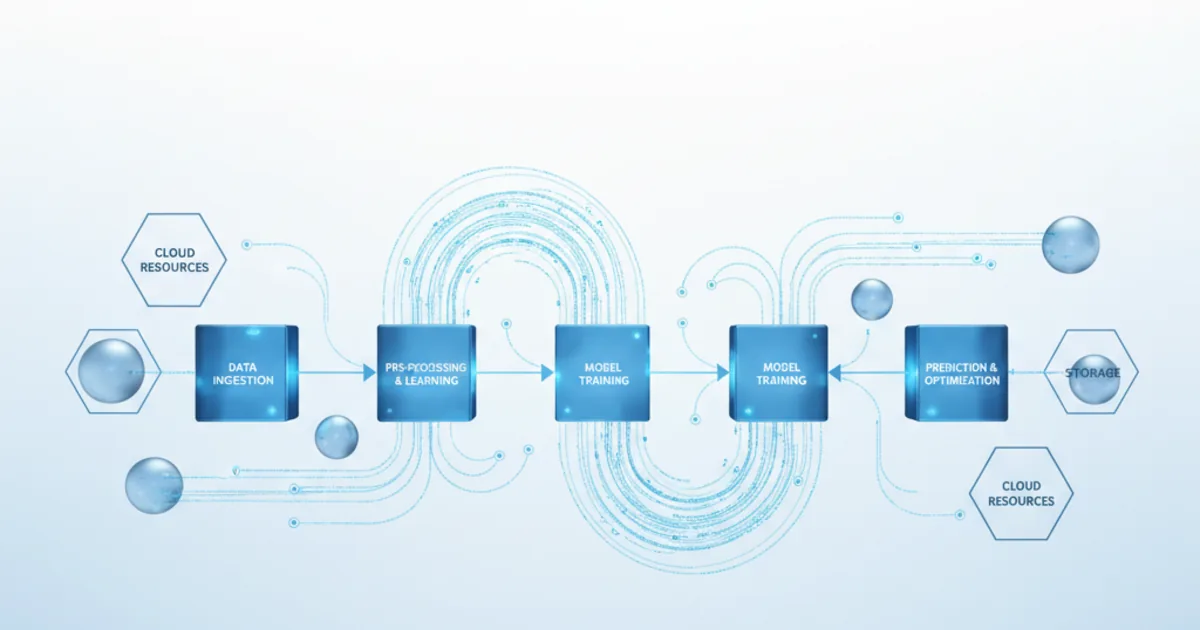
AIOps (Artificial Intelligence for IT Operations) uses machine learning and big data analytics to automate and enhance how organizations manage their IT infrastructure. Rather than relying on manual monitoring and reactive troubleshooting, these intelligent platforms ingest data from across your technology stack to detect anomalies, correlate events, and resolve incidents before they affect business operations.
This guide explains how AI-driven IT operations work, the measurable benefits they deliver, and practical steps for implementation. Whether you are evaluating platforms or planning a rollout, this resource covers what IT leaders and operations teams need to know to make informed decisions about operational intelligence.
Key Takeaways
- AIOps applies machine learning to IT operations data, enabling predictive management instead of reactive firefighting.
- Organizations using intelligent operations platforms typically reduce mean time to resolution (MTTR) by 50% or more, according to Cisco's overview of the technology.
- Successful adoption requires structured data ingestion, team training, and a phased rollout strategy.
- These platforms bridge the gap between DevOps velocity and operational stability across hybrid environments.
- Integration with existing monitoring and IT automation tools accelerates time to value.
- The combination of real-time analytics and historical pattern analysis creates a continuous learning system that improves over time.
What Is AIOps and Why Does It Matter?
AIOps combines artificial intelligence, machine learning, and big data to unify and automate IT operations management. The term was coined by Gartner in 2016, originally as "Algorithmic IT Operations" before evolving to "Artificial Intelligence for IT Operations" within a year — reflecting a fundamental shift from simple rule-based systems to intelligent, self-learning platforms.
Traditional IT Operations Analytics (ITOA) tools laid the groundwork for this approach, but modern infrastructure generates data volumes that manual analysis cannot handle. Distributed cloud environments, microservices architectures, and hybrid setups produce thousands of alerts daily across dozens of monitoring tools. Without intelligent correlation, operations teams waste hours triaging false positives and chasing symptoms rather than root causes.
These platforms address this challenge by ingesting telemetry from every layer of the technology stack — network, compute, storage, application, and security. Machine learning models identify relationships between events that would be invisible to human operators reviewing siloed dashboards. The result is faster incident resolution, more accurate capacity planning, and a shift from reactive maintenance to proactive service management.
For organizations managing multi-cloud environments, this capability is no longer optional. It is the difference between proactive service delivery and constant operational firefighting that drains team productivity and damages customer trust.
Need expert help with aiops: how ai transforms it operations?
Our cloud architects can help you with aiops: how ai transforms it operations — from strategy to implementation. Book a free 30-minute advisory call with no obligation.
How AI-Driven IT Operations Work
Intelligent operations platforms function through two complementary capabilities: real-time data ingestion and historical pattern analysis. Together, these create a continuous learning system that grows more accurate with every incident it processes.
Real-Time Analytics and Event Correlation
The platform ingests streaming data from logs, metrics, traces, and ticketing systems simultaneously. As events arrive, correlation engines group related alerts and identify patterns that indicate emerging problems. This unified view replaces the fragmented, tool-specific dashboards that operations teams traditionally juggle across multiple screens.
Consider a practical example: a latency spike in one microservice might trigger dozens of downstream alerts across monitoring, APM, and infrastructure tools. An intelligent operations platform correlates these into a single incident, pinpointing the root cause rather than burying teams under redundant notifications. This correlation dramatically reduces alert noise — a persistent challenge for teams managing complex distributed systems.
Historical Data and Predictive Modeling
Machine learning algorithms analyze historical operational data to establish performance baselines for every monitored component. Once baselines exist, the system detects subtle deviations — such as gradual memory leaks, slowly degrading response times, or unusual traffic patterns — that traditional threshold-based monitoring misses entirely.
Over time, predictive models forecast capacity bottlenecks and potential failures hours or days before they affect users. This transforms raw telemetry into actionable foresight that enables operations teams to schedule maintenance windows, scale resources proactively, and prevent outages rather than respond to them.
| Analysis Type | Primary Function | Key Benefit |
|---|---|---|
| Real-Time Analytics | Processes streaming data as it arrives | Enables proactive incident response |
| Historical Analysis | Examines stored data to establish baselines | Improves predictive accuracy over time |
| Correlative Analysis | Connects events across multiple data sources | Identifies root causes faster |
Key Business Benefits
Organizations adopting AI-driven operations report measurable improvements in efficiency, incident resolution speed, and service reliability. These outcomes translate directly into cost savings, better customer experiences, and more productive engineering teams.
Reduced Costs and Faster Problem Resolution
Automated event correlation and root-cause analysis allow lean teams to resolve issues with precision. Sophisticated pattern recognition identifies system anomalies in real time, dramatically reducing mean time to resolution compared to manual investigation workflows.
By automating routine diagnostic work, engineers focus on higher-value tasks — architectural improvements, capacity planning, and reliability engineering — instead of manually sifting through alert queues. This shift reduces operational costs while improving the quality of incident response and team morale.
Improved Incident Response and Customer Experience
Predictive capabilities anticipate problems before they reach end users, transforming IT from a reactive cost center into a strategic asset. A unified framework aggregates telemetry from disparate monitoring tools, eliminating blind spots and enabling faster cross-team collaboration during complex incidents.
Industries with high availability requirements see particularly strong results. Healthcare organizations use these platforms to protect sensitive patient data and maintain HIPAA compliance, while manufacturing companies apply real-time monitoring for predictive maintenance of critical equipment. Financial services firms leverage automated anomaly detection to identify potential security threats and transaction irregularities before they cause damage.
AIOps vs. Traditional ITSM
Traditional IT Service Management relies on predefined rules and manual workflows, while AI-powered operations learn continuously from data to automate decisions. Understanding this distinction helps organizations evaluate where intelligent automation adds the most value to their existing processes.
| Capability | Traditional ITSM | AI-Driven Approach |
|---|---|---|
| Alert Management | Static thresholds, manual triage | Dynamic baselines, automated correlation |
| Root Cause Analysis | Manual investigation across tools | Automated cross-domain correlation |
| Capacity Planning | Periodic manual reviews | Continuous predictive forecasting |
| Incident Resolution | Runbook-driven, human-executed | Automated remediation with oversight |
| Data Processing | Siloed tools, limited correlation | Unified ingestion from all sources |
This comparison does not mean traditional service management is obsolete. Many organizations integrate intelligent operations with existing ITSM workflows, using AI to enrich tickets, prioritize queues, and suggest resolutions while maintaining established change management and compliance processes.
Implementing AI-Driven Operations: A Practical Roadmap
Successful adoption follows a phased approach that builds organizational confidence while minimizing risk. Rushing deployment without proper data foundations leads to inaccurate models, alert fatigue, and team distrust of the platform.
Phase 1: Data Ingestion and Aggregation
Start by mapping all data sources across your IT domains — infrastructure metrics, application logs, network telemetry, security events, and ticketing systems. Prioritize historical machine data and infrastructure metrics to establish baseline understanding before adding complexity.
Using clustering algorithms to identify trends in historical data builds the foundation for accurate anomaly detection. The selection of initial data types should match your highest-priority use cases: infrastructure metrics support capacity monitoring, while application logs help optimize customer-facing performance.
Phase 2: Automation and Workflow Integration
Once reliable data foundations exist, layer in automation capabilities progressively. Start with automated alert correlation and noise reduction. Then advance to predictive alerting and, eventually, automated remediation for well-understood incident types.
Implementation requires comprehensive training and maintained human oversight. As AWS explains in their operational intelligence guide, the goal is augmenting human decision-making, not replacing it. Teams should validate automated recommendations before granting autonomous remediation authority.
Platform Capabilities to Evaluate
Enterprise-grade platforms differentiate themselves through five core capabilities: big data management, performance monitoring, observability, predictive analytics, and automated remediation.
Big data management processes massive datasets without performance compromise, handling the volume, variety, and velocity of modern IT telemetry. Performance monitoring rapidly gathers event data across infrastructure layers and identifies degradation root causes with higher accuracy than traditional rule-based tools.
Observability provides deep visibility into distributed services and microservices architectures, enabling teams to trace transactions across multiple components. Predictive analytics leverage historical data and statistical modeling to forecast incidents before they materialize. Automation capabilities collect and correlate information from multiple sources, triggering responses while maintaining human oversight for accountability.
Domain-agnostic platforms span entire technology landscapes — from on-premises servers to cloud-managed infrastructure. This holistic visibility breaks down operational silos and enables coordinated issue resolution across hybrid environments, which is critical for organizations running workloads across multiple cloud providers.
Integration with DevOps Practices
Combining DevOps development velocity with operational intelligence creates a comprehensive framework spanning the entire software lifecycle. DevOps accelerates delivery through CI/CD pipelines and infrastructure as code, while AI-driven operations ensure stability and performance at scale.
| DevOps Focus | Operational Intelligence Contribution | Business Outcome |
|---|---|---|
| Accelerated deployment cycles | Proactive performance monitoring | Faster innovation with maintained stability |
| Automated testing pipelines | Anomaly detection and smart alerting | Higher application reliability |
| Infrastructure as code | Resource optimization analytics | Improved cost efficiency |
| Continuous integration | Real-time dependency mapping | Enhanced cross-team productivity |
This synergy is especially valuable for organizations running microservices architectures. Development teams gain autonomy to deploy rapidly while operations teams receive intelligent automation to maintain reliability without constant manual intervention. The shared visibility eliminates the information gaps that traditionally cause friction between development and operations functions.
Anomaly Detection and Predictive Monitoring
Advanced anomaly detection identifies data patterns that deviate from established baselines, often catching problems hours or days before traditional threshold-based alerts would trigger.
Modern platforms use multiple algorithmic approaches for comprehensive coverage. Trending algorithms examine individual performance indicators against established baselines, identifying gradual degradation. Cohesive algorithms analyze groups of related metrics that should behave similarly, detecting relational pattern breaks. Machine learning models predict expected values based on historical patterns, seasonal variations, and contextual factors like deployment schedules.
| Detection Method | Primary Focus | Key Advantage |
|---|---|---|
| Trending Algorithms | Individual metric analysis | Identifies gradual performance changes |
| Cohesive Algorithms | Group metric correlation | Detects relational pattern breaks |
| ML-Based Models | Predictive value comparison | Accounts for seasonal and contextual variations |
These systems separate meaningful alerts from operational noise, directly reducing alert fatigue that contributes to engineer burnout. When anomalies are detected, the platform correlates them with event data across environments to suggest root causes and recommend specific remediation steps drawn from historical resolution patterns. Streaming services, for instance, use these techniques to identify subtle performance degradation before it affects the experience of millions of concurrent users.
Cloud and Hybrid Environment Operations
Hybrid and multi-cloud infrastructures create operational complexity that traditional monitoring tools cannot address at scale. Organizations adopting cloud technologies gradually — rather than through wholesale migration — face interconnected components spanning multiple platforms, APIs, microservices, and constantly shifting network configurations.
Specialized platforms provide comprehensive visibility across diverse infrastructure types, seamlessly handling data movement between on-premises systems and cloud environments. They continuously analyze usage, availability, and performance metrics, consolidating information into unified dashboards that cloud security and operations teams can act on immediately.
Event correlation capabilities reduce operational risk during migration projects and ongoing hybrid operations. For organizations optimizing their cloud investments, these insights ensure workload placement, resource allocation, and scaling decisions are driven by data rather than guesswork.
Challenges and Future Trends
Successful adoption requires navigating both cultural and technical hurdles while preparing for rapid evolution in AI capabilities.
Overcoming Cultural and Skills Gaps
Moving from reactive troubleshooting to data-driven management demands new competencies across the organization. Teams need training to effectively use new tools and interpret AI-generated insights rather than defaulting to familiar manual workflows. Transparent, explainable models are essential for building trust — stakeholders must understand how automated decisions are made to maintain accountability and compliance risk delivery.
The Role of Generative AI in Operations
The market for intelligent operations platforms continues to grow rapidly as organizations recognize the limitations of traditional approaches. Generative AI is expanding platform capabilities into new areas, including automated code analysis, test generation, natural language querying of operational data, and conversational incident management. Organizations that explore these capabilities now will be better positioned as the technology matures and becomes a standard expectation for IT operations teams.
| Focus Area | Critical Action | Expected Benefit |
|---|---|---|
| Model Training | Use comprehensive, representative datasets | Optimal prediction accuracy |
| Human Oversight | Validate model conclusions before automation | Maintained accountability and trust |
| Workflow Integration | Integrate with existing ITSM processes | Faster adoption and reduced friction |
Getting Started
The path from reactive operations to AI-driven management begins with understanding your current environment and defining clear objectives.
Start with a focused pilot — choose one high-impact use case such as alert noise reduction or automated incident correlation. Measure results against specific KPIs before expanding scope. Common initial targets include reducing MTTR by a defined percentage, decreasing alert volume through intelligent grouping, or improving change success rates through predictive risk assessment.
Successful implementation requires both technology investment and organizational commitment to new ways of working. The organizations that achieve the best results treat this as a transformation program rather than a tool deployment — investing in training, process redesign, and executive sponsorship alongside the platform itself.
Opsio helps organizations design and implement intelligent operations strategies tailored to their infrastructure and business goals. Contact our team to discuss your operational challenges and explore how AI-driven automation can transform your IT operations.
FAQ
What is the primary goal of implementing an AIOps platform?
The primary goal is to improve operational reliability and team productivity by applying machine learning to IT operations data. These platforms process information from multiple sources to detect anomalies, identify patterns, and enable predictive management — reducing manual effort and accelerating problem resolution significantly.
How does AIOps improve incident management?
AI-driven platforms transform incident response by automating root cause analysis and event correlation. They group related alerts intelligently, reducing noise so teams can focus on genuine issues. This capability shortens mean time to resolution and improves system uptime, directly benefiting service reliability and customer experience.
Can AIOps integrate with existing monitoring tools?
Yes. Modern platforms are designed for integration with a wide range of monitoring systems, cloud environments, and legacy technologies. They aggregate data from network, application, and infrastructure components to provide a unified operational view across hybrid and multi-cloud environments without requiring organizations to replace their existing tooling.
What capabilities should I look for in an AIOps platform?
Essential capabilities include real-time analytics, anomaly detection, predictive alerting, and automated remediation workflows. Look for platforms offering advanced ML algorithms for pattern recognition, capacity forecasting, and intelligent automation — all with maintained human oversight for accountability and compliance.
How does AIOps support DevOps and SRE practices?
Intelligent operations bridge the gap between development velocity and operational stability. They provide shared visibility into application performance and infrastructure health, enabling faster deployment cycles and more reliable services. This integration supports continuous delivery while maintaining the service-level objectives that SRE teams manage.
What challenges should we expect when adopting AIOps?
Key challenges include cultural adaptation, skills development, and process redesign. Teams need to shift from reactive troubleshooting to trusting data-driven insights. Success requires comprehensive training, transparent AI models that stakeholders can understand, and a phased rollout that builds confidence through measurable results at each stage.
About the Author

Director & MLOps Lead
Vaishnavi leads machine learning operations initiatives at Opsio, enabling ML and predictive capabilities for industrial and automotive operations. Her expertise spans predictive maintenance, industrial data analysis, vibration-based condition monitoring, and applied AI — with a focus on practical, experiment-driven solutions designed for real operational environments.
Editorial standards: This article was written by a certified practitioner and reviewed by our engineering team. We revise it when the technology or regulation it covers changes; the dates above show the latest update. Opsio maintains editorial independence — we recommend solutions on technical merit, not commercial relationships.