
AI Consulting for Enterprises: How to Accelerate AI Adoption in 2026

Country Manager, India
AI, Manufacturing, DevOps, and Managed Services. 17+ years across Manufacturing, E-commerce, Retail, NBFC & Banking
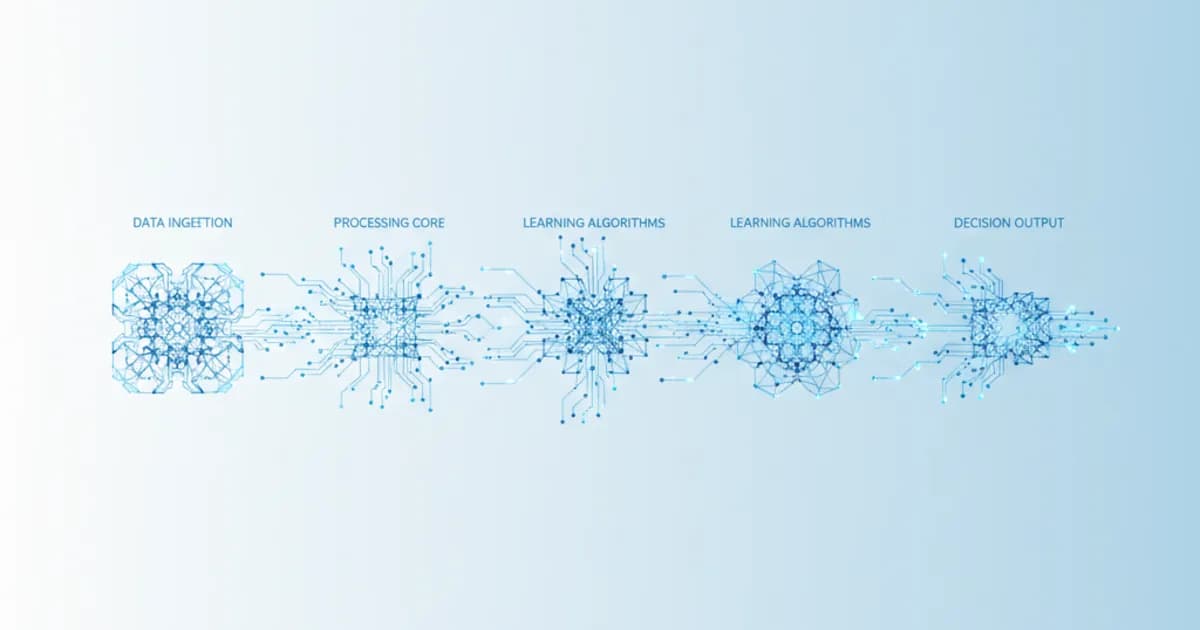
Most enterprise AI projects never reach production. According to (Gartner, 2025), only 54% of AI initiatives move past the pilot stage. The gap between experimentation and enterprise-wide deployment is where billions in potential value sit unused. Companies that close this gap don't do it alone. They work with specialized AI consulting partners who bring the technical depth, strategic clarity, and operational discipline that internal teams often lack.
This guide breaks down what AI consulting for enterprises actually involves, why it matters more than ever in 2026, and how to select a partner that delivers real outcomes rather than slide decks.
Key Takeaways - Enterprise AI consulting bridges the gap between pilot projects and production-scale deployment - 72% of large enterprises now use AI in at least one business function (McKinsey, 2025) - Core services span machine learning, NLP, computer vision, and MLOps - Cloud infrastructure alignment (AWS, Azure, GCP) is critical to long-term AI success - Choosing the right partner requires evaluating industry expertise, delivery methodology, and post-deployment support
What Is Enterprise AI Consulting?
Enterprise AI consulting is the practice of helping large organizations plan, build, and scale artificial intelligence solutions across their operations. According to (IDC, 2025), global spending on AI consulting and integration services reached $27 billion in 2025. That figure reflects a growing recognition that AI adoption requires more than just technology.
AI consultants work at the intersection of business strategy and technical execution. They assess where AI can create the most value, design architectures that fit existing infrastructure, and guide teams through deployment. The scope ranges from narrow use cases, like automating invoice processing, to company-wide transformations involving hundreds of models.
What separates enterprise AI consulting from general IT consulting is depth. These engagements involve data scientists, ML engineers, and domain specialists working together on problems that require custom solutions. Off-the-shelf tools don't cut it when you're dealing with proprietary data, complex compliance requirements, and legacy systems that resist change.
Citation Capsule: Enterprise AI consulting is a $27 billion global market as of 2025, according to IDC. The discipline combines strategic planning with hands-on engineering to help large organizations move AI initiatives from proof-of-concept to production at scale.
Why Do Enterprises Need AI Consulting Partners?
Enterprises need AI consulting partners because internal teams rarely have the breadth of expertise required for production AI. (McKinsey, 2025) reports that 72% of large companies now use AI in at least one function, yet fewer than 30% have scaled it across the organization. The gap is not ambition. It's execution.
Building AI in-house sounds appealing. You control the IP, the timelines, and the talent. But the reality is messier. Most enterprises face three interlocking challenges: a shortage of specialized talent, slow time to value, and difficulty integrating AI into existing workflows.
A consulting partner accelerates each of these areas. They bring battle-tested frameworks, cross-industry experience, and teams that have already solved the problems you're encountering for the first time.
Bridging the Skills Gap
The AI talent shortage isn't easing. (World Economic Forum, 2025) estimates that demand for AI and machine learning specialists will grow by 40% through 2027, far outpacing supply. Enterprises can't hire fast enough. Even when they do, a single data scientist without supporting infrastructure struggles to deliver production-ready models.
In our experience, the most effective consulting engagements aren't about replacing internal teams. They're about complementing them. A consulting partner handles the specialized work, like model optimization, pipeline architecture, and MLOps setup, while the client's team focuses on domain knowledge and long-term ownership. This hybrid model reduces dependency and builds lasting capability.
Consulting partners also bring exposure to patterns across industries. A firm that has deployed NLP solutions in financial services and healthcare can recognize pitfalls that a single-industry team would miss. That cross-pollination of knowledge is difficult to replicate through hiring alone.
Faster Time to Value
Speed matters. (Accenture, 2025) found that enterprises using external AI partners reduced their average time from concept to production by 40% compared to fully in-house efforts. The difference comes down to pre-built accelerators, established methodologies, and teams that don't need ramp-up time.
Consider a manufacturer deploying computer vision for quality inspection. An internal team might spend six months just evaluating frameworks and building data pipelines. A consulting partner with experience in visual inspection systems can compress that to weeks because they've already solved the foundational problems.
But speed without sustainability is worthless. The best partners don't just deliver a model and leave. They build the infrastructure, documentation, and training that let your team maintain and improve the system over time.
Citation Capsule: Enterprises working with external AI consulting partners reach production deployment 40% faster than those relying solely on in-house teams, according to Accenture's 2025 AI investment analysis. This advantage stems from reusable frameworks and pre-built deployment pipelines.
Need expert help with ai consulting for enterprises?
Our cloud architects can help you with ai consulting for enterprises — from strategy to implementation. Book a free 30-minute advisory call with no obligation.
What Core AI Consulting Services Do Enterprises Use?
The most widely adopted AI consulting services include machine learning development, natural language processing, computer vision, and MLOps. (Gartner, 2025) projects that the AI services market will reach $42 billion by 2027, driven largely by demand for these four capabilities.
Machine Learning Development. This is the foundation. ML consulting covers everything from exploratory data analysis to model training, validation, and deployment. Enterprise use cases include demand forecasting, customer segmentation, fraud detection, and predictive maintenance. The work typically involves custom model development rather than out-of-the-box solutions because enterprise data is messy, domain-specific, and often siloed.
Natural Language Processing. NLP has moved well beyond chatbots. Enterprises now use it for contract analysis, regulatory compliance screening, sentiment monitoring, and knowledge extraction from unstructured documents. Large language models have expanded what's possible, but deploying them in enterprise settings requires careful attention to data privacy, hallucination management, and cost control.
Computer Vision. Manufacturing, logistics, healthcare, and retail all rely on computer vision for inspection, tracking, and analysis. These projects demand robust data pipelines, edge deployment capabilities, and continuous model retraining as conditions change.
MLOps. This is where most enterprises struggle. Building a model is one thing. Operating it reliably in production is another. MLOps consulting covers model monitoring, automated retraining, version control, and infrastructure management. Without MLOps, models degrade over time and become liabilities instead of assets.
Providers like Opsio offer end-to-end consulting across all four areas, combining deep cloud expertise with AI engineering to deliver solutions that integrate cleanly with existing enterprise infrastructure.
Citation Capsule: Gartner forecasts the global AI services market will hit $42 billion by 2027. The four pillars of enterprise AI consulting, machine learning, NLP, computer vision, and MLOps, account for the majority of that growth as organizations move from experimentation to operational deployment.
How Should You Choose the Right AI Consulting Partner?
The right AI consulting partner combines deep technical capability with proven delivery in your industry. According to (Forrester, 2025), 68% of enterprises that reported failed AI projects cited "poor vendor selection" as a contributing factor. Choosing well isn't optional. It's the single biggest factor in project success.
Here's what to evaluate:
Industry experience. Has the firm delivered AI solutions in your sector? Domain knowledge affects everything from data strategy to model selection. A partner with healthcare AI experience understands HIPAA constraints intuitively. One without it will learn on your dime.
Technical depth. Can they build custom models, or do they reskin pre-built tools? Ask about their ML engineering team, their approach to model validation, and their experience with your tech stack. Generalists who outsource the hard work aren't consulting partners. They're middlemen.
Delivery methodology. How do they structure engagements? Look for phased approaches with clear milestones, defined success metrics, and built-in checkpoints. Avoid partners who promise everything upfront without scoping the problem first.
Cloud and infrastructure alignment. Your AI strategy must align with your cloud strategy. If you run on AWS, your partner should have deep AWS experience. The same applies for Azure and GCP. Misalignment here creates technical debt that compounds over time.
Post-deployment support. What happens after launch? Models need monitoring, retraining, and ongoing optimization. A partner that disappears after deployment leaves you exposed. Ask about their managed services offerings and long-term support models.
References and case studies. Don't take claims at face value. Ask for references from similar-sized companies in similar industries. Review published case studies for specifics, not just vague success stories.
We've found that the most telling indicator of a good partner is how they handle the scoping phase. Partners who rush to propose solutions before deeply understanding your data, infrastructure, and business objectives tend to deliver poor results. The best ones push back, ask hard questions, and sometimes recommend not using AI at all if a simpler solution exists.
Citation Capsule: According to Forrester's 2025 analysis, 68% of failed enterprise AI projects involved poor vendor selection as a contributing factor. Key evaluation criteria include industry experience, technical depth, delivery methodology, cloud alignment, and post-deployment support.
How Does AI Consulting Connect to Cloud Infrastructure?
AI consulting and cloud infrastructure are inseparable in enterprise settings. (IDC, 2025) reports that 83% of enterprise AI workloads now run on public cloud platforms, primarily AWS, Azure, and GCP. The consulting partner you choose must understand the cloud platform you use, not just the AI layer on top of it.
Each platform offers distinct AI and ML services. AWS provides SageMaker for model development and Bedrock for foundation model access. Azure offers Azure Machine Learning and OpenAI Service integration. GCP leads with Vertex AI and BigQuery ML for data-native workflows. A good consulting partner knows the strengths and trade-offs of each.
But cloud alignment goes deeper than service selection. It includes data architecture, security configurations, cost optimization, and networking. An AI model that performs brilliantly in a notebook but can't scale on your cloud infrastructure is useless.
How do you avoid this trap? Start with infrastructure. The consulting engagement should begin with a cloud readiness assessment that maps your current environment, identifies gaps, and designs an architecture that supports AI workloads at scale. Retrofitting AI onto a poorly designed cloud foundation is expensive and slow.
Multi-cloud and hybrid environments add complexity. Many enterprises run workloads across two or more providers, or maintain on-premises systems alongside cloud resources. AI consulting partners need to navigate this reality, building solutions that work within your actual environment rather than an idealized one.
The organizations getting the most value from AI consulting in 2026 are those that treat cloud infrastructure and AI strategy as a single initiative rather than separate workstreams. When data engineering, model development, and cloud operations teams work in isolation, the result is fragmented systems that nobody owns and nobody can maintain.
Citation Capsule: IDC reports that 83% of enterprise AI workloads run on public cloud platforms as of 2025. Effective AI consulting requires deep cloud platform expertise because model performance, scalability, and cost control all depend on infrastructure decisions made before a single line of training code is written.
FAQ
What does AI consulting for enterprises typically cost?
Enterprise AI consulting costs vary widely based on scope and complexity. Small proof-of-concept projects can start at $50,000 to $150,000, while full-scale enterprise deployments often range from $500,000 to several million dollars. According to (Deloitte, 2025), the average enterprise AI budget grew 25% year over year in 2025, reflecting increasing investment in production-grade implementations.
How long does an enterprise AI consulting engagement last?
Most engagements span 3 to 12 months depending on the project's scope. A focused use case like demand forecasting might take 3 to 4 months from scoping to deployment. Enterprise-wide AI transformation programs typically run 12 to 18 months. The fastest results come from phased approaches that deliver incremental value rather than big-bang launches.
Can AI consulting help with regulatory compliance?
Yes. Regulatory compliance is a core component of enterprise AI consulting, especially in financial services, healthcare, and government. Consultants help design AI systems that meet requirements like the EU AI Act, GDPR, and industry-specific frameworks. They also build audit trails, explainability features, and bias testing into the development process from the start.
What's the difference between AI consulting and data consulting?
AI consulting focuses specifically on building and deploying machine learning models and intelligent systems. Data consulting is broader, covering data strategy, governance, warehousing, and analytics. In practice, the two overlap significantly because AI systems require clean, well-organized data. Many firms, including Opsio, offer both capabilities under a single engagement to avoid the handoff problems that arise when different vendors own different parts of the data pipeline.
Do enterprises need AI consulting if they already have a data science team?
Usually, yes. Internal data science teams often excel at research and prototyping but lack the engineering resources to productionize models at scale. AI consulting partners fill this gap with MLOps expertise, cloud infrastructure knowledge, and experience deploying models in production environments. The goal isn't replacement. It's acceleration and capability building.
Conclusion
Enterprise AI adoption in 2026 isn't limited by technology. It's limited by execution. The tools, platforms, and research are more accessible than ever. What most organizations lack is the operational expertise to turn AI experiments into business value at scale.
AI consulting for enterprises addresses this gap directly. The right partner brings technical depth, industry knowledge, and proven deployment methodology. They help you avoid the common pitfalls that stall 46% of AI initiatives before they reach production.
Whether you're building your first ML pipeline or scaling AI across the organization, the principles remain the same: start with clear business objectives, align your cloud infrastructure, invest in MLOps from day one, and choose partners based on delivery track record rather than marketing claims.
The enterprises that will lead in the next decade are making these decisions now. The question isn't whether to adopt AI. It's how fast you can move from pilot to production.
About the Author

Country Manager, India
Praveena leads Opsio's India operations, bringing 17+ years of cross-industry experience spanning AI, manufacturing, DevOps, and managed services.
Editorial standards: This article was written by a certified practitioner and peer-reviewed by our engineering team. We update content quarterly to ensure technical accuracy. Opsio maintains editorial independence — we recommend solutions based on technical merit, not commercial relationships.