

"Selecting a cloud provider without clear criteria is like buying real estate sight unseen. You might like the view — until the roof leaks."
This guide uses cloud provider evaluation criteria and key metrics for cloud providers to give you a practical, audit-ready approach to cloud selection. It's aimed at IT leaders, procurement teams, security officers, and architects who need to short-list and validate cloud partners across performance, security, reliability, and cost.
Who should use this guide:
- CTOs and CIOs evaluating strategic cloud partners
- Procurement and vendor management teams running RFPs
- Security and compliance teams assessing risk posture
- Cloud architects and DevOps teams running pilots and proofs of concept
Defining Your Requirements Before Comparing Vendors
Before diving into vendor comparisons, it's essential to clearly define what your organization needs from a cloud service provider. This foundation ensures you're evaluating providers against criteria that matter to your specific business context.
Defining clear business and technical requirements is the foundation of effective cloud provider evaluationBusiness and technical requirements: scope, performance, compliance
Start by documenting your business objectives and constraints. This creates alignment between technical teams and business stakeholders while providing clear evaluation parameters.
- Scope: Which workloads are migrating — dev/test, web apps, databases, analytics, or regulated workloads?
- Performance: Define latency and throughput requirements, concurrency, and peak load expectations.
- Compliance: Identify regulatory frameworks (GDPR, HIPAA, PCI DSS, FedRAMP) and any data residency needs (e.g., EU, UK, or U.S. regions).
For example, a U.S.-based healthcare provider will require HIPAA-compliant services, Business Associate Agreements (BAAs), and US-region data residency. A global retail business may need multi-region failover and CDN support for peak shopping seasons.
Cost and licensing considerations: TCO, pricing models, and optimization needs
Total cost of ownership (TCO) should include more than just the base service fees. When evaluating cloud service providers, consider all potential costs that will impact your budget.
- Compute, storage, network, and managed service fees
- Data egress and inter-region transfer costs
- Licensing (bring-your-own-license vs. cloud license)
- Personnel and operational overhead for cloud management
Be careful of pricing models: pay-as-you-go, reserved instances, committed use discounts. Model multiple scenarios (baseline, 2x peak, seasonal spikes) to avoid surprises when your usage patterns change.
Service level objectives and availability targets to feed a cloud service provider comparison
Translate business needs into Service Level Objectives (SLOs) you can measure. These will form the backbone of your service level agreements with your chosen provider.
- Target uptime (e.g., 99.95% or higher)
- Recovery Time Objective (RTO) and Recovery Point Objective (RPO)
- Incident response time and support hours (24×7 vs. business hours)
These SLOs inform the cloud service provider comparison and contract negotiation, ensuring you select a provider that can meet your operational requirements.
Core Cloud Provider Evaluation Criteria
With your requirements defined, you need a structured framework to evaluate potential providers. These core criteria will help you assess each provider's capabilities in areas critical to your success.
Effective evaluation requires monitoring key performance and security metrics across providersPerformance and scalability metrics — the key metrics for cloud providers
Performance is a critical factor in cloud service provider selection. These key metrics will help you objectively compare providers:
| Metric | Description | Why It Matters |
| Availability/Uptime | SLA percentage guaranteeing service availability | Directly impacts business continuity and customer experience |
| Latency | Response time (avg and 95th/99th percentile) | Affects application responsiveness and user satisfaction |
| Throughput | Requests per second, IOPS | Determines how many transactions your system can handle |
| Scalability | Auto-scaling responsiveness and limits | Enables handling of traffic spikes without manual intervention |
| Provisioning time | Time to create instances or services | Impacts agility and time-to-market for new features |
For a streaming application, monitor 95th and 99th percentile latency under peak load in a proof of concept. Compare each provider's documented SLA and real-world performance from public benchmarks.
Security, compliance, and data governance criteria for cloud provider evaluation
Security should never be an afterthought when evaluating cloud service providers. A comprehensive security assessment includes:
- Certifications: ISO 27001, SOC 2, PCI DSS, and region-specific certifications (e.g., UK Cyber Essentials)
- Data protection: Residency options, encryption at rest and in transit
- Identity management: IAM features, multi-factor authentication, role-based access
- Monitoring: Logging, monitoring capabilities, and log retention periods
- Key management: Support for customer-managed keys and hardware security modules
Include inspection of the shared responsibility model so teams know what the provider secures and what your organization must secure. This clarity prevents dangerous security gaps.
Understanding the shared responsibility model is crucial when evaluating cloud service provider securitySupport, managed services, and ecosystem compatibility as selection factors
The level of support and available managed services can significantly impact your operational efficiency and ability to focus on core business activities.
- Support tiers: Standard, Premium, Enterprise options and their response times
- Managed services: Available databases, serverless, analytics offerings that reduce operational burden
- Ecosystem: Marketplace and partner network for third-party tooling and MSP support
- Compatibility: Integration with your existing toolchain (CI/CD, monitoring, identity)
If you use Kubernetes, confirm the provider's managed Kubernetes features and available node types to ensure compatibility with your containerization strategy.
Reliability and Operational Assessment
While performance and security are vital, reliability and operational maturity often determine day-to-day satisfaction with your cloud provider. These factors impact your ability to maintain service quality and respond to incidents.

Cloud service reliability evaluation: uptime, SLAs, and incident history
Cloud service reliability evaluation should combine SLA reading with empirical history. This dual approach provides a more realistic picture of what to expect.
Quick math: 99.9% availability allows ~8.76 hours of downtime per year; 99.99% allows ~52 minutes.
Look for providers that publish detailed incident postmortems, which show transparency and operational maturity. Review these elements:
- SLA baseline: 99.9% (three nines) vs. 99.99% (four nines) and what they mean for annual downtime
- Historical incidents: Public postmortems and root-cause analyses from past outages
- Third-party validation: Status pages and historical uptime metrics from independent sources
Disaster recovery and backup capabilities: RTO, RPO, and geographic redundancy
Disaster recovery capabilities are crucial for business continuity. When evaluating cloud service providers, assess:
- Backup options: Native backup and snapshot capabilities with flexible retention policies
- Redundancy: Cross-region replication and multi-zone redundancy options
- Recovery guarantees: RTO and RPO guarantees for key services
- Validation: Runbook validation and documented failover procedures
For a finance firm, aim for RTO
Operational maturity: change management, monitoring, and automation practices
The operational maturity of a cloud provider directly impacts your experience as a customer. Evaluate these aspects:
- Monitoring tools: Native and third-party observability toolsets
- Deployment safety: Change management and deployment features (canary, blue/green)
- Automation: Infrastructure as Code (IaC) support and comprehensive APIs
- Service lifecycle: Update frequency and clear deprecation policies
Organizations with mature automation reduce Mean Time To Recovery (MTTR) and improve overall stability, making this an important factor in your evaluation.
Risk Assessment and Mitigation
A thorough risk assessment is essential when evaluating cloud service providers. This process helps identify potential vulnerabilities and establish mitigation strategies before committing to a provider.
A structured risk assessment framework helps identify and mitigate potential cloud provider risksCloud provider risk assessment: identifying vendor, operational, and regulatory risks
When performing a cloud provider risk assessment, consider these three key risk categories:
- Vendor risk: Financial health, market share, and potential for vendor lock-in
- Operational risk: Single points of failure, shared infrastructure vulnerabilities, third-party dependencies
- Regulatory risk: Compliance gaps or cross-border data transfer challenges
Each category requires specific evaluation methods and mitigation strategies. Documenting these risks creates a comprehensive view of your potential exposure.
Contractual and legal risk controls: SLAs, liability, and exit clauses
Contracts serve as your primary protection against cloud service provider risks. Ensure your agreements include:
- Clear SLAs: Defined service levels with meaningful remedies (credits, termination options)
- Liability provisions: Appropriate caps and indemnities for data breaches
- Exit strategy: Data export timelines, migration assistance, data deletion guarantees
- IP protection: Intellectual property rights and subcontractor disclosure requirements
Negotiating these terms before signing can significantly reduce your legal and operational exposure if issues arise later.
Third-party audits and certifications to validate risk posture
Independent validation provides objective assurance of a provider's security and compliance claims. Request these third-party assurances:
- Security reports: Latest SOC 2 Type II, ISO 27001, PCI DSS documentation
- Security testing: Penetration test summaries and vulnerability disclosure programs
- Industry certifications: Relevant certifications for your sector (FedRAMP, HIPAA, etc.)
Always verify that audit reports cover the specific regions and services you plan to use, as coverage can vary significantly.
Practical Comparison and Decision Framework
After gathering information about potential cloud service providers, you need a structured approach to compare options and make an informed decision. A systematic framework ensures objectivity and thoroughness.
A structured comparison framework enables objective evaluation across multiple cloud service providersBuilding a cloud service provider comparison matrix: weighting and scoring
Create a comparison matrix with weighted criteria to objectively evaluate providers against your specific needs:
| Criteria | Weight (%) | Provider A Score (1-5) | Provider B Score (1-5) | Provider C Score (1-5) |
| Performance | 25 | 4 | 5 | 3 |
| Security | 25 | 5 | 4 | 4 |
| Cost | 20 | 3 | 4 | 5 |
| Support | 15 | 4 | 3 | 4 |
| Reliability | 15 | 5 | 4 | 3 |
| Weighted Total | 100 | 4.25 | 4.15 | 3.80 |
This quantitative approach helps justify your decision to stakeholders and provides a clear record of your evaluation process.
Conducting pilots and proofs of concept to validate claims
Theoretical evaluations should be validated with practical testing. Run pilots for critical workloads to verify provider claims:
- Define metrics: Establish clear success criteria (latency, throughput, failover time)
- Use realistic loads: Test with representative data volumes and traffic patterns
- Set timeframes: Time-box pilots (4–8 weeks) and include comprehensive cost tracking
- Document findings: Record observations about usability, support responsiveness, and hidden costs
A well-designed pilot reveals practical differences that might not be apparent from marketing materials or technical documentation.
Using a cloud vendor assessment checklist to standardize evaluations
A standardized checklist ensures consistent evaluation across providers and prevents overlooking critical factors:
Cloud Vendor Assessment Checklist
- Business Alignment
- Service coverage for required workloads
- Geographic presence in target markets
- Industry experience and references
- Performance & Reliability
- SLA terms and historical uptime
- Latency and throughput benchmarks
- Scalability limits and auto-scaling capabilities
- Backup and disaster recovery options
- Security & Compliance
- Certifications relevant to your industry
- Encryption capabilities (at rest, in transit)
- Identity and access management features
- Security incident response process
- Support & Operations
- Support tiers and response SLAs
- Technical account management options
- Documentation quality and developer resources
- Change management and notification policies
- Commercial Terms
- Pricing model and volume discounts
- Contract flexibility and minimum commitments
- Exit terms and data portability options
- Service credits for SLA violations
This checklist can be customized to your organization's specific needs and used to create a consistent evaluation record across all potential providers.
Cost, Contracting, and Long-Term Governance
Selecting a cloud service provider is just the beginning. Effective cost management, contract negotiation, and ongoing governance are essential for long-term success with your chosen provider.

Total cost of ownership analysis and cost-optimization levers
A comprehensive TCO analysis should account for all direct and indirect costs associated with cloud adoption:
- Direct cloud costs: Compute, storage, network, managed services
- Data movement costs: Egress charges, inter-region traffic, API calls
- Operational costs: Personnel, third-party tools, training
- Migration costs: Professional services, re-architecting, parallel environments
Once deployed, leverage these cost-optimization strategies to maximize value:
- Commitment discounts: Reserved instances or committed use discounts (30-70% savings)
- Right-sizing: Matching instance types to actual workload requirements
- Storage optimization: Implementing tiering and lifecycle policies for data
- Hybrid approaches: Strategic workload placement to minimize egress costs
Negotiating contracts, SLAs, and change management with your chosen provider
Effective contract negotiation can significantly improve your terms and protect your interests:
- Volume discounts: Negotiate enterprise discounts and startup/pilot credits
- Custom SLAs: Secure tailored service levels and meaningful financial remedies
- Support provisions: Define clear escalation paths and dedicated account teams
- Capacity guarantees: Secure commitments for peak season capacity needs
Document change management expectations in contract annexes, including notification timelines for maintenance, version changes, and service deprecations.
Governance model and continuous evaluation to manage vendor relationships
Establish a governance framework to maintain oversight and optimize your cloud investment:
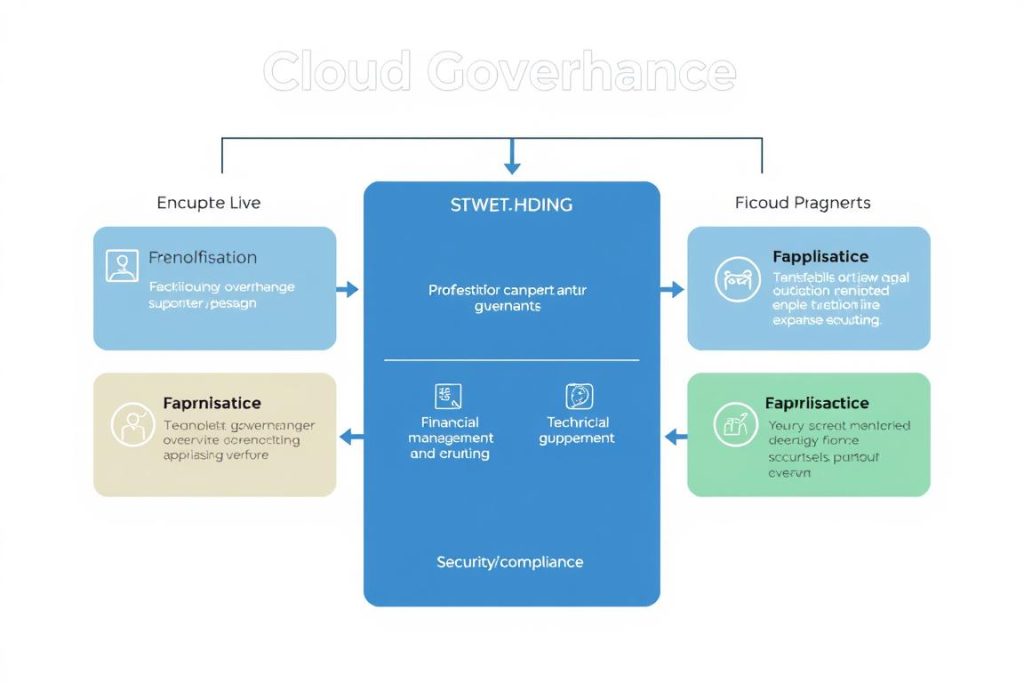
- Governance structure: Executive steering committee and technical gatekeepers
- Regular reviews: Quarterly business reviews with vendor representatives
- Ongoing assessment: Continuous performance monitoring and risk evaluation
- Optimization cycles: Scheduled architecture and cost optimization reviews
This governance model should be tied to clear KPIs and contractual milestones to ensure accountability and continuous improvement.
Selecting and Maintaining the Right Cloud Partner
Choosing the right cloud service provider is a strategic decision that impacts your organization's agility, security, and bottom line. A methodical approach to evaluation and ongoing management ensures you maximize the benefits of cloud adoption.

Recap of cloud provider evaluation criteria and key metrics for cloud providers
Throughout this guide, we've explored the essential elements of evaluating cloud service providers:
- Define business and technical requirements first (scope, SLOs, compliance)
- Evaluate using measurable cloud provider evaluation criteria: performance, security, cost, support, and operational maturity
- Use key metrics for cloud providers (uptime, latency percentiles, throughput, RTO/RPO) backed by pilots
- Standardize with a cloud vendor assessment checklist and a weighted comparison matrix
- Include legal and contractual protections, and perform regular cloud provider risk assessment and cloud service reliability evaluation
Recommended next steps: pilot, negotiate, and implement governance
To put this framework into action, follow this practical action plan:
- Finalize your requirements and service level objectives
- Run a 4–8 week pilot with your top 2-3 providers and measure key metrics
- Negotiate favorable contract terms, SLAs, and exit clauses
- Implement governance, monitoring, and cost control mechanisms
Resources and templates: cloud vendor assessment checklist and comparison tools
These industry resources can provide additional guidance for your cloud provider evaluation:
- NIST Cloud Computing Program: NIST Cloud Computing
- Cloud Security Alliance: Cloud Security Alliance (CSA)
- ISO/IEC standards overview: ISO 27001
Remember to treat cloud selection as an ongoing relationship, not a one-time procurement. Use measurable SLOs, pilot validation, and contract protections to align incentives with the vendor and ensure long-term success.
Need Expert Guidance for Your Cloud Provider Evaluation?
Our cloud specialists can help you develop a customized evaluation framework, conduct vendor assessments, and implement governance processes tailored to your business needs. Contact us today for a consultation.