

Understanding Real-Time Cloud SLA Monitoring
In today's fast-paced digital landscape, cloud services form the backbone of countless businesses. Ensuring these services consistently meet agreed-upon performance standards is critical for operational stability and customer satisfaction. This is where real-time Cloud sla monitoring emerges as an indispensable practice.
Real-time Cloud sla monitoring involves continuously tracking, analyzing, and reporting on the performance and availability of cloud services against predefined Service Level Agreements (SLAs). It provides instant visibility into your cloud environment, moving beyond reactive problem-solving to proactive management. This approach ensures that any deviations from expected performance are identified and addressed immediately.
What is a Cloud SLA?
A Service Level Agreement (SLA) is a contractual agreement between a cloud service provider and its customer. It meticulously outlines the expected level of service the customer will receive, covering critical aspects like uptime, performance metrics, and support response times. These agreements are fundamental to setting expectations and defining accountability within cloud relationships.
Understanding your cloud provider’s SLA is the first step in effective monitoring. It establishes the benchmarks against which all real-time performance data will be measured. Without a clear SLA, assessing service compliance becomes a subjective and challenging task.
The Essence of Real-Time Monitoring
Real-time service level agreement monitoring goes beyond periodic checks, offering a continuous pulse of your cloud infrastructure. It’s about having an instant cloud SLA tracking system that captures data as events unfold. This continuous data stream empowers organizations to detect anomalies, performance bottlenecks, or potential outages before they escalate into major issues.
This immediate insight into service health is paramount for maintaining business continuity. It allows teams to respond with agility, preserving service quality and upholding customer trust. Organizations gain an unparalleled advantage by leveraging such up-to-the-minute information.
Why Real-Time Cloud SLA Monitoring is Essential
The dynamic nature of cloud environments demands a sophisticated approach to oversight. Traditional monitoring methods often fall short, providing delayed insights that can lead to significant operational disruptions. Real-time Cloud sla monitoring, conversely, offers the agility and precision needed to thrive in a cloud-centric world.
It ensures that businesses can uphold their commitments to customers, partners, and internal stakeholders. Proactive identification of issues prevents costly downtime and safeguards reputation. This immediate understanding of system status is a game-changer for modern enterprises.
Proactive Issue Detection and Resolution
One of the primary advantages of real-time Cloud sla monitoring is its ability to facilitate proactive issue detection. By continuously streaming live performance monitoring cloud data, systems can flag potential problems the moment they arise. This allows IT teams to intervene before end-users are even aware of an issue.
Early detection dramatically reduces the mean time to resolution (MTTR). Addressing problems in their nascent stages prevents widespread service degradation and minimizes the impact on business operations. This shifts the focus from damage control to preventative maintenance.
Ensuring Immediate SLA Compliance Checks
Maintaining immediate SLA compliance checks is crucial for avoiding penalties and preserving trust with cloud providers. Real-time monitoring provides an ongoing audit trail, documenting whether services are meeting the agreed-upon standards. This transparency is invaluable for both parties.
It offers irrefutable evidence in case of disputes, protecting businesses from unwarranted charges or service level breaches. Furthermore, it helps identify areas where a cloud provider consistently underperforms, enabling informed discussions and potential renegotiations. This level of oversight ensures contractual obligations are met without fail.
Enhancing Business Continuity and Resilience
Business continuity hinges on the reliable performance of underlying cloud infrastructure. Any deviation from expected service levels can have cascading effects, impacting critical applications and workflows. Real-time monitoring acts as a safeguard, bolstering organizational resilience.
By instantly alerting teams to potential disruptions, it enables swift mitigation strategies to be deployed. This can involve traffic rerouting, resource scaling, or failover mechanisms. The ability to react instantaneously significantly minimizes the window of vulnerability.
Key Components and Metrics in Real-Time Monitoring
Effective real-time Cloud sla monitoring relies on a robust framework that captures, processes, and presents critical data. Understanding the core components and performance metrics is essential for building an insightful monitoring strategy. These elements work in concert to provide a comprehensive view of your current cloud service health.
Choosing the right metrics and tools ensures that the monitoring effort translates into actionable intelligence. Without precise data points, even continuous monitoring can be ineffective. It's about monitoring what truly matters for your operations.
Core Metrics for Cloud SLA Monitoring
Several key metrics form the bedrock of any real-time Cloud sla monitoring strategy. These metrics provide objective data points for assessing service performance and compliance. Focusing on these ensures a clear picture of cloud health.
- Availability/Uptime: This measures the percentage of time a service is operational and accessible. It’s often the most critical SLA metric.
- Latency: The time delay between a user request and a service response. High latency impacts user experience significantly.
- Throughput: The amount of data or number of operations processed per unit of time. It indicates the capacity and efficiency of a service.
- Error Rate: The percentage of requests or operations that result in an error. A high error rate points to instability or configuration issues.
- Resource Utilization: Monitoring CPU, memory, network I/O, and storage usage helps identify potential bottlenecks or over-provisioning.
- Response Time: The total time taken for a service to respond to a request, encompassing network latency and processing time.
Data Collection and Aggregation
Collecting real-time cloud performance metrics involves integrating with cloud provider APIs, deploying agents, or utilizing synthetic transactions. These methods gather data from various points across the cloud infrastructure. The sheer volume of data necessitates efficient aggregation.
Specialized monitoring tools are designed to collect data from disparate sources and consolidate it into a unified view. This aggregation process is crucial for correlating events and identifying patterns that might otherwise go unnoticed. It transforms raw data into a coherent narrative of system performance.
Visualization and Alerting Mechanisms
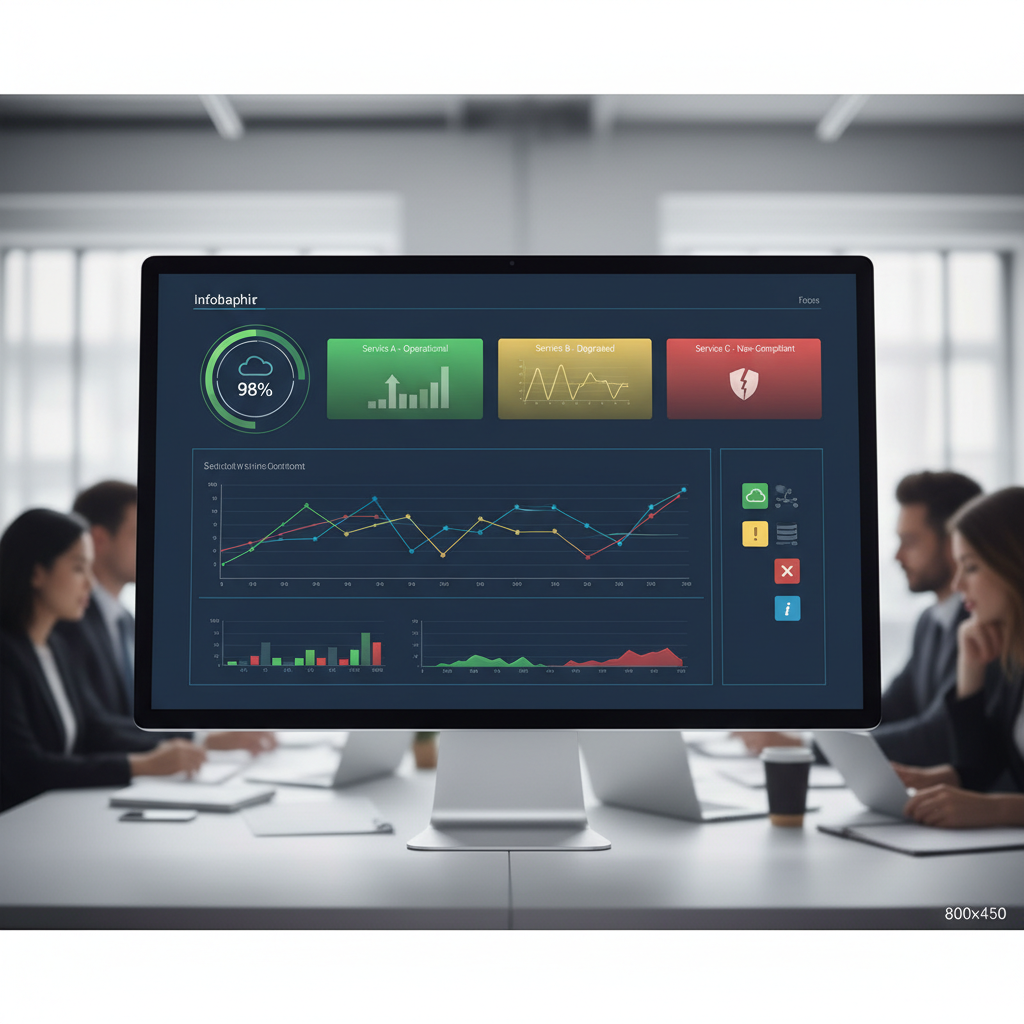
Visualizing real-time data through dashboards and custom reports is fundamental for quick comprehension. Graphical representations allow IT teams to rapidly identify trends, anomalies, and potential issues at a glance. Intuitive dashboards are key to making monitoring actionable.
Furthermore, sophisticated alerting mechanisms are essential for immediate action. These systems can be configured to trigger notifications via email, SMS, or incident management tools when specific thresholds are breached. Effective alerts are the backbone of rapid response, ensuring that critical events never go unnoticed.
ENSURE UNINTERRUPTED SERVICE
Ensure uninterrupted service delivery and proactively prevent costly SLA breaches. Leverage our automated, real
✓ Free consultation✓ No commitment required
✓ Trusted by experts
Benefits of Robust Real-Time Cloud SLA Monitoring
Implementing best real-time Cloud sla monitoring practices offers a multitude of tangible benefits for organizations. These advantages extend beyond mere technical oversight, positively impacting operational efficiency, financial health, and overall business strategy. The insights gained are invaluable.
From improved customer satisfaction to optimized resource allocation, the ripple effects of effective monitoring are far-reaching. It empowers businesses to make data-driven decisions and maintain a competitive edge. This strategic capability underpins sustainable growth.
Enhanced Customer Satisfaction and Experience
Consistent and reliable service delivery directly correlates with higher customer satisfaction. Real-time monitoring ensures that services meet expected performance levels, minimizing disruptions that could frustrate users. A seamless user experience fosters loyalty and positive brand perception.
By proactively addressing issues, businesses can reduce customer-facing downtime and maintain high service availability. This dedication to quality translates into a superior customer journey. Happy customers are more likely to return and recommend your services.
Faster Problem Resolution and Reduced Downtime
The ability to detect and diagnose issues in real-time dramatically slashes problem resolution times. With immediate alerts and granular data, IT teams can pinpoint the root cause of a problem much faster. This efficiency is critical in preventing minor glitches from escalating into major outages.
Reduced downtime means fewer revenue losses, less impact on productivity, and enhanced operational continuity. Every minute of uptime saved contributes directly to the bottom line. This speed in response is a hallmark of high-performing IT operations.
Improved Resource Utilization and Cost Optimization
Real-time Cloud sla monitoring provides insights into actual resource consumption versus provisioned capacity. This data allows organizations to identify over-provisioned resources that are incurring unnecessary costs. Conversely, it highlights under-provisioned areas before they become performance bottlenecks.
Optimizing resource allocation based on live data ensures that cloud spending is efficient and aligned with actual demand. This leads to significant cost savings without compromising performance. It transforms cloud resource management from guesswork to precision.
Challenges and Solutions in Cloud SLA Tracking
While the benefits of real-time Cloud sla monitoring are clear, implementing and maintaining an effective system comes with its own set of challenges. Cloud environments are inherently complex, dynamic, and often distributed across multiple providers. Addressing these hurdles requires strategic planning and the right tools.
Navigating these complexities is crucial for extracting maximum value from your monitoring efforts. Ignoring potential pitfalls can lead to alert fatigue, missed critical events, or incomplete visibility. A proactive approach to these challenges ensures success.
Complexity of Multi-Cloud and Hybrid Environments
Many organizations operate in multi-cloud or hybrid environments, combining services from different providers and on-premises infrastructure. Monitoring across these disparate platforms presents a significant challenge. Each environment may have its own APIs, data formats, and monitoring tools.
Solution: Implement a unified monitoring platform that can integrate with various cloud providers and on-premises systems. Look for solutions that offer a single pane of glass view, aggregating data from all sources into a cohesive dashboard. This simplifies management and provides a holistic view of the ecosystem.
Data Overload and Alert Fatigue
Real-time monitoring generates vast quantities of data, leading to potential data overload. Without proper filtering and analysis, teams can be inundated with alerts, many of which may be irrelevant or non-critical. This "alert fatigue" can cause important warnings to be missed.
Solution: Leverage AI and machine learning capabilities within monitoring tools to analyze data, identify true anomalies, and prioritize critical alerts. Implement intelligent thresholding and dependency mapping to reduce noise and ensure alerts are actionable. Focus on metrics that directly impact SLAs.
Ensuring Data Accuracy and Context
The accuracy of monitoring data is paramount. Inaccurate data can lead to false positives, wasted time, and misinformed decisions. Furthermore, data needs context to be meaningful; a raw metric alone might not tell the whole story without understanding its business impact.
Solution: Establish clear data validation processes and integrate monitoring data with other operational tools like CMDBs or service maps. Enrich alerts with contextual information about the affected services, users, and potential business impact. This helps teams quickly understand the severity and scope of an issue.
Best Practices for Implementing Real-Time Cloud SLA Monitoring
Achieving robust real-time Cloud sla monitoring requires more than just deploying tools; it involves strategic planning, process definition, and continuous refinement. By adhering to established best practices, organizations can maximize the effectiveness of their monitoring initiatives. These real-time Cloud sla monitoring tips are designed to guide you toward optimal performance.
Successful implementation often hinges on a clear understanding of objectives and a commitment to ongoing improvement. It’s an iterative process that evolves with your cloud environment. Following these guidelines will lay a strong foundation.
Define Clear and Measurable SLAs
Before monitoring, ensure your SLAs are well-defined, specific, and measurable. Ambiguous SLA terms make effective monitoring impossible. Clearly outline the performance thresholds, acceptable downtime, and responsibilities of both parties.
Tip: Review and update your SLAs regularly to reflect changes in your cloud infrastructure, business needs, and customer expectations. Make sure everyone involved understands what each metric signifies and what constitutes a breach.
Choose the Right Monitoring Tools
The market offers a wide array of monitoring solutions. Selecting the best real-time Cloud sla monitoring tool requires careful consideration of your specific needs, cloud environment, and budget. Look for features that support your operational requirements.
Consider factors like ease of integration with your existing systems, scalability, reporting capabilities, and the sophistication of their alerting mechanisms. A tool that provides comprehensive visibility across your entire cloud ecosystem is invaluable.
Automate Alerts and Reporting
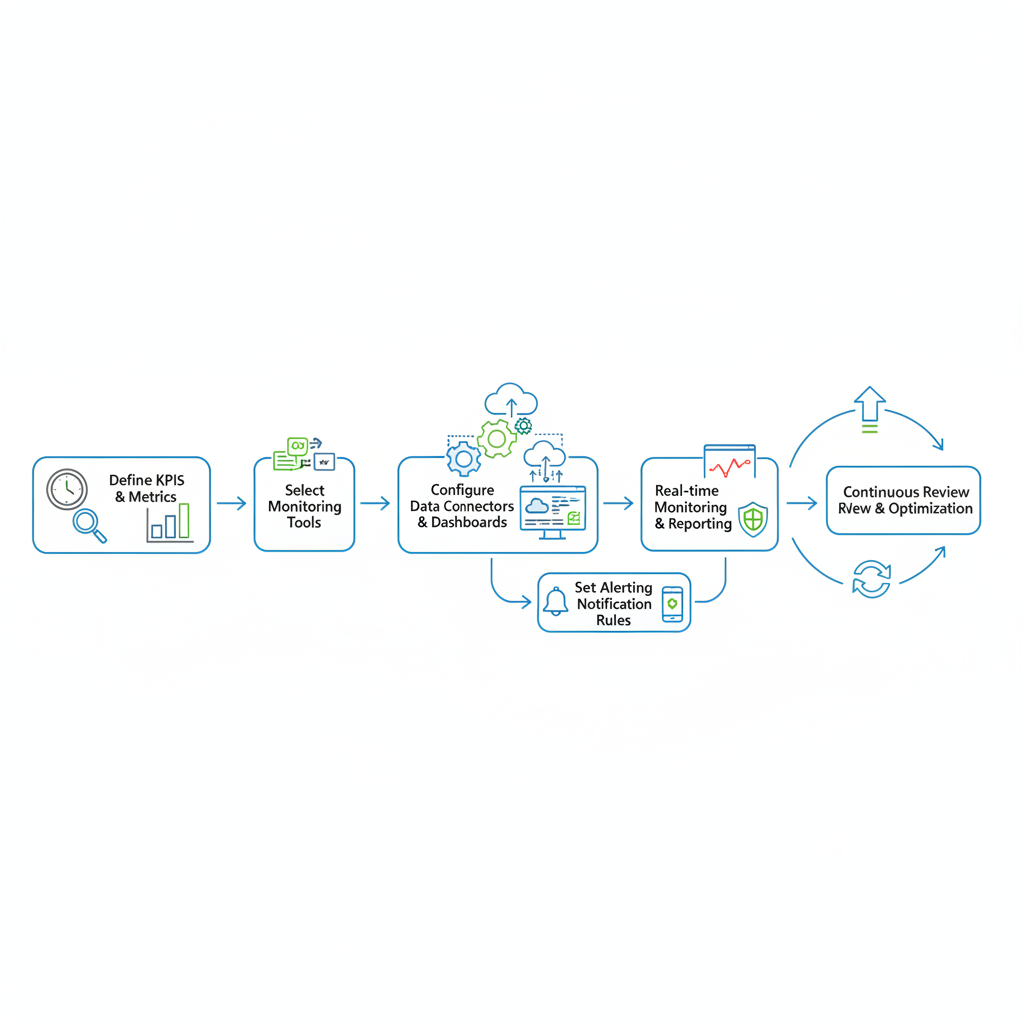
Manual checks are inefficient and prone to human error. Automate alerts for any SLA breaches or performance deviations. Configure notifications to reach the right personnel immediately through preferred channels.
Beyond alerts, automate performance reports. Regular, scheduled reports provide a historical view of compliance and performance trends, which is crucial for capacity planning and future negotiations. This reduces manual effort and increases consistency.
Regularly Review and Optimize
Real-time Cloud sla monitoring is not a set-it-and-forget-it task. Cloud environments are constantly evolving, and your monitoring strategy must evolve with them. Regularly review your monitoring setup, metrics, and thresholds.
Tip: Conduct periodic audits of your monitoring data and processes. Identify any gaps, fine-tune your alerts to reduce false positives, and adjust thresholds as your cloud usage patterns change. Continuous optimization ensures your monitoring remains relevant and effective.
Real-Time Cloud SLA Monitoring Examples and Use Cases
Understanding real-time Cloud sla monitoring concepts is best cemented through practical examples. These scenarios illustrate how various industries leverage instant cloud SLA tracking to maintain performance, ensure compliance, and deliver superior services. The applications are diverse and critical across sectors.
From safeguarding financial transactions to ensuring smooth e-commerce operations, real-time insights prove invaluable. These real-time Cloud sla monitoring examples highlight the tangible benefits of a proactive approach to cloud management. They demonstrate the breadth of its impact.
E-commerce Platform Resilience
An online retail giant relies on cloud services to handle millions of transactions daily, especially during peak sales events. Real-time Cloud sla monitoring continuously tracks website load times, database response speeds, and payment gateway availability. If a regional cloud server experiences a spike in latency or an increased error rate, an immediate alert is triggered.
This allows the operations team to swiftly divert traffic to other healthy regions or scale up resources instantly. Such proactive measures prevent abandoned shopping carts and revenue loss, ensuring a seamless experience for customers during critical periods.
Healthcare Data Accessibility
A healthcare provider uses a cloud-based electronic health record (EHR) system, where uptime and data access speed are critical for patient care. Their real-time monitoring solution tracks the availability of the EHR application, the latency of database queries, and the security access logs. Any unauthorized access attempts or significant performance dips for doctors accessing patient files generate high-priority alerts.
This ensures that medical staff always have immediate, reliable access to vital patient information, directly impacting treatment quality and patient safety. Compliance with HIPAA and other regulations is also rigorously maintained through continuous checks.
Financial Services Transaction Integrity
For a fintech company processing high-volume financial transactions, every millisecond counts, and data integrity is paramount. Real-time Cloud sla monitoring tracks transaction processing times, API response rates for third-party integrations, and database consistency. If a payment processing service's API latency exceeds a predefined threshold, or if data replication between cloud regions shows a delay, an immediate warning is issued.
This enables rapid intervention to prevent transaction failures, ensure compliance with financial regulations, and maintain customer trust in the platform's reliability. It protects against significant financial losses and reputational damage.
Frequently Asked Questions
What is real-time Cloud sla monitoring?
Real-time Cloud sla monitoring is the continuous, instant tracking and analysis of cloud service performance against predefined Service Level Agreements (SLAs). It provides immediate visibility into the health and compliance of cloud resources, allowing for quick identification and resolution of issues as they occur. This proactive approach ensures services consistently meet operational standards.
Why is real-time monitoring better than periodic checks?
Real-time monitoring offers a significant advantage over periodic checks because it provides instant insights into system performance and compliance. Periodic checks only capture snapshots, potentially missing critical events or performance degradations that happen between checks. Instant monitoring allows for immediate detection of issues, enabling rapid response and minimizing downtime and impact.
What are the key metrics to monitor for Cloud SLAs?
Key metrics for real-time Cloud SLA monitoring typically include availability/uptime, latency, throughput, error rates, and response time. Additionally, resource utilization metrics like CPU, memory, network I/O, and storage can provide deeper insights into performance bottlenecks. Focusing on these metrics ensures comprehensive coverage of critical service aspects.
Can real-time monitoring prevent all cloud issues?
While real-time Cloud sla monitoring significantly reduces the likelihood and impact of issues, it cannot prevent all problems. It is a powerful tool for early detection and rapid response, mitigating many potential service disruptions. However, unforeseen events, complex system interactions, or fundamental architectural flaws might still lead to issues that monitoring can only help identify, not inherently prevent.
How does real-time monitoring help with cost optimization?
Real-time Cloud sla monitoring helps with cost optimization by providing granular insights into resource utilization. By continuously tracking CPU, memory, and network usage, organizations can identify over-provisioned resources that are incurring unnecessary expenses. This data enables informed decisions on scaling resources up or down, ensuring that cloud spending is aligned with actual demand and performance requirements.
ENSURE UNINTERRUPTED SERVICE
Ensure uninterrupted service delivery and proactively prevent costly SLA breaches. Leverage our automated, real
✓ Free consultation✓ No commitment required
✓ Trusted by experts
Conclusion: Mastering Your Cloud Performance
Real-time Cloud sla monitoring is no longer a luxury but a necessity for any organization leveraging cloud services. It empowers businesses with the immediate insights needed to maintain optimal performance, ensure unwavering compliance, and deliver exceptional service experiences. By embracing a proactive, data-driven approach, you can transform potential threats into opportunities for greater resilience and efficiency. Master your cloud performance and safeguard your digital future with comprehensive real-time monitoring.
Opsio provides cloud consulting and managed services to help organizations implement and manage their technology infrastructure effectively.