

Why Cloud SLA Monitoring Matters for Modern Businesses
Organizations running workloads on AWS, Azure, or Google Cloud depend on Service Level Agreements to guarantee uptime, latency, and throughput. Yet an SLA is only as valuable as your ability to verify it. Cloud SLA monitoring gives IT teams an objective, data-driven view of provider performance so they can detect breaches early, hold vendors accountable, and protect revenue-critical services.
Without continuous SLA monitoring tools in place, performance degradation can go unnoticed for hours or even days. According to Gartner, the average cost of IT downtime exceeds $5,600 per minute for mid-size enterprises. A well-implemented cloud SLA monitoring solution transforms reactive firefighting into proactive risk management, reducing mean time to detection (MTTD) and mean time to resolution (MTTR).
Beyond operational resilience, cloud service level agreement monitoring is increasingly a compliance requirement. Frameworks such as SOC 2, ISO 27001, and HIPAA mandate auditable evidence that infrastructure meets defined availability thresholds. Automated SLA tracking software provides the continuous audit trail these standards demand.
Key Features to Look for in SLA Monitoring Tools
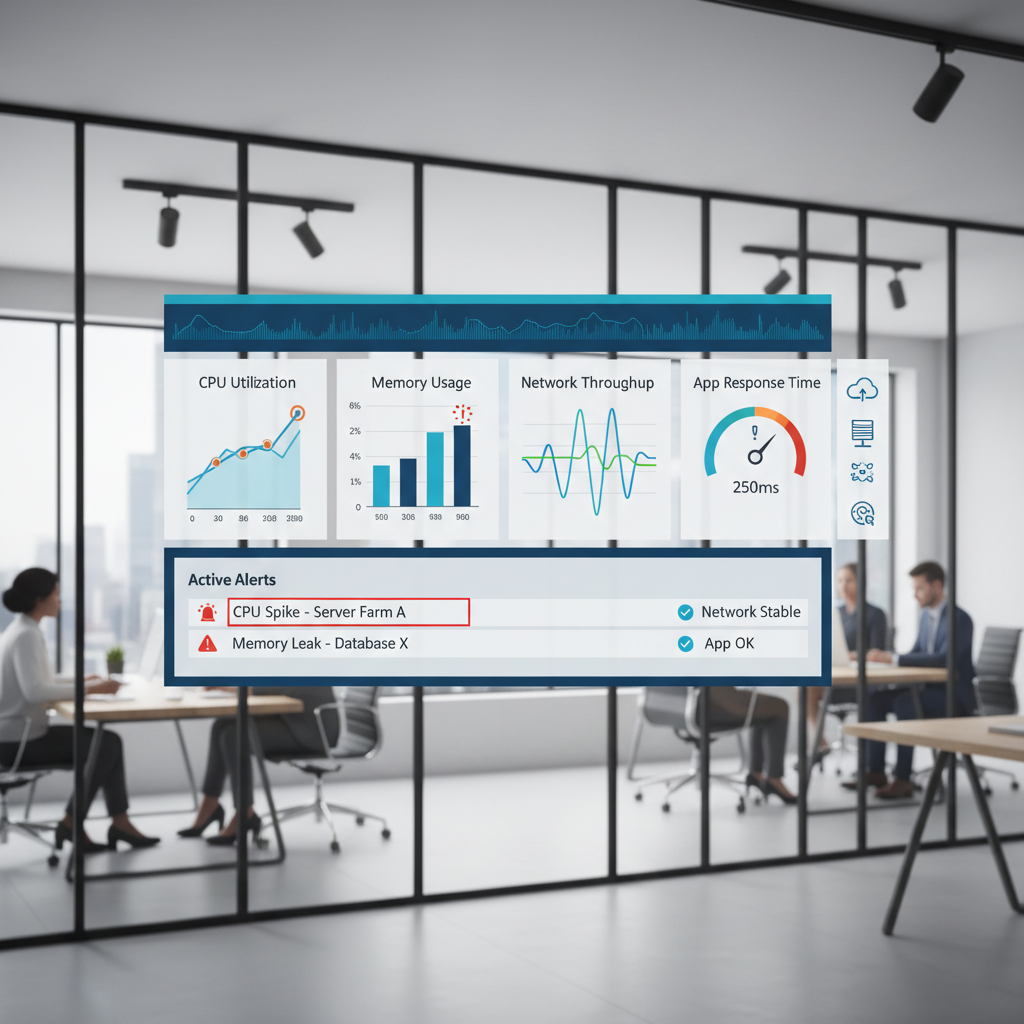
Not every monitoring platform qualifies as a true cloud SLA management solution. When evaluating options, prioritize the following capabilities that separate basic uptime checkers from enterprise-grade SLA monitoring tools.
Multi-Cloud and Hybrid Visibility
Most enterprises operate across two or more cloud providers. A capable SLA tracking platform must aggregate metrics from AWS CloudWatch, Azure Monitor, Google Cloud Operations, and on-premise systems into a single pane of glass. Multi-cloud SLA monitoring eliminates the blind spots that arise when each provider is tracked in isolation.
Customizable Alerting and Escalation
Static threshold alerts are no longer sufficient. Look for solutions that support dynamic baselines, anomaly detection, and multi-channel escalation through email, Slack, PagerDuty, or Microsoft Teams. Intelligent alerting reduces noise and ensures the right team receives the right notification at the right time.
SLA Reporting and Compliance Dashboards
Automated SLA reporting tools should generate scheduled compliance reports showing uptime percentages, breach counts, and trend analysis over configurable time windows. These reports serve as evidence for audits and as leverage during vendor contract negotiations. Exportable formats such as PDF and CSV make sharing with non-technical stakeholders straightforward.
Root Cause Analysis and Log Correlation
When an SLA breach occurs, speed matters. Integrated root cause analysis that correlates infrastructure logs, application traces, and network data accelerates resolution. Solutions that combine SLA compliance monitoring with observability reduce the diagnostic gap between detecting a problem and understanding its origin.
Historical Baselining and Capacity Planning
Long-term data retention enables teams to establish performance baselines and forecast capacity needs. Historical SLA data reveals seasonal patterns, growth-driven load increases, and recurring failure modes, all of which inform smarter infrastructure investment decisions.
How to Select the Right Cloud SLA Monitoring Solution
Choosing the right platform requires a structured approach. The following steps will guide you from requirements gathering through deployment and ongoing optimization.
Step 1: Define Your SLA Metrics and Priorities
Start by cataloging every active SLA across your cloud providers. Map each agreement to the specific metrics it covers: uptime percentage, response time percentiles (P95, P99), error rates, and throughput guarantees. Rank these by business impact to focus monitoring resources on the services that matter most.
Step 2: Evaluate Vendor Capabilities
Build a shortlist of SLA monitoring tools based on your requirements. Assess each platform against criteria including multi-cloud support, integration depth with your existing ITSM stack (ServiceNow, Jira Service Management), pricing model, and scalability. Request sandbox environments to test real-world scenarios before committing.
Step 3: Pilot and Validate
Run a time-boxed proof of concept with your top two candidates. Connect them to production data sources and evaluate alert accuracy, dashboard usability, and reporting quality. Involve both engineering and business stakeholders in the evaluation to ensure the chosen solution meets operational and compliance needs.
Step 4: Deploy and Integrate
Roll out the selected solution incrementally, starting with your most critical workloads. Integrate SLA alerts with your incident management workflow to automate ticket creation and escalation. Configure SLA compliance dashboards for each team that owns a monitored service.
Step 5: Continuously Optimize
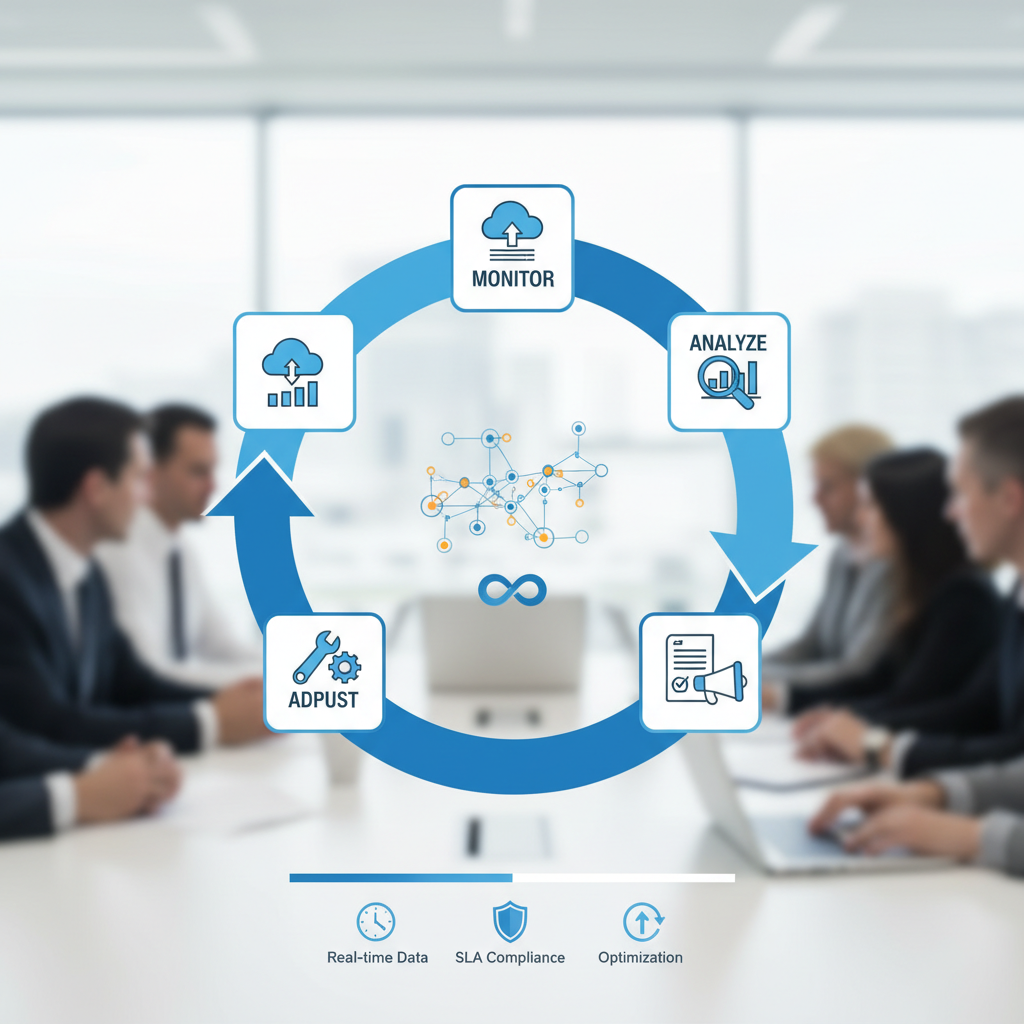
Cloud environments evolve constantly. Schedule quarterly reviews of your monitoring configuration to retire stale alerts, adjust thresholds for new services, and incorporate feedback from on-call engineers. Continuous optimization ensures your cloud SLA management strategy stays aligned with your infrastructure.
Understanding Service Level Agreements in Cloud Computing
A Service Level Agreement is a contractual commitment between a cloud provider and customer that defines measurable performance standards. Typical cloud SLAs specify uptime guarantees (often 99.9% or 99.99%), maximum acceptable latency, data durability targets, and the remedies available when standards are not met, usually in the form of service credits.
The nuances of cloud SLAs vary significantly between providers. AWS measures availability at the regional level for most services, Azure uses a monthly uptime percentage, and Google Cloud calculates availability based on error rates. These differences make normalized cloud SLA monitoring essential for organizations operating in multi-cloud environments.
Understanding your SLAs also means knowing their exclusions. Scheduled maintenance windows, force majeure events, and customer-caused outages are commonly excluded from uptime calculations. Your monitoring solution should account for these exclusions to produce accurate compliance reports that reflect the real contractual obligations.
Overcoming Common Challenges in Cloud SLA Monitoring
Even with the right tools, cloud SLA monitoring presents challenges that require deliberate strategies to overcome.
Alert Fatigue and Data Overload
Cloud infrastructure generates enormous volumes of telemetry data. Without intelligent filtering, teams drown in alerts that obscure genuine issues. Combat this by implementing tiered alerting: informational notifications for minor deviations, warning alerts for approaching thresholds, and critical pages only for confirmed SLA breaches.
Inconsistent Metrics Across Providers
Each cloud provider defines and calculates metrics differently. A 99.9% uptime guarantee from AWS is not directly comparable to the same figure from Azure without normalization. Your SLA tracking software must translate provider-specific metrics into a unified model for accurate cross-cloud comparison and reporting.
Monitoring Hybrid and Edge Environments
As workloads extend to edge locations and on-premise data centers, monitoring coverage gaps emerge. Choose a platform that supports agent-based and agentless monitoring across all environments to maintain end-to-end SLA visibility regardless of where your workloads run.
Best Practices for Cloud SLA Monitoring in 2026
Adopting these proven practices will help your organization extract maximum value from its SLA monitoring investment and maintain cloud service reliability throughout the year.
Set Internal SLOs Before Monitoring External SLAs. Define service level objectives for your own applications that are stricter than your provider SLAs. This creates an early warning buffer: if your internal SLO is breached, you can investigate before the external SLA is at risk.
Automate Everything That Can Be Automated. Manual SLA tracking does not scale. Use automated SLA monitoring to collect metrics, generate alerts, create incident tickets, and produce compliance reports. Automation eliminates human error and ensures 24/7 vigilance without increasing headcount.
Integrate SLA Data with Business Context. Raw uptime percentages mean little to business leaders. Correlate SLA metrics with business KPIs such as transaction volume, customer satisfaction scores, and revenue impact. This translation makes SLA reporting actionable at the executive level.
Leverage AI for Anomaly Detection. Modern SLA monitoring tools use machine learning to detect subtle performance anomalies that static thresholds miss. AI-powered alerting identifies degradation patterns early, enabling preemptive remediation before users are affected.
Conduct Quarterly SLA Reviews. Schedule regular reviews with both your internal teams and cloud providers. Use historical SLA data to negotiate better terms, identify underperforming services, and reallocate resources to workloads with the greatest business impact.
Document and Drill Incident Response. An SLA breach response plan is only effective if the team has practiced it. Run tabletop exercises that simulate SLA violations to test alerting chains, escalation paths, and communication protocols.
Self-Managed vs. Managed SLA Monitoring Platforms
Organizations evaluating cloud SLA monitoring solutions generally choose between two models: building a self-managed stack or subscribing to a managed SaaS platform.
A self-managed approach, typically built on open-source tools like Prometheus, Grafana, and custom SLA calculators, offers maximum flexibility and avoids vendor lock-in. However, it demands significant engineering investment in setup, maintenance, scaling, and security. This path suits large enterprises with dedicated platform engineering teams.
A managed platform, such as those offered by specialized cloud operations providers like Opsio, delivers faster time to value with lower operational overhead. These solutions handle infrastructure, updates, and support while providing enterprise-grade SLA compliance monitoring, multi-cloud dashboards, and automated reporting out of the box. For organizations that want to focus resources on core business rather than tooling, managed SLA monitoring is the more efficient choice.
The Future of Cloud SLA Monitoring
Cloud SLA monitoring is evolving rapidly alongside the broader observability landscape. Several trends are reshaping what organizations should expect from their monitoring investments in the years ahead.
AI-driven predictive SLA monitoring will move from detecting breaches after they occur to forecasting them before they happen. Machine learning models trained on historical performance data will predict capacity constraints and degradation windows, giving teams time to act proactively.
Unified observability platforms are converging infrastructure monitoring, application performance management, and SLA tracking into single solutions. This consolidation eliminates tool sprawl and provides the holistic visibility needed for complex, distributed architectures.
FinOps integration is emerging as a critical capability. Future SLA monitoring tools will correlate service performance with cloud spending, enabling organizations to optimize cost-performance ratios and ensure they are paying only for the service levels they actually need.
Frequently Asked Questions
What is cloud SLA monitoring and why does my business need it?
Cloud SLA monitoring is the continuous tracking and verification of cloud service performance against contractual Service Level Agreements. Your business needs it to detect downtime and performance issues before they impact customers, enforce vendor accountability with objective data, meet compliance requirements for frameworks like SOC 2 and ISO 27001, and make informed decisions about cloud provider relationships and infrastructure investments.
Which metrics should I monitor for cloud SLA compliance?
The most critical metrics for cloud SLA compliance include uptime percentage (typically targeting 99.9% or higher), application response time percentiles (P95 and P99), error rates, network latency, resource utilization for CPU, memory, and storage, and mean time to recovery after incidents. The exact metrics depend on your specific SLA terms and the cloud services you consume.
Can a single tool monitor SLAs across AWS, Azure, and Google Cloud?
Yes. Modern multi-cloud SLA monitoring platforms are designed to aggregate metrics from multiple cloud providers through native API integrations. They normalize provider-specific data into a unified dashboard, enabling accurate cross-cloud comparison and consolidated compliance reporting from a single interface.
How does automated SLA monitoring reduce operational costs?
Automated SLA monitoring reduces costs by eliminating manual data collection and report generation, decreasing mean time to detection which limits the blast radius of outages, preventing SLA breaches that would otherwise result in financial penalties or service credits, and freeing engineering time to focus on improvement initiatives rather than reactive monitoring tasks.
What is the difference between SLAs, SLOs, and SLIs?
A Service Level Agreement (SLA) is a formal contract between provider and customer defining performance commitments and remedies. A Service Level Objective (SLO) is an internal target set by your own team, typically stricter than the external SLA. A Service Level Indicator (SLI) is the actual measured metric, such as the real uptime percentage over a given period, used to evaluate whether SLOs and SLAs are being met.