

Cloud Managed Service Providers (MSPs) in India deliver enterprise-grade cloud management at 30-50% lower cost than US-based alternatives, with 24/7 support enabled by favorable time zone differences. India's cloud computing market is projected to reach USD 26.43 billion in 2026, growing at a 21.1% CAGR through 2031 (Mordor Intelligence, 2026), making it one of the fastest-growing cloud ecosystems globally.
Key Takeaways
- Indian Cloud MSPs reduce operational costs by 30-50% compared to US providers while maintaining enterprise-grade SLAs
- India's IT services sector crossed $283 billion in FY2025, with cloud and platform services capturing 33.2% of revenue
- Core services include cloud migration, infrastructure management, security operations, and multi-cloud optimization
- Selection criteria should prioritize certifications (AWS/Azure/GCP partner status), security compliance (ISO 27001, SOC 2), and industry-specific expertise

What Is a Cloud MSP and Why Does India Lead?
A Cloud Managed Service Provider (MSP) is a third-party organization that remotely manages a customer's cloud infrastructure, security, and operations. Rather than building costly in-house teams, enterprises outsource cloud management to MSPs who bring specialized expertise, proven tooling, and established processes.
India dominates the global IT outsourcing landscape for good reason. The country's IT services sector achieved $283 billion in revenue in FY2025, with a 5.1% year-on-year growth rate (IBEF, 2025). Cloud and platform services now represent 33.2% of India's IT services revenue, translating to approximately $12.3 billion in cloud-specific services.
What Indian Cloud MSPs Typically Manage
- 24/7 monitoring and incident response for cloud infrastructure across AWS, Azure, and GCP
- Proactive identification and resolution of performance bottlenecks
- Security policy enforcement, threat detection, and compliance auditing
- Cloud resource optimization for cost and performance
- Strategic guidance for cloud adoption and digital transformation
Core Services Offered by Cloud MSPs in India
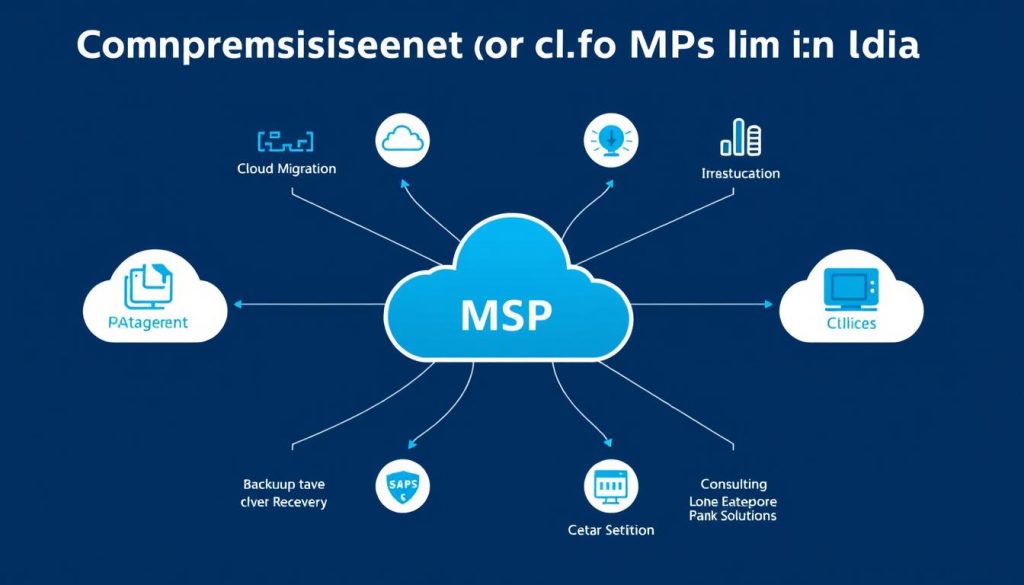
Indian Cloud MSPs provide end-to-end cloud lifecycle management. Here are the six service categories enterprises most commonly engage.
Cloud Migration Services
Indian MSPs specialize in migrating workloads from on-premises infrastructure to AWS, Azure, or GCP with minimal downtime. A structured migration process typically includes workload assessment, dependency mapping, phased execution, and post-migration validation.
- Detailed workload assessment and dependency mapping
- Data migration with integrity verification
- Application modernization and re-platforming
- Post-migration performance tuning and cost optimization
Cloud Management Platforms
MSPs deploy unified management platforms that provide centralized visibility across multi-cloud environments. These platforms automate provisioning, track spend in real time, and surface optimization recommendations that typically reduce cloud waste by 20-35%.
- Unified dashboards for multi-cloud visibility
- Automated provisioning and auto-scaling policies
- Real-time cost tracking with anomaly detection
- Performance monitoring with customizable alerting
Cloud Infrastructure Services
Infrastructure management covers compute, storage, networking, and database resources across public, private, and hybrid cloud environments. Indian MSPs design architectures for high availability, disaster recovery, and regulatory compliance.
- Infrastructure-as-Code design and architecture
- Automated resource provisioning and configuration
- Performance optimization and horizontal scaling
- High availability and disaster recovery setup
Cloud Backup and Recovery
Data protection services ensure business-critical information remains available and recoverable. Indian MSPs implement automated backup scheduling, encrypted storage, and tested recovery procedures with defined RPO and RTO targets.
- Automated backup scheduling with retention policies
- Encrypted data storage with geo-redundancy
- Rapid recovery capabilities with sub-hour RTO targets
- Quarterly recovery testing and DR drill execution
Cloud Consulting Services
Strategic consulting aligns cloud initiatives with business objectives. Indian MSPs deliver cloud readiness assessments, total-cost-of-ownership modeling, and governance frameworks that ensure technology investments produce measurable ROI.
- Cloud readiness assessment and strategy development
- Technology selection and reference architecture design
- TCO modeling and ROI analysis
- Governance, risk, and compliance framework design
Enterprise Cloud Solutions
Custom solutions address industry-specific requirements by integrating cloud services with existing enterprise systems. These include AI/ML implementation, IoT platforms, and advanced analytics pipelines tailored to vertical needs.
- Industry-specific cloud solutions (healthcare, fintech, manufacturing)
- Integration with existing ERP, CRM, and enterprise systems
- Custom application development and containerization
- AI/ML model deployment and MLOps pipelines

Benefits of Partnering with a Cloud MSP in India
Outsourcing cloud management to India delivers advantages across cost, talent, and operational resilience. Here is what enterprises consistently report.
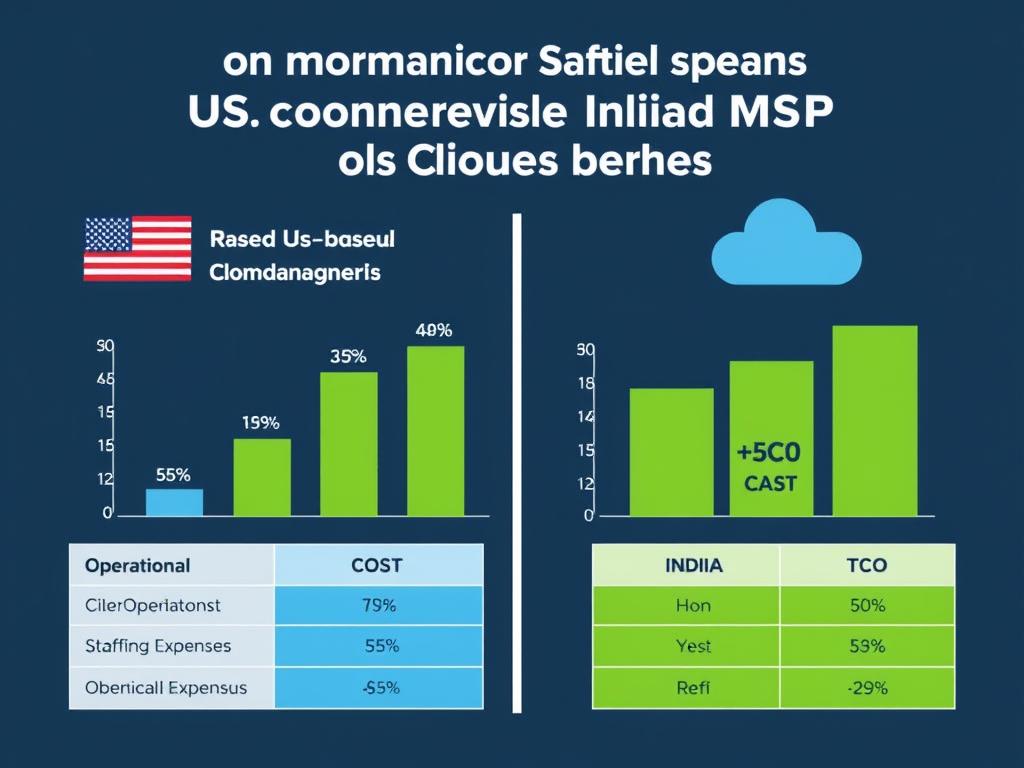
Cost Efficiency: 30-50% Savings
Operating costs in India are significantly lower than in the US, enabling MSPs to deliver enterprise-grade services at competitive rates. According to Grand View Research, India's managed services market generated USD 18.9 billion in 2025, driven partly by global enterprises seeking cost-optimized alternatives.
- 30-50% reduction in operational costs compared to US-based providers
- Flexible pricing models: fixed, tiered, or consumption-based
- Elimination of recruitment and training costs for specialized cloud roles
- Reduced capital expenditure through optimized resource utilization
Scalability and Flexibility
Indian Cloud MSPs offer elastic services that adapt to changing demand. Whether scaling up for seasonal peaks or scaling down during quieter periods, these providers right-size cloud resources in real time to eliminate waste.
- On-demand resource scaling without service disruption
- Rapid adaptation to seasonal demand fluctuations
- Support for expansion into new geographic markets
- Flexible engagement models: project-based, staff augmentation, or fully managed
Enterprise-Grade Security
Indian MSPs implement multi-layered security frameworks aligned with global standards. Dedicated Security Operations Centers (SOCs) provide continuous threat monitoring, vulnerability management, and incident response.
- Security frameworks aligned with ISO 27001, SOC 2, and NIST
- 24/7 SOC with threat detection and automated response
- Regular penetration testing and vulnerability assessments
- Compliance enforcement for GDPR, HIPAA, PCI DSS, and industry regulations
Access to Deep Cloud Expertise
India produces over 1.5 million engineering graduates annually, creating one of the world's largest pools of cloud-certified professionals. By partnering with an Indian MSP, enterprises access AWS, Azure, and GCP specialists without competing in tight domestic hiring markets.
- Certified professionals across AWS, Azure, and Google Cloud
- Specialized expertise in AI/ML, DevOps, and cloud-native architectures
- Continuous training and certification renewal programs
- Cross-functional teams covering infrastructure, security, and application layers
24/7 Follow-the-Sun Support
The 10-13 hour time zone offset between India and the US creates a natural follow-the-sun support model. Indian teams perform maintenance, deploy updates, and resolve incidents during US night hours, so enterprises start each business day with systems fully optimized.
- 24/7/365 monitoring and incident response
- Overnight maintenance windows aligned with US off-hours
- Proactive issue resolution completed before US business hours
- Overlap hours maintained for real-time collaboration

How to Choose the Right Cloud MSP in India
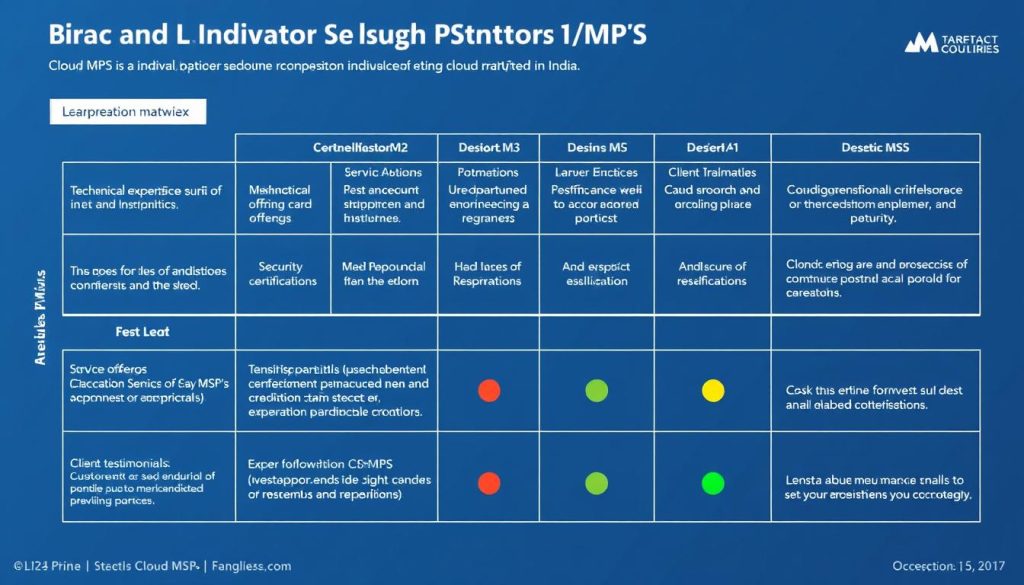
Selecting the right MSP partner requires evaluating technical depth, security posture, communication maturity, and cultural fit. Use these six criteria as your evaluation framework.
Technical Certifications and Partner Status
Verify the provider holds active partner designations with AWS, Azure, and Google Cloud. Look for team-level certifications (Solutions Architect, DevOps Engineer, Security Specialty) and assess depth of expertise with your specific technology stack.
- Verify AWS/Azure/GCP partner tier and competencies
- Check team-level certifications and specializations
- Assess experience with your specific tech stack
- Evaluate depth in critical areas: Kubernetes, Terraform, serverless
Service Scope and Industry Specialization
Assess whether the MSP's service portfolio aligns with your needs. Some providers excel in security operations, others in migration or multi-cloud cost optimization. Prioritize providers with demonstrable experience in your industry vertical.
- Map service offerings against your requirements
- Identify industry-specific expertise and case studies
- Evaluate experience with similar-scale environments
- Assess ability to provide end-to-end managed services
Security Compliance and Data Protection
Security is non-negotiable. Evaluate the provider's compliance certifications, data residency policies, encryption standards, and incident response procedures. Require evidence of recent audits and penetration testing.
- Verify ISO 27001, SOC 2 Type II, and relevant certifications
- Review data residency and sovereignty policies
- Assess encryption standards (at rest and in transit)
- Evaluate incident response SLAs and escalation procedures
Communication and Cultural Alignment
Effective collaboration with an offshore partner depends on communication maturity. Evaluate the provider's project management practices, reporting cadence, English proficiency, and time zone overlap hours.
- Assess communication channels and reporting tools
- Evaluate English proficiency across the delivery team
- Confirm time zone overlap (minimum 4 hours recommended)
- Review escalation paths and executive engagement
Track Record and Client References
Past performance is the strongest predictor of future delivery. Request client references in your industry, review published case studies, and verify client retention rates over multi-year engagements.
- Request references from clients in your industry
- Review published case studies with measurable outcomes
- Check client retention rates and relationship longevity
- Evaluate SLA adherence history and performance metrics
Pricing Models and Contract Flexibility
Understand the pricing structure and ensure contract terms protect your interests. Look for transparent pricing, reasonable contract durations (typically 1-3 years), clear exit clauses, and SLAs with defined penalties.
- Compare pricing models: fixed, tiered, and consumption-based
- Review contract flexibility and termination clauses
- Assess SLA commitments with financial penalties
- Evaluate total cost of ownership over the full contract term
2026 Trends Shaping Cloud MSPs in India
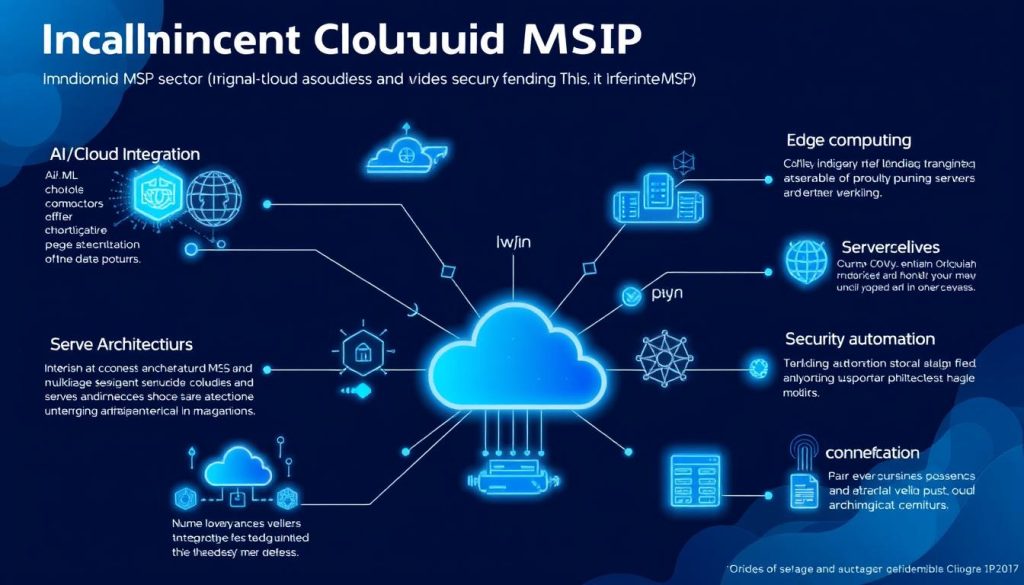
The Indian Cloud MSP landscape is evolving rapidly as new technologies reshape service delivery. India's cloud managed services market is projected to grow from USD 4.4 billion in 2025 to USD 9.7 billion by 2035 at an 8.14% CAGR (Market Research Future, 2025). Here are the six trends driving this growth.
AIOps and Intelligent Automation
Indian MSPs are embedding AI into every layer of cloud operations. AIOps platforms analyze telemetry data to predict failures, auto-remediate incidents, and optimize resource allocation without human intervention, reducing mean time to resolution by up to 60%.
- AI-driven predictive maintenance and anomaly detection
- Automated resource scaling based on usage pattern analysis
- Intelligent threat detection using behavioral analytics
- Self-healing infrastructure with automated runbooks
Multi-Cloud and FinOps Expertise
As enterprises adopt multi-cloud strategies to avoid vendor lock-in, Indian MSPs are building specialized FinOps practices. These teams combine cloud cost management with performance engineering to maximize value per dollar spent across AWS, Azure, and GCP simultaneously.
- Unified management across AWS, Azure, and Google Cloud
- Cross-platform security and compliance frameworks
- FinOps practices for multi-cloud cost governance
- Workload placement optimization across providers
Edge Computing and Distributed Cloud
With IoT deployments expanding and latency requirements tightening, Indian MSPs are extending management capabilities to edge locations. This enables data processing closer to the source while maintaining centralized governance and security policies.
- Distributed cloud architecture design and deployment
- Edge device fleet management and security
- Low-latency data processing with cloud synchronization
- Edge-to-cloud connectivity and data pipeline optimization
Zero-Trust Security as Standard
Indian Cloud MSPs are adopting zero-trust architectures as the baseline security model. This includes continuous identity verification, micro-segmentation, and least-privilege access controls that protect cloud environments against sophisticated supply-chain and ransomware attacks.
- Zero-trust network access implementation
- Continuous identity verification and micro-segmentation
- Extended detection and response (XDR) integration
- 24/7 SOC with threat intelligence feeds
Green Cloud and Sustainability
Enterprises increasingly require cloud operations aligned with ESG goals. Indian MSPs are developing carbon-aware workload scheduling, energy-efficient resource allocation, and sustainability dashboards that track and report environmental impact.
- Carbon-aware workload scheduling and placement
- Energy-efficient resource allocation algorithms
- Sustainability dashboards with carbon footprint reporting
- Alignment with corporate ESG targets and frameworks

Industry-Specific Cloud Platforms
Rather than one-size-fits-all services, Indian MSPs are building vertical-specific cloud platforms with pre-configured compliance controls, industry data models, and purpose-built integrations for healthcare, financial services, manufacturing, and retail.
- Healthcare platforms with HIPAA-ready infrastructure
- Financial services platforms with regulatory compliance built in
- Manufacturing IoT platforms with predictive analytics
- Retail platforms with real-time personalization engines
Making the Right Cloud MSP Decision
Cloud MSPs in India offer a compelling combination of technical depth, cost efficiency, and 24/7 operational coverage. With India's cloud computing market projected to reach USD 26.43 billion in 2026 and its IT services sector already exceeding $283 billion, the ecosystem's maturity and scale are well established.
The key to a successful partnership lies in structured evaluation: verify certifications and partner status, assess security compliance with evidence-based audits, confirm communication maturity through pilot engagements, and define clear SLAs with measurable outcomes. Enterprises that invest in this due diligence consistently achieve 30-50% cost reductions while improving system reliability and security posture.
As AIOps, zero-trust security, and FinOps practices reshape cloud management in 2026, Indian MSPs with strong innovation capabilities will deliver increasing value. Start your evaluation with a focused proof-of-concept engagement to validate technical fit before committing to a long-term partnership.
Frequently Asked Questions
How do Indian Cloud MSPs ensure data security and compliance?
Indian Cloud MSPs implement multi-layered security frameworks including encryption (at rest and in transit), identity and access management, continuous threat monitoring, and regular penetration testing. Reputable providers maintain ISO 27001, SOC 2 Type II, and industry-specific certifications. They enforce compliance with GDPR, HIPAA, and PCI DSS through automated policy engines and offer dedicated 24/7 Security Operations Centers for real-time incident detection and response.
How does the time zone difference between India and the US affect service delivery?
The 10-13 hour time zone offset is a strategic advantage. Indian teams perform maintenance, deploy patches, and resolve non-critical incidents during US night hours through a follow-the-sun model. Most MSPs maintain 4-6 hours of daily overlap with US business hours for real-time collaboration, sprint ceremonies, and escalation handling. This arrangement means US teams arrive each morning to fully updated, optimized systems.
What is the typical contract duration for Cloud MSP services in India?
Initial engagements typically range from 1-3 years, with renewal options and annual review clauses. Many MSPs offer a 3-6 month pilot or proof-of-concept phase before long-term commitment. Contracts should include clear exit clauses, transition assistance provisions, and data portability guarantees. Project-based engagements (such as cloud migration) may run on shorter 6-12 month timelines.
How much can enterprises save by outsourcing cloud management to India?
Enterprises typically achieve 30-50% cost savings on cloud operations when partnering with Indian MSPs compared to US-based providers. This reduction comes from lower labor costs, operational efficiencies, and optimized cloud resource utilization. Additional savings come from eliminating recruitment and training costs for specialized cloud roles, which can exceed $150,000-$200,000 per engineer annually in the US market.
What cloud platforms do Indian MSPs typically support?
Most Indian Cloud MSPs provide certified expertise across all three major platforms: Amazon Web Services (AWS), Microsoft Azure, and Google Cloud Platform (GCP). Many also support private cloud environments (VMware, OpenStack), hybrid architectures, and emerging platforms. Look for providers with active partner designations and platform-specific certifications at the team level, not just organizational partnerships.