

The modern automotive industry is undergoing a profound transformation, driven largely by advancements in software and digital technologies. Vehicles are no longer just mechanical marvels; they are sophisticated, interconnected computers on wheels. This evolution has elevated the importance of specialized automotive software development companies, who are at the forefront of innovation, shaping the future of transportation.
These firms play a pivotal role in creating the intelligent systems that power today's cars, from basic operational functions to advanced autonomous driving capabilities. Understanding their impact, services, and expertise is crucial for anyone involved in or curious about the automotive sector. This comprehensive guide will explore the top questions surrounding these essential development partners.
What Defines Automotive Software Development Companies?
Automotive software development companies are specialized technology firms dedicated to designing, developing, and implementing software solutions for the automotive industry. Their work spans the entire vehicle ecosystem, from in-car systems to cloud-based services. They focus on delivering robust, secure, and high-performance software tailored for the unique demands of vehicles.
These companies possess deep expertise in specific automotive domains and technologies. They understand the stringent safety standards, regulatory compliance, and real-time performance requirements inherent in car software development. Their teams often consist of engineers with backgrounds in embedded systems, cybersecurity, AI, and cloud architecture.
The Core Mission
The core mission of these specialized companies is to enhance vehicle functionality, safety, and user experience through innovative software. This includes improving engine performance, enabling sophisticated driver-assistance systems, and providing seamless connectivity options. They aim to make vehicles smarter, safer, and more enjoyable for occupants.
They also focus on developing solutions that support the entire automotive lifecycle. This extends from manufacturing and diagnostics to post-purchase updates and fleet management. Their contributions are essential for the continuous evolution of the automotive sector, driving it towards a more connected and autonomous future.
Evolving Industry Demands
The automotive industry is characterized by rapid technological change and evolving consumer expectations. Automotive software development companies must constantly adapt to these shifts, incorporating new technologies like artificial intelligence, machine learning, and advanced sensor fusion. This dynamic environment requires continuous learning and innovation from development partners.
Demand for new features such as advanced driver-assistance systems (ADAS), electric vehicle (EV) battery management, and personalized user interfaces is constantly growing. These companies are instrumental in turning these complex demands into functional and reliable car software development solutions. Their ability to innovate quickly is a key differentiator.
The Critical Role of Software in Modern Vehicles
Software has transitioned from a supplementary component to the very heart of vehicle functionality and differentiation. It orchestrates everything from powertrain management to the user's interaction with the car. Modern vehicles rely on millions of lines of code to operate safely and efficiently.
This reliance means that the quality and innovation of automotive software are direct determinants of a vehicle's market success and customer satisfaction. The industry increasingly views software as the primary driver for competitive advantage. Companies that excel in this domain are setting new benchmarks for vehicle performance and user engagement.
Beyond Mechanical Engineering
Historically, automotive engineering focused predominantly on mechanical, electrical, and hydraulic systems. While these remain vital, software now acts as the central nervous system, integrating and controlling all components. This shift has fundamentally changed how vehicles are designed, manufactured, and maintained.
Software enables complex interactions between various vehicle systems that would be impossible with purely mechanical means. It allows for intricate control over engine timing, brake force distribution, and even the coordination of multiple sensors for environmental perception. This integration is crucial for advanced features.
Safety, Efficiency, and User Experience
Software directly impacts critical aspects like vehicle safety, operational efficiency, and the overall user experience. Sophisticated algorithms enhance active safety features, preventing accidents and protecting occupants. Precision software control optimizes fuel consumption or battery life in electric vehicles.
Furthermore, intuitive in-car infotainment systems and personalized settings are all software-driven, significantly improving how drivers and passengers interact with their vehicles. These elements are no longer luxuries but expected standards, influencing purchasing decisions. A superior software experience can transform an ordinary drive into an extraordinary journey.
Key Services Offered by Automotive Software Development Companies
Automotive software development companies offer a comprehensive suite of services that cover the entire software lifecycle within the automotive domain. These services are highly specialized, addressing the unique complexities and stringent requirements of vehicle systems. Their expertise is vital for bringing innovative automotive solutions to market.
From conceptualization and design to development, testing, and maintenance, these firms provide end-to-end support. Their offerings span multiple critical areas, each requiring distinct technical skills and industry knowledge. This broad capability allows them to serve diverse client needs across the automotive ecosystem.
In-Car Infotainment Systems Development
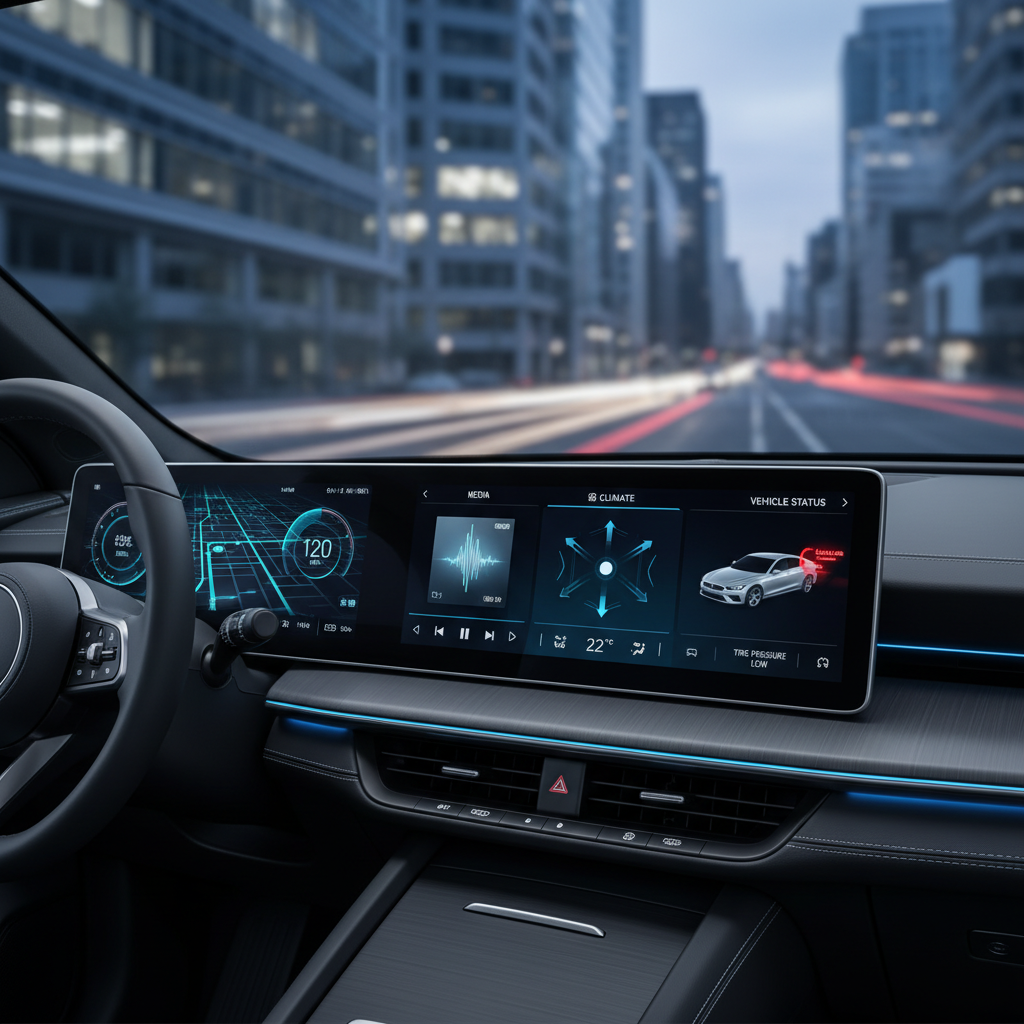
Developing in-car infotainment systems is a core service, focusing on creating advanced, user-friendly interfaces for navigation, multimedia, communication, and vehicle settings. These systems are central to the modern driving experience, offering seamless integration with smartphones and other digital services. Companies aim to deliver intuitive, responsive, and feature-rich infotainment solutions.
This involves designing attractive user interfaces (UI) and engaging user experiences (UX) that are safe and easy to operate while driving. It also includes integrating technologies like Apple CarPlay, Android Auto, Bluetooth, Wi-Fi, and voice control. The goal is to provide a connected and enjoyable environment within the vehicle.
Autonomous Vehicle Software Solutions
The development of autonomous vehicle software is arguably one of the most challenging and innovative areas. This involves creating the complex algorithms and AI models that enable vehicles to perceive their environment, make decisions, and navigate without human intervention. This field demands expertise in computer vision, sensor fusion, machine learning, and deep neural networks.
Companies in this space build the perception, planning, and control modules essential for self-driving cars. They focus on ensuring the highest levels of safety, reliability, and redundancy in their software architectures. Their work is critical for achieving different levels of autonomy, from advanced driver-assistance to full self-driving capabilities.
Connected Car Technology Implementation
Connected car technology integrates vehicles with external networks, enabling communication with other vehicles (V2V), infrastructure (V2I), pedestrians (V2P), and the cloud (V2C). This allows for real-time traffic updates, remote diagnostics, emergency services, and advanced telematics. Automotive software development companies implement the necessary hardware and software frameworks for these connections.
They build secure communication protocols, data transfer mechanisms, and cloud integration solutions. This connectivity forms the backbone for many modern automotive services, enhancing safety, efficiency, and convenience. Robust cybersecurity measures are paramount in these implementations to protect sensitive data and prevent unauthorized access.
Automotive Embedded Software Engineering
Automotive embedded software is fundamental to almost every electronic control unit (ECU) within a vehicle, managing functions from engine control and braking systems to lighting and power windows. This software operates directly on hardware, often with real-time constraints and strict safety requirements. Expertise in low-level programming and hardware-software integration is crucial here.
Developers in this area work with microcontrollers, real-time operating systems (RTOS), and various communication protocols (like CAN, LIN, FlexRay, Ethernet). They ensure that the software is highly optimized for performance, reliability, and minimal resource consumption. This deep-seated software forms the bedrock of vehicle functionality.
Telematics Solutions and Fleet Management
Telematics solutions combine telecommunications and informatics to send, receive, and store information about remote objects, primarily vehicles. This service focuses on developing systems for GPS tracking, vehicle diagnostics, remote monitoring, and intelligent route planning. These solutions are invaluable for fleet management, logistics, and insurance purposes.
Automotive software development companies create platforms that collect and analyze vehicle data, providing insights into driver behavior, fuel efficiency, and maintenance needs. They enable businesses to optimize their operations, reduce costs, and improve safety across their vehicle fleets. This data-driven approach is transforming transportation logistics.
Vehicle Diagnostic Software Creation
Vehicle diagnostic software is essential for identifying and troubleshooting issues within complex modern vehicles. These companies develop tools and applications that interface with a vehicle's ECUs to read fault codes, monitor sensor data, and perform system tests. This capability is vital for efficient maintenance and repair.
The software helps mechanics and service centers quickly pinpoint problems, reducing repair times and costs. It supports various diagnostic protocols and can be integrated into larger workshop management systems. This ensures vehicles remain in optimal working condition, contributing to safety and longevity.
Cybersecurity for Automotive Systems
With increasing connectivity and software complexity, cybersecurity has become a paramount concern in the automotive industry. Automotive software development companies offer specialized services to protect vehicles from cyber threats. This includes designing secure architectures, implementing robust encryption, and conducting penetration testing.
They develop intrusion detection systems, secure boot mechanisms, and over-the-air (OTA) update security protocols. Their work ensures that vehicles and their data remain protected from hacking, malware, and other vulnerabilities. Proactive cybersecurity is critical for maintaining consumer trust and regulatory compliance.
Over-the-Air (OTA) Updates and Maintenance
OTA updates allow vehicle manufacturers to remotely deploy software updates, new features, and security patches to vehicles without requiring a visit to a service center. Automotive software development companies design and implement the infrastructure and software for these crucial systems. This capability enables continuous improvement and maintenance.
OTA updates are vital for the long-term viability and security of modern vehicles. They facilitate bug fixes, performance enhancements, and even the activation of new functionalities after purchase. This service optimizes vehicle lifecycle management and enhances customer satisfaction by keeping cars up-to-date.
HMI and UI/UX Design for Automotive
Human-Machine Interface (HMI) and User Interface/User Experience (UI/UX) design are critical for creating intuitive, safe, and enjoyable interactions within the vehicle. Automotive software development companies specialize in designing HMIs that minimize driver distraction while maximizing functionality. This includes designing dashboards, touchscreens, voice interfaces, and heads-up displays.
Their design process considers ergonomic factors, cognitive load, and brand aesthetics to create a seamless user journey. They ensure that complex systems are presented in an easy-to-understand and accessible manner, enhancing overall driving satisfaction. A well-designed HMI is a key differentiator in today's competitive market.
AI DEVELOPMENT WORKSHOP
Schedule your exclusive 1-to-1 discovery meeting. Let's define your next step into AI Success.
✓ Free consultation✓ No commitment required
✓ Trusted by experts
Understanding the Technologies Driving Automotive Software
The innovations delivered by automotive software development companies are underpinned by a sophisticated array of advanced technologies. These technologies enable the complex functionalities found in modern vehicles, from automated driving to personalized infotainment experiences. A deep understanding of these elements is crucial for effective development.
These technologies are constantly evolving, requiring developers to stay at the forefront of research and implementation. They range from fundamental computing paradigms to specialized communication protocols and sensor technologies. Mastery of these areas allows for the creation of robust and future-proof automotive solutions.
Artificial Intelligence and Machine Learning
Artificial Intelligence (AI) and Machine Learning (ML) are central to the next generation of automotive software, especially in areas like autonomous driving and predictive maintenance. AI algorithms enable vehicles to perceive their environment, recognize patterns, and make complex decisions in real-time. ML models are trained on vast datasets to improve accuracy and adaptability.
These technologies power features such as object detection, traffic prediction, driver behavior analysis, and even personalized in-car experiences. The ability of autonomous vehicle software to learn and adapt is a game-changer, promising safer and more efficient transportation systems. Continuous learning from real-world data is key to their improvement.
Cloud Computing and Edge Processing
Cloud computing provides scalable infrastructure for storing vast amounts of vehicle data, performing heavy-duty analytics, and managing OTA updates. It enables remote diagnostics, fleet management, and the development of connected car services. However, real-time decision-making in a vehicle requires rapid processing.
Edge processing brings computational power closer to the source of data, directly within the vehicle or at nearby network nodes. This minimizes latency, which is critical for safety-critical functions like collision avoidance in autonomous driving. A hybrid approach, combining cloud and edge, is often employed for optimal performance.
Real-Time Operating Systems (RTOS)
Automotive embedded software frequently relies on Real-Time Operating Systems (RTOS) to manage critical functions that require precise timing and guaranteed response times. RTOS ensure that tasks are executed within strict deadlines, which is essential for safety-critical systems like braking, steering, and airbag deployment. Predictability is paramount in these environments.
These specialized operating systems are designed for efficiency and reliability, offering deterministic behavior that standard operating systems cannot guarantee. The choice of RTOS significantly impacts the performance and safety certification of automotive systems. Developers need deep expertise in these specialized platforms.
Communication Protocols (CAN, LIN, Ethernet, 5G)
Effective communication between a vehicle's numerous ECUs and external systems is vital. Various communication protocols facilitate this data exchange. CAN (Controller Area Network) and LIN (Local Interconnect Network) are traditionally used for internal vehicle communication, offering robustness for different levels of data speed and criticality.
With the advent of connected car technology and autonomous vehicle software, high-bandwidth protocols like automotive Ethernet are becoming standard for complex data flows. Furthermore, 5G technology enables ultra-fast, low-latency communication with the cloud and V2X (Vehicle-to-Everything) infrastructure, unlocking new possibilities for connectivity and autonomous functions.
Sensor Fusion and Perception Systems
Modern vehicles are equipped with a multitude of sensors, including cameras, radar, lidar, and ultrasonic sensors, each providing a different perspective of the environment. Sensor fusion is the process of combining data from these diverse sensors to create a comprehensive and accurate understanding of the vehicle's surroundings. This is a crucial component of autonomous vehicle software.
Perception systems interpret this fused data to identify objects, measure distances, track movement, and understand traffic signs and road markings. The robustness and accuracy of these systems are fundamental to safe autonomous driving. Automotive software development companies specialize in developing the sophisticated algorithms for effective sensor fusion and perception.
Challenges in Automotive Software Development
Developing software for the automotive industry presents a unique set of challenges that require specialized expertise and rigorous processes. Unlike consumer electronics, software in vehicles has direct implications for human safety and operates in highly demanding environments. Overcoming these hurdles is a key differentiator for leading automotive software development companies.
These challenges stem from the inherent complexity of vehicle systems, the critical nature of their functions, and the rapidly evolving technological and regulatory landscape. Addressing them effectively requires a deep understanding of automotive engineering principles combined with cutting-edge software development practices.
Ensuring Safety and Reliability
The paramount challenge in automotive software development is ensuring absolute safety and reliability. A software malfunction can have catastrophic consequences, leading to injuries or fatalities. Developers must adhere to stringent safety standards, such as ISO 26262 (Functional Safety for Road Vehicles), throughout the entire development lifecycle.
This involves meticulous requirements engineering, robust architecture design, extensive validation and verification, and comprehensive testing. The software must be fault-tolerant, predictable, and capable of operating reliably under diverse and often extreme conditions. This focus on safety permeates every stage of car software development.
Navigating Regulatory Compliance
The automotive industry is heavily regulated, with various regional and international standards governing everything from emissions and safety to data privacy. Automotive software development companies must navigate this complex web of regulations to ensure their products are legally compliant. This includes standards for cybersecurity, data logging, and autonomous driving ethics.
Compliance often requires specific documentation, testing procedures, and adherence to certified processes. Failure to comply can result in significant fines, recalls, and reputational damage. Keeping abreast of evolving regulations is a continuous and demanding task for these specialized firms.
Managing Complexity and Integration
Modern vehicles contain dozens, sometimes hundreds, of Electronic Control Units (ECUs), each running specialized automotive embedded software and communicating with others. Managing the complexity of these interconnected systems and ensuring seamless integration is a monumental task. The sheer volume of code and the interdependencies between modules are enormous.
Developers must employ advanced architectural patterns and modular design principles to handle this complexity. Effective integration strategies are essential to prevent compatibility issues and ensure all systems work harmoniously. This requires strong collaboration between hardware and software engineering teams.
Addressing Cybersecurity Threats
As vehicles become more connected and software-defined, they also become more vulnerable to cyberattacks. Protecting vehicle systems and sensitive data from malicious actors is a critical challenge. A successful cyberattack could compromise vehicle safety, personal privacy, or even national security.
Automotive software development companies must implement robust cybersecurity measures from the initial design phase. This includes secure coding practices, encryption, authentication protocols, intrusion detection systems, and regular security audits. Continuous vigilance and adaptability are necessary to counter evolving cyber threats.
Rapid Technological Advancements
The pace of technological change in the automotive sector is incredibly fast, particularly in areas like AI, connectivity, and autonomous driving. Developers must constantly learn, adapt, and integrate new technologies while ensuring backward compatibility and long-term maintainability. This can be a significant strain on resources and expertise.
Keeping software up-to-date with the latest hardware advancements and industry trends requires continuous investment in research and development. The challenge lies in balancing innovation with the need for stability and reliability, especially in safety-critical applications. This dynamic environment shapes the strategies of best automotive software development companies.
How to Choose the Best Automotive Software Development Companies
Selecting the right partner from the multitude of automotive software development companies is a critical decision that can significantly impact project success. Given the specialized nature and high stakes of automotive software, a thorough evaluation process is essential. This ensures alignment with project goals, technical requirements, and long-term strategic vision.
Prospective clients need to look beyond basic technical skills and consider factors like industry specific experience, quality assurance processes, and cultural fit. Making an informed choice requires a methodical approach, focusing on tangible evidence of expertise and reliability. This guide offers automotive software development companies tips for effective selection.
Evaluating Experience and Expertise
A prospective partner's track record in the automotive sector is paramount. Look for companies with demonstrable experience in developing similar types of car software development solutions, whether it's in-car infotainment systems, autonomous vehicle software, or automotive embedded software. Deep domain knowledge is irreplaceable.
Assess their understanding of automotive-specific standards and regulations, such as ISO 26262, ASPICE, and cybersecurity norms. Request case studies, client testimonials, and examples of their past projects. The longevity of their involvement in the automotive space can also indicate a high level of expertise and stability.
Assessing Technical Capabilities
Beyond general experience, evaluate the specific technical capabilities of their engineering teams. Do they have proficiency in the programming languages, tools, and platforms relevant to your project (e.g., C/C++, Python, MATLAB/Simulink, various RTOS, specific communication protocols)? Understanding their technical stack is crucial.
Inquire about their expertise in emerging technologies like AI/ML, cloud computing, and cybersecurity. Do they have dedicated specialists in these areas? A strong technical foundation ensures they can tackle complex engineering challenges effectively and deliver innovative solutions.
Understanding Industry Specializations
Some automotive software development companies might specialize in particular niches, such as commercial vehicles, electric vehicles, or specific vehicle domains like ADAS or telematics. Understanding their specializations helps determine if their focus aligns with your project's unique requirements. A specialized partner may offer deeper insights and efficiencies.
For instance, if your project involves telematics solutions, partnering with a company that has extensive experience in IoT, data analytics, and fleet management platforms would be highly beneficial. Their focused expertise can lead to more tailored and effective outcomes.
Prioritizing Quality Assurance and Testing
Given the safety-critical nature of automotive software, robust quality assurance (QA) and testing processes are non-negotiable. Inquire about their methodologies for testing, validation, and verification. Do they employ automated testing, hardware-in-the-loop (HIL) simulation, software-in-the-loop (SIL) testing, and comprehensive functional and non-functional testing?
A strong QA culture and dedicated testing teams indicate a commitment to delivering high-quality, reliable software. Ask about their defect management processes and how they ensure compliance with automotive quality standards. This commitment reduces risks and ensures the final product meets stringent performance criteria.
Considering Scalability and Support
Consider whether the company can scale its resources to meet your project's evolving needs, both during development and post-launch. Automotive software projects often have long lifecycles, requiring ongoing maintenance, updates, and feature enhancements. Assess their capacity for long-term partnership and support.
Ask about their post-deployment support models, including bug fixing, security patching, and future development roadmaps. A reliable partner should offer comprehensive support to ensure the software remains current, secure, and performs optimally throughout the vehicle's lifespan. This long-term perspective is vital for success.

The Future Landscape for Automotive Software Development Companies
The future of the automotive industry is undeniably software-driven, positioning automotive software development companies at the forefront of innovation. The trends shaping this future are characterized by increasing intelligence, connectivity, and personalization, moving towards a world where vehicles are truly integrated into our digital lives and urban infrastructures.
These firms will continue to be instrumental in transforming concepts into tangible realities, driving profound changes in how we experience transportation. Their adaptability and foresight will be critical in navigating this dynamic landscape, addressing emerging challenges and seizing new opportunities. The evolution is continuous and profound.
Hyper-Personalization and Customization
Future automotive software will enable unprecedented levels of personalization, adapting to individual driver preferences and habits. From customized infotainment experiences to dynamic driving modes and cabin environments, software will tailor every aspect of the vehicle. This goes beyond simple settings adjustments.
Car software development will focus on creating intelligent agents that learn and anticipate user needs, offering seamless and intuitive interactions. This hyper-personalization will extend to predictive maintenance schedules, route optimization based on personal routines, and even tailored energy management for electric vehicles. The user becomes the center of the vehicle's digital ecosystem.
Software-Defined Vehicles (SDV)
The concept of the Software-Defined Vehicle (SDV) represents a paradigm shift, where vehicle functionality is primarily determined by software rather than hardware. This means features can be updated, upgraded, or even added post-purchase through software updates, similar to smartphones. Automotive software development companies are central to this transformation.
SDVs will allow for rapid innovation, shorter development cycles, and new revenue streams for manufacturers through subscription services and feature-on-demand models. This approach requires highly modular software architectures, robust OTA update capabilities, and sophisticated cybersecurity to manage the vehicle's entire digital lifecycle.
Integration with Smart City Infrastructures
As smart cities develop, vehicles will become integral components of a larger interconnected ecosystem. Future connected car technology will enable seamless communication between vehicles and smart city infrastructure, including traffic lights, charging stations, parking systems, and emergency services. This integration promises optimized traffic flow, reduced congestion, and enhanced safety.
Automotive software development companies will develop the interfaces and communication protocols necessary for these interactions. This includes V2X (Vehicle-to-Everything) communication frameworks and cloud-based platforms that manage vast amounts of data exchanged between vehicles and urban systems. The car becomes a moving node in a smart network.
New Business Models and Revenue Streams
The software-centric nature of future vehicles will open up entirely new business models and revenue streams for manufacturers and service providers. This includes subscriptions for premium features (e.g., advanced driver-assistance capabilities, enhanced performance, specialized infotainment content), usage-based services, and data monetization.
Automotive software development companies will be key enablers of these models, developing the platforms and applications that facilitate these transactions and services. Their ability to innovate not only on the technical front but also in supporting new commercial strategies will define success in the evolving automotive landscape.
Demonstrating E-E-A-T in Automotive Software Partnerships
For clients seeking the best automotive software development companies, demonstrating E-E-A-T (Experience, Expertise, Authoritativeness, and Trustworthiness) is crucial. This framework helps evaluate a potential partner's credibility and capability to deliver high-quality, reliable, and compliant automotive software solutions. It provides assurance that the chosen company truly understands the unique demands of the sector.
A strong E-E-A-T profile is built upon a foundation of proven success, deep technical knowledge, adherence to industry standards, and transparent communication. It's about showing, not just telling, clients that they are partnering with a leader in the field. This section provides automotive software development companies tips for building and recognizing E-E-A-T.
Proven Track Record and Case Studies
Experience is a cornerstone of E-E-A-T. A company's proven track record, demonstrated through a portfolio of successful automotive projects, speaks volumes. Prospective clients should look for detailed case studies that outline project challenges, solutions implemented, and measurable outcomes. These provide concrete evidence of capability.
The relevance of past projects to the client's specific needs is also critical. A company with extensive experience in autonomous vehicle software development, for instance, would be a more authoritative choice for such a project than one whose experience is primarily in generic web development.
Industry Certifications and Standards Adherence
Expertise and authoritativeness are often validated through adherence to rigorous industry standards and certifications. For automotive software, this includes ISO 26262 for functional safety, ASPICE (Automotive Software Process Improvement and Capability Determination) for process quality, and relevant cybersecurity standards.
Companies that invest in obtaining and maintaining these certifications demonstrate a commitment to best practices and a deep understanding of industry-specific requirements. These are not merely badges but represent a disciplined approach to development that minimizes risk and ensures quality.
Transparent Communication and Collaboration
Trustworthiness is built on clear, honest, and proactive communication. Automotive software development companies should be transparent about their processes, progress, challenges, and solutions. They should foster a collaborative environment, engaging clients in regular updates and decision-making.
A partner that actively solicits feedback, offers clear explanations for technical decisions, and maintains open lines of communication throughout the project lifecycle instills confidence. This collaborative transparency is essential for managing complex automotive projects and ensuring mutual understanding.
Key Considerations for Successful Automotive Software Projects
Embarking on an automotive software project requires careful planning and execution. Beyond selecting the right development partner, several key considerations are vital for ensuring success. These encompass everything from initial requirement definition to post-deployment support, emphasizing a holistic approach to car software development.
Addressing these factors proactively helps mitigate risks, optimize resource allocation, and ensure that the final product meets both technical specifications and market demands. These are crucial automotive software development companies tips for clients aiming for efficient project delivery and impactful outcomes.
Defining Clear Requirements
Ambiguous or incomplete requirements are a primary cause of project failure in software development. For automotive projects, with their inherent complexity and safety implications, crystal-clear, unambiguous requirements are absolutely essential. This includes functional, non-functional, safety, and regulatory requirements.
Automotive software development companies should work closely with clients to meticulously define and document every aspect of the desired solution. This process often involves detailed workshops, use case analysis, and prototyping to ensure a shared understanding and minimize scope creep.
Adopting Agile Methodologies
Given the rapid pace of technological change and evolving requirements in the automotive industry, agile development methodologies are increasingly favored. Agile allows for iterative development, frequent feedback loops, and greater flexibility to adapt to changes. This contrasts with traditional, rigid waterfall approaches.
Implementing agile practices, such as Scrum or Kanban, can significantly enhance project responsiveness, accelerate time-to-market, and improve collaboration between development teams and stakeholders. It also enables continuous testing and integration, which is critical for automotive embedded software and other complex systems.
Robust Testing and Validation Strategies
Thorough testing and validation are non-negotiable for automotive software. This extends beyond basic unit and integration testing to include rigorous system testing, performance testing, security testing, and environmental testing. Validation against safety standards and regulatory requirements is also paramount.
Employing a multi-layered testing strategy that incorporates automated tests, hardware-in-the-loop (HIL) simulations, and real-world vehicle testing is crucial. This comprehensive approach helps identify defects early, ensures reliability, and validates that the software performs as expected under all foreseeable conditions.
Post-Deployment Support and Evolution
The lifecycle of automotive software doesn't end at deployment. Ongoing support, maintenance, and evolution are critical for ensuring long-term success. This includes providing regular security updates, bug fixes, performance optimizations, and potentially new features via OTA updates. A vehicle's software ecosystem needs continuous care.
A reliable automotive software development companies guide emphasizes the importance of a clear strategy for post-deployment. This ensures the software remains secure, functional, and relevant throughout the vehicle's operational life, maximizing its value and maintaining customer satisfaction.
AI DEVELOPMENT WORKSHOP
Schedule your exclusive 1-to-1 discovery meeting. Let's define your next step into AI Success.
✓ Free consultation✓ No commitment required
✓ Trusted by experts
Conclusion: Driving Innovation with Expert Automotive Software Partners
The automotive industry is in the midst of an unprecedented digital revolution, with software becoming the ultimate differentiator. Automotive software development companies are not just vendors; they are strategic partners driving this transformation, enabling the creation of safer, smarter, and more connected vehicles. Their specialized expertise in areas like in-car infotainment systems, autonomous vehicle software, and connected car technology is indispensable.
Understanding the breadth of services offered, the technologies involved, and the unique challenges faced is crucial for anyone engaging with this sector. By carefully evaluating experience, technical capabilities, and a commitment to quality, businesses can choose the best automotive software development companies to navigate this complex landscape. The future of mobility is being built, one line of code at a time, by these innovative software pioneers.
Opsio provides technology consulting and managed services to help organizations implement and manage their technology infrastructure effectively.