


What is Artificial Intelligence Visual Inspection?
Artificial intelligence visual inspection uses computer vision and machine learning models to analyze image or video data and automatically detect defects, anomalies, or features of interest on products and components. Unlike traditional inspection systems that rely on fixed, rule-based heuristics (for example, hard thresholds on pixel intensity or geometric measurements), AI-driven inspection learns patterns from labeled examples and generalizes to new variations.
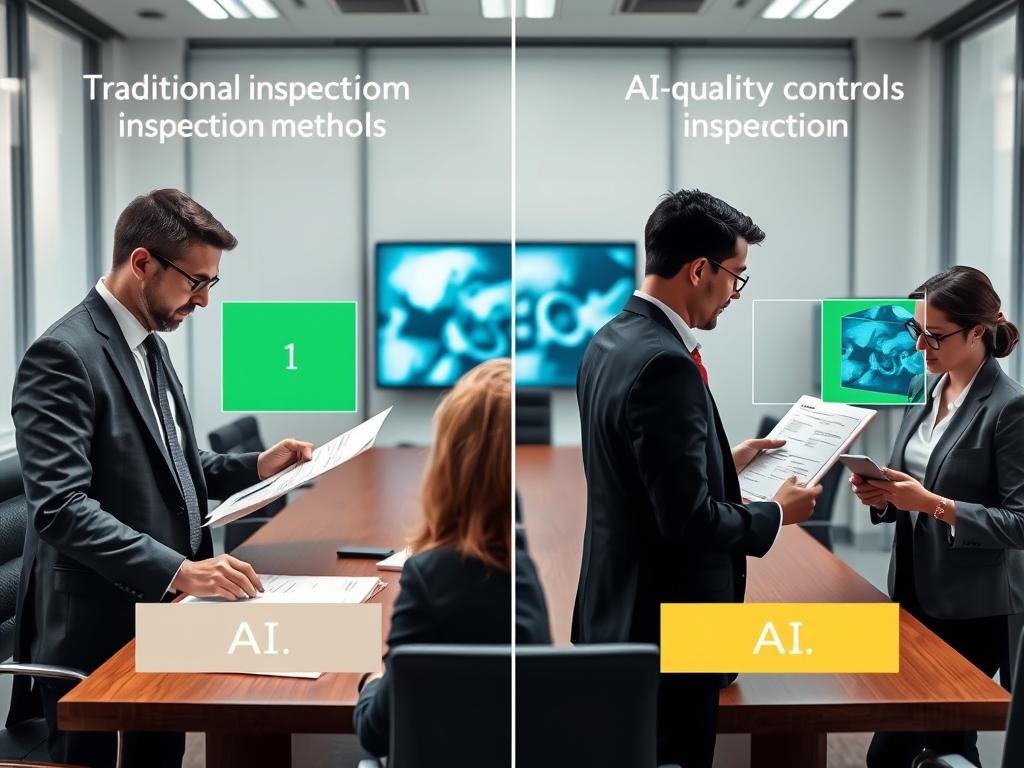
Traditional Visual Inspection
- Rule-based algorithms with fixed parameters
- Deterministic outcomes based on predefined thresholds
- Brittle to variations in lighting, positioning, and product changes
- Requires constant reprogramming for new products or defect types
- Limited ability to detect subtle or complex defects
AI-Powered Visual Inspection
- Learning-driven models that adapt to patterns
- Probabilistic assessments that improve with more data
- Robust to environmental variations and product changes
- Adaptable to new products through retraining rather than reprogramming
- Capable of detecting subtle, complex, or previously unseen defects
This fundamental shift—from explicit programming to learning from examples—enables inspection systems to handle complex textures, variable lighting, and new defect types without constant manual intervention. The result is a more flexible, accurate, and scalable approach to quality control.
Why AI in Visual Inspection Matters for Modern Manufacturing
Manufacturers face increasing pressure to deliver perfect products while optimizing costs and throughput. Implementing AI in visual inspection helps companies address these challenges by fundamentally transforming their quality control capabilities.
Enhanced Accuracy
AI systems can detect defects with accuracy levels up to 99%, significantly outperforming human inspectors who typically achieve 80-85% accuracy due to fatigue and attention limitations. This translates to fewer defective products reaching customers and reduced warranty claims.
Improved Throughput
Modern AI inspection systems can process hundreds or thousands of parts per minute, enabling 100% inspection even on high-speed production lines. This eliminates sampling-based quality control and ensures every product meets standards.
Data-Driven Improvement
AI systems generate rich datasets about defect patterns, enabling manufacturers to identify root causes and implement process improvements. This creates a continuous feedback loop that drives quality upstream into production processes.
These capabilities aren't just incremental improvements—they represent a fundamental shift in how manufacturers approach quality control, moving from reactive detection to proactive prevention and continuous improvement.
Ready to explore AI visual inspection for your operations?
Our experts can help you assess your specific inspection challenges and identify the right AI approach for your manufacturing environment.
How AI Enhances Visual Inspection Capabilities
From Rule-Based Systems to Machine Learning in Inspection Systems
Traditional machine vision relies on deterministic rules: edge detection, blob analysis, or pre-defined measurement tolerances. These systems work well when parts and lighting are tightly controlled. However, as product variability increases, rule-based approaches become expensive to maintain and often fail to adapt.
Machine learning in inspection systems shifts the effort from rule programming to data and model training. Instead of hand-coding every possible defect scenario:
- Engineers curate representative images and label examples of defects and good parts
- Models learn discriminative features automatically, enabling them to generalize to variations in appearance
- Retraining or fine-tuning with new data is often faster than rewriting rule logic

An electronics manufacturer replaced dozens of brittle optical rules with a convolutional neural network that learns to detect solder joint defects across multiple board variants — reducing rule maintenance overhead by 70%.
Accuracy, Speed, and Scalability Improvements
Accuracy Gains
- Detection of subtle patterns and textured defects that elude threshold-based checks
- Improved true positive detection rates (typically 90-99%)
- Reduced false negatives, preventing defective products from reaching customers
- Ability to recognize complex defect patterns that human inspectors might miss
Implementation Challenges
- Requires sufficient training data covering defect variations
- Initial model development and validation takes time
- Needs proper hardware infrastructure for real-time processing
- Requires ongoing monitoring and occasional retraining
Modern GPU and edge-inference accelerators enable real-time processing at production speeds, with many systems capable of inspecting hundreds or thousands of parts per minute. This combination of accuracy and speed creates a compelling business case for AI adoption.
Integration Scenarios for Production Lines
| Integration Scenario | Implementation Approach | Typical Benefits |
| Inline inspection on conveyor belts | High-speed cameras + edge inference devices mounted above production line | Real-time defect detection without slowing production |
| Stationary inspection after critical process | Fixed camera station with controlled lighting after processes like soldering or coating | Immediate feedback on process quality, preventing downstream issues |
| End-of-line inspection | Multi-camera system examining final product from multiple angles | Comprehensive quality verification before packaging and shipping |
| Robotic inspection cells | Camera-equipped robots that move around complex products | Thorough inspection of complex geometries and hard-to-reach areas |
A food-packaging manufacturer implemented AI visual inspection to verify label integrity and seal quality. When the model detects a defect, the line automatically rejects the affected package and logs an image with timestamp to the quality dashboard for audit and root-cause analysis. This integration reduced customer complaints about packaging defects by 87% within three months of deployment.
Core Technologies Behind AI Visual Inspection
Computer Vision and Deep Learning Architectures
At the core of artificial intelligence visual inspection systems are sophisticated neural network architectures designed to process and analyze visual data. These models have evolved significantly in recent years, with several architectures proving particularly effective for industrial inspection tasks:

Convolutional Neural Networks (CNNs)
The foundation of modern visual inspection, CNNs like ResNet, EfficientNet, and MobileNet excel at feature extraction from images. These networks automatically learn to identify relevant patterns that distinguish good parts from defective ones.
Object Detection Models
Frameworks like Faster R-CNN, YOLO, and SSD not only classify defects but also localize them with bounding boxes. This capability is crucial for pinpointing exactly where on a product a defect occurs.
Segmentation Models
U-Net and Mask R-CNN provide pixel-level defect delineation, enabling precise measurement of defect size, shape, and area. This granularity is essential for detailed quality analytics and process improvement.
Data Requirements and Model Training
Data is often the principal constraint in implementing effective AI inspection systems. Successful implementations require careful attention to several aspects of data management:
Dataset Collection
Gather representative images across product variants, lighting conditions, and expected defect modes. Ideally, collect hundreds to thousands of examples per defect category to ensure robust model performance.
Labeling and Annotation
Accurate, consistent annotations are vital for supervised learning. Depending on the inspection task, use bounding boxes, segmentation masks, or class labels to mark defects. Quality control experts should validate annotations to ensure they align with acceptance criteria.
Data Augmentation
Expand limited datasets through techniques like rotation, cropping, brightness adjustments, and noise addition. These transformations help models generalize to real-world variability and improve robustness.
Synthetic Data Generation
For rare but critical defects, synthetic data generation can supplement limited real examples. Techniques range from simple image manipulation to sophisticated generative models that simulate realistic defect appearances.

Edge Computing, Sensors, and Real-Time Inference
The hardware infrastructure supporting AI visual inspection is critical to its performance and cost-effectiveness. Key components include:
Cameras and Optics
Resolution, frame rate, and lens selection directly influence what defects can be detected. High-resolution cameras may be necessary for fine defects, while high-speed cameras are essential for fast-moving production lines.
Lighting Systems
Consistent, appropriate lighting reduces image noise and simplifies model learning. Different inspection tasks may require specific lighting techniques such as backlighting, directional lighting, or structured light.
Inference Hardware
Edge devices reduce latency and bandwidth use for real-time applications, while server/GPU setups offer greater computing power for complex models. The choice depends on required inspection rate and acceptable decision latency.
Inference Loop Example (Pseudo-code)
# Pseudo-inference loop
while production_line_running:
 frame = camera.capture()
 preprocessed = preprocess(frame)
 prediction = model.infer(preprocessed) # ONNX/TensorRT on edge
 if prediction.defect_confidence > threshold:
 actuator.reject_part()
 logger.log(frame, prediction)
Benefits and Business Impact
Quantifying the Benefits of AI in Manufacturing Inspection
Manufacturers implementing artificial intelligence visual inspection typically measure success through several key performance indicators:
 4.7
Overall Impact
Defect Detection Rate
94%
Inspection Speed Improvement
90%
False Positive Reduction
85%
ROI Timeline
80%
Quality Improvement
92%
4.7
Overall Impact
Defect Detection Rate
94%
Inspection Speed Improvement
90%
False Positive Reduction
85%
ROI Timeline
80%
Quality Improvement
92%
Case studies across industries consistently demonstrate substantial improvements in these metrics, with many manufacturers reporting:
- 30-50% reduction in inspection labor costs
- 15-25% improvement in first-pass yield
- 40-60% faster inspection cycles
- 50-80% reduction in customer complaints related to quality issues
- ROI achievement within 6-18 months depending on implementation scale
Impact of AI on Quality Control and Regulatory Compliance
Beyond operational metrics, AI-enabled inspection systems strengthen quality management systems and regulatory compliance through:
Enhanced Traceability
AI systems automatically log images, decisions, and confidence scores tied to batch IDs and timestamps, creating comprehensive audit trails for quality investigations and regulatory inspections.
Consistent Application of Standards
Once trained, AI models apply the same quality criteria consistently across shifts, plants, and time periods, eliminating the variability inherent in human judgment.
Evidence-Based Quality Management
The rich data generated by AI inspection enables more sophisticated quality analytics, supporting root cause analysis and continuous improvement initiatives required by standards like ISO 9001.
Validation Documentation
For regulated industries like pharmaceuticals and medical devices, AI systems can generate the performance documentation needed for validation protocols, including version control for models and defined retraining policies.
Workforce Implications and Human-AI Collaboration
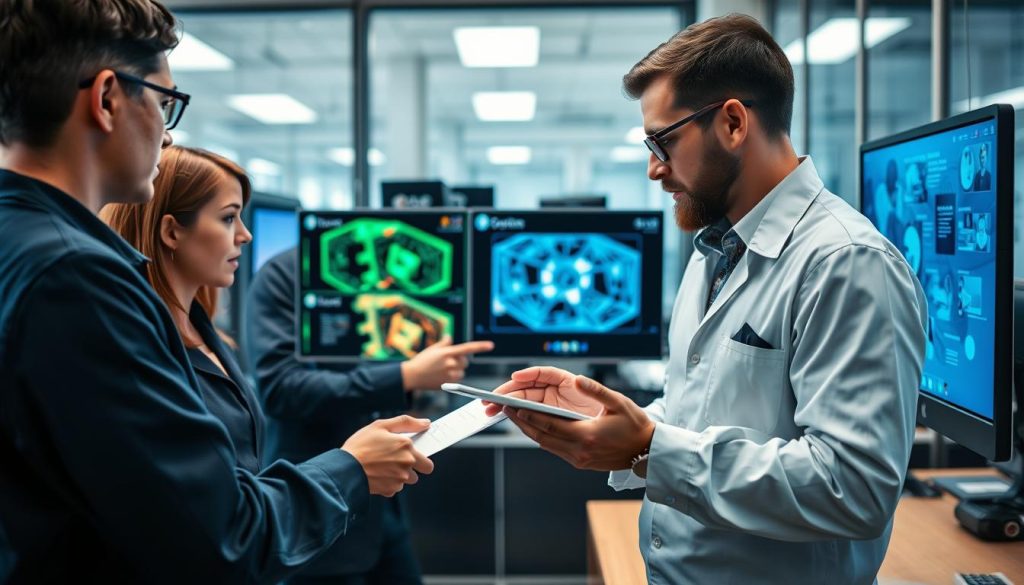
Contrary to common concerns, AI doesn't simply replace human inspectors—it transforms their roles and often enhances their capabilities:
Role Evolution
Quality personnel shift from repetitive inspection tasks to higher-value activities like exception handling, model validation, and process improvement. This often leads to more engaging work and opportunities for skill development.
Augmented Capabilities
AI systems can highlight potential defects for human verification, combining machine consistency with human judgment for complex decisions. This collaborative approach often achieves higher accuracy than either humans or AI alone.
Knowledge Preservation
AI models trained by experienced inspectors can capture and preserve their expertise, making it available to new employees and across multiple facilities. This helps address challenges related to workforce turnover and tribal knowledge.
Evaluate your organization's AI readiness
Our team can help you assess your current inspection processes and identify high-impact opportunities for AI implementation.
Implementation Challenges and Best Practices
Common Challenges in Deploying AI in Visual Inspection
While the benefits of artificial intelligence visual inspection are compelling, implementation comes with several challenges that organizations must address:

Data Quality and Labeling Bias
Poor or inconsistent annotations lead to underperforming models. When subject matter experts disagree on defect classifications or severity thresholds, this disagreement transfers to the model. Additionally, if training data doesn't represent the full range of product variations and defect types, the model will have blind spots in production.
Model Drift and Performance Degradation
Changes in materials, lighting conditions, camera positioning, or manufacturing processes can cause model performance to degrade over time. Without monitoring and maintenance, an initially successful deployment may become unreliable as conditions evolve.
Integration Complexity
Legacy production systems and MES/PLC interfaces often require careful engineering to integrate with AI inspection systems. Synchronizing image capture with production tracking, implementing reject mechanisms, and ensuring real-time performance can be technically challenging.
Explainability and Trust
Black-box models can be difficult to validate for critical decisions. Operators and quality managers may resist adoption if they don't understand why the AI is making specific determinations, especially when those determinations contradict human judgment.
Best Practices for Successful AI Adoption
Organizations that successfully implement AI visual inspection typically follow these best practices:
Start with Focused Pilots
Begin with a single, high-impact inspection point rather than attempting a factory-wide deployment. This allows for faster validation of the approach and builds organizational confidence before scaling.
Build Cross-Functional Teams
Include quality engineers, operators, data scientists, and IT specialists in the implementation team. This diverse expertise ensures that technical capabilities align with operational realities and business objectives.
Define Clear Success Metrics
Establish specific, measurable success criteria upfront, such as defect detection rate, false positive rate, and ROI timeline. These metrics provide objective evaluation of the implementation and guide ongoing improvements.

Sample 12-Week Pilot Implementation Plan
- Weeks 1-2: Process assessment and data collection planning
- Weeks 3-4: Initial data collection and annotation
- Weeks 5-6: Model development and offline validation
- Weeks 7-8: Hardware integration and testing
- Weeks 9-10: Shadow deployment with human verification
- Weeks 11-12: Performance evaluation and adjustment
Ensuring Reliability: Validation, Testing, and Continuous Improvement
Maintaining AI inspection system performance requires ongoing attention to validation and improvement:
Validation Methods
- Hold-out testing on labeled datasets not used in training
- Cross-validation to ensure model robustness
- Field validation with real-time A/B testing comparing model results to human inspectors
- Confusion matrix analysis to identify specific strengths and weaknesses
Continuous Improvement Loop
- Log production images and model decisions systematically
- Review false positive and false negative cases regularly
- Update training data with challenging examples
- Retrain models periodically or when performance metrics decline
- Monitor and adjust for changes in production conditions
Organizations should establish clear triggers for model retraining, such as a specified drop in accuracy or the introduction of new product variants or defect types. This proactive approach ensures that AI inspection systems remain effective as production environments evolve.
Future Trends and Innovations
Advances in AI Models and Sensing Technologies
The field of artificial intelligence visual inspection continues to evolve rapidly, with several emerging technologies poised to shape the next generation of inspection systems:

Self-Supervised Learning
These techniques reduce dependence on labeled datasets by enabling models to learn from unlabeled images. This approach is particularly valuable in manufacturing, where defect examples may be scarce but normal product images are abundant.
Transformer-Based Vision Models
Vision Transformers (ViT) and similar architectures offer improved contextual understanding for complex assemblies and subtle defect patterns. Their ability to capture long-range dependencies in images makes them promising for intricate inspection tasks.
Multi-Modal Sensing
Combining vision with thermal, hyperspectral, or 3D LIDAR data enables detection of defects that may not be visible in standard RGB images. This fusion approach is particularly valuable for materials with complex properties or internal defects.
Scaling Automated Quality Control with AI Across Industries
While electronics and automotive manufacturing were early adopters of AI visual inspection, the technology is rapidly expanding to other sectors:
| Industry | Application Areas | Specific Challenges |
| Food and Beverage | Contamination detection, fill level verification, label inspection | Variable product appearance, high-speed production, hygiene requirements |
| Pharmaceuticals | Package integrity, pill inspection, label verification | Regulatory compliance, validation requirements, zero-defect tolerance |
| Consumer Goods | Cosmetic defect detection, packaging quality, assembly verification | Product variety, aesthetic judgments, seasonal changes |
| Energy and Aerospace | Composite surface inspection, weld quality, turbine blade analysis | Safety-critical applications, complex geometries, specialized materials |
Successful cross-industry scaling requires robust data pipelines and modular model architectures that can generalize across product families while accommodating industry-specific requirements.
Ethical, Security, and Supply-Chain Considerations
As AI visual inspection becomes more prevalent, organizations must address several important considerations:

Data Privacy
Manufacturing images may contain proprietary designs or processes. Organizations must implement appropriate data governance to protect intellectual property while enabling AI training and operation.
Model Security
AI inspection systems must be protected against tampering or adversarial attacks that could potentially hide defects. This includes securing both the physical hardware and the model deployment pipeline.
Supply Chain Resilience
Dependencies on specific hardware components or model architectures should be diversified to prevent single-point failures. This is particularly important as global supply chains face increasing disruptions.
Manufacturers should adopt cybersecurity best practices for industrial AI and include AI governance in vendor selection processes. As regulatory frameworks for AI continue to evolve, staying informed about compliance requirements will be increasingly important.
Conclusion
Recap of Key Takeaways on AI in Visual Inspection
Artificial intelligence visual inspection represents a transformative approach to quality control in manufacturing. By moving from brittle rule-based systems to adaptive machine learning models, companies gain improved accuracy, higher throughput, and richer traceability. The impact of AI on quality control is measurable—from lower scrap rates to faster root-cause analysis—and benefits accrue when AI is integrated thoughtfully into production workflows.

Actionable Next Steps for Manufacturers
Organizations looking to implement AI visual inspection should consider these practical next steps:
- Evaluate readiness: Audit current inspection points and data availability to identify high-potential applications.
- Choose a high-impact pilot: Select an inspection task with clear KPIs and significant business impact.
- Build a cross-functional team: Include quality, IT, operations, and data science expertise.
- Start collecting data now: Begin gathering and labeling production images to build your training dataset.
- Plan for integration: Map how AI results will connect to existing systems and processes.
Looking Ahead: Staying Competitive with AI-Driven Inspection
Adopting automated quality control with AI is not a one-time project—it's an ongoing capability. Manufacturers that invest in data pipelines, workforce upskilling, and continuous model validation will maintain higher quality standards and faster innovation cycles. To stay competitive, combine human expertise with AI, keep close watch for model drift, and align inspection strategies with broader digital transformation goals.
Ready to transform your quality inspection processes?
Our experts can help you select the right inspection points for an AI pilot and develop a roadmap for implementation that delivers measurable ROI.