

CRM software development services help organizations build, customize, and integrate customer relationship management platforms that match their exact sales, marketing, and service workflows. Unlike off-the-shelf CRM tools, a custom-built or deeply configured system eliminates the compromises that force teams to work around their software rather than with it.
The global CRM market is projected to reach $145.6 billion by 2029, according to Fortune Business Insights. That growth reflects a clear pattern: organizations across industries are investing in CRM platforms not just as contact databases but as operational command centers that unify sales pipelines, marketing automation, customer support, and revenue analytics in a single system.
This guide explains what CRM development services include, how the engagement typically works, what to expect on cost and timeline, and how to evaluate a development partner.
Key Takeaways
- Custom CRM development delivers a platform shaped to your processes, rather than forcing your team to adapt to generic software limitations.
- A consulting-led discovery phase prevents costly mid-project scope changes by aligning requirements, data models, and integrations upfront.
- AI-powered features such as predictive lead scoring, churn detection, and automated follow-ups are now practical additions to most CRM builds.
- Typical project costs range from $15,000 for a basic setup to $550,000+ for complex enterprise platforms with deep integrations.
- Successful CRM implementations require change management, role-based training, and post-launch optimization—not just code delivery.
What CRM Software Development Services Include
CRM development services cover the full lifecycle from strategy and requirements through build, integration, migration, and ongoing support. A credible provider does not simply write code; they consult on business process alignment, data architecture, and adoption strategy before a single line is committed.
The core service areas typically include:
- CRM consulting and requirements analysis: Stakeholder interviews, process mapping, and gap analysis to define what the system must do and how it connects to existing tools.
- Custom CRM platform development: Building bespoke modules, workflows, dashboards, and user interfaces tailored to specific business rules and team roles.
- CRM configuration and customization: Extending commercial platforms like Salesforce, Microsoft Dynamics 365, HubSpot, or Zoho with custom objects, fields, automations, and reports.
- Integration services: Connecting the CRM to ERPs, billing systems, marketing automation tools, telephony, and analytics platforms through APIs and middleware.
- Data migration and consolidation: Moving records from legacy systems, spreadsheets, or multiple CRMs into a unified platform with deduplication and validation.
- Training, adoption, and change management: Role-based training programs, documentation, and hands-on workshops that ensure teams actually use the system.
- Ongoing support and optimization: Post-launch monitoring, performance tuning, feature enhancements, and quarterly optimization sprints.
The scope of any engagement depends on whether you need a greenfield build, a migration from a legacy platform, or an extension of an existing CRM. A good development partner helps you determine the right approach before committing budget.
Custom CRM vs. Off-the-Shelf: When to Build
Off-the-shelf CRM platforms work well for organizations with standard sales and service workflows, but they fall short when business processes are genuinely unique. The decision to invest in custom CRM development should be driven by specific, measurable limitations—not a general preference for bespoke software.
Consider a custom CRM build when:
- Your sales process involves non-standard pipeline stages, approval chains, or pricing logic that commercial platforms cannot accommodate without extensive workarounds.
- You need deep integration with proprietary or legacy systems that lack pre-built connectors.
- Regulatory requirements demand specific data handling, audit trails, or access controls beyond what standard platforms offer.
- Licensing costs for a commercial CRM at your user count exceed the total cost of ownership for a tailored solution.
- Your competitive advantage depends on customer data workflows that off-the-shelf tools cannot replicate.
| Factor | Off-the-Shelf CRM | Custom CRM Development |
|---|---|---|
| Time to deploy | Days to weeks | 2–12 months |
| Upfront cost | Low (subscription) | Higher (development investment) |
| Long-term flexibility | Limited by vendor roadmap | Full control over features and data |
| Integration depth | Pre-built connectors only | Custom APIs for any system |
| Process fit | Generic workflows | Exact match to business rules |
| Vendor dependency | High | Low |
For many mid-market organizations, the practical path is a hybrid: start with a commercial platform and invest in custom development for the modules, integrations, and workflows where the standard product falls short. This approach balances speed-to-value with long-term flexibility.
The CRM Development Process
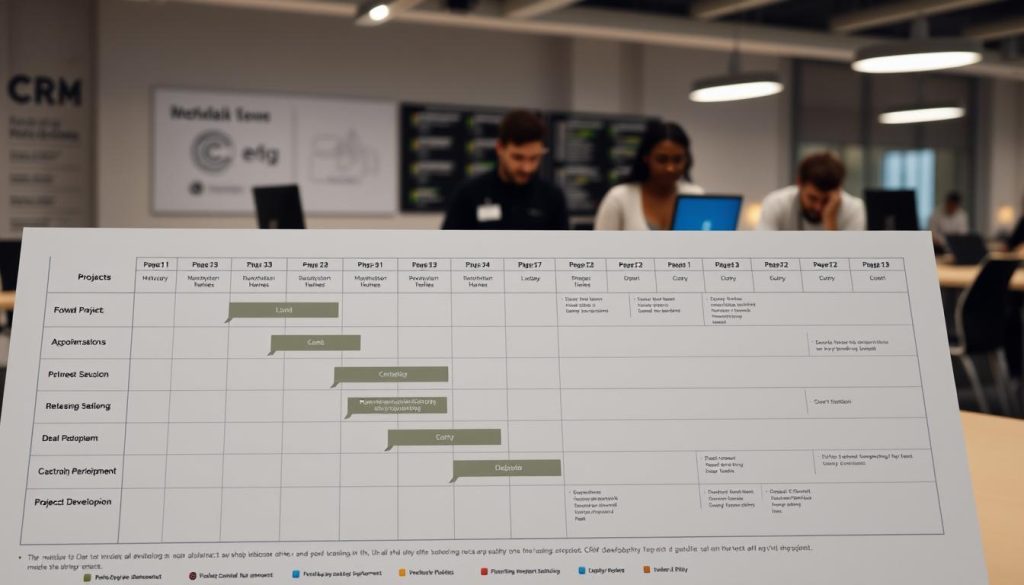
A structured development process reduces risk and ensures the delivered system matches actual business needs rather than assumptions. While specific methodologies vary, most credible CRM development companies follow a phased approach.
Discovery and Strategy
The engagement begins with stakeholder interviews, process documentation, and requirements gathering. The goal is to translate business objectives into a prioritized backlog with clear acceptance criteria. Architecture decisions, data models, and integration specifications are defined upfront to prevent costly rework later.
Design and Prototyping
UX design focuses on role-specific workflows. Sales reps, marketing teams, and service agents each need different views, dashboards, and data access levels. Interactive prototypes let stakeholders validate the design before development begins, reducing the gap between expectation and delivery.
Iterative Development
Development follows agile sprints with regular demos and prioritized backlogs. CI/CD pipelines, automated testing, and code reviews maintain quality throughout. Modular architecture allows staged rollouts—core functionality ships first, with additional capabilities added incrementally.
Integration and Data Migration
APIs and middleware connect the CRM to your existing systems. Integration patterns are chosen per need: event-driven for real-time alerts, batch for bulk syncs, and hybrid for cost-sensitive flows. Data migration includes profiling, cleansing, deduplication, and dry runs to validate record counts and relationships before cutover.
Testing and User Acceptance
Functional, performance, security, and regression tests validate the system against requirements. User acceptance testing (UAT) follows scripts that mirror real workflows and edge cases, ensuring the platform works as expected in practice—not just in theory.
Deployment and Training
Rollouts are coordinated with role-based training, playbooks, quick-reference guides, and live sessions to accelerate adoption. Change management planning addresses the organizational side of the transition—new processes, updated responsibilities, and communication plans for stakeholders.
Post-Launch Support
Hypercare support immediately after go-live addresses issues fast. The engagement then transitions to ongoing maintenance with SLAs, proactive monitoring, and quarterly optimization sprints driven by usage analytics and user feedback.
Ready to Build Your CRM?
Opsio delivers custom CRM development services with consulting-led discovery, agile delivery, and post-launch optimization.
Schedule a CRM ConsultationAI-Powered CRM Capabilities
Artificial intelligence transforms CRM platforms from passive record-keeping systems into proactive decision-support tools. Modern CRM development services increasingly include AI features that automate routine tasks, surface insights from customer data, and help teams prioritize their highest-value activities.
Predictive Lead Scoring and Churn Detection
Machine learning models analyze historical deal data, engagement patterns, and customer attributes to score leads by conversion likelihood. The same approach works in reverse for churn prediction—flagging at-risk accounts before renewal deadlines so retention teams can intervene proactively. According to McKinsey, companies that excel at personalization generate 40 percent more revenue from those activities than average performers.
Intelligent Chatbots and Virtual Assistants
AI-powered chatbots handle routine inquiries around the clock, qualifying leads, answering common questions, and routing complex issues to human agents with full context. Natural language processing enables these assistants to understand intent rather than relying on rigid keyword matching, improving both resolution rates and customer satisfaction.
Automated Follow-Ups and Campaign Orchestration
AI determines optimal send times, channel selection, and message content for follow-up sequences based on recipient behavior. Campaign orchestration engines cluster customers by preference and lifecycle stage, powering tailored offers and adaptive cadence that respond to real-time signals rather than static rules.
Sentiment Analysis and Next-Best-Action
Sentiment analysis across email, chat, social media, and call transcripts flags negative trends before they escalate. Next-best-action engines embed recommendations directly into rep workflows, suggesting specific actions based on the full context of each customer relationship.
CRM Integration and Ecosystem Connectivity
A CRM that operates in isolation creates data silos, duplicate entry, and inconsistent customer records across departments. Integration services connect your CRM to the broader technology ecosystem so teams see one consistent truth across tools and channels.
Common integration targets include:
- ERP and billing systems: Syncing customer records, orders, invoices, and payment status to eliminate manual reconciliation.
- Marketing automation: Connecting platforms like HubSpot, Marketo, or Mailchimp for closed-loop reporting between campaigns and sales outcomes.
- Customer support tools: Linking Zendesk, Freshdesk, or ServiceNow to provide support agents with full account context.
- Telephony and communication: Integrating VoIP, SMS, and messaging platforms for call logging and communication tracking.
- Analytics and BI: Feeding CRM data into tools like monitoring dashboards and business intelligence platforms for cross-functional reporting.
Integration reliability matters as much as connectivity. Robust retry logic, error handling, and observability ensure that data syncs consistently even when downstream systems experience latency or outages. Security controls—OAuth, mutual TLS, and scoped API permissions—protect sensitive records across every connection point.
Data Migration Without Disruption
Migrating customer data from legacy systems to a new CRM is one of the highest-risk phases of any implementation. Poorly executed migrations result in lost records, broken relationships between data objects, and a loss of user trust that undermines adoption of the new platform.
A structured migration process minimizes these risks:
- Inventory and profile source systems: Identify every data source, assess quality, and document field mappings to the target schema.
- Define a canonical data model: Establish a single schema that normalizes duplicates, standardizes values, and preserves data lineage for audit purposes.
- Run multi-phase dry migrations: Execute test migrations with reconciliation checklists that validate record counts, relationships, and data integrity before the production cutover.
- Execute cutover with rollback plan: Minimize the cutover window, run parallel systems briefly, and maintain documented rollback procedures.
- Validate with user acceptance: Have actual users verify data accuracy in real workflows before decommissioning legacy systems.
Encryption in transit and at rest, temporary environments with strict access controls, and detailed audit logs protect sensitive customer data throughout the migration process.
Security, Compliance, and Uptime
Customer data is a liability as well as an asset, and a CRM platform that stores it must be secured accordingly. CRM development services should include security architecture from the start—not bolted on after delivery.
Key security measures for CRM platforms include:
- Encryption: Data encrypted at rest and in transit using industry-standard protocols.
- Role-based access controls: Least-privilege permissions enforced at the field level, with segregation of duties across environments.
- Audit logging: Immutable logs that track who accessed, modified, or exported customer records.
- Patch management: Scheduled vulnerability scanning with severity-based prioritization.
- High-availability architecture: Redundancy, automated failover, and health checks designed to meet targeted uptime SLAs.
- Backup and recovery: RPO/RTO objectives tailored to your operational requirements and tested regularly.
For regulated industries, the CRM must also support compliance with frameworks like HIPAA (healthcare), PCI DSS (payment data), GDPR (EU personal data), and SOC 2 (service organizations). A credible security consulting process ensures these requirements are addressed in the architecture phase rather than discovered during an audit.
Engagement Models, Timelines, and Costs
CRM project costs vary widely based on complexity, integration depth, data volume, and customization requirements. Transparent pricing starts with understanding the main cost drivers and choosing an engagement model that matches your risk tolerance and budget.
| Project Tier | Typical Cost Range | Timeline | Scope |
|---|---|---|---|
| Small / Startup | $15,000–$25,000 | 8–12 weeks | Basic contact and lead management, minimal integrations, low user count |
| Standard / Mid-Market | $80,000–$150,000 | 4–6 months | Custom workflows, third-party integrations, moderate data migration |
| Complex / Enterprise | $250,000–$550,000+ | 6–12 months | Deep integrations, high data volumes, custom AI modules, multi-region deployment |
Common engagement models include:
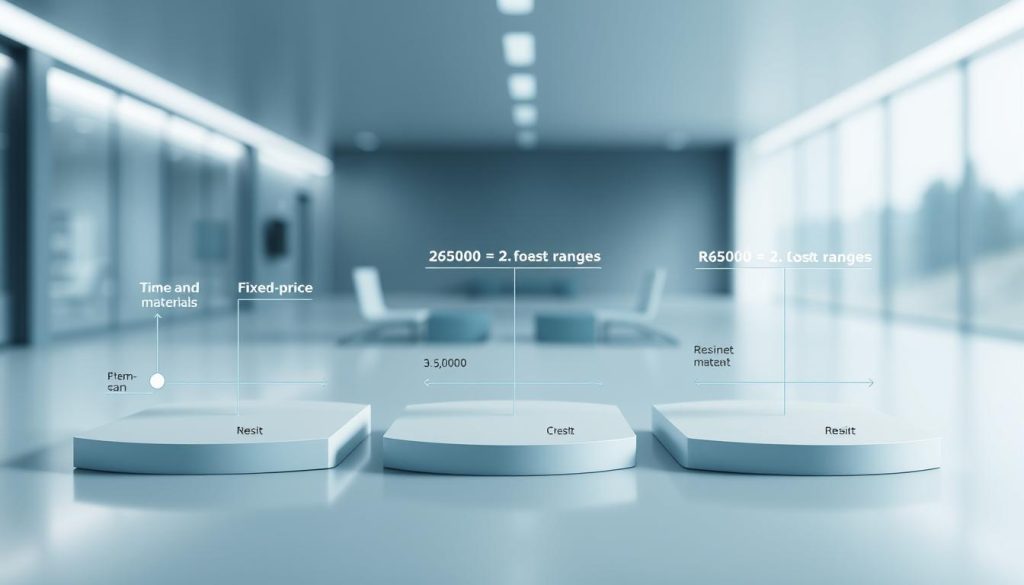
- Fixed-price: Best for well-defined scopes with clear requirements. Reduces budget uncertainty but limits mid-project flexibility.
- Time-and-materials: Suits evolving requirements where discovery reveals new needs. Offers flexibility but requires active scope management.
- Dedicated team: A cross-functional squad works exclusively on your project with clear velocity tracking and burn rates. Best for long-term engagements.
An MVP-first approach—delivering core functionality in 8–12 weeks, then iterating based on real usage data—reduces risk and shortens time-to-value. This is especially effective for organizations building a CRM for the first time, where assumptions about workflow needs often change once teams start using the system.
Industries Served
CRM requirements differ significantly across industries because each vertical has distinct sales cycles, compliance rules, and customer interaction patterns. A development partner with cross-industry experience anticipates these differences and designs accordingly.
- Healthcare: Role-based access, audit trails for patient data, HIPAA-aligned permissions, and integration with electronic health record systems.
- Financial services: Strict entitlements, approval workflows, regulatory reporting, and integration with core banking or payment platforms.
- Automotive and dealerships: Inventory visibility, test-drive scheduling, lead routing by location, and manufacturer reporting requirements.
- Retail and eCommerce: Unified customer profiles across channels, order history integration, loyalty program management, and marketing automation.
- Logistics and supply chain: Shipment tracking, exception handling, account-level SLAs, and carrier integration.
- Professional services: Project-based pipeline management, resource allocation, time tracking, and client portal access.
- Real estate: Listing pipelines, showing schedules, document management, and drip campaign automation for buyer and seller leads.
- Education: Enrollment journeys, student retention analytics, communication workflows, and cloud migration from legacy student information systems.
How to Choose a CRM Development Partner
The difference between a successful CRM implementation and a failed one often comes down to the development partner, not the technology. These criteria help separate firms that deliver working systems from those that produce incomplete projects and shelf-ware documentation.
Relevant Industry and Platform Experience
Ask for case studies or references from projects in your industry. A team that has built CRM solutions for healthcare will understand HIPAA constraints without being told; a team focused on eCommerce will know how to handle catalog-scale data. Platform certifications for Salesforce, Dynamics 365, or AWS demonstrate hands-on expertise.
Process Transparency
Credible partners provide clear project plans with defined milestones, regular demos, risk logs, and KPI scorecards. Weekly or biweekly sprint reviews should be standard, not optional. Ask how the team handles scope changes and what the escalation path looks like when issues arise.
Post-Launch Commitment
A CRM is not a deliver-and-forget project. Evaluate the partner's support model—hypercare periods, SLAs, optimization cadence, and upgrade path. The best partners measure success by adoption rates and business outcomes, not just on-time delivery.
Team Composition
Cross-functional teams that include architects, developers, QA engineers, data specialists, and change management leads deliver better outcomes than code-only shops. Ask about the specific roles that will be assigned to your project and how quality assurance is handled.
Evaluate Your CRM Options
Opsio provides CRM consulting, custom development, integration, and managed support across industries.
Request a CRM AssessmentFrequently Asked Questions
What types of CRM software development services are available?
CRM development services range from full custom platform builds to configuration and customization of commercial tools like Salesforce, Dynamics 365, and HubSpot. Services typically include consulting, requirements analysis, UX design, development, integration, data migration, training, and ongoing support. The right mix depends on your existing systems, budget, and how unique your business processes are.
How long does a custom CRM project take?
Timelines vary based on complexity. A basic CRM with standard contact and pipeline management takes 8 to 12 weeks. Mid-market projects with custom workflows and integrations require 4 to 6 months. Enterprise-scale builds with deep integrations, data migration, and AI features can take 6 to 12 months. An MVP-first approach delivers usable functionality faster while allowing iterative improvements.
How much does CRM development cost?
Small projects start around $15,000 to $25,000. Standard mid-market implementations typically cost $80,000 to $150,000. Complex enterprise builds range from $250,000 to $550,000 or more. Key cost drivers include feature complexity, number of integrations, data migration effort, user count, and the level of customization required.
Can you integrate a custom CRM with our existing tools?
Yes. CRM integration services connect your platform to ERPs, billing systems, marketing automation tools, support desks, telephony, and analytics platforms. Integration uses APIs, native connectors, and middleware, with patterns selected based on whether real-time, batch, or hybrid syncing best fits each data flow.
How do AI features improve CRM performance?
AI capabilities include predictive lead scoring that prioritizes high-conversion prospects, churn detection that flags at-risk accounts, chatbots that handle routine inquiries around the clock, sentiment analysis that monitors customer satisfaction across channels, and automated follow-up sequences that optimize timing and channel selection based on recipient behavior.
What industries benefit most from custom CRM development?
Industries with complex sales cycles, strict compliance requirements, or unique customer interaction patterns benefit most. Healthcare, financial services, automotive, logistics, and professional services organizations frequently invest in custom CRM development because off-the-shelf tools cannot adequately address their specific workflow and regulatory needs.
How do you handle data migration from a legacy CRM?
Data migration follows a structured process: inventory source systems, define a canonical data model, run multi-phase dry migrations with reconciliation checks, execute cutover with a documented rollback plan, and validate accuracy through user acceptance testing. Encryption, access controls, and audit logs protect data throughout the process.
What post-launch support should I expect?
Post-launch support typically includes a hypercare period for immediate issue resolution, followed by ongoing maintenance with SLAs, proactive monitoring, and scheduled optimization sprints. Training refreshers, feature enhancements, and platform upgrades ensure the CRM continues delivering value as your business evolves.