
Data Residency and Sovereignty in Cloud Operations for Regulated Enterprises

Consultant Manager
Six Sigma White Belt (AIGPE), Internal Auditor - Integrated Management System (ISO), Gold Medalist MBA, 8+ years in cloud and cybersecurity content
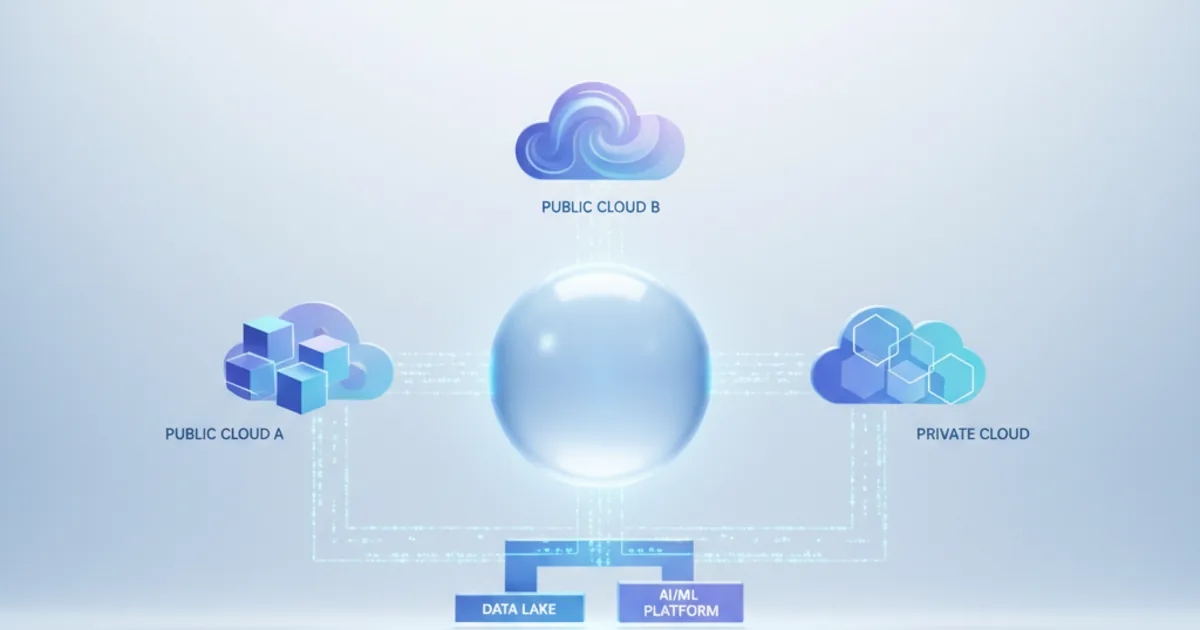
What Is Data Sovereignty in Cloud Operations?
Data sovereignty is the legal concept that data is subject to the laws and regulations of the country where it's physically stored or processed. For regulated enterprises, this means navigating a complex web of sometimes conflicting requirements across different jurisdictions.
When your organization operates globally, you must understand:
- Which country's laws apply to your data
- How those laws impact data collection, storage, and processing
- What rights governments have to access your data
- How sovereignty requirements affect your cloud architecture
The consequences of mishandling data sovereignty can be severe—from regulatory fines to business disruption. Organizations need more than just policies; they need operational controls that prove compliance.
What Data Residency Really Requires
Data residency goes beyond simply choosing a cloud region. It encompasses the entire lifecycle of data within your organization and requires a comprehensive approach to ensure compliance.
Data Flows
Understanding how data moves across systems, applications, and integrations is crucial. Each transfer point represents a potential compliance risk that must be mapped and controlled.
Access Controls
Administrative access and privileged operations must be tightly managed to ensure only authorized personnel can interact with data in specific jurisdictions.
Supporting Infrastructure
Logs, backups, replicas, and metadata all contain regulated information and must adhere to the same residency requirements as primary data.
Retention Practices
Data retention and deletion practices must comply with local regulations, which often vary significantly between jurisdictions.
Third-Party Services
Dependencies on third-party services and subprocessors introduce additional complexity that must be carefully managed.
Technical Controls
Implementing technical controls that enforce residency requirements automatically rather than relying on manual processes.
Need expert help with data residency and sovereignty in cloud operations for regulated enterprises?
Our cloud architects can help you with data residency and sovereignty in cloud operations for regulated enterprises — from strategy to implementation. Book a free 30-minute advisory call with no obligation.
Common Sovereignty Challenges in Cloud Operations
Organizations face numerous challenges when implementing data sovereignty in cloud environments:
- Conflicting Requirements: Different countries have different, sometimes contradictory regulations
- Cloud Architecture: Standard cloud configurations often don't account for sovereignty boundaries
- Operational Complexity: Managing multiple environments with different rules increases overhead
- Visibility Gaps: Lack of clear insight into where data actually resides and how it moves
"The biggest mistake organizations make is treating data sovereignty as a checkbox exercise rather than an operational reality that must be continuously managed."
— Cloud Compliance Expert
Opsio's Regulation-First Approach to Residency and Sovereignty
Opsio takes a comprehensive, three-phase approach to ensuring data residency and sovereignty compliance that focuses on operational proof rather than just policy statements.
1) Map Data Flows and Dependencies
Before implementing controls, organizations need complete visibility into their data landscape:
- Comprehensive system and integration inventory
- Classification of data types and sensitivity levels
- Identification of cross-border flow points
- Assessment of risk hotspots and compliance gaps
Opsio helps establish this foundation through detailed discovery and mapping processes that create a clear picture of your data environment.
2) Implement Enforceable Controls
Residency requirements need operational enforcement mechanisms:
- Granular access controls based on least privilege principles
- Controlled administrative workflows with approval gates
- Technical segmentation and environment isolation
- Comprehensive logging of all access and changes
- Automated enforcement of residency boundaries
3) Prove It With Audit-Ready Evidence
Compliance isn't just about implementation—it's about proving it:
- Clear, defensible control narratives
- Repeatable evidence collection processes
- Change governance tied to residency decisions
- Documentation that satisfies auditor requirements
- Real-time compliance monitoring and reporting
Outcomes You Should Expect
Clarity and Confidence
Clear understanding of what is in scope for data residency requirements and what isn't, eliminating ambiguity and providing confidence in compliance posture.
Reduced Compliance Friction
Streamlined procurement and audit processes with ready-to-use evidence and documentation that satisfies regulatory requirements.
Faster Stakeholder Alignment
Improved collaboration across legal, security, and engineering teams with shared understanding of requirements and controls.
Operational Confidence Under Pressure
When urgent business needs arise, having established data residency controls allows for faster decision-making without compromising compliance.
Organizations working with Opsio report 60% faster resolution of data residency questions during time-sensitive projects.
Technical Implementation of Data Sovereignty Controls
Effective data sovereignty requires technical controls that enforce compliance automatically rather than relying on manual processes or documentation alone.
Data Classification
Automated tools that identify and classify sensitive data subject to residency requirements, ensuring visibility across all environments.
Geofencing
Technical boundaries that prevent data from moving outside approved jurisdictions without proper authorization and documentation.
Access Management
Context-aware access controls that consider user location, data classification, and regulatory requirements when granting permissions.
"The most successful organizations embed data sovereignty controls into their DevOps pipelines, making compliance part of the development process rather than an afterthought."
— Cloud Security Architect
Frequently Asked Questions
Can Opsio help if requirements differ by country or business unit?
Yes—Opsio can help create tiered control models and enforceable operational boundaries that accommodate different requirements across jurisdictions and business units. Our approach focuses on creating a consistent framework that can be adapted to specific regulatory contexts.
Is residency possible without slowing delivery?
Yes—when controls are designed as operating routines, not manual gates. Opsio helps organizations embed compliance into their operational workflows and automation pipelines, ensuring that data residency requirements are met without creating bottlenecks in the delivery process.
Can you help respond to "where is the data?" questions from auditors and customers?
Yes—Opsio structures documentation and evidence so answers are consistent and defensible. We implement comprehensive data mapping and tracking capabilities that provide clear, auditable records of where data resides throughout its lifecycle, making it easy to respond to inquiries from auditors, customers, and regulators.
How does Opsio handle the distinction between data sovereignty and data residency?
Opsio addresses both concepts comprehensively. We help organizations understand the legal requirements (sovereignty) that apply to their data based on its physical location (residency), and implement controls that satisfy both aspects. Our approach ensures that you not only store data in the right places but also comply with all applicable laws and regulations.
Real-World Impact: Financial Services Case Study
A global financial services firm needed to expand operations while maintaining strict compliance with data residency requirements across 12 jurisdictions.
Challenges:
- Conflicting regulatory requirements across regions
- Pressure to accelerate time-to-market for new services
- Legacy systems with limited residency controls
- Lack of clear documentation for auditors
Opsio's Solution:
- Comprehensive data flow mapping across all environments
- Implementation of automated residency controls
- Development of jurisdiction-specific compliance playbooks
- Creation of audit-ready documentation and evidence collection
Results
The firm achieved 100% compliance across all jurisdictions while reducing time-to-market for new services by 40%. Audit preparation time decreased by 65%, and the organization successfully expanded into three new markets within 12 months.
Make Data Residency and Sovereignty an Operational Strength
Data residency and sovereignty requirements don't have to be obstacles to your cloud strategy. With the right approach, they can become operational strengths that provide competitive advantages in regulated markets.
Opsio's regulation-first methodology helps organizations move beyond checkbox compliance to implement enforceable, provable controls that satisfy even the most stringent requirements.
Ready to Transform Your Approach to Data Residency and Sovereignty?
Partner with Opsio to implement regulation-first cloud operations that provide clear, defensible compliance across all jurisdictions.
About the Author

Consultant Manager
Debolina works at the intersection of IT operations, quality management, and compliance at Opsio. She focuses on practical, data-driven insights around operational efficiency, governance, and continuous improvement — helping organisations streamline complex systems while maintaining standards.
Editorial standards: This article was written by a certified practitioner and reviewed by our engineering team. We revise it when the technology or regulation it covers changes; the dates above show the latest update. Opsio maintains editorial independence — we recommend solutions on technical merit, not commercial relationships.