
Cloud Managed Services — Your Cloud, Our 24/7 Operations
Running cloud infrastructure in-house means hiring expensive specialists, carrying pagers, and hoping your team handles incidents at 3 AM. Opsio's cloud managed services deliver 24/7 operations across AWS, Azure, and GCP — monitoring, 15-minute incident triage, security management, and FinOps cost optimization so your team focuses on building product, not babysitting infrastructure.
Trusted by 100+ organisations across 6 countries
AWS/Azure/GCP
Multi-Cloud
24/7
Operations
99.9%
Uptime SLA
35%
Avg Cost Savings
What's Included
Opsio's managed cloud covers six operational domains an internal infrastructure team would otherwise have to staff separately — across AWS, Azure, Google Cloud, hybrid and on-prem estates, run by one platform-certified team. 24/7 monitoring with a 15-minute critical-alert triage SLA and true root-cause analysis, not just restarts. Continuous security and compliance monitoring with automated SOC 2, GDPR, HIPAA, NIS2 and ISO 27001 checks plus rapid critical-CVE patching. Infrastructure-as-code discipline through Terraform and CI/CD so configuration drift is detected and reverted automatically. Backup and disaster recovery to defined RPO/RTO targets with quarterly restoration drills. And FinOps that typically cuts cloud spend 25–40% through right-sizing, commitment strategies and continuous cleanup — whichever clouds, or combination of them, you run.
24/7 Monitoring & Incident Response
Infrastructure and application monitoring with Datadog, CloudWatch, or Azure Monitor. 15-minute critical alert triage, 1-hour active remediation SLA. PagerDuty-based alert routing with escalation policies. Root cause analysis and permanent fixes for every incident — not just restarts.
Multi-Cloud Operations
Unified operations across AWS, Azure, and GCP with consistent monitoring, alerting, and incident management. Cross-cloud networking and identity management. Single operational team covering all platforms with certified engineers for each cloud provider.
Security & Compliance Monitoring
Continuous security monitoring with GuardDuty, Sentinel, or Security Command Center. Automated compliance checks against SOC 2, GDPR, HIPAA, and ISO 27001. Proactive patching within 48 hours for critical CVEs. Quarterly access reviews and security posture assessments.
Infrastructure-as-Code Management
Terraform-managed environments with CI/CD pipelines for all infrastructure changes. Configuration drift detection and remediation. No console-click changes — every modification is code-reviewed, tested, and version-controlled for auditability.
Backup & Disaster Recovery
Automated backup strategies with cross-region replication and point-in-time recovery. Documented DR plans with defined RPO/RTO targets. Quarterly DR drills to verify recoverability. Backup restoration testing ensures your recovery capability is real, not theoretical.
FinOps & Cost Optimization
Monthly cost reports with trend analysis and optimization recommendations. Reserved Instance and Savings Plan management, spot strategy implementation, right-sizing based on utilization data, and resource cleanup. Typical savings of 25-40% on monthly cloud spend.
Opsio is our partner for IT operations and cyber security – a crucial part of our business. We roast 12 million cups of coffee each day, and therefore have high demands for availability and reliability to deliver the best possible quality for our customers. Our partnership with Opsio is vital for us to succeed with this central function.

Magnus Norman
Head of IT · Löfbergs
Two enterprise security platforms. Included free.
Others pay a fortune for continuous vulnerability monitoring and a unified security-and-cost workspace — and then pay again for the people to run them. Every Opsio managed-cloud customer gets both, at no extra cost, with our engineers acting on what they surface.
SeqOps
Continuous vulnerability monitoring across your entire cloud & server estate — always on, never in the way.
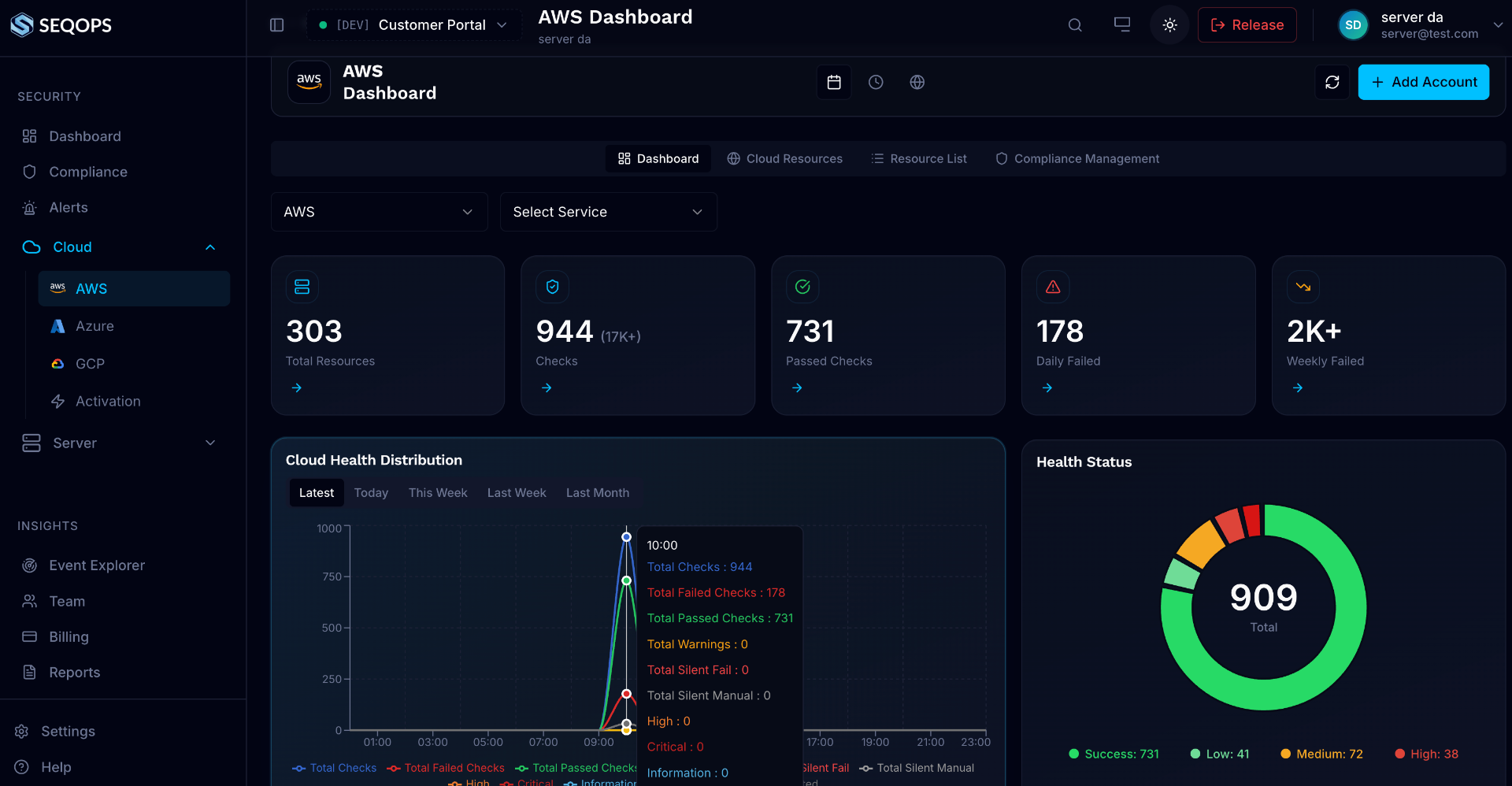
- Every vulnerability, misconfiguration & exposure found continuously across AWS, Azure, GCP, Windows & Linux
- AI ranks findings by real risk, so effort goes where it matters
- Continuous compliance scoring: NIS2 · ISO 27001 · GDPR · PCI · HIPAA
- Read-only — collects security metadata, never your data
Opsio Shield
One intelligent workspace that unifies security posture, compliance scoring and cloud cost — so nothing hides between tools.
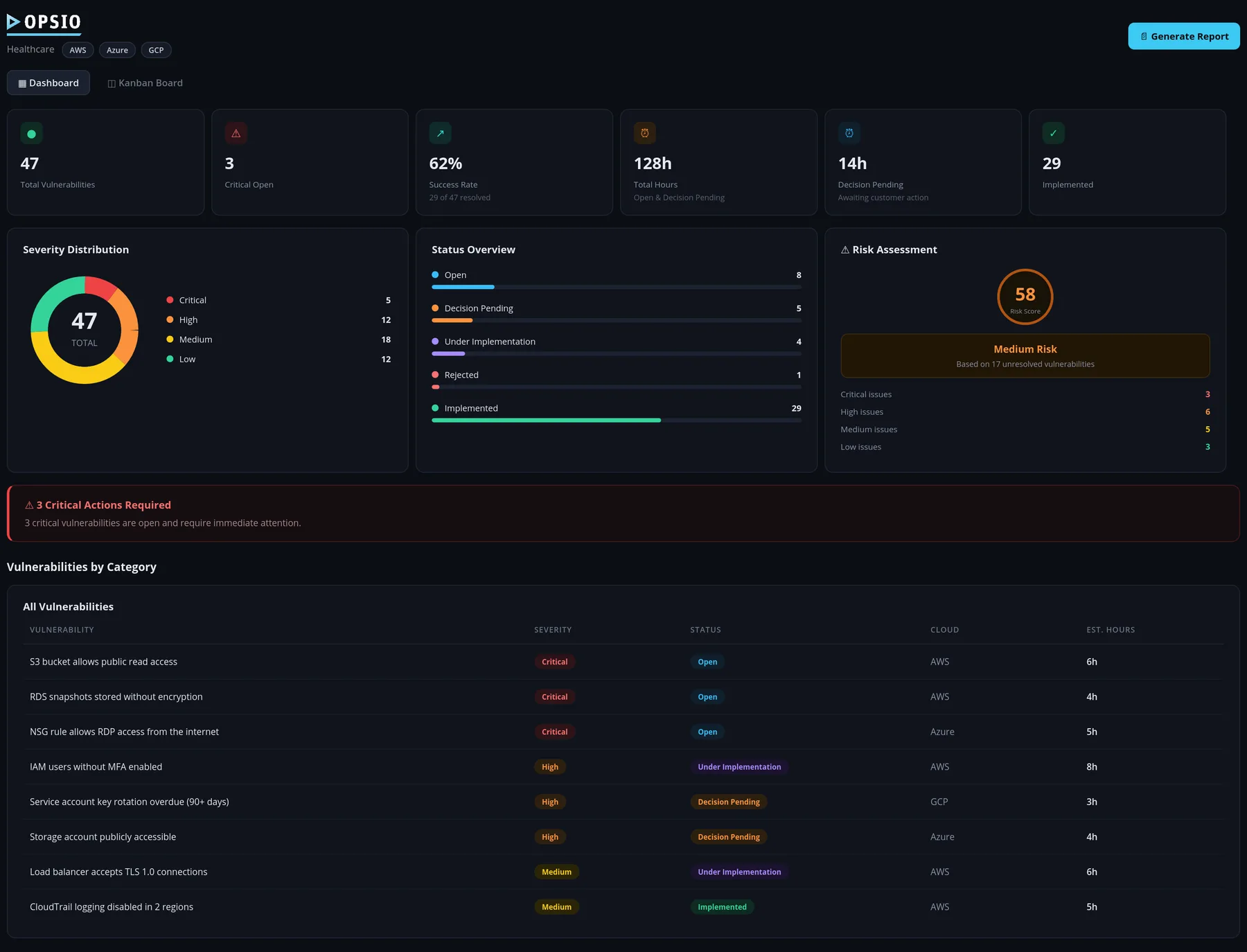
- Security posture, compliance score & multi-cloud spend on one live dashboard
- Cost anomalies & budget overruns caught before the invoice lands
- Auto-generated compliance evidence & vulnerability reports
- Encrypted secrets, mandatory MFA & row-level isolation by design
It's simply part of being an Opsio managed-cloud customer.
Cloud Managed Services That Let You Focus on Product
Cloud managed services from Opsio close the operational gaps that in-house teams hit at scale — patches that lapse, certificates that expire, alerts that page someone at 3 AM, and incidents that surface missing runbooks. Most organizations underestimate the operational burden until the first major outage forces a post-mortem. Our managed cloud service provider model takes those gaps off your plate permanently, with 24/7 coverage across AWS, Azure, and GCP. We provide end-to-end cloud operations across AWS, Azure, and GCP for organizations across the Nordics, UK, and US — including SaaS platforms run from London and New York and regulated enterprises in Stockholm and Frankfurt. Our scope covers infrastructure monitoring with Datadog or CloudWatch, incident response with 15-minute triage SLA, security monitoring with GuardDuty, Sentinel, or Security Command Center, backup and cloud disaster recovery testing, patching and upgrade execution, and cost optimization with monthly FinOps reporting.
Multi-cloud management is increasingly common as organizations use AWS for compute, Azure for Microsoft workloads, and GCP for data analytics. Opsio provides unified operations across all three platforms with platform-certified AWS managed services, Azure managed services, and GCP managed services teams — eliminating the need to hire specialists for each cloud provider separately.
Infrastructure-as-code discipline — powered by our managed DevOps practices — ensures that every change is version-controlled, reviewed, and repeatable. We manage environments with Terraform, apply changes through CI/CD pipelines, and detect configuration drift automatically. This eliminates the console-click changes that cause outages and make environments impossible to reproduce.
Security is embedded in operations, not treated as a separate function. Our managed security services ensure threats are detected and remediated continuously. We monitor for threats continuously, apply security patches proactively, conduct quarterly access reviews, and maintain compliance posture against frameworks like SOC 2, GDPR, HIPAA, and ISO 27001 with regular compliance risk assessment reviews. Security findings are remediated as part of operational workflow, not deferred to a future sprint.
Cost transparency is standard. Monthly FinOps and cloud financial management reports show exactly where your cloud spend goes, identify optimization opportunities, and track savings over time. We manage Reserved Instance coverage, spot strategies, right-sizing, and resource cleanup. Clients typically save 25-40% on their cloud bill — often more than the cost of managed services itself. Before workloads reach steady-state operations, our cloud consultancy practice runs the upstream architecture, landing-zone, and migration-strategy work so the environment we take over is built right from day one rather than retrofitted in flight. Featured reading from our knowledge base: Supply Chain Managed Services: Streamlining Your Operations, Automated Managed Services: Streamlining Your Operations with Our Expertise, and Non-Profit Managed IT Services: Streamlining Your Operations with Expertise.
How Opsio Compares
| Capability | In-House Team | Other Provider | Opsio |
|---|---|---|---|
| Cloud coverage | 1-2 platforms | Single platform focus | AWS, Azure, GCP unified |
| 24/7 operations | Business hours + on-call | Basic monitoring | Full 24/7 NOC with 15-min SLA |
| Security monitoring | Periodic scans | Basic alerting | Continuous with compliance automation |
| Cost optimization | Annual review | Quarterly audit | Continuous FinOps with monthly reports |
| Infrastructure-as-code | Partial adoption | Not enforced | Terraform with drift detection |
| DR testing | Never tested | Annual at best | Quarterly with verified restoration |
| Typical annual cost | $350K+ (3-4 engineers) | $150-250K | $60-240K (fully managed) |
Ready to get started?
What You Get
Every cloud managed services engagement ships a fixed set of recurring deliverables — not just operational dashboards. The initial scope includes a cloud audit across security, performance, and cost dimensions; full monitoring and alerting configuration in Datadog or CloudWatch; incident response workflows with PagerDuty integration and documented runbooks; a security baseline with compliance monitoring and patching schedule; and Terraform-managed infrastructure with drift detection. Ongoing deliverables include FinOps cost reports tracking optimization savings, monthly operations reports covering uptime, incidents, and cost metrics, quarterly strategic reviews with architecture recommendations, and full knowledge-transfer documentation with escalation contacts. Backup and disaster recovery configurations are tested every quarter with documented restoration results — proving the recovery capability is real rather than theoretical. Each deliverable has a clear owner, frequency, and success criterion measured monthly.
Pricing & Investment Tiers
Transparent pricing. No hidden fees. Scope-based quotes.
Cloud Assessment & Onboarding
$10,000–$25,000
One-time setup
Standard Managed Services
$5,000–$12,000/mo
Most popular — full operations
Enterprise Managed Services
$12,000–$20,000/mo
Enhanced SLA + dedicated team
Transparent pricing. No hidden fees. Scope-based quotes.
Questions about pricing? Let's discuss your specific requirements.
Cloud Managed Services — Your Cloud, Our 24/7 Operations
Free consultation