
We Provide DevOps Managed Services for Enhanced Efficiency

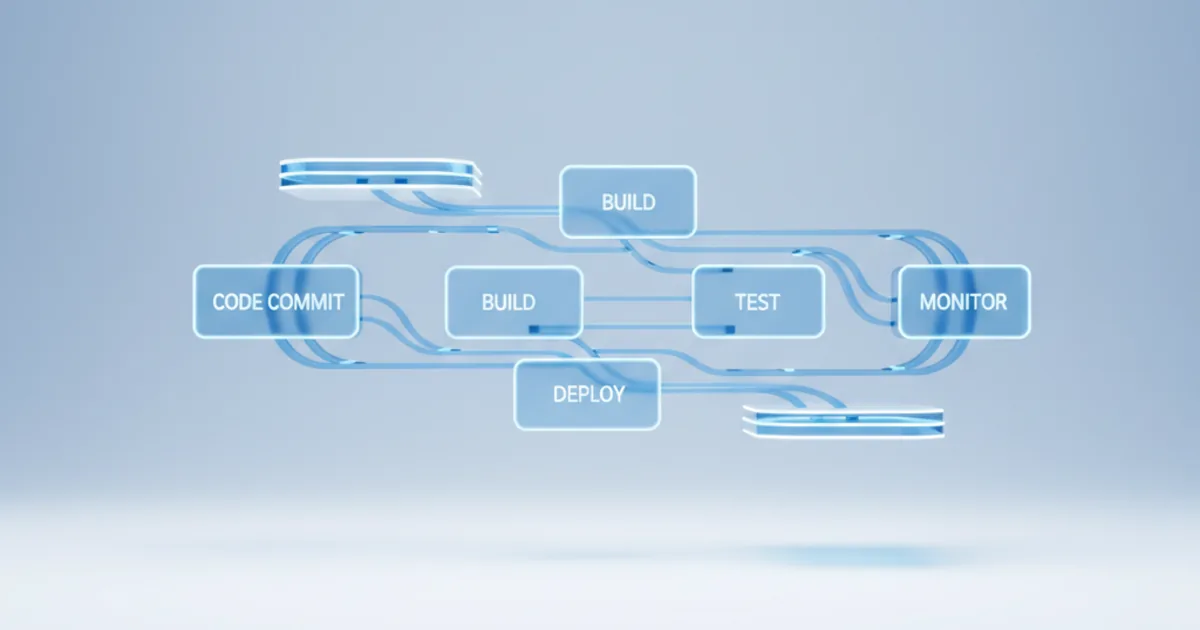
Did you know that traditional software development can take six to nine months to move from an idea to a working product? This lengthy timeline creates a major disadvantage for any business trying to keep up in today's fast-paced market.
We understand that speed and quality are critical for success. Slow development cycles prevent companies from responding to new opportunities and customer needs. This delay can mean the difference between leading the market and falling behind.
Our approach is designed to solve this exact problem. We combine advanced technology with proven methods to streamline your entire development process. This helps your team reduce time-to-market from months down to weeks or even days.
By partnering with us, you gain access to expert guidance and comprehensive solutions. We handle the complex parts of infrastructure and deployment. This allows your internal developers to focus on creating innovative products that drive growth.
Our goal is to provide a complete partnership that enhances your operational efficiency. We work as an extension of your organization, creating seamless workflows between development and operations. This collaboration delivers measurable improvements in speed, reliability, and overall performance.
Key Takeaways
- Traditional software development often takes six to nine months, creating competitive disadvantages.
- Speed to market is critical for business success in the current digital landscape.
- Our methodology significantly reduces development timelines from months to weeks or days.
- Partnering with us provides expert guidance without the need for a large in-house team.
- We focus on streamlining workflows to improve deployment frequency and system reliability.
- Our collaborative approach allows your developers to concentrate on innovation and core business goals.
- The result is a decisive competitive advantage through accelerated delivery cycles and enhanced operational efficiency.
Introduction
Today's business environment requires organizations to respond to customer needs with remarkable agility and precision. We understand that software development efficiency directly impacts your competitive positioning and operational costs.
Why Efficiency Matters in Today's Market
Efficiency has transformed from a desirable attribute to a fundamental requirement for survival. Businesses that rapidly adapt to market changes gain substantial advantages over competitors stuck in traditional cycles.
The separation between development and operations teams creates friction that slows delivery. This costs valuable time and resources while more agile competitors move forward.
An Overview of Our DevOps Approach
Our approach fundamentally transforms how your organization delivers software. We break down silos between teams and implement automation throughout the development lifecycle.
We leverage proven methodologies to create a customized framework aligned with your specific business objectives. This ensures smooth adoption and sustainable long-term results through our devops managed expertise.
| Performance Metric | Traditional Approach | Our Modern Approach |
|---|---|---|
| Deployment Frequency | Monthly or quarterly | Several times per day |
| Change Failure Rate | 15-20% | Below 5% |
| Lead Time for Changes | Weeks or months | Hours or days |
| Mean Time to Recovery | Days | Minutes |
Need expert help with we provide devops managed services for enhanced efficiency?
Our cloud architects can help you with we provide devops managed services for enhanced efficiency — from strategy to implementation. Book a free 30-minute advisory call with no obligation.
Defining DevOps Managed Services
The convergence of development and operations requires specialized expertise that many companies lack internally. We provide a holistic approach where our team assumes responsibility for implementing and optimizing your entire technology infrastructure.
Our comprehensive DevOps managed services include Infrastructure as Code for automated provisioning and CI/CD pipelines for continuous deployment. We utilize industry-leading tools like Terraform, Docker, and Kubernetes to create scalable, reliable environments.
Key Components and Tools
The foundation of our service rests on proven technologies that automate critical processes. Configuration management ensures system consistency while comprehensive monitoring provides real-time visibility across your technology stack.
We break infrastructure configurations into reusable modules that maintain version control. This approach simplifies on-demand scaling and automates deployment across diverse environments, ensuring consistency and reliability throughout your software development lifecycle.
How It Streamlines Software Development
By eliminating manual configuration errors, we reduce deployment times from weeks to hours. Automated testing occurs throughout the development cycle, creating standardized processes across all environments.
Your team can focus on writing quality code and creating business value. We handle the complexities of tool configuration, infrastructure management, and pipeline optimization. This integrated approach dramatically reduces failure risks while accelerating delivery.
Accelerating Software Delivery Through Automation
Automation represents the most significant advancement in software development methodology since the advent of agile principles. We implement comprehensive automation strategies that transform how your team builds, tests, and deploys applications.
Automated CI/CD Pipelines
Our automated continuous integration and delivery pipelines eliminate manual bottlenecks throughout the development lifecycle. These systems automatically trigger builds when code changes occur, executing comprehensive test suites across multiple environments.
The pipeline handles the complete journey from code commit to production deployment. This includes security scans, performance validation, and automated quality checks.
This approach enables multiple daily deployments with confidence. Your team gains immediate feedback on code changes, accelerating iteration cycles dramatically.
Leveraging AI to Reduce Errors
We enhance our automation with artificial intelligence that identifies potential issues before they impact users. AI systems analyze code patterns to detect imperfections and redundancies human reviewers might miss.
Machine learning algorithms predict failure points based on historical data. This proactive approach catches security vulnerabilities and performance bottlenecks early in the development cycle.
| Development Aspect | Manual Process | Automated Approach |
|---|---|---|
| Deployment Frequency | Weekly or monthly | Multiple times daily |
| Error Detection Time | Days or weeks | Minutes or hours |
| Testing Coverage | Selective manual testing | Comprehensive automated suites |
| Resource Allocation | Manual task management | AI-optimized resource use |
By automating repetitive tasks, we free your developers to focus on innovation. This combination of automation and intelligence delivers higher quality software with faster release cycles.
Enhancing Security and Compliance in DevOps
Security threats evolve faster than traditional development cycles can address them. We integrate protection measures directly into your development workflow rather than treating them as separate concerns. This approach ensures security becomes an inherent part of your delivery process.
Continuous Monitoring for Vulnerabilities
Our systems maintain 24/7 surveillance across your entire technology stack. Advanced tools track security events and detect anomalies in real-time. This constant vigilance identifies potential vulnerabilities before they can impact your operations.
Automated scanning occurs throughout each development stage using industry-leading tools. These systems analyze code for known vulnerabilities and compliance violations. Early detection makes security issues easier and less expensive to resolve.
Regulatory Compliance and Built-In Safeguards
We ensure your infrastructure adheres to industry standards like SOC 2 and ISO 27001. Built-in safeguards and automated checks simplify compliance documentation. This reduces audit complexity while maintaining regulatory alignment.
Our partnership approach makes security an enabler rather than a barrier to rapid delivery. Your team can move quickly while maintaining customer trust and meeting compliance requirements. This balanced methodology protects your business without slowing innovation.
How Do You Optimize Cloud Infrastructure and Cost Efficiency?
Modern organizations face the dual challenge of maintaining robust technology infrastructure while controlling operational expenses. We address this through strategic cloud optimization that balances performance with financial responsibility.
Advantages of Cloud Migration
Moving to cloud environments can reduce IT infrastructure costs by up to 37%. This significant saving comes from eliminating physical hardware maintenance and adopting pay-as-you-go pricing models.
Our migration services provide a comprehensive pathway from legacy systems to modern cloud platforms. We design architectures that align with your specific workload requirements and compliance needs.
Reducing Overhead with Scalable Solutions
We implement Infrastructure as Code principles to create dynamic infrastructure that adjusts with project growth. This approach enables automatic scaling during peak demand while reducing capacity during quiet periods.
Continuous monitoring of resource utilization identifies optimization opportunities. Our management solutions ensure you maintain performance without over-investing in unused capacity.
Through strategic enhancement plans, we help your cloud environment evolve alongside business growth. This proactive approach prevents technological constraints on innovation while maximizing cost efficiency.
Integrating Tools and Processes for Seamless Operations
Organizations often struggle with technology adoption when new systems create friction rather than enhancing existing team workflows. We prioritize seamless integration that respects your established processes and tools.
Our approach ensures new capabilities complement rather than disrupt your current operations. This creates a smooth transition that maximizes adoption and minimizes learning curves.
No-Code and Low-Code Benefits
We implement visual interfaces that democratize technical capabilities across your organization. Team members without extensive programming expertise can now participate in deployment processes.
Pre-built templates for common tasks reduce configuration time from hours to minutes. This approach empowers your entire team to contribute to development work.
| Development Aspect | Traditional Coding Approach | No-Code/Low-Code Solution |
|---|---|---|
| Pipeline Configuration | Manual scripting (2-4 hours) | Visual interface (10-15 minutes) |
| Infrastructure Provisioning | Command-line coding | Drag-and-drop templates |
| Team Participation | Limited to developers | Cross-functional involvement |
| Error Rate | Higher due to manual coding | Lower with standardized components |
Facilitating Collaboration Across Teams
We establish shared platforms that break down traditional silos between departments. This creates collective ownership of the entire software delivery process.
Our integration strategy ensures compatibility with tools your teams already use daily. Information flows seamlessly between systems, enhancing collaboration on all projects.
How Do You Choose the Right DevOps Managed Services Provider?
Selecting a technology partner requires careful consideration of both technical capabilities and cultural alignment. This decision directly influences your software delivery speed and operational efficiency for years to come. We recommend evaluating potential providers against several critical criteria that ensure successful long-term collaboration.
Evaluating Automation Capabilities
Automation forms the foundation of effective modern development practices. Examine a provider's ability to implement sophisticated CI/CD pipelines and Infrastructure as Code solutions. These capabilities significantly reduce manual intervention while accelerating deployment times.
Look for providers demonstrating comprehensive automated testing frameworks and intelligent monitoring systems. Their approach should minimize human error while maximizing delivery frequency. This technical expertise directly impacts your team's ability to meet project deadlines.
Ensuring Communication and Compliance
Clear communication channels and transparency define successful partnerships. Qualified providers establish regular reporting cadences and adapt their communication style to match your organizational needs. They should demonstrate willingness to sign comprehensive non-disclosure agreements.
end-to-end cloud security remains non-negotiable for any serious provider. Verify certifications like ISO 27001 and SOC 2 alongside industry-specific compliance experience. This due diligence protects your software assets while maintaining regulatory alignment.
The ideal provider works proactively rather than reactively, identifying optimization opportunities before issues arise. They advocate for knowledge transfer and documentation transparency, ensuring you maintain control over your technology stack.
Conclusion
Successful digital transformation hinges on creating seamless workflows that bridge the gap between development ambitions and operational realities. Our approach delivers comprehensive solutions that accelerate delivery while enhancing quality and security.
We become an extension of your team, implementing proven practices across every stage of your software lifecycle. This partnership model reduces operational costs and frees your organization to focus on innovation.
The right devops managed services provider understands both technical excellence and business outcomes. We invite you to discuss your specific needs and discover how our expertise can transform your development capabilities.
Contact us today to begin your journey toward enhanced operational efficiency and competitive advantage.
FAQ
What are the primary benefits of adopting a managed service for our development and infrastructure needs?
Adopting a managed service provides significant advantages, including enhanced operational efficiency and reduced overhead. We focus on streamlining your software delivery pipeline, improving system reliability, and ensuring robust security and compliance. This approach allows your internal team to concentrate on core business objectives while we handle the technical complexities and day-to-day maintenance of your environments.
How does your approach to automation improve our software deployment process?
Our automation strategy centers on creating robust CI/CD pipelines that accelerate code integration and deployment. By automating testing, building, and release stages, we drastically reduce manual errors and speed up time-to-market. This results in more frequent, reliable deployments and frees your team from repetitive tasks, fostering a culture of continuous improvement and quality.
Can you help with our organization's specific security and regulatory compliance requirements?
A> Absolutely. We integrate security practices directly into the development lifecycle, a practice often called DevSecOps. Our processes include continuous monitoring for vulnerabilities, automated security testing within the pipeline, and built-in safeguards designed to meet various regulatory standards. This proactive approach ensures your systems remain secure and compliant throughout their entire lifecycle.
What is involved in migrating our existing infrastructure to a cloud-based solution with your team?
Our cloud migration process is collaborative and methodical. We begin by assessing your current systems and business goals to design a tailored migration strategy. We then manage the entire transition, ensuring minimal disruption to your operations. Post-migration, we provide ongoing management of the cloud infrastructure, optimizing for performance and cost-efficiency while leveraging scalable solutions to support your growth.
How do you facilitate collaboration between our development and operations teams?
We act as a bridge, implementing tools and processes that foster seamless collaboration. By establishing clear communication channels and shared goals, we help break down traditional silos. Our use of integrated platforms and automation creates a unified workflow, enabling both teams to work together more effectively towards common objectives, ultimately improving project outcomes and innovation.
What should we look for when selecting a provider for these specialized services?
When choosing a partner, prioritize proven expertise in automation, a strong track record in security and compliance, and transparent communication practices. Evaluate their ability to tailor solutions to your specific business needs and their experience with your industry's regulatory landscape. A true partner should demonstrate a deep understanding of both the technical and business aspects of your operations.
About the Author

Editorial standards: This article was written by a certified practitioner and reviewed by our engineering team. We revise it when the technology or regulation it covers changes; the dates above show the latest update. Opsio maintains editorial independence — we recommend solutions on technical merit, not commercial relationships.