
Choosing Between DevOps vs Software Engineer: Our Insights

Country Manager, India
AI, Manufacturing, DevOps, and Managed Services. 17+ years across Manufacturing, E-commerce, Retail, NBFC & Banking
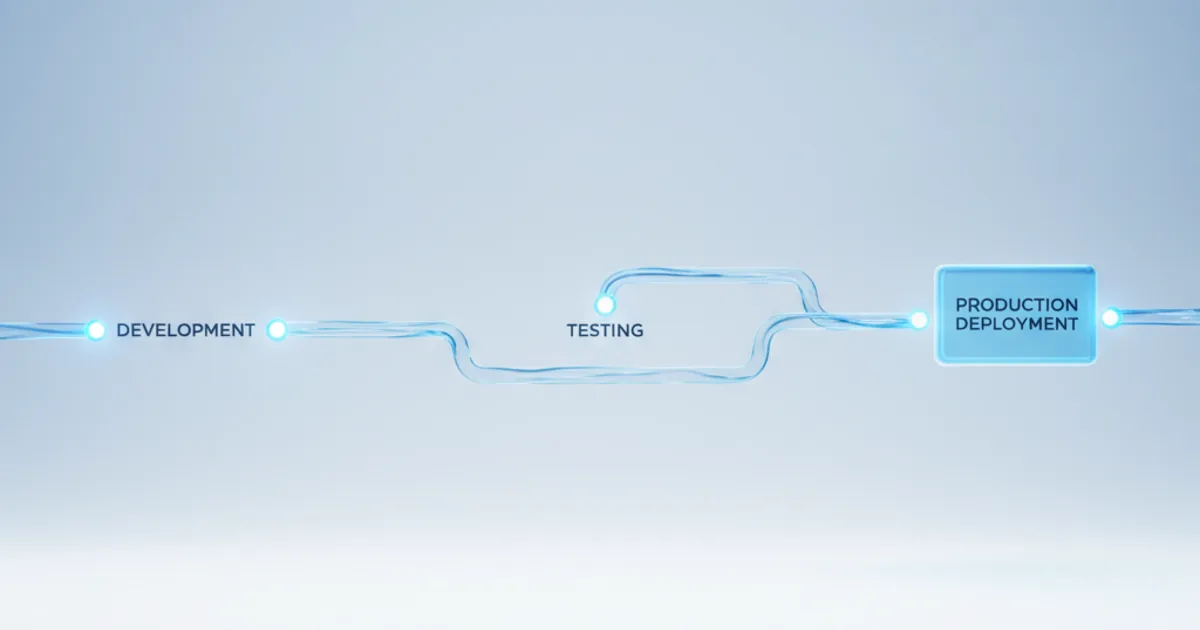
Did you know that organizations using specialized technology roles report 40% faster project completion and significantly higher quality outcomes? This staggering statistic highlights why understanding the distinction between these critical positions has become essential for modern business success.
As technological capabilities continue to expand at an unprecedented rate, the landscape of digital creation has transformed dramatically. This evolution has given rise to highly specialized functions within development teams, each requiring unique expertise and approaches.
We recognize that both positions are fundamental to successful digital product delivery. However, they serve distinctly different purposes within the technology ecosystem. Each role demands specific skill sets, operational mindsets, and strategic contributions.
Our comprehensive analysis draws from extensive industry data and real-world applications. We provide actionable insights to help business leaders make informed decisions about which expertise aligns best with their organizational needs and strategic objectives.
Key Takeaways
- Specialized technology roles can accelerate project completion by up to 40%
- Technological evolution has created distinct career paths within development
- Each role serves unique functions with different required skill sets
- Understanding these differences is crucial for strategic hiring decisions
- Industry data and real-world applications provide valuable guidance
- The right choice depends on specific organizational needs and objectives
- Both positions are essential for comprehensive digital product success
Introduction to the Comparison
Organizational success increasingly depends on correctly identifying which technical expertise aligns with specific project needs. We examine why understanding these distinct positions matters for building effective technology teams.
Purpose of the Comparison
As companies modernize their digital ecosystems, recognizing the differences between these critical functions becomes essential. Our analysis helps leaders make informed decisions about resource allocation and team composition.
The methodology behind one role emerged between 2007 and 2009 to mediate conflicts between development and operations teams. This approach proved indispensable for improving collaboration and establishing automated processes.
Overview of the Two Roles
One position has been an established branch of engineering since the 1960s, focusing on designing, developing, and maintaining applications. These professionals create solutions that comply with user requirements using engineering principles.
The other role specializes in integrating both development and operations teams to achieve seamless collaboration. These IT professionals utilize various tools and methodologies aimed at streamlining the entire delivery process.
While one function creates software solutions, the other ensures these solutions deploy efficiently and maintain reliability in production environments. Understanding this distinction helps organizations prioritize expertise based on specific operational goals.
Need expert help with choosing between devops vs software engineer: our insights?
Our cloud architects can help you with choosing between devops vs software engineer: our insights — from strategy to implementation. Book a free 30-minute advisory call with no obligation.
What Is the Role of a Software Engineer?
Building effective digital infrastructure begins with understanding the creators behind the code. These IT professionals transform complex requirements into functional solutions through systematic development processes.
We categorize these specialists into two primary groups. Application engineers focus on client needs and program creation, while system engineers maintain and grow computer systems.
Core Responsibilities
Daily tasks include gathering user requirements and writing efficient code. Professionals continuously improve existing codebases while testing for functionality.
They design support components and document development processes. This ensures sustainable growth and future reference for complex systems.
Skill Set & Tools
Technical expertise spans multiple programming languages and data structures. Mastery includes HTML, CSS, SQL, Python, and JavaScript environments.
These creators apply object-oriented design principles within Agile frameworks. Workplace skills emphasize analytical thinking and collaborative problem-solving.
| Specialization | Focus Area | Primary Technologies |
|---|---|---|
| Front-End | User Interface Design | HTML, CSS, JavaScript |
| Back-End | Server Infrastructure | Python, Java, SQL Databases |
| Full-Stack | Complete Applications | Combined Front/Back-End Tools |
Specialization options allow professionals to focus on specific development areas. This targeted expertise ensures optimal solution design for diverse project requirements.
What Is the Role of a DevOps Engineer?
Modern technology ecosystems require specialists who bridge the gap between creation and implementation. These professionals combine coding expertise with operational management to ensure seamless software delivery.
We define these hybrid specialists as technical experts who integrate development and operational functions. They play a dual role by writing code while also managing deployment schedules and resolving implementation issues.
Key Duties and Operational Focus
These professionals lead technical teams while staying current with emerging technologies. Their responsibilities include maintaining security controls and improving operational performance through continuous optimization.
They manage cloud infrastructure data and evaluate automated tool effectiveness. This comprehensive approach ensures systems remain efficient and scalable as business needs evolve.
Automation and Infrastructure Expertise
DevOps engineers possess deep knowledge of automation testing tools like Selenium. They master integration platforms such as Jenkins and automated delivery systems including Puppet and Ansible.
Their expertise extends to cloud platform deployment on AWS, Google Cloud, and Microsoft Azure. This infrastructure management capability enables flexible, scalable solutions that support business growth.
The DevOps methodology emphasizes continuous delivery and Infrastructure as Code principles. These approaches ensure code remains deployment-ready while maintaining system reliability through proactive monitoring.
What Are the Key Differences in DevOps vs Software Engineer Roles?
Distinct approaches to the software lifecycle characterize the essential differences between these technology specialists. We observe fundamental variations in operational scope and strategic objectives that define each position's unique value proposition.
Operational Focus vs Development Focus
Development specialists concentrate exclusively on creating applications through coding and testing phases. Their work ensures software aligns with specific requirements through systematic design processes.
DevOps professionals maintain a broader operational perspective that spans both creation and implementation stages. They prioritize user experience and business objectives while managing deployment workflows.
Approach to the SDLC
The software development lifecycle reveals significant methodological differences between these roles. Development experts primarily engage during design, coding, and testing phases.
DevOps practitioners oversee the entire lifecycle from conception through production monitoring. Their comprehensive approach maximizes efficiency while minimizing infrastructure disruption.
These complementary methodologies create a powerful synergy when properly integrated. Understanding these distinctions helps organizations make informed hiring decisions that align with specific project requirements.
Technical and Soft Skills Analysis
The skill landscape reveals fundamental differences in how technology professionals approach problem-solving and system optimization. We examine the distinct competency requirements that define each role's effectiveness in modern IT environments.
Programming Languages vs Scripting and Automation
Application creators demonstrate high proficiency in multiple programming languages for building complex systems. Their technical toolkit includes deep knowledge of databases, data structures, and algorithms.
Process automation specialists focus more on scripting languages and automation tools. They incorporate coding skills into a broader skill set that includes cloud services and infrastructure management.
| Skill Category | Application Development | Process Automation |
|---|---|---|
| Primary Languages | Java, C++, JavaScript, SQL | Python, Bash, PowerShell |
| Core Focus | Code development and debugging | Automation and deployment |
| Key Technologies | Databases, algorithms | Cloud platforms, CI/CD tools |
Collaboration and Communication Skills
Both roles benefit from strong collaboration abilities, but automation specialists require exceptional cross-team coordination skills. They continually bridge different functional groups to ensure alignment.
As one industry leader noted:
"The most effective technology professionals combine technical depth with the ability to translate complex concepts across organizational boundaries."
Application developers primarily need team collaboration skills for coordinating on complex systems. Automation experts additionally require managerial capabilities to lead technical teams effectively.
Responsibilities and SDLC Involvement
Both technology professionals engage with the development process, but their involvement differs significantly across lifecycle stages. We examine how these specialists contribute to successful software delivery through complementary approaches.
DevOps practitioners maintain comprehensive involvement throughout the entire software development lifecycle. Their responsibilities span from initial planning through post-deployment monitoring, ensuring continuous integration and delivery.
Lifecycle Stage Contributions
These professionals implement automation to streamline testing and deployment processes. This approach minimizes human involvement while establishing collaboration between technical teams.
Monitoring and optimization represent critical post-deployment tasks. Using various tools, they track application performance and maintain system reliability throughout production.
Application developers focus primarily on code creation during the development phase. Their core responsibilities include designing algorithms and conducting thorough testing before deployment.
Once development completes successfully, these specialists transfer applications to operations teams. This handoff signals readiness for deployment and ongoing maintenance responsibilities.
Understanding these different contributions helps organizations structure teams effectively. Each role brings unique value to the software development process, creating powerful operational synergy.
Career Advancement and Growth Paths
Technology careers offer dynamic progression paths where initial specialization evolves into broader strategic roles. We observe consistent advancement opportunities for professionals in both development and operational integration fields.
Professional Progression Opportunities
Development specialists can transition into diverse positions as they gain experience. These include cybersecurity analysis, application development, and technical consulting roles.
Operational integration professionals often advance to security engineering or architectural positions. Their expertise in deployment processes creates natural pathways to leadership responsibilities.
| Career Stage | Development Specialist Paths | Operational Integration Paths |
|---|---|---|
| Early Career (0-5 years) | Junior Developer, Web Developer | Automation Specialist, Release Engineer |
| Mid-Career (5-10 years) | Senior Developer, Application Architect | DevOps Architect, Security Engineer |
| Advanced Career (10+ years) | Engineering Manager, Technical Director | Infrastructure Lead, Platform Director |
Salary progression reflects the value of accumulated experience. Professionals with fifteen years of experience typically earn six-figure compensation in both specializations.
Many operational integration specialists begin as development professionals. This foundation provides essential coding knowledge before expanding into deployment and infrastructure management.
Salary Insights and Market Trends
Compensation structures provide valuable insights into market demand and specialization value for technology professionals. We analyze current salary data to help organizations understand investment requirements for building effective technical teams.
Current market data reveals significant compensation differences between these specialized positions. The broader responsibilities of one role typically command higher remuneration across most regions.
US Market Comparison
In the United States, average compensation for a software engineer ranges between $88,659 and $111,845 according to different sources. Professionals in the other specialization earn between $113,638 and $126,302 annually.
This approximately 30% premium reflects the expanded skill set required for integration and automation responsibilities. Senior professionals with extensive experience can earn significantly more than these averages.
International markets show similar compensation patterns with regional variations. European salaries range from $46,000 to $68,000 for development specialists, while integration professionals earn €54,737 to €97,002.
Latin American markets demonstrate considerable regional differences in compensation levels. Even senior-level professionals earn approximately $68,000 annually in this region.
The job outlook remains exceptionally strong for both specializations. The US Bureau of Labor Statistics projects 17% growth through 2033, indicating sustained demand for technical expertise.
How Do You Choose the Right Expertise for Your Team?
Strategic hiring decisions require matching specific organizational challenges with the appropriate technical expertise. We provide clear guidance for selecting between these complementary roles based on your immediate business needs and long-term objectives.
Understanding when each specialist delivers maximum value helps optimize your technology investment. The right choice depends entirely on your current operational priorities and development stage.
When to Hire a Software Engineer
Prioritize this expertise when developing custom solutions like proprietary applications or customer portals. These professionals design tailored software that meets specific business requirements.
New product development initiatives benefit significantly from their skills in programming and architecture. They transform concepts into functional minimum viable products and refine existing offerings.
Algorithm-intensive projects involving artificial intelligence or complex computation demand their problem-solving capabilities. They create sophisticated solutions requiring advanced mathematical processing.
When to Hire a DevOps Engineer
Organizations requiring faster software delivery should prioritize this expertise. These specialists optimize workflows using continuous integration pipelines for automated updates.
Enterprises with large-scale operations or cloud migration projects benefit from their infrastructure management skills. They ensure scalability through infrastructure-as-code practices.
Teams experiencing communication gaps between development and operations need their integration capabilities. They bridge organizational silos by promoting shared responsibility and workflow efficiency.
Frequent system failures or manual processes indicate the need for their automation expertise. They boost reliability by automating testing, deployment, and monitoring procedures.
Impact on Software Development Processes
The evolution of development methodologies has fundamentally reshaped how organizations approach software creation and delivery. We observe distinct impacts on the entire development lifecycle when comparing traditional approaches with modern integrated practices.
Traditional development processes follow sequential stages with feedback arriving late in the cycle. This separation means upgrades and fixes typically emerge later, creating delays in addressing user needs.
Modern methodologies streamline feedback through continuous communication between development and evaluation teams. This approach enables rapid issue resolution and immediate deployment capabilities.
Automation represents a key differentiator in modern software development. Automated release processes allow faster feature launches and quicker responses to customer requirements.
Quality assurance maintains critical importance despite accelerated timelines. Reliable delivery combines enhanced pace with seamless user experience through consistent infrastructure management.
Scalability benefits emerge through automated systems and cloud infrastructure. Organizations can manage complex environments with high efficiency while minimizing operational risks.
Cost reduction becomes achievable through decreased manual labor and improved resource utilization. Limited errors from automated testing further contribute to financial optimization.
The complementary relationship between application creation and deployment expertise creates powerful synergy. Both approaches contribute to faster market delivery and more resilient systems.
Conclusion
Strategic team composition hinges on recognizing how different technical roles contribute to organizational objectives. We understand that both positions create essential synergy for modern digital success.
DevOps engineering presents greater complexity, demanding broader technical expertise and advanced soft skills. These professionals bridge development and operations with exceptional leadership capabilities.
Software engineers build foundational applications while DevOps engineers ensure reliable deployment and scaling. This complementary relationship drives efficiency in today's challenging hiring environment.
We help businesses match specific needs with the right expertise, whether creating custom software or optimizing deployment pipelines. Understanding these distinct roles enables strategic decisions that align with long-term technology goals.
FAQ
What is the primary goal of a DevOps engineer compared to a software engineer?
A DevOps engineer primarily focuses on optimizing the entire software delivery pipeline, ensuring rapid, reliable deployments through automation and infrastructure management. A software engineer concentrates on designing, coding, and testing specific features and applications. Their core objective is building functional, high-quality software products.
Which role requires more expertise in cloud platforms and infrastructure as code?
DevOps engineers typically require deeper, hands-on expertise in cloud platforms like AWS, Azure, or Google Cloud and infrastructure as code tools such as Terraform or Ansible. While software developers may use cloud services, their focus is more on integrating these services into applications rather than managing the underlying infrastructure.
How do the daily tasks of these two positions differ?
A typical day for a software engineer involves writing code, debugging, performing unit testing, and collaborating on feature development. A DevOps engineer's day is often centered on managing CI/CD pipelines, monitoring system health, ensuring cloud security delivery, and automating operational tasks to improve efficiency and reduce manual intervention.
Can a software engineer transition into a DevOps role?
Yes, many professionals successfully transition. This path requires gaining additional skills in system administration, automation scripting, and cloud infrastructure management. A strong foundation in coding is a significant advantage, making the shift a natural progression for those interested in the full application lifecycle.
Which career path generally offers a higher salary?
Salaries are competitive for both roles and vary by experience, location, and company. Due to the high demand for automation and cloud skills, DevOps engineering roles can sometimes command a premium. However, senior software engineers specializing in high-demand programming languages or complex systems also earn top-tier compensation.
When should our company prioritize hiring a DevOps engineer over a software developer?
Prioritize hiring a DevOps engineer when your team faces challenges with deployment frequency, system stability, or manual operational processes. If your primary need is to build new product features, enhance user experience, or expand application functionality, then hiring a software engineer is the more strategic choice.
How do these roles collaborate within a development team?
Effective collaboration is essential. Software engineers build the application, while DevOps engineers provide the tools and environment for seamless integration, testing, and deployment. This partnership ensures that code moves smoothly from development to production, fostering a culture of shared responsibility for the final product's success.
About the Author

Country Manager, India
Praveena leads Opsio's India operations, bringing 17+ years of cross-industry experience spanning AI, manufacturing, DevOps, and managed services.
Editorial standards: This article was written by a certified practitioner and reviewed by our engineering team. We revise it when the technology or regulation it covers changes; the dates above show the latest update. Opsio maintains editorial independence — we recommend solutions on technical merit, not commercial relationships.