

Navigating the complexities of cloud computing presents significant opportunities for innovation and scalability. However, unchecked cloud usage can quickly lead to spiraling expenses, becoming a substantial drain on resources. Effective management of these costs is crucial for maintaining financial health and maximizing the return on your cloud investment. This is precisely where cloud cost optimization tools become indispensable, offering the visibility and control needed to manage your cloud spend effectively.
This comprehensive guide will walk you through everything you need to know about cloud cost optimization tools. We will explore what these tools are, why they are essential, and how to leverage them to achieve significant savings. By the end of this article, you will have a clear understanding of how to implement these solutions for a more efficient and cost-effective cloud environment in 2026 and beyond.
Understanding Cloud Cost Optimization
Cloud cost optimization is the practice of reducing your overall cloud spend by identifying waste, right-sizing resources, and taking advantage of pricing models. It's an ongoing process that requires continuous monitoring and adjustment rather than a one-time fix. This discipline ensures that you are only paying for the resources you truly need, configured optimally for performance and efficiency.
The goal is not simply to cut costs, but to align cloud expenditures with business value and performance requirements. This strategic approach ensures that cost savings do not come at the expense of necessary functionality or operational efficiency. Ultimately, it’s about making smart financial decisions that support your organization's broader objectives.
Why Cloud Cost Optimization Matters
In today's fast-paced digital landscape, cloud adoption continues to grow at an unprecedented rate. While the cloud offers immense flexibility and agility, it also introduces a new layer of financial management challenges. Without proper oversight, organizations often find themselves overspending on underutilized or mismanaged cloud resources.
Optimizing cloud costs directly impacts a company's bottom line, freeing up capital that can be reinvested into other strategic initiatives. It improves financial predictability and allows organizations to allocate budgets more effectively. Furthermore, efficient resource utilization also contributes to sustainability efforts, making it a responsible business practice.
Common Cloud Cost Challenges
Organizations face several common hurdles when trying to manage their cloud expenses. A primary issue is the sheer complexity and dynamism of cloud environments, which makes it difficult to track every resource. The pay-as-you-go model, while flexible, can also lead to unexpected costs if not carefully monitored.
Lack of visibility into cloud usage across different teams or projects often leads to orphaned resources and shadow IT. Additionally, insufficient understanding of various pricing models, such as reserved instances or spot instances, can prevent companies from taking advantage of potential savings. Inefficient resource provisioning, where resources are over-provisioned "just in case," also contributes significantly to unnecessary expenditures.
What Are Cloud Cost Optimization Tools?
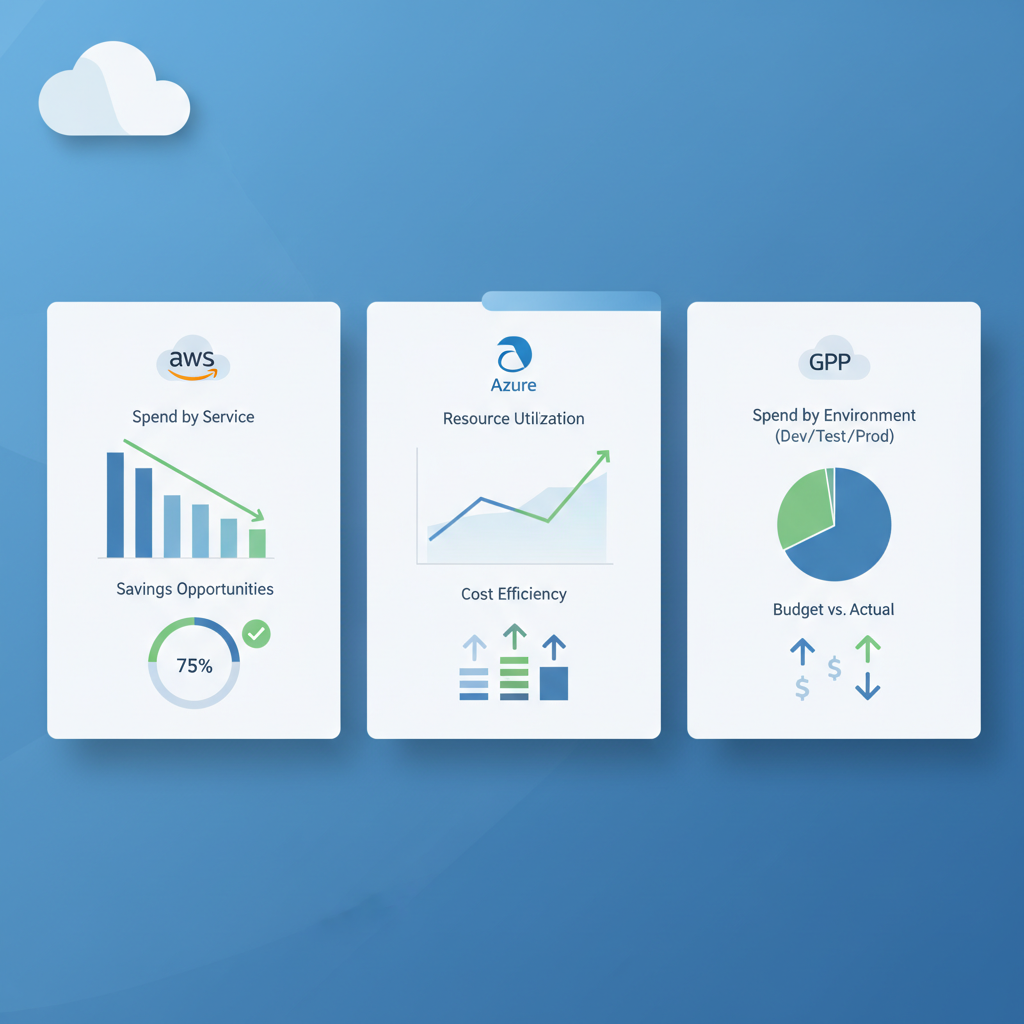
Cloud cost optimization tools are specialized software solutions designed to help organizations monitor, analyze, and reduce their cloud spending. These tools provide granular insights into resource usage and expenditure patterns across various cloud providers. They empower businesses to make informed decisions that lead to significant financial savings.
These platforms often integrate with major cloud providers like AWS, Azure, and Google Cloud, aggregating billing data and usage metrics into a single, comprehensive view. They move beyond simple invoice analysis, offering sophisticated features that enable proactive cost management. By automating many aspects of financial governance, they help enforce policies and identify optimization opportunities.
Key Features to Look For
When evaluating cloud cost optimization tools, several core features stand out as essential for effective spend management. These functionalities enable a holistic approach to controlling and reducing cloud expenses. Understanding these features will help you select the best cloud cost optimization tools for your specific needs.
#### Cost Visibility and Monitoring
One of the most fundamental features is providing comprehensive visibility into your cloud spend. These tools offer dashboards and reports that break down costs by service, department, project, or tag, giving you a clear picture of where your money is going. Continuous monitoring helps identify spending trends and anomalies in real-time.
Advanced cost monitoring tools for cloud environments often allow for customizable views and detailed drill-downs. This granular insight is critical for understanding cost drivers and attributing expenses accurately. Without clear visibility, effective optimization is nearly impossible.
#### Resource Management and Rightsizing
Resource optimization tools play a crucial role in ensuring that you are using the correct size and number of resources for your workloads. They analyze usage patterns and recommend rightsizing compute instances, storage volumes, and databases. Identifying and shutting down idle or unused resources is another key function.
This feature helps eliminate waste by ensuring that resources are neither over-provisioned nor under-provisioned. By matching resource allocation to actual demand, organizations can avoid paying for capacity they don't use, leading to substantial savings.
#### Anomaly Detection and Alerting
Unexpected spikes in cloud bills can often indicate underlying issues, such as misconfigurations, runaway processes, or even security breaches. Cloud cost optimization tools include anomaly detection capabilities that use machine learning to identify unusual spending patterns. They can automatically trigger alerts when costs deviate from expected norms.
Prompt alerts allow teams to investigate and address issues quickly, preventing potentially massive cost overruns. This proactive approach to automated cloud cost control is invaluable for maintaining budget predictability and avoiding financial surprises.
#### Budgeting and Forecasting
Effective financial planning requires robust budgeting and forecasting capabilities. These tools allow you to set budgets for different teams or projects and track spending against those limits. They also use historical data and current trends to predict future cloud expenditures.
Accurate forecasting enables better financial planning and resource allocation. It helps organizations anticipate future needs and make strategic decisions about cloud investments. This forward-looking perspective is crucial for long-term cloud financial management.
#### Automation Capabilities
Automation is a game-changer in cloud cost optimization, moving beyond manual adjustments. Many cloud cost optimization tools offer automated actions based on predefined rules or recommendations. This can include automatically shutting down idle resources, scaling down instances during off-peak hours, or applying appropriate reserved instances.
Automated cloud cost control reduces manual effort and ensures that optimization strategies are consistently applied. It allows teams to focus on more strategic initiatives while the tool handles routine cost-saving tasks. This level of efficiency is vital in dynamic cloud environments.
#### Recommendation Engines
Sophisticated cloud cost optimization tools leverage AI and machine learning to provide actionable recommendations. These engines analyze your usage patterns, existing contracts, and market pricing to suggest specific actions. Recommendations might include purchasing reserved instances, converting instance types, or migrating to more cost-effective services.
These intelligent suggestions help users discover optimization opportunities they might otherwise miss. They translate complex data into clear, easy-to-understand actions, guiding users toward optimal cloud configurations and substantial savings.
RECOMMENDED FOR YOU
Connect With Opsio
Tell us about your business requirement and let Opsio take care of the rest.
✓ No commitment required
✓ Trusted by experts
Types of Cloud Cost Optimization Tools
The market for cloud cost optimization tools is diverse, offering solutions tailored to different needs and budgets. Understanding the various categories of tools available can help organizations choose the most appropriate fit. From native offerings to specialized FinOps platforms, each type brings distinct advantages.
Native Cloud Provider Tools
All major cloud providers offer their own set of tools for managing and optimizing costs within their ecosystems. These are often built directly into the cloud platform, providing seamless integration with other services. Examples include AWS Cost Explorer, Azure Cost Management + Billing, and Google Cloud Billing.
These native tools offer excellent visibility and basic optimization features for their respective clouds. They are typically included with your cloud subscription, making them a cost-effective starting point for many organizations. While powerful for single-cloud environments, they may lack multi-cloud capabilities.
Third-Party FinOps Platforms
For organizations operating in multi-cloud environments or those requiring more advanced features, third-party FinOps platforms are a popular choice. These comprehensive cloud spend management software solutions are designed to provide a unified view across multiple cloud providers. They often offer deeper analytics, more robust automation, and specialized recommendation engines.
These finops platforms integrate financial accountability with cloud operations, fostering collaboration between finance, IT, and business teams. They are built to support the principles of FinOps, enabling organizations to manage cloud costs with greater agility and transparency. Such platforms are ideal for complex enterprise environments seeking holistic cost control.
Open-Source Solutions
Another category includes open-source cloud cost optimization tools, which can be a viable option for organizations with strong internal engineering capabilities. These tools provide flexibility and allow for significant customization to fit specific requirements. Examples might include custom scripts built around cloud APIs or community-driven projects.
While they may require more effort to set up and maintain, open-source solutions can offer a cost-effective alternative to commercial products. They give users complete control over their cost management infrastructure and can be highly effective when tailored precisely to an organization's unique cloud footprint.
How to Implement Cloud Cost Optimization Tools Effectively (A Step-by-Step Guide)
Successfully implementing cloud cost optimization tools requires a structured approach. It's not just about installing software; it's about integrating these tools into your operational processes and fostering a culture of cost awareness. This guide offers practical cloud cost optimization tools tips for a smooth and effective deployment.
Step 1: Assess Your Current Cloud Spend
Before deploying any tools, it's crucial to understand your baseline. Begin by gathering all available billing data from your cloud providers for the past several months. Analyze this data to identify major cost centers, spending trends, and potential areas of waste. This initial assessment provides the necessary context for setting meaningful optimization goals.
Look for services with unexpectedly high usage, idle resources, or costs that don't align with business value. This step also involves understanding how your current resources are tagged, as this will impact your ability to track costs later. A thorough audit will highlight your immediate pain points and opportunities.
Step 2: Define Your Optimization Goals
With a clear understanding of your current spending, establish specific, measurable, achievable, relevant, and time-bound (SMART) goals for your optimization efforts. These goals might include reducing overall cloud spend by a certain percentage, improving resource utilization, or enhancing cost visibility for specific departments. Clearly defined objectives will guide your tool selection and implementation strategy.
Consider both short-term wins and long-term strategic objectives. For instance, a short-term goal could be to identify and terminate all idle VMs within a month, while a long-term goal might involve implementing a robust FinOps framework across the entire organization.
Step 3: Evaluate and Select the Right Tools
Based on your defined goals and the scale of your cloud operations, evaluate various cloud cost optimization tools. Consider factors such as multi-cloud support, features offered, ease of integration, scalability, and pricing models. Look for cloud spend management software that aligns with your technical capabilities and budget.
Request demos and trials, and involve key stakeholders from finance, operations, and development teams in the selection process. The best cloud cost optimization tools are those that provide the right balance of functionality, usability, and cost-effectiveness for your specific environment.
Step 4: Integrate and Configure the Tools
Once you've selected your tools, the next step is integration. This typically involves connecting the chosen tool to your cloud provider accounts using API keys or specific roles. Ensure that the tool has the necessary permissions to access billing data, resource usage metrics, and, if applicable, to perform automated actions.
Proper configuration is paramount. Set up dashboards, alerts, and reports according to your established goals. Define tagging policies and implement them consistently across your cloud resources. This foundational setup will ensure that the tool accurately captures and presents the data you need for effective decision-making.
Step 5: Monitor, Analyze, and Act Continuously
Implementation is just the beginning; cloud cost optimization is an ongoing process. Regularly monitor the data and recommendations provided by your cost monitoring tools for cloud environments. Analyze reports to identify new optimization opportunities, track progress against your goals, and detect any emerging anomalies.
Act on the insights gained, whether by rightsizing resources, purchasing reserved instances, or adjusting automation rules. This iterative cycle of monitoring, analyzing, and acting ensures that your cloud environment remains cost-efficient over time.
Step 6: Foster a FinOps Culture
For sustainable cost optimization, it's essential to embed financial accountability throughout your organization. This means fostering a FinOps culture where engineering, finance, and business teams collaborate to make data-driven spending decisions. Educate your teams on cost awareness and empower them with the insights provided by your cloud billing analysis software.
Encourage developers to consider cost implications during the design phase of new services. Establish clear ownership for cloud costs within teams and reward cost-saving initiatives. A strong FinOps culture ensures that cost optimization becomes a shared responsibility, leading to more profound and lasting savings.
Best Practices for Using Cloud Cost Optimization Tools in 2026
Leveraging cloud cost optimization tools effectively requires more than just installation; it demands adherence to best practices. These tips focus on maximizing the value derived from your investment and ensuring continuous financial efficiency. These cloud cost optimization tools tips are crucial for success in the evolving cloud landscape of 2026.

Leverage Automation for Greater Efficiency
Automation is key to scaling your optimization efforts. Configure your resource optimization tools to automatically identify and shut down idle resources, apply specific tagging conventions, or adjust resource sizes based on predefined rules. Always test automation rules in a staging environment before deploying them to production to prevent unintended disruptions.
Automated cloud cost control not only saves time but also ensures consistency in your optimization strategy. It helps you respond quickly to changes in usage patterns without constant manual intervention, leading to more dynamic and efficient cost management.
Rightsizing and Deleting Unused Resources
Regularly review recommendations from your cloud spend management software for rightsizing instances. Downgrading oversized VMs or databases to match actual usage can yield significant savings. Equally important is the identification and deletion of unused resources such as old snapshots, unattached storage volumes, or forgotten development environments.
These orphaned resources often continue to accrue charges without providing any value. Make it a routine to scan for and eliminate these hidden costs, as they represent pure waste.
Utilizing Reserved Instances and Savings Plans
For stable, long-running workloads, commit to reserved instances (RIs) or savings plans offered by cloud providers. Your cloud cost optimization tools can analyze your historical usage patterns and recommend the optimal RIs or savings plans to purchase. These commitments offer substantial discounts compared to on-demand pricing.
Carefully evaluate your forecasted usage before making long-term commitments, as unused capacity in RIs can still be a cost. Use the tool's forecasting capabilities to ensure your commitments align with future needs.
Implementing Tagging Strategies
A robust tagging strategy is foundational for effective cost visibility and attribution. Implement consistent tags across all your cloud resources to identify owners, projects, environments (dev, staging, prod), and cost centers. Your cloud billing analysis software relies heavily on accurate tags to break down costs.
Develop and enforce a strict tagging policy within your organization. This ensures that all resources are properly categorized, allowing for precise cost allocation and reporting, which is vital for identifying who owns what costs.
Monitoring FinOps Platforms and Anomalies
Set up alerts within your finops platforms to notify you of any sudden spikes in spending or deviations from expected budgets. Regular monitoring of these alerts helps you catch and address issues before they escalate into significant financial burdens. Pay close attention to unexpected usage patterns that might signal a problem.
Timely response to anomalies is a hallmark of proactive cloud cost management. It helps prevent "bill shock" and ensures that your cloud environment remains aligned with your financial targets.
Regular Reporting and Review with cloud billing analysis software
Schedule regular reviews of your cloud cost reports with all relevant stakeholders, including finance, engineering, and business unit leaders. Use your cloud billing analysis software to generate customized reports that highlight key performance indicators (KPIs) related to cost efficiency and savings. Discuss trends, challenges, and new optimization opportunities.
These periodic reviews foster transparency and accountability, reinforcing the FinOps culture. They ensure that everyone is aligned on cost objectives and understands their role in achieving them.
Future Trends in Cloud Cost Optimization
The landscape of cloud computing is constantly evolving, and with it, the strategies and tools for cost optimization. Looking ahead to 2026, several key trends are set to reshape how organizations approach cloud financial management. Staying abreast of these developments will be crucial for maintaining a competitive edge.
AI and Machine Learning Driven Optimization
Artificial intelligence and machine learning are increasingly integrated into cloud cost optimization tools. These technologies will move beyond simple anomaly detection to offer more predictive and prescriptive recommendations. AI will identify complex spending patterns, predict future costs with greater accuracy, and even automatically execute optimization actions based on learned behaviors.
Expect tools to become more autonomous, proactively suggesting and implementing changes that maximize savings without human intervention. This shift towards intelligent automation will significantly enhance the efficiency and effectiveness of cloud cost control.
Deeper Integration with DevOps
The synergy between FinOps and DevOps will continue to deepen. Cloud cost optimization tools will be more tightly integrated into CI/CD pipelines, allowing developers to receive real-time cost feedback during the development phase. This "shift-left" approach empowers engineers to build cost-aware applications from the outset, rather than optimizing post-deployment.
This integration will promote a culture where cost efficiency is a core consideration throughout the entire software development lifecycle, not just an afterthought. It supports rapid iteration while keeping financial guardrails in place.
Focus on Sustainability and Green IT
Beyond financial savings, environmental sustainability is emerging as a significant driver for cloud optimization. Future cloud cost optimization tools will increasingly incorporate metrics related to carbon footprint and energy efficiency. Organizations will seek to optimize not just for cost, but also for environmental impact.
This trend will encourage the adoption of greener cloud practices, such as choosing regions with renewable energy sources and actively shutting down idle resources to reduce power consumption. The intersection of cost, efficiency, and sustainability will become a critical consideration for cloud leaders.
RECOMMENDED FOR YOU
Connect With Opsio
Tell us about your business requirement and let Opsio take care of the rest.
✓ No commitment required
✓ Trusted by experts
Conclusion
Effective cloud cost optimization is no longer optional; it's a fundamental requirement for any organization leveraging cloud services. The right cloud cost optimization tools provide the necessary visibility, automation, and intelligence to manage your cloud spend effectively. By understanding your usage, selecting appropriate tools, and adopting best practices, you can transform your cloud infrastructure into a highly efficient and cost-effective engine for innovation.
Embrace a FinOps culture, continuously monitor your environment, and stay informed about emerging trends to ensure your cloud strategy remains financially sound. Investing in these tools and practices will not only reduce unnecessary expenditure but also free up resources for strategic growth and innovation, securing your competitive advantage in the dynamic digital landscape of 2026.
Opsio provides cloud consulting and managed services to help organizations implement and manage their technology infrastructure effectively.