

In today's digital landscape, cybersecurity is a top priority for organizations. Penetration testing, or pen testing, plays a crucial role in this effort. It involves simulating cyber attacks to identify vulnerabilities before malicious actors can exploit them.
Penetration testing is not just about finding weaknesses. It's about understanding the potential impact of those weaknesses. This proactive approach helps organizations strengthen their defenses and protect sensitive data.
External penetration testing focuses on evaluating the security of internet-facing assets. This includes websites and servers. It is essential for identifying entry points that hackers might exploit.
The process of penetration testing is systematic. It involves planning, reconnaissance, scanning, exploitation, and reporting. Each step is designed to uncover different types of vulnerabilities.
Ethical hackers, also known as white-hat hackers, conduct these tests. They use the same techniques as malicious hackers but with permission and for a good cause.
Regular penetration testing is vital. It helps organizations stay ahead of emerging threats and evolving attack vectors. It also ensures compliance with industry regulations and standards.
Choosing the right penetration testing provider is crucial. Organizations must ensure that testers have the necessary skills and experience. This ensures that the testing is thorough and effective.
Integrating penetration testing into a broader security strategy is key. It enhances an organization's ability to respond to real-world cyber threats. This proactive stance builds trust with customers and stakeholders.
What is Penetration Testing?
Penetration testing, often called a pen test, simulates cyber attacks on computer systems. It aims to identify exploitable vulnerabilities before they can be exploited by malicious hackers. This proactive approach helps organizations bolster their security measures.
Penetration testing isn't a single activity. It involves a detailed process carried out by skilled security professionals. These professionals use similar techniques to real-world hackers but with authorization. Their goal is to identify weaknesses that could lead to unauthorized access or data breaches.
There are several types of penetration testing, each with a specific focus:
- Network Penetration Testing
- Web Application Penetration Testing
- Wireless Penetration Testing
- Social Engineering Penetration Testing
- Physical Penetration Testing
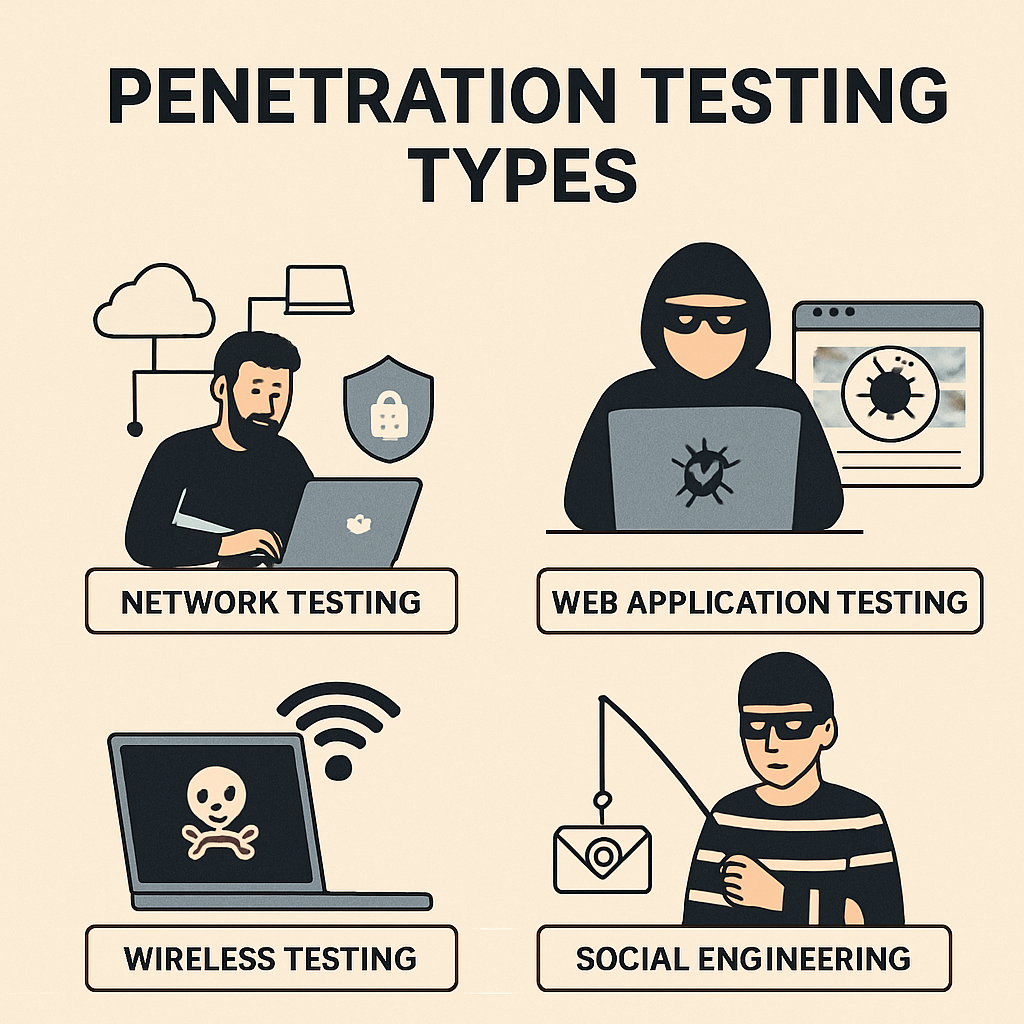
These tests assess different aspects of an organization's security. Network and web application tests evaluate technical defenses, while social engineering targets human vulnerabilities.
A successful penetration test provides a detailed report. The report includes identified vulnerabilities, their potential impacts, and recommended strategies for remediation. It offers a clear roadmap for strengthening an organization's security posture.
Ultimately, penetration testing is a vital component of cybersecurity strategy. It enhances an organization's awareness of its security strengths and weaknesses. This awareness is crucial for developing effective defenses and ensuring data protection.
Why is Penetration Testing Important?
Penetration testing plays a crucial role in identifying security weaknesses before they can be exploited. By mimicking real-world cyber attacks, organizations gain insight into potential vulnerabilities. This helps prioritize security improvements and allocate resources effectively.
Moreover, pen tests help organizations comply with industry regulations and standards. Compliance with frameworks like PCI DSS, HIPAA, and ISO 27001 requires regular security testing. Penetration testing meets these requirements and demonstrates a commitment to security.
Regular pen tests offer several benefits:
- Detect vulnerabilities early
- Enhance incident response plans
- Improve security policies and procedures
Conducting penetration tests can also strengthen trust with customers and stakeholders. Demonstrating proactive security measures reassures them of their data protection commitments. This trust is vital in maintaining business relationships and protecting brand reputation.
Finally, staying ahead of emerging threats is essential. As cyber threats evolve, constant vigilance is necessary. Penetration testing provides the insights needed to adapt and enhance defense measures, ensuring the organization remains resilient against attacks.
Types of Penetration Testing
Penetration testing is a broad field, encompassing various specific types targeted to different aspects of an organization's infrastructure. Each type of testing focuses on unique areas, ensuring comprehensive coverage.
Commonly, penetration tests fall into these categories:
- Network penetration testing analyzes network security, identifying vulnerabilities in protocols, hosts, and network services.
- Web application penetration testing targets web apps, uncovering flaws like SQL injection and cross-site scripting.
- Wireless penetration testing checks the security of wireless networks and identifies weak points.
Each type requires specialized skills and tools to effectively identify and exploit potential vulnerabilities. Choosing the right type is dependent on the organization's specific needs and areas of concern.
In addition to network and application testing, social engineering penetration tests evaluate human factors. These tests expose risks linked to employee behavior and security awareness.
Organizations may also consider physical penetration testing. This type assesses security controls related to the physical access to systems and facilities.
For a comprehensive security assessment, organizations should employ a combination of these testing types.

External Penetration Testing
External penetration testing focuses on assessing the security of an organization's publicly accessible assets. These may include websites, email servers, and other online services.
The goal is to identify vulnerabilities that an external attacker could exploit. These tests help ensure that external entry points are secure from outside threats.
Key aspects typically evaluated in external pen tests are:
- Open ports and services
- Firewall configurations
- External-facing web applications
Regular external penetration testing aids in detecting misconfigurations and vulnerabilities exposed to the internet. Addressing these weaknesses is crucial to protect against external attacks.
As cyber threats continue to evolve, regular external testing is essential. It ensures that security measures align with new threats and helps maintain the integrity of external systems.

Internal Penetration Testing
Unlike external testing, internal penetration testing simulates an attack from within the organization. This helps identify vulnerabilities that could be exploited by insider threats or once perimeter defenses are bypassed.
Focus areas in internal pen tests include:
- Assessing internal network security
- Evaluating access controls and permissions
- Testing intrusion detection systems
By understanding weaknesses in internal security, organizations can reinforce defenses and minimize the risk of internal breaches.
Internal testing is critical in organizations with large, complex networks. It ensures that once inside, attackers face a robust security posture.
Regular internal penetration testing helps validate security policies and improve network segmentation strategies. This ultimately enhances overall security resilience.
Web Application Penetration Testing
Web application penetration testing targets vulnerabilities in web apps. These apps are often entry points for attackers due to their accessibility.
This type of testing focuses on common web app vulnerabilities, such as:
- SQL injection
- Cross-site scripting (XSS)
- Cross-site request forgery (CSRF)
Since web applications often handle sensitive data, robust security is crucial. Detecting and fixing these vulnerabilities can prevent significant data breaches.
Testing web applications regularly is necessary as they evolve and new vulnerabilities emerge. Updates and changes can introduce new security risks.
By incorporating web app testing in your security strategy, you can protect user data and maintain trust. This is key in an increasingly digital landscape.

Wireless, IoT, and Cloud Penetration Testing
Wireless, IoT, and cloud environments introduce new security challenges. Penetration testing in these areas is crucial to identify and address potential risks.
Key focus areas include:
- Securing wireless networks and devices
- Testing IoT devices and their communication protocols
- Assessing cloud service configurations and access controls
Wireless penetration tests expose weaknesses in network encryption and authentication, such as weak passwords or outdated protocols.
IoT penetration testing covers the specific security issues unique to interconnected devices, ensuring they are not entry points for attacks.
Cloud penetration testing focuses on data protection and access management in cloud services. It evaluates how cloud resources are managed and configured.
Regular testing in these domains helps address security gaps due to emerging technologies and ensures adherence to best practices.

The Penetration Testing Process: Step by Step
The penetration testing process is meticulous and methodical. It ensures that vulnerabilities are comprehensively identified and addressed. Each stage plays a crucial role in uncovering security weaknesses.
The process can be broken down into the following steps:
- Planning and Scoping
- Reconnaissance and Information Gathering
- Vulnerability Analysis and Scanning
- Exploitation
- Post-Exploitation and Reporting
Together, these steps offer a complete picture of an organization’s security posture. Understanding each phase helps in executing effective penetration tests. Organizations benefit by addressing identified vulnerabilities proactively. This structured approach ensures that security measures are robust and comprehensive.
Overall, the penetration testing process is essential in maintaining cybersecurity defenses. This is achieved through a thorough examination of potential and existing security vulnerabilities.

1. Planning and Scoping
Planning and scoping lay the foundation for a successful penetration test. This phase defines the test's objectives and constraints.
Key activities include:
- Defining test scope and objectives
- Identifying critical systems and assets
- Understanding compliance and legal requirements
Clear communication in this phase is key. It aligns expectations between the testing team and the organization. Proper planning ensures a focused and effective test that delivers actionable insights.
2. Reconnaissance and Information Gathering
During reconnaissance, information is collected about the target systems. This phase provides a clearer understanding of potential vulnerabilities.
Typical tasks in this step:
- Gathering publicly available information
- Profiling the target network
- Identifying exposed services and technologies
This phase is essential for understanding how an attacker might approach the target. It helps in building an accurate threat model. Proper reconnaissance can significantly enhance the effectiveness of a penetration test.

3. Vulnerability Analysis and Scanning
Vulnerability analysis identifies potential flaws in the target systems. This phase involves using various tools and techniques to scan for weak points.
Key activities include:
- Conducting automated vulnerability scans
- Manually analyzing potential vulnerabilities
- Prioritizing threats based on risk levels
Thorough vulnerability analysis helps pinpoint critical weaknesses. It informs the next steps of exploitation. A diligent vulnerability analysis ensures that no significant vulnerabilities remain unnoticed.

4. Exploitation
Exploitation aims to validate the identified vulnerabilities by attempting to exploit them. This step simulates real-world attack scenarios.
Activities in this phase include:
- Leveraging known vulnerabilities for access
- Exploiting security gaps to demonstrate impact
- Testing the effectiveness of security controls
Successful exploitation reveals the potential impact of a breach. It underscores the importance of addressing vulnerabilities. This step demonstrates the seriousness of discovered security gaps.

5. Post-Exploitation and Reporting
In the post-exploitation phase, the focus shifts to understanding the implications of a successful exploit. The findings are then compiled into a detailed report.
Key activities include:
- Analyzing the impact of the exploit
- Documenting vulnerabilities and findings
- Providing remediation recommendations
The final report is vital for stakeholders. It outlines vulnerabilities, risks, and proposed mitigation strategies. This document guides the organization in bolstering its security posture effectively.

Tools and Techniques Used in Penetration Testing
Penetration testing relies on a blend of specialized tools and methods. These resources enable testers to identify vulnerabilities effectively and efficiently. Among the numerous available tools, some have become industry standards.
Common tools include:
- Nmap: Widely used for network discovery and security auditing.
- Metasploit: Essential for the exploitation phase, offering a range of exploits.
- Burp Suite: Primarily used for web application testing and vulnerability scanning.
- Wireshark: Useful in analyzing network protocol data.
Choosing the right tool depends on the test scope and target environment. Testers often combine several tools to cover various scenarios. It's important to remember that skilled testers augment tools with manual techniques for maximum effectiveness.
Techniques play an essential role alongside tools. Ethical hackers employ skills like social engineering to uncover non-technical vulnerabilities. This combination of tools and techniques is crucial for comprehensive pen tests.
Regular updates and training help testers stay abreast of the latest developments in penetration testing. They must adapt to evolving threats and technologies, ensuring their methods remain effective.
The synergy between tools and human expertise forms a formidable defense against cyber threats. Testers must leverage this combination to penetrate and understand systems thoroughly.


Compliance, Risk Management, and Business Value
In today’s regulatory landscape, compliance is non-negotiable for businesses. Penetration testing plays a critical role in meeting these obligations. Organizations must ensure their systems align with standards like PCI DSS and ISO 27001.
Risk management is at the core of cybersecurity strategies. Through penetration testing, businesses can pinpoint vulnerabilities. This proactive approach aids in mitigating potential threats before they materialize. It transforms risks into manageable challenges.
Moreover, pen tests provide direct business value beyond security. They help in maintaining customer trust by demonstrating a commitment to data protection. This can significantly enhance an organization’s reputation and credibility.
Penetration testing offers:
- Improved cybersecurity posture.
- Alignment with compliance standards.
- Enhanced risk management.
- Increased stakeholder confidence.
Identifying vulnerabilities early also streamlines resource allocation. By focusing on tangible threats, businesses can prioritize investments effectively. This approach not only cuts costs but also improves overall operational efficiency.
Visualizing the lifecycle of penetration testing within a business context provides clarity. It shows how intertwined security practices and business objectives are, emphasizing their mutual dependency.

Challenges and Limitations of Penetration Testing
Penetration testing, while indispensable, has its challenges. One significant limitation is its scope. Tests often focus on specific areas, leaving other potential vulnerabilities unexplored.
Time constraints can also hinder thorough testing. Comprehensive assessments require adequate time, but business operations may limit this duration. As a result, some vulnerabilities may go unnoticed during a pen test.
Another limitation is the potential disruption to services. Testing in live environments can inadvertently cause downtime, affecting business continuity. This risk necessitates careful planning and coordination with IT teams.
Budget considerations can be a challenge as well. High-quality penetration testing demands skilled professionals and sophisticated tools, which can be costly. Some businesses may struggle to allocate sufficient resources.
These challenges highlight the importance of a holistic security approach. Organizations should consider penetration testing as one component within an integrated cybersecurity strategy. Key limitations include:
- Limited scope
- Time constraints
- Potential disruptions
- Budgetary constraints
Best Practices for Effective Penetration Testing
To maximize the value of penetration testing, adhere to best practices. Start by clearly defining the scope and objectives. This ensures the test aligns with your organization’s security goals.
Engage qualified, reputable testers. Look for experience and certifications like Certified Ethical Hacker (CEH) or Offensive Security Certified Professional (OSCP). Competent testers can identify and exploit vulnerabilities effectively.
Maintain open communication between testers and internal teams. This fosters collaboration and ensures minimal disruption to operations. It also helps in addressing any immediate concerns that arise during testing.
Finally, treat penetration testing as an ongoing process, not a one-time event. Regular tests help stay ahead of evolving threats. Continuously improve your security posture based on test results.
Key best practices include:
- Define clear scope and objectives.
- Hire qualified testers with proven credentials.
- Ensure open, ongoing communication.
- Incorporate testing into a continuous security strategy.
How to Choose a Penetration Testing Provider
Selecting the right penetration testing provider is crucial for your security. Start by evaluating their credentials and expertise. Ensure they have relevant certifications and a proven track record.
Consider their methodology and approach. A good provider will customize their testing to fit your unique needs. They should also have a clear process for reporting findings and recommending solutions.
Finally, prioritize communication and transparency. Choose a provider that keeps you informed throughout the testing process. This helps in understanding vulnerabilities and aligning on remediation plans.
When choosing a provider:
- Verify certifications and experience.
- Assess their methodology.
- Ensure strong communication and transparency.
Integrating Penetration Testing into Your Security Strategy
Penetration testing should be an integral part of your cybersecurity strategy. It identifies vulnerabilities and tests the effectiveness of security controls. By integrating pen tests, you proactively manage risks.
To embed penetration testing effectively, consider aligning tests with business goals. This ensures tests address the most critical assets. Regular scheduling of pen tests helps in staying ahead of evolving threats.
Collaboration between IT and security teams is essential. It ensures alignment on objectives, scope, and remediation plans. This teamwork can enhance the overall security posture of your organization.
Consider these steps when integrating penetration testing:
- Align tests with business objectives.
- Schedule regular testing sessions.
- Foster collaboration between teams.
A proactive approach to penetration testing can transform your security strategy. It builds resilience and strengthens defenses, preparing you for future challenges.

Conclusion: The Future of Penetration Testing
As technology advances, the landscape of penetration testing continues to evolve. Emerging threats and technologies, such as IoT and AI, require more sophisticated approaches. Organizations must adapt and innovate to maintain robust security defenses.
The future of penetration testing involves deeper integration with automation tools. Automated testing will complement manual efforts to enhance efficiency and accuracy. This blend offers a more comprehensive security assessment.
Continuous learning and development in cybersecurity are crucial. As attackers evolve, so must the defenders. Investing in cutting-edge testing practices ensures readiness and resilience in facing future cyber challenges. Penetration testing will remain a cornerstone of proactive security strategies, essential for safeguarding digital infrastructures.