Mastering iac management: Your Path to Efficient Infrastructure
March 12, 2026|7:41 AM
Unlock Your Digital Potential
Whether it’s IT operations, cloud migration, or AI-driven innovation – let’s explore how we can support your success.
Home /
Work /
Blogs /
Mastering iac management: Your Path to Efficient Infrastructure
Understanding the Fundamentals of iac management
Modern infrastructure demands agility, scalability, and consistency. iac management, or Infrastructure as Code management, stands at the forefront of achieving these critical goals. It transforms the way organizations provision and manage their IT infrastructure, moving from manual processes to automated, code-driven workflows. This fundamental shift ensures environments are consistent, repeatable, and less prone to human error.
At its core, iac management treats infrastructure definition files like any other software source code. Instead of clicking through dashboards or manually configuring servers, engineers write code that describes their desired infrastructure state. This code can then be versioned, tested, and deployed programmatically, bringing software development best practices to infrastructure operations. This approach is essential for efficiently managing infrastructure with code in today’s dynamic cloud environments.
The concept of iac management leverages declarative or imperative programming paradigms to define infrastructure resources. Declarative approaches describe the desired state of the infrastructure, allowing tools to figure out how to achieve it. Imperative approaches, conversely, specify how to change the infrastructure step-by-step. Understanding this distinction is crucial for an effective IaC strategy.
Key Principles and Benefits of iac management
Adopting iac management brings a multitude of benefits, revolutionizing how development and operations teams collaborate. One of the most significant advantages is the unprecedented consistency it provides across environments. By defining infrastructure in code, you eliminate configuration drift and ensure that development, staging, and production environments are identical. This consistency greatly reduces the “it works on my machine” problem and streamlines troubleshooting.
Another paramount benefit is the speed and agility gained through automating infrastructure provisioning. Manual processes are time-consuming and error-prone, but with IaC, entire environments can be spun up or down in minutes. This speed is vital for rapid development cycles, continuous integration, and disaster recovery scenarios, allowing businesses to respond quickly to market demands. This approach is central to modern infrastructure automation.
Furthermore, iac management enhances reliability and reduces human error. Code-driven infrastructure means changes are reviewed, tested, and approved like any other software change. Version control systems track every modification, providing a complete audit trail and easy rollback capabilities. This meticulous approach to configuration as code significantly improves operational stability and security posture, fostering trust in deployments.
Consistency: Ensures identical environments from development to production.
Speed: Accelerates infrastructure provisioning and deployment cycles.
Reliability: Minimizes human error and provides robust rollback options.
Scalability: Easily replicate or scale infrastructure components as needed.
Cost Efficiency: Optimizes resource utilization and reduces operational overhead.
Collaboration: Fosters better collaboration between development and operations teams through shared codebases.
Choosing the Right Tools for iac management
Selecting the appropriate tools is a foundational step in any successful iac management journey. The landscape of IaC tools is rich and diverse, each offering unique strengths tailored to different use cases and cloud environments. Your choice will significantly impact your IaC strategy and the efficiency of your infrastructure automation efforts. It’s essential to consider your existing technology stack, team expertise, and specific infrastructure needs.
Popular IaC tools can be broadly categorized by their primary function and the environment they target. Some tools are cloud-agnostic, allowing you to manage infrastructure across multiple providers, while others are specific to a single cloud platform. Understanding these distinctions is key to making an informed decision. The goal is to find tools that seamlessly integrate into your existing workflows and empower your team.
Here are some prominent IaC tools and their characteristics:
Terraform (HashiCorp): A cloud-agnostic tool that allows you to define and provision infrastructure using a declarative configuration language (HCL). It supports a vast ecosystem of providers, making it excellent for multi-cloud environments.
Ansible (Red Hat): An open-source automation engine primarily used for configuration management, application deployment, and task automation. It uses YAML for playbooks and is agentless, relying on SSH for communication.
Pulumi: Offers a modern approach to IaC by allowing developers to define infrastructure using general-purpose programming languages like Python, JavaScript, TypeScript, Go, and C#. This enables greater flexibility and reusability of existing code.
AWS CloudFormation: Amazon’s native IaC service for provisioning and managing AWS resources. It uses YAML or JSON templates to describe desired AWS infrastructure, providing deep integration with the AWS ecosystem.
Azure Resource Manager (ARM) Templates: Microsoft Azure’s native service for deploying and managing Azure resources. Similar to CloudFormation, it uses JSON templates to define Azure infrastructure.
Google Cloud Deployment Manager: Google Cloud’s service for declaring and managing resources via declarative templates. It supports YAML templates and leverages Jinja2 or Python for template generation.
When evaluating tools, consider factors such as community support, learning curve, integration capabilities with your CI/CD pipelines, and the level of abstraction they offer. The right tool choice can greatly simplify managing infrastructure with code and enhance your overall operational efficiency.
✓ Free consultation ✓ No commitment required ✓ Trusted by experts
Developing Your IaC Strategy
Developing a robust IaC strategy is crucial for successfully operationalizing IaC within your organization. This strategy goes beyond merely selecting tools; it encompasses defining processes, establishing standards, and fostering a culture of automation. A well-defined strategy ensures that iac management becomes an integral part of your development and operations workflows, leading to sustained benefits. It starts with a clear understanding of your current infrastructure and future goals.
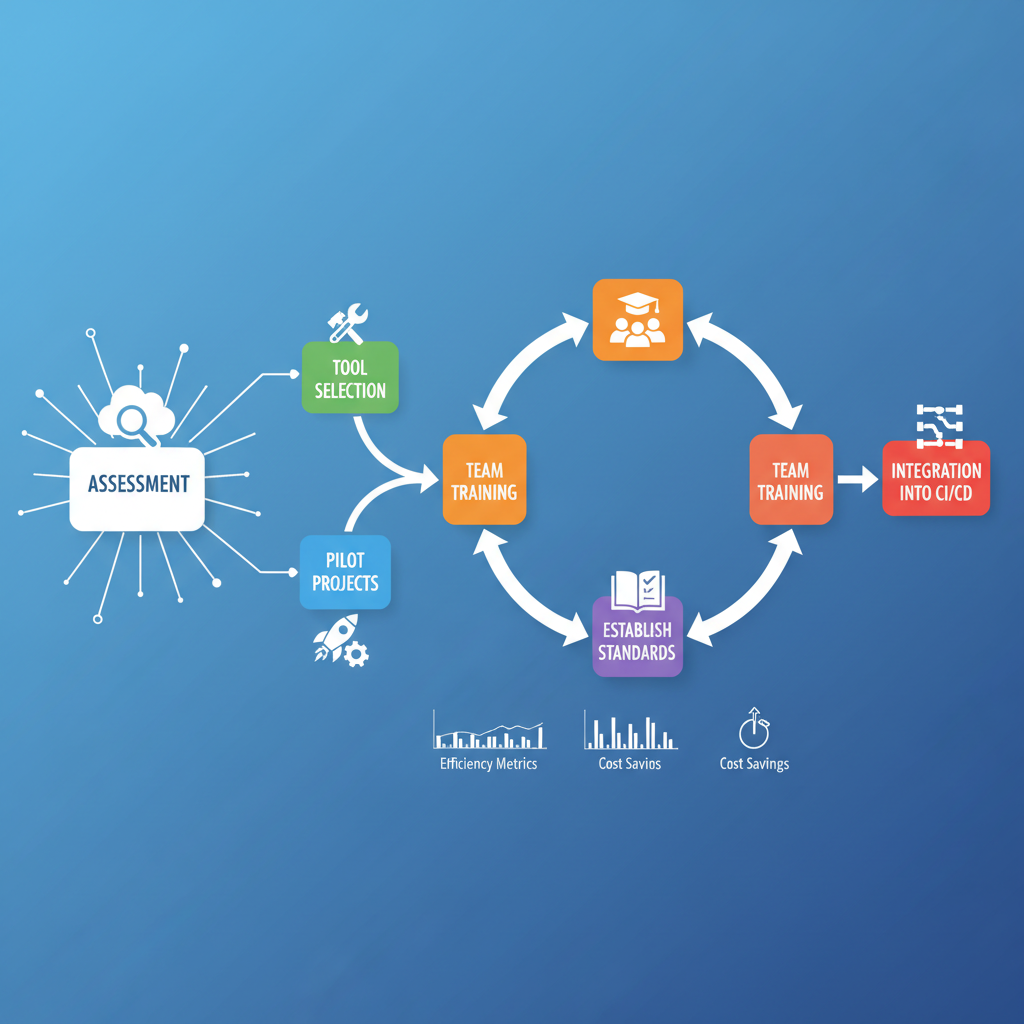
The initial phase involves assessing your current infrastructure landscape and identifying areas that will benefit most from automation. Prioritize critical components or repetitive tasks that consume significant time and resources. This assessment helps in building a roadmap for gradual IaC adoption, allowing your team to gain experience and refine processes iteratively. Remember that transitioning to a code-driven infrastructure is a journey, not a one-time event.
A diagram showing a workflow for IaC strategy development, starting with assessment, moving through tool selection, pilot projects, establishing standards, team training, and integration into CI/CD pipelines.
Establishing clear standards and conventions for your IaC code is another vital component. This includes naming conventions, module structure, repository organization, and security guidelines. Consistent standards make your code easier to read, maintain, and collaborate on, which is especially important as your IaC codebase grows. Define roles and responsibilities within your team for creating, reviewing, and deploying IaC changes to maintain order.
Define Scope and Goals: Clearly articulate what infrastructure components will be managed by IaC and what you aim to achieve (e.g., faster deployments, higher consistency).
Pilot Projects: Start with small, non-critical projects to gain experience and refine your approach before scaling up.
Team Training: Invest in training your team on chosen IaC tools and best practices. Cultural shift is as important as technical capability.
Version Control Integration: Integrate your IaC code with a version control system (e.g., Git) from day one. This is non-negotiable for collaborative development and auditing.
Modularity: Design your IaC code to be modular and reusable. This reduces duplication and promotes consistency across projects.
Security First: Incorporate security considerations into your IaC strategy from the outset, including secure coding practices and access controls.
Implementing and Automating Your Infrastructure with Code
Once your IaC strategy is in place and tools are selected, the next step is the practical implementation of automating infrastructure. This phase involves writing your infrastructure code, organizing it effectively, and integrating it into your deployment pipelines. The goal is to achieve seamless, repeatable deployments that align with your code-driven infrastructure principles. Start with simple resources and gradually increase complexity.
A common starting point is to structure your IaC repositories logically. This typically involves separating code for different environments (development, staging, production) and organizing resources into reusable modules. Modular code promotes reusability, simplifies maintenance, and reduces the risk of configuration errors. Think of infrastructure components as building blocks that can be assembled and reassembled as needed.
Consider a multi-environment approach where different branches or directories represent different deployment targets. For example, a `main` branch might hold the production-ready code, while feature branches are used for development and testing. This disciplined approach ensures that changes are thoroughly vetted before reaching critical environments, which is a cornerstone of effective iac management.
Writing Your IaC Definitions
The actual process of writing IaC definitions varies depending on the tool chosen. Regardless of the tool, the principles of clear, concise, and documented code remain paramount.
1. Start Simple: Begin by defining basic resources, like a single virtual machine or a storage bucket. This helps you understand the syntax and workflow of your chosen tool. 2. Use Modules: Break down complex infrastructure into smaller, manageable modules. For instance, a network module might define VPCs, subnets, and routing tables, which can then be reused across projects. 3. Parameterize Everything: Avoid hardcoding values. Use variables and parameters to make your IaC code flexible and adaptable to different environments. This allows you to apply the same code base to various configurations. 4. Comment Your Code: Document your IaC definitions extensively. Explain the purpose of different blocks, variables, and outputs. This aids in understanding and maintenance, especially for new team members.
Integrating with CI/CD Pipelines
True infrastructure automation is realized when your IaC code is integrated into Continuous Integration/Continuous Deployment (CI/CD) pipelines. This automation ensures that every change to your infrastructure code triggers an automated validation and deployment process.
1. Version Control Trigger: Configure your CI/CD pipeline to trigger automatically upon code commits to your IaC repository. 2. Linting and Validation: Include steps to lint your IaC code for style and validate its syntax. Tools like `terraform validate` or `cfn-lint` are essential here. 3. Plan Generation: For declarative tools, generate an execution plan (e.g., `terraform plan`) that shows exactly what changes will be applied to your infrastructure. This step is critical for review. 4. Automated Testing: Implement integration and end-to-end tests to verify that the provisioned infrastructure behaves as expected. 5. Deployment: Once all checks pass and approvals are granted, automatically apply the infrastructure changes. Many organizations implement manual approval gates for production deployments.
This systematic approach to integrating iac management with CI/CD pipelines ensures secure, reliable, and efficient infrastructure delivery. It’s a key aspect of operationalizing IaC effectively.
Ensuring iac management Best Practices and Governance
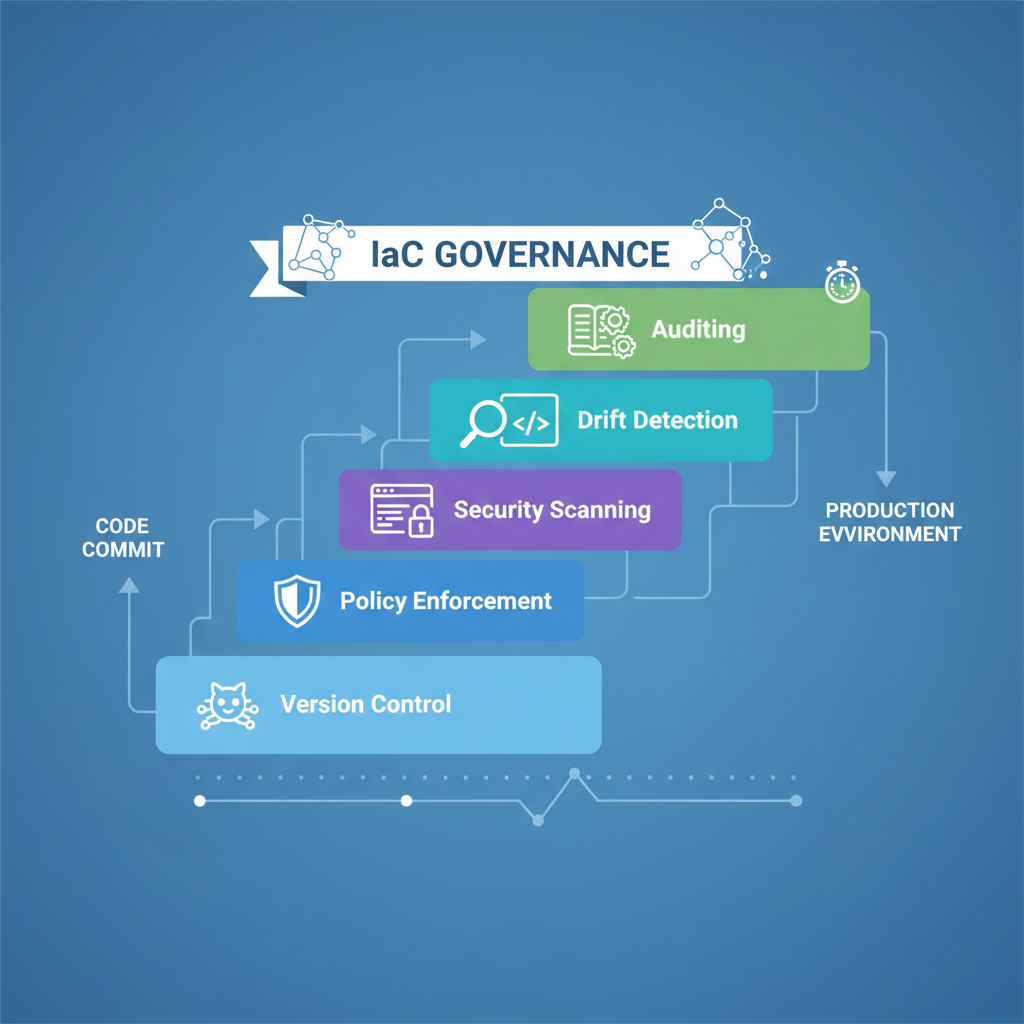
Effective iac management extends beyond initial setup to encompass ongoing best practices and robust governance. This ensures the long-term maintainability, security, and compliance of your code-driven infrastructure. Without proper governance, IaC can quickly become unwieldy, leading to security vulnerabilities or configuration drift. Establishing clear policies and processes is paramount for sustainable success.
One of the most critical best practices is to treat your infrastructure code with the same rigor as application code. This means implementing comprehensive version control, conducting peer reviews for all changes, and maintaining clear documentation. Every modification to your infrastructure should be traceable, auditable, and easily reversible if necessary. This discipline is a hallmark of strong IaC governance.
Security must be an integral part of your IaC workflow from the very beginning. Implement static analysis tools to scan your IaC code for potential security misconfigurations before deployment. Enforce the principle of least privilege in your infrastructure definitions, granting only the necessary permissions to resources. Regular security audits of your IaC templates are crucial for identifying and mitigating risks.
A conceptual diagram illustrating IaC governance layers, including version control, policy enforcement, security scanning, drift detection, and auditing.
Key Best Practices
Version Control Everything: Store all IaC configurations in a version control system like Git. This provides a single source of truth, change history, and collaboration capabilities.
Modularity and Reusability: Design your IaC modules to be small, focused, and reusable. This reduces redundancy and makes your infrastructure definitions easier to manage and scale.
Idempotence: Ensure your IaC code can be run multiple times without causing unintended side effects. Each run should achieve the desired state regardless of the starting condition.
Testing and Validation: Implement automated tests for your IaC code, including linting, syntax validation, unit tests for modules, and integration tests for deployed infrastructure.
Drift Detection: Regularly monitor your deployed infrastructure for configuration drift – deviations from your defined IaC state. Tools can help identify and rectify these differences.
Secrets Management: Never hardcode sensitive information (e.g., API keys, passwords) directly into your IaC code. Use secure secrets management solutions like HashiCorp Vault or cloud-native key management services.
Implementing IaC Governance
IaC governance focuses on establishing policies, processes, and controls to manage the entire lifecycle of your infrastructure as code. This ensures consistency, compliance, and security across your cloud environments.
1. Define Policies: Create clear policies for how infrastructure can be provisioned, configured, and managed. These policies might cover tagging standards, allowed resource types, or security configurations. 2. Automated Policy Enforcement: Use policy-as-code tools (e.g., OPA, Sentinel) to automatically enforce your governance policies within your CI/CD pipelines. This prevents non-compliant infrastructure from being deployed. 3. Access Control: Implement robust Role-Based Access Control (RBAC) for your IaC repositories and deployment pipelines. Limit who can approve and apply infrastructure changes, especially in production environments. 4. Auditing and Reporting: Maintain detailed audit logs of all IaC deployments and changes. Regularly review these logs to ensure compliance and identify any unauthorized modifications. This is vital for regulatory requirements and security.
By diligently applying these best practices and governance principles, organizations can maximize the value derived from iac management. It transforms infrastructure provisioning into a secure, compliant, and highly efficient process.
Overcoming Challenges in iac management
While iac management offers significant advantages, its implementation is not without challenges. Organizations often encounter hurdles ranging from technical complexities to cultural resistance, which can hinder the successful adoption of an IaC strategy. Addressing these challenges proactively is crucial for sustained success and for efficiently operationalizing IaC within your ecosystem. Anticipating potential issues allows for better planning and mitigation strategies.
One common technical challenge revolves around state management. Tools like Terraform maintain a state file that maps your IaC code to your actual infrastructure. Managing this state, especially in collaborative environments, requires careful planning to prevent corruption or inconsistencies. Distributed teams need robust solutions for remote state storage and locking to ensure integrity during concurrent operations.
Another significant hurdle is dealing with infrastructure drift. Despite defining infrastructure with code, manual changes can still occur outside the IaC pipeline, leading to discrepancies between your code and the actual environment. Detecting and reconciling this drift effectively is critical for maintaining consistency and avoiding unexpected issues. Tools and processes for regular drift detection are therefore essential.
Complexity of Initial Setup: The initial learning curve for IaC tools and the effort to define existing infrastructure as code can be steep. Start with smaller projects and gradually expand your IaC scope.
State Management: For tools with state files, ensure robust remote state storage (e.g., S3, Azure Blob Storage) with strong locking mechanisms to prevent concurrency issues in team environments.
Infrastructure Drift: Implement automated drift detection tools and processes. Educate teams on the importance of making all infrastructure changes through IaC pipelines to prevent manual deviations.
Security Concerns: Incorrectly configured IaC can expose vulnerabilities. Prioritize security best practices, integrate security scanning into your pipelines, and enforce least privilege.
Cultural Resistance: Moving from manual operations to code-driven infrastructure requires a significant cultural shift. Provide extensive training, highlight the benefits, and gain buy-in from all stakeholders.
Tool Sprawl: With many IaC tools available, organizations might end up using several, leading to complexity. Standardize on a few core tools that best fit your needs and integrate them seamlessly.
Testing IaC: Testing infrastructure changes before deployment can be more complex than testing application code. Develop robust testing strategies, including static analysis, unit tests, and integration tests.
Frequently Asked Questions about iac management
What is iac management?
iac management, or Infrastructure as Code management, refers to the practice of defining, provisioning, and managing IT infrastructure using code and automation tools. Instead of manual configurations, infrastructure is described in machine-readable definition files, allowing it to be versioned, tested, and deployed like traditional software applications. This approach brings consistency, efficiency, and reliability to infrastructure operations.
Why is iac management important for modern IT?
iac management is crucial for modern IT because it enables organizations to achieve unprecedented levels of agility, consistency, and scalability. It reduces manual errors, accelerates deployment cycles, and ensures environments are identical, which is vital for DevOps practices, continuous delivery, and managing complex cloud-native architectures. It fundamentally transforms managing infrastructure with code into a streamlined process.
What are the main benefits of adopting an IaC strategy?
The primary benefits of adopting an IaC strategy include increased consistency across environments, faster provisioning and deployment times, reduced human error, improved reliability, and enhanced collaboration between development and operations teams. It also provides a clear audit trail for all infrastructure changes and facilitates disaster recovery. This leads to a more robust and efficient code-driven infrastructure.
What are some popular tools used for iac management?
Several popular tools are widely used for iac management, each with its strengths and target environments. Key examples include Terraform for multi-cloud provisioning, Ansible for configuration management and automation, AWS CloudFormation for AWS-specific resources, Azure Resource Manager (ARM) templates for Azure, and Pulumi, which allows infrastructure definition using general-purpose programming languages. Choosing the right tool depends on your specific cloud platform and team expertise.
How does IaC governance contribute to successful iac management?
IaC governance is essential for ensuring the long-term success, security, and compliance of your iac management efforts. It involves establishing policies, standards, and processes for how infrastructure code is developed, reviewed, and deployed. This includes implementing version control, automated policy enforcement, robust access controls, and regular auditing to prevent configuration drift and maintain a secure and compliant infrastructure. It ensures an effective operationalizing IaC framework.
✓ Free consultation ✓ No commitment required ✓ Trusted by experts
Conclusion: Mastering iac management for Modern Infrastructure
Mastering iac management is no longer an option but a necessity for organizations navigating the complexities of modern IT infrastructure. By embracing the principles of managing infrastructure with code, teams can achieve unparalleled levels of automation, consistency, and speed. This transformative approach empowers businesses to innovate faster, reduce operational overhead, and build more resilient systems. An effective IaC strategy is the bedrock of future-proof IT operations.
The journey to fully adopting iac management involves careful planning, selecting the right tools, developing robust implementation strategies, and establishing continuous governance. While challenges may arise, the benefits of a code-driven infrastructure far outweigh the initial investment. By committing to these practices, organizations can unlock the full potential of their cloud environments and streamline their entire infrastructure lifecycle, truly operationalizing IaC for lasting impact.
Johan Carlsson is a cloud architecture specialist and frequent speaker focused on scalable workloads, AI/ML, and IoT innovation. At Opsio, he helps organizations harness cutting-edge technology, automation, and purpose-built services to drive efficiency and achieve sustainable growth. Johan is known for enabling enterprises to gain a competitive advantage by transforming complex technical challenges into powerful, future-ready cloud solutions.