Choosing a technology partner is a big decision for your business. It affects your project’s success and your digital growth. The right partner can improve your website, make operations smoother, and help you stay ahead of the competition.
We are a top Drupal development company. We know the challenges businesses face in finding reliable, skilled, and affordable help. India is a key place for web solutions, offering great skills at good prices. This helps businesses get the most from their technology.
Our Indian Drupal experts know a lot about web architecture, security, and how to grow your site. They have worked on big projects in government, education, healthcare, and e-commerce. We focus on making your business goals real through our technical skills.
This guide answers common questions about working with web developers in India. It helps you make smart choices for your digital projects. We value teamwork, clear talk, and solutions that help your business grow while easing your work load.
Key Takeaways
- Choosing the right technology partner directly impacts your digital transformation success and long-term competitive positioning in the market
- Indian web development firms offer cost-effective solutions without compromising technical excellence or enterprise-grade quality standards
- Certified professionals from specialized firms contribute actively to open-source communities, bringing cutting-edge expertise to client projects
- Successful partnerships emphasize collaborative approaches, transparent communication, and alignment between technical capabilities and business objectives
- Expert teams deliver scalable solutions across diverse industries including government, healthcare, education, and e-commerce sectors
- Comprehensive service providers focus on reducing operational burden while enabling business growth through innovative cloud solutions
Understanding Drupal and Its Importance for Businesses
Digital transformation starts with finding the right technology. It should match your vision and adapt to market changes. Knowing the tech behind your digital presence is key for making smart decisions. This affects your competitive edge and how well you work.
The system you choose will shape what you can do today and tomorrow. It helps your company face future challenges and opportunities in the digital world.
In India, businesses are speeding up their digital moves. They need strong, flexible platforms. Drupal CMS services meet these needs. They offer customization to stand out in the market.
What is Drupal?
Drupal is a powerful, open-source platform that has grown over 20 years. It started as a message board in 2000. Now, it’s a top choice for complex digital projects.
It supports over 1.7 million active websites worldwide. This shows its wide use across different industries and sizes.
Drupal stands out because of its modular design. It lets us build exactly what you need without being stuck in pre-made solutions. It has a core system for basics like user management and security. Thousands of modules add more features for specific needs.
Drupal is used by about 7% of the world’s top 10,000 websites. It’s known for handling big traffic and critical tasks. Big names like government agencies and Fortune 500 companies use it for its reliability and security.
Drupal is more than a website builder. It’s a framework for managing complex content and user permissions. It supports many languages and integrates well with other systems. This makes it great for complex needs.
Why Choose Drupal for Your Website?
Choosing Drupal means you get strong security and flexibility. Drupal has a dedicated security team and regular updates. It also meets strict compliance standards like GDPR and HIPAA.
Drupal is scalable, handling big traffic while growing with your business. We’ve seen clients start small and add more features like e-commerce and mobile apps. All while keeping a unified content repository.
Drupal is open-source, offering long-term benefits. It’s not locked into proprietary systems. This means you get continuous innovation from a global community. This community-driven model keeps Drupal relevant and competitive over time.
Drupal lets you customize deeply, unlike other systems. We can tailor content types, workflows, and integrations to fit your needs. This means your site truly reflects your brand and operations.
| Feature Category |
Drupal Capability |
Business Impact |
Technical Advantage |
| Security Framework |
Dedicated security team, regular patches, access control |
Regulatory compliance, risk mitigation, data protection |
Built-in security modules, authentication systems, audit trails |
| Scalability |
Handles millions of pages and high traffic volumes |
Supports business growth without platform migration |
Caching mechanisms, database optimization, CDN integration |
| Customization |
Modular architecture with 46,000+ contributed modules |
Tailored solutions matching specific workflows |
Custom content types, fields, views, and business logic |
| Multilingual Support |
Native translation for 100+ languages |
Global market reach, localized user experiences |
Translation workflows, language detection, content versioning |
| Integration Capabilities |
RESTful APIs, JSON support, third-party connectors |
Unified digital ecosystem, operational efficiency |
Decoupled architecture, web services, data synchronization |
In India’s fast-paced market, Drupal is a top choice. It offers enterprise-level features at a good price. Its success in various industries gives confidence in its ability to meet your needs. With Drupal, you get a solid digital foundation for growth and innovation.
Key Benefits of Hiring a Drupal Development Company
Working with experienced Drupal teams brings big wins. They boost your website’s performance, security, and value. Our work in enterprise Drupal development shows that teaming up with experts is key. It helps tackle complex needs that simple solutions can’t handle.
Choosing Drupal website developers India means more than saving money. It’s about getting top-notch tech skills and creative solutions. This partnership helps you stay ahead in the fast-changing digital world. Your tech setup will support your current needs and grow with your business.
Customization and Flexibility
Professional Drupal services offer unmatched customization. They turn basic features into solutions that fit your business perfectly. We use our deep Drupal knowledge to make sure everything works smoothly with your systems.
Custom module development is a big plus with experienced developers. They know how to build custom features that are fast, secure, and easy to maintain. This avoids the problems that come from using the wrong solutions or bad third-party extensions.
We also make it easy to connect your Drupal site with important systems. We use APIs and modern security to link it with CRM, ERP, marketing tools, and payment gateways. This creates a seamless digital ecosystem where data flows freely, reducing errors and manual work.
Our theming and front-end work brings your brand to life. We focus on responsive design and accessibility. Your site will look great on all devices and offer a top-notch user experience that boosts engagement and sales.
Security Features
Security is a major area where Drupal pros add a lot of value. We use top security practices to protect your site and customer data. Our approach includes secure coding, access control, and regular checks for vulnerabilities.
We start with secure coding to prevent common attacks. We review and audit your code to find and fix weaknesses. This proactive method reduces the risk of data breaches and keeps your site safe.
Keeping your site up to date is another key part of our professional Drupal services. We stay on top of security advisories and apply updates quickly. This keeps your site safe from new threats and prevents security gaps.
We also set up access controls that match your organization’s structure and data sensitivity. This limits who can see what, reducing the risk of data leaks and internal security issues. With encryption for data in transit and storage, we create strong security frameworks that meet strict standards.
Scalability for Growing Businesses
Working with Drupal website developers India is great for growing businesses. We design solutions that grow with your business, handling more traffic without needing expensive rebuilds. This lets your tech support your growth, not hold it back.
We use smart caching to make your site fast and efficient. We set up multiple caching layers and use content delivery networks to serve static assets. This means your site can handle more traffic without slowing down, keeping users happy and boosting sales.
Optimizing your database is key to scalability. We design efficient databases and write queries that handle more data without slowing down. This keeps your site fast even as it grows, preventing slowdowns that come from neglecting database performance.
Custom module development helps with scalability too. We build modular systems that make adding new features easy without rebuilding everything. This approach saves time and reduces the risk of unexpected problems.
Partnering with a professional enterprise Drupal development team is cost-effective in the long run. It reduces errors, downtime, and development time. We use reusable components and best practices to deliver quality quickly. Our ongoing support keeps your site running smoothly, protecting your investment and supporting your revenue.
Top Qualities to Look for in a Drupal Development Company
When you decide to hire Drupal developers in India, it’s important to know what makes a good partner. Choosing the right company is crucial for your digital success. It affects your project’s success and your online presence’s growth.
There are many Drupal development services out there. You need to find a company that truly understands Drupal. Look for qualities that show they can handle complex projects well.
Look for companies with verifiable credentials and experience. They should offer services that meet your project needs and ongoing operations. This ensures a successful partnership.
When evaluating potential partners, consider what they can show you. Look for certifications, portfolio examples, and client testimonials. A good offshore Drupal agency will be open about their qualifications and share success stories.
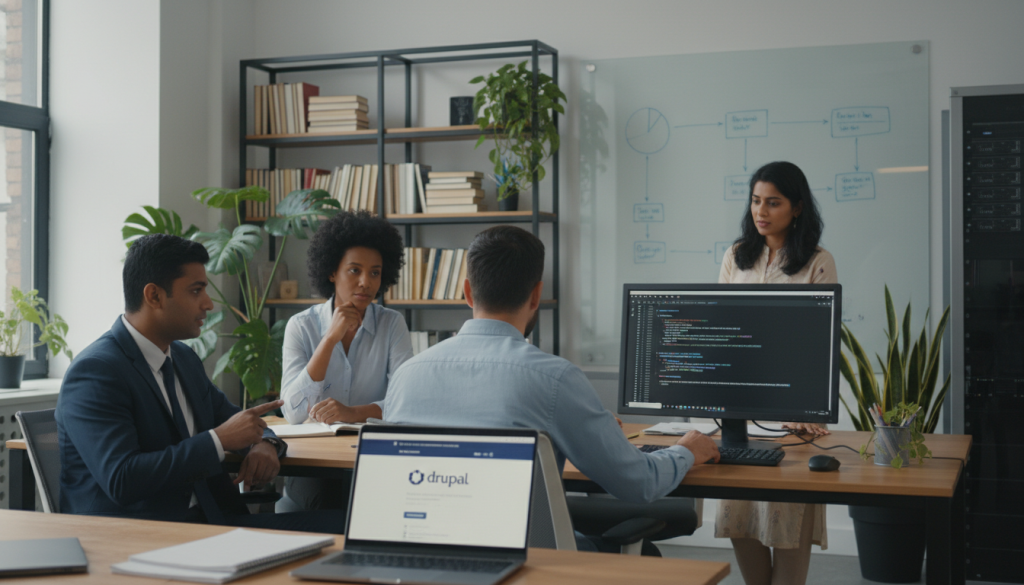
Expertise and Experience
Technical skills and experience are key. Look for a team with certified Drupal developers. This shows they know Drupal well.
Certifications from Acquia are important. They show a developer’s knowledge and skill. Having certified developers means your project is in good hands.
Check the company’s portfolio for complex projects. Look for examples that match your needs. A good portfolio shows they can handle different challenges.
“The quality of a development partnership is determined not by what a company promises during the sales process, but by what they deliver during implementation and sustain through ongoing support.”
Client testimonials and case studies are valuable. They show how the company works. Ask for references and talk to them about their experiences.
Ask about how they handle challenges and communicate. Good communication and problem-solving are key to success.
The range of services a Drupal development company offers is important. Look for companies that can help from start to finish. They should offer strategy, development, migration, optimization, and integration services.
| Quality Indicator |
What to Verify |
Why It Matters |
Red Flags to Avoid |
| Acquia Certified Developers |
Number of certified team members, specific certification types held |
Validates technical proficiency through independent verification |
No certifications or vague claims about “Drupal expertise” |
| Portfolio Depth |
Complexity of past projects, industry diversity, custom solutions |
Demonstrates ability to handle requirements similar to yours |
Generic templates, limited customization examples |
| Client References |
Testimonials from similar-sized organizations, verifiable case studies |
Reveals collaboration quality and long-term partnership success |
Unwillingness to provide references, anonymous testimonials |
| Service Breadth |
Full lifecycle capabilities from strategy through ongoing support |
Ensures continuity without needing multiple vendors |
Development-only focus without strategic or support services |
Post-Launch Support
While initial development is important, post-launch support is just as crucial. Your site needs ongoing care for security, performance, and growth. The quality of support services impacts your site’s success and cost over time.
Look for clear service level agreements (SLAs). These should outline response and resolution times, and support availability. Make sure the SLAs meet your needs and risk tolerance.
Proactive monitoring is valuable. It helps the team catch and fix issues before they affect your site. Good monitoring includes server checks, error rates, security scans, and uptime tracking.
Regular security updates and patch applications are critical. Your support partner should apply updates promptly. Delaying these updates can leave your site vulnerable to attacks.
Performance tuning keeps your site fast and responsive. It’s important as your site grows and changes. Your support partner should optimize your site regularly and offer advice on managing content.
Strategic guidance is also important. A good partner will keep you updated on Drupal’s latest features and best practices. This helps your site stay effective and competitive.
The Process of Drupal Development
We have a structured way of doing Drupal projects. This ensures they bring great value and can adapt to changing needs. We know that digital transformation is more than just tech. It’s about working together to meet your business goals.
Every business is different, so we tailor our approach to fit your needs. We keep a balance between standard methods and custom solutions. This way, we create Drupal sites that are made just for you, not generic ones.
Initial Consultation
The start of every Drupal project is about understanding your needs. We spend a lot of time in this phase because we know it’s crucial. We talk about your goals, how you stand out, and who you’re trying to reach.
We gather lots of information during stakeholder interviews. We look at how you manage content and the skills of your team. We also check how your current tech fits with the new Drupal site.
We analyze your competitors to find ways to stand out. We discuss how fast your site needs to be and how it should handle more visitors. This helps us plan a detailed project that meets your needs.
We create a roadmap for your project. It shows when things will happen and who will do them. We offer different ways to do things, so you can choose what’s best for you. This planning takes about one to two weeks.
Design and Development Phases
Once we know what to do, our design and development teams start working. They talk to each other a lot and keep improving their work. The design team makes the site look good and work well on all devices.
We make prototypes to show what the site will be like. This lets everyone see and give feedback before we start building. This stage can take one to four weeks, depending on how complex the site is.
While the design team works, the development team builds the site. They make sure the site is easy to use and works well. They also add special features just for you.
We use agile methods to keep the project moving. We work in short periods, show what we’ve done, and get feedback. This way, we can change things if needed and keep moving forward.
| Development Phase |
Key Activities |
Typical Duration |
Primary Deliverables |
| Discovery & Planning |
Requirements gathering, stakeholder interviews, technical architecture design, project roadmap creation |
1-2 weeks |
Project specification document, technical architecture diagram, timeline with milestones |
| Design |
Wireframing, visual design, responsive layouts, design system development, prototype creation |
1-4 weeks |
Approved design mockups, interactive prototypes, style guide documentation |
| Development |
Content modeling, custom module coding, theme implementation, API integrations, performance optimization |
4-12 weeks |
Functional Drupal installation with custom features, integrated third-party systems |
| Testing & QA |
Functional testing, cross-browser validation, performance assessment, security review, accessibility audit |
1-2 weeks |
Test reports, bug fixes, performance benchmarks, compliance documentation |
| Launch & Training |
Deployment execution, DNS configuration, content migration, team training, documentation delivery |
1 week |
Live production site, training materials, ongoing support plan |
The development phase can last from four to twelve weeks. It depends on how big the project is and how complex it is. We keep you updated with project management tools.
Testing and Launch
We test everything before we launch your site. We check if it works as it should and if it’s fast. We make sure it looks good on all devices and works well with assistive technologies.
We test on different browsers and devices to make sure it works for everyone. We check how fast the site is, even when lots of people are using it. This makes sure your site is always up and running smoothly.
We also check for security issues and make sure the site is accessible. We test it on different devices and make sure it’s easy for everyone to use. We make sure your team is happy with the site before we launch it.
Launching your site is a careful process. We make sure everything goes smoothly. We keep an eye on how the site is doing after it’s launched. This way, we can fix any problems quickly and make sure your site is a success.
Common Challenges in Drupal Development
Every project faces obstacles, and knowing them ahead helps us solve them early. We talk openly about Drupal’s complexities to build trust with our clients. Drupal’s strength comes from its ability to handle big websites, but it needs special skills to overcome technical hurdles.
Custom module development requires deep knowledge of PHP and Drupal’s architecture. Companies must also deal with theme issues, performance, and system integration. With our experience, these challenges become easier to handle.
Addressing Security Vulnerabilities
Security is a big challenge in web development. Drupal has strong security features, but using them right needs expertise. We protect your site from threats with multiple layers of defense.
We check code for vulnerabilities and follow secure coding standards. We also limit user access to what they need, reducing risks. This keeps your site safe from attacks.
As Drupal experts, we face security issues during upgrades. We update modules and refactor code to meet current security standards. This keeps your site safe from common attacks.
We apply security updates quickly and check for weaknesses. Our focus on Drupal security keeps your site safe and flexible for your business needs.
Optimizing Platform Performance
Improving performance is a big challenge. Drupal’s features can slow down your site if not set up right. We use many strategies to make your site fast, even when it’s busy.
We use caching to speed up your site. This makes it fast for everyone, improving user experience. We also optimize databases to keep your site running smoothly.
Improving front-end performance is key. We use image compression, lazy loading, and minify CSS and JavaScript. This makes your site load faster and use less bandwidth.
We also use content delivery networks to make your site faster for users everywhere. This reduces latency and improves user experience.
| Challenge Category |
Common Issues |
Our Solution Approach |
Expected Outcome |
| Security Vulnerabilities |
Outdated modules, improper access controls, insecure custom code |
Code reviews, security audits, principle of least privilege implementation |
Protected digital assets with minimal attack surface |
| Performance Bottlenecks |
Inefficient caching, database query issues, unoptimized front-end |
Multi-layer caching, query optimization, CDN implementation |
Fast page loads under varied traffic conditions |
| Integration Complexity |
API limitations, data synchronization conflicts, error handling gaps |
Comprehensive API testing, abstraction layers, robust logging |
Seamless communication with external business systems |
| Version Upgrades |
Module compatibility issues, deprecated code patterns, breaking changes |
Systematic migration planning, code refactoring, thorough testing |
Smooth transitions with maintained functionality |
Overcoming Integration Obstacles
Integrating with other systems is a big challenge. It requires Drupal skills and knowledge of external systems. Your Drupal site must work well with CRM systems, marketing tools, and more.
We tackle system integration challenges by understanding external systems first. This helps avoid costly changes later. We test APIs and review documentation to plan well.
We use error handling and logging to fix integration issues quickly. This saves time and keeps your site running smoothly. We also make sure data stays consistent across systems.
We create layers to make integration easier. This way, changing external systems doesn’t affect your Drupal site much. This protects your investment as your technology needs change.
Comparing Drupal with Other Content Management Systems
Business leaders often face the tough choice of picking a content management system. Each system has its own strengths that meet different needs. The world of content management has grown, offering many options. From easy-to-use systems for quick setup to complex ones for big digital projects, there’s a lot to consider.
When looking at a CMS evaluation, it’s important to dig deep. We help leaders understand the true value of each system. We compare WordPress, Joomla, and Drupal, each with its own strengths and weaknesses.
WordPress vs. Drupal: Understanding the Fundamental Differences
WordPress and Drupal are often compared. WordPress is known for its ease of use and is used by many websites. It’s great for simple sites and blogs.
But Drupal is better for big projects. It has advanced features for complex content and large sites. It’s perfect for businesses that need more.
Drupal also focuses on security. It has strong security features that WordPress can’t match. This is important for businesses that handle sensitive data.
For more information, check out this article on choosing Drupal.
| Capability |
WordPress Strengths |
Drupal Advantages |
Best Use Case |
| Content Architecture |
Simple posts and pages |
Complex content types and relationships |
Drupal for enterprise content |
| User Permissions |
Basic role system |
Granular, customizable permissions |
Drupal for organizations |
| Scalability |
Suitable for moderate traffic |
Enterprise-grade high-volume handling |
Drupal for growth |
| Learning Curve |
Beginner-friendly interface |
Requires technical expertise |
WordPress for simplicity |
When traffic and content grow, performance matters. WordPress can handle some traffic, but Drupal is better for big sites. This is important for businesses that will grow a lot.
Joomla vs. Drupal: Evaluating the Middle Ground
Joomla tries to balance ease and power. It has more features than WordPress and is good for growing sites. But it’s not as good as Drupal for complex needs.
Joomla can’t match Drupal’s advanced features. It’s not as flexible for complex content and workflows. Joomla is good for some needs, but not all.
The community and support are also important. Joomla’s community is active, but it’s losing market share. Drupal has strong support for long-term projects.
Choosing the Right CMS for Your Organizational Needs
Choosing a CMS is complex. It’s not just about what you need now, but also what you’ll need in the future. We help clients find the right CMS for their needs.
Think about your content and how it will grow. Simple sites might work with WordPress, but Drupal is better for complex content. The right CMS will help your site grow without problems.
When evaluating CMS options, consider these key factors:
- Content complexity: Is your content simple or complex?
- Workflow requirements: How complex are your editorial processes?
- Traffic expectations: How much traffic do you expect?
- Security obligations: Do you handle sensitive data?
- Integration needs: Do you need to connect with other systems?
- Technical capabilities: Is your team ready for a new CMS?
- Budget constraints: What’s your budget for the CMS?
Choose Drupal for complex content, growth, and security. It’s perfect for big projects and complex needs. It’s also great for businesses that need strong security and compliance.
Consider your team’s skills and your budget. Drupal is powerful but requires technical knowledge. Simpler platforms might be better for smaller projects.
Cost Factors in Drupal Development Services
Understanding Drupal development costs helps you match tech investments with business goals. We aim to provide clarity for smart decisions. Budgets are key in choosing the right partner and project approach. Clear cost talks are the base of our client relationships.
Affordable Drupal development means quality and no technical debt. This avoids higher costs later.
Drupal project costs vary with scope and complexity. Small sites start at $10,000, while big ones can go over $200,000. This shows Drupal’s flexibility for all sizes.
There are different pricing models for projects. Each fits different needs and project types. Choosing the right model is crucial for success and budget control.
Understanding Pricing Models
We use three main engagement types for clients. Each fits specific project needs and risks. The right choice depends on your project’s clarity, budget needs, and ongoing development.
Hourly pricing is great for projects with changing needs. Drupal development costs India range from $15 to $50 per hour. It’s best for ongoing support and projects with unpredictable work.
Fixed pricing gives budget certainty for clear projects. It helps plan finances but needs thorough discovery. We have clear rules for scope changes.
Retainer models offer ongoing partnerships. They give predictable costs and priority access. Many find them best for managing digital platforms long-term.
| Pricing Model |
Best Suited For |
Budget Certainty |
Flexibility Level |
| Hourly Rates |
Evolving requirements, ongoing support, exploratory projects |
Variable based on actual hours |
Maximum flexibility for scope changes |
| Fixed Project Price |
Well-defined scope, specific deliverables, one-time implementations |
High certainty with defined scope |
Limited flexibility, requires change orders |
| Monthly Retainer |
Continuous development, priority support, long-term partnerships |
Predictable monthly investment |
Moderate flexibility within capacity limits |
Factors Affecting Overall Costs
Several factors affect Drupal project costs. We discuss these during initial talks. This helps set realistic expectations.
Site complexity and custom features are big cost factors. Simple sites are cheaper, while complex ones cost more. This reflects the needed expertise.
Design impact is also big. Custom designs take more time and money. We help find a balance between design and budget.
Integration requirements add complexity. Costs depend on the number of integrations and API quality. Modern APIs are easier to integrate than old ones.
Migrating from old platforms or Drupal versions costs more than expected. This includes content auditing and transformation. Costs depend on content volume and complexity.
Ongoing support and maintenance are ongoing costs. We suggest 15-20% of initial costs annually for maintenance. This keeps your site secure and efficient.
When comparing proposals, look at total costs, not just initial quotes. Drupal development costs India are good value with experienced teams. Cheap quotes can lead to more costs later.
View Drupal development as a strategic investment. It offers flexibility, security, and scalability. Understanding costs and choosing the right model maximizes value while keeping budgets realistic.
Trends in Drupal Development for 2026
Drupal development is changing fast, thanks to new trends. These changes make the platform better for creating complex digital solutions. We keep up with these trends to help our clients use the latest technology.
Knowing about these trends helps businesses make smart choices about their digital projects. Drupal’s strong base and new tech create new ways to improve digital experiences and work processes.
Emerging Technologies and Tools
Headless Drupal and decoupled architecture are big changes in how we manage content. This approach lets content reach many places easily. It makes it simple to share content across different platforms.
Drupal acts as a content API in decoupled systems. It manages and delivers content through APIs. Modern JavaScript frameworks then make the content interactive and engaging.
- Omnichannel content delivery that reaches audiences wherever they engage with your brand
- Enhanced performance through optimized API responses and client-side rendering techniques
- Frontend development flexibility unconstrained by traditional theming conventions
- Improved resilience where frontend and backend systems can be scaled, deployed, and maintained independently
- Future-proof architecture that adapts easily to new presentation channels and technologies
AI integration is another big trend we’re using. AI makes content management, user experiences, and site functionality better. It helps reduce costs and improve engagement.
“The future of content management lies in intelligent systems that understand context, anticipate user needs, and deliver personalized experiences at scale.”
AI-powered content recommendations improve user journeys. They make content more relevant and engaging. AI also helps make digital experiences more accessible and compliant with rules.
Drupal 10 has improved security and compliance. It has the latest patches and better API security. It also supports multi-factor authentication and enterprise identity providers.
| Architecture Type |
Content Delivery |
Frontend Flexibility |
Best Use Cases |
| Traditional Drupal |
Single web channel |
Theme-based customization |
Standard websites with unified presentation |
| Decoupled Architecture |
Multi-channel distribution |
Framework-independent frontend |
Complex digital ecosystems with diverse touchpoints |
| Progressive Decoupling |
Hybrid approach combining both |
Selective JavaScript enhancement |
Gradual transition scenarios and mixed requirements |
Drupal 10 also has better compliance features. It helps meet GDPR, HIPAA, and WCAG standards. This makes it easier for businesses in regulated fields to follow rules.
Today, personalization and user experience are key. We use AI to make content better. This includes A/B testing, behavioral targeting, and dynamic content assembly.
Low-code and no-code tools are becoming more popular. They make Drupal easier for non-technical users. These tools help make changes faster while keeping the platform powerful.
Community Contributions and Updates
The strength of Drupal 10 comes from its community. We’re part of this community, sharing and benefiting from its work. This helps Drupal grow and meet new challenges.
Drupal 10 has many improvements. It has modern dependencies, better developer tools, and improved content management. The community makes sure it’s easy to upgrade and keeps existing sites working well.
Modules from the community add new features to Drupal. They cover everything from commerce to multimedia. The quality and security of these modules are checked by the community.
Regular updates and improvements show the community’s dedication. The release cycle helps with planning, and the long-term support model keeps sites stable. This approach makes Drupal different from proprietary systems.
There are also efforts to improve the developer experience. Better documentation and tools make it easier for new and experienced developers. Automated testing and continuous integration improve code quality and reduce risks.
We see our clients’ Drupal projects as part of a bigger ecosystem. Being part of this community brings many benefits. It helps businesses find new ways to improve their digital presence and build valuable networks.
Frequently Asked Questions about Drupal Development
Businesses looking into Drupal solutions often have questions about the development process and what the platform can do. They want to know about timelines, what features are available, and what technical needs are involved. We answer these questions to help businesses make informed decisions.
Our experience shows that clear expectations lead to successful partnerships. This is true for both the development timeline and the platform’s capabilities for commercial use.
What Timeframes Should You Expect for Development?
The time it takes to develop a Drupal site varies. It depends on how complex the site is, how much customization is needed, and other factors. Simple sites with basic features usually take 4-8 weeks to complete.
For sites with more features, like custom content models and integrations, it can take 8-16 weeks. This includes design, development, testing, and deployment.
Large, complex projects, like those for big companies, can take 16-40 weeks or more. These projects involve a lot of customization, complex integrations, and moving a lot of content from old systems.
Several things can affect how long a project takes. These include how long it takes to get approval, how available experts are, and how complex the systems being replaced are.
- Organizational decision-making processes that require approval from multiple stakeholders across departments
- Availability of subject matter experts for requirements clarification and validation throughout development phases
- Complexity of existing systems being replaced or integrated, particularlly legacy platforms with custom configurations
- Content migration requirements including cleanup, restructuring, and quality assurance of large content repositories
- Custom feature development addressing unique business processes not covered by standard modules
We focus on giving accurate timelines based on clear requirements and client involvement. This approach helps build trust and ensures successful projects.

Does Drupal Support Commercial Transactions?
Drupal developers in India use powerful modules to create strong e-commerce sites. The Drupal Commerce module offers top-notch features for businesses of all sizes. It allows for detailed commercial solutions without losing the flexibility of Drupal for complex sites.
Drupal’s e-commerce features include:
- Flexible product modeling accommodating simple products, configurable items with variations, product bundles, and subscription-based offerings
- Comprehensive pricing systems supporting multiple currencies, tax calculations, promotional pricing, volume discounts, and customer-specific pricing rules
- Shopping cart functionality with persistent carts across sessions and devices, enabling customers to continue shopping seamlessly
- Customizable checkout workflows optimized to match business requirements and maximize conversion rates
- Payment gateway integrations supporting major providers including Stripe, PayPal, Authorize.net, and numerous regional processors
- Order management systems tracking orders through fulfillment processes and integrating with inventory and shipping platforms
- Customer account features including order history, saved payment methods, address books, and wishlist functionality
Drupal e-commerce sites can handle small to large product catalogs. They support complex pricing, multiple fulfillment centers, and international sales. The platform is flexible for custom features like quote-based selling and subscription management.
Integration with ERP systems helps manage inventory and orders smoothly. This reduces manual work and errors. We’ve helped many businesses in retail, manufacturing, and services with their e-commerce needs. Drupal is a solid base for your commercial operations.
Conclusion: Why Partner with a Drupal Development Company in India
Choosing the right development partner is key to your digital success and growth. It’s not just about the cost. You need to think about technical skills, how well you communicate, and if you share the same values.
Strategic Advantages of Indian Development Partners
Hiring Drupal developers in India means tapping into a rich tech scene. It offers great prices, up to 60% less than in the West, without sacrificing quality. Our team has the skills you need for big projects, online stores, and custom solutions.
Partnering with a Drupal company in India means you get flexible work options. We handle everything from planning to ongoing support. This keeps your project on track and helps your business grow.
Taking the Next Step Forward
Ready to see if we’re a good fit for your goals? Check out our success stories and talk to our Drupal experts. Connect with our clients to see the benefits of working with Indian Drupal experts. Making an informed choice leads to great digital experiences and real business results.
Frequently Asked Questions
How long does Drupal development typically take?
We give clear timelines based on your project’s scope and complexity. Simple sites need 4-8 weeks. More complex sites take 8-16 weeks.Big projects with lots of custom features can take 16-40 weeks or more. Timelines depend on many factors, like decision-making and content migration.We focus on realistic timelines. Clear requirements and timely feedback are key. We aim to meet our commitments to build trust.
Can Drupal handle e-commerce needs?
Yes, Drupal is great for e-commerce. It has powerful modules like Drupal Commerce. This supports various product types and pricing systems.It also has shopping cart features and payment gateways. This makes it perfect for small to large businesses.Drupal can handle complex e-commerce needs. It supports custom features and integrations. This makes it ideal for businesses with unique needs.
What makes Drupal more secure than other content management systems?
Drupal’s security is a top priority. It has a dedicated security team that updates and patches regularly. This makes it more secure than many other CMS platforms.Drupal also has access control and compliance features. These help meet security standards like GDPR and WCAG. We use rigorous security measures in our custom solutions.Drupal’s security is crucial for organizations with strict security needs. It’s a key advantage for protecting sensitive information.
How much does it cost to hire Drupal developers in India?
Drupal development costs vary. Hourly rates in India range from to . This is cheaper than in North America and Europe.Costs depend on site complexity and custom features. Simple sites cost ,000-,000. More complex sites cost ,000-,000 or more.Design costs also impact the price. Custom designs require more designer time. This increases costs.Integration and ongoing support add to the cost. Support costs about 15-20% of the initial cost annually. This ensures your site stays secure and up-to-date.
What is the difference between custom Drupal development and using pre-built themes?
Custom Drupal development offers unique solutions. It aligns with your brand and meets specific needs. Pre-built themes are faster and cheaper but limit design and functionality.Custom solutions provide flexibility and control. They are ideal for businesses that need to stand out. Pre-built themes are better for simple sites or when budget is tight.
Can you migrate my existing website to Drupal?
Yes, we can migrate your site to Drupal. We have successfully moved sites from various platforms to Drupal. Our process is systematic and minimizes risks.We start with a thorough content audit. This helps us understand your content and plan the migration. We then develop custom scripts to transfer content accurately.The complexity of the migration depends on the site’s size and structure. We consider factors like content volume and system complexity. Our goal is to improve your site’s functionality and user experience.
Do you provide ongoing support and maintenance after the website launch?
Yes, we offer comprehensive support and maintenance. We have clear service level agreements and proactive monitoring. This ensures your site remains secure and performs well.We apply security updates regularly. We also optimize site performance and handle technical issues. Our support teams are available for any questions or concerns.We understand the importance of ongoing support. It helps you maximize your Drupal investment. Our goal is to ensure your site remains a valuable asset for your business.
What industries do you serve with Drupal development services?
We have experience in various industries. Our team in India is skilled in creating custom Drupal solutions. We understand the unique challenges and opportunities in different sectors.In the government sector, we build secure and accessible portals. We also serve educational institutions, healthcare organizations, and e-commerce businesses. Our solutions meet specific industry needs.We are familiar with the requirements of different industries. Our expertise helps us create tailored Drupal solutions. This ensures your site meets your specific needs and goals.
How do you ensure the Drupal website is mobile-responsive?
We prioritize mobile-responsive design. Most web traffic comes from mobile devices. We create mobile-first design concepts to ensure a good user experience on all devices.We use responsive techniques like fluid grid layouts and CSS media queries. This ensures your site adapts to different screen sizes and devices. We also optimize mobile experiences through touch-friendly interfaces and streamlined navigation.We test our sites on various devices. This ensures a consistent and high-quality experience for your users. Our goal is to provide a seamless user experience across all devices.
What happens if I need changes or new features after the website is launched?
We support ongoing development and enhancements. We provide flexible engagement models to accommodate your evolving needs. This includes retainer arrangements, time-and-materials engagements, and fixed-price project quotes.Our enhancement process is efficient. We follow a structured workflow that includes requirements gathering, technical assessment, development, and testing. We also maintain accurate documentation to reflect any changes.We understand the importance of continuous improvement. Our goal is to help you achieve your digital goals and adapt to changing requirements.
How do you handle Drupal security updates and patches?
We handle security updates with urgency and rigor. We proactively monitor security advisories and apply patches promptly. This ensures your site remains secure and protected from threats.We follow a risk-based response procedure. We prioritize updates based on vulnerability severity. This ensures critical vulnerabilities are addressed quickly.We test updates thoroughly before applying them to production environments. This includes functional testing and security scanning. We also have rollback procedures in place to address any unexpected issues.In addition to patching, we implement proactive security measures. These include regular security audits and security hardening. We also monitor for suspicious activity and provide security training for your team.
Can you integrate Drupal with our existing CRM, ERP, or other business systems?
Yes, we can integrate Drupal with your existing systems. We have extensive experience in enterprise Drupal development. We can connect your site with CRM systems, ERP platforms, and other specialized systems.We use various technical approaches to integrate systems. This includes RESTful API integrations, SOAP-based integrations, and custom integration modules. We ensure seamless communication between systems.We thoroughly test integrations to ensure data accuracy and performance. Our goal is to create a cohesive technology ecosystem that supports your business needs.
Author
Praveena Shenoy
- Country Manager, Opsio
Praveena Shenoy is the Country Manager for Opsio India and a recognized expert in DevOps, Managed Cloud Services, and AI/ML solutions. With deep experience in 24/7 cloud operations, digital transformation, and intelligent automation, he leads high-performing teams that deliver resilience, scalability, and operational excellence. Praveena is dedicated to helping enterprises modernize their technology landscape and accelerate growth through cloud-native methodologies and AI-driven innovations, enabling smarter decision-making and enhanced business agility.