

Organizations that invest in managed DevOps report deployment frequency increases of up to 200 times compared to low-performing teams, according to the DORA State of DevOps Report. For enterprises seeking cost-effective expertise, India has emerged as a global hub for DevOps managed services that combine deep technical talent with competitive pricing.
 cloud infrastructure orchestration" title="DevOps Managed Services in India" width="750" height="428" srcset="https://opsiocloud.com/wp-content/uploads/2026/01/DevOps-Managed-Services-in-India-1024x585.png 1024w, https://opsiocloud.com/wp-content/uploads/2026/01/DevOps-Managed-Services-in-India-300x171.png 300w, https://opsiocloud.com/wp-content/uploads/2026/01/DevOps-Managed-Services-in-India-768x439.png 768w, https://opsiocloud.com/wp-content/uploads/2026/01/DevOps-Managed-Services-in-India.png 1344w" sizes="(max-width: 750px) 100vw, 750px" loading="eager">
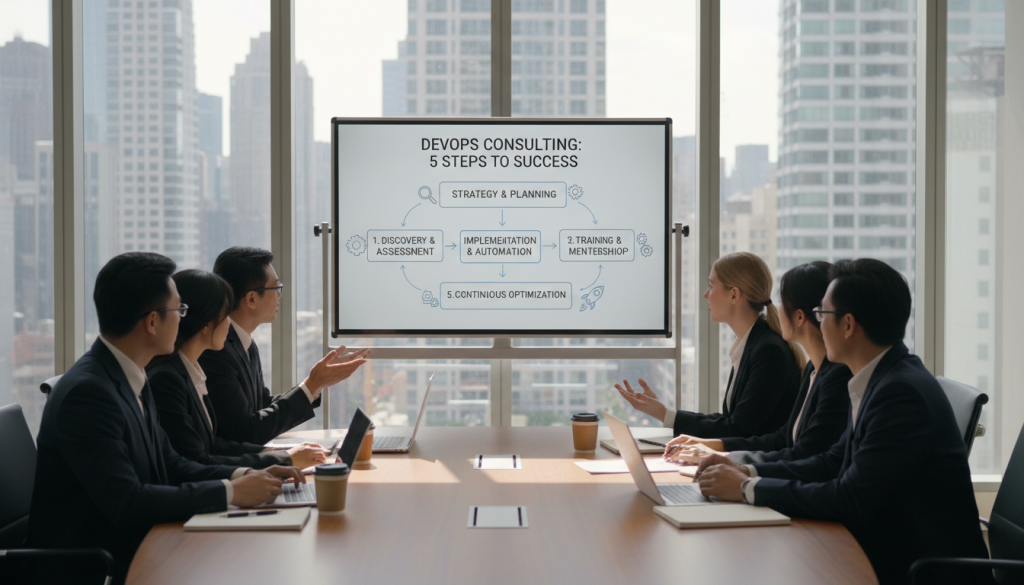
Opsio delivers comprehensive DevOps managed services in India, serving as a strategic partner for organizations accelerating their digital transformation. Our approach integrates deep technical knowledge with business strategy to produce measurable outcomes that strengthen competitive positioning.
Our expertise covers the full application lifecycle, from initial assessment through continuous deployment and around-the-clock support. We align technology decisions with business objectives so that digital transformation efforts deliver real, sustained value.
Key Takeaways
- Managed DevOps reduces deployment cycles from weeks to hours through CI/CD automation
- Infrastructure as Code (IaC) eliminates configuration drift and cuts provisioning time by over 90%
- DevSecOps integration catches vulnerabilities early, reducing remediation costs by up to 6x
- Flexible engagement models from fully managed to project-based consulting
- Proven results including 30% AWS cost reduction and multi-day-to-hours deployment acceleration
- 24/7 monitoring with 99.95% availability SLAs across AWS, Azure, and Google Cloud
What Are DevOps Managed Services?
DevOps managed services unify software development and IT operations under a single managed framework. Rather than maintaining separate teams for writing code and running infrastructure, a managed DevOps provider handles the entire pipeline: code integration, automated testing, deployment, monitoring, and incident response.
This approach eliminates common bottlenecks that plague internal teams. Tool sprawl, configuration inconsistencies, security gaps, and manual deployment errors all disappear when a dedicated partner manages the operational complexity.
The result is that internal engineering talent is freed from repetitive operational work. Developers focus on building features, solving customer problems, and driving revenue, while the managed service partner ensures stability, speed, and security across every release.
| Aspect | Without Managed DevOps | With Managed DevOps |
|---|---|---|
| Primary Focus | Managing infrastructure and tooling | Product innovation and customer value |
| Deployment Frequency | Weekly or monthly releases | Multiple daily deployments |
| Error Handling | Reactive troubleshooting | Proactive monitoring and self-healing |
| Cost Structure | Unpredictable infrastructure overhead | Optimized, predictable spend |
Core Benefits of Managed DevOps for Enterprises
The measurable advantages of managed DevOps extend well beyond faster releases. When development velocity aligns with operational stability, businesses gain a compounding competitive edge.
Accelerated time-to-market. Automated CI/CD pipelines compress release cycles from weeks to hours. Every code change passes through standardized build, test, and deployment stages without manual intervention. This speed enables rapid responses to market shifts and customer feedback.
Significant cost reduction. Optimized resource utilization, eliminated tool redundancy, and automated scaling directly lower infrastructure costs. Our FinOps practices have delivered cloud savings exceeding $1 million for enterprise clients.
Improved application quality. Continuous integration catches defects early when they cost the least to fix. Automated testing, security scanning, and quality gates ensure that only validated code reaches production environments.
Enhanced security posture. DevSecOps practices embed security checks at every pipeline stage. Vulnerabilities detected during development are 6 times cheaper to remediate than those found in production, according to IBM's Cost of a Data Breach Report.
24/7 operational coverage. Proactive monitoring, alerting, and incident response run continuously. Self-healing systems and automated runbooks restore service quickly, maintaining the high availability that enterprise applications demand.
CI/CD Pipeline Automation and Continuous Delivery
Automated pipelines form the backbone of modern software delivery. We design and manage CI/CD systems that transform every code commit into a production-ready artifact through standardized, repeatable processes.
Pipeline Design and Management
We build custom pipelines using tools like Jenkins, GitLab CI, GitHub Actions, and Azure DevOps. Each pipeline automates compilation, unit testing, integration testing, security scanning, and deployment with precision. Branch strategies, merge policies, and environment promotion rules are codified to ensure consistency.
This structured approach means releases are predictable and reliable. Teams ship features confidently, knowing every change has passed comprehensive automated validation before reaching users.
Deployment Automation Best Practices
Our deployment automation follows industry best practices including blue-green deployments, canary releases, and rolling updates. These patterns minimize risk during releases and enable instant rollback if issues surface.
Quality gates enforce code coverage thresholds, security scan results, and performance benchmarks. No release proceeds unless all gates pass, preventing defective code from reaching production while maintaining the pace of multiple daily updates.
Infrastructure Automation and Configuration Management
Manual infrastructure provisioning is slow, error-prone, and impossible to audit at scale. Infrastructure as Code (IaC) replaces ad-hoc processes with declarative, version-controlled definitions of every server, network, and service.
Rapid Provisioning with IaC
Using Terraform, Ansible, Pulumi, and CloudFormation, we define complete environments as code. New environments spin up in minutes rather than days. Development, staging, and production remain identical, eliminating the "works on my machine" problem at the infrastructure level.
Version control for infrastructure means every change is tracked, reviewed, and reversible. Audit trails are automatic, and compliance teams can verify environment configurations at any point in time.
Eliminating Configuration Drift
Configuration management automation ensures that thousands of servers maintain identical settings. Drift detection and automatic remediation prevent the slow accumulation of inconsistencies that cause production incidents in traditional operations.
This systematic approach delivers exceptional reliability while cutting operational overhead. Every provisioning action follows the same validated pattern, creating stable environments that support continuous innovation.
Containerization and Orchestration
Containers solve the portability problem by packaging applications with all their dependencies into lightweight, isolated units. Combined with orchestration platforms, they provide the foundation for scalable, resilient microservices architectures.
Docker and Kubernetes Implementation
We containerize applications using Docker and manage them at scale with Kubernetes and OpenShift. Container orchestration automates deployment, scaling, load balancing, and health management across clusters.
Self-healing capabilities restart failed containers automatically. Horizontal pod autoscaling matches compute resources to actual demand, eliminating both over-provisioning waste and under-provisioning risk.
Service Mesh for Microservices
For complex microservices architectures, we implement service mesh technologies like Istio and Linkerd. These handle service-to-service communication, traffic management, mutual TLS encryption, and distributed tracing without requiring application code changes.
| Technology Layer | Function | Tools We Use |
|---|---|---|
| Containerization | Package applications with dependencies | Docker, Podman, Docker Compose |
| Orchestration | Automate deployment and scaling | Kubernetes, OpenShift, Helm |
| Service Mesh | Manage inter-service communication | Istio, Linkerd, Consul |
Security and Compliance in Cloud DevOps
Security cannot be bolted on at the end of the development cycle. Our DevSecOps approach embeds protection mechanisms directly into every pipeline stage, making security an inherent property of the delivery process rather than a final checkpoint.
Integrated DevSecOps Practices
Automated security scanning runs at every pipeline stage. Static application security testing (SAST), dynamic testing (DAST), software composition analysis (SCA), and container image scanning catch vulnerabilities before they reach production.
We integrate tools including Snyk, Aqua Security, HashiCorp Vault, and Trivy into existing workflows. Developers receive immediate feedback on security issues within their normal development environment, reducing context-switching and accelerating remediation.
Automated Compliance Frameworks
Policy-as-code implementations using Open Policy Agent (OPA) and HashiCorp Sentinel enforce compliance rules programmatically. Continuous compliance monitoring covers SOC 2, GDPR, PCI-DSS, HIPAA, and ISO 27001 requirements.
Real-time compliance dashboards provide instant visibility into your security posture across all environments. Audit preparation time drops from weeks to hours when every policy check is automated and documented.
Cloud Management and Cost Optimization
Effective cloud management goes beyond keeping services running. It requires continuous optimization of resources, costs, and performance across multi-cloud environments.
We support all major cloud platforms including AWS, Azure, Google Cloud, DigitalOcean, and Linode. Our cloud-agnostic architectures prevent vendor lock-in while leveraging each platform's native strengths.
FinOps practices drive measurable cost savings. We identify idle resources, right-size instances, implement reserved capacity strategies, and automate scaling policies. For one FinTech client, these practices reduced monthly AWS spend from $44K to $31K, a 30% reduction in three months without performance impact.
We guarantee 99.95% service availability through redundant architectures, geographic distribution, and proactive monitoring. Automated failover and disaster recovery ensure business continuity even during infrastructure failures.
DevOps Managed Services in India: Local Expertise, Global Standards
India's combination of world-class engineering talent, favorable time zones for US and European businesses, and cost-effective delivery models makes it an ideal hub for managed DevOps. Opsio's India operations bring deep local expertise paired with global delivery standards.
Tailored Solutions for International Clients
Our DevOps consulting team serves clients across industries including financial services, e-commerce, healthcare, logistics, and SaaS. We develop solutions customized to each organization's regulatory requirements, scale demands, and technology stack.
Whether supporting a startup scaling its first product or an enterprise modernizing legacy systems, our consultants begin with comprehensive assessment and roadmap development aligned to business priorities.
Adapting Global Practices to Local Context
We reject one-size-fits-all methodologies. Our DevOps consultants evaluate existing processes, technical debt levels, team capabilities, and strategic priorities before designing solutions. This adaptive approach ensures that recommended changes are achievable and sustainable.
| Dimension | Generic Consulting | Opsio's Adaptive Approach |
|---|---|---|
| Methodology | Standardized templates | Customized frameworks for each client |
| Knowledge Transfer | Limited documentation | Hands-on training and pair programming |
| Engagement Model | Fixed pricing, rigid scope | Value-based, flexible scaling |
Our team prioritizes capability building through collaborative work. Internal expertise grows alongside our engagement, ensuring long-term self-sufficiency rather than dependency.
Flexible Engagement Models
Different organizations need different levels of external involvement. We offer engagement models designed to match diverse maturity levels, budgets, and operational requirements.

Fully Managed vs. Project-Based Services
Fully managed services provide end-to-end operational coverage. We handle infrastructure administration, pipeline management, monitoring, incident response, and continuous optimization. This model suits organizations that want hands-off control of their DevOps operations.
Project-based services deliver targeted solutions with defined scope and timelines. Cloud migrations, security assessments, CI/CD pipeline builds, and Kubernetes implementations are common project engagements.
Scalable Support Tiers
Our tiered support packages range from business-hours coverage to premium 24/7 assistance with guaranteed response times. Support levels scale during critical periods like product launches or traffic spikes, ensuring you pay only for what you need.
Clear success metrics, communication protocols, and governance structures are established at engagement start. Regular reviews ensure continuous alignment between service delivery and evolving business objectives.
Client Results and Case Studies
Measurable outcomes validate the effectiveness of our managed DevOps approach. Here are examples from real client engagements across multiple industries.
| Client Sector | Challenge | Result |
|---|---|---|
| FinTech Startup | Excessive AWS costs during rapid scaling | 30% monthly cost reduction ($44K to $31K) |
| Logistics Platform | Multi-day global deployment cycles | Deployment time reduced to hours with Kubernetes and Terraform |
| Enterprise IT | On-premises Jira migration complexity | Seamless Atlassian cloud migration with zero data loss |
| Data Services | 12TB+ data migration risk | 27% infrastructure cost reduction post-migration |
Each engagement contributes to our growing knowledge base, enabling faster solutions and better outcomes for future clients.
Enhancing Developer Productivity
When operational friction disappears, engineering teams achieve their highest output. We create environments where developers spend their time writing code rather than managing infrastructure or debugging deployment issues.
Self-service infrastructure provisioning gives developers on-demand access to environments without waiting for operations tickets. Integrated toolchains using Jira, Confluence, Slack, and Microsoft Teams streamline communication across distributed teams.
Standardized development environments and comprehensive documentation reduce new team member onboarding from weeks to days. Blameless post-incident cultures and shared responsibility models transform traditional siloed teams into high-performing collaborative units.
Automation as an Efficiency Driver
Intelligent automation eliminates repetitive manual work while ensuring consistent, error-free execution at scale. We build custom automation solutions using Bash, Python, PowerShell, and Groovy for infrastructure provisioning, application deployment, testing, and incident response.
Our progressive maturity approach starts with the most error-prone manual processes and expands to comprehensive automation that handles routine operations at scale. Self-healing systems and predictive scaling based on usage patterns further reduce human intervention requirements.
| Metric | Before Automation | After Automation |
|---|---|---|
| Deployment Frequency | Weekly or monthly | Multiple times daily |
| Error Rate | High (human-dependent) | Near-zero (repeatable execution) |
| Recovery Time | Hours to days | Minutes (automated rollback) |
| Scaling Response | Manual, delayed | Automatic, real-time |
Emerging Trends in Cloud and DevOps
The cloud and DevOps landscape continues to evolve rapidly. Staying ahead of meaningful trends ensures infrastructure investments remain relevant and competitive.
Serverless computing eliminates server management entirely. We implement solutions on AWS Lambda, Google Cloud Functions, and Azure Functions for event-driven workloads that scale automatically to zero when idle.
GitOps extends infrastructure as code principles by using Git repositories as the single source of truth for both application and infrastructure state. ArgoCD and Flux automate reconciliation between declared and actual states.
Platform engineering builds internal developer platforms that abstract infrastructure complexity. Golden paths and self-service portals reduce cognitive load while maintaining governance and security standards.
AI-assisted operations (AIOps) applies machine learning to monitoring data for anomaly detection, predictive alerting, and automated remediation. This reduces alert fatigue and accelerates incident response.
Getting Started with DevOps Managed Services
Beginning a managed DevOps engagement follows a structured, low-risk process designed to deliver value quickly.
Free Consultation and Discovery
Contact us to schedule a no-obligation consultation. We explore your current infrastructure, team capabilities, pain points, and strategic goals. This discovery phase identifies quick wins alongside longer-term transformation opportunities.
Phased Roadmap and Onboarding
Based on discovery findings, our experts develop a phased implementation roadmap prioritized by dependency, risk, and business value. Clear milestones and success criteria define each phase.
Onboarding establishes communication channels, escalation paths, and governance structures. We start small, prove value on initial workloads, and scale successful patterns across the organization. This approach builds confidence while minimizing disruption to existing operations.
Conclusion
DevOps managed services in India offer enterprises a proven path to faster delivery, lower costs, and stronger security. By combining automation-first pipelines, infrastructure as code, containerized architectures, and embedded security practices, managed DevOps transforms technology operations from a cost center into a strategic advantage.
Opsio's tailored approach, flexible engagement models, and track record of measurable client results make us a reliable partner for organizations at any stage of their DevOps maturity. Contact us today to start your transformation journey with a free consultation.