What if you could eliminate the guesswork from managing your physical resources? As organizations grow, maintaining control over valuable equipment across multiple locations becomes a monumental task. Traditional manual checks are slow and prone to mistakes. These errors disrupt workflow and hurt the bottom line.
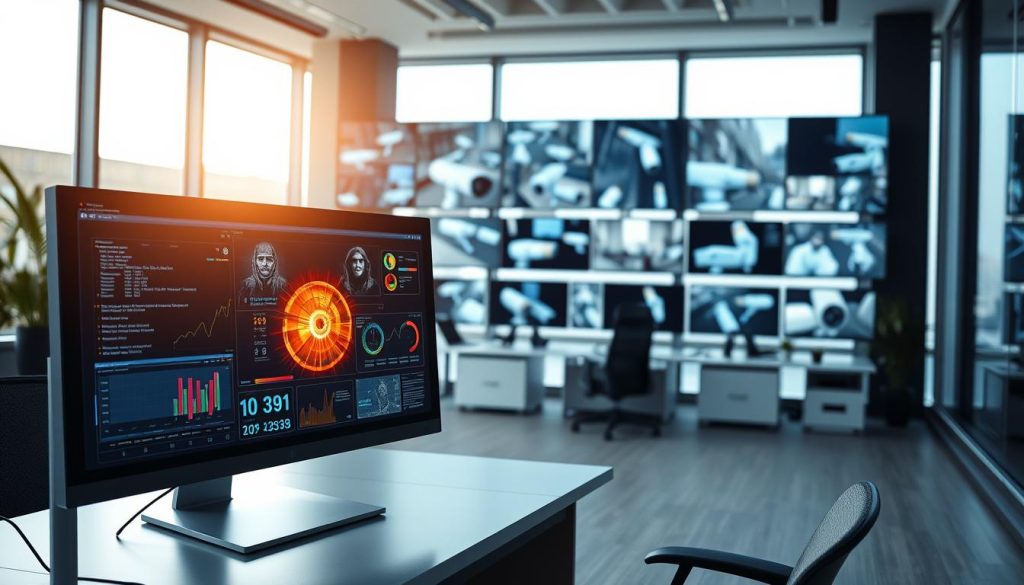
We see a transformative shift happening. Modern solutions use artificial intelligence and advanced cameras to provide real-time insights. This approach moves businesses from reactive fixes to proactive, data-driven decisions. It’s a smarter way to oversee operations.
Our experience shows that integrating these technologies delivers significant benefits. Companies see lower labor costs and less equipment downtime. They also gain digital records that support compliance and strategic planning. This is the power of intelligent oversight.
This guide will explore the core concepts and real-world applications. We will show how computer vision asset tracking solutions create measurable returns. You will learn to evaluate and implement these systems for your own goals.
Key Takeaways
- Manual inspection methods are becoming inefficient for modern, large-scale operations.
- Advanced technology enables a shift from reactive maintenance to proactive management.
- Integration leads to reduced operational costs and minimized equipment downtime.
- Actionable data from visual information supports better decision-making.
- These systems are now accessible to organizations of all sizes.
- Strategic implementation aligns with broader goals like safety and digital transformation.
Introduction to Asset Monitoring Using Computer Vision
Field technicians once carried clipboards and manually recorded equipment readings across vast facilities. This approach created significant delays between observation and action, often leading to transcription errors and inconsistent documentation.
Understanding the Evolution of Asset Monitoring
We have witnessed a dramatic shift from periodic human inspections to continuous automated surveillance. Traditional methods required physical visits to each location, creating inherent limitations in data quality and response times.
The integration of computer vision technology enables real-time visibility across distributed equipment portfolios. This transformation captures more data points and identifies subtle changes that manual inspections might miss.
Benefits of Integrating Computer Vision in Operations
These advanced systems deliver numerous operational advantages. Companies achieve significant labor cost reductions while improving safety outcomes by minimizing technician exposure to hazardous environments.
The market growth trajectory reflects widespread industry recognition. AI camera technology is projected to expand from $12.4 billion in 2025 to $78.7 billion by 2034, demonstrating the fundamental transformation occurring across industrial sectors.
Organizations implementing these solutions report efficiency improvements of 60-80% in inspection time. They gain comprehensive historical information that supports trend analysis and predictive maintenance strategies, creating lasting operational value.
Current Challenges in Traditional Asset Monitoring
Maintaining accurate oversight of physical resources remains one of the most persistent operational challenges. Many organizations struggle with fundamental gaps between their tracking needs and available capabilities.
We see companies facing difficult choices between maintaining legacy approaches and pursuing comprehensive modernization. Both paths present significant obstacles that impact efficiency and cost management.
Limitations of Manual Inspections and Legacy Systems
Manual inspection processes create substantial operational bottlenecks. The time required for physical visits, documentation, and system updates becomes prohibitive for organizations managing distributed resources.
Legacy analog equipment presents particularly difficult challenges. While this equipment often functions reliably for decades, the lack of digital connectivity forces organizations into unattractive choices between expensive replacements or continued labor-intensive monitoring.
The true costs extend beyond direct labor expenses. Delayed problem detection, incomplete data capture, and inconsistent inspection quality create hidden expenses that undermine maintenance initiatives.
The Cost and Complexity of Modernizing Asset Tracking
Compliance requirements add another layer of complexity. Regulatory frameworks mandate detailed documentation that consumes substantial staff time while generating limited analytical value.
Modernization efforts frequently reveal unexpected infrastructure needs. Comprehensive deployments require investments not only in sensors but also in networking, power systems, and data management platforms.
Data gaps represent perhaps the most insidious challenge. Without continuous visibility, organizations remain unaware of developing trends until problems cause operational disruptions. This complexity often creates organizational paralysis, where companies maintain inadequate processes rather than pursuing incremental improvements.
System Architecture and Key Components
Modern resource management platforms rely on integrated components that process information seamlessly. We design comprehensive frameworks that connect field operations with cloud-based intelligence. This approach ensures reliable performance across diverse operational environments.
Our architectural designs balance scalability with practical implementation requirements. Each component serves specific functions while maintaining interoperability with other system elements.
Mobile App and Data Capture Mechanisms
The mobile application serves as the primary interface for field personnel. Technicians use standard smartphone cameras to capture visual information from equipment labels. This approach eliminates the need for specialized hardware devices.
We leverage AWS Amplify for application development and hosting. Amazon Cognito handles user authentication, ensuring secure access to system functions. The software automatically uploads images using accelerated transfer protocols.
AWS-Powered Backend and Cloud Integration
Backend infrastructure utilizes serverless AWS Lambda functions for data processing. These components automatically scale to handle variable workloads without manual intervention. The architecture supports efficient resource allocation.
Cloud storage employs Amazon S3 for multiple purposes including image repositories. Amazon Bedrock provides access to foundation models for advanced analysis tasks. The system generates vector representations for similarity comparisons.
| Component | Primary Function | Key Benefit |
|---|
| Mobile Application | Field data capture and upload | Familiar interface for technicians |
| AWS Lambda Functions | Serverless data processing | Automatic scaling and cost efficiency |
| Amazon S3 Storage | Secure data repository | Accelerated upload capabilities |
| AI Models | Image analysis and extraction | Continuous learning improvement |
The complete infrastructure supports reliable operations across distributed locations. Each component contributes to the overall system effectiveness while maintaining data integrity.
How to Implement Asset Monitoring Using Computer Vision
Successful deployment begins with a strategic approach to technical integration. We focus on creating a seamless workflow that connects field operations with cloud intelligence.
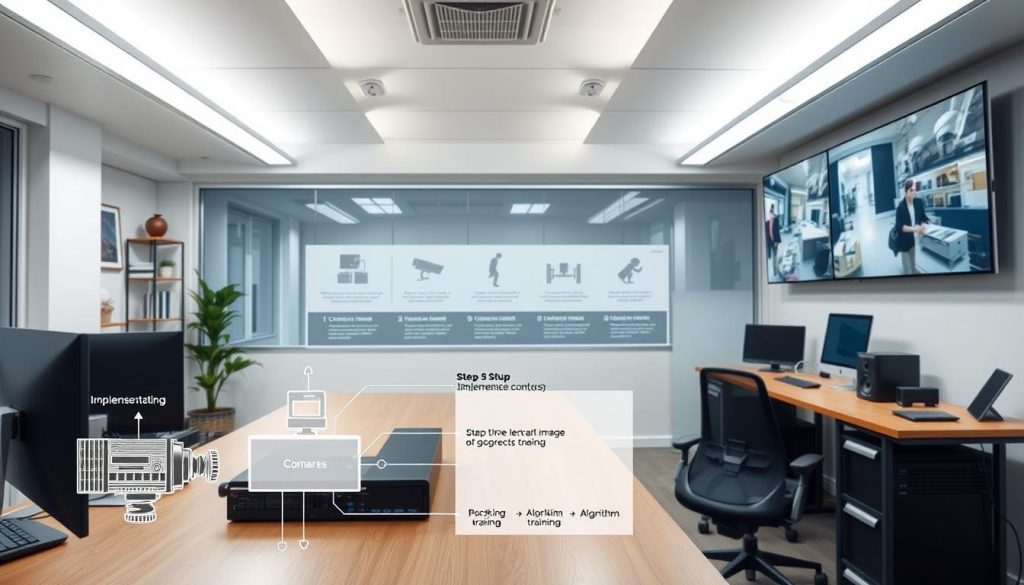
Step-by-Step Guide to Setting Up the System
We recommend starting with a focused pilot program. This initial phase allows your team to validate the technical approach and refine workflows.
The implementation process involves multiple interconnected steps. Field operators capture images, which trigger automated data extraction through cloud services.
Configuring AWS Services for Asset Data Extraction
Our approach leverages Amazon Web Services for scalable infrastructure. The configuration process establishes secure data pipelines.
Key components include S3 storage for images and DynamoDB for inventory management. These services work together to process information efficiently.
Deploying and Testing the Mobile Application
The mobile software provides the interface for field personnel. We build this application using AWS Amplify for consistent performance.
Thorough testing validates each component before full deployment. This ensures reliable operation across different environments.
Continuous improvement is built into our solution. The system learns from human feedback to enhance tracking accuracy over time.
Leveraging Generative AI and Machine Learning
We are witnessing a fundamental transformation in how systems interpret visual information. This evolution moves beyond rigid, pre-defined rules toward intelligent, adaptable understanding.
Our approach integrates cutting-edge generative AI to create more flexible and powerful solutions.
Utilizing Large Language Models for Data Extraction
Large language models like Anthropic’s Claude 3 bring a new level of sophistication. These systems are pre-trained on vast amounts of data, enabling them to understand context and relationships within images.
This capability allows for accurate extraction of information from diverse label formats without extensive custom training.
Enhancing Label Recognition with Advanced Prompts
We employ sophisticated prompt engineering to guide the models. This technique provides clear instructions and examples, improving the accuracy of text recognition.
The system uses vector embeddings to find similar reference examples. This technology helps the model understand unfamiliar label layouts by comparing them to known patterns.
This machine learning approach creates a powerful feedback loop. Each new image processed refines the system’s understanding, leading to continuous improvement in data extraction quality.
This application of generative AI demonstrates practical benefits for operational efficiency.
Optimizing Operational Efficiency Through Automation
The true power of intelligent systems emerges when they seamlessly integrate automated processes with expert judgment. We design workflows that maximize efficiency while maintaining high accuracy standards. This approach ensures reliable performance across diverse operational environments.
Automated Data Verification and Inventory Updates
Our verification process begins with automated comparison of extracted information. When discrepancies fall below configured thresholds, the system automatically updates inventory databases. This eliminates manual entry tasks and saves valuable time.
The system continuously monitors extraction confidence levels. High-confidence results flow directly to database updates without human intervention. This streamlined approach optimizes resource allocation.
Integrating Human-in-the-Loop for Enhanced Accuracy
For uncertain extractions, our solution engages subject matter experts through Amazon A2I. These specialists access a dedicated console to review flagged entries. They make corrections and identify patterns that improve future performance.
This human-in-the-loop integration creates a feedback mechanism. The system learns from expert input, gradually reducing the needs for manual review. This adaptive learning process ensures continuous improvement.
| Verification Type | Confidence Level | Action Taken | Benefit |
|---|
| High Confidence | >90% | Automatic database update | Maximum efficiency |
| Medium Confidence | 70-90% | Operator verification | Balanced approach |
| Low Confidence | | Expert review required | Quality assurance |
This comprehensive approach to data validation ensures operational efficiency while maintaining quality standards. Organizations benefit from automated processing where reliable, with expert oversight when needs arise.
Real-World Use Cases and Applications
Across industrial landscapes, we observe practical implementations delivering measurable operational improvements through automated oversight systems. These deployments transform how organizations manage distributed equipment portfolios in challenging environments.
Our experience reveals consistent patterns of success when companies implement these solutions. The technology proves particularly valuable for remote locations where manual inspections involve significant costs and safety concerns.
Remote Monitoring in Oil & Gas and Utility Sectors
Energy companies deploy smart cameras at remote wellheads and pipelines to interpret analog gauges continuously. One global operator installed over 3,500 battery-powered devices across 500+ sites, eliminating manual inspection rounds.
Utility substations benefit from continuous observation of temperature gauges and pressure indicators. This approach detects anomalies within minutes rather than days, substantially improving grid reliability.
Industrial Applications and Safety Compliance
Manufacturing facilities use these solutions to digitize legacy equipment without expensive retrofits. One factory scaled from pilot to 2,000 cameras across 320 locations, automating gauge reading for boilers and compressors.
Safety compliance represents a high-value application where continuous verification ensures emergency equipment remains operational. Chemical plants implement daily automated inspections instead of weekly manual checks.
| Sector | Primary Application | Key Benefit |
|---|
| Oil & Gas | Remote wellhead monitoring | Reduced field visits and enhanced safety |
| Utilities | Substation equipment tracking | Improved grid reliability and outage prevention |
| Manufacturing | Legacy equipment digitization | Cost-effective modernization |
| Facility Management | Utility meter reading automation | Labor savings and early leak detection |
These implementations demonstrate how automated oversight creates tangible business value across diverse operational contexts. Organizations achieve better visibility while reducing costs and improving safety outcomes.
Conclusion
As we’ve explored throughout this guide, the integration of intelligent systems fundamentally reshapes how businesses approach resource management. The technologies discussed represent more than just incremental improvements—they enable a complete transformation from manual oversight to automated, data-driven operations.
Companies implementing these solutions consistently achieve remarkable results. They gain real-time visibility across distributed locations, reduce operational costs significantly, and enhance safety outcomes. The ability to detect anomalies early prevents costly downtime and extends equipment lifespan.
Looking ahead, we anticipate continued advancements in AI capabilities and edge computing. Organizations that embrace these innovations position themselves for sustainable growth and competitive advantage. The journey toward operational excellence begins with identifying high-impact use cases and pursuing strategic implementations.
We encourage you to explore how these transformative technologies can address your specific operational challenges. The path to smarter resource oversight starts with a focused pilot that demonstrates tangible value and builds momentum for broader adoption.
FAQ
How does computer vision improve operational efficiency?
Our solution automates the tracking of physical equipment, reducing manual labor and providing real-time insights. This speeds up inventory checks and maintenance scheduling.
What infrastructure is needed to deploy this technology?
We leverage cloud-based platforms like AWS, requiring minimal on-site hardware. Our system integrates with existing cameras and devices, keeping setup simple and cost-effective.
Can the system function in remote or challenging environments?
A>Yes, our application is designed for tough conditions, including areas with limited connectivity. It processes data locally when needed, ensuring reliable performance anywhere.
How does machine learning enhance asset data accuracy?
Advanced algorithms analyze images to identify and log items, learning over time to reduce errors. This continuous improvement means fewer mistakes and better decision-making.
What support is available during implementation?
Our team provides full guidance, from initial setup to system optimization. We ensure a smooth transition with training and ongoing assistance.
How does this solution help with regulatory compliance?
Automated monitoring keeps detailed records of equipment status and maintenance history. This documentation supports safety standards and audit requirements effortlessly.
What are the cost benefits compared to traditional methods?
By cutting down on manual checks and preventing equipment downtime, our technology lowers operational expenses. It also extends the life of your resources through proactive care.