Predictive maintenance is revolutionizing how organizations manage industrial assets by using data analytics and artificial intelligence to anticipate failures before they occur. Unlike reactive approaches or rigid maintenance schedules, predictive maintenance enables companies to optimize reliability, minimize downtime, and reduce operational costs through data-driven decision making.This comprehensive guide explores the fundamentals of predictive maintenance, including key technologies, implementation strategies, and best practices for asset-intensive industries seeking to enhance operational excellence.
What Is Predictive Maintenance?
Predictive maintenance is a data-driven maintenance strategy that monitors the actual condition of equipment to determine when maintenance should be performed. Unlike preventive maintenance, which follows fixed schedules regardless of asset condition, predictive maintenance uses historical data, real-time sensor inputs, and machine learning models to detect patterns that indicate potential failures.
Predictive maintenance workflow: from sensor data collection to actionable insights
By predicting issues in advance, organizations can take corrective action at the optimal time — avoiding both unexpected breakdowns and unnecessary maintenance activities. This approach transforms maintenance from a cost center into a strategic advantage that supports operational reliability and business continuity.
Why Predictive Maintenance Is Critical for Modern Operations
Industrial operations depend on complex machinery and interconnected systems where equipment failures often result in production losses, safety risks, and increased operational expenses. As digital transformation accelerates across industries, predictive maintenance has become a foundational capability for data-driven operations.
Key Benefits of Predictive Maintenance
- Reduced unplanned downtime and production losses
- Improved asset availability and reliability
- Extended equipment lifespan and optimized performance
- Lower maintenance costs and spare parts inventory
- Enhanced maintenance planning and resource allocation
- Improved safety conditions and regulatory compliance
- Data-driven decision making for capital investments
- Increased operational efficiency and productivity
Predictive Maintenance vs Traditional Maintenance Approaches
Understanding the differences between maintenance strategies helps organizations select the right approach for their specific operational needs and asset criticality.
| Maintenance Type |
Approach |
Advantages |
Disadvantages |
Best For |
| Reactive Maintenance |
Fix after failure occurs |
No upfront planning costs; Maximum component utilization |
Unpredictable downtime; Higher repair costs; Safety risks |
Non-critical, easily replaceable assets |
| Preventive Maintenance |
Fixed schedule regardless of condition |
Predictable scheduling; Reduced emergency repairs |
Unnecessary maintenance; Inefficient resource usage |
Assets with predictable wear patterns |
| Condition-Based Maintenance |
Monitor asset condition and perform maintenance when indicators show deterioration |
Reduces unnecessary maintenance; Based on actual conditions |
Requires monitoring equipment; Reactive to current conditions |
Assets with measurable performance parameters |
| Predictive Maintenance |
Use data analytics and AI to predict future failures |
Optimized maintenance timing; Reduced downtime; Data-driven decisions |
Higher initial investment; Requires data infrastructure |
Critical assets with high downtime costs |
While each maintenance strategy has its place, predictive maintenance offers the best balance of cost, reliability, and performance for critical operational assets. By implementing a hybrid approach, organizations can apply the right maintenance strategy to each asset based on its criticality and failure impact.
How Predictive Maintenance Works
Predictive maintenance combines multiple technologies and processes to create a comprehensive system for monitoring asset health and predicting potential failures.
Data Collection
The foundation of predictive maintenance is comprehensive data collection from multiple sources:
- Equipment sensors measuring vibration, temperature, pressure, and acoustics
- Control systems and operational technology (OT) platforms
- Historical maintenance records and failure logs
- Environmental and operational context data
Data Processing and Integration
Raw sensor data must be processed, structured, and contextualized to be useful for analysis. This requires secure IT/OT integration that bridges the gap between operational technology and information systems while maintaining data integrity and security.
Machine Learning and Analytics
Advanced analytics and machine learning algorithms analyze the processed data to identify patterns, anomalies, and potential failure indicators. These models improve over time as they process more data, increasing prediction accuracy and reliability.
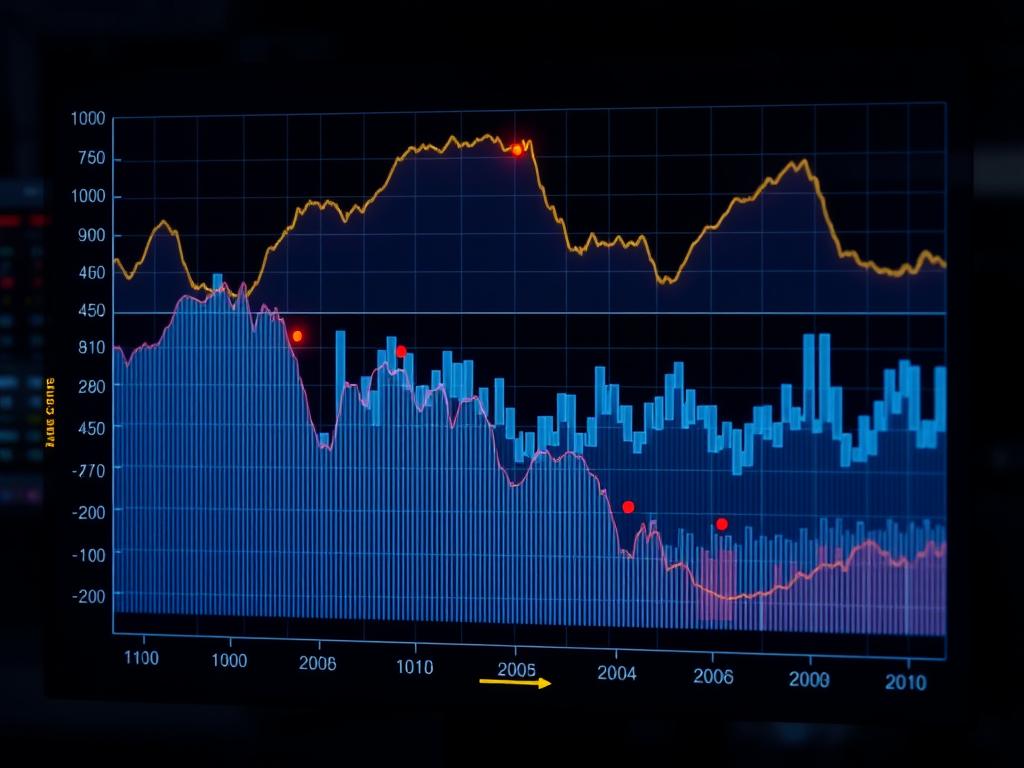
Machine learning models identify subtle patterns that indicate potential equipment failures
Insights and Maintenance Actions
The final step translates analytical insights into actionable maintenance recommendations. These insights can be integrated with maintenance management systems to automatically generate work orders, order parts, and schedule maintenance activities at the optimal time.
Need help implementing predictive maintenance?
Our team can guide you through the process of building an effective predictive maintenance program tailored to your specific operational needs.
Contact us to discuss your AI content strategy
Core Technologies Behind Predictive Maintenance
Effective predictive maintenance relies on a combination of technologies working together to collect, process, analyze, and act on equipment data.
Industrial IoT Sensors
Connected sensors monitor equipment parameters like vibration, temperature, pressure, and power consumption in real-time, providing the raw data needed for condition monitoring.
Edge Computing
Edge devices process data near its source, enabling real-time analysis and reducing bandwidth requirements for time-sensitive applications in remote or bandwidth-constrained environments.
Data Integration Platforms
Integration platforms securely connect OT and IT systems, enabling seamless data flow between operational equipment and analytical systems while maintaining security boundaries.
Machine Learning Algorithms
Advanced algorithms detect patterns, anomalies, and correlations in equipment data that would be impossible to identify manually, improving prediction accuracy over time.
Time-Series Analytics
Specialized analytics tools process chronological data to identify trends, seasonal patterns, and subtle changes in equipment behavior that may indicate developing issues.
Maintenance Management Systems
Enterprise asset management and computerized maintenance management systems integrate with predictive tools to automate work order generation and resource planning.
The value of predictive maintenance comes from how these technologies work together in an integrated system — not from individual components alone. Organizations must develop a cohesive architecture that supports their specific operational requirements and asset portfolio.
Predictive Maintenance Across Industries
While the core principles remain consistent, predictive maintenance implementation varies across industries based on specific operational requirements, asset types, and regulatory environments.

Manufacturing
Production facilities use predictive maintenance to monitor critical equipment like motors, pumps, and robotic systems to prevent line stoppages and quality issues. Vibration analysis and power quality monitoring help identify developing issues in production machinery before they impact output.
Energy Generation
Power plants implement predictive maintenance for turbines, generators, and transformers to ensure reliable electricity production. Thermal imaging and oil analysis help detect potential failures in critical power generation equipment, preventing costly outages.
Mining & Heavy Industry
Mining operations deploy predictive maintenance for haul trucks, excavators, and processing equipment operating in harsh environments. Acoustic monitoring and structural analysis help identify fatigue and wear in critical components exposed to extreme conditions.
Transportation
Fleet operators use predictive maintenance to monitor vehicle components and optimize maintenance scheduling. Telematics data and engine diagnostics help predict failures in commercial vehicles, reducing roadside breakdowns and improving safety.
Oil & Gas
Upstream and downstream operations implement predictive maintenance for pumps, compressors, and pipeline infrastructure. Pressure monitoring and corrosion detection help identify potential leaks or failures in critical processing equipment.
Facilities Management
Building managers apply predictive maintenance to HVAC systems, elevators, and electrical infrastructure. Energy consumption analysis and vibration monitoring help identify inefficiencies and potential failures in building systems.
Enterprise Predictive Maintenance Architecture
A scalable, secure predictive maintenance architecture integrates operational technology with information systems while supporting analytics at both the edge and enterprise levels.
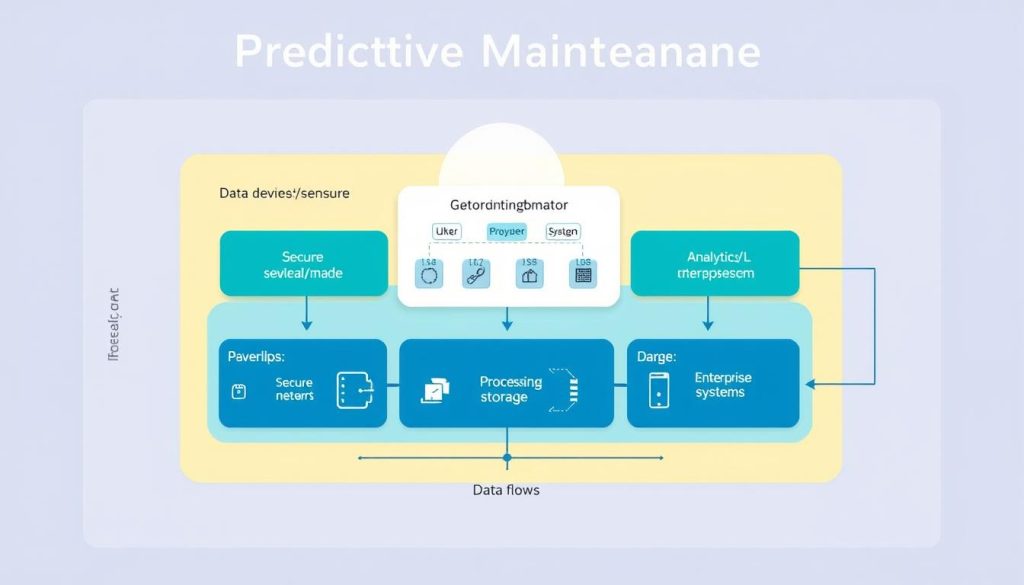
Reference architecture for enterprise-scale predictive maintenance implementation
Key Architecture Components
Data Acquisition Layer
Collects data from sensors, control systems, and operational platforms, often using edge computing for initial processing and filtering.
Network & Security Layer
Ensures secure data transmission between OT and IT environments, implementing zero-trust principles and industrial security protocols.
Data Management Layer
Stores, organizes, and manages time-series data, maintenance records, and asset information in appropriate database technologies.
Analytics & Machine Learning Layer
Processes data using statistical models, machine learning algorithms, and domain-specific analytics to generate predictive insights.
Integration Layer
Connects predictive systems with enterprise applications like EAM, CMMS, ERP, and workflow management tools.
Visualization & Reporting Layer
Presents insights to different stakeholders through dashboards, alerts, and reports tailored to specific user roles.
When designing a predictive maintenance architecture, organizations must consider scalability, security, and integration requirements from the beginning. A well-designed architecture supports both current needs and future expansion across additional assets and sites.
Implementing Predictive Maintenance Successfully
Successful predictive maintenance implementation requires a structured approach that balances technical capabilities with organizational readiness and business objectives.
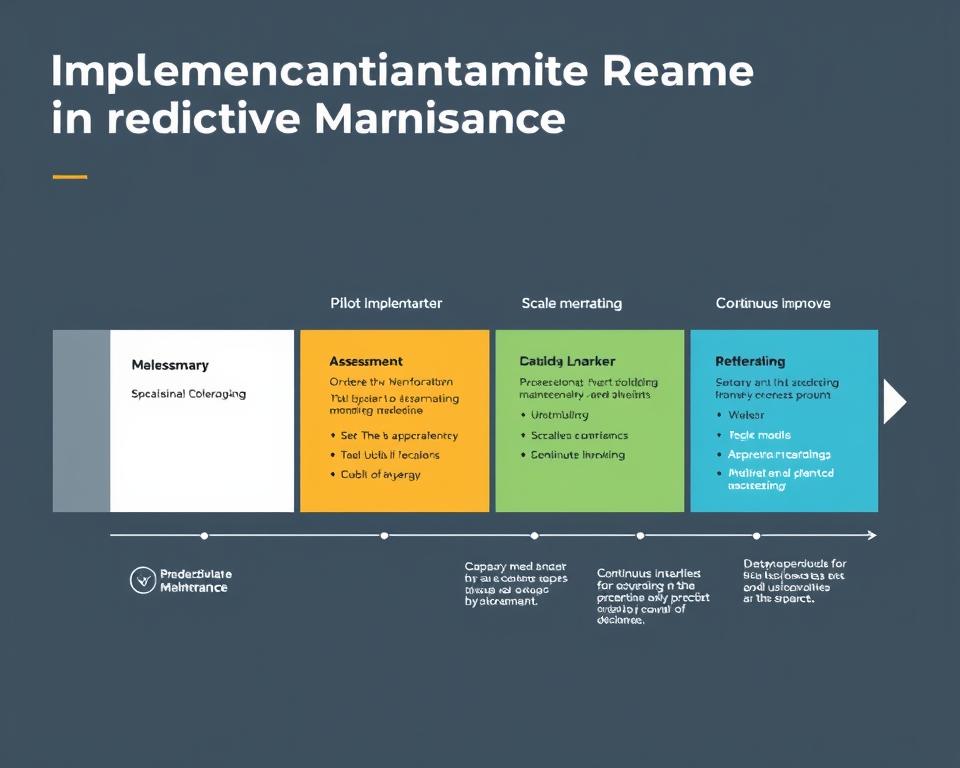
Step 1: Assessment and Readiness
Begin with a comprehensive assessment of your current maintenance practices, asset portfolio, and organizational capabilities:
- Identify critical assets based on failure impact and maintenance costs
- Evaluate data availability and quality for key equipment
- Assess IT/OT infrastructure readiness for integration
- Define clear business objectives and success metrics
- Identify skill gaps and training requirements
Step 2: Pilot Implementation
Start with a focused pilot project to validate the approach and demonstrate value:
- Select high-impact assets with good data availability
- Implement sensors and data collection infrastructure
- Develop initial predictive models for selected failure modes
- Integrate with existing maintenance workflows
- Measure results against established baseline metrics
Step 3: Scaling and Optimization
Expand the program based on lessons learned from the pilot:
- Develop a standardized approach for additional asset classes
- Implement enterprise data architecture for scalability
- Refine machine learning models with additional data
- Automate maintenance workflows and integration
- Develop comprehensive training and change management
The most successful predictive maintenance implementations start small, demonstrate clear value, and scale methodically based on proven results and organizational learning.
Ready to start your predictive maintenance journey?
Our experts can help you assess your current maintenance practices and develop a roadmap for implementing AI-driven predictive maintenance.
Contact us to discuss your AI content strategy
Business Value and ROI of Predictive Maintenance
Predictive maintenance delivers measurable value across multiple dimensions, from direct cost savings to strategic operational improvements.
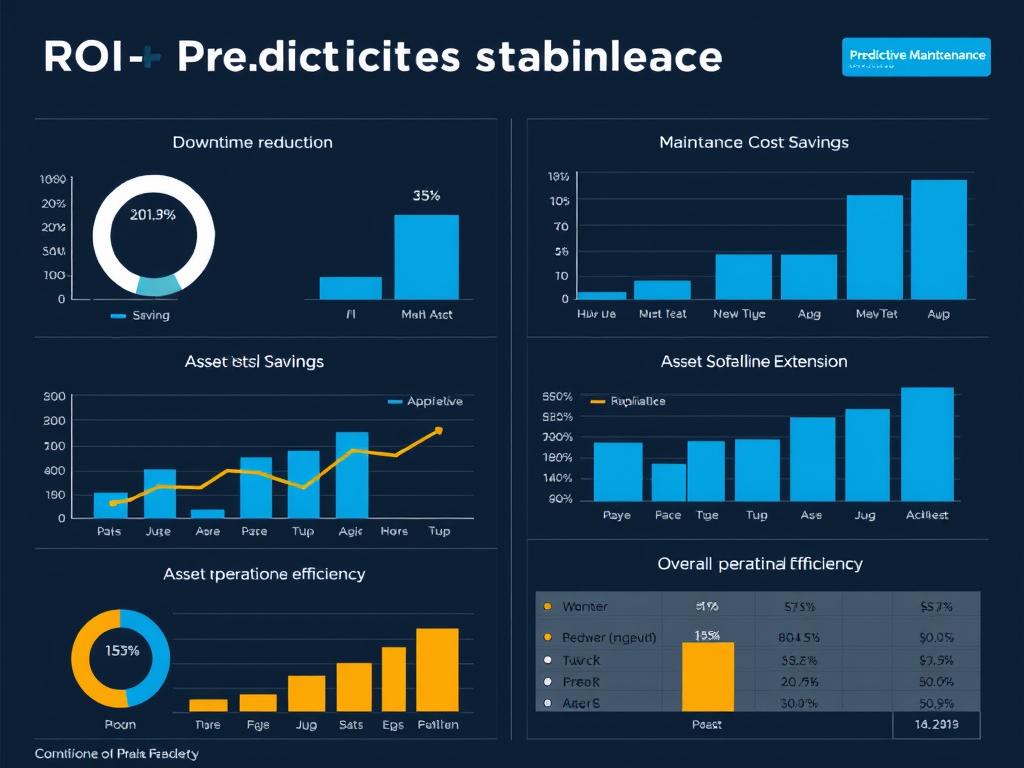
Key performance indicators for measuring predictive maintenance ROI
Quantifiable Benefits
Operational Improvements
- 10-40% reduction in unplanned downtime
- 15-25% increase in equipment availability
- 20-35% extension in asset lifespan
- 10-20% improvement in production quality
Cost Reductions
- 15-30% decrease in maintenance costs
- 20-25% reduction in spare parts inventory
- 10-15% lower energy consumption
- 5-10% reduction in capital expenditures
Strategic Value
Beyond direct cost savings, predictive maintenance creates strategic value by:
- Improving operational resilience and business continuity
- Enhancing safety performance and regulatory compliance
- Supporting data-driven decision making for capital planning
- Building digital capabilities that enable broader transformation
- Creating competitive advantage through operational excellence
When aligned with business goals, predictive maintenance becomes a strategic capability rather than a standalone technical initiative, delivering sustained value across the organization.
Common Challenges in Predictive Maintenance
While the benefits are compelling, organizations often face several challenges when implementing predictive maintenance programs.
Implementation Challenges
- Data Quality Issues: Inconsistent, incomplete, or inaccurate data undermining model accuracy
- Legacy Equipment: Older assets lacking sensor capabilities or digital interfaces
- IT/OT Integration: Complexity in connecting operational and information technology systems
- Skill Gaps: Shortage of personnel with both domain expertise and data science skills
- Change Management: Resistance to new workflows and decision-making approaches
Solution Approaches
- Data Strategy: Develop a comprehensive data quality framework and governance process
- Retrofit Solutions: Implement external sensors and edge computing for legacy equipment
- Secure Architecture: Design integration patterns that maintain OT security boundaries
- Training Programs: Invest in upskilling maintenance teams and hiring specialized talent
- Stakeholder Engagement: Involve maintenance teams early in the design and implementation

Addressing these challenges requires a balanced approach that combines technical expertise with organizational change management. By anticipating common obstacles and developing mitigation strategies, organizations can increase the likelihood of successful implementation and sustained value creation.
Getting Started with Predictive Maintenance
Successful predictive maintenance implementation begins with a clear strategy and roadmap that aligns technology investments with business objectives.
Key Steps to Begin Your Journey
- Define Clear Objectives: Establish specific, measurable goals aligned with business priorities
- Assess Current State: Evaluate existing maintenance practices, data availability, and system capabilities
- Identify High-Value Use Cases: Select initial applications with significant impact potential
- Develop a Phased Roadmap: Create a multi-stage implementation plan with clear milestones
- Build Cross-Functional Teams: Combine maintenance, IT, and analytics expertise
- Start Small and Scale: Begin with pilot projects that demonstrate value before expanding
- Measure and Communicate Results: Track performance against baseline and share successes
Pro Tip: Focus initial efforts on assets where failure is both costly and somewhat predictable. The combination of high impact and reasonable prediction accuracy will deliver the most compelling early results.
Take the next step in your predictive maintenance journey
Our team can help you develop a customized roadmap for implementing AI-driven predictive maintenance that aligns with your specific business objectives.
Contact us to discuss your AI content strategy
Frequently Asked Questions About Predictive Maintenance
What makes predictive maintenance different from preventive maintenance?
Predictive maintenance uses real-time and historical data to determine when maintenance is actually needed, rather than relying on fixed schedules. While preventive maintenance follows predetermined intervals regardless of asset condition, predictive maintenance analyzes actual equipment performance to optimize maintenance timing, reducing both unnecessary work and unexpected failures.
Does predictive maintenance require artificial intelligence?
While advanced predictive maintenance solutions leverage machine learning and AI to improve accuracy, organizations can begin with simpler statistical approaches and rule-based models. The most effective implementations typically start with basic condition monitoring and gradually incorporate more sophisticated analytics as data quality and organizational capabilities mature.
Can predictive maintenance work on legacy equipment?
Yes, predictive maintenance can be implemented on legacy equipment through retrofit solutions. External sensors can be attached to monitor vibration, temperature, acoustics, and other parameters without requiring built-in digital capabilities. Edge computing devices can collect and process this data, enabling predictive analytics even for older assets.
How long does it take to implement predictive maintenance?
Implementation timelines vary based on organizational readiness, data availability, and scope. Focused pilot projects can deliver initial results in 3-6 months, while enterprise-wide implementation typically takes 12-24 months or longer. The most successful approaches use an iterative methodology, starting with high-value use cases and expanding based on demonstrated results.
What types of failures can predictive maintenance detect?
Predictive maintenance can detect a wide range of mechanical, electrical, and process-related failures, including bearing wear, misalignment, imbalance, lubrication issues, insulation breakdown, valve leakage, and many others. The specific failure modes that can be predicted depend on the sensors deployed, data collected, and analytical models implemented.
Conclusion
Predictive maintenance represents a proven approach for improving asset reliability, reducing costs, and enabling data-driven operations. By combining sensor data, analytics, and domain expertise, organizations can transform maintenance from a reactive necessity into a strategic advantage that supports operational excellence and business objectives.
As industries continue to digitalize, predictive maintenance will remain a cornerstone of operational excellence. Organizations that invest in the right foundations today—building the data infrastructure, analytics capabilities, and organizational expertise needed for effective predictive maintenance—are better positioned to scale, innovate, and compete in an increasingly digital industrial landscape.

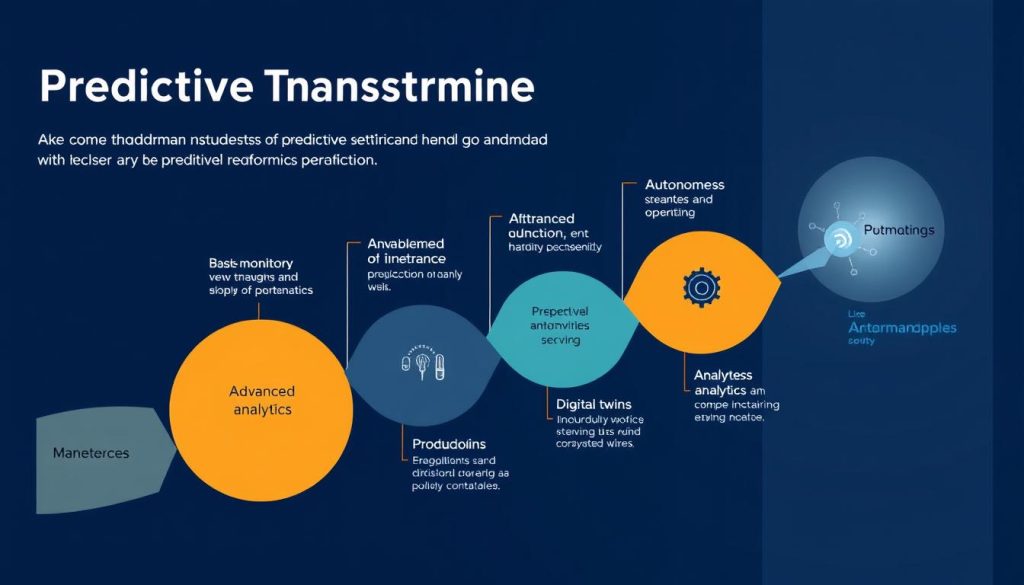
The future of predictive maintenance: from prediction to prescription and autonomy
Start your predictive maintenance transformation today
Our team of experts can help you develop and implement an effective predictive maintenance strategy tailored to your specific operational needs.
Contact us to discuss your AI content strategy