Is your internal team truly equipped to handle the relentless pace of cloud innovation while simultaneously managing day-to-day operations? Many organizations discover that maintaining a comprehensive internal technology team is a significant drain on resources, often hindering the very progress they seek.

We understand this challenge. Today’s enterprise landscape demands rapid digital advancement alongside streamlined business efficiency. This creates a critical need for a strategic partner who can deliver both.
This is where a transformative approach to handling complex infrastructure becomes essential. External partnerships provide access to top-tier capabilities and specialized expertise, enabling true focus on core objectives. This guide explores how the right partnership can become your greatest asset.
Key Takeaways
- Enterprises face dual pressures: driving innovation and reducing operational complexity.
- Strategic technology partnerships offer a path to access enterprise-grade capabilities without massive internal investment.
- Cloud innovation is a critical component of maintaining a competitive advantage.
- Specialized expertise is required to effectively implement and manage cloud environments.
- Outsourced support can alleviate the burden on internal teams, allowing them to focus on strategic goals.
- Selecting the right partner involves evaluating service breadth, security, and a proven track record.
Understanding Managed IT Services for Enterprise
Many forward-thinking companies are now turning to specialized providers to manage their essential technology functions. This approach, known as managed services, involves outsourcing critical tasks to a third-party vendor. These comprehensive solutions cover areas like digital help desk management, network security monitoring, and business continuity planning.
Providers deliver ongoing support through proactive assessment of client infrastructure. They identify potential threats and improvement opportunities before issues arise. This represents a fundamental shift from reactive problem-solving to strategic technology management.
Overview of Outsourced IT Support
The subscription-based model is a cornerstone of this support. Providers typically offer flat, recurring rates organized in tiered levels. As service levels increase, clients receive greater automation and management capabilities.
This structure allows organizations to access enterprise-grade infrastructure and expertise. They achieve this at a fraction of the capital expenditure required for an internal team. It eliminates the complexity of recruiting and retaining specialized technical talent.
Common Service Tier Comparison
| Service Tier |
Core Focus |
Automation Level |
Ideal For |
| Essential |
Reactive support & monitoring |
Basic |
Stabilizing core operations |
| Advanced |
Proactive management & security |
Moderate |
Driving operational efficiency |
| Strategic |
Business alignment & innovation |
High |
Supporting aggressive growth |
Streamlining Business Operations
Modern solutions enable organizations to keep critical networks and data operating smoothly. This eliminates high upfront costs and infrastructure investments. The primary benefit is a predictable operational model that supports growth.
We view these providers as strategic partners, not mere vendors. They work collaboratively to align technology solutions with business objectives. This ensures infrastructure actively supports initiatives rather than constraining potential.
The Evolution of Managed IT Services: From Break/Fix to Proactive Solutions
The early days of enterprise computing were characterized by a ‘wait for failure’ model of technical support. This method, known as the break/fix approach, meant technicians only addressed computer systems after a complete breakdown occurred.
This reactive style of maintenance was inherently inefficient. It led to costly downtime, unpredictable expenses, and provided little strategic value to an organization’s growth.
As the number of systems in business environments exploded, this legacy model became unsustainable. The gap between available expertise and the volume of devices needing support widened dramatically, constraining operational efficiency.
Historical Break/Fix Models
Under the break/fix paradigm, support was purely transactional. Technicians responded to emergencies, which created a cycle of firefighting. This left little room for providers to scale their operations or for clients to enjoy stable technology performance.
Transition to Proactive Monitoring and Management
A transformative shift began in the early 2000s with the rise of the managed service provider (MSP). This new approach centered on preventing problems before they could disrupt business. It introduced continuous system monitoring, regular upgrades, and routine maintenance.
This evolution toward proactive management delivered unprecedented efficiency. It consolidated resources, improved client satisfaction through predictable service delivery, and enabled providers to support larger portfolios with broader capabilities.
Break/Fix vs. Proactive Service Models
| Model Aspect |
Traditional Break/Fix |
Modern Proactive Approach |
| Primary Focus |
Reactive problem-solving |
Preventative maintenance |
| Cost Structure |
Unpredictable, per-incident fees |
Fixed, predictable monthly rates |
| Impact on Operations |
Frequent, disruptive downtime |
Maximized uptime and stability |
| Strategic Value |
Low; addresses immediate needs only |
High; aligns with long-term business goals |
This fundamental shift has become the industry standard. It ensures technology infrastructure actively enables organizational objectives rather than hindering them.
How Managed IT Services for Enterprise Boost Cloud Innovation
The migration to cloud environments represents one of the most significant technological transitions facing contemporary organizations. We guide enterprises through this complex journey, transforming legacy systems into flexible, scalable architecture.
Seamless Cloud Migration Strategies
Our approach begins with comprehensive assessment of existing infrastructure. We develop tailored migration plans that minimize disruption to daily operations. This strategic process ensures business continuity while achieving technological advancement.
Specialized providers implement cloud-based monitoring and security solutions throughout transition. These measures protect critical data and maintain system integrity. The result is a smooth shift to virtualized environments that support growth objectives.
Optimizing Infrastructure with Cloud Services
Cloud adoption delivers measurable financial benefits by eliminating costly hardware investments. Organizations redirect capital toward innovation rather than maintenance. This optimization creates efficiency across all business functions.
Ongoing management ensures cloud environments remain secure and compliant. Performance optimization becomes continuous rather than periodic. Enterprises gain enterprise-grade capabilities without massive internal budgets.
Successful cloud innovation requires more than initial migration. It demands strategic oversight from experienced providers who understand both technology and business needs. This partnership enables true digital transformation.
Key Benefits of Outsourcing IT Operations
Organizations seeking operational excellence increasingly recognize the strategic value of external partnerships. This approach delivers significant advantages, transforming technology from a cost center into a catalyst for growth.
Cost Reduction and Predictable Budgeting
We help organizations achieve substantial financial benefits. Partnering with external providers eliminates the high costs of recruiting and maintaining a full internal team.
The subscription model converts unpredictable technology expenses into fixed, monthly costs. This predictability simplifies financial planning and allows for accurate forecasting of investments.
Access to specialized expertise is another critical advantage. The global talent shortage makes filling high-level roles difficult and expensive. External partners bridge this gap effectively.
These providers bring extensive experience from managing diverse client environments. They offer deep knowledge in areas like cybersecurity and regulatory compliance.
Financial Impact: Internal Team vs. External Partnership
| Consideration |
Internal Team |
External Partnership |
| Primary Cost Structure |
Salaries, benefits, training, hardware |
Predictable monthly subscription |
| Access to Expertise |
Limited to hired staff |
Broad, specialized knowledge pool |
| Scalability |
Rigid, requires hiring/firing |
Flexible, pay for what you need |
| Strategic Value |
Often focused on maintenance |
Aligned with business growth objectives |
This model also enhances operational dependability. Providers ensure continuous support with redundant resources and established processes. This minimizes interruptions and boosts overall productivity.
Freeing internal staff from routine tasks allows them to focus on core business functions. This strategic reallocation of resources directly contributes to competitive advantage and revenue generation.
Managed Services Offerings: Cybersecurity, Network, and Data Solutions
Modern digital environments demand integrated solutions that address cybersecurity, network performance, and data integrity simultaneously. We deliver comprehensive protection strategies that encompass both technological safeguards and human factors.
Strengthening Cybersecurity and Compliance
Our cybersecurity management solutions form a critical foundation for organizational protection. We implement layered security measures that proactively address evolving threats.
Key components of our approach include:
- Continuous software updates and patch management
- Advanced antivirus and anti-malware platforms
- Multi-factor authentication implementation
- Regular risk assessments and compliance audits
- Employee security awareness training programs
These measures ensure robust defense against both internal vulnerabilities and external attacks. We maintain constant vigilance through 24/7 monitoring from dedicated security operations centers.
Remote Monitoring and IT Automation
Remote monitoring and management software enables proactive oversight of client networks and endpoints. This technology provides continuous visibility into routers, switches, firewalls, and connectivity resources.
Our automation capabilities streamline routine tasks while enhancing security posture. Automated patching ensures timely updates without disrupting business operations. Asset discovery maintains accurate inventories of network devices.
This approach identifies and resolves issues before they impact productivity. It represents a significant advancement over traditional reactive support models.
Tailoring Pricing Models for Managed IT Success
Selecting the right financial structure for technology partnerships requires careful consideration of four distinct pricing approaches. We help organizations navigate these options to find the optimal fit for their operational requirements and growth trajectory.
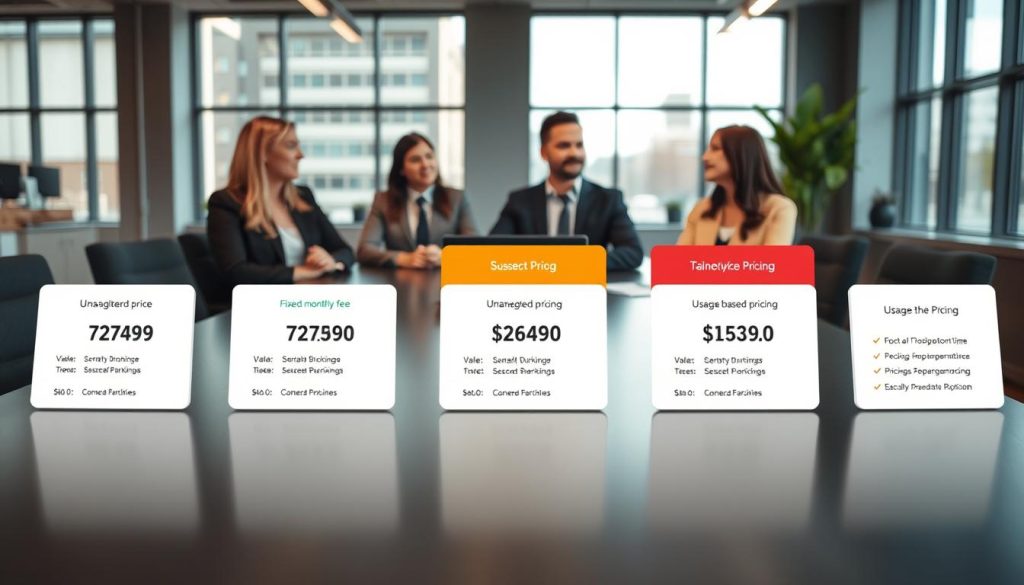
The tiered model offers package-based subscription levels with progressively comprehensive offerings. This approach provides clear upgrade paths as technology requirements expand, enabling effective bundling of complementary solutions.
For maximum flexibility, the à la carte approach functions like a restaurant menu. Clients select and pay only for specific services they require, typically ranging from thirty to one hundred dollars per service per device.
The per-user model represents the most common methodology in our industry. This structure charges a fixed monthly rate per user, encompassing all devices associated with each individual.
Alternatively, the per-device pricing establishes flat fees for each endpoint on the network. This provides straightforward cost calculation for organizations with stable infrastructure counts.
Choosing the appropriate pricing structure demands careful analysis of workforce size, device diversity, and growth expectations. We recommend working with providers who offer flexible approaches that can evolve alongside changing business needs.
Best Practices for Implementing Managed IT Solutions
The transition to external technology management succeeds when built upon proven implementation practices that prioritize client needs and operational efficiency. We focus on establishing frameworks that deliver consistent value from day one.
Effective Documentation and Strategic Planning
Comprehensive documentation forms the foundation of successful partnerships. We meticulously record organizational structures and repeatable processes. This enables consistent service delivery and identifies automation opportunities.
Strategic planning begins by examining needs from the client perspective. We carefully consider what tools and services organizations genuinely require. Our approach minimizes disruptions by aligning with operational schedules.
Talent Management and Co-Managed Services
Building client-centric teams of high-quality professionals is essential. We combine technical expertise with business acumen and communication skills. When recruiting challenges arise, strategic partnerships effectively bolster internal resources.
The co-managed model dispels misconceptions about external support making internal professionals obsolete. Instead, our providers work as extensions of existing teams. They handle routine tasks, freeing internal staff for complex projects.
This collaborative approach delivers superior outcomes than either team could achieve independently. Both teams work together to resolve issues and drive innovation forward.
Enhancing Business Growth Through Robust IT Management
Strategic growth initiatives often stall when technology infrastructure lacks the specialized expertise required for modern challenges. We bridge this gap by providing access to professionals with deep knowledge across cybersecurity, compliance, and operational efficiency. This external perspective transforms how companies approach their digital evolution.
Leveraging Expert Knowledge for Strategic Advantage
Our professionals bring real-world experience from managing diverse client environments. They understand nuanced compliance requirements and emerging threats that internal teams might overlook. This breadth of knowledge becomes a powerful asset for any organization.
We maintain constant currency with evolving technologies and security protocols. Our team dedicates significant resources to continuous learning and certification maintenance. This ensures your infrastructure benefits from the latest advancements without straining internal staff.
The risk mitigation value extends beyond basic protection. We implement layered defense strategies informed by threat intelligence gathered across our entire client portfolio. This collective wisdom identifies vulnerabilities that inexperienced teams might miss.
Organizations benefit from both our skills and our extensive resources. This includes advanced technology platforms and established vendor relationships. The partnership approach transforms technology from a cost center into a strategic growth enabler.
Strategic technology management ensures your infrastructure scales with organizational expansion. It supports new initiatives without becoming a constraint. This reliability allows leadership to pursue growth opportunities with confidence.
Strengthening IT Infrastructure with Integrated Managed Services
The effectiveness of digital operations hinges on three interconnected elements that form the backbone of business continuity. We address these foundational pillars through comprehensive approaches that transform how organizations approach their technology needs.
Scalability, Reliability, and Security Considerations
Our integrated approach ensures infrastructure grows with your organization without compromising performance. We implement flexible architecture that accommodates expansion while maintaining operational stability.
Security remains paramount throughout this process. Layered controls and continuous monitoring protect valuable data assets from evolving threats. This comprehensive protection extends across all systems and storage solutions.

Success Stories and Case Studies
Documented results demonstrate the tangible benefits of our approach. Organizations typically achieve a 55% reduction in IT issues within three months of implementation. Emergency response times average just ten minutes, minimizing business disruption.
Our methodology includes thorough root-cause analysis for every resolved issue. This prevents recurring problems by addressing underlying causes rather than symptoms. The compounding effect creates increasingly stable operations over time.
Real-world success includes a New York marketing agency that seamlessly transitioned to remote work. They improved productivity while maintaining security and connectivity. Similarly, a law firm reduced servers from nineteen to three, freeing attorneys from IT troubleshooting.
These outcomes represent typical results when partnering with experienced providers. We combine technical expertise with genuine commitment to client success, delivering comprehensive solutions that support sustainable growth.
Conclusion
As organizations navigate complex technological ecosystems, the choice between building internal capabilities and leveraging external expertise becomes increasingly critical. We recognize this strategic decision represents a fundamental shift in how modern enterprises approach their technological needs.
The evolution from reactive support models to comprehensive managed services has transformed technology from a cost center into a strategic enabler. This approach delivers measurable benefits including predictable budgeting, enhanced security, and access to specialized knowledge.
Successful partnerships require careful alignment between organizational objectives and provider capabilities. The right solution bridges talent gaps while protecting critical data and infrastructure from emerging threats.
We encourage viewing these services as strategic investments in organizational resilience. This perspective enables businesses to capitalize on cloud opportunities while maintaining focus on core objectives.
FAQ
What specific services are included in a typical enterprise managed services agreement?
Our comprehensive agreements include proactive monitoring management, robust cybersecurity protection, network management, cloud services optimization, and dedicated support. We tailor these solutions to address your organization’s specific operational needs, ensuring your infrastructure, data, and systems are secure and efficient.
How does partnering with a service provider lead to predictable budgeting and cost reduction?
We transition your business from unpredictable capital expenses to a stable, subscription-based pricing model. This approach eliminates surprise costs associated with break/fix scenarios and hardware failures. You gain predictable monthly operational costs, allowing for better financial planning and resource allocation for strategic growth initiatives.
What is the difference between proactive monitoring and traditional break/fix IT support?
Traditional break/fix models react to problems after they disrupt your operations. Our proactive monitoring management uses advanced software to continuously watch your systems, identifying and resolving potential threats and performance issues before they impact your business. This shift prevents downtime and keeps your teams productive.
How do you ensure our data and operations remain secure and compliant?
We implement a layered cybersecurity strategy that includes advanced threat detection, regular compliance audits, and employee training. Our solutions are designed to protect your sensitive data and ensure your organization meets industry-specific regulatory requirements, providing peace of mind and reducing legal risks.
Can your services scale with our business growth and evolving needs?
Absolutely. Our solutions are built on scalable cloud infrastructure and flexible service plans. As your business expands or your technology requirements change, we seamlessly adjust resources, storage, and support levels. This ensures your IT capabilities always align with your strategic objectives without unnecessary overhead.
What is the typical process for migrating our operations to the cloud?
We begin with a thorough assessment of your current infrastructure and business goals. Our team then develops a customized cloud migration strategy to ensure a smooth transition with minimal disruption. We manage the entire process, from initial data transfer to ongoing optimization of your new cloud environment.
Author
Praveena Shenoy
- Country Manager, Opsio
Praveena Shenoy is the Country Manager for Opsio India and a recognized expert in DevOps, Managed Cloud Services, and AI/ML solutions. With deep experience in 24/7 cloud operations, digital transformation, and intelligent automation, he leads high-performing teams that deliver resilience, scalability, and operational excellence. Praveena is dedicated to helping enterprises modernize their technology landscape and accelerate growth through cloud-native methodologies and AI-driven innovations, enabling smarter decision-making and enhanced business agility.