What if the key to overcoming your biggest operational hurdles wasn’t a complete overhaul, but a smarter way of seeing? Many leaders believe that significant gains require monumental effort, but what if a transformative shift was already within reach?
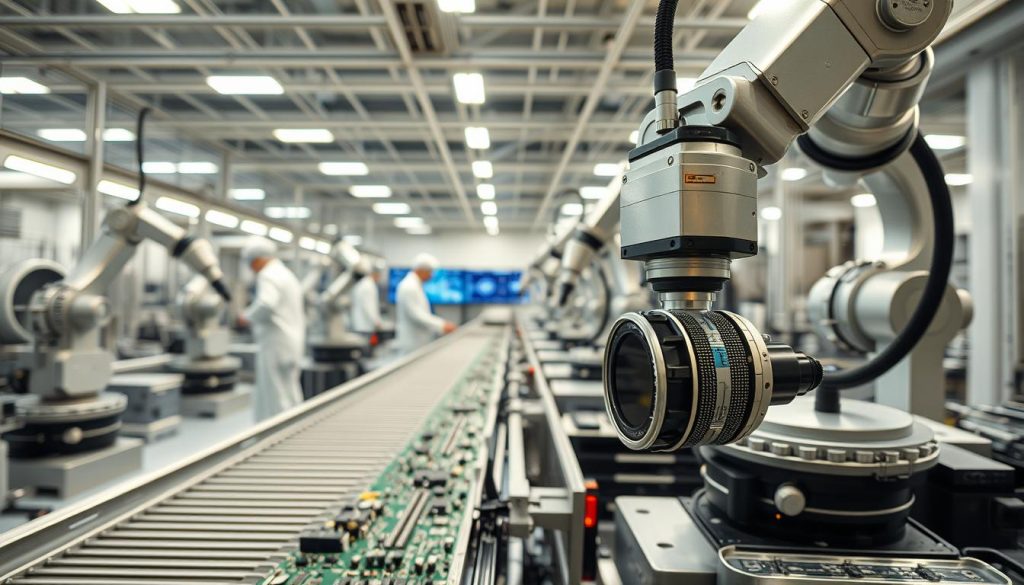
Modern manufacturing facilities face immense pressure. Manual processes introduce variability and human error, leading to inconsistent quality and unplanned stoppages. In fact, research indicates that up to 80% of unplanned downtime stems from human error, consuming valuable production line time.
We see an opportunity for a different path. Advanced computer vision technology offers a new lens for manufacturing operations. These intelligent systems provide automated monitoring and real-time decision-making capabilities. They address critical challenges head-on.
Our collaborative approach guides decision-makers through the complex landscape of implementing artificial intelligence. We focus on integrating these powerful solutions seamlessly with existing manufacturing infrastructure. The goal is continuous visibility and data-driven improvements that create sustainable advantages.
Imagine transforming traditional inspection and quality control into automated, consistent, and scalable processes. This is the promise of modern computer vision systems. For a deeper understanding of how these technologies are revolutionizing the industry, explore our insights on manufacturing automation.
Key Takeaways
- Manual processes are a primary source of error and downtime in industrial settings.
- Intelligent visual systems provide a powerful alternative to inconsistent manual checks.
- Seamless integration with existing operations is crucial for successful implementation.
- Real-time data from these technologies enables proactive decision-making.
- The focus is on creating sustainable, long-term advantages for the entire facility.
- Expert guidance helps navigate the technical and strategic aspects of adoption.
Understanding the Impact of Vision AI on Production Efficiency
Moving beyond theoretical potential, visual AI demonstrates concrete value by directly addressing core manufacturing challenges. These systems deliver immediate, measurable advantages that transform daily operations.
We guide leaders in leveraging this technology to achieve significant gains. The focus is on practical applications that yield rapid returns.
Benefits for Manufacturers
Intelligent visual systems provide a multi-faceted advantage. They automate repetitive inspection tasks with unwavering consistency.
This leads to superior product quality and frees skilled personnel for more complex duties. The technology also offers deep insights into the entire process.
Real-time monitoring identifies bottlenecks and deviations instantly. This proactive approach prevents small issues from escalating into major disruptions.
Key Advantages of Visual Intelligence Systems
| Benefit Area |
Operational Impact |
Measurable Outcome |
| Quality Assurance |
Consistent, automated inspection standards |
Higher first-pass yield rates |
| Process Visibility |
Real-time detection of deviations |
Reduced unplanned downtime |
| Operational Speed |
Identification and elimination of bottlenecks |
Improved units per hour (UPH) |
| Data Integrity |
Accurate, unbiased monitoring of task completion |
Reliable metrics for process improvement |
Real-World Use Cases in Production Lines
Our collaborations with electronics manufacturing services show rapid results. In one case, a system revealed a data reporting gap within four weeks.
Operators were marking tasks complete prematurely, skewing system data. Correcting this procedural issue directly enhanced operational flow.
Another implementation in semiconductor packaging significantly reduced average cycle time. Yield remained stable at 95% with a 97.6% first-pass rate.
These examples highlight the technology’s versatility. From assembly verification to packaging validation, the applications are vast and impactful.
Integrating Computer Vision for Automated Inspection
The transition from manual oversight to automated precision represents a fundamental evolution in manufacturing quality control. We guide organizations through this transformation, ensuring a smooth integration that delivers immediate benefits.
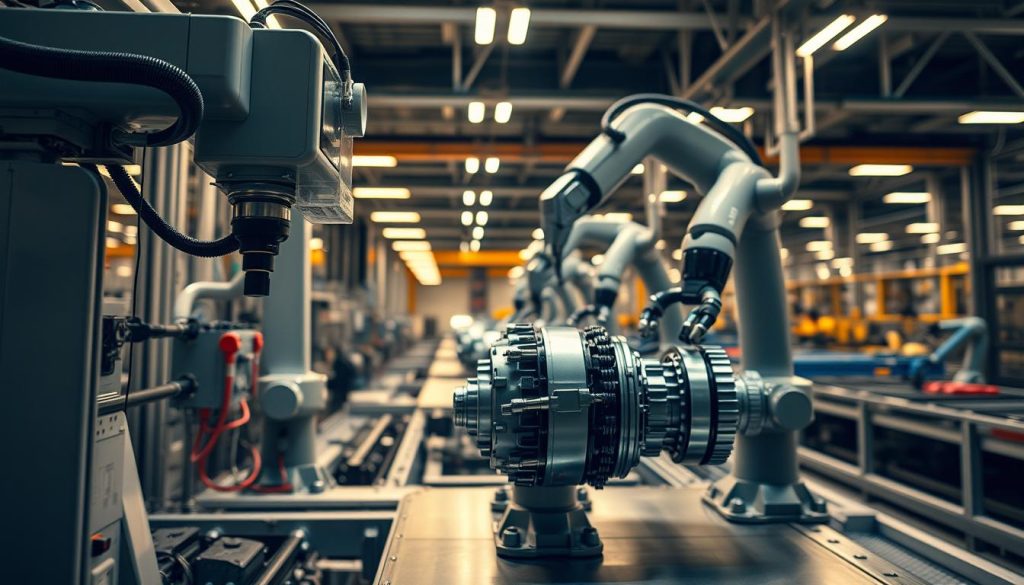
Manual Versus Automated Quality Assessment
Traditional manual inspection approaches face inherent limitations that affect consistency. Human inspectors experience fatigue during extended shifts, leading to variable performance. Lighting conditions and subjective judgment further complicate quality assessment.
These factors create inconsistencies that impact overall product quality. The challenge becomes more pronounced when scaling operations to meet growing demands.
Comparison of Inspection Methods
| Aspect |
Manual Inspection |
Automated Systems |
| Consistency |
Variable across shifts |
Unchanging standards |
| Speed |
Limited by human capacity |
Millisecond processing |
| Accuracy |
Subject to human error |
Objective measurement |
| Scalability |
Labor-intensive |
Easily expandable |
Computer vision inspection systems operate without fatigue or variation. Once trained on specific defect parameters, they maintain identical evaluation criteria indefinitely. This consistency is crucial for maintaining high quality standards.
We recommend beginning with parallel operations where automated systems work alongside human teams. This approach builds confidence while documenting performance improvements. The data gathered during this phase often reveals the substantial advantages of automated inspection.
Increase production efficiency with vision AI in Manufacturing
Modern industrial environments require advanced solutions that go beyond traditional automation methods. We help manufacturers implement sophisticated computer vision technologies that integrate seamlessly into existing workflows. These systems provide continuous monitoring without disrupting established operational rhythms.
Our approach centers on deploying high-performance models like YOLO11 that deliver both speed and precision. These computer systems process visual information instantly, identifying surface flaws and assembly errors at remarkable speeds. The technology operates continuously, eliminating the consistency challenges of manual inspection.
We’ve witnessed how these technologies transform manufacturing operations by automating critical tasks. Key applications include:
- Alignment verification and tolerance measurement
- Part presence validation and component tracking
- Surface flaw detection and quality assessment
Through our partnerships, we ensure these computer vision implementations capture comprehensive operational data. This information extends beyond simple pass/fail decisions, providing insights into process variations and equipment performance. The real time feedback enables proactive adjustments and continuous improvement.
Successful implementation requires careful model training using facility-specific data. We guide manufacturers in teaching these systems to recognize exact defect types and quality standards. This customized approach ensures the technology adapts to unique manufacturing environments and product lines.
The integration of visual technology represents a fundamental transformation in how facilities monitor quality control and manage processes. These advancements create sustainable competitive advantages through multiple mechanisms, including reduced inspection cycles and optimized resource allocation.
Leveraging Data-Driven Insights and Image Analysis
The foundation of any intelligent system rests on the quality of information it processes. We guide manufacturers in shifting from fragmented manual data collection to a comprehensive strategy built on continuous visual capture.
Capturing Accurate Visual Data
Traditional methods like stopwatch timing provide an incomplete picture. Our approach prioritizes the systematic capture of high-resolution images and video across all product variants and failure modes.
This visual data forms the essential input for training robust computer vision models. Proper lighting and organization by defect type are critical for consistency.
Actionable Metrics for Process Improvement
The true power of this data emerges through sophisticated analysis. These systems transform raw images into quantifiable insights about cycle times and equipment performance.
This enables a proactive approach to the process. For a deeper look at transforming information into strategy, explore ways to leverage AI for data.
Data Strategy Implementation Framework
| Component |
Manual Method |
Computer Vision Approach |
| Data Collection |
Sampled, time-consuming |
Continuous, real-time |
| Data Quality |
Subjective, error-prone |
Objective, consistent |
| Analysis Speed |
Delayed, batch processing |
Instant, streaming |
| Actionable Output |
Historical reports |
Live alerts and trends |
We help establish clear annotation standards and storage protocols. This creates a feedback loop where outcomes continuously refine the computer vision models, turning data into a lasting competitive advantage.
Optimizing Quality Control and Reducing Defects
The pursuit of flawless manufacturing output requires innovative approaches to quality management that transcend traditional inspection methods. We help manufacturers implement advanced strategies that address quality challenges comprehensively.
Real-Time Defect Detection and Quality Assurance
Traditional manual inspection methods often struggle with consistency and speed. Human inspectors face challenges maintaining focus over long shifts, leading to variable performance. These limitations directly impact product quality and customer satisfaction.
Our approach centers on implementing sophisticated detection systems that operate continuously. These technologies identify surface flaws like cracks, scratches, and discoloration with remarkable precision. The consistency achieved surpasses human capabilities.
We’ve observed significant improvements when manufacturers adopt these automated inspection systems. The technology differentiates between acceptable and defective products with high accuracy. This reliability builds confidence in automated quality control decisions.
The benefits extend beyond simple defect identification. Early detection minimizes material waste and eliminates expensive rework operations. Preventing defects from propagating through production stages protects brand reputation.
Real-time monitoring represents a fundamental shift in quality assurance philosophy. Instead of reactive sampling, manufacturers gain proactive control over their processes. This transformation creates measurable improvements in operational effectiveness.
Overcoming Challenges in AI Vision System Deployment
Implementing advanced visual technology involves navigating a series of practical hurdles that require careful planning and expert guidance. We partner with organizations to address these complexities directly, transforming potential obstacles into opportunities for growth.

Initial financial commitment often represents the first consideration for many manufacturers. These systems require significant investment in cameras, sensors, and computational infrastructure. We help frame these costs as strategic investments that deliver measurable returns.
Adapting to Environmental Variables
Dynamic factory conditions present unique challenges for computer vision models. Lighting changes, dust, and vibration can affect accuracy. Our approach includes robust hardware selection and preventive maintenance schedules.
We ensure consistent performance despite challenging conditions. Regular fine-tuning maintains system reliability over time.
Ensuring Scalable Integration Across Production Lines
Successful deployment across multiple production lines demands careful planning. Not all camera systems suit every task. Inspecting transparent materials requires different optics than tracking assembly sequences.
We guide manufacturers in selecting hardware matched to specific inspection needs. Sensor positioning is critical for accuracy. Testing configurations directly on lines before finalizing purchases prevents costly mistakes.
Deployment Challenge Comparison
| Challenge |
Common Issue |
Our Solution |
| Data Requirements |
Extensive labeled datasets needed |
Systematic data capture planning |
| Workforce Training |
Staff unfamiliar with new technology |
Comprehensive technical training programs |
| Environmental Factors |
Lighting changes affect accuracy |
Robust hardware and maintenance protocols |
| Scalability |
Hardware mismatch across tasks |
Use-case specific equipment selection |
Workforce training addresses another critical area. Adopting these computer vision systems involves preparing staff for new operational paradigms. We develop programs that build confidence and competence.
Our collaborative approach accounts for safety requirements and integration challenges. Understanding the practical risks associated with new technology implementation helps mitigate potential equipment failures. This comprehensive strategy ensures smooth adoption across the organization.
Conclusion
As industrial processes grow more complex, the need for sophisticated monitoring systems becomes increasingly critical. We have demonstrated how computer vision technologies transform traditional manufacturing approaches into data-driven operations.
These intelligent systems deliver consistent accuracy across quality control and defect detection. The benefits extend to comprehensive real-time monitoring that prevents equipment issues before they escalate.
Looking ahead, emerging technologies like 3D imaging and multispectral analysis will further enhance these capabilities. Advanced computer vision models will enable unprecedented precision in complex manufacturing environments.
We remain committed to guiding organizations through this technological evolution. Our partnership approach ensures that every implementation delivers measurable improvements while adapting to each facility’s unique requirements.
FAQ
How does computer vision improve quality control on manufacturing lines?
Our computer vision systems enhance quality control by performing automated, high-speed visual inspection of products in real time. This technology identifies defects, inconsistencies, and deviations from standards with greater accuracy and consistency than manual inspection, directly improving product quality and reducing risks associated with human error.
What is the primary benefit of using AI for visual inspection tasks?
The primary benefit is the significant increase in operational efficiency and accuracy. Artificial intelligence and machine learning models can analyze vast amounts of visual data from video or images without fatigue, enabling 24/7 monitoring. This leads to faster detection of equipment failures, process anomalies, and quality issues, allowing for immediate corrective actions.
Can these vision systems be integrated with existing factory equipment?
A> Yes, a key advantage of our solutions is their design for scalable integration. We ensure our AI-driven inspection systems can connect with your current production lines and manufacturing equipment. This minimizes disruption during deployment and allows you to leverage existing infrastructure while gaining powerful new insights into your operations.
How does real-time monitoring contribute to production line management?
Real-time monitoring provides immediate insights into the manufacturing process, enabling proactive management. By analyzing visual data as it happens, the system can trigger alerts for potential equipment failures, safety hazards, or quality control breaches. This allows operations teams to address issues instantly, preventing downtime and maintaining consistent product quality.
What kind of training data is required to implement a vision AI system?
Implementing a robust system requires a dataset of images or video that represents both acceptable products and known defects. We work collaboratively with your team to gather and label this visual data, which is used to train the machine learning models. The quality and breadth of this initial training data are crucial for the model’s accuracy in detecting defects during live production.
How do AI-powered inspection systems handle different product variations?
Our advanced systems are designed to adapt to product variations through continuous learning. The machine learning models can be trained to recognize a wide range of product types and configurations on the same production line. This flexibility ensures that the inspection process remains accurate and effective even when manufacturing different products or implementing design changes.
Author
Praveena Shenoy
- Country Manager, Opsio
Praveena Shenoy is the Country Manager for Opsio India and a recognized expert in DevOps, Managed Cloud Services, and AI/ML solutions. With deep experience in 24/7 cloud operations, digital transformation, and intelligent automation, he leads high-performing teams that deliver resilience, scalability, and operational excellence. Praveena is dedicated to helping enterprises modernize their technology landscape and accelerate growth through cloud-native methodologies and AI-driven innovations, enabling smarter decision-making and enhanced business agility.