

What Is a Dimensional Measurement Vision System?
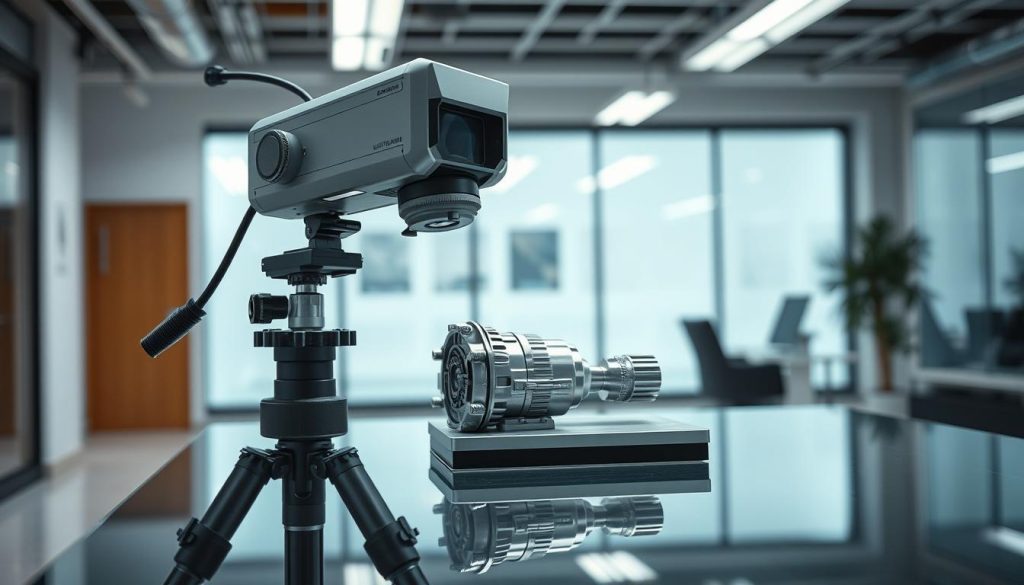
A dimensional measurement vision system is an automated inspection platform that uses high-resolution cameras, specialized sensors, and analytical software to quantify the physical dimensions of manufactured parts without physical contact. These systems capture detailed images and extract precise measurements of features such as diameters, angles, edge positions, roundness, and complex geometries—all at speeds that match modern production lines.
Unlike traditional manual gauging with calipers or go/no-go fixtures, a vision-based approach delivers consistent, micron-level accuracy regardless of operator skill. By eliminating the variability inherent in human measurement, manufacturers in aerospace, automotive, medical devices, and electronics gain confidence that every component meets exact design specifications.
The technology does more than issue simple pass/fail verdicts. It produces numerical data across multiple measurement sections, feeding directly into statistical process control (SPC) tools and traceability databases. This combination of speed, precision, and data intelligence is what makes automated optical inspection a cornerstone of modern quality assurance.
How Manual Gauging Evolved Into Machine Vision Measurement
The shift from manual to automated inspection solved the three biggest limitations of traditional methods: operator variability, slow throughput, and incomplete data capture.
For decades, inspectors relied on hand tools—calipers, microgauges, optical comparators, and inspection jigs. These techniques worked, but they introduced inconsistency. Two operators measuring the same part often recorded different values. Environmental factors like temperature fluctuations and vibration compounded the problem.
Inspection jigs offered basic pass/fail results yet produced no numerical data for process improvement. Full manual inspection programs required significant labor investment, while sampling strategies risked missing defective parts entirely.
| Inspection Aspect | Manual Gauging | Machine Vision Measurement |
|---|---|---|
| Measurement speed | Minutes per part | Seconds per part |
| Accuracy consistency | Operator-dependent | Repeatable, micron-level |
| Data capture | Limited manual recording | Comprehensive automated logging |
| Complex geometry handling | Challenging and slow | Simultaneous multi-feature analysis |
| Error rate | Subject to human fatigue | Minimal and quantifiable |
Machine vision measurement platforms addressed every one of these gaps. Automated inspection now delivers the speed, accuracy, and data intelligence that high-volume production demands while freeing skilled workers for higher-value tasks.
Core Components: Cameras, Sensors, and Software
Every industrial vision system relies on three tightly integrated components—cameras that capture images, sensors that detect three-dimensional deviations, and software that transforms raw visual data into actionable measurements.
High-Resolution Cameras
Camera selection determines the baseline capability of the system. Area-scan cameras handle discrete parts with high detail, while line-scan cameras excel at inspecting continuous materials such as textiles or metal strip. CCD sensors provide high sensitivity in low-light conditions, which is critical for inspecting dark or reflective surfaces.
3D Profile Sensors
For applications demanding depth data, 3D profile sensors detect deviations from design parameters that flat images cannot reveal. These sensors are essential in quality control for manufacturing environments where components have complex surface topographies.
Analytical Software
Software is where raw images become measurements. Modern platforms perform object recognition, defect detection, edge detection, and geometric analysis through sophisticated algorithms. The software evaluates whether each measured dimension falls within specified tolerances and outputs results in real time.
Three principles guide effective digital measurement: accuracy (correctness of results), repeatability (consistency across inspections), and efficiency (speed without compromising quality). Technologies such as white light interferometry push resolution to the nanometer scale, enabling inspection of micro-features that were unmeasurable just a decade ago.
Pixel Resolution and Sub-Pixel Edge Detection
The achievable measurement precision of an optical measurement system is ultimately governed by pixel resolution—the physical length each pixel represents—and by sub-pixel processing techniques that push accuracy well beyond that hardware limit.
Calculating Pixel Resolution
Pixel resolution is calculated with a simple formula: divide the field of view (in millimeters) by the camera’s pixel count in that direction. A 2-megapixel camera covering a 100 mm field of view, for example, yields a resolution of approximately 0.083 mm per pixel. Tolerance thresholds are typically set at ±5 pixels to ensure stable pass/fail judgments.
Selecting a higher megapixel camera narrows the resolution, enabling tighter tolerances. This lets manufacturers match hardware to their specific non-contact measurement requirements without over-investing.
How Sub-Pixel Processing Boosts Precision
Sub-pixel edge detection performs calculations in units smaller than a single pixel. It analyzes the gradient transition between light and dark regions, converts these into waveforms, and identifies peaks to pinpoint edge positions to within fractions of a pixel—achieving precision of 0.001 pixel in practice.
This technique is especially valuable because it optimizes accuracy without requiring a more expensive, higher-resolution camera. Manufacturers can extract superior performance from existing hardware, making sub-pixel processing a cost-effective upgrade path for any visual inspection system.
Edge Detection Techniques for Measurement Precision
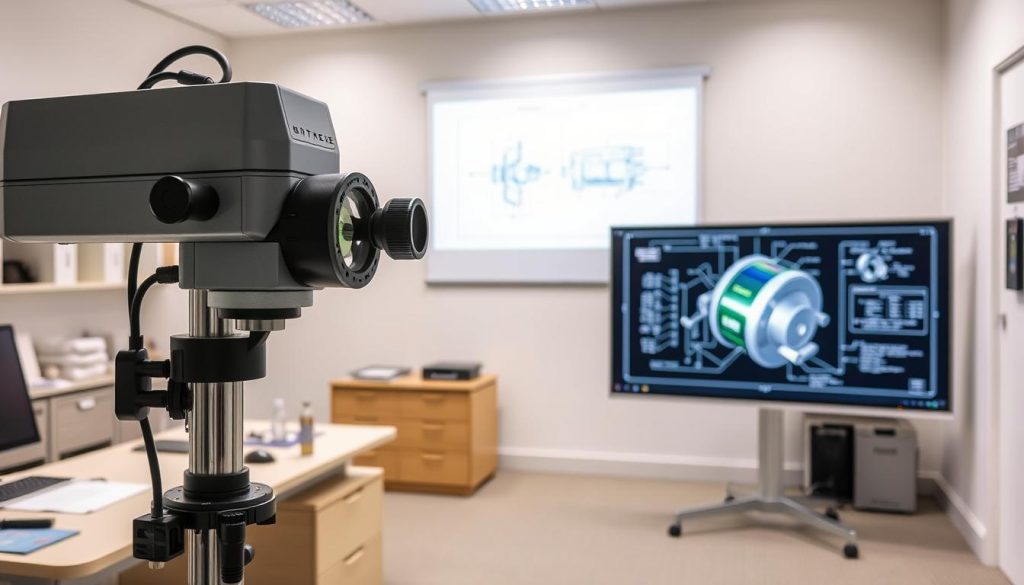
Reliable edge detection is the single most critical algorithm in any dimensional measurement vision system, because every length, angle, and diameter calculation depends on knowing exactly where feature boundaries begin and end.
Differential Processing and Sensitivity Thresholds
The process starts by scanning the target perpendicular to the expected edge direction. This generates projection waveforms that represent intensity transitions across feature boundaries. Mathematical differentiation then highlights areas of rapid shade change—larger differential values flag potential edge locations.
Normalization corrects for uneven illumination, and only peaks that exceed a defined sensitivity threshold become confirmed edge points. This approach ensures stable results even when lighting conditions vary across production shifts.
Generating Reliable Numerical Data
Final precision enhancement calculates waveform characteristics across three adjacent pixels, achieving edge-position accuracy of 0.001 pixel. These techniques deliver not just pass/fail verdicts but rich numerical datasets of dimensions across multiple cross-sections.
The resulting data supports traceability management, SPC charting, and long-term process improvement. Manufacturers gain the documentation required for regulatory compliance and the analytical foundation for continuous quality enhancement.
Implementing an Automated Dimensional Inspection System
Successful deployment starts with a requirements assessment that maps the specific attributes, accuracy levels, speed targets, and environmental conditions of your production line.
Key implementation steps include:
- Define inspection scope. Identify which dimensions, tolerances, and geometric features require verification. Document the required accuracy and throughput.
- Select hardware. Choose cameras with sufficient resolution, appropriate lighting (structured, diffuse, or backlighting), and stable mounting fixtures that maintain consistent positioning.
- Configure software. Set up gauging wizards, calibration routines, and tolerance profiles. Modern platforms like IVS® enable high-speed data capture and multi-area simultaneous measurement.
- Integrate into the line. Connect the system to PLCs, factory information systems, or SQL databases for real-time data flow and automated reject handling.
- Validate and refine. Run gauge repeatability and reproducibility (GR&R) studies. Verify that measured values correlate with known reference standards.
Environmental considerations—vibration control, temperature stability, contamination shielding—are equally important. A well-controlled environment ensures the system delivers trustworthy results through extended operational periods without drift.
Inline Inspection: Non-Contact Quality Control at Production Speed
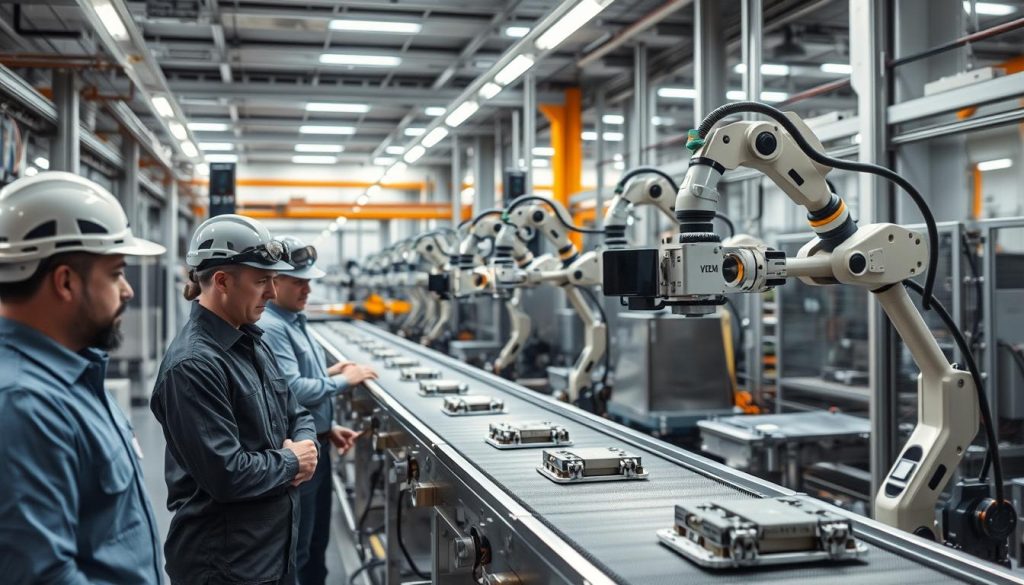
Inline inspection eliminates the traditional bottleneck of pulling parts offline for measurement by embedding non-contact measurement directly into the production workflow. This means every part is verified as it moves through the line, not just a statistical sample.
| Parameter | Offline Sampling | Inline Non-Contact Inspection |
|---|---|---|
| Inspection coverage | Statistical sample only | 100% of parts |
| Production interruption | Frequent stops | None |
| Feedback speed | Delayed reports | Real-time corrective signals |
| Defect escape risk | Higher (gaps between samples) | Near-zero |
Real-time feedback enables immediate process corrections before tolerances are exceeded. Robots equipped with inline vision capabilities measure multiple parameters simultaneously—angles, roundness, lengths—in a single cycle. This comprehensive approach ensures complete part verification at full production speed.
The efficiency gains are substantial. Manufacturers report 80–90% reductions in per-part inspection time when switching from offline manual methods to inline machine vision quality control.
Industrial Applications Across Manufacturing Sectors
Dimensional measurement vision systems deliver measurable ROI across every manufacturing sector where tight tolerances and high throughput intersect.
Automotive
Automotive production lines use these systems to inspect complex stampings, machined engine components, and assembled sub-systems. Vision-based verification catches dimensional drift before defective parts reach downstream assembly stations, preventing costly recalls.
Aerospace and Defense
Aerospace components must meet extremely tight tolerances—often single-digit microns—where deviations compromise flight safety. Non-contact inspection protects delicate turbine blades and structural elements while generating the traceability documentation that aviation regulators require.
Electronics and Semiconductors
Capacitor lead alignment, die placement accuracy, and PCB trace widths all demand the precision that only automated optical inspection can deliver at production volume. Advanced imaging segments components for micro-level analysis of diameter, spacing, and positional accuracy.
Medical Devices
Implants, surgical instruments, and diagnostic devices carry zero tolerance for dimensional error. Machine vision for manufacturing in this sector provides the dual benefit of precision measurement and fully auditable inspection records for FDA and MDR compliance.
Data Acquisition, SPC, and Traceability
Comprehensive, automated data capture transforms inspection from a gatekeeping function into a continuous improvement engine. Modern vision platforms transmit measurement results directly to acquisition systems, SPC dashboards, and factory databases in real time.
Manufacturers can track dimensional trends over time, calculate capability indices like Cp and Cpk, and identify process drift before tolerances are breached. Image saving and inspection reporting provide brand protection against complaints or recalls, while full data logging supports AI-driven quality assurance initiatives.
Industry 5.0 and IIoT trends are accelerating demand for flexible measurement platforms that integrate artificial intelligence and advanced analytics. Establishing this data infrastructure now positions manufacturers for the next generation of predictive quality control, where systems not only detect deviations but forecast and prevent them.
Choosing the Right Vision System for Your Production Line
Selecting the optimal system requires balancing resolution, speed, integration complexity, and budget against your specific inspection requirements. Consider the following factors:
- Part complexity: Simple 2D profiles may need only an area-scan camera, while complex 3D geometries require profile sensors or structured-light systems.
- Throughput needs: Match the camera frame rate and processing speed to your line speed. Inline systems must keep pace without creating bottlenecks.
- Tolerance requirements: Calculate the pixel resolution needed to reliably detect your tightest tolerance, then add margin for sub-pixel processing.
- Environment: Harsh conditions (dust, vibration, temperature extremes) demand ruggedized enclosures and stable mounting solutions.
- Data integration: Ensure the system supports your existing factory information systems, PLC protocols, and database formats.
Working with an experienced integration partner shortens deployment timelines and avoids common pitfalls. At Opsio, we help manufacturers evaluate, deploy, and optimize vision-based inspection solutions that align with their operational goals and scale with future production demands.
Conclusion
Dimensional measurement vision systems have moved from specialized laboratory tools to essential production-floor infrastructure. They replace the variability of manual gauging with consistent, micron-level precision. They replace delayed offline sampling with real-time inline verification. And they replace sparse data with comprehensive measurement records that power SPC, traceability, and continuous improvement.
For manufacturers operating in sectors where quality failures carry safety, regulatory, or financial consequences, automated dimensional inspection is no longer optional. The technology is proven, the ROI is measurable, and the competitive advantage of 100% inline inspection grows as production complexity increases. Investing in this foundational infrastructure now prepares your operations for the demands of Industry 5.0 and beyond.
Frequently Asked Questions
What is a dimensional measurement vision system?
A dimensional measurement vision system is an automated platform that uses high-resolution cameras, sensors, and software to measure the physical dimensions of manufactured parts without physical contact. It captures images, extracts geometric features, and compares measurements against specified tolerances in real time.
How does sub-pixel edge detection improve measurement accuracy?
Sub-pixel edge detection analyzes the intensity gradient between light and dark regions to locate feature boundaries at fractions of a pixel—achieving precision as fine as 0.001 pixel. This dramatically improves accuracy without requiring a higher-resolution camera, making it a cost-effective way to enhance existing systems.
Can vision systems integrate with existing production lines?
Yes. Modern vision systems are designed for seamless integration with PLCs, factory information systems, and SQL databases. They support standard communication protocols for real-time data exchange, enabling immediate feedback and automated reject handling within existing workflows.
What industries benefit most from automated dimensional inspection?
Automotive, aerospace, electronics, semiconductors, and medical devices benefit most because these sectors require tight tolerances, high throughput, and comprehensive traceability documentation. Any manufacturing environment where dimensional accuracy directly impacts safety or performance is a strong candidate.
How does inline inspection differ from offline sampling?
Inline inspection embeds non-contact measurement directly into the production line, verifying 100% of parts in real time. Offline sampling pulls a statistical subset of parts for separate measurement, leaving gaps where defective components can escape detection.
What role does data acquisition play in vision-based quality control?
Automated data acquisition captures every measurement result and feeds it into SPC dashboards, traceability databases, and factory information systems. This enables trend analysis, process drift detection, capability index calculation (Cp/Cpk), and full audit-trail documentation for regulatory compliance.
What makes non-contact inspection advantageous over contact methods?
Non-contact inspection prevents part damage and tool wear, enables high-speed measurement, and handles delicate or deformable components that contact probes cannot safely assess. It also supports simultaneous multi-feature measurement in a single inspection cycle.
How do you calculate the pixel resolution needed for an inspection task?
Divide the field of view in millimeters by the camera’s pixel count in the corresponding direction. The result tells you the physical size each pixel represents. Tolerance thresholds are typically set at ±5 pixels to ensure reliable pass/fail decisions. Choose a camera whose resolution provides comfortable margin for your tightest tolerance.