

The modern IT landscape is rapidly evolving, with cloud adoption becoming a cornerstone for agility and innovation. For organizations leveraging DevOps principles, the cloud offers unparalleled flexibility and scalability. However, this power comes with a significant challenge: managing escalating cloud costs effectively. Without a deliberate strategy, expenses can quickly spiral out of control, eroding the very benefits DevOps seeks to deliver.
This comprehensive devops cloud cost optimization guide will serve as your strategic playbook. It provides practical strategies and actionable advice to ensure your cloud infrastructure is not only robust and performant but also cost-efficient. We will explore the nuances of cloud spending within a DevOps context, empowering your teams to build, deploy, and operate efficiently without sacrificing financial prudence.
Understanding the Landscape of Cloud Costs in DevOps
The transition from on-premise infrastructure to cloud services fundamentally changes how IT resources are procured and consumed. In a DevOps environment, where rapid iteration and autonomous teams are paramount, understanding cloud costs becomes even more complex. Resources are provisioned dynamically, often by developers, leading to potential blind spots in spending.
This dynamic environment necessitates a different approach to financial management, often leading to the adoption of finops for devops. FinOps integrates financial accountability with technical operations, ensuring that everyone in the organization, especially development and operations teams, understands the financial impact of their cloud decisions. It bridges the gap between engineering and finance, fostering a culture of cost awareness.
Cloud costs can quickly escalate due to various factors inherent to DevOps practices. Continuous integration and continuous deployment (CI/CD) pipelines can spin up numerous temporary environments. Ephemeral resources, while crucial for testing and development, might not always be de-provisioned promptly, leading to orphaned or underutilized instances. Moreover, the sheer variety of cloud services, from compute and storage to databases and specialized AI/ML tools, makes comprehensive tracking challenging.
Core Principles of devops cloud cost optimization
Effective devops cloud cost optimization hinges on several foundational principles. These principles help establish a robust framework for managing and controlling cloud expenditures. They require a shift in mindset, moving beyond simple cost cutting to intelligent resource management.
First and foremost is achieving comprehensive visibility into cloud spending. You cannot optimize what you cannot see, making detailed monitoring and reporting essential. This involves tracking usage across all services, accounts, and teams, providing granular insights into where money is being spent. This visibility empowersdeveloper cloud spending control, allowing teams to directly see the financial impact of their choices.
Resource right-sizing is another critical principle, ensuring that provisioned resources precisely match actual workload requirements. Over-provisioning compute, memory, or storage leads directly to wasted expenditure, while under-provisioning can hinder performance. Automation plays a pivotal role here, allowing for dynamic scaling and de-provisioning based on real-time demand. This ensures that resources are always aligned with current needs.
Implementing robust cost allocation and chargeback mechanisms is also vital. By tagging resources and services effectively, costs can be attributed back to specific projects, teams, or business units. This creates a sense of ownership and accountability, motivating teams to optimize their own cloud consumption. Clear allocation fosters transparency, which is key for successful budget management.
RECOMMENDED FOR YOU
Connect With Opsio
Tell us about your business requirement and let Opsio take care of the rest.
✓No commitment required
✓Trusted by experts
Practical Strategies for Cost-Efficient DevOps Practices
Adopting specific,cost-efficient devops practicescan significantly impact your cloud bill. These strategies move beyond theoretical principles into actionable steps that engineering teams can implement daily. Focusing on these areas will yield tangible savings and improve overall efficiency.
One major area for optimization isoptimizing cloud costs in CI/CD. Review your CI/CD pipelines to ensure that build agents and testing environments are only active when needed. Utilize on-demand instances for builds and tests, scaling them down or terminating them immediately after the job is complete. Caching dependencies and optimizing build times can also reduce compute costs associated with frequent pipeline executions.
Consider the adoption of serverless computing and managed services where appropriate. Serverless functions (like AWS Lambda or Azure Functions) charge only for actual execution time, eliminating idle server costs. Managed databases, queues, and other services often offer better cost-performance ratios than self-managed alternatives, as the cloud provider handles maintenance and scaling. Evaluate if these services can meet your application’s requirements.
Leverage cloud provider pricing models effectively. Spot instances offer significant discounts for fault-tolerant workloads, such as batch processing or non-critical testing. For stable, predictable workloads, investigate reserved instances or savings plans, which offer substantial discounts in exchange for a commitment to a certain level of usage over time. Combining these strategies can lead to considerable savings on your compute infrastructure.

Data transfer and storage are often overlooked cost drivers. Optimize data transfer by co-locating resources to minimize cross-region or cross-availability zone traffic, which incurs charges. Implement intelligent data lifecycle policies for storage, moving less frequently accessed data to cheaper archive tiers. Regularly audit and delete old snapshots and unused data volumes.
Advanced Techniques for devops cloud cost optimization
Beyond the foundational strategies, several advanced techniques can further refine yourdevops cloud cost optimization. These often involve greater automation, deeper architectural considerations, and a more programmatic approach to cost management. Implementing these can lead to significant long-term savings and more resilient infrastructure.
Container cost optimizationpresents a unique challenge and opportunity within DevOps. While containers offer portability and efficiency, managing their resource consumption requires careful attention. Ensure your container orchestration platform (like Kubernetes) is configured for efficient scheduling and resource allocation, preventing “bin packing” issues or underutilized nodes. Implement horizontal pod autoscaling (HPA) to dynamically adjust the number of pods based on demand, avoiding over-provisioning.
Policy-as-code is a powerful approach for enforcing cost governance. Define and automate policies that prevent the provisioning of overly expensive resource types, enforce tagging conventions, or automatically shut down idle development environments. Tools like Open Policy Agent (OPA) or cloud-native policy services (e.g., AWS Config, Azure Policy) allow you to embed cost-saving rules directly into your infrastructure provisioning workflows. This proactive approach prevents cost overruns before they occur.
Leveraging AI and Machine Learning for cost prediction and anomaly detection can provide a significant edge. ML models can analyze historical usage patterns to forecast future spending, helping you make informed decisions about reserved instances or capacity planning. They can also identify unusual spikes or deviations from normal spending, alerting teams to potential issues or misconfigurations in real-time. This proactive monitoring enhances financial control.
For organizations operating across multiple cloud providers, multi-cloud cost management introduces additional complexity. Centralized cost management platforms can aggregate data from various clouds, providing a unified view of spending. Standardize tagging conventions and resource naming across all environments to facilitate consistent reporting and analysis. This approach ensures a holistic understanding of your entire cloud footprint.
Implementing a devops budget management Framework
Effectivedevops budget managementis not just about cutting costs; it’s about making informed financial decisions that support business objectives. Establishing a structured framework ensures that cost optimization becomes an integral part of your operational process, not just a periodic cleanup activity. This framework involves setting clear financial goals and empowering teams to achieve them.
Begin by establishing clear budgets for different teams, projects, or environments. These budgets should be realistic and based on historical data, future projections, and business priorities. Once budgets are set, implement automated alerts that notify relevant stakeholders when spending approaches predefined thresholds. This provides early warning signals, allowing teams to take corrective action before exceeding their allocated budget.
Regular review cycles and detailed reporting are crucial for maintaining financial discipline. Schedule weekly or bi-weekly meetings to review cloud spend with engineering and finance leads. Generate comprehensive reports that break down costs by service, resource, and team, highlighting trends, anomalies, and areas for potential optimization. These reports should be easily accessible and understandable by all stakeholders.
Foster strong collaboration between finance and engineering teams. Finance can provide the financial guardrails and insights into cost drivers, while engineering can explain the technical rationale behind spending and identify optimization opportunities. This collaborative FinOps culture ensures that cost decisions are made with both technical and financial perspectives in mind. Empowering teams with tools and education facilitates better decision-making.
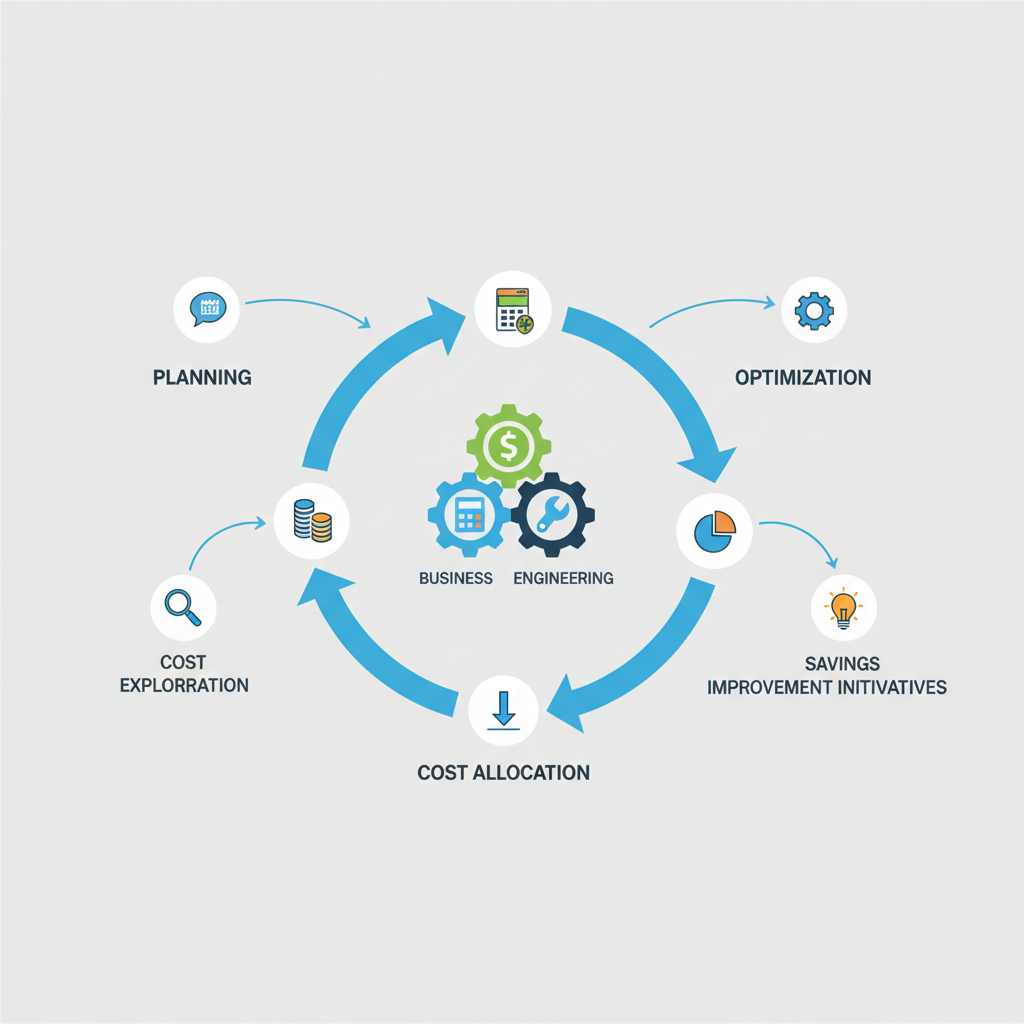
Modern cloud cost management platforms offer a range of features to supportdevops budget management. These tools can automate anomaly detection, provide cost forecasting, recommend right-sizing opportunities, and enforce policy-as-code rules. Investing in the right platform can streamline your cost management efforts, reducing manual overhead and increasing accuracy.
Continuous Improvement and Culture
Achieving sustainabledevops cloud cost optimizationrequires more than just implementing tools and strategies; it demands a cultural shift towards continuous improvement. Cost awareness must be woven into the fabric of your DevOps culture, becoming a shared responsibility across all teams. This ensures that optimization efforts are ongoing and evolve with your cloud usage.
Fostering a cost-aware culture starts with leadership buy-in and consistent communication. Educate your teams on the importance of cloud cost management and how their daily actions impact the bottom line. Provide regular training sessions on cloud cost best practices, new optimization tools, and the financial implications of different architectural choices. Empowering developers with knowledge encourages responsible resource consumption.
Implement an iterative optimization process. Cloud environments are dynamic, so your cost optimization strategies must be equally agile. Regularly review your resource utilization, identify new optimization opportunities, and implement changes incrementally. This continuous feedback loop allows for rapid adjustments and ensures that your cost management efforts remain effective as your infrastructure evolves. Document lessons learned and share successes.
Organizations that have successfully embraceddevops cloud cost optimization examplesoften showcase a few key characteristics. They empower teams with direct visibility into their spending, provide clear guidelines and guardrails, and foster open communication between technical and financial departments. These successful implementations demonstrate that optimization is an ongoing journey, not a destination. It becomes a natural part of the development lifecycle.
Best Practices and Common Pitfalls
Adhering tobest devops cloud cost optimizationpractices ensures that your efforts yield maximum results. These practices encompass both technical implementation and cultural aspects, creating a holistic approach to cloud financial management. Avoiding common pitfalls is equally important for long-term success.
Key best practices include:
- Automate everything:From resource provisioning and de-provisioning to alert generation and policy enforcement, automation reduces human error and ensures consistency.
- Tagging strategy:Implement a robust and consistent tagging strategy across all cloud resources. This is fundamental for accurate cost allocation, reporting, and automation.
- Right-sizing:Continuously monitor and adjust resource sizes to match actual demand. Avoid the “set it and forget it” mentality.
- Delete unused resources:Regularly audit for orphaned or idle resources (e.g., old snapshots, unattached volumes, idle VMs) and remove them promptly.
- Leverage discounts:Proactively utilize Reserved Instances, Savings Plans, and Spot Instances for suitable workloads to significantly reduce costs.
- FinOps culture:Integrate financial accountability into your DevOps processes, fostering collaboration between engineering and finance.
However, organizations often fall into several common pitfalls that derail their optimization efforts. Over-provisioning resources “just in case” is a prevalent issue, leading to significant waste. A lack of visibility into actual spending patterns can prevent teams from identifying expensive resources or processes. Neglecting to de-provision temporary development and testing environments after use is another major culprit.
Ignoring data transfer and storage costs can also lead to unpleasant surprises on your bill. Furthermore, failing to continuously monitor and adapt your strategies as your cloud footprint grows can quickly negate previous optimization efforts. By keeping thesedevops cloud cost optimization tipsin mind, you can build a more resilient and cost-effective cloud environment. Embrace a proactive approach to prevent these issues.
RECOMMENDED FOR YOU
Connect With Opsio
Tell us about your business requirement and let Opsio take care of the rest.
✓No commitment required
✓Trusted by experts
Conclusion
Effectivedevops cloud cost optimizationis no longer a luxury but a necessity for any organization leveraging cloud technologies. It’s about achieving a delicate balance between agility, innovation, and financial prudence. By embracing FinOps principles, implementing practical strategies, and fostering a cost-aware culture, you can significantly reduce your cloud expenditures without compromising performance or development velocity.
Thisdevops cloud cost optimization guidehas provided a comprehensive playbook for understanding, implementing, and continually refining your cloud cost management strategies. Remember, optimization is an ongoing journey that requires vigilance, collaboration, and a commitment to continuous improvement. By integrating cost awareness into every stage of your DevOps lifecycle, you empower your teams to build a sustainable and efficient cloud future. Start implementing these strategies today to transform your cloud spending into a strategic advantage.