
GCP Managed Service Provider for Cloud Operations
Expert GCP Managed Services for Your Google Cloud
Achieve the best out of your Google Cloud Platform. Opsio offers Full Managed GCP Services that are useful in managing all complexities of your cloud-based infrastructure. Our team will make sure that your environment is safe, cost-efficient, and perfectly aligned with your business objectives to get on to the innovation by ensuring continuous and proactive monitoring, to expert Google Cloud Project Management.

3 Months Free
GCP Management

Introduction
From Daily Hassles to Strategic Success with GCP Managed Services
The Google Cloud Platform is meant to be an excellent resource for growth, but it can easily become a second full-time job. The perpetual, endless loop of resource up-sizing, the issuance of security patches, and performance tracking may divert your best talent off track. When you start to feel the constraints of your in-house ability and see these constant irritations, it is not a weakness but an indication that you are now ready to have a strategic partner.
Being your faithful GCP Managed Services provider, we transform those shortcomings into opportunities.
Expert Google Cloud Project Management
Our core is making the use of Google Cloud Project Management effective. We do not respond to tickets, we offer a strategic roadmap of your whole GCP environment.
As an illustration, in case you are undertaking a complicated data migration, our team will manage the whole process, from the initial evaluation and planning to the completion and validation, which will ensure that the transition process proceeds with little disturbance to your daily activities.
Modernization That Drives Real Value
We enable you to upgrade your applications to be fully benefiting of the power of the cloud. This forms part of our gcp managed services.
This may involve taking you on a journey of replacing traditional virtual machines with a more efficient and container-based architecture with the Google Kubernetes Engine (GKE). The effects of this type of modernizing are the increased application performance, increased ease of scaling, and reduced operational cost.
Comprehensive Security and Data Protection
We will take care of all your daily security and management requirements. Security is a priority to us and we are applying the best practices that will see your sensitive data is always secured.
An example would be the use of the GCP Cloud Key Management Service to apply a high level of encryption to your vital data, which enables you to control who has access to your sensitive data. There is no worry about the hassle; we handle that, then you can focus on your business.

What is Azure managed service?
Accelerate Growth and Uptime with Expert GCP Managed Services
Developing a cloud-native architecture on Google Cloud is a potent method of realizing both speed and resilience, yet a prohibitive learning curve hinders the entire potential of the platform. Many companies have the ambition to grow, but do not commit to technical skills to exploit the superior tools of GCP. This is the point at which GCP Managed Services of Opsio enters into play. We offer the profound experience and active management required to turn your Google Cloud platform into a real growth generator.
Building with a Cloud-Native Mindset
We assist you in developing and operating applications in the cloud-native manner that is crucial to the contemporary speed and innovativeness.
This implies that we do not just move and transfer old applications, but we assist you in modernizing them with the help of potent tools such as Google APIs and microservices. We have the experience of dealing with these services, and so you can be assured that your
applications are built to scale within the initial stages providing you with a great competitive edge.
Implementing a Zero-Trust Security Framework
In the modern world, security needs to be the priority and not a by product. We use a zero-trust security architecture of your business.
In a straightforward context, this presupposes that any threat may be posed by any user or any device, and that is why we authenticate users and devices. We use such strong features as the GCP Cloud Key Management Service, which makes sure that your sensitive data is encrypted and secured at all times to provide you with the ability to work safely.
Proactive Management for Maximum Uptime
Proactive management is the basis of our service to make sure that your business is online and accessible to your customers always.
We do not simply wait to break by using the best Google Cloud Project Management and round-the-clock monitoring. We constantly upgrade your infrastructure to avoid problems even before they have a chance to affect your business. This is one of the fundamental elements of our pledge to be a leader in providing managed services on GCP.
Why Businesses Should Choose GCP
Strategic Google Cloud Project Management: More Than Just Maintenance
How much does it cost you to run your own cloud? The server costs are not the only thing, it is the time and energy that your team would use to maintain their server regularly and to install the required software patches rather than be creative. Our GCP Managed Services under the Managed Services category are going to fully offload these duties and turn your IT operations into a strategic value driver to your organization because it is no longer a daily cost center.

GCP Managed Services with
24/7 assistance
A Cost-Effective Model Built on Value
We reckon that you only pay when you need to, and you must need expertise. Our gcp managed services works on a pay-as-you-use basis and it is much more economical than employing a full-time group of cloud engineers. You also have a vast pool of qualified professionals without the constant overhead cost and can be guaranteed that your money is always spent effectively and to have the greatest impact.
Unlocking a Renewed Focus on Innovation
By outsourcing the daily running of the offices to us, you have provided your staff their best asset, which is concentration.
Your finest engineers are devoting their week to coming up with a radical new product feature, rather than having to worry about a security patch that would fix a critical security issue in your servers. This is the freedom our Google Cloud Project Management offers- we do the infrastructure so that your team can work on the innovation that really makes a difference to your customers.
Turning IT Savings into Strategic Growth
We do not simply cut down your operational costs, but we can help you to put your savings back into your business in a strategic way. In line with this, we adopt advanced cost-tracking models to do away with unwarranted cloud costs.
As an illustration, the potential cash savings of optimizing your cloud storage can directly go back into a new marketing initiative or R&D of your next multi-billion dollar idea. We allow you to convert the savings in IT to real business development.
Get GCP Management Free For 3 Months
Certified Google Cloud experts optimize your workloads. Enhance stability, cut costs, and strengthen security—all free for three months.
Follow us on
Our GCP Managed Services
Unlock Your Potential with Personalized GCP Managed Services
Your business deserves more than a generic solution. We provide truly personalized GCP Managed Services by tailoring every aspect of our work to your unique business goals.

Our gcp managed services are accompanied with insatiable attention to your bottom line. We do not simply send you a bill, but we make one of it. Regular cost audits and performance audits are also based on us, so that you will never have to spend excessively. As an example, a server may be too powerful (and costly) to do its work, which would be found during our rightsizing analysis. We can save you money as much as a month and still not lose on performance by recommending to you a smaller option.

We promise to first get to know all your technical and business needs properly. Out of that we create a strong cloud infrastructure that is able to withstand a heavy load. GCP managed services also involve round-the-clock performance, cost, and security monitoring, which leads to a highly performing cloud that you can depend on to support your business.

Through our end-to-end GCP management service, you are able to relieve the pain of maintaining your cloud architecture, which is very cumbersome and time-consuming. This liberates your staff to develop new solutions, enhance current solutions, and concentrate on the innovation-based practices that will lead to actual business and revenue expansion.

The process of receiving numerous notifications and data in a cloud environment can easily become overwhelming. Our round-the-clock cloud architecture monitoring support is provided throughout your networks, platforms, and databases. Using the power of cloud-native products, we assist you in tracking and examining the application or service performance and thereby, on-the-fly, make more informed and data-driven choices.

We provide multi-layered security to protect your valuable IT assets and data. Our services include privileged access management, vulnerability analysis, and continuous security system checks. To protect your most sensitive data, we leverage the GCP Cloud Key Management Service to handle your cryptographic keys safely, ensuring your data is always encrypted.

An effective cloud migration begins with a bulletproof foundation. Our professional Google Cloud Project Management is the guarantee that your GCP environment will be designed and constructed into the right way on day one. We provide a safe and scalable and simple to manage cloud computing platform that is tailored to your business and technical requirements so that you can be assured of one that is powerful and which can be depended upon.
Our gcp managed services are accompanied with insatiable attention to your bottom line. We do not simply send you a bill, but we make one of it. Regular cost audits and performance audits are also based on us, so that you will never have to spend excessively. As an example, a server may be too powerful (and costly) to do its work, which would be found during our rightsizing analysis. We can save you money as much as a month and still not lose on performance by recommending to you a smaller option.
We promise to first get to know all your technical and business needs properly. Out of that we create a strong cloud infrastructure that is able to withstand a heavy load. GCP managed services also involve round-the-clock performance, cost, and security monitoring, which leads to a highly performing cloud that you can depend on to support your business.
Through our end-to-end GCP management service, you are able to relieve the pain of maintaining your cloud architecture, which is very cumbersome and time-consuming. This liberates your staff to develop new solutions, enhance current solutions, and concentrate on the innovation-based practices that will lead to actual business and revenue expansion.
The process of receiving numerous notifications and data in a cloud environment can easily become overwhelming. Our round-the-clock cloud architecture monitoring support is provided throughout your networks, platforms, and databases. Using the power of cloud-native products, we assist you in tracking and examining the application or service performance and thereby, on-the-fly, make more informed and data-driven choices.
We provide multi-layered security to protect your valuable IT assets and data. Our services include privileged access management, vulnerability analysis, and continuous security system checks. To protect your most sensitive data, we leverage the GCP Cloud Key Management Service to handle your cryptographic keys safely, ensuring your data is always encrypted.
An effective cloud migration begins with a bulletproof foundation. Our professional Google Cloud Project Management is the guarantee that your GCP environment will be designed and constructed into the right way on day one. We provide a safe and scalable and simple to manage cloud computing platform that is tailored to your business and technical requirements so that you can be assured of one that is powerful and which can be depended upon.
Benefits of Our GCP Expertise
Why GCP Managed Services Offered
by Opsio Cloud Are Beneficial
- The major aim of our Google Cloud Project Management is to take away the routine of maintenance chores of your IT departments so they can quit wasting their days patching and monitoring and begin concentrating on the innovation that will put your business ahead.
- We address the basic security and scaling problems affecting many industries in the cloud, and our GCP Managed Services are built to manage these general problems.
- It starts with our personalized service to get to know your unique industry needs and business objectives so that our GCP Managed Services are ideally customized to fit you.
- We constantly recall your data security, we utilize such powerful tools as the gcp cloud key management service to get strong encryption, which provides the peace of mind that your own most important digital assets have no chance to be compromised.
- The continuous optimization of your cloud environment is what drives our GCP Managed Services and this continuous flow of insights is what results in better and quicker decision making processes by your business.
- A flawless cloud architecture is the design of our team that is continually aimed at providing a disruption-free workflow. With our managed services on gcp, we design your network in a high availability way so that your operations are not affected.
- We conduct regular analyses of your security, cost-effectiveness, and performance, and have made sure that all the areas of your managed services on gcp are producing the best possible returns on your investment.
Industries We Serve
Personalized GCP Managed Services for Every Industry
We realize that each sector has got its own world with certain challenges, rules, and objectives. This is why our gcp managed services are never the same. We customize to your industry and offer solutions that are specific to you companies and make your own industry problems your strongest competitive edge.

Technology Providers
In the technology industry, technology is fast-moving, and the infrastructure management is not the actual product, it is innovation to our clients. By relieving your group of the complicated and time-intensive duties of managing the cloud, we empower your staff to concentrate on your company’s main mission. It implies that we do the 24/7 security surveillance, 24/7 cost-optimization, and on-demand scalability, thus allowing your precious engineering workforce to do what they are best at, developing, deploying and enhancing the products that will spur your growth.

Public Sectors
PSOs are custodians of personal information of the citizen and security, compliance, and citizen trust are the most important factors. This is the design of our GCP Managed Services. We are using the powerful tools of Google Cloud (AI and data analytics) not only to deliver performance, but also to provide the improved security. As an example, we can assist you to install anomaly detection systems to assist in automatically identifying suspicious activity and to prevent the loss of data and to ensure that your decision-making process is never compromised.

BFSI
The BFSI industry is based on security and compliance as its foundation. We develop safe, agile and compliant GCP cloud ecosystems that enable you to work securely and without interference in turbulent financial markets. Indicatively, we use the gcp cloud key management service to be sure that your sensitive financial and customer data are encrypted always at rest and in transit. Being an azure expert managed services provider, our knowledge will assist you in achieving rigid regulatory requirements, thereby enabling you to concentrate on your customers.

Telecom
Telecom industry demands extreme levels of efficiency and a high degree of agility in order to meet the new 5G and IoT digital environment. We are providing you with specialist Google Cloud Project Management to modernize your network in order to manage these new demands. This is to take advantage of GCP to provide real-time data insights to reinvent the customer experience and business agility to stay well in front of the curve in an ever-changing market.
Stay Ahead of the Cloud Curve
Get monthly insights on cloud transformation, DevOps strategies, and real-world case studies from the Opsio team.
Why Partner With Opsio Cloud?
Your Partner in Growth: Unlocking Potential with GCP Managed Services
Effective expansion within the cloud is not only possible through a platform but as well through a partnership. Since we are your trusted GCP Managed Services, our certified specialists will integrate themselves into your business to manage the cumbersome day-to-day tasks, which include flawless migrations to the active monitoring and maintenance to enable you to cease worrying about infrastructure and concentrate on the next big move. Are you willing to leave your problems of complex clouds in the dust bin, besides, do you wish to unleash the power of Google Cloud? Contact our team today. We should speak about how our expertise in Google Cloud Project Management can give you the professional advice and individual approach towards serving your objectives.
Managed GCP Evolution: Your Opsio Roadmap To Success
Customer Introduction
An initial session to discuss your objectives of our GCP Managed Services.

Proposal
A proposal on your custom Google Cloud Project management plan.

Onboarding
Easy integration and onboarding of your new GCP Managed Services.

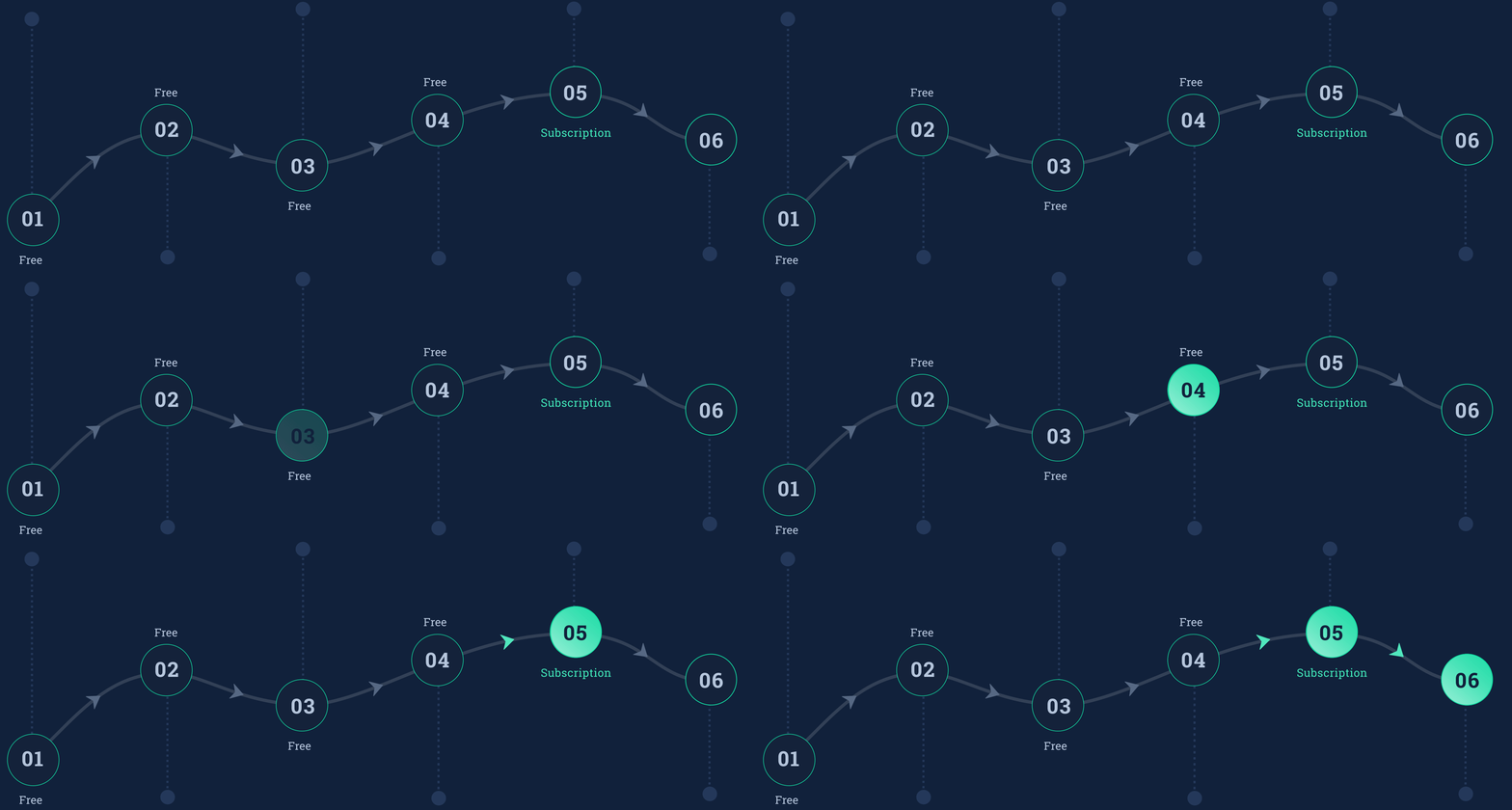
Assessment Phase
Workshops in order to evaluate your requirements for our managed services on GCP.

Compliance Activation
Contracts are also signed to formally start our new business.

Run & Optimize
Constant optimization and security, such as the GCP Cloud Key Management Service.

FAQ: Managed GCP
what is managed instance group in gcp?
In today’s rapidly evolving cloud landscape, scalability and resilience are paramount for any application. Google Cloud Platform (GCP) offers several tools to help developers and businesses achieve these goals, one of which is the Managed Instance Group (MIG). But what exactly is a Managed Instance Group in GCP, and why is it crucial for modern cloud architecture? This blog post delves into the intricacies of Managed Instance Groups, exploring their features, benefits, and practical applications.
A Managed Instance Group in GCP is a collection of virtual machine (VM) instances that are treated as a single entity. These groups are designed to simplify the management of multiple VMs, allowing for seamless scaling, load balancing, and automated updates. By leveraging MIGs, businesses can achieve high availability and robustness, ensuring that their applications can handle varying loads and recover quickly from failures.
At the heart of a Managed Instance Group is the concept of uniformity. All instances within a MIG are created from a common instance template, which specifies the configuration for the VM instances, including machine type, boot disk image, and network settings. This uniformity ensures consistency across all instances, making it easier to manage and maintain the group.
One of the standout features of Managed Instance Groups is their ability to automatically scale based on demand. With autoscaling, MIGs can dynamically adjust the number of instances in response to changes in workload. For instance, during peak traffic periods, the group can scale out by adding more instances to handle the increased load. Conversely, during off-peak times, the group can scale in by reducing the number of instances, thereby optimizing resource usage and minimizing costs. This elasticity is particularly beneficial for applications with variable traffic patterns, such as e-commerce websites or online gaming platforms.
Load balancing is another critical aspect of Managed Instance Groups. GCP offers integrated load balancing services that distribute incoming traffic across the instances in a MIG, ensuring even distribution and preventing any single instance from becoming a bottleneck. This not only enhances the performance and responsiveness of applications but also contributes to their resilience by spreading the load across multiple instances.
Managed Instance Groups also excel in maintaining high availability. In the event of an instance failure, the MIG automatically replaces the failed instance with a new one, based on the instance template. This self-healing capability ensures that the group remains healthy and operational, minimizing the impact of individual instance failures on the overall application.
For those looking to deploy applications across multiple regions, Regional Managed Instance Groups offer an added layer of redundancy and fault tolerance. By distributing instances across different zones within a region, these groups can withstand zone-level failures, providing a robust solution for mission-critical applications.
Security is a top priority for any cloud deployment, and Managed Instance Groups are no exception. GCP provides various security features to protect instances within a MIG, such as firewall rules, VPNs, and IAM policies. Additionally, the uniformity of instances within a group simplifies the implementation of security best practices, ensuring that all instances adhere to the same security standards.
Updating instances in a Managed Instance Group can be a daunting task, especially in large-scale deployments. However, GCP simplifies this process with rolling updates. Rolling updates allow you to update instances in a controlled manner, minimizing downtime and reducing the risk of disruptions. You can specify the update policy, such as the maximum number of instances to update simultaneously and the wait time between updates, ensuring a smooth and predictable update process.
Monitoring and logging are essential for managing and optimizing the performance of applications. GCP integrates with tools like Stackdriver to provide comprehensive monitoring and logging capabilities for Managed Instance Groups. These tools offer insights into the performance and health of instances, enabling proactive management and troubleshooting.
In summary, Managed Instance Groups in GCP offer a powerful and flexible solution for managing VM instances at scale. By automating tasks such as scaling, load balancing, and updates, MIGs enable businesses to focus on delivering value through their applications, rather than getting bogged down in infrastructure management. Whether you’re running a small web application or a large-scale distributed system, Managed Instance Groups provide the scalability, resilience, and efficiency needed to thrive in the cloud.
Advanced Insights into Managed Instance Groups in Google Cloud Platform (GCP)
In today’s rapidly evolving cloud landscape, scalability and resilience are paramount for any application. Google Cloud Platform (GCP) offers several tools to help developers and businesses achieve these goals, one of which is the Managed Instance Group (MIG). But what exactly is a Managed Instance Group in GCP, and why is it crucial for modern cloud architecture? This blog post delves into the intricacies of Managed Instance Groups, exploring their features, benefits, and practical applications.
A Managed Instance Group in GCP is a collection of virtual machine (VM) instances that are treated as a single entity. These groups are designed to simplify the management of multiple VMs, allowing for seamless scaling, load balancing, and automated updates. By leveraging MIGs, businesses can achieve high availability and robustness, ensuring that their applications can handle varying loads and recover quickly from failures.
Core Concepts and Features
At the heart of a Managed Instance Group is the concept of uniformity. All instances within a MIG are created from a common instance template, which specifies the configuration for the VM instances, including machine type, boot disk image, and network settings. This uniformity ensures consistency across all instances, making it easier to manage and maintain the group.
Autoscaling: Elasticity on Demand
One of the standout features of Managed Instance Groups is their ability to automatically scale based on demand. With autoscaling, MIGs can dynamically adjust the number of instances in response to changes in workload. For instance, during peak traffic periods, the group can scale out by adding more instances to handle the increased load. Conversely, during off-peak times, the group can scale in by reducing the number of instances, thereby optimizing resource usage and minimizing costs. This elasticity is particularly beneficial for applications with variable traffic patterns, such as e-commerce websites or online gaming platforms.
Load Balancing: Ensuring Even Distribution
Load balancing is another critical aspect of Managed Instance Groups. GCP offers integrated load balancing services that distribute incoming traffic across the instances in a MIG, ensuring even distribution and preventing any single instance from becoming a bottleneck. This not only enhances the performance and responsiveness of applications but also contributes to their resilience by spreading the load across multiple instances.
High Availability and Self-Healing
Managed Instance Groups also excel in maintaining high availability. In the event of an instance failure, the MIG automatically replaces the failed instance with a new one, based on the instance template. This self-healing capability ensures that the group remains healthy and operational, minimizing the impact of individual instance failures on the overall application.
Regional Managed Instance Groups: Enhanced Redundancy
For those looking to deploy applications across multiple regions, Regional Managed Instance Groups offer an added layer of redundancy and fault tolerance. By distributing instances across different zones within a region, these groups can withstand zone-level failures, providing a robust solution for mission-critical applications.
Security and Compliance
Security is a top priority for any cloud deployment, and Managed Instance Groups are no exception. GCP provides various security features to protect instances within a MIG, such as firewall rules, VPNs, and IAM policies. Additionally, the uniformity of instances within a group simplifies the implementation of security best practices, ensuring that all instances adhere to the same security standards.
Operational Efficiency
Rolling Updates: Minimizing Downtime
Updating instances in a Managed Instance Group can be a daunting task, especially in large-scale deployments. However, GCP simplifies this process with rolling updates. Rolling updates allow you to update instances in a controlled manner, minimizing downtime and reducing the risk of disruptions. You can specify the update policy, such as the maximum number of instances to update simultaneously and the wait time between updates, ensuring a smooth and predictable update process.
Monitoring and Logging: Proactive Management
Monitoring and logging are essential for managing and optimizing the performance of applications. GCP integrates with tools like Stackdriver to provide comprehensive monitoring and logging capabilities for Managed Instance Groups. These tools offer insights into the performance and health of instances, enabling proactive management and troubleshooting.
Advanced Use Cases
Blue-Green Deployments and Canary Releases
Managed Instance Groups are also ideal for sophisticated deployment strategies such as blue-green deployments and canary releases. By leveraging these strategies, businesses can minimize the risk associated with new releases. For instance, in a blue-green deployment, you can maintain two identical environments (blue and green) and switch traffic between them, ensuring zero downtime during updates. In canary releases, you can gradually roll out new features to a small subset of users before a full-scale deployment, allowing for real-world testing and immediate rollback if issues are detected.
Integration with Kubernetes and Hybrid Environments
For organizations adopting containerization, Managed Instance Groups can seamlessly integrate with Kubernetes clusters. By using MIGs as the underlying infrastructure for Kubernetes nodes, you can leverage GCP’s autoscaling and self-healing capabilities, enhancing the resilience and scalability of your containerized applications. Additionally, MIGs can be a vital component in hybrid cloud environments, providing consistent and scalable infrastructure across on-premises and cloud deployments.
Conclusion
In summary, Managed Instance Groups in GCP offer a powerful and flexible solution for managing VM instances at scale. By automating tasks such as scaling, load balancing, and updates, MIGs enable businesses to focus on delivering value through their applications, rather than getting bogged down in infrastructure management. Whether you’re running a small web application or a large-scale distributed system, Managed Instance Groups provide the scalability, resilience, and efficiency needed to thrive in the cloud.
By understanding and leveraging the full capabilities of Managed Instance Groups, businesses can not only optimize their cloud infrastructure but also gain a competitive edge in an increasingly digital world.”
What are GCP managed services?
What are GCP managed services?
GCP Managed Services
Google Cloud Platform (GCP) offers a range of managed services that simplify and automate the management of cloud infrastructure and applications. These services allow businesses to focus on their core activities while GCP handles the complexities of cloud management. Here are some key GCP managed services:
1. Compute Services
Google Compute Engine (GCE):
Description: Managed Infrastructure as a Service (IaaS) that provides scalable virtual machines (VMs) running in Google’s data centers.
Features: Automatic backups, live migration, and integrated load balancing.
Google Kubernetes Engine (GKE):
Description: Managed Kubernetes service for running containerized applications.
Features: Automated updates, scaling, and cluster management.
App Engine:
Description: Platform as a Service (PaaS) that enables developers to build and deploy applications without managing the underlying infrastructure.
Features: Automatic scaling, versioning, and built-in load balancing.
2. Storage and Databases
Cloud Storage:
Description: Object storage service for storing and accessing data.
Features: High availability, scalability, and security. Different storage classes for various use cases (e.g., Standard, Nearline, Coldline, Archive).
Cloud SQL:
Description: Fully managed relational database service for MySQL, PostgreSQL, and SQL Server.
Features: Automated backups, patch management, and high availability.
Cloud Spanner:
Description: Globally distributed, horizontally scalable, strongly consistent database service.
Features: Automatic sharding, replication, and high availability.
Firestore:
Description: NoSQL document database for building serverless applications.
Features: Real-time synchronization, offline support, and scalability.
Bigtable:
Description: Managed NoSQL database designed for large analytical and operational workloads.
Features: Low latency, high throughput, and scalability.
Cloud Datastore:
Description: NoSQL database for web and mobile applications.
Features: Automatic scaling, ACID transactions, and high availability.
3. Networking
Cloud Load Balancing:
Description: Managed service for distributing incoming traffic across multiple instances.
Features: Global and regional load balancing, SSL offload, and auto-scaling.
Cloud CDN:
Description: Content delivery network to deliver content with low latency and high availability.
Features: Caching, SSL/TLS support, and integration with Cloud Storage.
Virtual Private Cloud (VPC):
Description: Managed networking service that provides secure and scalable networking infrastructure.
Features: Subnets, firewalls, VPN, and peering.
4. Big Data and Analytics
BigQuery:
Description: Fully managed, serverless data warehouse for analytics.
Features: Real-time analytics, built-in machine learning, and integration with other GCP services.
Dataflow:
Description: Managed service for stream and batch processing of data.
Features: Autoscaling, integrated monitoring, and support for Apache Beam.
Dataproc:
Description: Managed Spark and Hadoop service.
Features: Rapid deployment, autoscaling, and integration with other GCP services.
Pub/Sub:
Description: Managed messaging service for real-time event ingestion and delivery.
Features: Scalability, low latency, and integration with other GCP services.
Data Fusion:
Description: Managed service for building and managing ETL data pipelines.
Features: Code-free data integration, pre-built connectors, and data lineage tracking.
5. Machine Learning and AI
AI Platform:
Description: Managed service for building, deploying, and managing machine learning models.
Features: End-to-end ML lifecycle management, support for TensorFlow and other frameworks, and integration with BigQuery and Cloud Storage.
AutoML:
Description: Managed service for building custom machine learning models with minimal effort.
Features: Automated model training and tuning, and easy deployment.
Vision AI:
Description: Managed service for image analysis and processing.
Features: Image classification, object detection, and OCR.
Natural Language AI:
Description: Managed service for natural language processing.
Features: Sentiment analysis, entity recognition, and syntactic analysis.
Dialogflow:
Description: Managed service for building conversational interfaces.
Features: Natural language understanding, integration with messaging platforms, and support for multiple languages.
Translation AI:
Description: Managed service for translating text.
Features: Support for multiple languages, custom translation models, and real-time translation.
6. Security and Identity
Identity and Access Management (IAM):
Description: Managed service for controlling access to GCP resources.
Features: Fine-grained access control, role-based access, and integration with other GCP services.
Cloud Identity:
Description: Managed identity service for managing users and groups.
Features: Single sign-on (SSO), multi-factor authentication (MFA), and integration with G Suite.
Security Command Center:
Description: Managed security and risk management platform.
Features: Threat detection, security posture management, and integration with other GCP services.
Cloud Armor:
Description: Managed DDoS protection and web application firewall (WAF).
Features: Layer 7 security, custom rules, and integration with Cloud Load Balancing.
7. Operations and Monitoring
Cloud Monitoring:
Description: Managed service for monitoring and observability.
Features: Metrics collection, dashboards, and alerting.
Cloud Logging:
Description: Managed service for log management and analysis.
Features: Log collection, analysis, and real-time log streaming.
Cloud Trace:
Description: Managed service for distributed tracing.
Features: Latency analysis, root cause analysis, and integration with Cloud Monitoring.
Cloud Profiler:
Description: Managed service for continuous profiling of applications.
Features: Performance analysis, CPU and memory profiling, and integration with Cloud Trace.
Cloud Debugger:
Description: Managed service for debugging applications in production.
Features: Real-time debugging, snapshot creation, and integration with Cloud Logging.
Conclusion
GCP managed services offer a wide range of solutions for computing, storage, networking, big data, machine learning, security, and operations. These services simplify cloud management, enhance security, improve scalability, and provide advanced capabilities for developing and deploying applications. By leveraging GCP managed services, businesses can focus on their core activities while benefiting from Google’s expertise, infrastructure, and continuous innovation.
Why do businesses need GCP managed cloud services?
Why Do Businesses Need GCP Managed Cloud Services?
Businesses opt for Google Cloud Platform (GCP) managed cloud services for a variety of reasons, including enhanced efficiency, security, scalability, and cost management. Here’s a detailed explanation of why businesses need GCP managed cloud services:
1. Expertise and Technical Support
Access to Cloud Experts:
GCP managed services provide access to Google’s cloud experts who have deep knowledge and experience with GCP’s vast array of services.
Businesses can leverage this expertise to optimize their cloud architecture, performance, and security without needing to hire in-house specialists.
24/7 Support:
Managed services offer round-the-clock support, ensuring that any issues are addressed promptly, minimizing downtime and disruptions.
Continuous Learning and Updates:
Google’s managed services keep up with the latest advancements in cloud technology, ensuring that businesses benefit from the most current and efficient solutions.
2. Cost Management and Optimization
Cost Efficiency:
Managed services help businesses optimize their cloud spending by identifying unused or underutilized resources and providing recommendations for cost savings.
Pay-as-you-go pricing models and cost management tools enable businesses to control and predict their expenses better.
Operational Efficiency:
By outsourcing cloud management, businesses can reduce the operational overhead associated with managing their cloud infrastructure.
This allows internal teams to focus on strategic initiatives and core business activities.
3. Enhanced Security and Compliance
Advanced Security Measures:
GCP managed services include robust security features such as data encryption, identity and access management, and threat detection.
Continuous monitoring and automated security updates help protect against vulnerabilities and cyber threats.
Compliance Support:
Managed services help businesses meet regulatory and compliance requirements (e.g., GDPR, HIPAA, SOC 2).
GCP provides compliance certifications and audit reports, ensuring that businesses can maintain compliance with industry standards.
4. Scalability and Flexibility
On-Demand Scalability:
GCP managed services allow businesses to scale their cloud resources up or down based on demand, ensuring they can handle varying workloads efficiently.
This flexibility is crucial for businesses experiencing fluctuating traffic or seasonal peaks.
Rapid Deployment:
Managed services enable quick deployment of new environments and applications, accelerating time-to-market for new products and services.
Global Reach:
GCP’s global network of data centers ensures that businesses can deploy their applications closer to their customers, improving performance and reducing latency.
5. Reliability and Performance
High Availability:
Managed services provide high availability and resilience through automatic failover, redundancy, and disaster recovery solutions.
Businesses can ensure that their applications and services remain available and performant, even in the face of failures or disruptions.
Performance Optimization:
Continuous monitoring and optimization of cloud resources ensure that applications run smoothly and efficiently.
Managed services help identify and resolve performance bottlenecks proactively.
6. Focus on Core Business Activities
Offloading IT Management:
By leveraging managed cloud services, businesses can offload the complexities of cloud management, allowing their internal teams to focus on innovation and growth.
This shift enables more strategic use of resources and personnel.
Improved Productivity:
With managed services handling the technical details, development and operations teams can work more efficiently and effectively on projects that drive business value.
7. Innovation and Competitive Advantage
Access to Latest Technologies:
GCP managed services leverage the latest cloud technologies and tools, enabling businesses to innovate faster and stay competitive.
Businesses can quickly adopt new services and features that provide a competitive edge.
Strategic Guidance:
Managed service providers offer strategic guidance and recommendations to help businesses leverage cloud technology effectively.
They assist in aligning cloud strategy with business goals and objectives.
8. Disaster Recovery and Backup
Robust Disaster Recovery:
Managed services include disaster recovery planning and implementation to ensure business continuity.
Providers create and test disaster recovery plans, ensuring that data and applications can be quickly restored in case of a failure.
Automated Backups:
Regular automated backups protect critical data and ensure it can be recovered in case of data loss or corruption.
Conclusion
GCP managed cloud services provide businesses with the expertise, support, and tools needed to optimize their cloud infrastructure, enhance security, and ensure scalability and performance. By leveraging these managed services, businesses can reduce operational overhead, focus on their core activities, and drive innovation. The comprehensive support and advanced features offered by GCP managed services enable businesses to achieve greater efficiency, cost savings, and a competitive edge in their respective markets.
In today’s rapidly evolving cloud landscape, scalability and resilience are paramount for any application. Google Cloud Platform (GCP) offers several tools to help developers and businesses achieve these goals, one of which is the Managed Instance Group (MIG). But what exactly is a Managed Instance Group in GCP, and why is it crucial for modern cloud architecture? This blog post delves into the intricacies of Managed Instance Groups, exploring their features, benefits, and practical applications.
A Managed Instance Group in GCP is a collection of virtual machine (VM) instances that are treated as a single entity. These groups are designed to simplify the management of multiple VMs, allowing for seamless scaling, load balancing, and automated updates. By leveraging MIGs, businesses can achieve high availability and robustness, ensuring that their applications can handle varying loads and recover quickly from failures.
At the heart of a Managed Instance Group is the concept of uniformity. All instances within a MIG are created from a common instance template, which specifies the configuration for the VM instances, including machine type, boot disk image, and network settings. This uniformity ensures consistency across all instances, making it easier to manage and maintain the group.
One of the standout features of Managed Instance Groups is their ability to automatically scale based on demand. With autoscaling, MIGs can dynamically adjust the number of instances in response to changes in workload. For instance, during peak traffic periods, the group can scale out by adding more instances to handle the increased load. Conversely, during off-peak times, the group can scale in by reducing the number of instances, thereby optimizing resource usage and minimizing costs. This elasticity is particularly beneficial for applications with variable traffic patterns, such as e-commerce websites or online gaming platforms.
Load balancing is another critical aspect of Managed Instance Groups. GCP offers integrated load balancing services that distribute incoming traffic across the instances in a MIG, ensuring even distribution and preventing any single instance from becoming a bottleneck. This not only enhances the performance and responsiveness of applications but also contributes to their resilience by spreading the load across multiple instances.
Managed Instance Groups also excel in maintaining high availability. In the event of an instance failure, the MIG automatically replaces the failed instance with a new one, based on the instance template. This self-healing capability ensures that the group remains healthy and operational, minimizing the impact of individual instance failures on the overall application.
For those looking to deploy applications across multiple regions, Regional Managed Instance Groups offer an added layer of redundancy and fault tolerance. By distributing instances across different zones within a region, these groups can withstand zone-level failures, providing a robust solution for mission-critical applications.
Security is a top priority for any cloud deployment, and Managed Instance Groups are no exception. GCP provides various security features to protect instances within a MIG, such as firewall rules, VPNs, and IAM policies. Additionally, the uniformity of instances within a group simplifies the implementation of security best practices, ensuring that all instances adhere to the same security standards.
Updating instances in a Managed Instance Group can be a daunting task, especially in large-scale deployments. However, GCP simplifies this process with rolling updates. Rolling updates allow you to update instances in a controlled manner, minimizing downtime and reducing the risk of disruptions. You can specify the update policy, such as the maximum number of instances to update simultaneously and the wait time between updates, ensuring a smooth and predictable update process.
Monitoring and logging are essential for managing and optimizing the performance of applications. GCP integrates with tools like Stackdriver to provide comprehensive monitoring and logging capabilities for Managed Instance Groups. These tools offer insights into the performance and health of instances, enabling proactive management and troubleshooting.
In summary, Managed Instance Groups in GCP offer a powerful and flexible solution for managing VM instances at scale. By automating tasks such as scaling, load balancing, and updates, MIGs enable businesses to focus on delivering value through their applications, rather than getting bogged down in infrastructure management. Whether you’re running a small web application or a large-scale distributed system, Managed Instance Groups provide the scalability, resilience, and efficiency needed to thrive in the cloud.
Advanced Insights into Managed Instance Groups in Google Cloud Platform (GCP)
In today’s rapidly evolving cloud landscape, scalability and resilience are paramount for any application. Google Cloud Platform (GCP) offers several tools to help developers and businesses achieve these goals, one of which is the Managed Instance Group (MIG). But what exactly is a Managed Instance Group in GCP, and why is it crucial for modern cloud architecture? This blog post delves into the intricacies of Managed Instance Groups, exploring their features, benefits, and practical applications.
A Managed Instance Group in GCP is a collection of virtual machine (VM) instances that are treated as a single entity. These groups are designed to simplify the management of multiple VMs, allowing for seamless scaling, load balancing, and automated updates. By leveraging MIGs, businesses can achieve high availability and robustness, ensuring that their applications can handle varying loads and recover quickly from failures.
Core Concepts and Features
At the heart of a Managed Instance Group is the concept of uniformity. All instances within a MIG are created from a common instance template, which specifies the configuration for the VM instances, including machine type, boot disk image, and network settings. This uniformity ensures consistency across all instances, making it easier to manage and maintain the group.
Autoscaling: Elasticity on Demand
One of the standout features of Managed Instance Groups is their ability to automatically scale based on demand. With autoscaling, MIGs can dynamically adjust the number of instances in response to changes in workload. For instance, during peak traffic periods, the group can scale out by adding more instances to handle the increased load. Conversely, during off-peak times, the group can scale in by reducing the number of instances, thereby optimizing resource usage and minimizing costs. This elasticity is particularly beneficial for applications with variable traffic patterns, such as e-commerce websites or online gaming platforms.
Load Balancing: Ensuring Even Distribution
Load balancing is another critical aspect of Managed Instance Groups. GCP offers integrated load balancing services that distribute incoming traffic across the instances in a MIG, ensuring even distribution and preventing any single instance from becoming a bottleneck. This not only enhances the performance and responsiveness of applications but also contributes to their resilience by spreading the load across multiple instances.
High Availability and Self-Healing
Managed Instance Groups also excel in maintaining high availability. In the event of an instance failure, the MIG automatically replaces the failed instance with a new one, based on the instance template. This self-healing capability ensures that the group remains healthy and operational, minimizing the impact of individual instance failures on the overall application.
Regional Managed Instance Groups: Enhanced Redundancy
For those looking to deploy applications across multiple regions, Regional Managed Instance Groups offer an added layer of redundancy and fault tolerance. By distributing instances across different zones within a region, these groups can withstand zone-level failures, providing a robust solution for mission-critical applications.
Security and Compliance
Security is a top priority for any cloud deployment, and Managed Instance Groups are no exception. GCP provides various security features to protect instances within a MIG, such as firewall rules, VPNs, and IAM policies. Additionally, the uniformity of instances within a group simplifies the implementation of security best practices, ensuring that all instances adhere to the same security standards.
Operational Efficiency
Rolling Updates: Minimizing Downtime
Updating instances in a Managed Instance Group can be a daunting task, especially in large-scale deployments. However, GCP simplifies this process with rolling updates. Rolling updates allow you to update instances in a controlled manner, minimizing downtime and reducing the risk of disruptions. You can specify the update policy, such as the maximum number of instances to update simultaneously and the wait time between updates, ensuring a smooth and predictable update process.
Monitoring and Logging: Proactive Management
Monitoring and logging are essential for managing and optimizing the performance of applications. GCP integrates with tools like Stackdriver to provide comprehensive monitoring and logging capabilities for Managed Instance Groups. These tools offer insights into the performance and health of instances, enabling proactive management and troubleshooting.
Advanced Use Cases
Blue-Green Deployments and Canary Releases
Managed Instance Groups are also ideal for sophisticated deployment strategies such as blue-green deployments and canary releases. By leveraging these strategies, businesses can minimize the risk associated with new releases. For instance, in a blue-green deployment, you can maintain two identical environments (blue and green) and switch traffic between them, ensuring zero downtime during updates. In canary releases, you can gradually roll out new features to a small subset of users before a full-scale deployment, allowing for real-world testing and immediate rollback if issues are detected.
Integration with Kubernetes and Hybrid Environments
For organizations adopting containerization, Managed Instance Groups can seamlessly integrate with Kubernetes clusters. By using MIGs as the underlying infrastructure for Kubernetes nodes, you can leverage GCP’s autoscaling and self-healing capabilities, enhancing the resilience and scalability of your containerized applications. Additionally, MIGs can be a vital component in hybrid cloud environments, providing consistent and scalable infrastructure across on-premises and cloud deployments.
Conclusion
In summary, Managed Instance Groups in GCP offer a powerful and flexible solution for managing VM instances at scale. By automating tasks such as scaling, load balancing, and updates, MIGs enable businesses to focus on delivering value through their applications, rather than getting bogged down in infrastructure management. Whether you’re running a small web application or a large-scale distributed system, Managed Instance Groups provide the scalability, resilience, and efficiency needed to thrive in the cloud.
By understanding and leveraging the full capabilities of Managed Instance Groups, businesses can not only optimize their cloud infrastructure but also gain a competitive edge in an increasingly digital world.”
What are GCP managed services?
GCP Managed Services
Google Cloud Platform (GCP) offers a range of managed services that simplify and automate the management of cloud infrastructure and applications. These services allow businesses to focus on their core activities while GCP handles the complexities of cloud management. Here are some key GCP managed services:
1. Compute Services
Google Compute Engine (GCE):
Description: Managed Infrastructure as a Service (IaaS) that provides scalable virtual machines (VMs) running in Google’s data centers.
Features: Automatic backups, live migration, and integrated load balancing.
Google Kubernetes Engine (GKE):
Description: Managed Kubernetes service for running containerized applications.
Features: Automated updates, scaling, and cluster management.
App Engine:
Description: Platform as a Service (PaaS) that enables developers to build and deploy applications without managing the underlying infrastructure.
Features: Automatic scaling, versioning, and built-in load balancing.
2. Storage and Databases
Cloud Storage:
Description: Object storage service for storing and accessing data.
Features: High availability, scalability, and security. Different storage classes for various use cases (e.g., Standard, Nearline, Coldline, Archive).
Cloud SQL:
Description: Fully managed relational database service for MySQL, PostgreSQL, and SQL Server.
Features: Automated backups, patch management, and high availability.
Cloud Spanner:
Description: Globally distributed, horizontally scalable, strongly consistent database service.
Features: Automatic sharding, replication, and high availability.
Firestore:
Description: NoSQL document database for building serverless applications.
Features: Real-time synchronization, offline support, and scalability.
Bigtable:
Description: Managed NoSQL database designed for large analytical and operational workloads.
Features: Low latency, high throughput, and scalability.
Cloud Datastore:
Description: NoSQL database for web and mobile applications.
Features: Automatic scaling, ACID transactions, and high availability.
3. Networking
Cloud Load Balancing:
Description: Managed service for distributing incoming traffic across multiple instances.
Features: Global and regional load balancing, SSL offload, and auto-scaling.
Cloud CDN:
Description: Content delivery network to deliver content with low latency and high availability.
Features: Caching, SSL/TLS support, and integration with Cloud Storage.
Virtual Private Cloud (VPC):
Description: Managed networking service that provides secure and scalable networking infrastructure.
Features: Subnets, firewalls, VPN, and peering.
4. Big Data and Analytics
BigQuery:
Description: Fully managed, serverless data warehouse for analytics.
Features: Real-time analytics, built-in machine learning, and integration with other GCP services.
Dataflow:
Description: Managed service for stream and batch processing of data.
Features: Autoscaling, integrated monitoring, and support for Apache Beam.
Dataproc:
Description: Managed Spark and Hadoop service.
Features: Rapid deployment, autoscaling, and integration with other GCP services.
Pub/Sub:
Description: Managed messaging service for real-time event ingestion and delivery.
Features: Scalability, low latency, and integration with other GCP services.
Data Fusion:
Description: Managed service for building and managing ETL data pipelines.
Features: Code-free data integration, pre-built connectors, and data lineage tracking.
5. Machine Learning and AI
AI Platform:
Description: Managed service for building, deploying, and managing machine learning models.
Features: End-to-end ML lifecycle management, support for TensorFlow and other frameworks, and integration with BigQuery and Cloud Storage.
AutoML:
Description: Managed service for building custom machine learning models with minimal effort.
Features: Automated model training and tuning, and easy deployment.
Vision AI:
Description: Managed service for image analysis and processing.
Features: Image classification, object detection, and OCR.
Natural Language AI:
Description: Managed service for natural language processing.
Features: Sentiment analysis, entity recognition, and syntactic analysis.
Dialogflow:
Description: Managed service for building conversational interfaces.
Features: Natural language understanding, integration with messaging platforms, and support for multiple languages.
Translation AI:
Description: Managed service for translating text.
Features: Support for multiple languages, custom translation models, and real-time translation.
6. Security and Identity
Identity and Access Management (IAM):
Description: Managed service for controlling access to GCP resources.
Features: Fine-grained access control, role-based access, and integration with other GCP services.
Cloud Identity:
Description: Managed identity service for managing users and groups.
Features: Single sign-on (SSO), multi-factor authentication (MFA), and integration with G Suite.
Security Command Center:
Description: Managed security and risk management platform.
Features: Threat detection, security posture management, and integration with other GCP services.
Cloud Armor:
Description: Managed DDoS protection and web application firewall (WAF).
Features: Layer 7 security, custom rules, and integration with Cloud Load Balancing.
7. Operations and Monitoring
Cloud Monitoring:
Description: Managed service for monitoring and observability.
Features: Metrics collection, dashboards, and alerting.
Cloud Logging:
Description: Managed service for log management and analysis.
Features: Log collection, analysis, and real-time log streaming.
Cloud Trace:
Description: Managed service for distributed tracing.
Features: Latency analysis, root cause analysis, and integration with Cloud Monitoring.
Cloud Profiler:
Description: Managed service for continuous profiling of applications.
Features: Performance analysis, CPU and memory profiling, and integration with Cloud Trace.
Cloud Debugger:
Description: Managed service for debugging applications in production.
Features: Real-time debugging, snapshot creation, and integration with Cloud Logging.
Conclusion
GCP managed services offer a wide range of solutions for computing, storage, networking, big data, machine learning, security, and operations. These services simplify cloud management, enhance security, improve scalability, and provide advanced capabilities for developing and deploying applications. By leveraging GCP managed services, businesses can focus on their core activities while benefiting from Google’s expertise, infrastructure, and continuous innovation.
Why Do Businesses Need GCP Managed Cloud Services?
Businesses opt for Google Cloud Platform (GCP) managed cloud services for a variety of reasons, including enhanced efficiency, security, scalability, and cost management. Here’s a detailed explanation of why businesses need GCP managed cloud services:
1. Expertise and Technical Support
Access to Cloud Experts:
GCP managed services provide access to Google’s cloud experts who have deep knowledge and experience with GCP’s vast array of services.
Businesses can leverage this expertise to optimize their cloud architecture, performance, and security without needing to hire in-house specialists.
24/7 Support:
Managed services offer round-the-clock support, ensuring that any issues are addressed promptly, minimizing downtime and disruptions.
Continuous Learning and Updates:
Google’s managed services keep up with the latest advancements in cloud technology, ensuring that businesses benefit from the most current and efficient solutions.
2. Cost Management and Optimization
Cost Efficiency:
Managed services help businesses optimize their cloud spending by identifying unused or underutilized resources and providing recommendations for cost savings.
Pay-as-you-go pricing models and cost management tools enable businesses to control and predict their expenses better.
Operational Efficiency:
By outsourcing cloud management, businesses can reduce the operational overhead associated with managing their cloud infrastructure.
This allows internal teams to focus on strategic initiatives and core business activities.
3. Enhanced Security and Compliance
Advanced Security Measures:
GCP managed services include robust security features such as data encryption, identity and access management, and threat detection.
Continuous monitoring and automated security updates help protect against vulnerabilities and cyber threats.
Compliance Support:
Managed services help businesses meet regulatory and compliance requirements (e.g., GDPR, HIPAA, SOC 2).
GCP provides compliance certifications and audit reports, ensuring that businesses can maintain compliance with industry standards.
4. Scalability and Flexibility
On-Demand Scalability:
GCP managed services allow businesses to scale their cloud resources up or down based on demand, ensuring they can handle varying workloads efficiently.
This flexibility is crucial for businesses experiencing fluctuating traffic or seasonal peaks.
Rapid Deployment:
Managed services enable quick deployment of new environments and applications, accelerating time-to-market for new products and services.
Global Reach:
GCP’s global network of data centers ensures that businesses can deploy their applications closer to their customers, improving performance and reducing latency.
5. Reliability and Performance
High Availability:
Managed services provide high availability and resilience through automatic failover, redundancy, and disaster recovery solutions.
Businesses can ensure that their applications and services remain available and performant, even in the face of failures or disruptions.
Performance Optimization:
Continuous monitoring and optimization of cloud resources ensure that applications run smoothly and efficiently.
Managed services help identify and resolve performance bottlenecks proactively.
6. Focus on Core Business Activities
Offloading IT Management:
By leveraging managed cloud services, businesses can offload the complexities of cloud management, allowing their internal teams to focus on innovation and growth.
This shift enables more strategic use of resources and personnel.
Improved Productivity:
With managed services handling the technical details, development and operations teams can work more efficiently and effectively on projects that drive business value.
7. Innovation and Competitive Advantage
Access to Latest Technologies:
GCP managed services leverage the latest cloud technologies and tools, enabling businesses to innovate faster and stay competitive.
Businesses can quickly adopt new services and features that provide a competitive edge.
Strategic Guidance:
Managed service providers offer strategic guidance and recommendations to help businesses leverage cloud technology effectively.
They assist in aligning cloud strategy with business goals and objectives.
8. Disaster Recovery and Backup
Robust Disaster Recovery:
Managed services include disaster recovery planning and implementation to ensure business continuity.
Providers create and test disaster recovery plans, ensuring that data and applications can be quickly restored in case of a failure.
Automated Backups:
Regular automated backups protect critical data and ensure it can be recovered in case of data loss or corruption.
Conclusion
GCP managed cloud services provide businesses with the expertise, support, and tools needed to optimize their cloud infrastructure, enhance security, and ensure scalability and performance. By leveraging these managed services, businesses can reduce operational overhead, focus on their core activities, and drive innovation. The comprehensive support and advanced features offered by GCP managed services enable businesses to achieve greater efficiency, cost savings, and a competitive edge in their respective markets.
GCP Managed Service FAQ
What are the benefits of choosing a Google Cloud Platform managed service provider for our IT needs?
Choosing a Google Cloud Platform (GCP) managed service provider for your IT needs can offer numerous benefits that can significantly enhance your overall operations and efficiency.
First and foremost, a managed service provider specializing in GCP can provide you with access to a team of highly skilled and experienced professionals who are well-versed in the intricacies of the platform. This means that you can leverage their expertise to optimize your GCP environment, ensuring that your applications and workloads are running smoothly and efficiently.
Furthermore, by partnering with a GCP managed service provider, you can benefit from 24/7 monitoring and support, which can help to minimize downtime and quickly address any issues that may arise. This can ultimately improve your overall system reliability and performance, allowing you to focus on your core business objectives without worrying about IT disruptions.
Additionally, working with a GCP managed service provider can also help you to reduce your overall IT costs. By outsourcing your GCP management to a third party, you can avoid the need to hire and train in-house IT staff, as well as invest in expensive infrastructure and equipment. This can result in significant cost savings for your organization, allowing you to allocate your resources more effectively towards other strategic initiatives.
Overall, choosing a GCP managed service provider can provide your organization with the expertise, support, and cost savings needed to drive your business forward in today’s competitive digital landscape.
How does OpsioCloud differentiate itself as a Google Cloud Platform managed service provider compared to other providers in the market?
OpsioCloud differentiates itself as a Google Cloud Platform managed service provider in several key ways that set it apart from other providers in the market. Firstly, OpsioCloud’s team of IT consultants are highly skilled and experienced in Google Cloud technologies, ensuring that they can provide the best possible service and support to their clients. This expertise allows OpsioCloud to offer a level of customization and optimization that is unmatched by many other providers.
Secondly, OpsioCloud places a strong emphasis on customer service and satisfaction. Their team is dedicated to building strong relationships with their clients and understanding their unique needs and goals. This customer-centric approach means that OpsioCloud is able to provide personalized solutions that truly meet the needs of each individual client.
Additionally, OpsioCloud is committed to staying at the forefront of industry trends and developments. They continuously invest in training and development for their team to ensure that they are up to date with the latest technologies and best practices. This commitment to innovation allows OpsioCloud to offer cutting-edge solutions that give their clients a competitive edge.
Overall, OpsioCloud’s combination of expertise, customer focus, and innovation sets them apart as a leading Google Cloud Platform managed service provider in the market. By choosing OpsioCloud, clients can be confident that they are receiving top-tier service and support that is tailored to their specific needs and goals.
What level of support can we expect from OpsioCloud as our Google Cloud Platform managed service provider?
As your Google Cloud Platform managed service provider, OpsioCloud is committed to providing you with the highest level of support and service possible. Our team of experienced IT consultants will work closely with you to understand your business needs, goals, and challenges, in order to provide you with tailored solutions that meet your specific requirements.
OpsioCloud offers a range of support services, including 24/7 monitoring and management of your Google Cloud Platform environment, proactive maintenance and optimization, as well as troubleshooting and resolution of any issues that may arise. Our team is highly skilled and knowledgeable in all aspects of Google Cloud Platform, and we are dedicated to ensuring that your infrastructure is running smoothly and efficiently at all times.
In addition to technical support, OpsioCloud also provides strategic guidance and advice to help you make the most of your investment in Google Cloud Platform. Whether you are looking to migrate your existing infrastructure to the cloud, optimize your current setup, or scale your operations, our team of experts will work with you every step of the way to ensure that you achieve your business objectives.
Overall, you can expect a high level of support and service from OpsioCloud as your Google Cloud Platform managed service provider. We are committed to helping you succeed in the cloud, and we will go above and beyond to ensure that your infrastructure is secure, reliable, and efficient.
Choosing a Google Cloud Platform (GCP) managed service provider for your IT needs can offer numerous benefits that can significantly enhance your overall operations and efficiency.
First and foremost, a managed service provider specializing in GCP can provide you with access to a team of highly skilled and experienced professionals who are well-versed in the intricacies of the platform. This means that you can leverage their expertise to optimize your GCP environment, ensuring that your applications and workloads are running smoothly and efficiently.
Furthermore, by partnering with a GCP managed service provider, you can benefit from 24/7 monitoring and support, which can help to minimize downtime and quickly address any issues that may arise. This can ultimately improve your overall system reliability and performance, allowing you to focus on your core business objectives without worrying about IT disruptions.
Additionally, working with a GCP managed service provider can also help you to reduce your overall IT costs. By outsourcing your GCP management to a third party, you can avoid the need to hire and train in-house IT staff, as well as invest in expensive infrastructure and equipment. This can result in significant cost savings for your organization, allowing you to allocate your resources more effectively towards other strategic initiatives.
Overall, choosing a GCP managed service provider can provide your organization with the expertise, support, and cost savings needed to drive your business forward in today’s competitive digital landscape.
OpsioCloud differentiates itself as a Google Cloud Platform managed service provider in several key ways that set it apart from other providers in the market. Firstly, OpsioCloud’s team of IT consultants are highly skilled and experienced in Google Cloud technologies, ensuring that they can provide the best possible service and support to their clients. This expertise allows OpsioCloud to offer a level of customization and optimization that is unmatched by many other providers.
Secondly, OpsioCloud places a strong emphasis on customer service and satisfaction. Their team is dedicated to building strong relationships with their clients and understanding their unique needs and goals. This customer-centric approach means that OpsioCloud is able to provide personalized solutions that truly meet the needs of each individual client.
Additionally, OpsioCloud is committed to staying at the forefront of industry trends and developments. They continuously invest in training and development for their team to ensure that they are up to date with the latest technologies and best practices. This commitment to innovation allows OpsioCloud to offer cutting-edge solutions that give their clients a competitive edge.
Overall, OpsioCloud’s combination of expertise, customer focus, and innovation sets them apart as a leading Google Cloud Platform managed service provider in the market. By choosing OpsioCloud, clients can be confident that they are receiving top-tier service and support that is tailored to their specific needs and goals.
As your Google Cloud Platform managed service provider, OpsioCloud is committed to providing you with the highest level of support and service possible. Our team of experienced IT consultants will work closely with you to understand your business needs, goals, and challenges, in order to provide you with tailored solutions that meet your specific requirements.
OpsioCloud offers a range of support services, including 24/7 monitoring and management of your Google Cloud Platform environment, proactive maintenance and optimization, as well as troubleshooting and resolution of any issues that may arise. Our team is highly skilled and knowledgeable in all aspects of Google Cloud Platform, and we are dedicated to ensuring that your infrastructure is running smoothly and efficiently at all times.
In addition to technical support, OpsioCloud also provides strategic guidance and advice to help you make the most of your investment in Google Cloud Platform. Whether you are looking to migrate your existing infrastructure to the cloud, optimize your current setup, or scale your operations, our team of experts will work with you every step of the way to ensure that you achieve your business objectives.
Overall, you can expect a high level of support and service from OpsioCloud as your Google Cloud Platform managed service provider. We are committed to helping you succeed in the cloud, and we will go above and beyond to ensure that your infrastructure is secure, reliable, and efficient.
Do you have questions?
For more information, please contact us directly.
Elevate Now
