

What Is Cloud SLA Monitoring?
Cloud SLA monitoring is the systematic, ongoing measurement of whether a cloud provider delivers the performance, availability, and security commitments defined in a Service Level Agreement. An SLA is a binding contract between a cloud service provider and a customer that sets minimum acceptable thresholds for uptime, latency, throughput, data durability, and support response times.
Without structured monitoring, organizations have no way to verify that they receive the service levels they pay for. The Uptime Institute's 2024 Annual Outage Analysis found that more than 55% of organizations experienced a significant outage in the preceding three years, with the cost of a single major incident often exceeding $100,000. Tracking SLA compliance transforms vague trust in a provider into measurable, verifiable accountability.
For organizations that depend on cloud infrastructure for revenue-generating applications, monitoring service level agreements is not optional. It underpins financial planning, vendor management, regulatory compliance, and customer experience. This guide explains why tracking SLAs matters, what metrics to track, how to build an effective monitoring strategy, and which tools can help.
Why SLA Monitoring Is Critical for Businesses
Service level agreement monitoring protects your organization from hidden service degradation, unexpected costs, and compliance failures that erode trust and revenue. The importance spans operations, finance, and long-term planning.
Uptime and Performance Assurance
Cloud services power customer-facing applications, internal workflows, and data pipelines. When performance drops below agreed thresholds, the impact cascades: slower page loads reduce conversions, API timeouts break integrations, and database latency stalls reporting. Continuous tracking of response time, error rate, and availability percentage gives teams early warning before end users notice problems.
A 99.9% uptime guarantee still permits roughly 8.7 hours of downtime per year. Monitoring reveals whether your provider actually delivers that level or whether you are experiencing more downtime than the contract allows.
Financial Accountability and Cost Control
Cloud pricing models are complex, often combining reserved capacity, on-demand usage, and data transfer fees. SLA tracking helps verify that you receive the performance you pay for. When breaches occur, documented evidence from your monitoring system supports SLA credit claims and contract renegotiation.
Beyond credits, monitoring identifies over-provisioned resources that waste budget and under-provisioned services that create risk. This data-driven approach to cloud financial management typically reduces wasted spend by 15 to 25 percent, according to Flexera's State of the Cloud report.
Regulatory Compliance
Industries such as finance, healthcare, and government operate under strict data handling and availability requirements. Tracking SLA compliance creates an auditable trail demonstrating that your cloud infrastructure meets regulatory standards for data durability, encryption, access controls, and disaster recovery. Without this evidence, organizations risk penalties during compliance audits, particularly under frameworks like HIPAA, SOC 2, and PCI DSS.
Vendor Accountability
Objective performance data transforms the vendor relationship from trust-based to evidence-based. Rather than relying on provider-supplied dashboards alone, independent monitoring gives you the facts needed for quarterly business reviews, contract renewals, and escalation conversations. This is especially valuable in multi-cloud environments where comparing service levels across AWS, Azure, and Google Cloud requires a unified view.
Key Metrics to Track in Cloud SLAs
Effective SLA monitoring starts with selecting the right metrics, because tracking everything creates noise while tracking too little creates blind spots. The table below summarizes the most important SLA metrics and their business impact.
| Metric | What It Measures | Typical SLA Target | Business Impact |
|---|---|---|---|
| Availability / Uptime | Percentage of time the service is operational | 99.9% – 99.99% | Revenue loss, customer churn |
| Latency | Response time for requests | <200ms p95 | User experience, conversion rates |
| Throughput | Data transfer or transaction capacity | Varies by service | Application performance under load |
| Error Rate | Percentage of failed requests | <0.1% | Data integrity, user trust |
| Data Durability | Probability of data loss | 99.999999999% (11 nines) | Regulatory compliance, business continuity |
| Recovery Time Objective (RTO) | Maximum acceptable downtime after a failure | Minutes to hours | Disaster recovery readiness |
| Recovery Point Objective (RPO) | Maximum acceptable data loss window | Seconds to hours | Backup frequency, data protection |
| Support Response Time | Time to first meaningful response from provider | 15 min – 4 hours by severity | Incident resolution speed |
When defining your monitoring strategy, align each metric to a specific business outcome. A 99.9% uptime target for a critical e-commerce platform has very different implications than the same target for an internal development environment.
Strategies for Effective SLA Monitoring
A well-structured monitoring strategy combines clear metric definitions, the right tooling, regular reviews, and escalation protocols that turn raw data into actionable insight.
Define SMART Metrics Aligned to Business Goals
Start by mapping each SLA metric to the business process it supports. Use Specific, Measurable, Achievable, Relevant, and Time-bound criteria. For example, rather than monitoring "uptime" generically, define it as "99.95% monthly availability for the production API, measured at the load balancer, excluding scheduled maintenance windows." This precision eliminates ambiguity when you need to assess compliance or escalate a concern.
Choose the Right Monitoring Tools
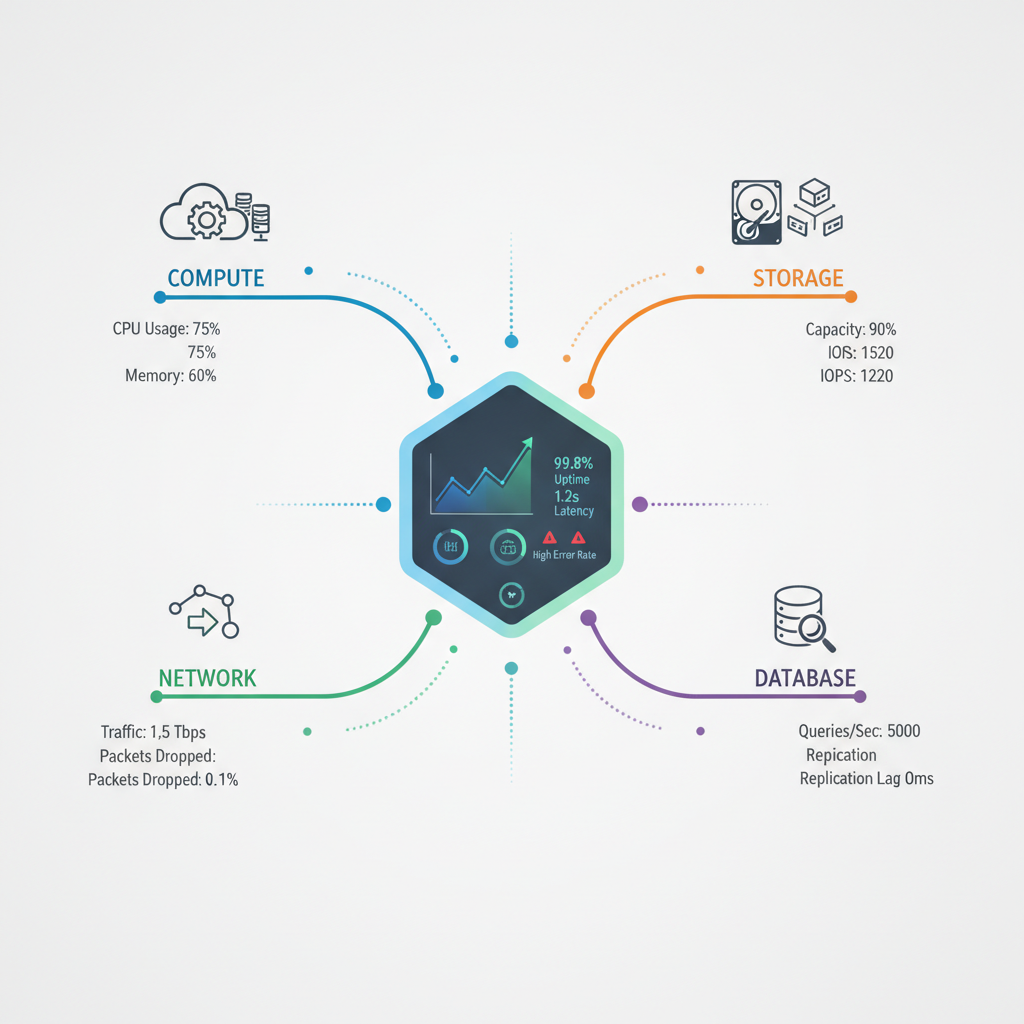
Select tools that provide end-to-end visibility across your cloud stack. The best SLA monitoring tools combine infrastructure metrics, application performance data, and log analysis in a single dashboard. Key capabilities to evaluate include:
- Multi-cloud support for AWS CloudWatch, Azure Monitor, and Google Cloud Operations
- Custom SLA dashboards with real-time threshold alerts
- Anomaly detection powered by machine learning
- Historical trend analysis for capacity planning
- Automated reporting for compliance documentation
Popular options include Datadog, New Relic, Dynatrace, Grafana with Prometheus, and cloud-native services. For organizations evaluating SLA monitoring software, the choice depends on environment complexity, budget, and integration requirements.
Establish Regular Review Cadences
Tracking service levels is not a set-and-forget activity. Establish weekly operational reviews for critical services and monthly executive summaries that map performance to business KPIs. Quarterly deep-dives should assess whether SLA targets still reflect actual business requirements, since workloads and user expectations evolve over time.
Reports should clearly present performance against agreed thresholds, highlight any breaches, document root causes, and track remediation actions. This review cycle reinforces best practices for managing SLAs and keeps all stakeholders aligned.
Define Escalation and Communication Protocols
When an SLA breach occurs, every minute counts. Define clear escalation paths: who gets notified, through which channel (PagerDuty, Slack, email), and at what severity threshold. Include both internal teams and provider contacts. Pre-defined runbooks for common breach scenarios reduce mean time to resolution (MTTR) significantly.
ENSURE UNINTERRUPTED SERVICE
Prevent costly SLA breaches with automated, real-time cloud monitoring. Opsio's managed services team monitors your infrastructure 24/7.
✓ Free consultation✓ No commitment required
✓ Trusted by experts
Common Challenges in Cloud SLA Monitoring
Even with the right tools, monitoring SLA performance faces real obstacles that require deliberate architectural and process decisions to overcome.
Data Volume and Complexity
Cloud environments produce massive volumes of logs, metrics, traces, and events from dozens of services. Correlating this data across distributed microservices to identify the root cause of an SLA deviation requires sophisticated aggregation and analysis capabilities. Without proper tooling, teams drown in data while missing the signals that matter.
Multi-Cloud and Hybrid Complexity
Organizations running workloads across AWS, Azure, Google Cloud, and on-premises infrastructure face a fragmented monitoring landscape. Each provider offers its own metrics, APIs, and dashboards. Building a unified monitoring view across these environments demands integration work and, often, a dedicated observability platform that can normalize data from all sources.
Dynamic and Ephemeral Resources
Containers, serverless functions, and auto-scaling groups create and destroy resources continuously. Traditional monitoring approaches that track static IP addresses or fixed server inventories cannot keep pace. Modern SLA management must support dynamic service discovery and automatically adjust its scope as infrastructure changes.
Alert Fatigue
Poorly configured thresholds generate excessive alerts that desensitize operations teams. Genuine SLA breaches get lost in the noise. Effective monitoring uses intelligent alerting with context-aware thresholds, anomaly detection, and alert grouping to ensure that only actionable notifications reach the right people.
How to Compare Cloud Provider SLAs
Not all cloud service level agreements are equal, and understanding the differences between major providers helps you negotiate better terms and set realistic monitoring targets.
| Provider | Compute Uptime SLA | Storage Durability | Credit for Breach | Measurement Window |
|---|---|---|---|---|
| AWS (EC2) | 99.99% (multi-AZ) | 99.999999999% (S3) | 10–30% depending on downtime | Monthly |
| Microsoft Azure | 99.99% (availability sets) | 99.999999999% (LRS) | 10–100% depending on tier | Monthly |
| Google Cloud | 99.99% (multi-zone) | 99.999999999% (Cloud Storage) | 10–50% depending on downtime | Monthly |
When comparing providers, pay attention to how each defines "downtime." Some exclude scheduled maintenance windows. Others require that you report the outage within a specific timeframe to qualify for credits. Your SLA dashboard should track these nuances so you never miss a valid credit claim.
Real-World Use Cases
Cloud Monitoring service agreements delivers measurable value across industries, from protecting e-commerce revenue to ensuring patient safety in healthcare.
E-Commerce: Protecting Revenue During Peak Traffic
An online retailer monitors page load times, transaction success rates, and API latency against provider commitments during high-traffic events like seasonal sales. When monitoring detects response times approaching thresholds, the team triggers pre-emptive scaling before customers experience slowdowns. This proactive approach prevents revenue loss that can reach thousands of dollars per minute of degraded performance.
Financial Services: Meeting Regulatory Mandates
Banks and trading platforms use compliance tracking to document that cloud-hosted transaction systems meet regulatory requirements for availability, data encryption, and audit logging. Continuous monitoring produces the compliance evidence required during regulatory examinations and reduces the risk of penalties.
Healthcare: Ensuring Data Accessibility
Healthcare providers storing patient records in the cloud monitor data accessibility, application response times, and backup completion against strict RTO and RPO targets. Monitoring ensures that electronic health records remain available for clinical decisions and that disaster recovery capabilities meet the standards required by HIPAA.
SaaS Providers: Maintaining Customer Trust
SaaS companies monitor their own SLAs to customers while simultaneously tracking the underlying cloud provider's agreements. This dual-layer monitoring helps identify whether performance issues originate in the application code or the infrastructure, enabling faster resolution and transparent status communication to end users.
Future Trends in SLA Monitoring
The next generation of service level tracking is shifting from reactive alerting toward predictive intelligence and autonomous remediation.
AI-Powered Anomaly Detection
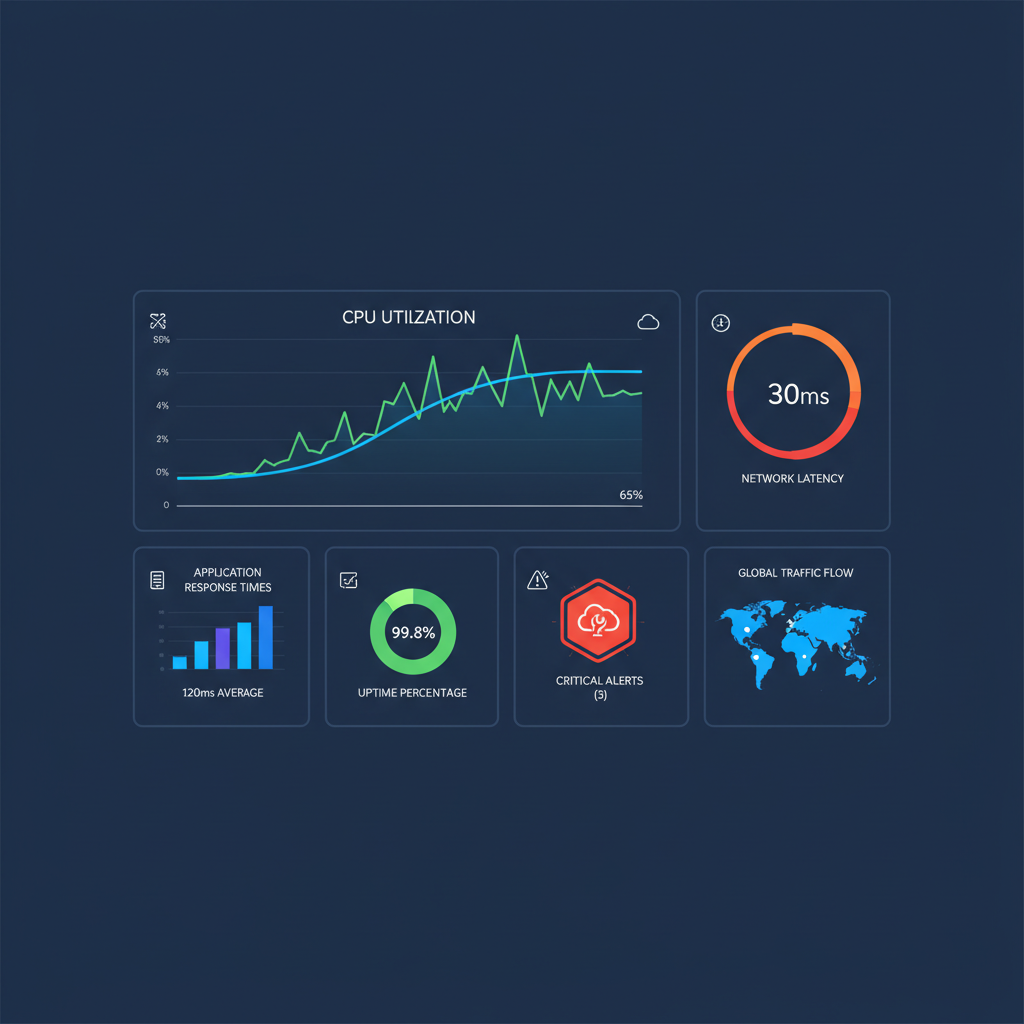
Machine learning models trained on historical performance data can identify subtle patterns that precede SLA breaches. Unlike static thresholds, AI-based detection adapts to seasonal patterns, traffic spikes, and infrastructure changes. This reduces false positives while catching genuine anomalies earlier.
Predictive Analytics
Predictive models forecast when specific SLA metrics are likely to breach based on current trends and historical patterns. This gives operations teams hours or days of advance warning rather than minutes, enabling preventive action instead of incident response. Organizations investing in automated monitoring gain the most from these capabilities.
Autonomous Remediation
The convergence of monitoring, automation, and AI enables systems that not only detect problems but fix them automatically. Auto-scaling resources, rerouting traffic, restarting failed services, and rolling back problematic deployments are increasingly handled without human intervention. While full autonomy is still maturing, the trajectory is clear: monitoring systems are evolving from passive observers into active participants in maintaining service levels.
Frequently Asked Questions
What exactly is a cloud SLA?
A cloud Service Level Agreement is a contract between a cloud service provider and a customer that defines minimum acceptable performance standards. It specifies metrics such as uptime percentage (commonly 99.9% or higher), latency thresholds, data durability guarantees, and support response times. The SLA also outlines remedies, typically service credits, when the provider fails to meet the agreed standards.
How does cloud SLA monitoring differ from traditional infrastructure monitoring?
Traditional infrastructure monitoring focuses on individual server health metrics like CPU, memory, and disk usage. Cloud SLA monitoring takes a broader view by tracking service-level outcomes against contractual commitments. It spans distributed services across shared infrastructure, often from multiple providers, and incorporates financial and compliance dimensions that traditional monitoring typically ignores.
What are the most important metrics to monitor in a cloud SLA?
The most critical metrics are availability (uptime percentage), latency (response time at the 95th or 99th percentile), error rate, data durability, and recovery objectives (RTO and RPO). The specific priorities depend on your workload: an e-commerce site may prioritize latency and availability, while a data platform may focus on durability and throughput.
Can SLA monitoring help reduce cloud costs?
Yes. Tracking your service agreements reveals over-provisioned resources that waste budget and under-performing services that require compensatory spending. It also provides the documented evidence needed to claim credits when providers breach their commitments. Organizations that actively monitor their agreements typically achieve 15 to 25 percent better cost efficiency compared to those relying on provider reports alone.
What tools are commonly used for cloud SLA monitoring?
Common tools include cloud-native services (AWS CloudWatch, Azure Monitor, Google Cloud Operations Suite), third-party observability platforms (Datadog, New Relic, Dynatrace), open-source solutions (Grafana with Prometheus, Zabbix), and specialized SLA management platforms. The best choice depends on your environment complexity, multi-cloud requirements, and budget.
How often should a cloud SLA be reviewed?
Performance data should be reviewed weekly for critical services and monthly at an executive level. The SLA contract itself should be formally reviewed annually or whenever significant changes occur in business requirements, cloud usage patterns, or provider service offerings. Major infrastructure changes, such as migrating to a new region or adopting a new service, should also trigger a review.
ENSURE UNINTERRUPTED SERVICE
Prevent costly SLA breaches with automated, real-time cloud monitoring. Opsio's managed services team monitors your infrastructure 24/7.
✓ Free consultation✓ No commitment required
✓ Trusted by experts
Conclusion
Cloud Monitoring your cloud service agreements is a foundational practice for any organization that depends on cloud infrastructure. It connects technical performance to business outcomes by ensuring that providers deliver what they promise, that costs stay aligned with value received, and that compliance requirements are continuously met.
The organizations that treat service level tracking as a strategic capability rather than a checkbox gain a meaningful advantage: fewer surprises, faster incident response, stronger vendor relationships, and clearer visibility into the true cost and performance of their cloud investments. As cloud environments grow in complexity with multi-cloud architectures, AI workloads, and edge computing, the role of disciplined service level agreement monitoring will only become more essential.
If your team lacks the bandwidth or tooling to monitor SLA compliance effectively, a managed service provider like Opsio can handle 24/7 monitoring, alerting, and vendor management on your behalf, letting you focus on the applications and services that drive your business forward.