

What is an AI agent? Exploring the Future of Human-Machine Collaboration

December 9, 2025|12:10 PM
Unlock Your Digital Potential
Whether it’s IT operations, cloud migration, or AI-driven innovation – let’s explore how we can support your success.
December 9, 2025|12:10 PM
Whether it’s IT operations, cloud migration, or AI-driven innovation – let’s explore how we can support your success.
AI agents represent a significant evolution in artificial intelligence technology, moving beyond traditional software to create systems that can perceive, reason, and act autonomously. As organizations increasingly adopt AI solutions, understanding what an AI agent is and how it can transform business operations becomes essential. This comprehensive guide explores the definition, characteristics, and applications of AI agents, providing insights into how these intelligent systems are shaping the future of human-machine collaboration.
AI agents combine perception, reasoning, and action capabilities to operate autonomously
An AI agent is a system that autonomously performs tasks by designing workflows with available tools. Unlike traditional software programs that follow predetermined rules, AI agents can perceive their environment, make decisions based on available information, and take actions to achieve specific goals. These intelligent agents leverage advanced technologies such as large language models (LLMs), machine learning algorithms, and natural language processing to understand context, solve problems, and adapt to changing circumstances.
AI agents can operate in various environments, from digital spaces like software applications to physical settings through robotics. What distinguishes them from conventional AI systems is their ability to function with minimal human intervention, continuously learning and improving their performance through experience and feedback mechanisms.
“AI agents solve complex tasks across enterprise applications, including software design, IT automation, code generation and conversational assistance. They use the advanced natural language processing techniques of large language models to comprehend and respond to user inputs step-by-step and determine when to call on external tools.”
Intelligent agents possess several defining characteristics that enable them to operate effectively in complex environments. Understanding these features helps distinguish AI agents from other types of software and explains their growing importance in business applications.
AI agents can operate independently without constant human supervision. They make decisions and take actions based on their programming, available data, and learning capabilities. This autonomy allows them to complete tasks efficiently while freeing human resources for more strategic activities.
Intelligent agents can perceive their environment through various sensors or data inputs and respond appropriately to changes. This reactivity enables them to adapt to new situations and maintain effectiveness even when conditions shift unexpectedly.
Beyond simply reacting to stimuli, advanced AI agents can take initiative to achieve goals. They anticipate needs, identify opportunities, and generate solutions without waiting for explicit instructions, making them valuable for complex problem-solving scenarios.
Many AI agents can interact with other agents, systems, or humans. This social capability allows them to collaborate, share information, and coordinate activities, enhancing their effectiveness in multi-agent environments or human-machine teams.
The most sophisticated AI agents incorporate machine learning capabilities that enable them to improve performance over time. By analyzing outcomes and incorporating feedback, these agents continuously refine their decision-making processes and actions.
Intelligent agents are designed to achieve specific objectives. Whether optimizing a supply chain, answering customer inquiries, or monitoring network security, their actions are directed toward accomplishing defined goals efficiently and effectively.
To fully appreciate the capabilities of AI agents, it’s helpful to understand how they differ from conventional software applications. These distinctions highlight why AI agents represent a significant advancement in computing technology.
| Characteristic | Traditional Software | AI Agents |
| Decision Making | Follows predetermined rules and logic | Makes decisions based on learning and reasoning |
| Adaptability | Limited to programmed scenarios | Adapts to new situations and learns from experience |
| Autonomy | Requires explicit instructions for each task | Can operate independently with minimal guidance |
| Problem Solving | Limited to predefined solutions | Can generate novel solutions to complex problems |
| Interaction | User interface driven | Can understand natural language and context |
| Improvement | Requires manual updates and programming | Improves through learning and feedback |
The fundamental difference lies in how AI agents process information and make decisions. While traditional software operates within rigid parameters, AI agents can interpret data, understand context, and generate appropriate responses based on their learning and reasoning capabilities. This flexibility makes them particularly valuable for tasks that require adaptation, creativity, or handling unpredictable situations.
AI agents can be categorized based on their capabilities, learning mechanisms, and decision-making processes. Understanding these different types helps in selecting the appropriate agent architecture for specific business applications.
The spectrum of AI agent types ranges from simple reactive systems to complex learning agents
Reactive agents represent the simplest form of AI agents, operating on a basic stimulus-response model without maintaining internal state or memory of past actions. These agents follow predefined rules to respond to specific situations in their environment.
Key characteristics of reactive agents:
Reactive agents excel in stable, predictable environments where quick responses are more important than complex reasoning. Examples include simple thermostats, basic chatbots that match keywords to responses, and obstacle-avoiding robots that use sensors to detect and navigate around objects.
Deliberative agents maintain an internal model of their environment and use reasoning processes to plan actions and achieve goals. Unlike reactive agents, they can consider the potential consequences of different actions before deciding how to proceed.
Key characteristics of deliberative agents:
These agents are well-suited for tasks that require strategic thinking and planning, such as inventory management systems that forecast demand, route optimization algorithms, and advanced virtual assistants that can understand context and user preferences over time.
Learning agents represent the most sophisticated category, combining the capabilities of deliberative agents with the ability to improve performance through experience. These agents use machine learning techniques to adapt their behavior based on feedback and outcomes.
Key characteristics of learning agents:
Learning agents are particularly valuable in dynamic environments where conditions change frequently or where optimal strategies are not known in advance. Examples include recommendation systems that personalize content based on user behavior, autonomous vehicles that improve driving skills through experience, and advanced AI assistants that learn user preferences and communication styles.
Get our comprehensive guide to implementing AI agents in your organization. Learn about selection criteria, integration strategies, and measuring ROI.
Multi-agent systems (MAS) consist of multiple interacting intelligent agents working together to solve problems that would be difficult or impossible for a single agent to handle. These systems leverage the collective intelligence and specialized capabilities of different agents to achieve complex goals through collaboration and coordination.
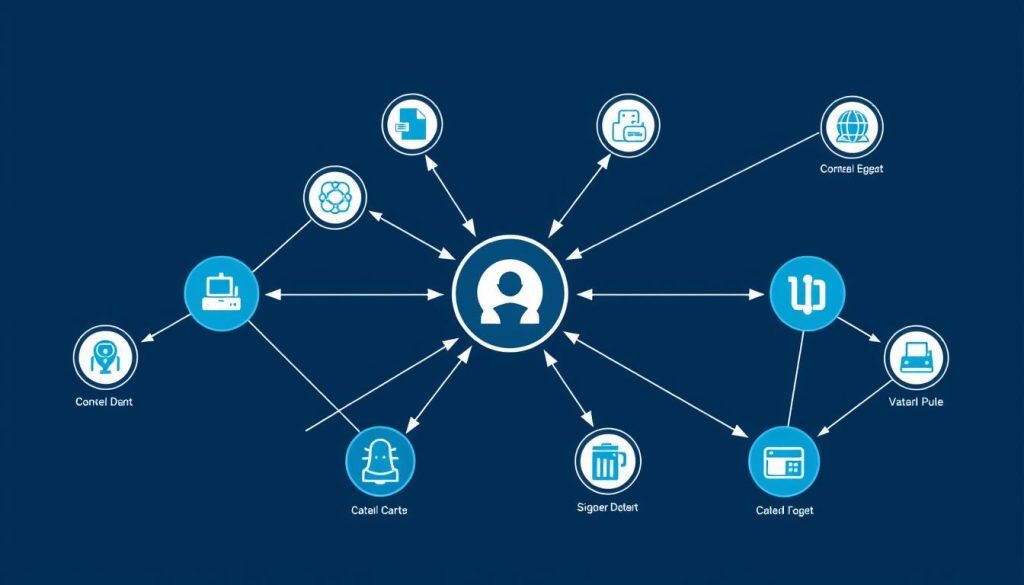
Multi-agent systems enable collaborative problem-solving through specialized agent interactions
In multi-agent systems, individual agents may have different roles, capabilities, and knowledge domains. They communicate and coordinate their activities to achieve shared objectives, often producing results that exceed what any single agent could accomplish alone. This distributed approach to problem-solving offers several advantages, including increased reliability, scalability, and the ability to handle complex, multifaceted tasks.
“Multiagent frameworks tend to outperform singular agents. This is because the more plans of action are available to an agent, the more learning and reflection occur. An AI agent incorporating knowledge and feedback from other AI agents specializing in related areas can be useful for information synthesis.”
Multi-agent systems have found applications across various industries, demonstrating their versatility and effectiveness in addressing complex business challenges. These implementations showcase how collaborative AI agents can transform operations and decision-making processes.
Multi-agent systems optimize supply chains by coordinating procurement, inventory, production, and distribution processes. Different agents manage specific functions while collaborating to minimize costs, reduce delays, and improve overall efficiency. These systems can adapt to disruptions and changing market conditions more effectively than centralized approaches.
In healthcare settings, multi-agent systems facilitate coordination among different departments, specialists, and resources. Agents can manage patient scheduling, resource allocation, treatment planning, and information sharing, improving care quality and operational efficiency while reducing administrative burden on healthcare professionals.
Trading and investment firms use multi-agent systems to analyze market data, identify patterns, and execute transactions. Different agents may specialize in specific market segments, asset classes, or analytical approaches, collaborating to develop comprehensive investment strategies that balance risk and return objectives.
The effectiveness of multi-agent systems stems from their ability to distribute complex tasks among specialized agents while maintaining coordination toward shared goals. As AI technology continues to advance, we can expect to see increasingly sophisticated multi-agent applications that further enhance business operations and decision-making capabilities.
Agent-based modeling (ABM) is a computational approach that simulates the actions and interactions of autonomous agents to assess their effects on the system as a whole. This methodology allows researchers and businesses to understand complex phenomena that emerge from the collective behavior of individual agents, each following simple rules.

Agent-based modeling reveals emergent patterns from individual agent interactions
Unlike equation-based modeling approaches that use mathematical formulas to describe system behavior, agent-based modeling focuses on the individual entities that make up the system. Each agent follows its own set of rules and can interact with other agents and the environment, creating complex dynamics that would be difficult to capture with traditional modeling techniques.
Key components of agent-based modeling:
Agent-based modeling has become an invaluable tool for developing and testing AI systems, offering insights that inform the design and implementation of intelligent agents across various domains.
Businesses use agent-based modeling to simulate market dynamics by creating virtual consumers, competitors, and other stakeholders. These simulations help predict how changes in pricing, product features, or marketing strategies might affect market share and profitability, allowing companies to test strategies before implementing them in the real world.
Urban planners and transportation authorities employ agent-based modeling to simulate traffic flow and test different management strategies. By modeling individual vehicles as agents with specific behaviors, these simulations can predict congestion patterns, evaluate the impact of new infrastructure, and optimize traffic signal timing to improve overall efficiency.
Public health organizations use agent-based models to simulate the spread of infectious diseases through populations. These models account for individual behaviors, movement patterns, and social interactions, providing insights into how different intervention strategies might affect disease transmission and helping authorities make informed decisions about resource allocation and policy implementation.
Agent-based modeling continues to evolve alongside advances in AI and computational capabilities. As these models become more sophisticated and accurate, they will play an increasingly important role in developing intelligent systems that can effectively navigate complex, dynamic environments.
As AI agents become more sophisticated, they are transforming the nature of work and creating new paradigms for collaboration between humans and machines. This evolving relationship offers significant opportunities for enhancing productivity and innovation while also raising important considerations about implementation and governance.

Effective human-machine collaboration leverages the complementary strengths of people and AI agents
AI agents offer numerous opportunities to improve operational efficiency and workforce productivity across organizations. By automating routine tasks, providing decision support, and enhancing human capabilities, these intelligent systems enable employees to focus on higher-value activities that require creativity, emotional intelligence, and strategic thinking.
AI agents can handle repetitive, time-consuming tasks such as data entry, scheduling, and basic customer inquiries. This automation frees human workers to concentrate on complex problems and creative endeavors that deliver greater value to the organization. For example, in customer service, AI agents can manage routine questions while human agents address more complex issues requiring empathy and nuanced understanding.
By analyzing vast amounts of data and identifying patterns that might escape human notice, AI agents can provide valuable insights to inform decision-making. These systems can generate recommendations, forecast outcomes, and evaluate alternatives, helping professionals make more informed choices in less time. This capability is particularly valuable in data-intensive fields like finance, healthcare, and marketing.
AI agents can enhance human capabilities by providing real-time assistance, knowledge access, and skill amplification. For instance, an AI agent might help a designer generate initial concepts, assist a writer with research and editing, or guide a technician through complex repair procedures. This collaboration combines human creativity and judgment with AI’s processing power and knowledge base.
As organizations increasingly deploy AI agents, they must address important ethical considerations and build trust in these systems among employees, customers, and other stakeholders. Responsible implementation requires attention to several key areas:
Organizations that successfully navigate these considerations can build trust in their AI systems while maximizing the benefits of human-machine collaboration. This requires thoughtful governance frameworks, ongoing monitoring and evaluation, and a commitment to using AI in ways that align with organizational values and societal expectations.
The field of AI agents is evolving rapidly, with emerging technologies and approaches promising to expand capabilities and applications. Understanding these trends helps organizations prepare for future developments and position themselves to leverage new opportunities as they arise.
Next-generation AI agents will feature enhanced autonomy, multi-modal capabilities, and seamless integration
Several technological developments are driving the evolution of AI agents, expanding their capabilities and potential applications across industries.
Future AI agents will increasingly integrate multiple forms of perception and communication, including text, speech, vision, and sensor data. This multimodal capability will enable more natural and comprehensive interactions with humans and environments, allowing agents to understand and respond to a wider range of inputs and contexts.
Advances in reasoning paradigms like ReAct (reasoning and action) and ReWOO (reasoning without observation) are improving AI agents’ ability to solve complex problems through step-by-step thinking and planning. These approaches enable more sophisticated decision-making and problem-solving capabilities, particularly for tasks requiring logical reasoning and strategic planning.
Federated learning techniques allow AI agents to learn from distributed data sources without centralizing sensitive information. This approach addresses privacy concerns while enabling agents to benefit from diverse training data, potentially accelerating adoption in regulated industries like healthcare and finance where data protection is paramount.
As AI agent technology matures, we can anticipate significant transformations across multiple industries, with new applications and use cases emerging to address specific business challenges.
| Industry | Emerging Applications | Potential Impact |
| Healthcare | Personalized treatment planning, clinical decision support, autonomous health monitoring | Improved patient outcomes, reduced costs, more efficient resource allocation |
| Financial Services | Automated portfolio management, fraud detection, personalized financial advice | Enhanced risk management, increased accessibility, improved customer experiences |
| Manufacturing | Predictive maintenance, autonomous quality control, supply chain optimization | Reduced downtime, improved product quality, more resilient supply chains |
| Retail | Personalized shopping experiences, inventory optimization, automated customer service | Increased sales, reduced costs, enhanced customer loyalty |
| Transportation | Autonomous vehicles, intelligent traffic management, dynamic route optimization | Improved safety, reduced congestion, lower environmental impact |
As these applications mature, organizations that proactively explore and adopt AI agent technologies will gain competitive advantages through enhanced efficiency, improved decision-making, and innovative customer experiences. However, successful implementation will require thoughtful consideration of technical, organizational, and ethical factors to ensure these systems deliver value while aligning with business objectives and societal expectations.

The future of work will increasingly feature collaborative relationships between humans and AI agents
AI agents represent a significant evolution in artificial intelligence technology, offering new possibilities for automation, decision support, and human-machine collaboration. As these systems become more sophisticated, they will continue to transform how organizations operate and how people work, creating opportunities for enhanced productivity, innovation, and competitive advantage.
The journey toward effective AI agent implementation requires a balanced approach that considers technical capabilities, business objectives, and ethical implications. Organizations that thoughtfully navigate these considerations while staying attuned to emerging trends will be well-positioned to leverage AI agents as powerful tools for addressing complex challenges and creating value in an increasingly digital world.
As we look to the future, the most successful applications of AI agents will likely be those that complement human strengths rather than simply replacing human activities. By focusing on collaborative models that combine the creativity, judgment, and emotional intelligence of people with the processing power, consistency, and tireless operation of AI systems, organizations can unlock new possibilities for growth, innovation, and human potential.
While chatbots and AI agents may seem similar, they differ significantly in capabilities and design. Chatbots are typically designed for specific conversational tasks using pattern matching and predefined responses. They excel at handling simple inquiries but struggle with complex contexts or adapting to new situations.
AI agents, by contrast, are more advanced and autonomous systems that can understand and keep context across multiple interactions, learn from experiences, and improve over time. They can handle a wider range of tasks, integrate with different systems, and perform actions that require deeper understanding of user needs and the environment. While the distinction is increasingly blurring as chatbots incorporate more advanced AI capabilities, AI agents generally possess greater autonomy, learning ability, and versatility.
Large language models (LLMs) like GPT-4 are not inherently AI agents, though they can serve as components within agent systems. An LLM is fundamentally a text prediction model trained to recognize patterns in human language, allowing it to generate coherent and contextually appropriate text.
An AI agent, by contrast, is a system that includes perception (sensors), action capabilities (actuators), and decision-making processes designed to achieve specific goals. While LLMs provide powerful natural language understanding and generation capabilities that can be leveraged by AI agents, they lack the autonomous goal-directed behavior and ability to interact with external environments that characterize true agents. However, when combined with other components like memory systems, planning modules, and tool-calling capabilities, LLMs can form the foundation of sophisticated AI agent architectures.
Implementing AI agents presents several significant challenges:
Successful implementation typically involves a phased approach, starting with well-defined use cases and gradually expanding capabilities as experience and confidence grow.
Multi-agent systems (MAS) differ from single AI agents in several important ways:
These differences make multi-agent systems particularly valuable for complex, multifaceted problems that benefit from diverse perspectives and specialized expertise.
Human oversight plays a crucial role in ensuring AI agent systems operate effectively, ethically, and in alignment with organizational objectives. Key aspects of human oversight include:
The appropriate level of oversight varies depending on the application context, potential risks, and regulatory requirements, with critical or high-risk applications generally warranting more extensive human involvement.



Experience power, efficiency, and rapid scaling with Cloud Platforms!