

Why This compliance Matters
Cloud compliance is the process of ensuring that your cloud-based systems, data, and operations adhere to relevant regulatory standards, industry frameworks, and internal policies. It's not merely a checkbox exercise but a continuous program that spans people, processes, and technology.
The Strategic Importance of These compliance capabilities
According to the IBM Cost of a Data Breach Report 2023, the global average cost of a data breach was approximately $4.45 million—with regulated industries often facing higher fines and remediation costs. Beyond financial implications, non-compliance can lead to reputational damage, loss of customer trust, and operational disruptions.
As Gartner and IDC forecasts indicate that a large majority of enterprise workloads will be cloud-based within a few years, the stakes for compliance in cloud environments continue to rise. Your customers, partners, and regulators expect demonstrable safeguards for sensitive data and systems.
The multifaceted impact of such solutions on organizational risk and trust
The Intersection of Security, Privacy, and Governance
This approach sits at the critical intersection of three essential disciplines:
Security
Technical controls including encryption, identity and access management (IAM), network segmentation, and threat detection capabilities that protect cloud resources.
Privacy
Data lifecycle management, consent mechanisms, data subject rights fulfillment, and appropriate data handling practices that respect privacy regulations.
Governance
Policies, roles and responsibilities, audit trails, risk management, and vendor oversight that ensure organizational control over cloud operations.
Compliance is not a one-time project; it's a continuous program that spans people, processes, and technology.
A well-governed cloud security program that incorporates privacy principles and maps to formal frameworks reduces risk and simplifies audits, creating a foundation for sustainable compliance.
Core Cloud Compliance Frameworks and Standards
Comparison of widely adopted the service frameworks
Widely Adopted This compliance Frameworks
ISO 27001
An international standard for information security management systems (ISMS) that provides a systematic approach to managing sensitive information. It helps organizations establish a policy-driven program and demonstrate risk management to partners globally.
ISO 27001 is particularly valuable for organizations operating internationally, as it's recognized worldwide as a benchmark for information security management.
SOC 2
A U.S.-centric attestation framework covering security, availability, processing integrity, confidentiality, and privacy. SOC 2 reports provide evidence that a service organization has implemented specific controls.
SOC 2 is especially popular with cloud service providers and SaaS vendors as it offers a standardized way to demonstrate security controls to customers and partners.
NIST Frameworks
The National Institute of Standards and Technology provides multiple helpful frameworks, including the NIST Cybersecurity Framework (CSF) for risk management and the NIST SP 800 series for technical controls and guidance.
NIST frameworks are particularly relevant for organizations working with U.S. federal agencies or in regulated industries.
Simplify Your Compliance Journey
Download our free Framework Mapping Guide to see how ISO 27001, SOC 2, and NIST controls map to each other, helping you implement controls once and satisfy multiple frameworks.
Download Framework Mapping Guide
The Shared Responsibility Model in These compliance capabilities
Understanding the shared responsibility model is crucial for cloud compliance. This model delineates which security and compliance responsibilities belong to the cloud provider versus the customer.
Cloud providers typically secure the infrastructure (physical security, hypervisors, host operating systems), while customers are responsible for securing their data, configurations, identities, and applications deployed in the cloud.
Misunderstanding this model is a major source of such solutions failures. Organizations must clearly identify which controls they own versus which are inherited from their provider.
The shared responsibility model in cloud environments
Mapping Frameworks to Regulatory Requirements
Frameworks provide controls that can be mapped to legal requirements, reducing duplication of effort. For example:
HIPAA Mapping
The HIPAA Security Rule requires administrative, physical, and technical safeguards for protected health information (PHI). Implementing ISO 27001 controls or NIST SP 800-66 guidance can help satisfy these obligations.
For example, a single control like encryption at rest can satisfy both ISO 27001 requirements and HIPAA technical safeguards.
GDPR Mapping
The GDPR requires data protection by design and default, lawful processing bases, and data subject rights. Controls from ISO 27001 and NIST CSF help demonstrate appropriate technical and organizational measures (TOMs).
Access controls implemented for ISO 27001 can also support GDPR requirements for limiting access to personal data.
Key Regulatory Requirements: HIPAA, GDPR, and Beyond
HIPAA Compliance for Cloud Services
The Health Insurance Portability and Accountability Act (HIPAA) protects personal health information (PHI) in the United States. When it comes to cloud environments, several key considerations apply:
- Covered Entities and Business Associates: Healthcare providers, health plans, and healthcare clearinghouses (covered entities) and their service providers (business associates) must comply with HIPAA when handling PHI.
- Business Associate Agreements (BAAs): Cloud providers that create, receive, maintain, or transmit PHI on behalf of a covered entity must sign a BAA that outlines their responsibilities.
- Technical Safeguards: Implement encryption in transit and at rest, strong identity and access management, and audit logging for PHI access.
- Risk Assessment: Regularly assess risks to PHI in cloud environments and document mitigation strategies.
Key HIPAA compliance requirements for cloud services
The U.S. Department of Health and Human Services (HHS) provides specific guidance on HIPAA compliance in cloud computing environments. Review their official guidance at HHS HIPAA & Cloud Computing.
GDPR Compliance in the Cloud
GDPR roles and responsibilities in cloud environments
The General Data Protection Regulation (GDPR) focuses on protecting personal data of individuals in the European Union. Key considerations for this approach include:
- Controller vs. Processor Roles: Cloud customers typically act as data controllers (determining the purposes and means of processing), while cloud providers act as data processors (processing data on behalf of the controller).
- Lawful Basis for Processing: Controllers must have a valid legal basis (consent, contract performance, legitimate interests, etc.) for processing personal data in the cloud.
- Cross-Border Transfers: Transfers of personal data outside the EU/EEA require adequate safeguards such as Standard Contractual Clauses (SCCs), Binding Corporate Rules, or adequacy decisions.
- Data Subject Rights: Organizations must be able to fulfill data subject requests (access, correction, deletion) for data stored in cloud environments.
PCI DSS
The Payment Card Industry Data Security Standard applies to organizations that process credit card data. Cloud environments storing or processing cardholder data must implement specific security controls, including network segmentation, encryption, and access restrictions.
State Privacy Laws
U.S. state laws like the California Consumer Privacy Act (CCPA/CPRA), Virginia's CDPA, and others impose specific requirements for personal data processing that affect cloud operations, including data inventory, consumer rights, and vendor management.
Industry Standards
Sector-specific frameworks like HITRUST (healthcare), FedRAMP (government), and others provide additional requirements for the service in specific industries, often mapping to broader regulations like HIPAA.
Common Cloud Compliance Challenges and Risks
Major categories of this compliance challenges facing organizations
Technical Challenges
Multi-Tenancy
Cloud environments often host multiple customers on shared infrastructure, creating potential security and compliance risks. Organizations must ensure proper tenant isolation and data separation to prevent unauthorized access or data leakage between tenants.
Data Residency
Many regulations impose data residency requirements, restricting where data can be stored or processed. Organizations must carefully select cloud regions that comply with applicable laws and implement controls to prevent unauthorized data transfers.
Encryption and Key Management
Effective encryption requires proper key management. Organizations must decide between provider-managed keys and customer-managed keys, balancing control and operational complexity while ensuring compliance with regulatory requirements.
According to Microsoft Security research, misconfiguration remains a top cause of cloud security incidents. Proper configuration management is essential for maintaining compliance and preventing breaches.
Organizational and Process Challenges
Shared Responsibility Confusion
Many organizations mistakenly assume their cloud provider handles all security and compliance responsibilities. This misunderstanding can lead to critical control gaps and compliance failures. Clear delineation of responsibilities is essential.
Vendor Management
These compliance capabilities often depends on the security posture of multiple vendors. Insufficient due diligence, unclear contractual terms, and inadequate ongoing monitoring can create significant compliance risks that are difficult to remediate.
Lack of Visibility
Cloud environments can be complex and dynamic, making it difficult to maintain visibility into configurations, data flows, and access patterns. Without proper visibility, organizations struggle to demonstrate compliance and identify potential issues.
Skills Gap
Many organizations lack personnel with the specialized skills needed to implement and maintain such solutions. This skills gap can lead to misconfiguration, control gaps, and ineffective compliance programs.
Compliance Validation and Audit Challenges
Evidence Collection
Audits require evidence such as logs, policies, change records, vulnerability scans, and access reviews. Collecting and organizing this evidence in cloud environments can be challenging, especially across multiple providers and services.
Continuous Monitoring
Cloud environments change rapidly, making point-in-time compliance assessments insufficient. Organizations need continuous monitoring capabilities to detect and address compliance issues promptly, which requires automation and specialized tools.
Third-Party Attestations
While provider certifications and attestations (SOC reports, ISO certificates) are valuable, they don't replace customer-side controls. Organizations must understand the scope and limitations of these attestations and implement complementary controls where needed.
Best Practices for Achieving and Maintaining Cloud Compliance
Security Control Best Practices
Essential security controls for this approach
Encryption
Implement encryption for data at rest and in transit across all cloud services. When regulatory control is needed, prefer customer-managed keys (CMKs) over provider-managed keys to maintain control over access to encrypted data.
Identity and Access Management (IAM)
Enforce least privilege principles, implement role-based access control (RBAC), enable multi-factor authentication (MFA), and regularly rotate credentials. Implement just-in-time access for privileged operations to reduce the risk of unauthorized access.
Logging and Monitoring
Centralize logs from all cloud services, retain them for required periods (based on regulatory requirements), and protect log integrity. Implement security information and event management (SIEM) solutions and detective controls to identify potential compliance issues.
Operational Best Practices
Policies and Procedures
Maintain written policies that reflect cloud operations and compliance obligations. Ensure policies address cloud-specific risks and controls, and review them regularly to account for changes in the environment and regulatory landscape.
Training and Awareness
Provide regular training for developers, operations teams, and security personnel on secure cloud configuration and compliance responsibilities. Ensure teams understand the shared responsibility model and their role in maintaining compliance.
Vendor Management
Implement robust vendor risk management practices, including security questionnaires, review of third-party audits, and appropriate contractual clauses (e.g., BAAs for HIPAA, SCCs for GDPR). Monitor vendor compliance on an ongoing basis.
Streamline Your The service
Get our This compliance Operational Handbook with ready-to-use policy templates, vendor assessment questionnaires, and training materials.
Automation and Tooling
Compliance-as-Code
Codify security policies using infrastructure as code (IaC) templates and policy-as-code approaches (e.g., Open Policy Agent) to prevent configuration drift and ensure consistent application of controls across cloud environments.
Continuous Monitoring Tools
Implement cloud-native tooling and third-party platforms for continuous control monitoring, configuration scanning, and automated evidence collection. These tools can identify compliance issues in real-time and accelerate remediation.
Example: AWS Config Rule for PHI Encryption
This simple AWS Config rule ensures S3 buckets containing PHI have encryption enabled:
{
"ConfigRuleName": "s3-bucket-server-side-encryption-enabled",
"Source": {
"Owner": "AWS",
"SourceIdentifier": "S3_BUCKET_SERVER_SIDE_ENCRYPTION_ENABLED"
}
}
Similar rules can be implemented across cloud providers to automate compliance checks and reduce manual effort.
Practical Approach to Navigating Cloud Compliance Requirements
The three-phase these compliance capabilities cycle
Phase 1: Assess
The assessment phase establishes your current state and compliance requirements:
- Inventory assets and data flows: Identify where sensitive and regulated data resides and how it moves through your cloud environment. Create a comprehensive data map that includes all cloud services, data types, and processing activities.
- Classify data: Tag data according to sensitivity and regulatory requirements (PHI, personal data, payment data, etc.). This classification guides the selection and implementation of appropriate controls.
- Map requirements: Identify applicable regulations and frameworks based on your data types, industry, and geographic footprint. Map these requirements to specific assets and data flows.
- Conduct risk assessment: Evaluate threats, vulnerabilities, and potential business impact. Prioritize high-risk items for immediate remediation and document your risk assessment methodology and findings.
Data mapping and risk assessment process
Phase 2: Implement
Technical Controls
Implement prioritized controls based on your risk assessment, including encryption, IAM, network segmentation, logging, and backup solutions. Focus on addressing high-risk areas first while building a comprehensive control framework.
Framework Mapping
Use framework crosswalks (e.g., NIST CSF → ISO 27001 → HIPAA) to identify control overlaps and avoid redundant work. Implement controls that satisfy multiple requirements simultaneously to maximize efficiency.
Contractual Protections
Ensure appropriate contractual protections with cloud vendors, including BAAs for HIPAA compliance, SCCs for GDPR cross-border transfers, and specific security requirements in service level agreements.
Document control ownership clearly, distinguishing between provider responsibilities and customer responsibilities. This documentation is essential for audits and helps prevent control gaps due to misunderstandings about the shared responsibility model.
Phase 3: Validate and Sustain
Audits and Assessments
Schedule regular internal audits to validate control effectiveness and compliance with requirements. Prepare evidence continuously rather than scrambling during external audits, and address findings promptly through a structured remediation process.
Continuous Monitoring
Implement automated checks for configuration drift, policy violations, and suspicious activity. Use cloud-native monitoring tools and third-party solutions to maintain real-time visibility into your compliance posture.
Documentation
Maintain up-to-date documentation of policies, procedures, risk assessments, and training records. Ensure documentation reflects your actual practices and is readily available for audit purposes.
Change Management
Integrate compliance reviews into your change management process to ensure changes to cloud infrastructure don't introduce new risks or compliance issues. Implement guardrails to prevent non-compliant changes from being deployed.
Assess Your Such solutions Posture
Take our free This approach Readiness Assessment to identify gaps in your current approach and receive a customized roadmap for improvement.
Case Examples and Implementation Guidance
Implementing HIPAA Compliance for Cloud Services
Scenario: A healthcare SaaS provider stores patient records and wants to host this data in the cloud while maintaining HIPAA compliance.
Implementation Steps:
- Execute a Business Associate Agreement (BAA) with the cloud provider and any subcontractors handling PHI, clearly defining responsibilities and obligations.
- Use a dedicated cloud region in the U.S. if contractually required for data residency purposes, ensuring PHI remains within appropriate jurisdictions.
- Apply encryption at rest using customer-managed KMS keys and enforce TLS for all data in transit, protecting PHI from unauthorized access.
- Implement strict IAM roles based on least privilege principles and comprehensive logging with a 6-year retention policy to meet HIPAA audit requirements.
- Perform periodic risk assessments and vulnerability scans, maintaining detailed audit records for potential HHS review.
Outcome: A documented, auditable environment that maps HIPAA safeguards to specific cloud controls, demonstrating compliance while maintaining operational efficiency.
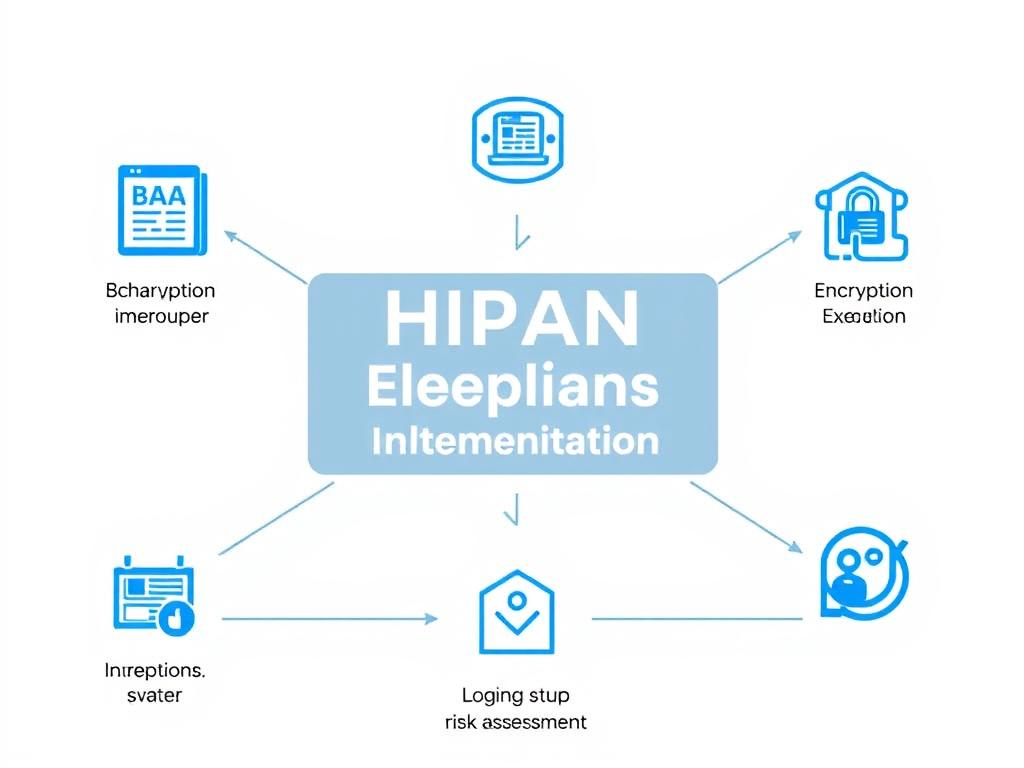
HIPAA this compliance implementation for healthcare SaaS
Achieving GDPR Compliance in the Cloud for International Data Transfers
GDPR compliance workflow for international data transfers
Scenario: A company processes EU customers' personal data using a cloud provider with data centers worldwide, requiring GDPR compliance for international transfers.
Implementation Steps:
- Determine roles: the company acts as a data controller while the cloud provider acts as a data processor, with responsibilities documented in a Data Processing Agreement (DPA).
- Implement and document lawful bases for processing personal data and update privacy notices to reflect cloud processing activities.
- For cross-border transfers, implement Standard Contractual Clauses (SCCs) and conduct transfer impact assessments to evaluate the legal environment in destination countries.
- Where possible, host EU personal data in EU/EEA regions to minimize transfer risks and simplify compliance.
- Implement mechanisms for fulfilling data subject requests (access, correction, deletion) for data stored in cloud environments.
Outcome: Reduced legal transfer risk and demonstrable protection for EU personal data, with clear documentation of technical and organizational measures implemented to ensure GDPR compliance.
Lessons Learned and Common Pitfalls
Provider Certification Misconceptions
A common pitfall is assuming that the cloud provider's certifications absolve customer-side responsibilities. While provider certifications are valuable, they don't replace customer controls or eliminate shared responsibility obligations.
Recommendation: Clearly document which controls are provider-managed versus customer-managed, and implement appropriate customer-side controls regardless of provider certifications.
Cost Considerations
Stronger compliance measures often increase monthly cloud costs. Dedicated regions, private connectivity, customer-managed encryption keys, and enhanced logging can significantly impact your cloud budget.
Recommendation: Budget for compliance-related costs from the beginning and consider them part of your total cost of ownership rather than unexpected expenses.
Vendor Selection Tips
Not all cloud providers offer the same compliance capabilities or contractual flexibility, which can impact your ability to meet regulatory requirements efficiently.
Recommendation: Prefer providers with transparent compliance artifacts, flexible contractual terms (SCCs, BAAs), robust security features, and a track record of supporting regulated workloads.
Conclusion: Your These compliance capabilities Roadmap
Cloud compliance is essential for protecting sensitive data, maintaining customer trust, and avoiding regulatory penalties. By adopting structured frameworks like ISO 27001, SOC 2, and NIST CSF and mapping them to regulatory obligations such as HIPAA and GDPR, you can establish a repeatable pathway to demonstrate controls and readiness.
To succeed in your cloud compliance journey:
- Prioritize risk-based controls that address your most significant threats and compliance obligations.
- Implement cloud compliance best practices for encryption, IAM, logging, vendor due diligence, and training.
- Use automation and continuous monitoring to maintain compliance in dynamic cloud environments.
- Maintain clear documentation for audits and incident response readiness.
Cloud compliance implementation roadmap
Resources and Next Steps
Official Guidance
- HHS HIPAA & Cloud Computing
- European Commission — Data Protection
- ISO 27001 Information
- NIST Cybersecurity Framework
Practical Next Steps
- Run a data inventory and map it to applicable regulations
- Obtain vendor compliance artifacts (SOC reports, ISO certificates, BAAs)
- Implement baseline technical controls and automate continuous monitoring
- Schedule an internal audit and prepare remediation plans
Additional Resources
- IBM Cost of a Data Breach Report 2023
- Cloud provider compliance documentation (AWS, Azure, GCP)
- Industry-specific compliance guidance from relevant associations