

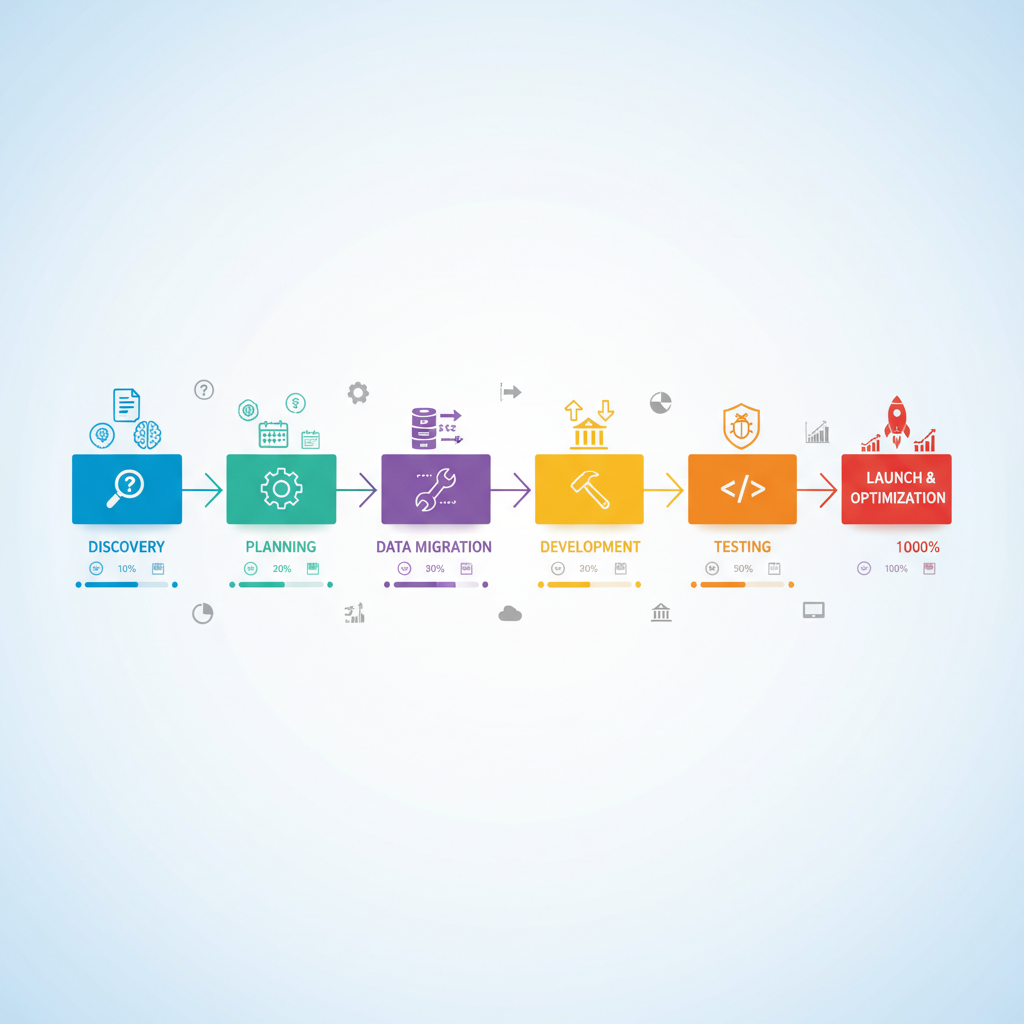
Key Stages of replatforming digital platform
Undertaking a replatforming digital platform project requires a structured approach to minimize risks and ensure a successful outcome. Each stage builds upon the last, demanding careful planning and execution. Following a clear methodology helps keep the project on track and within budget.
This replatforming digital platform tutorial breaks down the journey into manageable phases, providing a clear roadmap. From initial assessment to post-launch optimization, understanding each step is vital for a smooth transition. These steps are crucial for anyone looking into how to replatforming digital platform effectively.
1. Discovery and Planning
The first stage involves a thorough audit of your existing platform, identifying its strengths, weaknesses, and key functionalities. Define clear business objectives and technical requirements for the new platform. This phase is about understanding what you have, what you need, and why you are making the change.
Create a detailed project plan, including timelines, budgets, resource allocation, and a robust risk management strategy. Involve key stakeholders from various departments to ensure all perspectives are considered and buy-in is secured from the outset. A well-defined plan is the bedrock of success.
2. Platform Selection
Choosing the best replatforming digital platform for your needs is a critical decision that will impact your operations for years to come. Research various options, considering factors like scalability, flexibility, security, community support, and total cost of ownership. Evaluate both commercial and open-source solutions.
This step might involve looking into best replatforming platforms 2026 for future-proofing, assessing their features against your specific requirements. Conduct proofs of concept or demos to thoroughly test potential platforms before making a final commitment. The right choice aligns with both current needs and long-term strategic goals.
3. Data Migration Strategy
Data is the lifeblood of any digital platform, and its migration is often the most complex and risky part of the replatforming process. Develop a comprehensive data migration strategy, including data mapping, cleansing, transformation, and validation plans. Identify what data needs to be moved and what can be archived or discarded.
Consider a phased migration approach if possible, gradually moving data rather than a "big bang" transfer. Implement rigorous testing procedures to ensure data integrity and accuracy post-migration. Poor data migration can lead to significant operational disruptions and loss of trust.
4. Development and Integration
Once the new platform is chosen and data strategy is in place, the development and integration phase begins. This involves configuring the new platform, customizing its features to meet your specific business logic, and integrating it with other essential third-party systems. Focus on building a robust, efficient, and user-friendly solution.
Employ agile development methodologies to allow for flexibility and iterative improvements. Regular communication between development teams and stakeholders is paramount to ensure the project stays aligned with expectations. This stage brings your new digital vision to life.
5. Rigorous Testing
Comprehensive testing is non-negotiable before launch. This includes functional testing to ensure all features work as expected, performance testing to verify scalability and speed, and security testing to identify vulnerabilities. User acceptance testing (UAT) is crucial, allowing real users to validate the new platform.
Test data integrity, integrations, and all user journeys thoroughly. Identify and resolve bugs and issues proactively to avoid post-launch problems. A well-tested platform instills confidence and minimizes downtime.
6. Go-Live and Launch
The go-live phase requires meticulous coordination and a clear communication plan. Prepare for potential issues by having rollback strategies and dedicated support teams ready. Choose a launch window that minimizes impact on users and operations, often during off-peak hours.
Monitor the new platform closely immediately after launch, tracking performance metrics, user behavior, and error logs. Be prepared to address any unforeseen issues swiftly and efficiently. A smooth launch ensures a positive initial user experience.
7. Post-Launch Optimization and Maintenance
Replatforming is not a one-time event; it's the beginning of a new chapter for your digital platform. Continuously monitor performance, gather user feedback, and implement ongoing optimizations. Regular maintenance, updates, and security patches are essential to keep the platform running efficiently and securely.
Plan for future enhancements and expansions based on business needs and technological advancements. This continuous improvement mindset ensures your replatformed digital platform remains competitive and valuable over the long term. This ongoing effort is a key part of replatforming digital platform strategies.
FUTUREPROOF YOUR BUSINESS
Future-proof your business, boost performance, and unlock rapid innovation. Begin your strategic
✓ Free consultation✓ No commitment required
✓ Trusted by experts
Choosing the Best replatforming platforms
Selecting the ideal platform for your replatforming initiative is paramount to its long-term success. The market offers a vast array of solutions, each with distinct advantages and disadvantages. Your choice should align precisely with your business goals, technical requirements, and budgetary constraints. This is a vital part of finding the best replatforming digital platform for your specific context.
Evaluating platform options requires a deep understanding of your current system's limitations and your desired future state. Consider factors beyond just features, such as vendor reputation, community support, and the platform's long-term roadmap. A thorough assessment prevents costly mistakes down the line.
Key Evaluation Criteria
When assessing potential replatforming platforms, several criteria should guide your decision-making process. These factors help ensure that the chosen solution not only meets immediate needs but also supports future growth and innovation. Prioritizing these aspects will lead to a more informed choice.
- Scalability: Can the platform handle anticipated growth in traffic, data, and users without performance degradation?
- Flexibility and Customization: How easily can the platform be adapted or extended to meet unique business processes and branding requirements?
- Integration Capabilities: Does it seamlessly integrate with your existing CRM, ERP, marketing automation, and other essential tools?
- Security Features: What built-in security measures does it offer, and how does it handle data protection and compliance?
- Ease of Use and Development: Is it developer-friendly, and does it offer intuitive interfaces for content managers or administrators?
- Total Cost of Ownership (TCO): Beyond initial licensing or subscription fees, consider development, maintenance, hosting, and support costs.
- Vendor Support and Community: What level of support does the vendor provide, and is there an active community for resources and troubleshooting?
- Technology Stack: Does its underlying technology align with your team's expertise or your strategic technological direction?
Types of replatforming solutions
The landscape of replatforming solutions can broadly be categorized into several types, each offering different levels of control, flexibility, and cost structures. Understanding these distinctions helps in selecting the most appropriate path for your organization. This knowledge is essential for effective replatforming digital platform examples.
- SaaS (Software-as-a-Service) Platforms: These are cloud-based, fully managed solutions where the vendor handles hosting, maintenance, and updates. They offer rapid deployment and lower initial costs, but less customization. Examples include Shopify, Salesforce, or HubSpot.
- PaaS (Platform-as-a-Service) Solutions: PaaS provides a framework for developers to build, run, and manage applications without the complexity of building and maintaining the infrastructure. It offers more flexibility than SaaS but still abstracts some underlying infrastructure. Examples include AWS Elastic Beanstalk or Google App Engine.
- Open-Source Platforms: These platforms offer source code access, enabling extensive customization and avoiding licensing fees. However, they require significant internal expertise for setup, maintenance, and security. Examples include Magento Open Source, WordPress, or Drupal.
- Custom-Built Solutions: For highly unique business needs, building a custom platform from scratch on a modern technology stack might be the answer. This offers maximum control and customization but comes with the highest development cost and maintenance burden.
Essential replatforming digital platform Strategies for Success
A successful replatforming digital platform project hinges on more than just technical execution; it requires robust strategic planning and careful management. Adopting the right replatforming digital platform strategies can mitigate risks, ensure smooth transitions, and maximize the return on investment. These insights are critical for any organization embarking on this journey.
Strategic foresight helps in anticipating challenges and preparing effective countermeasures. It encompasses everything from stakeholder engagement to choosing the right team and fostering clear communication throughout the project lifecycle. Without a solid strategy, even the best technical efforts can falter.
Agile and Iterative Approach
Adopting an agile and iterative approach can significantly enhance the success rate of a replatforming project. Instead of a monolithic "big bang" launch, break the project into smaller, manageable phases, delivering incremental value. This allows for continuous feedback and adjustments.
This methodology helps in responding quickly to changes, reducing overall project risk, and allowing teams to learn and adapt throughout the process. It also provides opportunities to validate decisions early, preventing costly rework later in the development cycle. Agile practices are crucial for modern replatforming digital platform efforts.
Stakeholder Communication and Change Management
Effective communication with all stakeholders is paramount throughout the replatforming journey. Clearly articulate the 'why' behind the replatforming, its benefits, and potential impacts. Regular updates and transparent reporting build trust and manage expectations.
Change management is equally important. Replatforming often involves new processes and tools, which can meet resistance from users. Develop training programs and provide ample support to help employees adapt to the new platform. Proactively address concerns and celebrate milestones to maintain morale.
Data-Driven Decision Making
Leverage data at every stage of the replatforming process. Use analytics from your current platform to understand user behavior, identify critical functionalities, and inform design decisions for the new platform. Post-launch, continue to monitor key performance indicators (KPIs) to measure success and identify areas for further optimization.
Data-driven insights help in validating choices, quantifying the impact of the replatforming effort, and ensuring that the new platform delivers the expected business value. This analytical approach makes replatforming digital platform examples more impactful and measurable.
Build the Right Team
Assemble a cross-functional team with expertise in project management, development, data migration, quality assurance, and user experience. Ensure team members have a clear understanding of their roles and responsibilities. Consider external consultants if specialized skills are needed.
A strong, cohesive team is the backbone of any successful replatforming project. Foster an environment of collaboration, open communication, and shared ownership to navigate the complexities of the transition effectively. Investing in the right talent is an investment in the project's success.
Common Challenges and How to Overcome Them
Replatforming a digital platform is inherently complex and can present numerous challenges, ranging from technical hurdles to organizational resistance. Anticipating these obstacles and developing strategies to overcome them is crucial for a smooth and successful migration. Ignoring potential pitfalls can lead to delays, budget overruns, and even project failure.
Understanding these common issues allows teams to proactively plan and implement mitigation strategies. This foresight transforms potential roadblocks into manageable challenges, contributing significantly to a successful replatforming digital platform project. Addressing these is a vital part of any replatforming digital platform tips.
Data Integrity and Loss
One of the most significant risks is compromising data integrity or experiencing data loss during migration. Incorrect mapping, incomplete transfers, or corrupted files can severely impact business operations and customer trust. This is a common concern when replatforming digital platform.
Implement robust data validation processes at every stage of the migration. Utilize automated tools where possible and perform manual spot checks. Conduct multiple dry runs of data migration before the final cutover to identify and rectify issues early. Always maintain comprehensive backups of all original data.
Budget Overruns and Scope Creep
Replatforming projects can quickly exceed initial budget and timeline estimates due to unforeseen complexities or expanding requirements. Scope creep, where new features or functionalities are added post-planning, is a common culprit. This makes careful financial planning and strict scope management essential.
Define the project scope meticulously at the outset and obtain clear sign-offs from all stakeholders. Implement rigorous change control processes to manage any new requests. Regularly monitor budget expenditures against planned allocations and communicate any potential deviations early.
Integration Complexities
Modern digital platforms rarely operate in isolation; they integrate with numerous third-party systems like CRMs, ERPs, payment gateways, and marketing tools. Migrating or rebuilding these integrations can be highly complex and time-consuming. These complexities add to the replatforming digital platform challenges.
Thoroughly document all existing integrations and their dependencies during the discovery phase. Prioritize critical integrations for the initial launch, deferring less critical ones to post-launch phases. Utilize APIs and middleware solutions to simplify and standardize integration points.
User Resistance and Training
New platforms, even if superior, can face resistance from users accustomed to the old system. The learning curve for new interfaces and workflows can temporarily reduce productivity and cause frustration. This human element is often underestimated in replatforming digital platform projects.
Develop comprehensive training programs and user documentation well in advance of the launch. Provide hands-on workshops and continuous support to ease the transition. Emphasize the benefits of the new platform to users, highlighting how it will improve their daily tasks. Gather feedback during early testing phases to address usability concerns proactively.
Advanced replatforming digital platform Tips
Moving beyond the fundamentals, advanced replatforming digital platform tips focus on optimizing the migration process and maximizing the value derived from the new platform. These insights are geared towards organizations seeking to achieve not just a successful replatform, but an exceptionally efficient and future-proof one. They offer deeper perspectives for replatforming digital platform strategies.
Implementing these advanced strategies can help mitigate nuanced risks, enhance performance, and ensure a higher return on your investment. They represent best practices gleaned from numerous successful replatforming efforts across various industries. Consider these for your next major undertaking.
Embracing a Composable Architecture
Consider replatforming to a composable architecture, often referred to as 'MACH' (Microservices, API-first, Cloud-native, Headless). This approach offers unparalleled flexibility, scalability, and agility by breaking down the platform into independent, interchangeable components. It allows for best-of-breed solutions for each functional area.
While more complex initially, a composable architecture significantly reduces vendor lock-in and allows for faster innovation and easier integration of new technologies in the long run. It's a forward-thinking strategy for those looking beyond current limitations. This represents a modern approach to best replatforming platforms for future adaptability.
Performance Benchmarking and Optimization
Before and after replatforming, establish rigorous performance benchmarks for critical metrics such as page load times, transaction speeds, and server response times. These benchmarks provide objective measures of improvement and highlight areas that still require optimization.
Utilize tools for continuous performance monitoring post-launch. Identify bottlenecks, optimize code, and fine-tune infrastructure configurations to ensure the new platform consistently delivers optimal speed and responsiveness. Performance is key to user satisfaction and SEO.
Security by Design
Integrate security considerations into every phase of the replatforming process, not just as an afterthought. Adopt a "security by design" philosophy, ensuring that security features are baked into the architecture and development from day one. This proactive stance significantly reduces vulnerabilities.
Conduct regular security audits, penetration testing, and vulnerability assessments both during development and post-launch. Stay updated with the latest security best practices and ensure your team is trained in secure coding standards. Security is an ongoing commitment.
Phased Rollout Strategies
For large and complex platforms, a phased rollout strategy can significantly reduce risk compared to a single "big bang" launch. This involves migrating and launching specific functionalities or user segments incrementally. This approach provides valuable learning opportunities.
Each phase allows for testing, feedback, and optimization before proceeding to the next, minimizing the impact of any unforeseen issues. While potentially extending the overall project timeline, it drastically improves stability and user acceptance. These are good replatforming digital platform tips for beginners and experts alike.
Frequently Asked Questions about replatforming digital platform
Navigating the complexities of replatforming a digital platform often leads to a series of common questions. This FAQ section addresses some of the most pressing concerns and provides clear, concise answers to help clarify the process. Understanding these points is crucial for anyone considering a platform migration.
What is replatforming a digital platform?
Replatforming a digital platform refers to the process of migrating an existing software application or website from one underlying technology stack, infrastructure, or vendor to another. This usually involves rebuilding or redesigning the application on a new, more modern platform while retaining its core functionalities and data. It's a strategic move to overcome limitations of legacy systems, improve performance, or reduce operational costs.
How long does a replatforming project typically take?
The duration of a replatforming project varies significantly depending on the size, complexity, and scope of the digital platform, as well as the resources available. A small e-commerce site might take a few months, while a large enterprise system could span a year or more. Factors like data migration volume, custom integrations, and team experience heavily influence the timeline. Thorough planning and an agile approach can help manage expectations and accelerate the process.
What are the main risks associated with replatforming?
Key risks include data loss or corruption during migration, budget overruns, project delays, performance issues post-launch, integration failures with third-party systems, and user resistance to the new platform. These risks can be mitigated through meticulous planning, rigorous testing, effective change management, and phased rollout strategies. Early identification and proactive risk management are essential for a successful outcome.
Is replatforming always necessary, or are upgrades sufficient?
The decision between replatforming and upgrading depends on the extent of the issues with the current platform. Upgrades are typically sufficient when minor enhancements, bug fixes, or version updates are needed within the existing technology stack. Replatforming becomes necessary when the current platform fundamentally hinders growth, lacks scalability, poses security risks, or is too costly to maintain. It's a strategic choice when existing architecture is no longer viable.
How can I ensure data integrity during replatforming?
Ensuring data integrity involves a multi-faceted approach. Begin with a detailed data audit and mapping to understand your data structures. Implement robust data cleansing and transformation rules before migration. Perform multiple test migrations and rigorously validate the transferred data against the source. Utilize automated tools for accuracy checks and maintain comprehensive backups. A phased migration can also help in verifying data integrity in smaller chunks.
FUTUREPROOF YOUR BUSINESS
Future-proof your business, boost performance, and unlock rapid innovation. Begin your strategic
✓ Free consultation✓ No commitment required
✓ Trusted by experts
Conclusion
Replatforming a digital platform is a significant strategic undertaking that can redefine a business's online capabilities and future trajectory. While complex, a well-executed replatforming project offers profound benefits, including enhanced performance, improved security, greater scalability, and reduced operational costs. By meticulously planning, selecting the right platform, and employing robust replatforming digital platform strategies, organizations can successfully navigate this transformation.
The insights provided in this replatforming digital platform guide, from understanding the 'why' to mastering the 'how', equip you with the knowledge to approach your migration with confidence. Remember, the journey doesn't end at launch; continuous optimization and maintenance are key to sustaining long-term success. Embrace the challenge, and unlock the full potential of your digital future.
Opsio provides managed services and cloud consulting to help organizations implement and manage their technology infrastructure effectively.