

Why NIS2 Changes How Organizations Handle Incidents
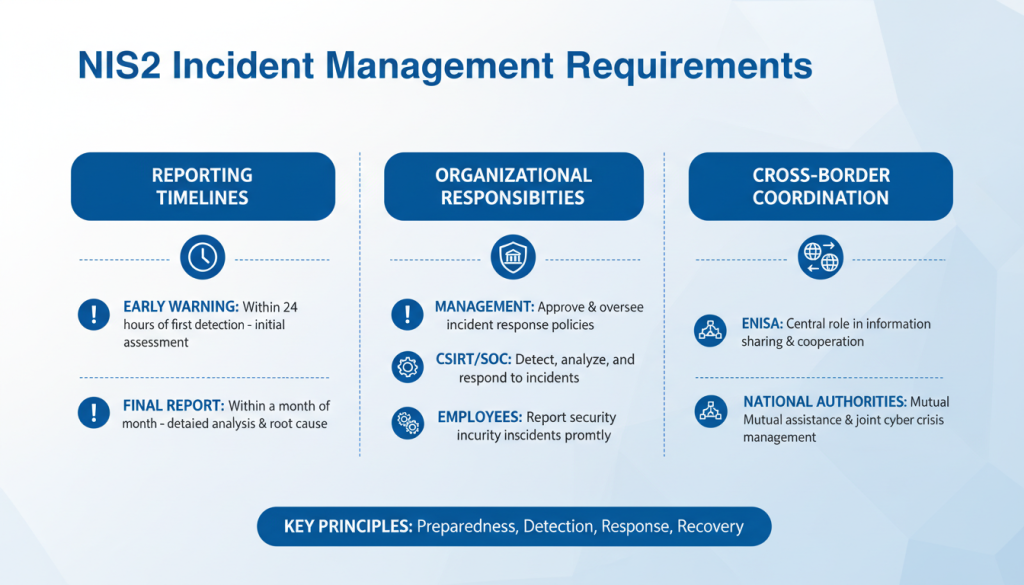
The Network and Information Systems Directive 2 (NIS2) represents a significant evolution in the EU's cybersecurity framework. It expands regulatory scope, introduces stricter reporting obligations, and places direct accountability on senior management. For security professionals, this means adapting existing incident response frameworks to meet new compliance requirements while maintaining operational effectiveness.
Overview of NIS2 and its impact on national and cross-border cybersecurity
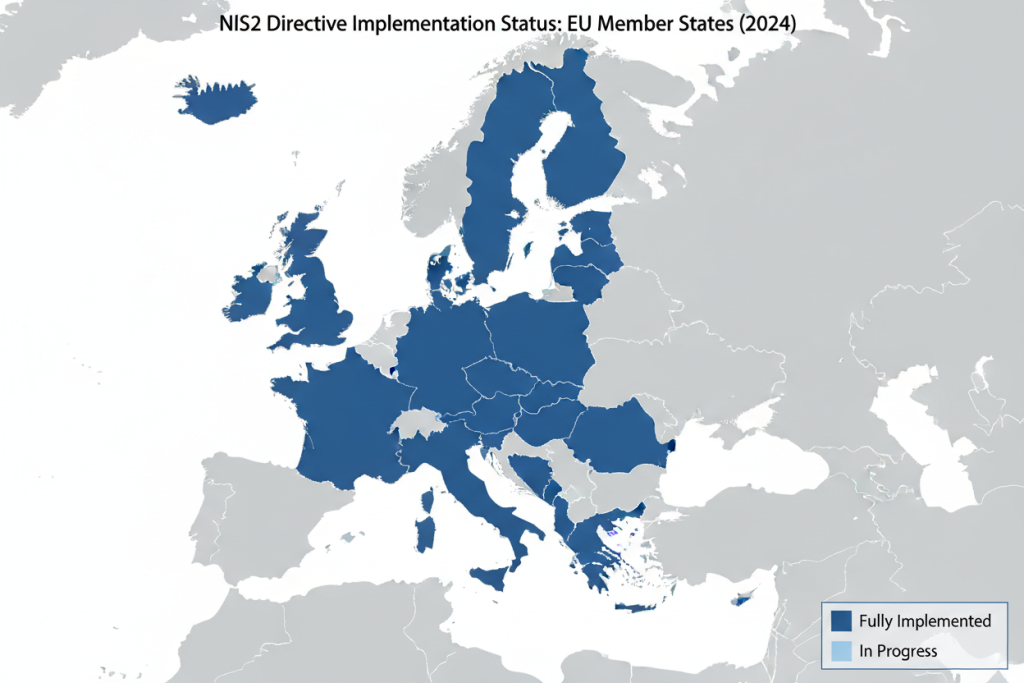
NIS2 broadens the scope of entities subject to cybersecurity regulations across EU Member States, strengthens supervisory powers, and tightens reporting rules and enforcement. Member States were required to transpose the directive into national law by October 17, 2024, though some countries are still finalizing implementation details. The directive emphasizes both operational resilience and cross-border coordination, making incident handling a central compliance and business continuity concern.
Defining "NIS2 incident management" and its relationship to existing frameworks
NIS2 incident management encompasses the processes, roles, tools, and governance that ensure timely detection, handling, reporting, and learning from incidents in compliance with NIS2 obligations. While it overlaps with existing frameworks like ISO/IEC 27001 and NIST SP 800-61, NIS2 adds stricter reporting timelines and broader accountability for senior management.
NIS2 doesn't replace existing incident response frameworks—it enhances them with specific regulatory requirements and timelines that must be integrated into your existing processes.
Key intersection points between NIS2 and established frameworks include:
- Incident lifecycle management from detection through post-incident review
- Evidence collection and preservation for regulatory review
- Cross-border coordination for incidents affecting multiple Member States
- Integration with risk management and continuous improvement processes
The stakes: legal, operational, and reputational risks
Failing to meet NIS2 incident management requirements carries significant consequences:
Legal and Financial
Fines up to €10 million or 2% of global annual revenue for essential entities (€7 million or 1.4% for important entities)

Operational
Increased regulatory scrutiny, mandatory security improvements, and potential business disruption during remediation

Reputational
Loss of customer trust, damage to brand reputation, and potential impacts on business relationships, especially with essential entities

According to the IBM Cost of a Data Breach Report, organizations with mature incident response capabilities reduce breach costs by an average of 58% compared to those without such capabilities. NIS2 compliance not only avoids penalties but also strengthens your overall security posture.
Building a NIS2-Aligned Incident Response Framework
Core components of an incident response program tailored to NIS2
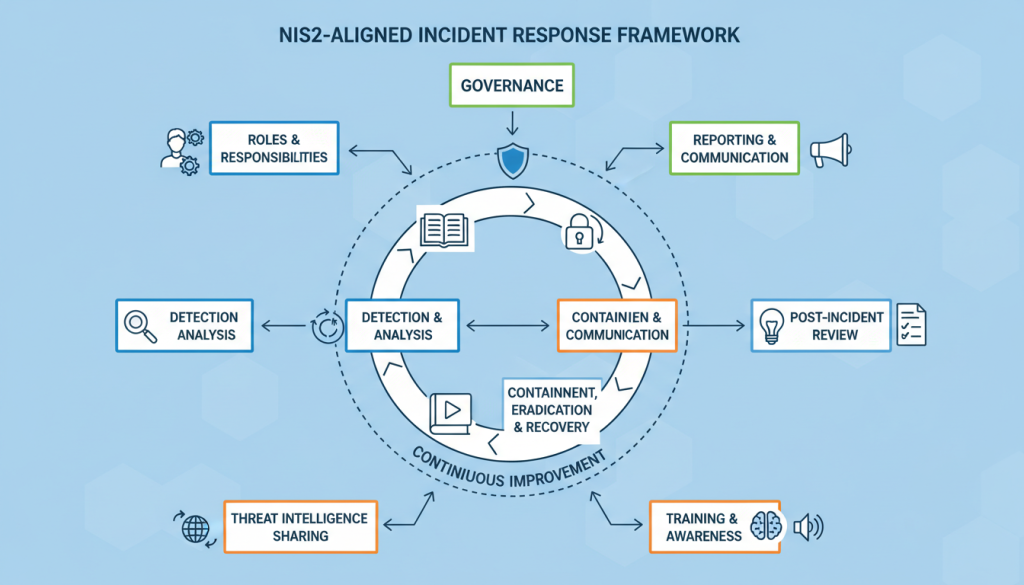
A comprehensive NIS2-aligned incident response program requires several interconnected components:
| Component | Description | NIS2 Alignment |
| Governance & Policy | Executive sponsorship, documented policies, and NIS2-compliant incident response procedures | Establishes management accountability and compliance foundation |
| Roles & Responsibilities | Clear RACI matrix for SIRT, CIO/CISO, Legal, Communications, and Business Continuity | Ensures timely decision-making and reporting within regulatory deadlines |
| Detection & Monitoring | 24/7 Security Operations Center (SOC), comprehensive logging, and threat intelligence | Reduces time-to-detect and enables early warning capabilities |
| Playbooks & Runbooks | Actionable procedures for common incident types with NIS2 reporting triggers | Standardizes response and ensures regulatory steps aren't missed |
| Reporting & Evidence | Structured templates for timelines, impact assessment, and forensic artifacts | Facilitates 24/72-hour reporting requirements with proper evidence |
| Training & Exercises | Tabletop exercises and simulations that include NIS2 reporting scenarios | Validates team readiness for regulatory compliance under pressure |
| Continuous Improvement | Post-incident reviews and KPIs for maturity tracking | Demonstrates ongoing compliance and risk reduction to regulators |
Need help building your NIS2 incident response framework?
Download our comprehensive NIS2 Incident Response Framework Template to jumpstart your compliance efforts.
Integrating incident response best practices with NIS2 requirements
Effective NIS2 incident management combines established security practices with specific regulatory requirements:
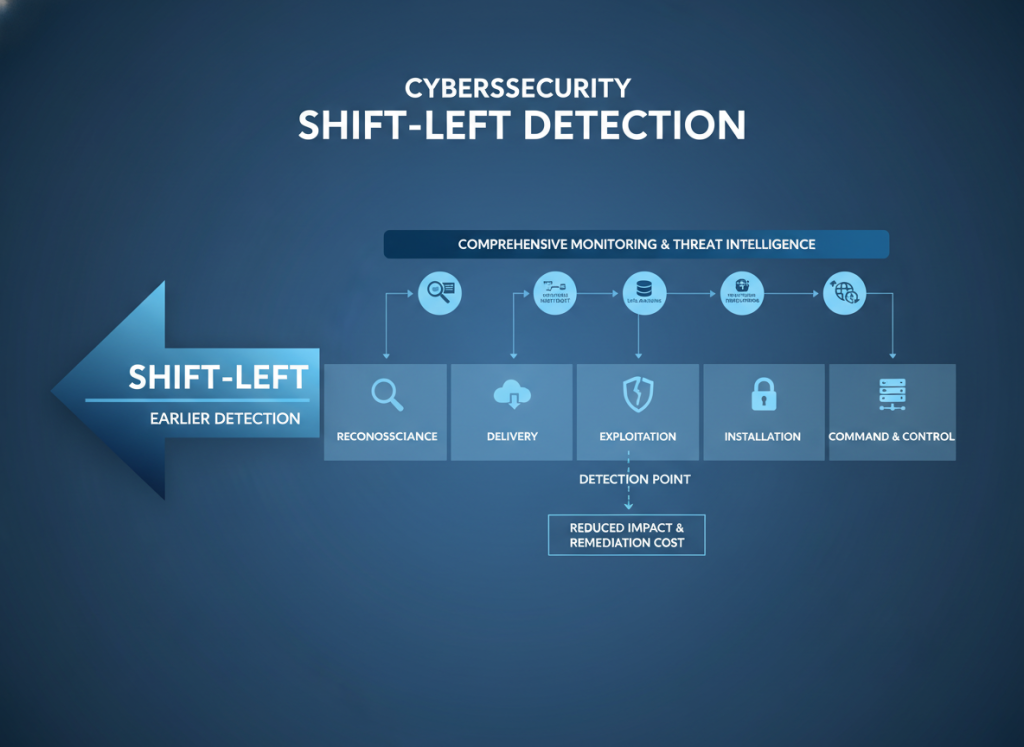
Shift-Left Detection
Implement comprehensive monitoring across endpoints, networks, and cloud assets to detect incidents earlier in the attack chain. This reduces time-to-detect and provides more time for analysis and reporting within NIS2 deadlines.
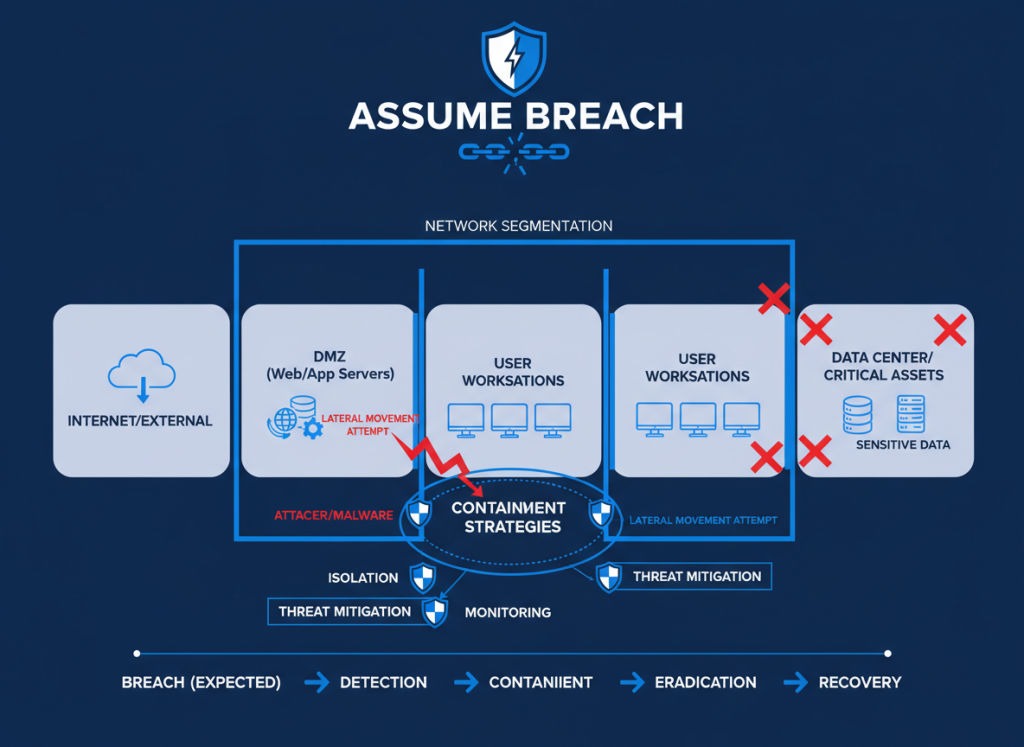
Assume Breach Mentality
Design containment and segmentation strategies assuming attackers are already in your network. This approach minimizes lateral movement and reduces incident impact, which can affect NIS2 reporting thresholds and regulatory scrutiny.
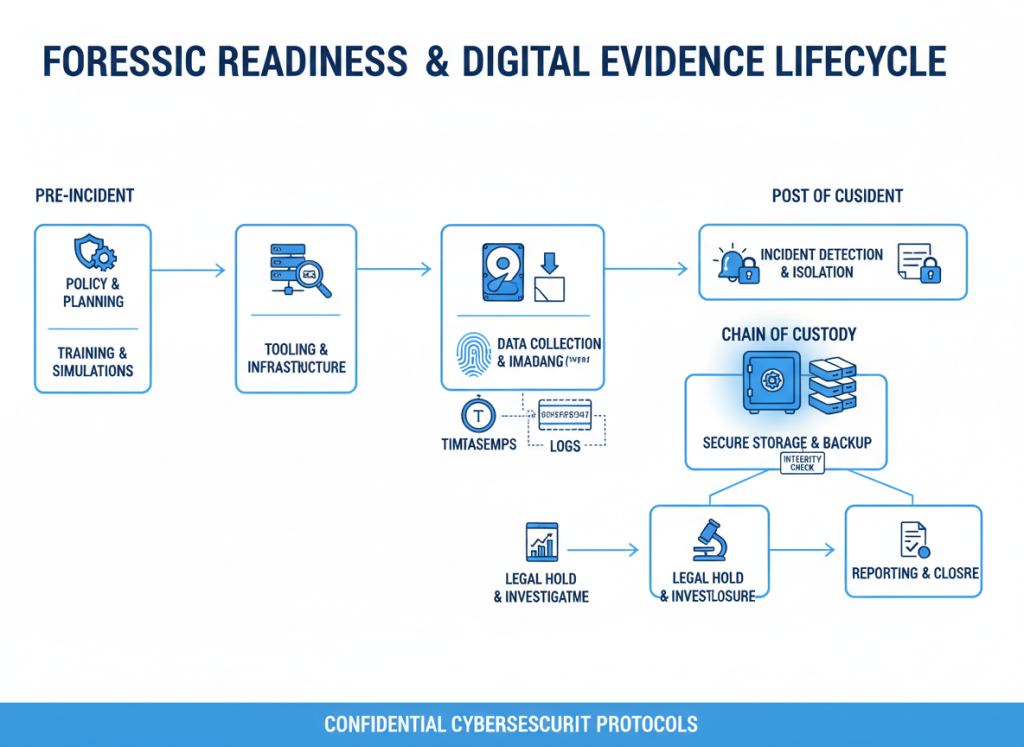
Forensic Readiness
Maintain tamper-evident logs and artifact preservation procedures to ensure evidence survives regulatory review. NIS2 may require providing detailed incident timelines and impact assessments to authorities.
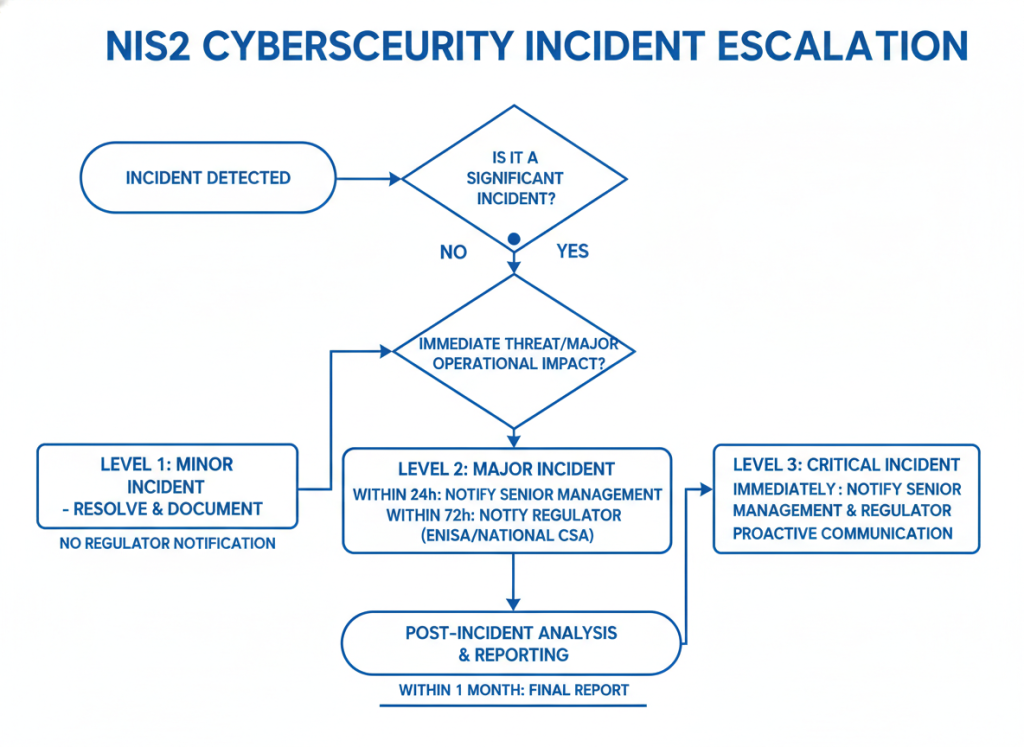
Timely Escalation
Implement automated thresholds that trigger senior leadership and regulator notification as required by NIS2. This ensures you never miss critical reporting deadlines even during high-stress incidents.
NIS2 incident management places importance on both technical defense and the completeness of documentation—treat documentation as a primary deliverable, not an afterthought.
Establishing roles, responsibilities, and governance for cybersecurity incident response
Clear governance reduces response friction and ensures compliance with NIS2 reporting obligations:
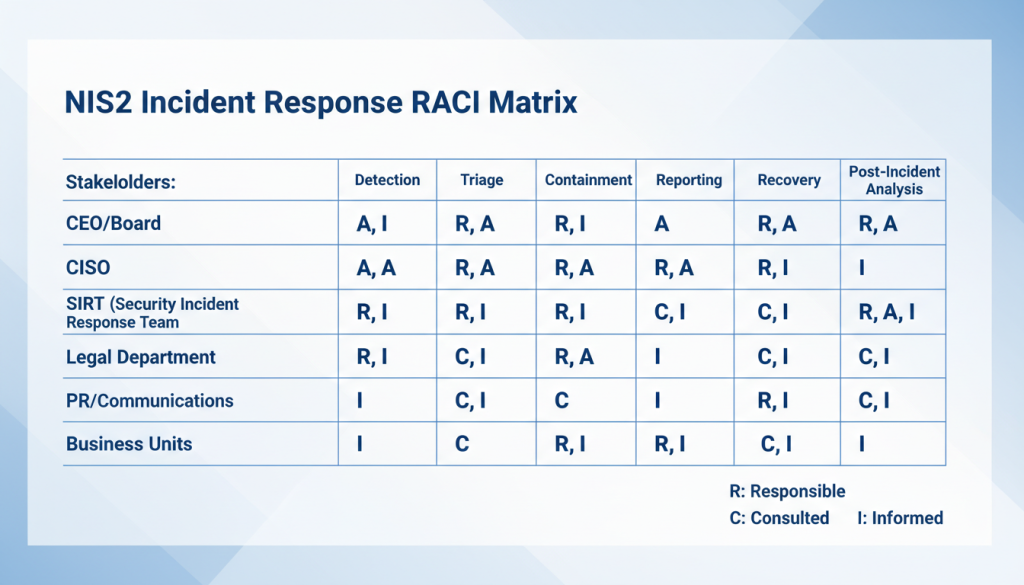
For high-impact incidents, establish a Senior Incident Decision Forum (SIDF) with:
- Pre-authorized decision-making authority for critical actions
- Representation from executive leadership, security, legal, and communications
- Defined meeting cadence during active incidents (e.g., twice daily)
- Direct responsibility for NIS2 regulatory reporting decisions
- Documentation protocols that support regulatory evidence requirements
This governance structure ensures that decisions are made at the appropriate level and that regulatory reporting obligations are never overlooked during crisis response.
Response Planning for NIS2: Policies, Playbooks, and Preparedness
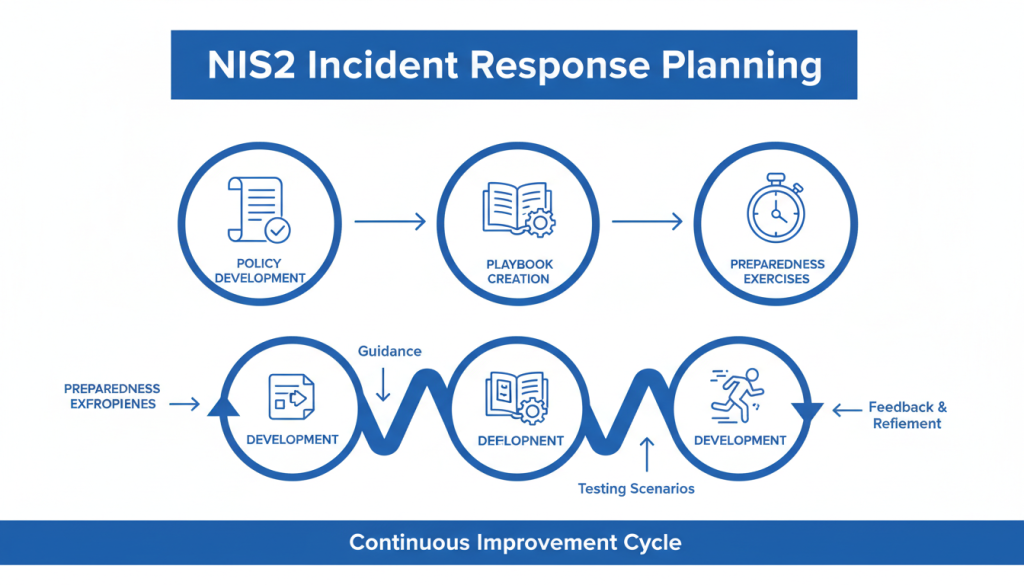
Developing response playbooks that reflect response planning for NIS2
Effective playbooks transform policy into actionable procedures. For NIS2 compliance, your playbooks should address both technical response and regulatory reporting requirements:
Example Ransomware Playbook Structure
- Detection Sources: EDR alerts, user reporting, file encryption patterns
- Immediate Triage: Isolate affected subnet, snapshot VMs, preserve memory dumps
- Evidence Collection: Capture memory dumps, EDR logs, file timestamps, ransom notes
- Notifications: CISO, Legal, SIDF, Data Protection Officer
- NIS2 Reporting: Prepare initial notification within 24 hours if impact thresholds are met
- Containment: Network segmentation, credential resets, blocking C2 domains
- Eradication: Malware removal, vulnerability patching, security hardening
- Recovery: System restoration, data recovery, service validation
- Post-Incident: Root cause analysis, lessons learned, control improvements
Create similar playbooks for other common incident types relevant to your organization, such as data exfiltration, supply chain compromise, DDoS attacks, and insider threats. Each playbook should include clear NIS2 reporting triggers and templates.
Scenario-based exercises and tabletop testing to validate incident response strategies
Regular exercises are essential to validate your NIS2 incident response capabilities:
| Exercise Type | Description | NIS2 Focus Areas | Frequency |
| Tabletop Exercises | Discussion-based scenarios with key stakeholders to validate decision-making | Reporting timelines, notification decisions, cross-border coordination | Quarterly |
| Technical Drills | Hands-on response activities for technical teams | Evidence collection, forensic preservation, technical documentation | Bi-monthly |
| Red Team / Blue Team | Simulated attacks to test detection and response capabilities | Time-to-detect, time-to-contain, evidence quality | Semi-annually |
| Full-Scale Simulations | Comprehensive scenarios involving all stakeholders and external parties | End-to-end response including regulatory reporting | Annually |
Exercises reveal process gaps. If a playbook can't be executed under stress, it isn't ready for a real incident or regulatory scrutiny.
Use realistic scenarios relevant to your organization, such as cloud service outages, managed service provider compromise, or ransomware affecting critical business functions. Measure outcomes including time-to-detect, time-to-contain, decision lag, and regulator notification readiness.
Strengthen your incident response capabilities
Register for our upcoming webinar: "NIS2 Tabletop Exercise Masterclass" to learn how to design and facilitate effective exercises that validate your regulatory compliance.
Communication plans: internal, external, and regulator-facing reporting under NIS2 reporting procedures
Effective communication is central to NIS2 compliance. Your communication plan should address three key audiences:
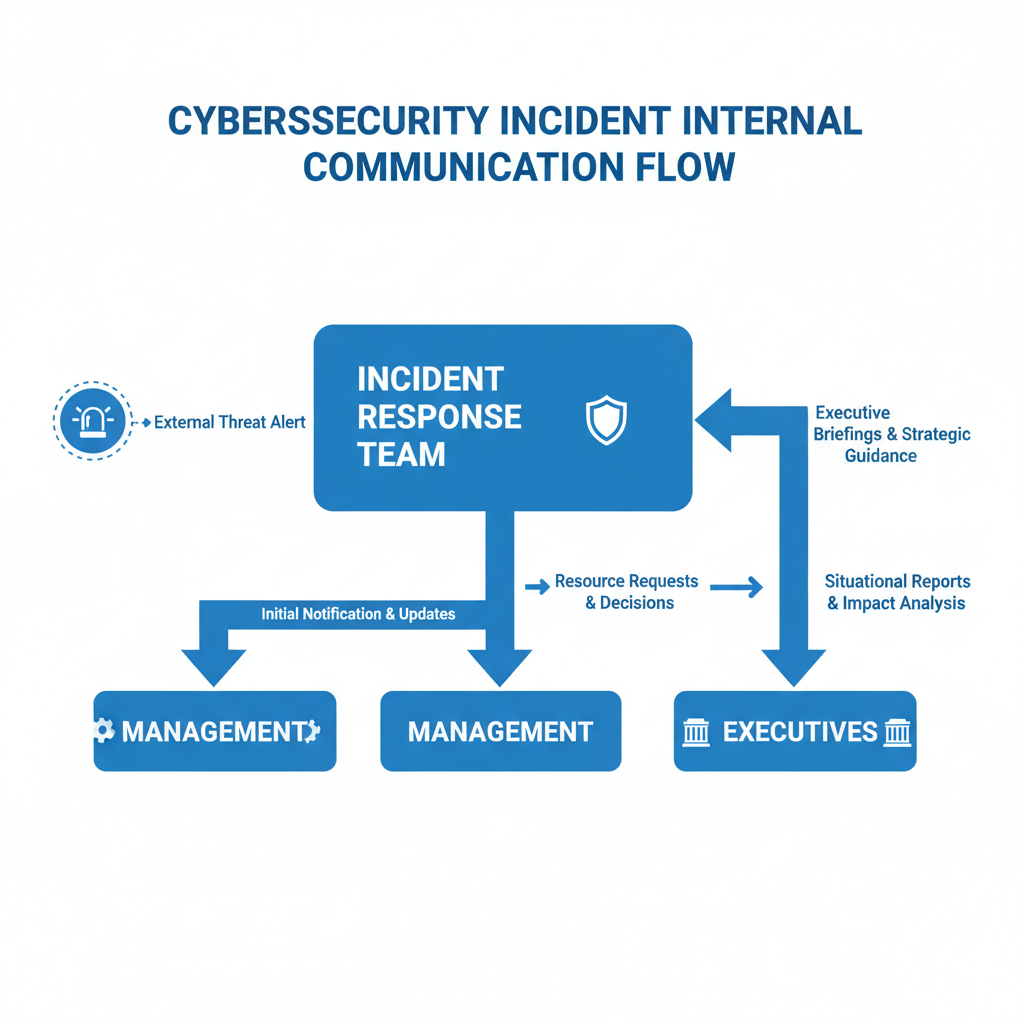
Internal Communications
- Tiered notification structure (incident team → SIDF → executive leadership)
- Secure, agreed-upon communication channels that work during crises
- Regular status updates with consistent format and cadence
- Clear escalation paths for decision-making blockers
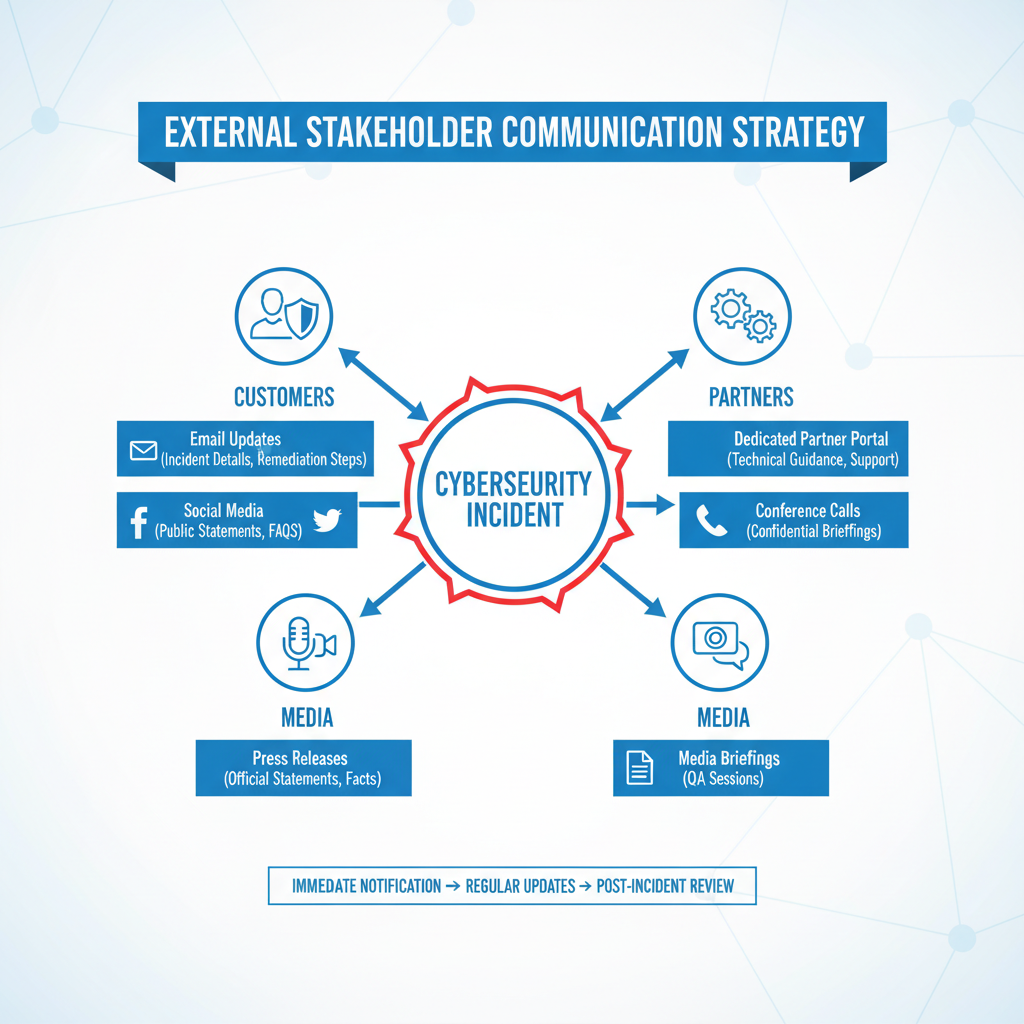
External Stakeholders
- Customer notification templates reviewed by legal counsel
- Prioritization framework for critical stakeholders
- Transparent but carefully crafted messaging
- Coordination with PR and communications teams
- Consistent spokesperson designation
Regulatory Reporting
- NIS2-compliant notification templates
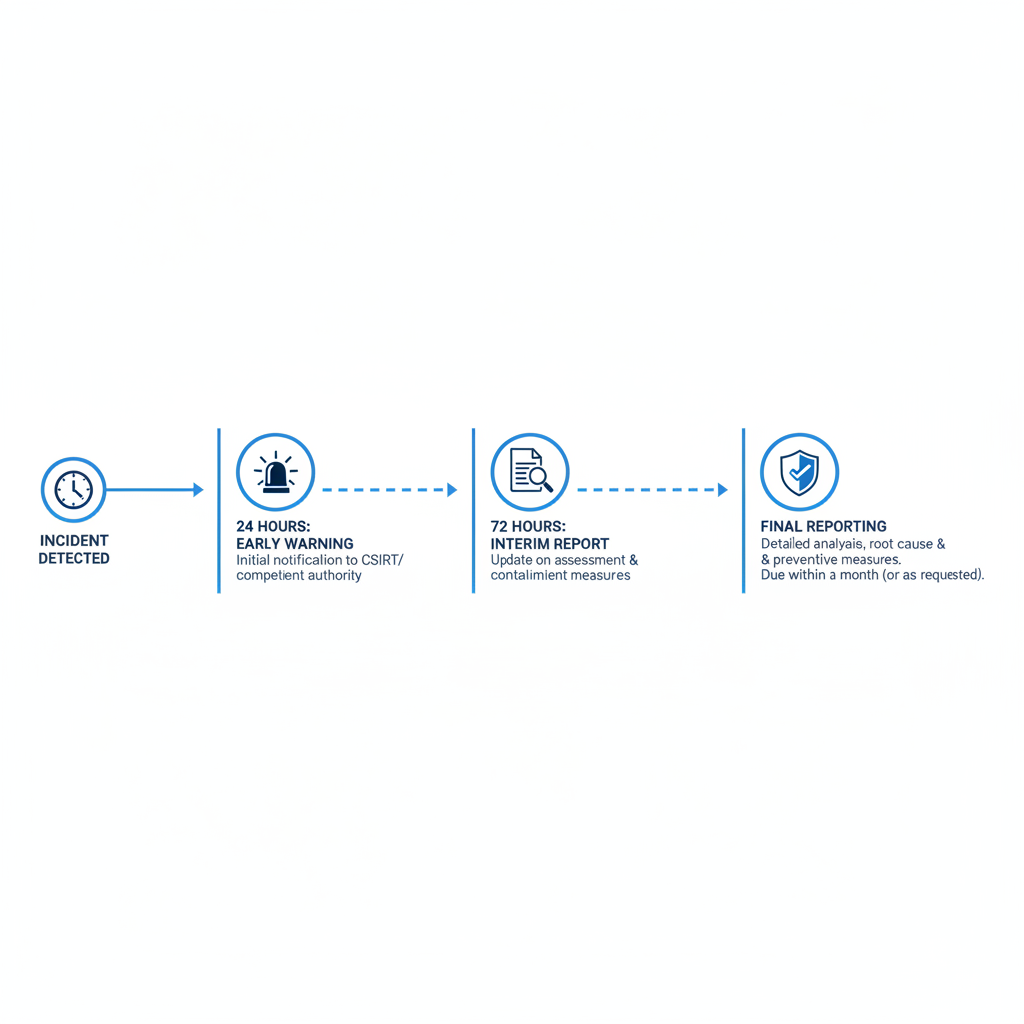
- 24/72-hour reporting timeline tracking
- Legal review process for regulatory submissions
- Documentation of all regulatory communications
- Follow-up and closure reporting procedures
Include a communication matrix in every playbook that specifies who communicates what to whom, when, and through which channels. Ensure all external communications are reviewed by legal counsel to maintain accuracy while meeting regulatory obligations.
Detection, Triage, and Containment: Operational Steps in Incident Handling
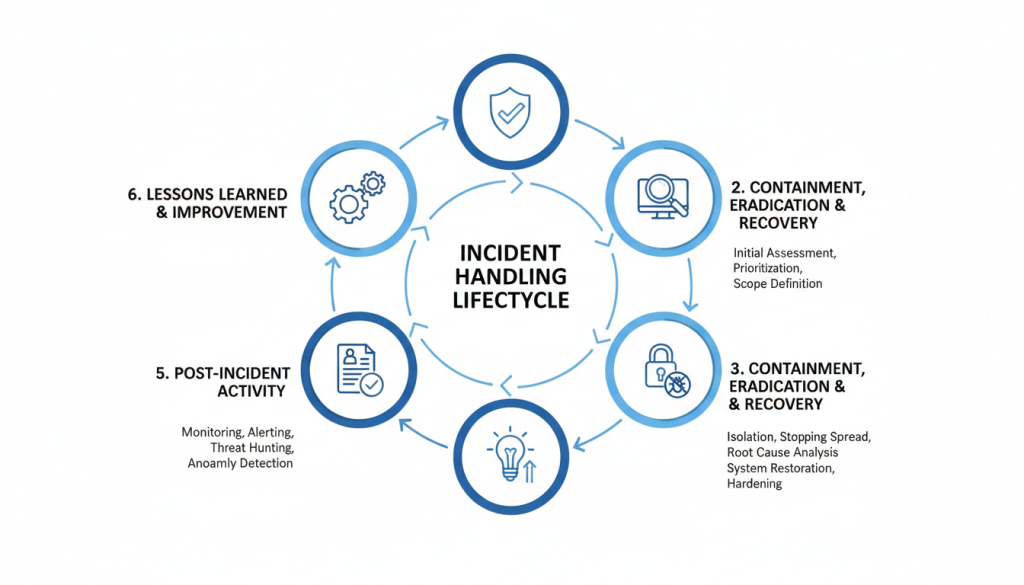
Early detection and threat intelligence to support rapid cybersecurity incident response
Early detection is critical for effective incident management and meeting NIS2 reporting timelines. Implement these key capabilities:
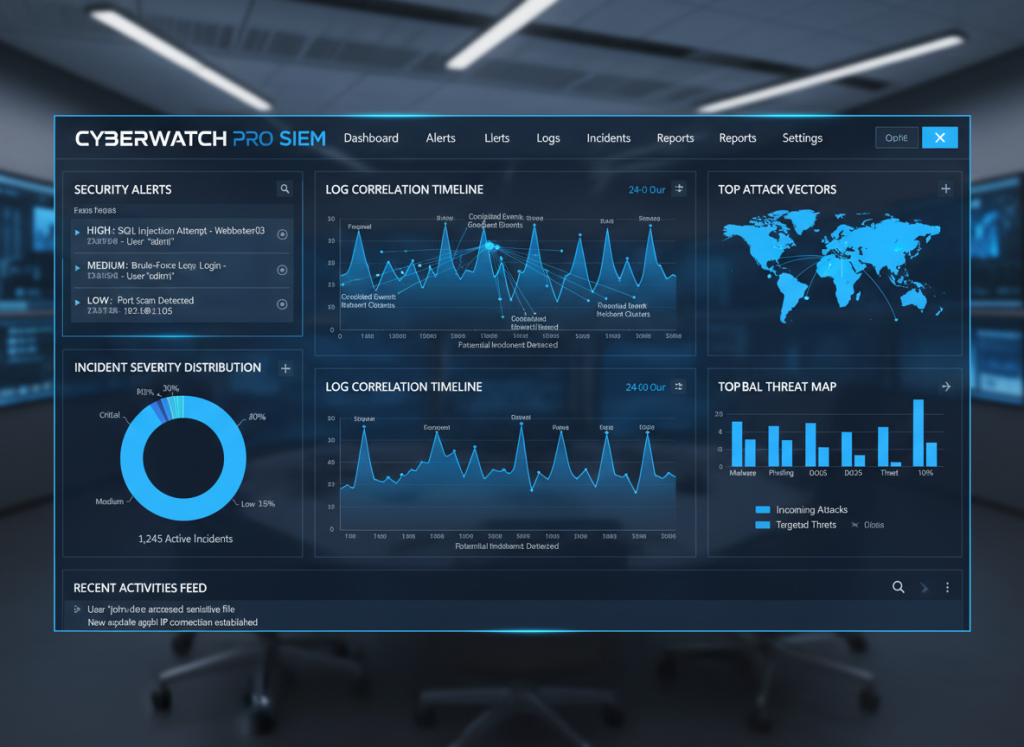
Centralized Logging and SIEM
Implement comprehensive log collection and correlation with defined alerting thresholds. Ensure logs are preserved with appropriate retention periods to support forensic investigation and regulatory reporting.
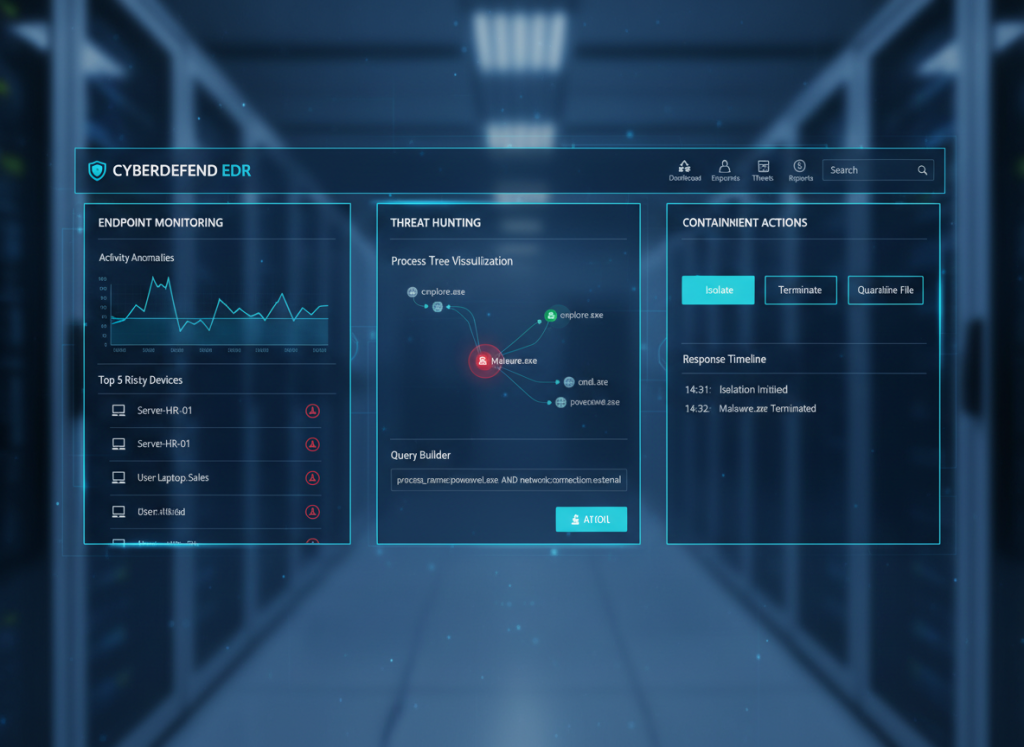
Endpoint Detection and Response (EDR)
Deploy EDR solutions across your environment to provide real-time visibility into endpoint activity, enable rapid containment actions, and collect forensic evidence required for NIS2 reporting.
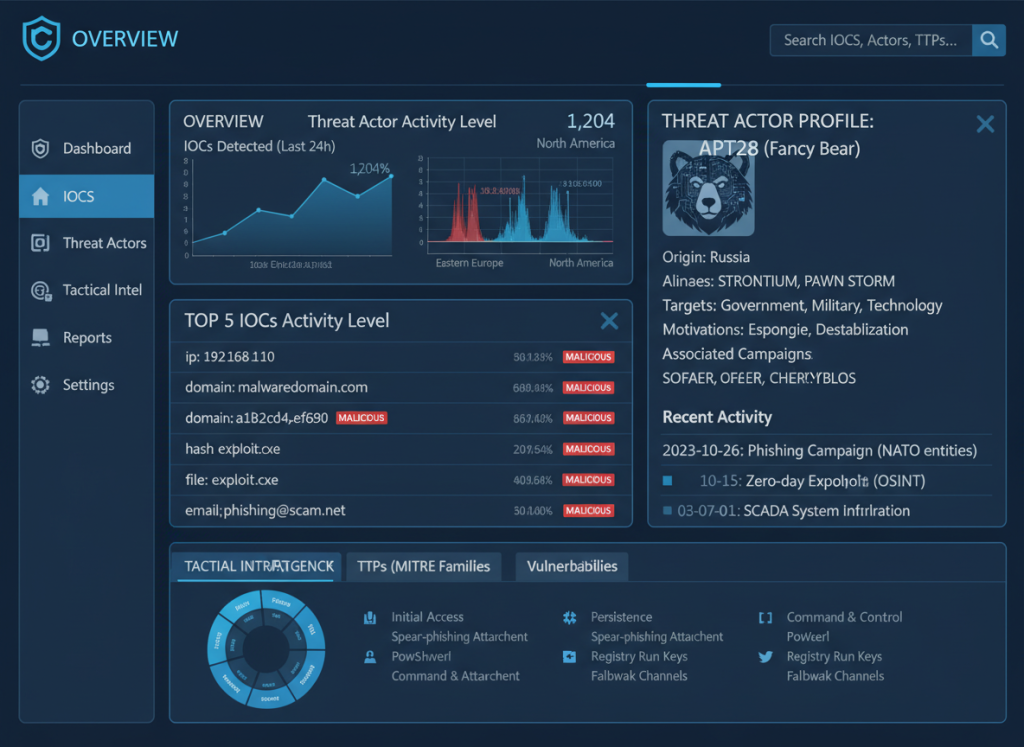
Threat Intelligence Integration
Incorporate threat intelligence feeds relevant to your sector and geography to enhance detection capabilities. Focus on actionable intelligence that can be operationalized through detection rules and hunting activities.
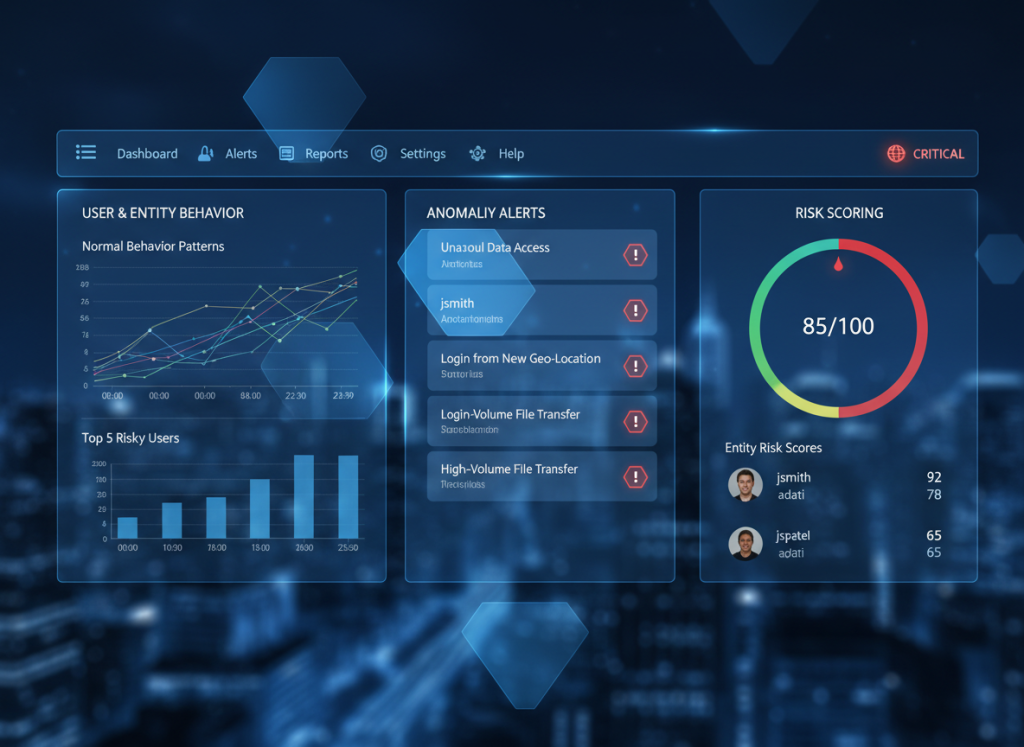
Behavioral Analytics
Implement user and entity behavior analytics (UEBA) to detect anomalous activity that might indicate compromise. This approach helps identify sophisticated attacks that might evade signature-based detection.
According to the IBM Cost of a Data Breach Report, organizations with mature detection capabilities reduce time-to-contain by an average of 74 days compared to those without such capabilities, which directly reduces remediation costs and regulatory exposure.
Triage processes and prioritization aligned with NIS2 criticality rules
Effective triage ensures resources are allocated appropriately and NIS2 reporting obligations are identified quickly:
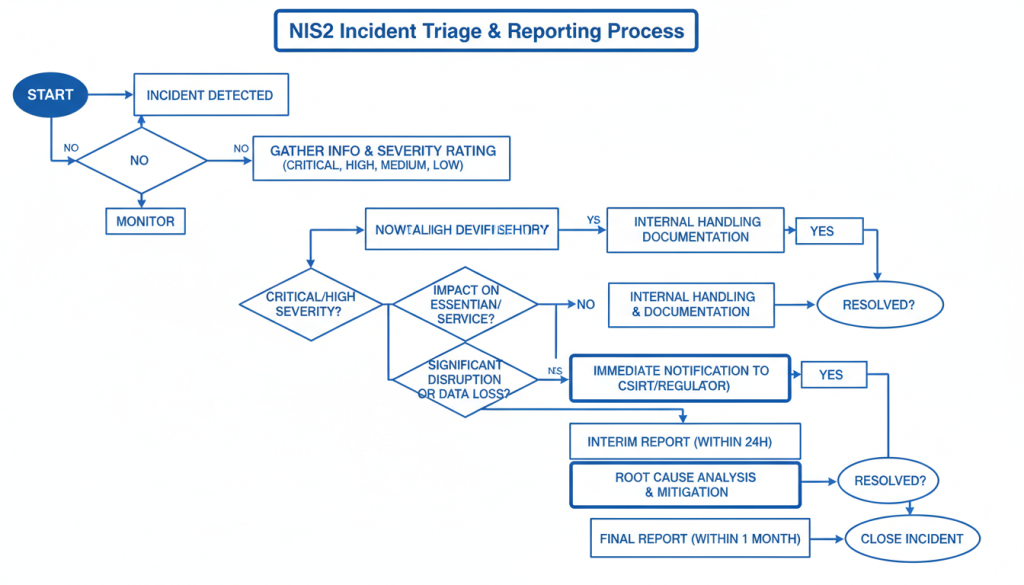
Implement a standardized incident classification system that aligns with NIS2 requirements:
| Severity Level | Criteria | Response Time | NIS2 Reporting |
| Critical | Significant impact on essential services, cross-border effects, substantial data breach | Immediate (24/7) | Required within 24 hours |
| High | Limited service disruption, potential for escalation, moderate data impact | Within 4 hours | Likely required (assess impact) |
| Medium | Minimal service impact, contained threat, limited data exposure | Within 8 hours | Possibly required (assess impact) |
| Low | No service impact, routine security event, no data exposure | Within 24 hours | Not typically required |
Use a standardized incident record template that captures all information needed for NIS2 reporting, including:
- Incident scope and affected systems/services
- Initial impact assessment (service availability, data confidentiality, integrity)
- Cross-border implications
- Initial containment actions taken
- Evidence collected and preservation status
- Preliminary root cause indicators
Streamline your incident triage process
Download our NIS2-aligned Incident Triage Template to ensure consistent classification and timely reporting.
Containment and eradication techniques that satisfy NIS2 incident management expectations
Effective containment minimizes incident impact while preserving evidence for regulatory reporting:
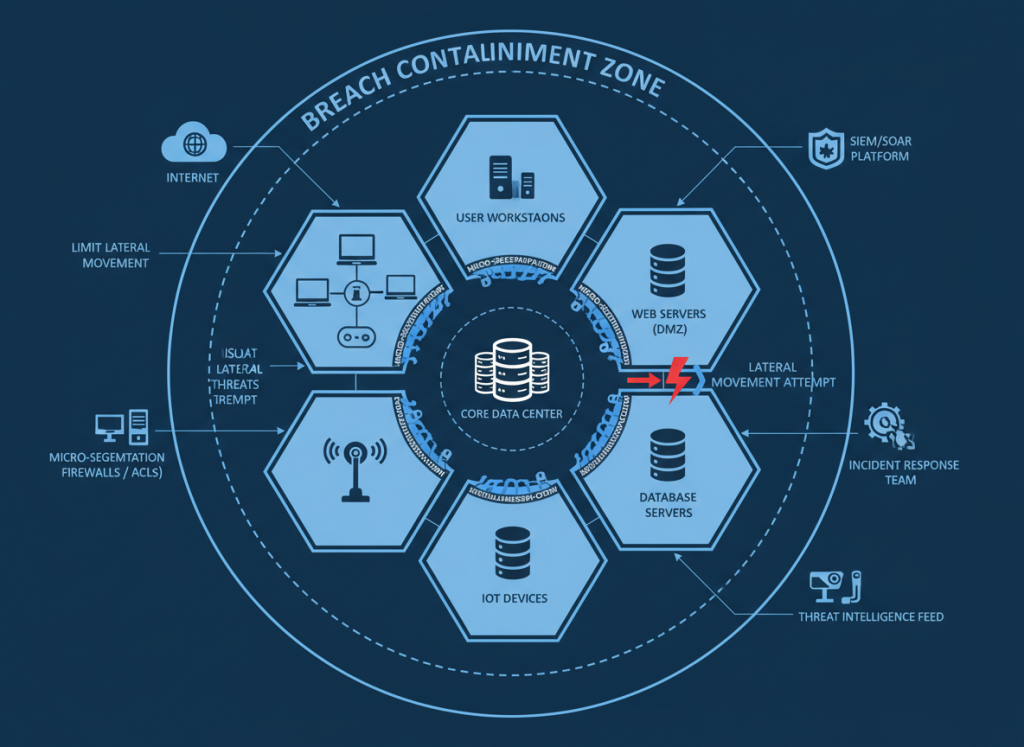
Network Segmentation
Implement micro-segmentation to limit lateral movement during incidents. Ensure containment actions are documented with timestamps to support NIS2 reporting requirements.
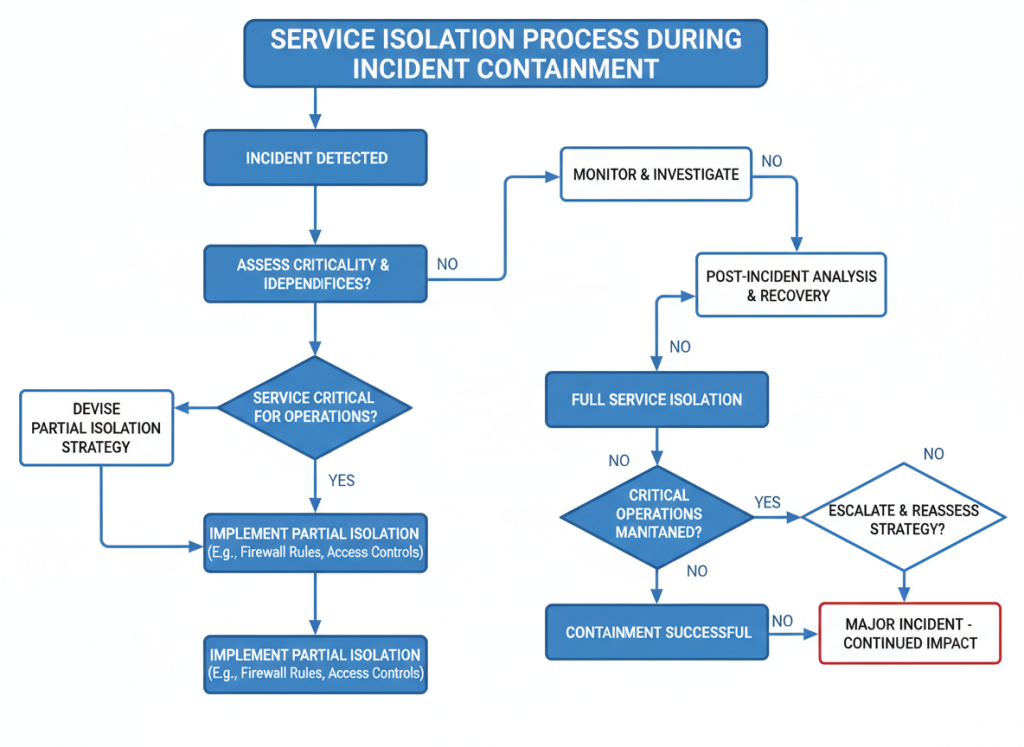
Service Isolation
Develop "circuit breaker" capabilities to isolate compromised services while maintaining critical operations. Document service impact for NIS2 reporting on availability effects.
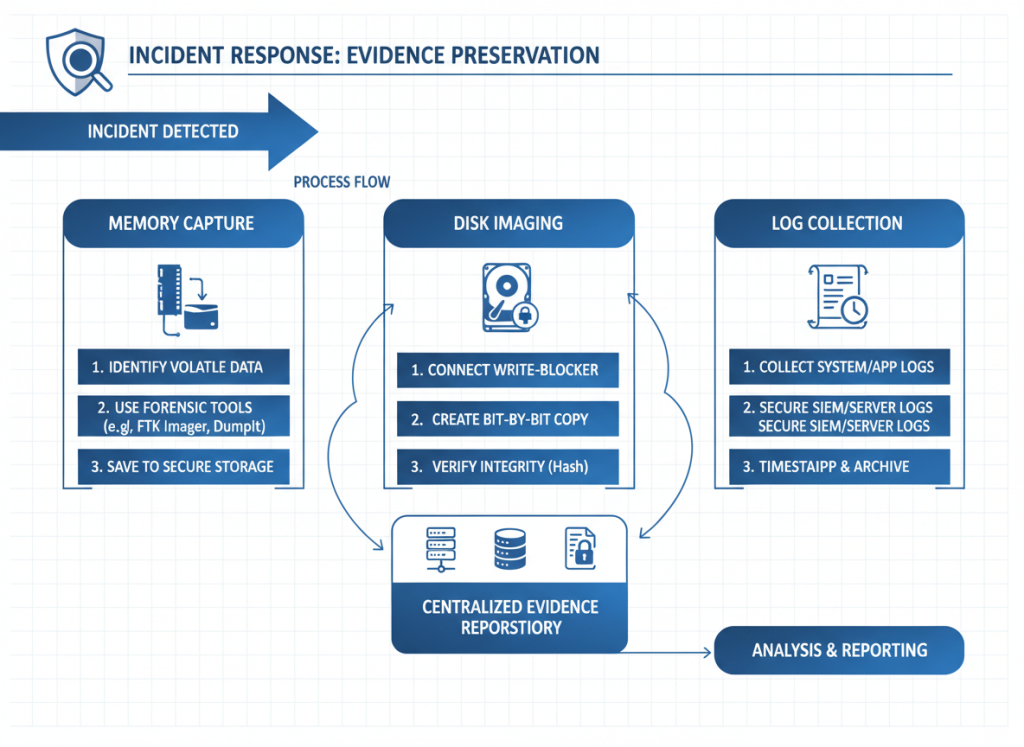
Evidence Preservation
Implement forensic-first containment processes that preserve evidence before taking potentially destructive actions. This supports both investigation and regulatory reporting requirements.
Documented Eradication
Maintain detailed records of all eradication activities, including malware removal, vulnerability patching, and security hardening. This documentation supports NIS2 reporting on remediation actions.
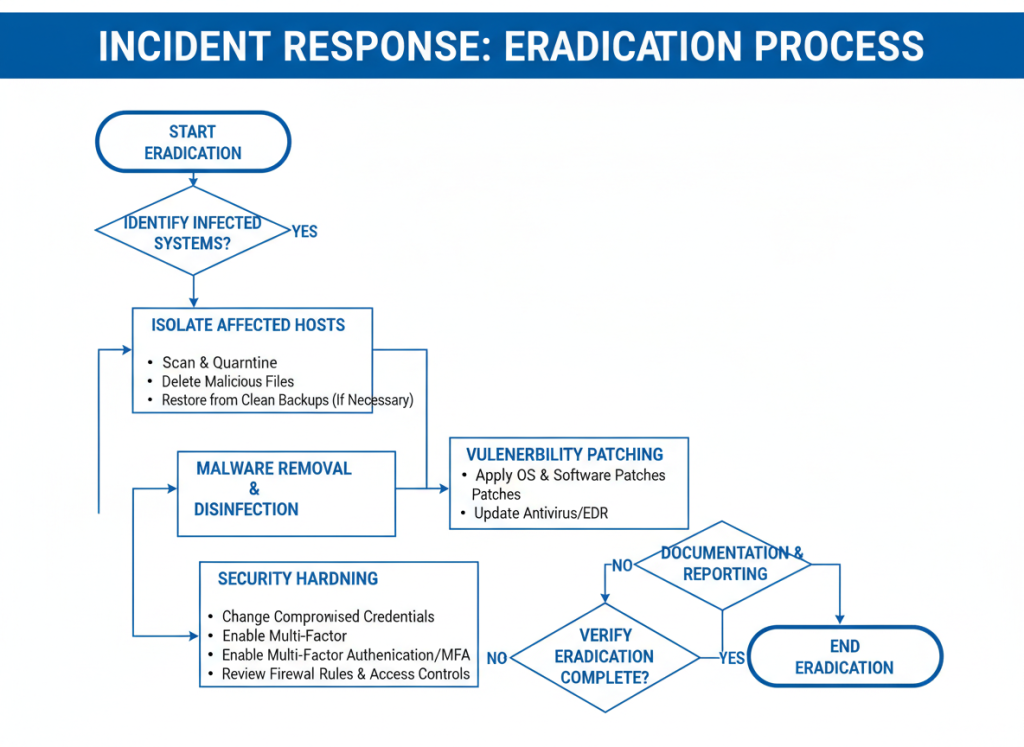
Always balance speed with evidence integrity during containment and eradication. Regulators will want to see what actions were taken, when they were performed, and their effectiveness in mitigating the incident.
Reporting and Post-Incident Requirements Under NIS2
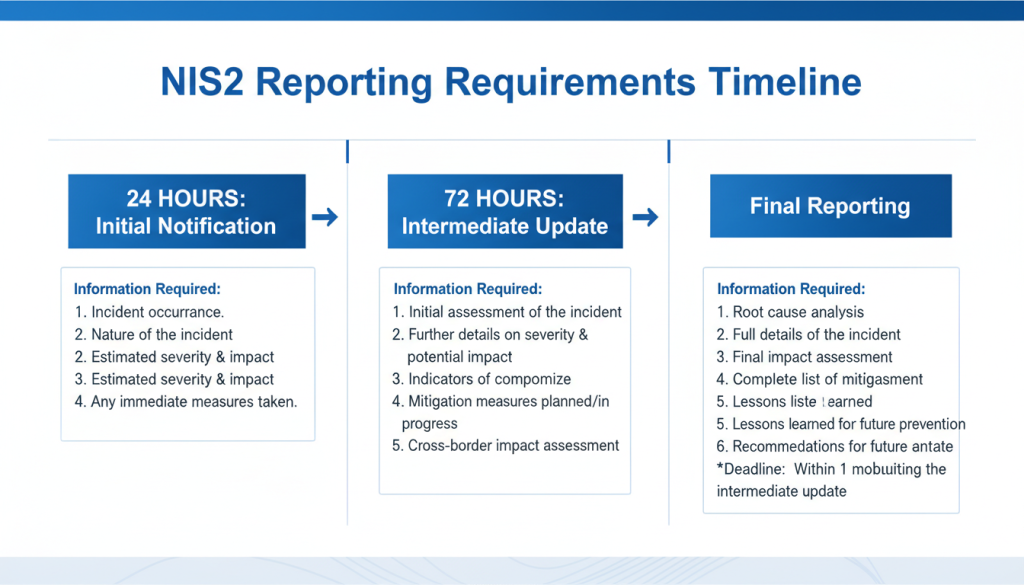
Understanding mandatory NIS2 reporting procedures and timelines
NIS2 establishes strict reporting obligations that organizations must follow:
| Reporting Stage | Timeline | Required Information | Recipients |
| Initial Notification | Within 24 hours of detection | Basic incident details, preliminary impact assessment, immediate containment actions | National CSIRT or competent authority |
| Progress Update | Within 72 hours of detection | Updated impact assessment, detailed technical information, ongoing response actions | National CSIRT or competent authority |
| Final Report | Within one month of resolution | Root cause analysis, complete impact assessment, remediation actions, lessons learned | National CSIRT or competent authority |
Important: Specific reporting timelines and thresholds may vary based on national implementation of NIS2. Check with your local regulatory authority for precise requirements in your jurisdiction.
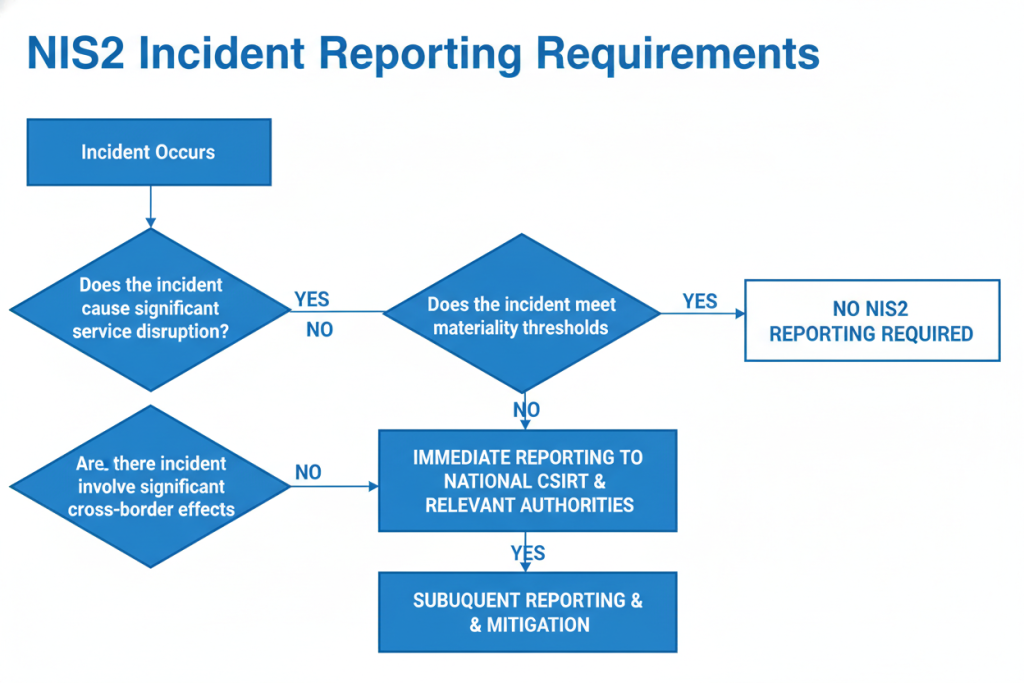
Reporting obligations apply to incidents that have a significant impact on service provision or could have significant impact based on various factors, including:
- Number of users affected by the disruption
- Duration and geographical spread of the incident
- Extent of impact on economic and societal activities
- Cross-border impact within the EU
- Impact on public safety or national security
For authoritative guidance, consult resources from ENISA and your national CSIRT or competent authority.
Preparing evidence, timelines, and root-cause analysis for regulators and auditors
Comprehensive documentation is essential for regulatory compliance:
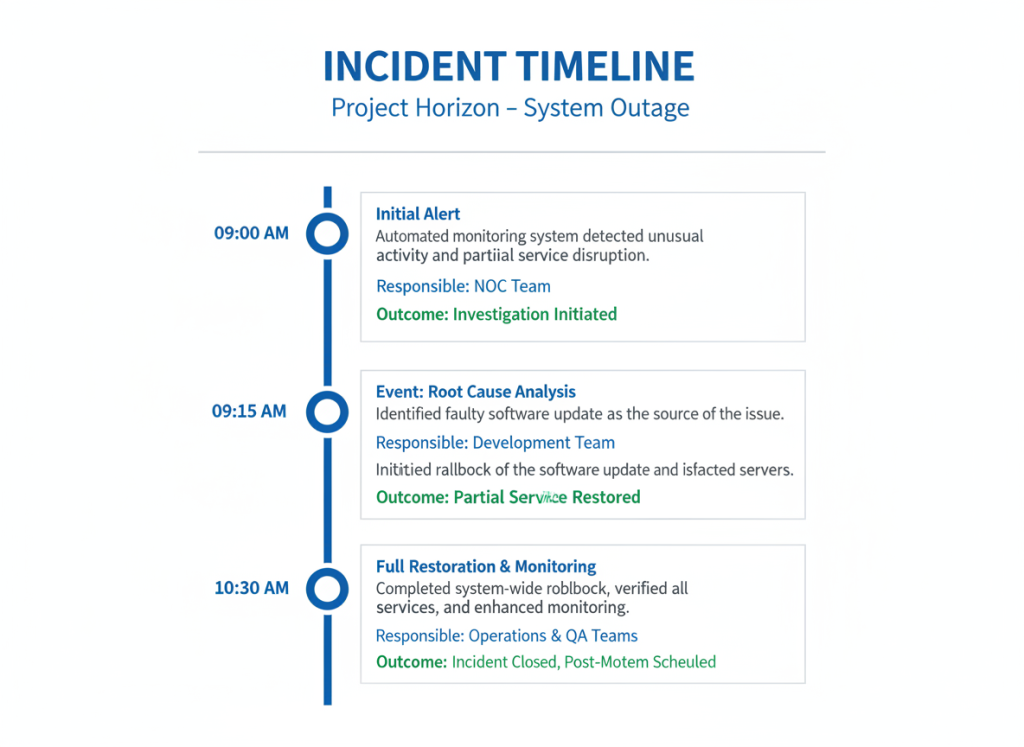
Incident Timeline
Maintain a detailed, tamper-evident timeline of all incident activities, including detection, containment, eradication, and recovery actions. Include timestamps, responsible parties, and outcomes.
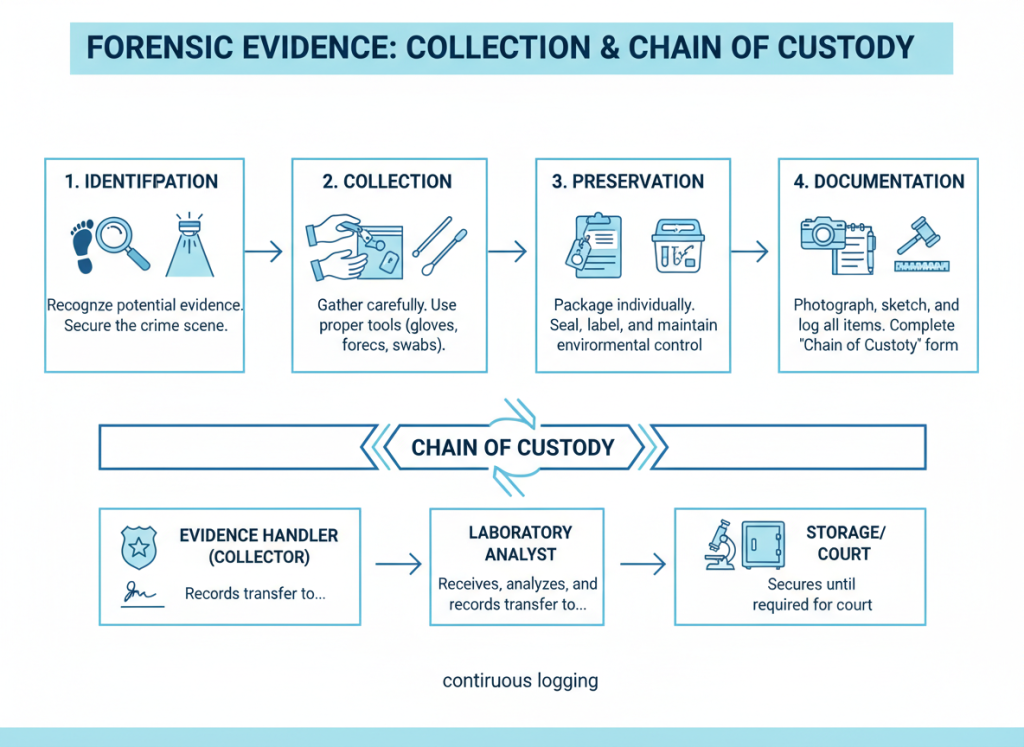
Forensic Artifacts
Preserve forensic evidence including disk images, memory dumps, network captures, and logs. Maintain chain of custody documentation for all evidence to ensure admissibility.
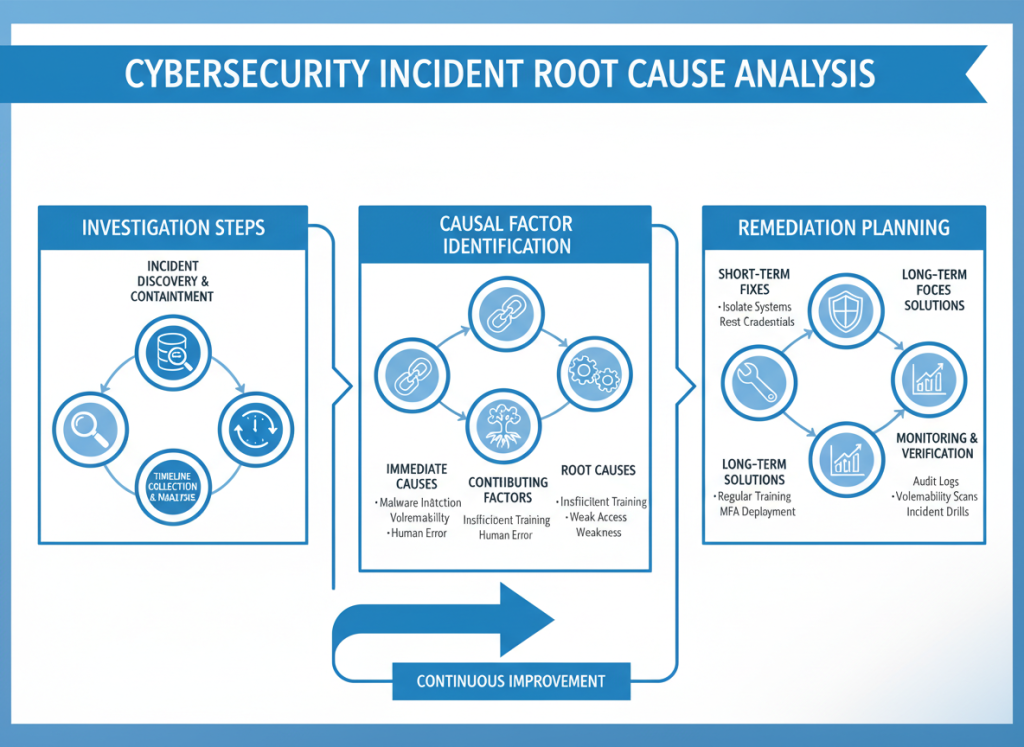
Root Cause Analysis
Conduct a formal root cause analysis that identifies the underlying vulnerabilities or weaknesses that enabled the incident. Include contributing factors and systemic issues.
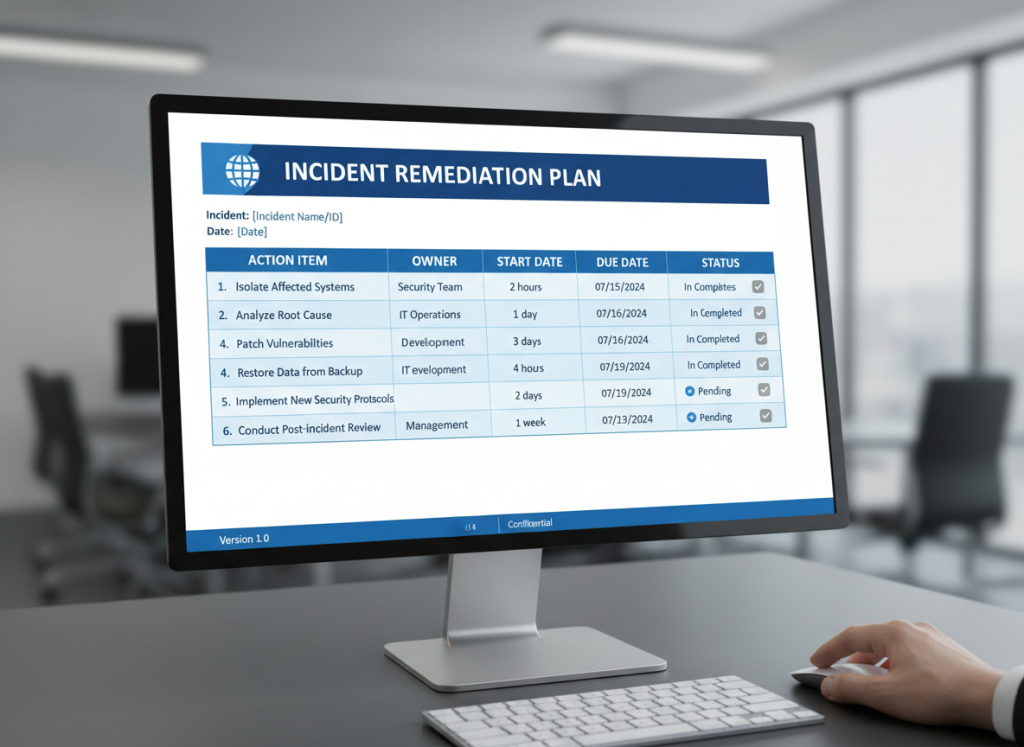
Remediation Plan
Develop a comprehensive remediation plan with specific actions, owners, and timelines. This demonstrates to regulators your commitment to addressing identified vulnerabilities.
Ensure regulatory compliance with comprehensive documentation
Download our NIS2 Incident Documentation Package, including timeline templates, evidence collection checklists, and root cause analysis frameworks.
Download Documentation Package
Managing NIS2 compliance incidents: lessons learned, remediation, and continuous improvement
Post-incident activities are critical for demonstrating ongoing compliance and improving security posture:
Concrete Remediation
- Implement technical fixes for identified vulnerabilities
- Update configurations and security controls
- Enhance monitoring for similar attack patterns
- Conduct supplier security assessments if relevant
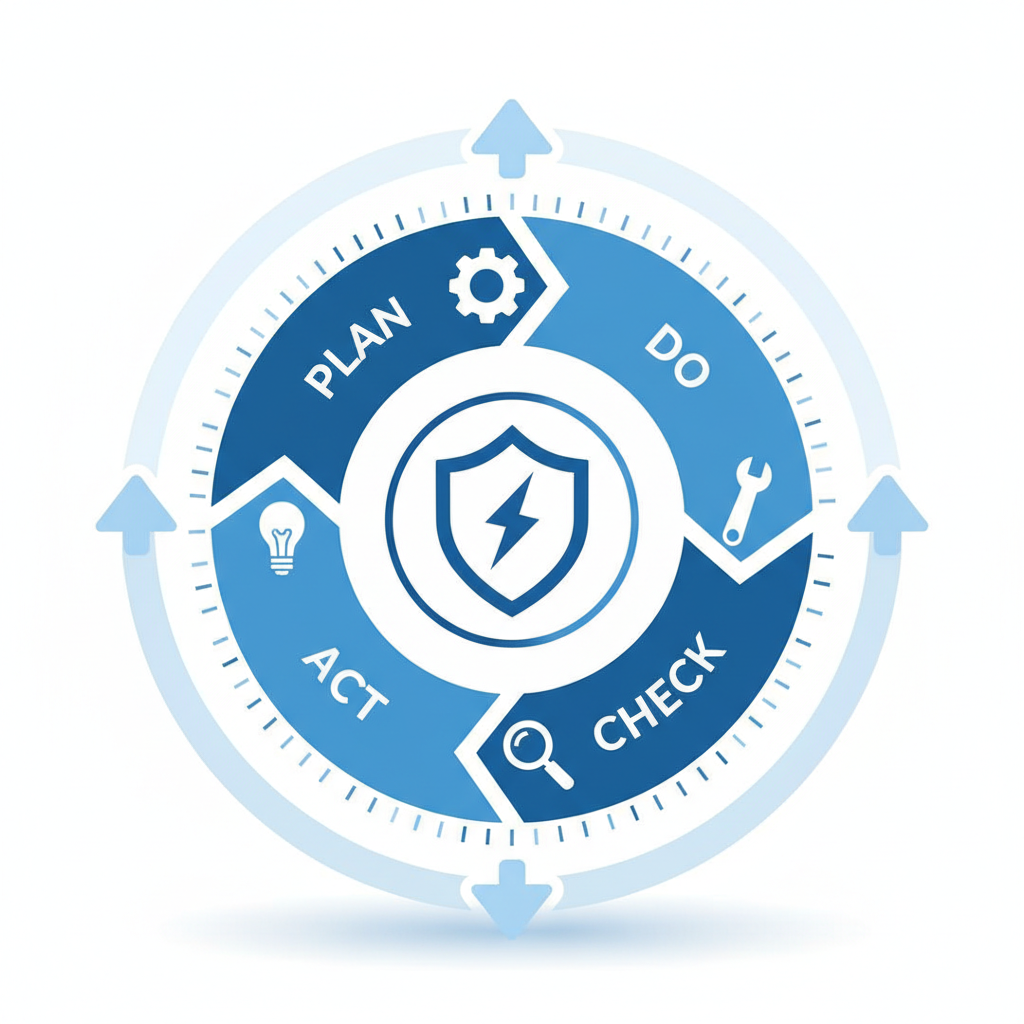
Process Improvements
- Update playbooks based on incident lessons
- Refine triage and classification procedures
- Enhance detection capabilities for similar threats
- Improve communication and escalation processes
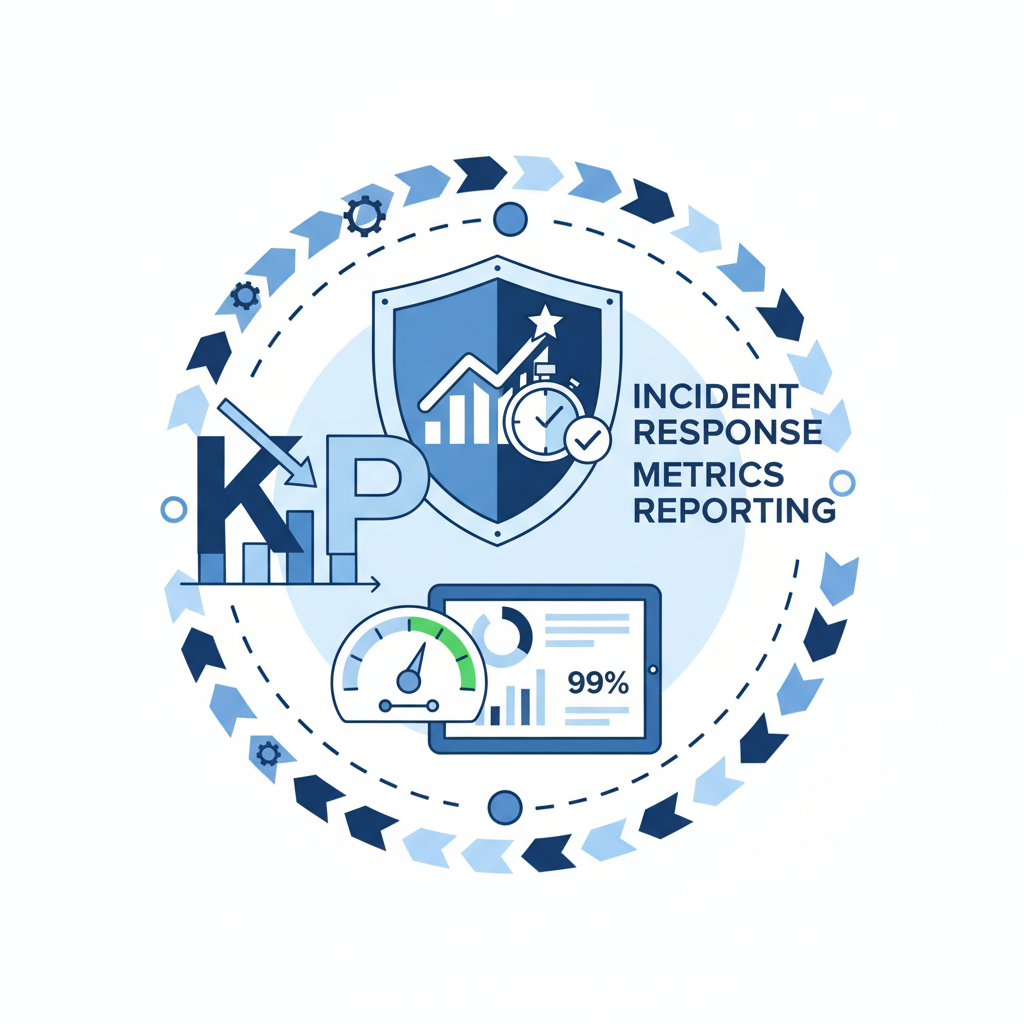
Metrics and Reporting
- Track key performance indicators (KPIs)
- Monitor mean time to detect (MTTD) and respond (MTTR)
- Measure regulatory reporting compliance
- Report improvements to leadership and regulators
A mature incident response program uses each NIS2 compliance incident as an opportunity to demonstrate improved resilience and regulatory commitment. Document all improvements and share them with leadership to demonstrate the value of your security investments.
Advanced Strategies and Tools to Strengthen Response Capabilities
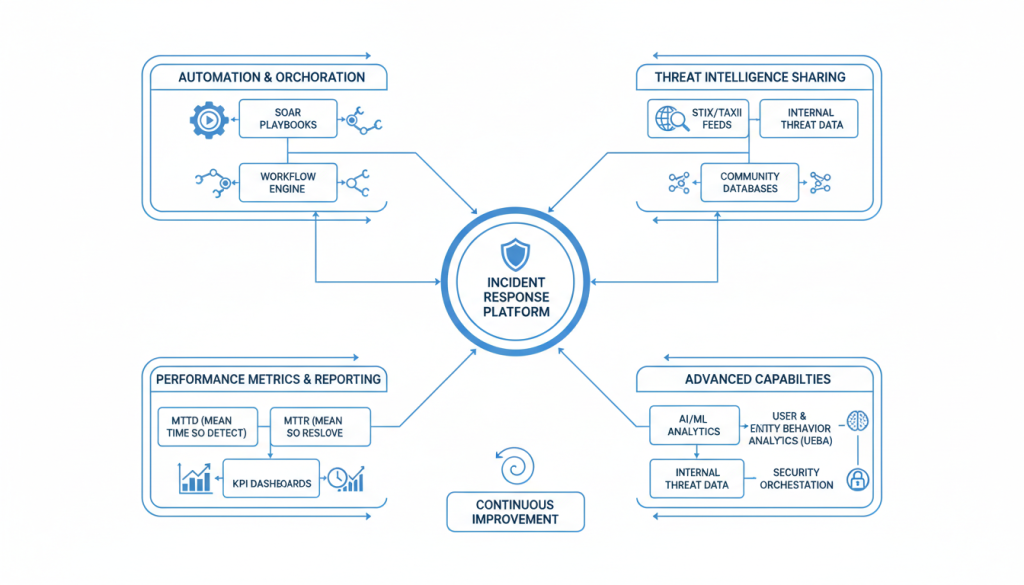
Automation, orchestration, and tooling to scale incident response strategies
Security Orchestration, Automation and Response (SOAR) tools can significantly enhance your NIS2 incident management capabilities:
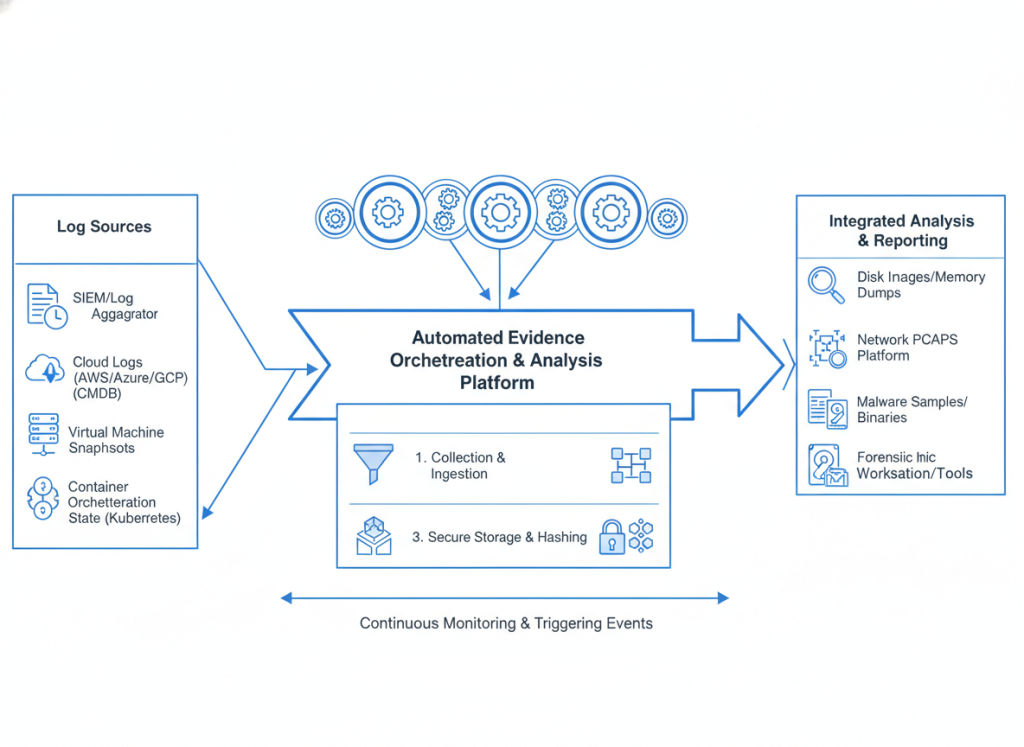
Automated Evidence Collection
Implement automated collection of logs, system states, and forensic artifacts to ensure comprehensive evidence preservation while reducing manual effort.
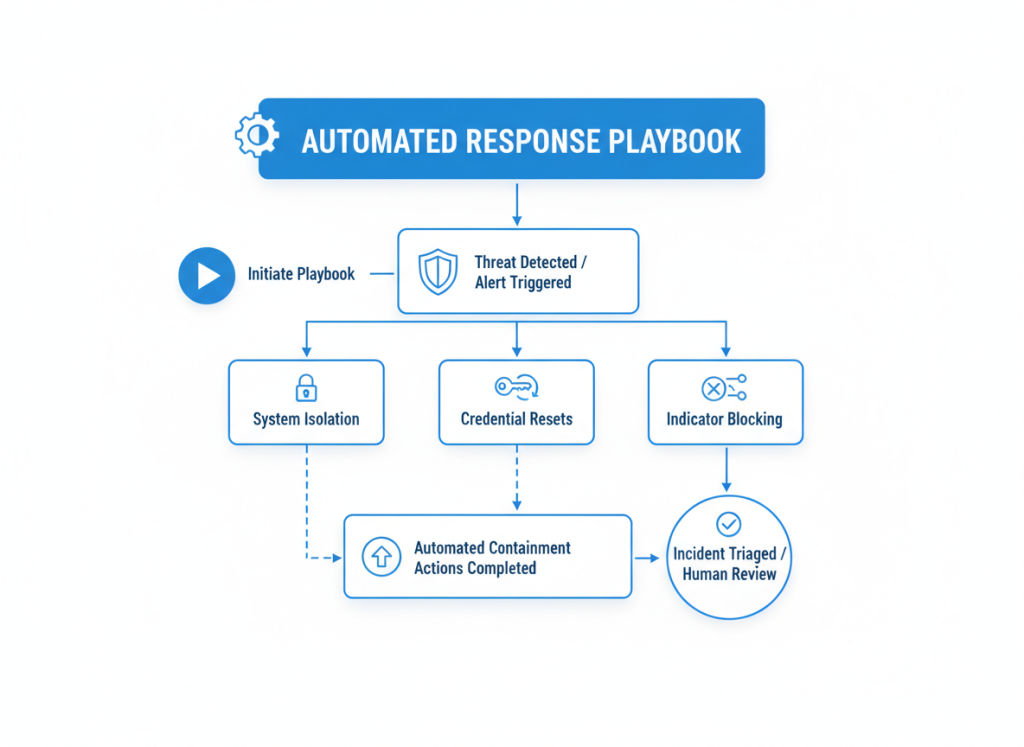
Response Playbook Automation
Automate common response actions such as system isolation, credential resets, and indicator blocking to reduce response time and ensure consistency.
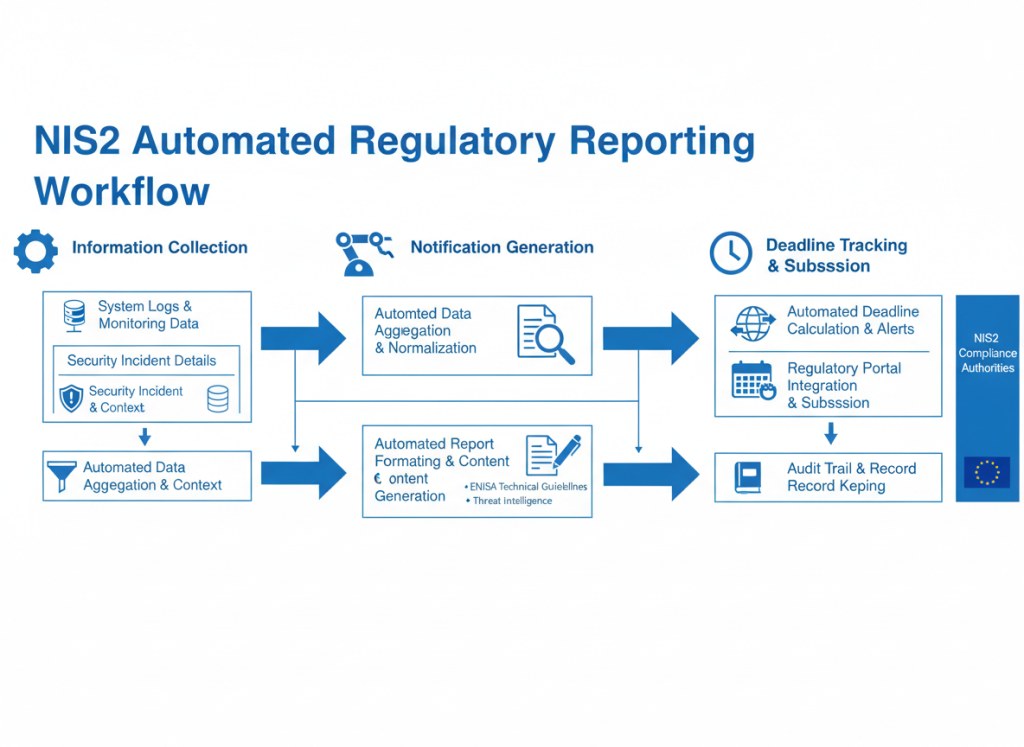
Regulatory Reporting Workflows
Implement automated workflows for NIS2 reporting that collect required information, generate notification templates, and track submission deadlines.
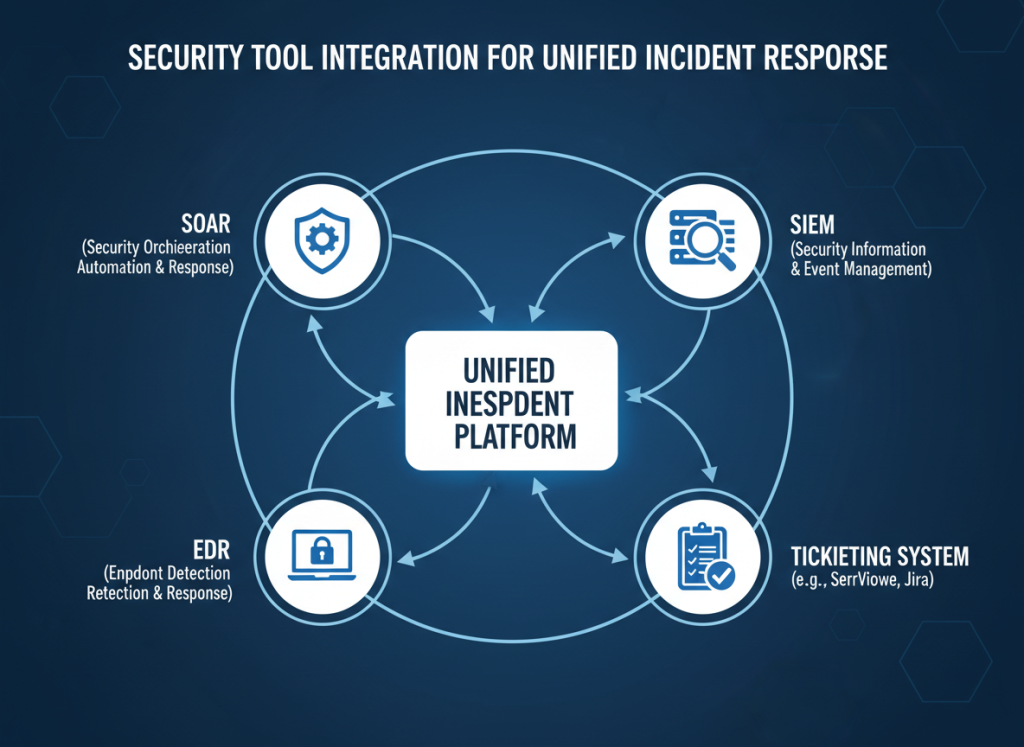
Integration with Security Tools
Integrate SOAR with SIEM, EDR, and ticketing systems to create a unified incident response platform with end-to-end traceability.
Automation reduces human error and improves time-to-notify, a critical metric under NIS2. It also ensures consistent execution of response procedures, even during high-stress incidents.
Leveraging threat intelligence sharing and sectoral cooperation under NIS2
NIS2 encourages information sharing and cross-border cooperation to enhance collective resilience:
Information Sharing Groups
- Join sector-specific ISACs (Information Sharing and Analysis Centers)
- Participate in national CERT/CSIRT information exchange programs
- Engage with industry working groups focused on cybersecurity
- Contribute to and consume shared threat intelligence

Cross-Border Coordination
- Establish contacts with CSIRTs in relevant EU Member States
- Develop procedures for coordinated incident response
- Participate in cross-border cybersecurity exercises
- Align reporting processes with multiple jurisdictions
Threat Intelligence Exchange
- Share anonymized indicators of compromise (IOCs)
- Exchange tactics, techniques, and procedures (TTPs)
- Contribute to early warning systems
- Implement automated intelligence sharing platforms
Enhance your threat intelligence capabilities
Schedule a consultation to learn how our threat intelligence services can strengthen your NIS2 incident response program.
Metrics, KPIs, and reporting dashboards to demonstrate incident response best practices
Measuring incident response performance is essential for demonstrating compliance and driving improvement:
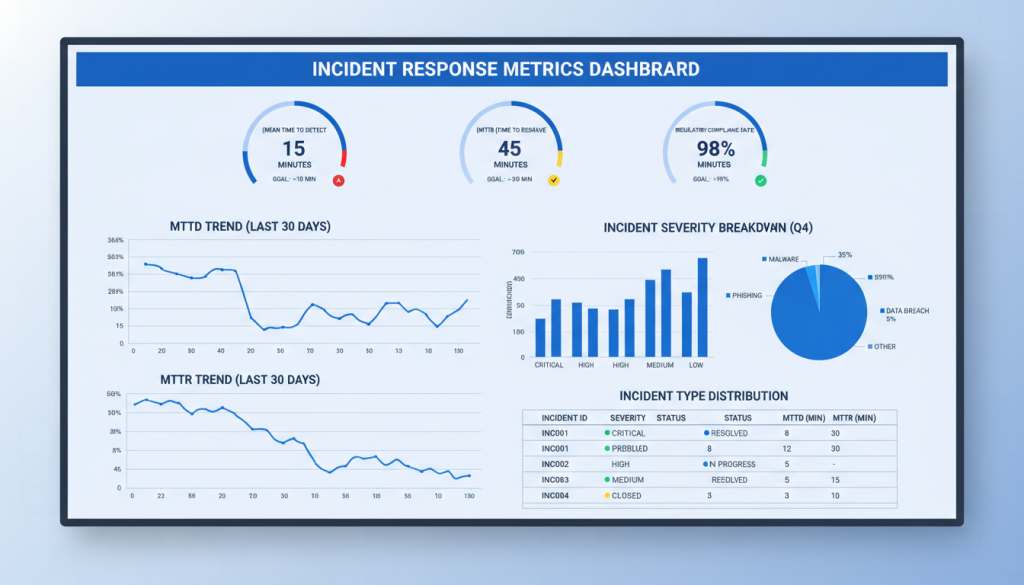
Key metrics to track for NIS2 compliance and program improvement include:
| Metric Category | Key Performance Indicators | NIS2 Relevance | Target |
| Detection Effectiveness | Mean Time to Detect (MTTD), detection source effectiveness, false positive rate | Earlier detection provides more time for analysis and reporting | MTTD |
| Response Efficiency | Mean Time to Respond (MTTR), containment effectiveness, time to recovery | Faster response reduces impact and reporting requirements | MTTR |
| Regulatory Compliance | Reporting timeline compliance, evidence quality, documentation completeness | Direct measure of regulatory obligations | 100% compliance |
| Continuous Improvement | Lessons implemented, recurring incident types, exercise findings addressed | Demonstrates ongoing risk reduction to regulators | 90% closure rate |
Create executive dashboards that translate technical metrics into business risk language. This helps leadership understand the value of your incident response program and supports resource allocation decisions.
Conclusion: Turning NIS2 Requirements into Operational Resilience
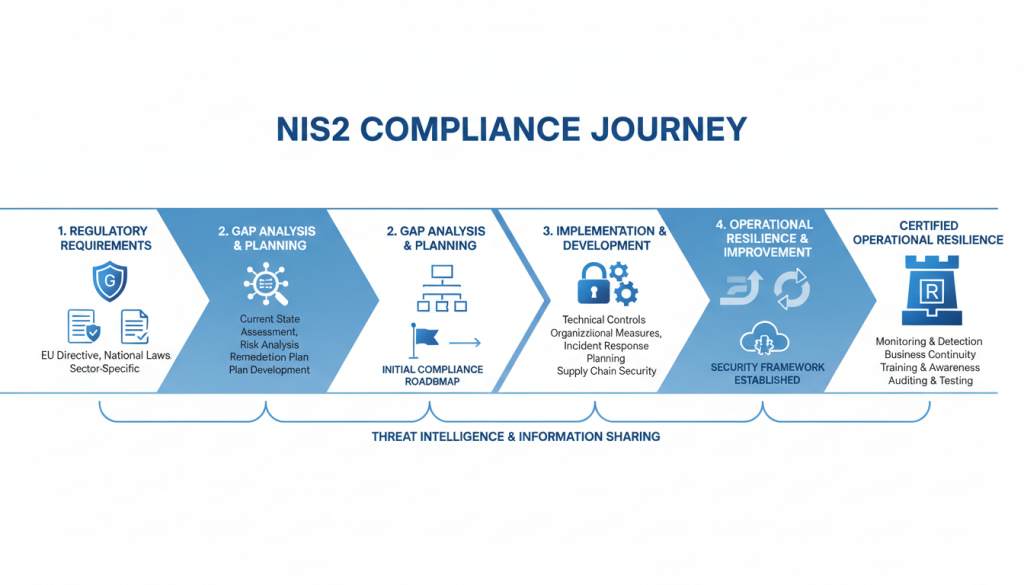
Summary of key response planning for NIS2 takeaways
NIS2 incident management requires a comprehensive approach that integrates regulatory compliance with operational effectiveness:
- Build a structured framework with clear governance, roles, and responsibilities
- Develop detailed playbooks that address both technical response and regulatory reporting
- Implement robust detection capabilities to identify incidents early
- Establish triage processes that align with NIS2 reporting thresholds
- Document all incident activities with evidence preservation for regulatory review
- Meet strict reporting timelines (24/72 hours) with comprehensive information
- Use incidents as opportunities for continuous improvement
- Leverage automation, threat intelligence, and cross-border cooperation
- Measure performance with metrics that demonstrate compliance and effectiveness
Quick action checklist for organizations facing NIS2 compliance incidents
NIS2 Incident Response Checklist
- Activate your incident response team and establish command structure
- Start an incident timeline and documentation process immediately
- Assess incident severity and determine if NIS2 reporting thresholds are met
- Preserve forensic evidence before taking potentially destructive actions
- Implement containment measures to limit incident impact
- Prepare and submit initial notification within 24 hours if required
- Conduct ongoing investigation and update regulators within 72 hours
- Develop and implement a remediation plan
- Prepare final incident report with root cause analysis
- Conduct lessons learned review and update response procedures
Recommended next steps and resources for ongoing NIS2 incident management maturity
To continue building your NIS2 incident management capabilities, consider these next steps:
- Review ENISA and national CSIRT guidance on NIS2 implementation
- Align technical playbooks with NIST SP 800-61 and ISO/IEC 27035 for industry best practices
- Conduct a gap assessment of your current incident response capabilities against NIS2 requirements
- Develop a roadmap for enhancing detection, response, and reporting capabilities
- Schedule regular exercises to validate your NIS2 compliance procedures
- Engage with sector-specific information sharing groups to enhance threat intelligence
Valuable resources for ongoing reference include:
- European Commission – NIS2 Directive
- ENISA – European Union Agency for Cybersecurity
- IBM Cost of a Data Breach Report – Latest Security Research
- CISA – Cybersecurity and Infrastructure Security Agency
- GOV.UK – NIS Guidance
Ready to strengthen your NIS2 incident management program?
Download our comprehensive NIS2 Incident Response Toolkit, including templates, playbooks, and implementation guides.