

Understanding cloud cost optimization
Navigating the complexities of cloud computing offers unparalleled flexibility and scalability for modern businesses. However, without diligent management, cloud expenses can quickly escalate, eroding potential savings. This guide delves into cloud cost optimization, providing actionable strategies to ensure your cloud investments yield maximum value.
Mastering cloud cost optimization is essential for any organization leveraging public cloud services. It's about more than just cutting costs; it's about maximizing efficiency and getting the most out of your cloud spending reduction efforts. By applying the right techniques, you can significantly impact your bottom line.
What is cloud cost optimization?
cloud cost optimization refers to the set of strategies and practices aimed at reducing the overall expenditure on cloud resources while maintaining or improving performance and business value. It involves analyzing usage patterns, identifying waste, and implementing changes to improve cloud resource efficiency. The goal is to align cloud spending with business objectives, ensuring every dollar spent adds tangible value.
This process is continuous, requiring ongoing monitoring and adjustments as cloud environments evolve. It encompasses technical adjustments, financial planning, and cultural shifts within an organization. Effective public cloud expense management ensures resources are provisioned appropriately and utilized efficiently.
Why is cloud cost optimization crucial?
In today's dynamic digital landscape, efficient cloud spending is paramount for sustainable growth and competitiveness. Uncontrolled cloud costs can quickly diminish the financial benefits of cloud adoption, turning a strategic advantage into a significant burden. Many organizations find themselves overspending due to underutilized or mismanaged resources.
Effective cloud cost optimization provides crucial insights into cloud financial operations, enabling businesses to make informed decisions. It helps prevent unexpected bill shocks and frees up budget for innovation and strategic investments. Ultimately, it’s about achieving more with less in your cloud infrastructure.
Key Principles of cloud cost optimization
Successful cloud cost optimization hinges on several fundamental principles that guide effective management of your cloud environment. Adhering to these principles ensures a holistic approach, moving beyond simple cost-cutting to genuine efficiency. These foundational elements form the bedrock for sustainable cloud financial health.
Understanding these core tenets is the first step towards achieving significant cloud spending reduction. They provide a framework for evaluating current practices and identifying areas for improvement. Every strategy discussed later will tie back to one or more of these principles.
Visibility and Monitoring
You cannot optimize what you cannot see. Comprehensive visibility into your cloud usage and spending is the cornerstone of any cloud cost optimization initiative. This involves tracking consumption patterns, identifying cost drivers, and understanding where every dollar is being spent across all cloud services.
Robust monitoring tools and dashboards are essential for gaining these insights. They allow teams to identify idle resources, detect inefficient configurations, and pinpoint areas of potential waste. Continuous monitoring helps in spotting anomalies and making timely adjustments.
Resource Management
Efficient resource management is about ensuring that cloud resources are appropriately provisioned for their intended workloads. This means avoiding over-provisioning, which leads to unnecessary expenditure, and under-provisioning, which can impact performance. It also involves the proper lifecycle management of resources.
Effective resource management strategies include rightsizing, identifying and terminating idle resources, and scheduling resources to match demand. This principle is directly tied to improving cloud resource efficiency. It ensures that compute, storage, and network resources are always aligned with actual needs.
Pricing Model Leverage
Cloud providers offer a variety of pricing models designed to reward predictable usage or commitment. Understanding and strategically leveraging these models is critical for significant cost savings. This includes opting for reserved instances, savings plans, or spot instances where appropriate.
These models often provide substantial discounts compared to on-demand pricing. Choosing the right pricing model requires careful analysis of workload stability, usage patterns, and future requirements. Maximizing these discounts is a key aspect of cloud cost optimization.
Automation for Efficiency
Manual cloud cost management is unsustainable and prone to errors in large, complex environments. Automation plays a vital role in executing optimization strategies consistently and efficiently. This includes automating resource scaling, shutdown schedules, and policy enforcement.
Automating these processes not only reduces operational overhead but also ensures that optimization efforts are continuously applied. It helps in maintaining a state of optimal cloud resource efficiency without constant human intervention. Automation is crucial for scaling your optimization efforts across a large infrastructure.

Practical Strategies for cloud cost optimization
Implementing effective cloud cost optimization requires a systematic approach, combining technical adjustments with strategic financial planning. These practical strategies are designed to provide immediate savings and foster long-term financial discipline in your cloud environment. Each strategy targets a specific aspect of cloud spending, contributing to overall cloud spending reduction.
By applying a combination of these methods, organizations can achieve significant improvements in their public cloud expense management. It’s about being proactive rather than reactive to rising cloud bills. Let's explore some key techniques that drive real results.
1. Rightsizing and Resource Allocation
Rightsizing involves continuously evaluating compute, storage, and networking resources to match their actual workload requirements. Many instances are over-provisioned, leading to unnecessary costs. Tools provided by cloud providers or third parties can recommend optimal instance types and sizes.
Regularly review CPU utilization, memory usage, and network I/O to ensure resources are neither too large nor too small. Properly allocated resources ensure peak performance without excessive expenditure. This is a foundational step in improving cloud resource efficiency.
2. Leveraging Reserved Instances and Savings Plans
Cloud providers like AWS and Azure offer significant discounts for committing to a certain amount of usage over a one or three-year period. Reserved Instances (RIs) are typically for specific instance types in a region, while Savings Plans offer more flexibility across compute usage. These are powerful AWS cost optimization strategies and Azure cost management tools.
Analyze your stable, long-running workloads to identify candidates for RIs or Savings Plans. These commitments can lead to savings of 30-70% compared to on-demand pricing. Strategic purchasing of RIs and Savings Plans is a core FinOps best practice.
3. Spot Instances for Fault-Tolerant Workloads
Spot Instances (AWS) or Low-priority VMs (Azure) allow you to bid on unused compute capacity in the cloud. These instances offer substantial discounts, often up to 90% off on-demand prices. However, they can be interrupted with short notice if the cloud provider needs the capacity back.
These are ideal for fault-tolerant, stateless, or flexible workloads like batch processing, big data analytics, or development/testing environments. Using Spot Instances effectively requires careful architecture to handle potential interruptions. They are excellent for achieving significant cloud spending reduction for appropriate workloads.
4. Eliminating Unused Resources and Waste
One of the most common sources of cloud waste is forgotten or unused resources. This includes unattached EBS volumes, idle databases, unassociated IP addresses, and old snapshots. Regularly audit your environment to identify and terminate these orphaned resources.
Automated scripts or cloud governance policies can help detect and remove such waste systematically. Implementing a strict resource tagging strategy can also make it easier to identify resource ownership and purpose. This proactive cleanup is vital for ongoing cloud financial operations.
5. Implementing Automated Shutdowns
For non-production environments like development, staging, or testing, resources are often only needed during business hours. Automating the shutdown of these instances during off-hours, weekends, and holidays can lead to considerable savings. Scheduled startups can also be implemented to ensure availability when needed.
Most cloud providers offer native scheduling capabilities, or you can use serverless functions to orchestrate these actions. This simple yet effective strategy drastically reduces hourly compute costs. It's a prime example of improving cloud resource efficiency through automation.
6. Optimizing Data Transfer Costs
Data transfer costs, especially egress (data leaving the cloud region or provider), can be a hidden expense. Evaluate your application architecture to minimize unnecessary data movement between regions, availability zones, or even services. Using content delivery networks (CDNs) can also reduce egress costs for static content.
Understand the pricing models for data transfer within and between cloud services. Sometimes, restructuring your data storage or access patterns can yield significant savings. This aspect of public cloud expense management is often overlooked but can be substantial.
7. Utilizing Serverless Architectures
Serverless computing (like AWS Lambda, Azure Functions) charges you only for the actual compute time consumed by your code, not for idle servers. For event-driven, intermittent workloads, serverless can be significantly more cost-effective than provisioning always-on virtual machines.
Migrating suitable workloads to serverless platforms can lead to substantial cloud spending reduction. It shifts the burden of server management and scaling to the cloud provider, allowing your team to focus on application logic. This strategy enhances both efficiency and agility.
UNLOCK MASSIVE CLOUD
Unlock massive cloud savings and gain full control over your spending. Start optimizing your
✓ Free consultation✓ No commitment required
✓ Trusted by experts
AWS cost optimization strategies in detail
AWS offers a vast array of services, and with that comes a complex pricing structure. Effective AWS cost optimization strategies are crucial for organizations heavily invested in the AWS ecosystem. Understanding the specific tools and features can unlock significant savings.
These strategies go beyond generic cloud optimization, focusing on AWS-specific features. By mastering these techniques, you can ensure your AWS cloud spending is both efficient and aligned with your business goals. Let's delve into some key AWS-centric approaches.
EC2 Rightsizing and Scheduling
Amazon EC2 instances are often the largest component of an AWS bill. AWS provides tools like AWS Cost Explorer and AWS Compute Optimizer to recommend optimal EC2 instance types and sizes based on historical usage. Regularly review these recommendations and apply them to rightsize your instances.
Automating EC2 start/stop schedules for non-production environments using AWS Instance Scheduler or custom Lambda functions is also highly effective. This ensures instances are only running when actively needed, reducing compute hours and costs. This is a primary driver for cloud spending reduction on AWS.
S3 Lifecycle Policies
Amazon S3 storage can accumulate significant costs, especially for infrequently accessed data. Implementing S3 Lifecycle Policies allows you to automatically transition objects to cheaper storage classes (like S3 Infrequent Access or S3 Glacier) or even delete them after a certain period. Configure lifecycle rules based on data access patterns and retention requirements.
This strategy ensures that your data resides in the most cost-effective storage tier for its current use case. It prevents "hot" data prices from being applied to "cold" or archived data. Optimizing S3 storage is a key aspect of cloud financial operations within AWS.
Leveraging AWS Savings Plans and RIs
AWS Savings Plans offer a flexible way to save on EC2, Fargate, and Lambda usage by committing to a consistent amount of compute usage (measured in USD/hour) over a 1 or 3-year term. Reserved Instances, while more specific to instance families, still provide substantial discounts. Analyze your predictable compute usage patterns to purchase the most suitable Savings Plans or RIs.
Consider a portfolio approach, combining both RIs for stable baseloads and Savings Plans for more flexible compute needs. This ensures a comprehensive coverage of your predictable usage at discounted rates. It is a cornerstone of AWS cost optimization strategies for long-term savings.
Azure cost management techniques
For organizations utilizing Microsoft Azure, effective Azure cost management is critical to controlling expenses and maximizing value. Azure provides a robust set of tools and services designed to help users monitor, analyze, and optimize their cloud spending. These techniques are tailored to the Azure ecosystem.
Proactive Azure cost management ensures that your cloud infrastructure remains efficient and cost-effective. By leveraging Azure's native capabilities, businesses can gain deeper insights and implement smarter spending habits. Let's explore some specific Azure-focused approaches.
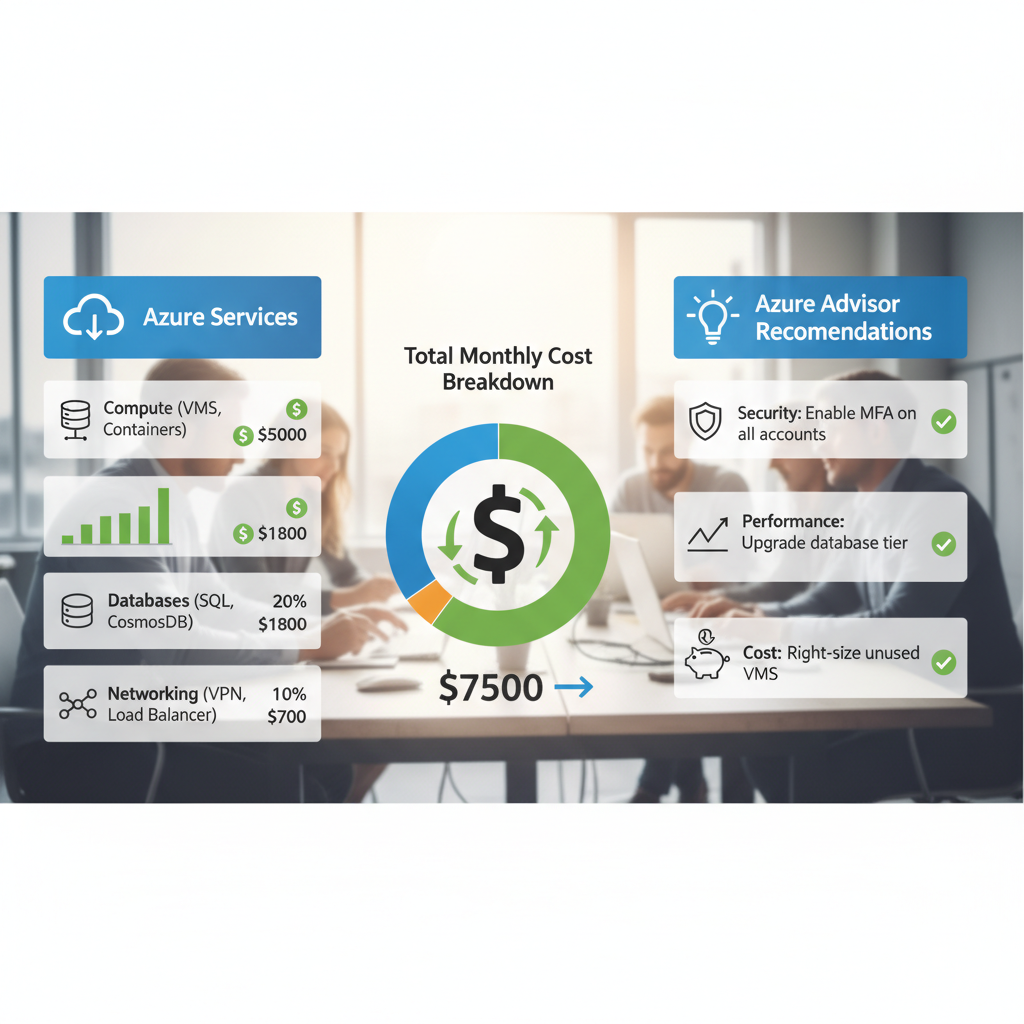
Azure Advisor Recommendations
Azure Advisor is a personalized cloud consultant that helps you follow best practices to optimize your Azure deployments. It provides recommendations across five categories, including cost optimization. Regularly review Azure Advisor's cost recommendations and act on them.
These recommendations often highlight underutilized resources, suggest rightsizing VMs, or identify opportunities for Reserved Instance purchases. Incorporating Azure Advisor into your routine ensures continuous cost efficiency. It’s an invaluable tool for improving cloud resource efficiency.
Utilizing Azure Reserved Instances
Similar to AWS, Azure offers Reserved Virtual Machine Instances (RIs) that provide significant discounts (up to 72% off pay-as-you-go prices) for committing to a one-year or three-year term. These are ideal for steady-state workloads that require continuous VM capacity. Identify consistent VM usage across your subscriptions and purchase Azure RIs accordingly.
Azure RIs can be scoped to a single subscription or shared across multiple subscriptions in an enrollment, offering flexibility. They are a fundamental component of effective Azure cost management and drive substantial cloud spending reduction.
Cost Management with Azure Budgets
Azure Cost Management + Billing provides robust tools to monitor and control your cloud spending. Creating budgets is a proactive way to manage costs by setting spending thresholds for your subscriptions, resource groups, or even specific resources. Configure Azure Budgets with alerts to notify stakeholders when spending approaches predefined limits.
Budgets can trigger actions like sending email notifications or even automating specific actions through action groups. This helps prevent unexpected overspending and fosters accountability across teams. It's a critical component of FinOps best practices within an Azure environment.
Advanced cloud cost optimization and FinOps best practices
Moving beyond basic optimization, advanced cloud cost optimization involves a more strategic, cultural, and continuous approach. This is where FinOps comes into play, integrating financial accountability with technical operations to manage cloud spending holistically. Implementing FinOps best practices transforms how an organization views and controls its cloud expenses.
These advanced strategies foster a collaborative environment, making everyone responsible for cloud costs. They enable organizations to fully realize the benefits of their multi-cloud cost control efforts and achieve sustainable cloud financial operations.
Implementing a FinOps Framework
FinOps, or Cloud Financial Operations, is an evolving operational framework that brings financial accountability to the variable spend model of the cloud. It is a cultural practice that enables organizations to get maximum business value by helping engineering, finance, and business teams to collaborate on data-driven spending decisions. Adopt a FinOps framework to establish clear roles, processes, and tools for managing cloud costs.
Key aspects of FinOps include understanding cloud usage and costs, optimizing for business value, and continuously improving cloud financial management. This framework shifts cloud cost management from a reactive task to a proactive, integrated process. It's the ultimate approach to multi-cloud cost control.
Establishing a Cost Center Culture
A crucial element of FinOps is fostering a cost-aware culture throughout the organization. This means empowering engineers with visibility into their team's spending and giving them the tools and knowledge to optimize. Encourage engineers to take ownership of the costs associated with the resources they provision and manage.
Regular training, clear internal communication, and incentive programs can help embed this culture. When everyone understands the financial impact of their cloud decisions, cloud resource efficiency naturally improves. This collaborative effort drives significant cloud spending reduction across the board.
Continuous Monitoring and Improvement
cloud cost optimization is not a one-time project; it's an ongoing journey. Cloud environments are dynamic, with new services, pricing models, and usage patterns constantly emerging. Establish a continuous feedback loop for monitoring costs, analyzing performance, and implementing optimizations.
Regularly review cost allocation reports, performance metrics, and compliance with budget thresholds. Use these insights to refine strategies, update policies, and train teams. This iterative process ensures that your cloud financial operations remain optimized over time.
Multi-cloud cost control considerations
Many enterprises now operate in multi-cloud environments, leveraging different providers for various workloads or business units. While offering flexibility, multi-cloud introduces additional complexities for cloud cost optimization. Effective multi-cloud cost control requires a unified approach despite disparate cloud platforms.
Managing costs across multiple cloud providers demands specialized strategies to ensure consistency and prevent cost leakages. It’s about gaining a single pane of glass visibility and applying consistent governance rules wherever possible. These considerations are vital for complex cloud landscapes.
Standardizing Tools and Processes
Managing cloud costs across AWS, Azure, Google Cloud, and others can be challenging due to different billing systems and APIs. Implement cloud-agnostic cost management platforms that provide a consolidated view of spending across all your providers.
Standardize tagging policies and resource naming conventions across all cloud platforms. This consistency enables accurate cost allocation and reporting, regardless of the underlying provider. A unified approach is critical for effective multi-cloud cost control.
Negotiating Enterprise Agreements
For organizations with significant and predictable multi-cloud spending, consider negotiating enterprise agreements directly with cloud providers. These agreements can often unlock additional discounts beyond standard Reserved Instance or Savings Plan offerings. Engage with your cloud account managers to explore customized pricing options for your combined multi-cloud footprint.
While requiring a substantial commitment, enterprise agreements can be a powerful tool for large-scale public cloud expense management. They provide predictability and often include dedicated support for optimization efforts. This is a strategic move for advanced multi-cloud cost control.
Frequently Asked Questions about cloud cost optimization
What is cloud cost optimization?
cloud cost optimization is the practice of reducing cloud expenses by identifying waste, right-sizing resources, and leveraging favorable pricing models. It aims to maximize business value from cloud investments while minimizing unnecessary expenditure. This continuous process involves technical adjustments, financial planning, and organizational culture shifts.
Why is cloud cost optimization important for businesses?
It is crucial for businesses to prevent uncontrolled cloud spending from eroding profits and diminishing the financial benefits of cloud adoption. Effective optimization ensures efficient resource utilization, frees up budget for innovation, and supports sustainable growth. It transforms cloud spending into a strategic investment rather than an uncontrolled expense.
What are some common challenges in cloud cost management?
Common challenges include lack of visibility into spending, the complexity of cloud pricing models, identifying idle or underutilized resources, managing costs across multiple cloud providers, and fostering cost awareness among development teams. Overcoming these requires robust tools, clear policies, and organizational collaboration.
How do FinOps best practices contribute to cloud cost optimization?
FinOps best practices integrate financial accountability with technical operations, fostering collaboration between finance, engineering, and business teams. By promoting shared ownership, data-driven decisions, and continuous improvement, FinOps helps organizations optimize cloud spending for maximum business value. It creates a cultural shift towards cost efficiency.
Can cloud cost optimization be automated?
Yes, many aspects of cloud cost optimization can and should be automated. This includes automating resource shutdowns for non-production environments, applying scaling policies, enforcing tagging standards, and triggering alerts for budget thresholds. Automation ensures consistent application of optimization strategies and reduces manual effort.
UNLOCK MASSIVE CLOUD
Unlock massive cloud savings and gain full control over your spending. Start optimizing your
✓ Free consultation✓ No commitment required
✓ Trusted by experts
Conclusion: Mastering cloud financial operations
Achieving comprehensive cloud cost optimization is a continuous journey that requires a blend of strategic planning, technical expertise, and cultural shifts. By embracing principles of visibility, efficient resource management, and pricing model leverage, organizations can unlock significant cloud spending reduction. Implementing FinOps best practices further strengthens cloud financial operations, ensuring every cloud dollar contributes to business value.
Whether you are focusing on AWS cost optimization strategies, Azure cost management, or multi-cloud cost control, the core methodologies remain consistent. Proactive management, combined with automation and a commitment to continuous improvement, will pave the way for a highly efficient and cost-effective cloud environment. Start your optimization journey today to transform your cloud infrastructure into a true strategic asset.
Opsio provides cloud consulting and managed services to help organizations implement and manage their technology infrastructure effectively.